10 Best Facial Cleansers for Pores (2026): Clearer, Smoother Skin
Large, visible pores are one of the most common skin complaints, especially on the nose, cheeks and forehead. Many cleansers promise to shrink or unclog them, but only some of those claims hold up. This list covers 10 options, from salicylic acid and clay washes to cleansing oils, with notes on who each suits.
Part of our guide to skincare products. Start with: 10 Best Facial Cleansers for Combination Skin (2026): Balanced Picks
The best facial cleanser for pores is one that clears excess oil and dead skin from the pore opening without stripping or irritating your skin. For oily and combination skin, a salicylic acid (BHA) cleanser is usually the most effective choice, because salicylic acid is oil-soluble and can work inside the pore lining. Clay cleansers help absorb surface oil, and a gentle foaming or gel cleanser suits people who cannot tolerate acids. Pores cannot be opened or closed, and no cleanser changes their actual size, but keeping them clear makes them look smaller and smoother. Avoid harsh scrubs and very drying washes, which can make pores look worse.
In short: a gentle salicylic acid or clay cleanser, used consistently, is the most useful choice for visible pores.
The American Academy of Dermatology advises washing the face twice a day and after sweating with a gentle, non-abrasive cleanser, using fingertips rather than scrubbing tools.
Below you will find the ten picks, how we chose them, why pores look enlarged, which cleanser ingredients help, what to avoid, how to use a pore cleanser correctly and what results to expect.
Shopping these picks?
Amazon Prime members get fast, free shipping on eligible items, plus Prime Video, Amazon Music and member deals. New members can start with a free trial.
Start a free Prime trialAged 18 to 24? Prime for Young Adults comes with a longer free trial and a lower price after it.
Affiliate link: we may earn a commission at no extra cost to you.
As an Amazon Associate we earn from qualifying purchases. This does not change which products we include.


Contents
- The 10 Best Facial Cleansers for Pores Right Now
- How We Chose These Products
- Why Pores Look Bigger
- Can a Cleanser Open or Close Pores?
- Cleanser Ingredients That Help With Pores
- Types of Pore Cleansers Compared
- What to Avoid When Choosing a Pore Cleanser
- How to Use a Pore Cleanser Properly
- Should You Double Cleanse for Pores?
- Choosing a Pore Cleanser by Skin Type
- Pore Care Dos and Don’ts
- Honest Limits
- When to See a Dermatologist
- Your Questions, Answered
- The Bottom Line
At a Glance
- Jack Black Deep Dive is our top pick for combining oil-absorbing clay with glycolic acid in a fragrance-free wash.
- DHC Deep Cleansing Oil is the best first cleanse for removing sunscreen and makeup from pores.
- Eight Saints Mud Gel is a gentler daily clay wash that suits sensitive and combination skin.
- Pores cannot open, close or permanently shrink; they can only look clearer.
- Salicylic acid is the most useful cleanser ingredient for clogged pores.
- Scrubs and harsh, drying washes often make pores look worse.
- Leave-on treatments usually do more for pores than cleansers alone.
The 10 Best Facial Cleansers for Pores Right Now
These ten cleansers were shortlisted from widely reviewed Amazon listings and are ranked by how well each formula targets oil and pore build-up, how gentle it is likely to be and how clearly the listing explains it. The list mixes clay, acid, foaming and oil cleansers, and each pick says who it suits and who should skip it.
| # | Product | Best For | Standout Feature | |
|---|---|---|---|---|
| 1 | Jack Black Deep Dive Glycolic Facial Cleanser | Oily and combination skin with visible pores | Clay plus glycolic acid, doubles as mask | View |
| 2 | DHC Deep Cleansing Oil | Removing sunscreen and makeup from pores | Olive-oil first cleanse that rinses off | View |
| 3 | Eight Saints Down To Earth Mud Gel Face Wash | Daily clay cleansing on sensitive skin | Kaolin and French clay in a gel | View |
| 4 | Botanic Tree 10% Glycolic and Salicylic Face Wash | Oily, breakout-prone skin with clogged pores | Glycolic and salicylic acid together | View |
| 5 | Whipped Korean Clay Charcoal Face Wash and Mask | Blackheads and sebaceous filaments on the nose | Charcoal clay wash that doubles as mask | View |
| 6 | NAELI AHA/BHA Exfoliating Face Wash | Dull, rough skin with visible pores | 10% glycolic with salicylic, pH-balanced | View |
| 7 | Hanskin PHA Pore Cleansing Oil | Sensitive skin that still needs a deep cleanse | Cleansing oil with gentle PHA | View |
| 8 | COSRX Salicylic Acid Daily Gentle Cleanser | Blackhead-prone oily skin | Simple daily BHA foam cleanser | View |
| 9 | Cetaphil Daily Facial Cleanser for Oily Skin | Sensitive, oily or combination skin | Soap-free, hypoallergenic foaming wash | View |
| 10 | Neutrogena Skin Balancing Kaolin Clay Cleanser | Shiny T-zones and oily skin | Kaolin clay with 2% PHA | View |
Jack Black Deep Dive Glycolic Facial Cleanser

Best for: Oily and combination skin with visible pores
Jack Black Deep Dive takes the top spot because it tackles the two things that make pores look bigger: surface oil and dead skin at the pore opening. It is a clay-based cleanser with glycolic acid, and the listing says it washes away dead skin, absorbs excess oil and can be left on briefly as a mask.
The seller describes it as fragrance-free, dermatologist tested and suitable for sensitive skin, which is unusual for an acid and clay formula. It also contains volcanic ash. Compared with the #8 COSRX salicylic cleanser it works more on the surface than inside the pore, and dry skin may find daily use too drying.
- Clay-based cleanser with glycolic acid
- Can be used as a cleanser or a short mask
- Aimed at excess oil and dead skin
- Described as fragrance-free and dermatologist tested
Pros
- Two pore-friendly approaches in one
- Doubles as a mask
- No added fragrance stated
Cons
- May be too drying for dry skin
- Acid plus clay needs care alongside other actives
Skip it if: Skip it if you already use a leave-on acid or retinoid; a gentle cleanser such as the #9 Cetaphil pick is a better partner.
Check Price on AmazonDHC Deep Cleansing Oil
Best for: Removing sunscreen and makeup from pores
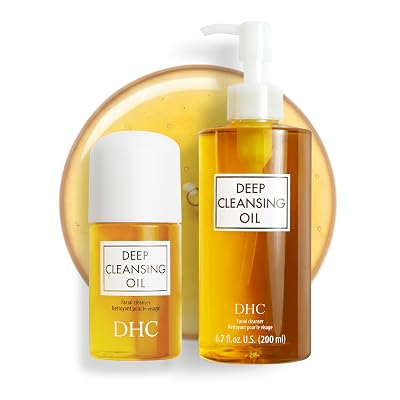
DHC Deep Cleansing Oil is the pick for the first step of a double cleanse. It is a facial cleansing oil and makeup remover built around organic olive oil and vitamin E, and the listing explains that it binds to oil-based residue such as makeup, which a single water-based wash can leave behind in and around pores.
Used on dry skin and massaged over the nose and chin, a cleansing oil can loosen sebaceous filaments over time, as our tip later in this guide explains. It is a classic, widely reviewed formula and includes a travel mini. Follow it with a water-based cleanser, and choose the #7 Hanskin oil if you want PHA in the mix.
- Cleansing oil and makeup remover
- Organic olive oil and vitamin E
- Designed as a first-step oil cleanser
- Includes a travel-size mini
Pros
- Dissolves sunscreen and makeup well
- Widely reviewed classic
- Travel mini included
Cons
- Needs a second cleanser afterwards
- Olive oil base may feel rich on very oily skin
Skip it if: Skip it if you wear little makeup or sunscreen; a single wash such as the #3 or #9 pick is enough.
Check Price on AmazonEight Saints Down To Earth Mud Gel Face Wash

Best for: Daily clay cleansing on sensitive skin
Eight Saints Down To Earth is a gel cleanser with kaolin and French clay, so it offers the oil-absorbing benefit of clay in a gentler, everyday texture. The listing recommends it for normal, oily, combination and sensitive skin, which makes it more flexible than the stronger acid washes further down this list.
It also contains vitamin C and is positioned as an anti-ageing cleanser, though a rinse-off product has little time to do much beyond cleansing. Compared with the #1 Jack Black it has no glycolic acid, which makes it the better choice if you already use a leave-on exfoliant. It can double as a makeup remover for light makeup.
- Gel cleanser with natural clays
- Kaolin clay and French clay
- Contains vitamin C
- For normal, oily, combination and sensitive skin
Pros
- Clay benefits in a gentle gel
- Suits most skin types
- No acids to over-exfoliate
Cons
- Anti-ageing claims add little in a rinse-off
- Not strong enough for heavy makeup alone
Skip it if: Skip it if you want an acid cleanser for blackheads; the #8 COSRX pick is more targeted.
Check Price on AmazonBotanic Tree 10% Glycolic and Salicylic Face Wash

Best for: Oily, breakout-prone skin with clogged pores
Botanic Tree’s face wash combines 10% glycolic acid with salicylic acid, so it works on dead skin at the surface and oil inside the pore at the same time. The listing aims it at breakouts as well as pores, and it contains bamboo, shea butter and tea tree in the base.
It is one of the stronger cleansers here, and the seller calls it a scrub as well as a cleanser, so use light pressure and avoid rubbing. Start once a day in the evening, as our how-to steps suggest. Tea tree can irritate some people, and the acids raise sun sensitivity, so daily sunscreen is essential.
- 10% glycolic acid plus salicylic acid
- Positioned as a cleanser and scrub
- Aimed at breakouts and dead skin
- Bamboo, shea butter and tea tree
Pros
- AHA and BHA in one wash
- Suits oily, breakout-prone skin
- Widely reviewed
Cons
- Can be too strong for sensitive skin
- Tea tree and acids may irritate some people
Skip it if: Skip it if your skin is sensitive or you already use a leave-on acid; choose the #9 Cetaphil pick instead.
Check Price on AmazonWhipped Korean Clay Charcoal Face Wash and Mask

Best for: Blackheads and sebaceous filaments on the nose
The Whipped face wash is aimed squarely at the dots people notice on their nose. The listing says it targets sebum, sebaceous filaments and blackheads, using clay with charcoal powder that gently exfoliates the surface, and it can be used as a short mask as well as a daily cleanser.
Its creamy texture is described as non-drying, which helps balance the clay. The colour-changing formula is fun but does not add cleansing power. Charcoal has no proven benefit over plain clay, so think of it as a clay cleanser first. Sebaceous filaments refill within days, so expect regular use to keep them less visible rather than remove them.
- Clay and charcoal cleanser
- Charcoal powder for gentle surface exfoliation
- Creamy, non-drying texture
- Works as a face mask or cleanser
Pros
- Targets nose blackheads and filaments
- Cleanser and mask in one
- Creamy rather than stripping
Cons
- Charcoal adds little over clay alone
- Physical exfoliation needs a light touch
Skip it if: Skip it if you have active, inflamed acne; exfoliating powders can irritate broken skin.
Check Price on AmazonNAELI AHA/BHA Exfoliating Face Wash

Best for: Dull, rough skin with visible pores
NAELI’s exfoliating face wash pairs 10% glycolic acid with salicylic acid in a pH-balanced gel, and it adds passion fruit and other fruit extracts. It suits people whose pores look bigger because of rough, dull texture, since glycolic acid loosens the dead skin that catches light around pore openings and makes skin look uneven.
It is similar in approach to the #4 Botanic Tree wash but positioned more at texture and brightness than breakouts. Fruit extracts add more ingredients that sensitive skin could react to, so patch test first. As with any acid cleanser, start once a day, wear sunscreen and do not combine it with other strong exfoliants.
- 10% glycolic acid plus salicylic acid
- pH-balanced exfoliating gel
- Passion fruit and other fruit extracts
- Vegan, made in the USA
Pros
- Targets rough, dull texture
- AHA and BHA together
- Gel texture rinses easily
Cons
- Many plant extracts for sensitive skin
- Increases sun sensitivity like any AHA
Skip it if: Skip it if you react easily to botanical extracts; the #9 Cetaphil or #10 Neutrogena pick is simpler.
Check Price on AmazonHanskin PHA Pore Cleansing Oil

Best for: Sensitive skin that still needs a deep cleanse
Hanskin’s PHA Pore Cleansing Oil is a Korean cleansing oil designed for sensitive skin. It adds PHA, a gentle acid aimed at blackheads and rough texture, to a lightweight oil blend of jojoba, soybean and sunflower oils that melts makeup and sunscreen and rinses clean without leaving the skin tight.
It is gentler in approach than the acid washes at #4 and #6 and a good alternative to the #2 DHC oil if you want a little exfoliation in your first cleanse. The large bottle lasts a long time. As with any oil, massage it on dry skin, then emulsify with water and follow with a gentle second cleanser.
- Cleansing oil designed for sensitive skin
- Contains PHA for blackheads and texture
- Jojoba, soybean and sunflower oils
- Large 300ml bottle
Pros
- Gentle PHA in a first cleanse
- Removes makeup and sunscreen
- Large size
Cons
- Needs a second cleanser
- Soybean oil may not suit those with soy sensitivity
Skip it if: Skip it if you prefer a one-step routine; the #1 or #8 picks work alone.
Check Price on AmazonCOSRX Salicylic Acid Daily Gentle Cleanser

Best for: Blackhead-prone oily skin
The COSRX Salicylic Acid Daily Gentle Cleanser is the most straightforward salicylic acid option on this list. Salicylic acid is oil-soluble, so it can work inside the pore lining, which is why this guide calls it the most useful cleanser ingredient for clogged pores. The listing aims it at breakouts and dead skin.
It is a foam cleanser positioned as gentle enough for daily use, which makes it simpler than the combined AHA and BHA washes at #4 and #6. It is a popular Korean skincare staple. Leave the lather on for up to a minute to give the acid time to work, and scale back if your skin feels tight.
- Salicylic acid (BHA) foam cleanser
- Aimed at breakouts and dead skin
- Positioned for gentle daily use
- Korean skincare formula
Pros
- Best-studied pore ingredient
- Simple, single-acid formula
- Suits daily use for many people
Cons
- Can still dry sensitive skin
- Listing gives limited formula detail
Skip it if: Skip it if your skin is dry and sensitive; start with the #9 Cetaphil pick instead.
Check Price on AmazonCetaphil Daily Facial Cleanser for Oily Skin

Best for: Sensitive, oily or combination skin
Cetaphil’s Daily Facial Cleanser for oily and combination skin is the gentlest pick here. It is a soap-free foaming wash that the listing describes as hypoallergenic and non-comedogenic, with glycerin and panthenol to support the skin barrier, and it is aimed at sensitive skin as well as oily and combination types.
It has no acids, so it will not unclog pores the way the #8 COSRX cleanser can. Instead it is the ideal partner for a leave-on salicylic acid or retinoid, which usually does more for pores than any wash. The two-bottle pack suits households or twice-daily users. It is also widely reviewed.
- Soap-free foaming face wash
- Hypoallergenic and non-comedogenic
- Glycerin and panthenol for the barrier
- For sensitive, combination and oily skin
Pros
- Very gentle
- Pairs well with leave-on treatments
- Two large bottles
Cons
- No acids, so little effect inside pores
- Will not remove heavy makeup alone
Skip it if: Skip it if you want a cleanser that treats blackheads by itself; the #8 COSRX pick is more active.
Check Price on AmazonNeutrogena Skin Balancing Kaolin Clay Cleanser

Best for: Shiny T-zones and oily skin
Neutrogena’s Skin Balancing cleanser combines kaolin clay with 2% polyhydroxy acid, or PHA, in a mattifying formula. Clay absorbs surface oil, while PHA is a gentle acid that loosens dead skin, so it suits oily skin that wants a matte, fresh feel without the stronger acids of the #4 and #6 picks.
It is simpler than the #1 Jack Black, with a milder acid, and from a very familiar pharmacy brand. The listing gives limited detail beyond the key ingredients, so check the label if you are sensitive. Dry areas may feel tight with daily use, so combination skin may prefer it on the T-zone only.
- Kaolin clay cleanser
- 2% polyhydroxy acid (PHA)
- Mattifying finish
- From an established pharmacy brand
Pros
- Clay and gentle acid together
- Matte, fresh finish
- Milder than glycolic washes
Cons
- Limited detail in the listing
- Can feel tight on dry areas
Skip it if: Skip it if your skin is dry overall; the #3 Eight Saints gel or #9 Cetaphil wash is kinder.
Check Price on AmazonHow We Chose These Products
We shortlisted facial cleansers from Amazon listings that are highly rated by a large number of shoppers, favouring established brands and fuller-featured formulas with ingredients that suit clogged or visible pores, such as salicylic acid, clay, gentle acids and rinse-clean cleansing oils. We then checked each product’s listed features against the guidance cited in this post, including the AAD’s advice to wash with a gentle, non-abrasive cleanser.
These are research-based picks, not hands-on lab tests. We did not use these cleansers ourselves, so rankings reflect listing detail, ingredients and fit for different skin types rather than personal results. We left out skincare sets that bundle a cleanser with other products, and we do not repeat pore-shrinking claims, because no cleanser changes pore size.
- Strong ratings from a large number of shoppers
- Ingredients that suit clogged or visible pores
- Established brands and fuller-featured formulas preferred
- Listed features checked against the cited AAD guidance
- Sets and products with thin or unclear listings excluded
Why Pores Look Bigger
Pores are the openings of hair follicles, and each one connects to an oil gland. Their size is largely set by genetics and skin type, which is why oily skin usually has more noticeable pores than dry skin.
Several things make pores look larger than they really are. Excess oil stretches the opening and reflects light. Dead skin and oil mix into plugs that darken at the surface. With age and sun damage, the skin around pores loses collagen and elasticity, so the openings sag and look wider.
- High oil production, often on the nose, forehead and chin.
- Build-up of dead skin cells around the pore opening.
- Blackheads and sebaceous filaments that fill the pore.
- Loss of firmness from ageing and years of sun exposure.
- Heavy, pore-clogging skincare or makeup left on overnight.
Many of the dark dots people see on their nose are sebaceous filaments rather than blackheads. They are normal and refill within days. Our guide to sebaceous filaments vs blackheads explains how to tell them apart.
Can a Cleanser Open or Close Pores?
No. Pores do not have muscles, so they cannot open with steam or close with cold water. Warm water can soften oil so it rinses away more easily, and cold water can make skin look briefly tighter, but neither changes pore size. Our article on whether cold water closes pores covers this myth in more detail.
What a cleanser can do is remove oil, sweat, sunscreen and loose dead skin so the pore opening looks cleaner and less stretched. Certain ingredients can also loosen material inside the pore over time. That is a real but modest benefit, and it only lasts as long as you keep using the product.
Labels such as pore minimising, pore refining or pore shrinking describe how pores may look, not a permanent change in size. Treat them as marketing language rather than a promise.
Cleanser Ingredients That Help With Pores
These are the ingredients most worth looking for when choosing a cleanser for visible or clogged pores.
| Ingredient | How it helps pores | Best for | Possible downside |
|---|---|---|---|
| Salicylic acid (BHA) | Oil-soluble; loosens oil and dead skin inside the pore | Oily, combination, blackhead-prone skin | Can dry or sting sensitive skin |
| Kaolin or bentonite clay | Absorbs surface oil | Oily skin, shiny T-zone | Can be drying if used daily on dry areas |
| Glycolic or lactic acid (AHA) | Loosens dead skin at the surface | Dull, rough skin with pores | More likely to irritate; sun sensitivity |
| Niacinamide | May help regulate oil and improve texture | Oily and combination skin | Little effect in a quick rinse-off |
| Mild surfactants | Remove oil without stripping | All skin types | Too mild alone for heavy sunscreen or makeup |
| Charcoal | Absorbs some oil | Oily skin | No proven benefit over clay; can be drying |
Of these, salicylic acid has the strongest case for clogged pores, because it can move through oil into the pore rather than only working on the surface. Clay is a good alternative or add-on for very oily skin that wants a matte, fresh feel.
Types of Pore Cleansers Compared
Pore cleansers come in several formats. The right one depends on your skin type and how sensitive your skin is.
| Cleanser type | What it does | Suits | Use |
|---|---|---|---|
| Salicylic acid gel or foam | Clears inside pores over time | Oily, blackhead-prone | Once daily, build to twice |
| Clay cleanser | Absorbs surface oil | Oily, combination | Daily or a few times a week |
| Gentle foaming cleanser | Removes oil without acids | Sensitive oily skin | Twice daily |
| Cleansing oil or balm | Dissolves sunscreen, makeup and oil | All types as a first cleanse | Evenings with makeup or SPF |
| Enzyme cleansing powder | Mild surface exfoliation | Normal to oily skin | A few times a week |
If you already use a leave-on salicylic acid or retinoid product, a gentle foaming cleanser without acids is often the better partner, so you do not overdo exfoliation.
What to Avoid When Choosing a Pore Cleanser
Some products marketed for pores can backfire, especially if they dry out or irritate the skin.
- Gritty scrubs with crushed shells, pits or rough beads.
- Very strong foaming washes that leave skin tight and squeaky.
- High levels of drying alcohol.
- Heavy fragrance and menthol that tingle and irritate.
- Using several acid products at once, such as an acid cleanser, acid toner and acid serum.
- Pore strips and suction tools used frequently, which can irritate and do not stop pores refilling.
When skin is stripped, it can become irritated and flaky, which makes pores look rougher. Some people also notice more shine within hours, as the skin surface looks oilier again.
Do not squeeze, pick or dig at pores with fingers, pins or metal tools. It can push debris deeper, damage the skin and leave marks or scars, particularly on darker skin tones where dark spots last longer.
How to Use a Pore Cleanser Properly
Good technique helps active ingredients work while keeping irritation low.
Remove sunscreen and makeup first
In the evening, massage a cleansing oil or balm into dry skin, then rinse.
Wet your face with lukewarm water
Warm, not hot, water helps loosen oil without drying skin.
Apply the pore cleanser
Use a small amount and massage gently with fingertips, focusing on oily areas.
Give acids a little time
With salicylic acid, leave the lather on for 30 to 60 seconds before rinsing.
Rinse well
Rinse thoroughly, especially around the nose and hairline.
Pat dry and moisturise
Use a soft towel, then a light, non-comedogenic moisturiser.
Protect in the morning
Wear a broad-spectrum SPF 30 or higher, as sun damage makes pores look larger.
Start with the acid cleanser once a day, usually in the evening, and increase to twice a day only if your skin stays comfortable after two weeks.
Should You Double Cleanse for Pores?
Double cleansing means using an oil-based cleanser first and a water-based cleanser second. It is useful if you wear water-resistant sunscreen, long-wear makeup or live in a polluted city, because oil dissolves oil-based residue that a single wash may leave behind.
It is not essential for everyone. If you wear little makeup, a single wash with a good cleanser may be enough. Our guide on when double cleansing is necessary helps you decide.
Choose a cleansing oil that turns milky when you add water and rinses clean. Massage it over your nose and chin for a full minute on dry skin; many people notice softer, less noticeable blackheads and filaments after a few weeks of consistent use.
Choosing a Pore Cleanser by Skin Type
The best pore cleanser for you depends as much on your skin type as on your pores. Match the formula to how your skin behaves across the whole face, not just the nose.
- Oily skin: a salicylic acid gel or foam, with a clay cleanser a few times a week if shine is heavy.
- Combination skin: a gentle gel cleanser overall, with a salicylic acid cleanser used only on the T-zone or on alternate evenings.
- Dry skin with visible pores: a cream or milk cleanser, plus a leave-on salicylic acid product applied only where pores are clogged.
- Sensitive skin: a mild, fragrance-free foaming cleanser without acids; introduce any exfoliant slowly and separately.
- Acne-prone skin: a salicylic acid or benzoyl peroxide wash may help, but avoid stacking it with other strong actives unless advised.
- Mature skin with enlarged pores: a gentle cleanser, because lost firmness rather than oil is often the cause; focus on retinoids and sunscreen instead.
If you are unsure, start with the gentlest option that suits your skin type and add a salicylic acid product only if clogging remains after a month.
Pore Care Dos and Don’ts
Helps
- Use a salicylic acid or clay cleanser consistently
- Remove sunscreen and makeup every evening
- Moisturise with non-comedogenic products
- Wear sunscreen daily
- Be patient for four to eight weeks
Backfires
- Scrub hard or use gritty exfoliants
- Squeeze or pick at pores
- Stack several acid products at once
- Rely on steam or ice to change pore size
- Expect a cleanser to erase pores
Consistency matters more than strength. A gentle product used every day will usually do more than a harsh one you can only tolerate once a week.
Honest Limits
No cleanser can permanently shrink pores or change their natural size. The best you can expect is clearer, smoother-looking pores and less shine, which usually takes a few weeks of regular use and fades if you stop.
Pore size is strongly linked to genetics, oil production and age. If your pores are large because of lost firmness, cleansers will make only a small difference. Claims of instant pore shrinking are usually temporary effects from cooling, astringent or mattifying ingredients.
Because a cleanser is on the skin for such a short time, leave-on products usually have more effect on pores. Topical retinoids help keep pores clear and, over months, support firmer skin around them. Leave-on salicylic acid and niacinamide can reduce clogging and shine.
Daily sunscreen protects the collagen that holds pores tight. For deeper change, in-office treatments such as chemical peels, microneedling and some lasers can improve the appearance of pores, though results vary and typically require several sessions.
When to See a Dermatologist
- You have frequent blackheads, whiteheads or pimples that do not respond to over-the-counter products.
- Your skin becomes red, peeling or painful with acid cleansers.
- You have deep, painful bumps or acne that leaves marks or scars.
- You want prescription retinoids or in-office treatments for pores.
- You are unsure whether bumps are acne, rosacea or another condition.
This article is for general information and does not replace professional medical advice. See a board-certified dermatologist for persistent acne, reactions to products or advice on prescription treatments.
Your Questions, Answered
What is the best facial cleanser for pores?
Our top pick is Jack Black Deep Dive, a clay and glycolic acid cleanser that doubles as a mask.
Can a cleanser shrink pores?
No, but it can make them look clearer and smaller.
Is a clay cleanser good for pores?
Yes, especially for oily skin, as it absorbs surface oil.
Can I use a salicylic acid cleanser every day?
Many people can; start once a day and watch for dryness.
Does steam open pores before cleansing?
No, pores do not open; steam only softens oil slightly.
Do cold water rinses close pores?
No, they may tighten skin briefly but do not change pore size.
Which cleanser on this list suits sensitive skin with visible pores?
Cetaphil Daily Facial Cleanser or the Hanskin PHA oil are the gentlest starting points.
Should I double cleanse for large pores?
It helps if you wear sunscreen or makeup.
Is a salicylic acid cleanser or a clay cleanser better for pores?
Salicylic acid, as in the COSRX pick, works inside pores; clay, as in Neutrogena’s, absorbs surface oil.
How long before I see results?
Usually four to eight weeks of consistent use.
The Bottom Line
The best facial cleanser for pores keeps them clear without stripping your skin; Jack Black Deep Dive is our top pick overall, with COSRX a simple salicylic acid alternative.
Pair it with daily sunscreen, a non-comedogenic moisturiser and, if needed, a leave-on treatment, and keep expectations realistic: clearer, smoother-looking pores are achievable, but permanently smaller ones are not.
Our top pick: Jack Black Deep Dive Glycolic Facial Cleanser
The Jack Black Deep Dive cleanser takes the top spot because it combines clay to absorb oil with glycolic acid to loosen dead skin, doubles as a mask and is described as fragrance-free and suitable for sensitive skin. Choose the DHC Deep Cleansing Oil instead if sunscreen and makeup residue are your main problem, or the Eight Saints Mud Gel if you want a gentler clay wash for daily use.
Check Price on Amazon
Written by
Registered pharmacist and founder of Facial Adviser. Rakib's pharmacy training covers how skincare actives work and interact; a later course in cosmetology turned that into a focus on facial treatments and skincare products. He plans, researches and edits every guide on the site and checks health claims against sources such as the American Academy of Dermatology, the FDA and the NIH. He is not a dermatologist; see the Editorial Policy and Medical Disclaimer.
About · Editorial policy · How we choose products · Medical disclaimer · Contact
Keep reading: Cleansers and face wash
- 10 Best Facial Cleansers for Combination Skin (2026): Balanced Picks
- 10 Best Facial Cleansers for Aging Skin (2026): Gentle, Hydrating Picks
- 10 Best Facial Washes for Sensitive Skin (2026): Gentle, Low-Sting Picks
- 10 Best Facial Cleansers for Combination Skin (2026): Gels That Balance
- 10 Best Facial Cleansers for Clogged Pores (2026): BHA and BP Picks
- 10 Best Facial Washes for Oily Skin (2026): Clean and Matte, Not Tight
- 10 Best Face Masks for Every Skin Type (2026): Clay, Gel and Sheet
- What Does a Facial Toner Do? The Real Answer