How Much Facial Hair Is Normal for a Woman?
How much facial hair is normal for a woman is a question that gets answered two opposite, equally unhelpful ways online: either any visible hair means something is medically wrong, or excess hair growth is dismissed as nothing worth ever checking.
Part of our guide to at-home facial devices. Start with: 10 Best Products for Women's Facial Hair Removal (2026): Gentle Picks
Some terminal facial hair is a normal variant, driven by ordinary circulating androgens every woman has, and the real clinical question is degree and pattern, scored on the Ferriman-Gallwey scale, not whether any hair is present at all. Hirsutism, the clinical term for excess terminal hair in a male-pattern distribution, affects an estimated 5 to 15 percent of women, common, not rare.
When a genuine hirsutism pattern is present, PCOS accounts for roughly seven in ten cases, and a small set of real red flags, rapid onset and signs of virilization in particular, are what actually distinguish a routine hormonal workup from an urgent one.
This guide covers the real scale doctors use, the actual distribution of underlying causes, the genuine red flags worth knowing, and what a doctor’s workup for excess facial hair actually involves.
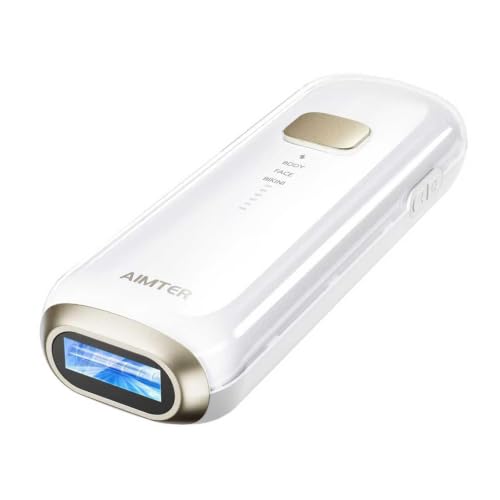
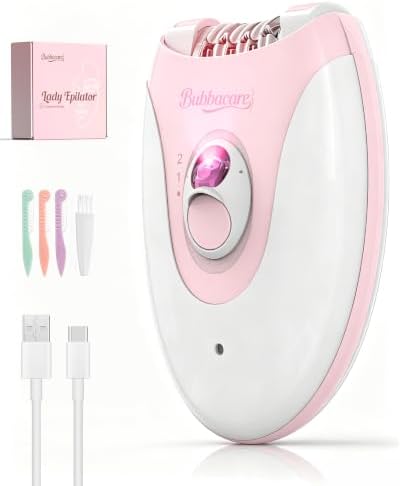
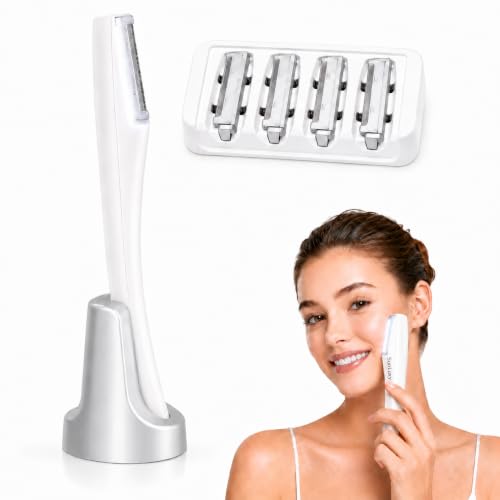
Recommended Products for At-Home Hair Removal

Key Takeaways
- Some fine or even coarse facial hair is a normal variant for women, since everyone has circulating androgens that can convert fine vellus hair into visible terminal hair.
- Hirsutism, the clinical term for excess terminal hair in a male-pattern distribution, affects an estimated 5 to 15% of women, common rather than rare.
- The Ferriman-Gallwey scale is the real clinical tool for scoring hirsutism, with cutoffs that vary meaningfully by ethnic background.
- PCOS accounts for roughly 71% of hirsutism cases, by far the most common identifiable cause when excess terminal hair is present.
- The pattern of onset matters more than the amount of hair: slow, puberty-onset growth is reassuring, while rapid onset over months with other virilization signs warrants prompt medical evaluation.
- Thyroid disease and certain medications can also affect facial hair growth and are worth mentioning to a doctor if hair changes accompany other symptoms.
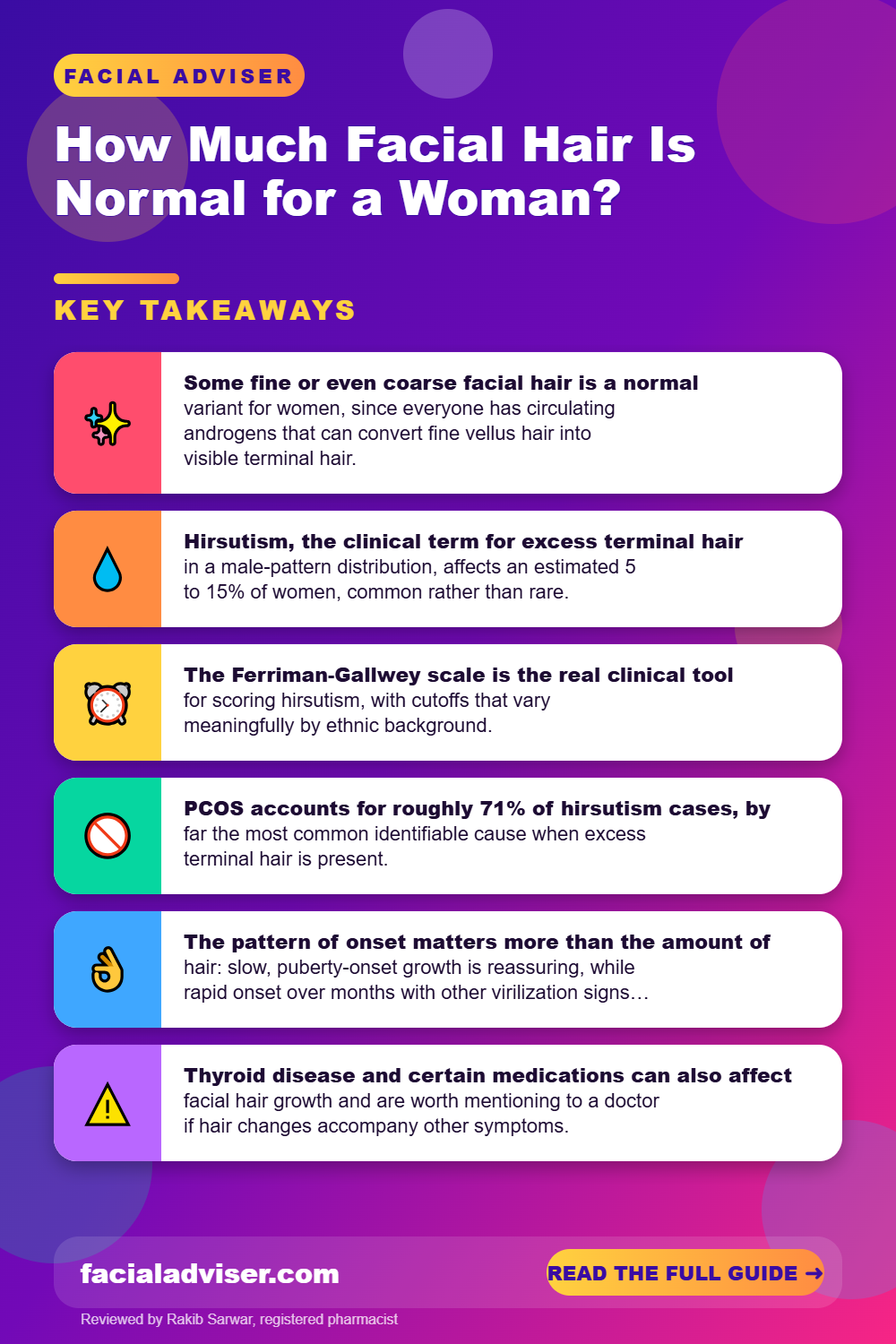
Table of Contents
- Why Women Have Facial Hair at All
- What Hirsutism Actually Means
- The Ferriman-Gallwey Scale, Explained
- What Actually Causes Excess Facial Hair
- The Real Red Flags Worth Knowing
- Thyroid, Medications, and Other Factors
- Managing Facial Hair Without Treating It as a Diagnosis
- What a Doctor’s Workup Actually Involves
- Do This, Not That
- Assessing Your Own Facial Hair Honestly
- When to See a Doctor
- Frequently Asked Questions
- The Bottom Line
Why Women Have Facial Hair at All
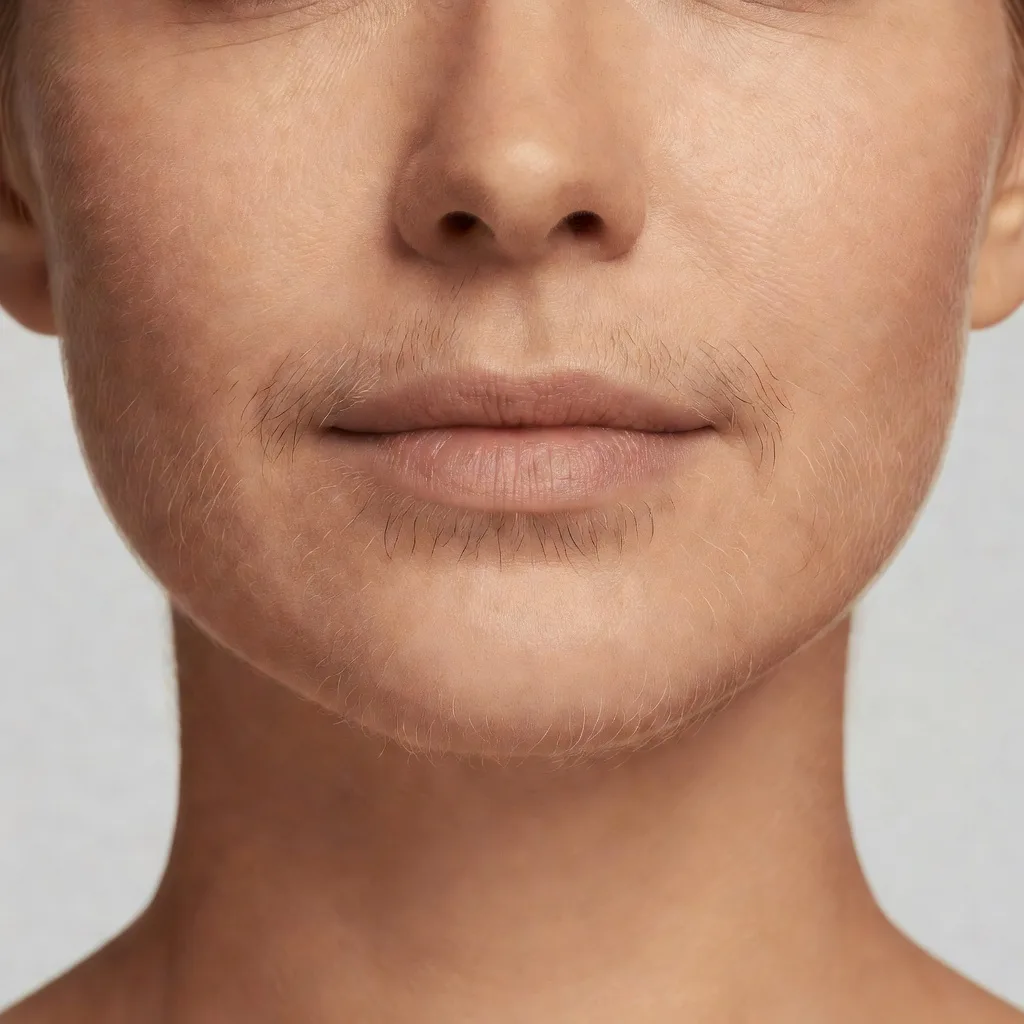
All women have fine, unpigmented vellus hair covering most of the body, including the face, and everyone, regardless of sex, has some circulating androgens from the ovaries and adrenal glands. Under androgen stimulation, follicles in androgen-sensitive areas, the upper lip, chin, jawline, and sideburns, can convert that fine vellus hair into coarser, longer, pigmented terminal hair. This is a normal biological process, not automatically a sign that something is wrong.
Shopping these picks?
Amazon Prime members get fast, free shipping on eligible items, plus Prime Video, Amazon Music and member deals. New members can start with a free trial.
Start a free Prime trialAged 18 to 24? Prime for Young Adults comes with a longer free trial and a lower price after it.
Affiliate link: we may earn a commission at no extra cost to you.
This guide covers where normal variation ends and clinically significant hirsutism begins, the real scoring system doctors use, the most common underlying causes, and the genuine red flags that separate an ordinary variation from something worth a prompt medical evaluation.
What Hirsutism Actually Means
Hirsutism is the clinical term for excess terminal hair growth in a male-pattern distribution on a woman, and it’s a formally defined, scored condition, not just a subjective judgment about how much hair looks like “too much.” According to a widely cited clinical review, hirsutism affects an estimated 5 to 15% of women, meaning at the upper end, nearly 1 in 7 women meet the clinical threshold.
Note: That prevalence figure matters for framing this topic honestly: visible facial hair on a woman is common enough that it shouldn’t automatically be treated as alarming, while a genuine hirsutism pattern is also common enough that it’s worth understanding rather than dismissing outright.
The Ferriman-Gallwey Scale, Explained
The modified Ferriman-Gallwey scale is the clinical standard for scoring hirsutism. It rates hair growth across nine androgen-sensitive body areas, including the upper lip and chin, on a 0 to 4 scale per area, and totals them into an overall score.
| Population reference | Hirsutism threshold score |
|---|---|
| White or Black women (US/UK reference) | 8 or higher |
| Mediterranean, Hispanic, or Middle Eastern | 9 or higher |
| South American | 6 or higher |
| South or East Asian | 2 or higher |
That last row is worth pausing on: the threshold is meaningfully lower for South and East Asian women, reflecting lower baseline terminal hair density in these reference populations, not a stricter standard. Severity bands above the threshold run from mild (8 to 15) to moderate-to-severe (above 15) to severe (above 25).
What Actually Causes Excess Facial Hair
When true hirsutism is present, the underlying causes are well documented and heavily skewed toward one condition. Polycystic ovary syndrome accounts for roughly 71% of hirsutism cases, by far the most common identifiable cause. Idiopathic hyperandrogenism (androgen levels above typical range with no other identified cause) accounts for about 15%, and idiopathic hirsutism (normal androgen levels, but androgen-sensitive follicles) accounts for about 10%. Nonclassic congenital adrenal hyperplasia accounts for roughly 3%, and androgen-secreting tumors, rare but important to catch early, account for about 0.3%.
PCOS and idiopathic hyperandrogenism together account for more than 85% of hirsutism cases, meaning for most women with a genuine hirsutism pattern, the underlying driver is androgen excess of ovarian or adrenal origin, most commonly PCOS specifically.
The Real Red Flags Worth Knowing
Warning: The pattern of onset matters more than the total amount of hair. A reassuring pattern is slow onset around puberty, a family or ethnic background with known higher baseline hair growth, and stability over years. A genuine red flag, possibly signaling an androgen-secreting tumor, is rapid onset over just months, especially alongside signs of virilization: a deepening voice, enlargement of the clitoris, increased muscle mass, or significant scalp hair thinning. Hirsutism that progresses rapidly despite treatment is also worth flagging to a doctor promptly.
This distinction is a genuinely usable, one-minute self-check: ask whether the hair growth has been a slow, stable pattern over years, or a rapid change over a matter of months, and whether it’s accompanied by any of the virilization signs above. The first pattern is common and reassuring; the second warrants a prompt medical evaluation rather than a wait-and-see approach.
Thyroid, Medications, and Other Factors
Thyroid dysfunction, both an underactive and an overactive thyroid, isn’t typically the primary driver of the specific Ferriman-Gallwey hirsutism pattern, but it can alter hair texture, growth, and shedding more generally. It’s reasonable to mention facial hair changes to a doctor as part of a broader hormonal picture if they’re accompanied by other symptoms like fatigue, unexplained weight change, menstrual irregularity, or unusual sensitivity to cold or heat.
Medication-induced hirsutism is also a recognized category, linked to certain hormonal medications, anabolic steroids, some anticonvulsants, minoxidil, cyclosporine, and danazol. If facial hair growth started or worsened after beginning a new medication, that’s worth mentioning specifically when discussing it with a doctor.
Managing Facial Hair Without Treating It as a Diagnosis
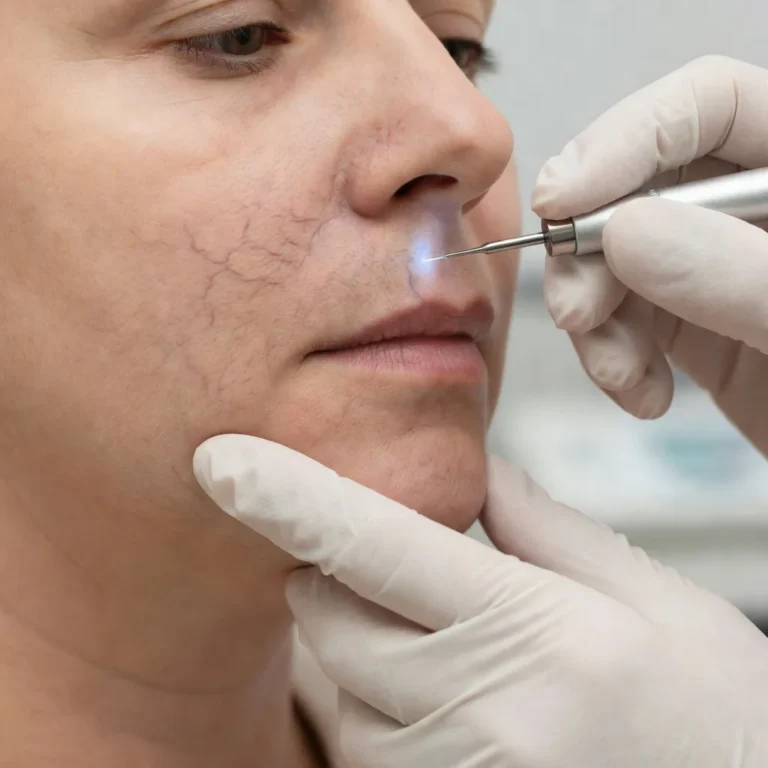
Plenty of women with entirely normal, non-hirsutism-level facial hair choose to remove it, and that choice doesn’t require a medical justification any more than shaving or waxing any other body area does. Options like threading, waxing, tweezing, depilatory cream, laser hair reduction, or electrolysis all work through their own distinct mechanisms and address the cosmetic preference directly, independent of whatever is driving the hair growth underneath.
The point worth separating clearly is the removal method from the diagnostic question. Choosing to remove facial hair is a personal, cosmetic decision that doesn’t imply something is medically wrong, and conversely, having a genuine hirsutism pattern doesn’t mean hair-removal methods won’t work, they still physically remove the hair. The two questions, “do I want this hair gone” and “is there an underlying hormonal cause worth investigating,” are independent of each other and can be answered on separate timelines.
What a Doctor’s Workup Actually Involves
A doctor evaluating hirsutism typically starts with a physical exam using the Ferriman-Gallwey scale described above, a menstrual history, and bloodwork checking androgen levels along with other relevant hormones. Given that PCOS accounts for the large majority of hirsutism cases, a pelvic ultrasound is also commonly part of the workup to look for the ovarian findings associated with that condition.
This is a reasonable, well-established diagnostic pathway, not an invasive or alarming process, and most women who go through it find a straightforward, manageable explanation like PCOS rather than anything more serious. The rare androgen-secreting tumor cases are exactly why the rapid-onset-plus-virilization red flags matter: they’re what prompts additional imaging or more urgent evaluation beyond the standard initial workup.
It’s worth knowing that PCOS rarely shows up as a single symptom. The same androgen excess driving unwanted facial hair growth is frequently also behind persistent jawline and chin breakouts, so a doctor working through the hirsutism picture will often ask about acne history in the same conversation. If breakouts and excess facial hair have been showing up together, it’s the same underlying hormonal thread, not two unrelated problems, and treating hormonal acne in isolation without addressing the androgen driver behind it tends to be a losing battle.
Do This, Not That
Do
- Recognize that some facial hair is a normal variant for most women
- Pay attention to the pattern of onset, not just the amount of hair present
- Mention any new medication when discussing facial hair changes with a doctor
- Consider PCOS as the most likely explanation if a genuine hirsutism pattern is present
- Seek evaluation promptly if hair growth is rapid and accompanied by virilization signs
Don’t
- Assume any visible facial hair automatically signals a hormonal disorder
- Dismiss a genuinely rapid-onset pattern as just “normal” without evaluation
- Ignore accompanying symptoms like voice changes or significant scalp hair thinning
- Assume thyroid disease is the primary cause of a classic hirsutism pattern
- Delay seeing a doctor if hirsutism is progressing despite home hair-removal methods
Assessing Your Own Facial Hair Honestly
Note the areas affected
Upper lip, chin, and jawline are the classic androgen-sensitive areas relevant to hirsutism scoring.
Consider the timeline
Slow, puberty-onset growth that’s stayed stable for years is a reassuring pattern.
Watch for rapid change
Hair growth that noticeably increases over just a few months is a genuine reason to seek evaluation sooner rather than later.
Tip: Taking photos every few months can make a genuinely rapid change much easier to confirm than relying on memory alone.
Check for other symptoms
Menstrual irregularity, unexplained weight change, or scalp hair thinning alongside facial hair changes point toward a hormonal evaluation.
Bring a medication list to your appointment
Certain medications are a recognized, reversible cause of increased facial hair growth.
When to See a Doctor
See a dermatologist or skin specialist, or your primary care doctor or an endocrinologist, if facial hair growth has increased rapidly over a few months, if it’s accompanied by voice changes, significant scalp hair thinning, or menstrual irregularity, or if you simply want a proper hormonal evaluation rather than guessing at the cause yourself.
Frequently Asked Questions
Is it normal for women to have facial hair?
Yes, some fine or even coarse facial hair is a normal variant, since all women have circulating androgens.
What percentage of women have hirsutism?
An estimated 5 to 15%, meaning it’s common rather than rare.
What’s the most common cause of hirsutism?
PCOS, accounting for roughly 71% of cases.
How do doctors measure hirsutism?
With the modified Ferriman-Gallwey scale, which scores hair growth across nine body areas.
Do hirsutism thresholds differ by ethnicity?
Yes, the clinical cutoff score varies meaningfully by ethnic background, reflecting different baseline hair density.
What’s a genuine red flag for facial hair growth?
Rapid onset over just months, especially with voice deepening or significant scalp hair thinning.
Can medications cause increased facial hair?
Yes, certain hormonal medications, anticonvulsants, and a few other drugs are a recognized cause.
Does thyroid disease cause hirsutism?
Not typically the classic hirsutism pattern itself, but it can affect hair growth and texture generally.
Are androgen-secreting tumors a common cause?
No, they’re rare, about 0.3% of hirsutism cases, but important to catch early given the rapid-onset pattern involved.
Should I see a doctor for facial hair alone?
If it’s stable and gradual, not necessarily; if it’s rapid or accompanied by other symptoms, yes.
The Bottom Line
Some facial hair is a normal, common part of being a woman with typical circulating androgens, and it shouldn’t automatically be treated as a medical problem. Genuine hirsutism, scored with the Ferriman-Gallwey scale, is also common, affecting up to 15% of women, and is most often explained by PCOS.
The pattern of onset is what actually distinguishes normal variation from something worth investigating: slow and stable is reassuring, while rapid growth alongside other virilization signs warrants a prompt medical evaluation rather than guesswork.

Written by
Registered pharmacist and founder of Facial Adviser. Rakib's pharmacy training covers how skincare actives work and interact; a later course in cosmetology turned that into a focus on facial treatments and skincare products. He plans, researches and edits every guide on the site and checks health claims against sources such as the American Academy of Dermatology, the FDA and the NIH. He is not a dermatologist; see the Editorial Policy and Medical Disclaimer.
About · Editorial policy · How we choose products · Medical disclaimer · Contact
Keep reading: Facial hair removal
- 10 Best Products for Women's Facial Hair Removal (2026): Gentle Picks
- Dermaplaning Facial: What the Evidence Shows
- Is Home Laser Hair Removal Safe? Real Data
- Facial Bleach: What It Actually Does to Your Skin
- Dark Upper Lip Treatment: What Actually Works
- How to Use a Blackhead Extractor Tweezer
- 10 Best Facial Tools (2026): LED, Cleansing, Gua Sha and More
- 10 Best LED Light Therapy Masks (2026): Clearer Skin, Softer Lines