10 Best Bronzer Brushes (2026): Soft, Streak-Free Warmth
Bronzer is one of the easiest products to overdo and one of the easiest to get right, and the difference is usually the brush rather than the bronzer. This list covers 10 options, from angled and fluffy kabukis to dense brushes for cream bronzer and body bronzing tools, with notes on who each suits.
Part of our guide to makeup tools. Start with: 10 Best Makeup Brush Sets (2026): Soft, Well-Made Kits for Every Look
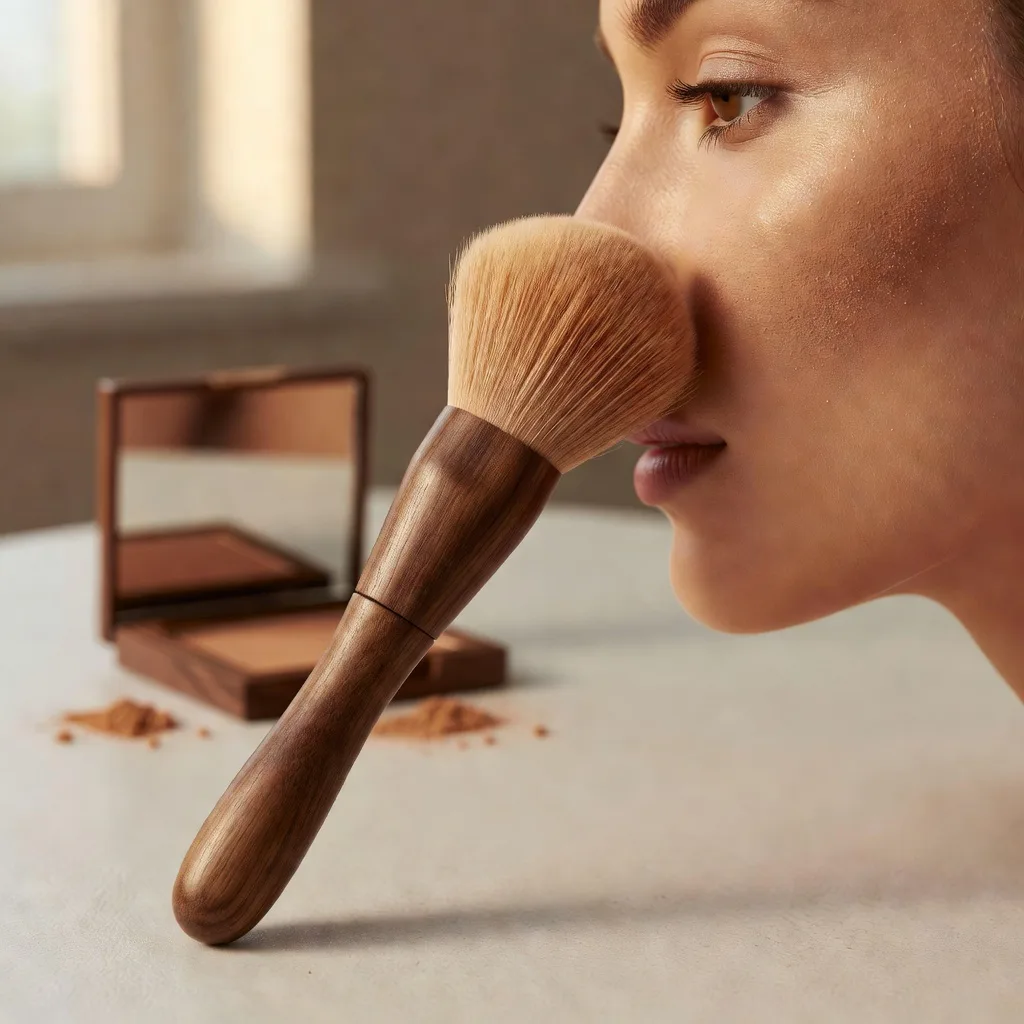
The best bronzer brush for most people is a large, fluffy, synthetic brush with a slightly domed or angled head and medium density, because it picks up a controlled amount of powder and blends it out without harsh edges. Angled brushes follow the cheekbone and jaw more precisely, while round, domed and kabuki styles suit an all-over, diffused warmth. Cream and liquid bronzers work better with a denser, flat-top or tightly packed synthetic brush. Whatever the shape, look for soft bristles that do not scratch, a secure ferrule that does not shed, and a size that matches the area you bronze.
In short: choose a fluffy, medium-density synthetic brush for powder, a denser one for cream, and keep it clean.
The American Academy of Dermatology notes that sunscreen, not makeup, is what protects skin from the sun, so a bronzed look should sit on top of your SPF rather than replace it.
Below you will find the ten picks, how we chose them, the main brush shapes and bristle types, what to avoid, how to apply bronzer with a brush and how to clean it so it lasts.
Shopping these picks?
Amazon Prime members get fast, free shipping on eligible items, plus Prime Video, Amazon Music and member deals. New members can start with a free trial.
Start a free Prime trialAged 18 to 24? Prime for Young Adults comes with a longer free trial and a lower price after it.
Affiliate link: we may earn a commission at no extra cost to you.
As an Amazon Associate we earn from qualifying purchases. This does not change which products we include.


Key Takeaways
- Laura Geller Retractable Angled Kabuki is our top pick for handling powder, cream and liquid in one travel-ready brush.
- Beauty by Earth Flat Top Kabuki is best for blending self tanner and cream bronzer.
- Real Techniques Angled Kabuki is best for bronzing the body.
- A large, fluffy, medium-density brush is the most forgiving choice for powder bronzer.
- Dense flat-top or kabuki brushes suit cream and liquid bronzers.
- Wash the brush regularly, as dirty bristles apply patchily and harbour bacteria.
- Bronzer adds warmth only; it gives no sun protection.
On This Page
- The 10 Best Bronzer Brushes Right Now
- How We Chose These Products
- Bronzer Brush Shapes Compared
- Synthetic vs Natural Bristles
- Density, Size and Handle: Features That Matter
- Matching the Brush to Powder, Cream or Liquid Bronzer
- What to Avoid When Buying a Bronzer Brush
- How to Choose for Your Face Shape and Skill Level
- How to Apply Bronzer With a Brush
- How to Clean and Care for a Bronzer Brush
- Dos and Don’ts
- Honest Limits
- When to Get Professional Advice
- Common Questions
- Where This Leaves You
The 10 Best Bronzer Brushes Right Now
These ten brushes were shortlisted from widely reviewed Amazon listings and cover angled kabukis, large fluffy powder brushes, dense brushes for cream and liquid formulas, and body bronzing tools. Each pick explains who it suits, its trade-offs and who should skip it.
| # | Product | Best For | Standout Feature | |
|---|---|---|---|---|
| 1 | Laura Geller Retractable Angled Kabuki Brush | Everyday bronzer on the go | Retractable angled head for any formula | View |
| 2 | Beauty by Earth Flat Top Kabuki Bronzer Brush | Blending self tanner on the face | Flat top built for tanner and bronzer | View |
| 3 | Real Techniques Angled Kabuki Brush | Bronzing legs, arms and decollete | Handle-less kabuki for body makeup | View |
| 4 | Jessup Large Fluffy Powder Brush MUL01 | Soft, all-over warmth | Full, domed head for airy blending | View |
| 5 | Jutoe Super Large Mineral Powder Brush | Loose and mineral bronzers | Large, dense, fluffy head | View |
| 6 | Keshima Dual-Ended Bronzer and Contour Brush | People who use cream and powder | Two ends for liquid and powder | View |
| 7 | No-Shed Angled Blush and Bronzer Brush | Defining cheekbones | Angled soft kabuki for any formula | View |
| 8 | docolor Travel Kabuki Brush | Small bags and touch-ups | Travel-size kabuki with vegan bristles | View |
| 9 | DUcare Dual End Powder Kabuki Brush | Cream and liquid bronzer users | Two vegan synthetic kabuki ends | View |
| 10 | Real Techniques Snatch and Sculpt Contour Brush | Defined, sculpted contour | Shaped for smooth, defined contour | View |
Laura Geller Retractable Angled Kabuki Brush

Best for: Everyday bronzer on the go
The Laura Geller angled kabuki earns the top spot because it handles the widest range of bronzers without feeling like a compromise. Its angled head follows the cheekbone and jaw for more control than a round brush, and the brand describes it as working with powder, cream and liquid products, which suits people who switch formulas between seasons.
The retractable design protects the bristles in a makeup bag and stops powder from dusting everything else, making it an easy brush to carry. The listing highlights a no-shed, vegan, high bristle-count head for even, streak-free coverage. It is smaller than the #4 Jessup and #5 Jutoe powder brushes, so it is less suited to bronzing the body or very large areas.
- No-shed, vegan bristles with a high bristle count
- Retractable kabuki design for travel
- Angled head for controlled application
- Suits liquid, cream and powder products
Pros
- Works with every bronzer formula
- Protected bristles in a bag
- Angle gives good control on cheekbones
Cons
- Too small for body bronzing
- Dense head can pick up a lot of powder at once
Skip it if: Skip it if you mainly want a very soft, airy wash of powder; the #4 Jessup is fluffier.
Check Price on AmazonBeauty by Earth Flat Top Kabuki Bronzer Brush

Best for: Blending self tanner on the face
Beauty by Earth designed this flat-top kabuki with self tanner in mind, which makes it the pick for anyone who wants a faux glow that does not stop at makeup. The listing describes it as a replacement for a tanning mitt on the face, blending lotion or mousse evenly so you avoid streaks around the hairline, nose and brows.
The soft vegan bristles also work as a foundation or bronzer brush, and the bamboo handle gives a comfortable grip. A flat top places product more densely than a fluffy brush, so it is better for cream bronzer and tanner than for a light dusting of powder. Compared with the #1 Laura Geller it is less portable but more focused on tanning.
- Flat-top kabuki with soft vegan bristles
- Designed to blend self tanner evenly
- Also works for bronzer and foundation
- Bamboo handle
Pros
- Great for self tanner on the face
- Doubles as a foundation brush
- Comfortable handle
Cons
- Dense head can be heavy-handed with powder
- Not retractable for travel
Skip it if: Skip it if you only use powder bronzer and want a soft, sheer finish.
Check Price on AmazonReal Techniques Angled Kabuki Brush

Best for: Bronzing legs, arms and decollete
Real Techniques built this angled kabuki for body makeup, and that makes it the pick for anyone who bronzes legs, arms or shoulders for an event. Its handle-less shape sits in the palm, which gives more control over large curved areas than a long-handled face brush, and the slanted cut helps it buff product into the skin rather than leaving stripes.
The listing says it works with powder, bronzer, highlighter, body oils and luminisers, and it is vegan and cruelty-free. It can be used on the face too, but its size makes detailed work around the nose and temples harder. For face-only bronzing, the #1 Laura Geller or #10 Real Techniques contour brush is a better fit.
- Handle-less kabuki with comfort grip
- Slanted cut to blend and buff liquid or powder
- Suits bronzer, highlighter, body oils and luminisers
- Cruelty-free and vegan
Pros
- Covers large areas quickly
- Easy to control in the palm
- Works with many formulas
Cons
- Too big for precise face work
- No handle for reaching your back
Skip it if: Skip it if you only bronze your face; a smaller angled brush is easier.
Check Price on AmazonJessup Large Fluffy Powder Brush MUL01

Best for: Soft, all-over warmth
The Jessup MUL01 is the pick for people who worry about looking muddy or striped. Its large, domed head with soft synthetic bristles is designed to lay down a diffused wash of colour, which is the most forgiving way to apply powder bronzer to the high points of the face.
The brand also suggests it for blusher, setting powder and body bronzing, so it can replace two or three brushes in a small kit. A brush this size is less precise than the #1 Laura Geller angled kabuki, so it is not ideal for sculpting under the cheekbones. It suits beginners and anyone who prefers a subtle, sunlit glow.
- Large, full, domed head
- High-quality synthetic bristles
- Suits bronzer, blusher and setting powder
- Can be used for body bronzing; easy to clean
Pros
- Very forgiving for beginners
- Soft, airbrushed-looking finish
- Multi-use in a small kit
Cons
- Too big for precise contouring
- Less suited to cream bronzer
Skip it if: Skip it if you want a sharp, defined contour line; choose the #10 Real Techniques instead.
Check Price on AmazonJutoe Super Large Mineral Powder Brush

Best for: Loose and mineral bronzers
Jutoe’s super large brush is the pick for loose and mineral bronzers, which need a head that can pick up powder, hold it and swirl it onto the skin. The listing describes a large, fluffy and dense head with no-shed synthetic bristles, which is a helpful balance between the airy #4 Jessup and the firmer kabukis on this list.
It is sold as a multi-purpose brush for powder, blush and even liquid foundation, so it can do double duty. The trade-off is size: it is bulky in a travel bag and gives less control near the eyes and hairline than the #1 Laura Geller. It works best for people who want quick, even coverage over the cheeks and forehead.
- Large, fluffy and dense head
- No-shed synthetic bristles
- Suits powder, blush and liquid foundation
- Gift-ready design
Pros
- Good pick-up for loose powders
- Quick coverage
- Versatile across products
Cons
- Bulky for travel
- Less precise near eyes and hairline
Skip it if: Skip it if you want a compact brush for a small bag; the #8 docolor travel kabuki is smaller.
Check Price on AmazonKeshima Dual-Ended Bronzer and Contour Brush

Best for: People who use cream and powder
Keshima’s dual-ended brush is the pick for anyone who layers cream bronzer under powder or switches formulas often. The title describes separate ends for liquid and powder, with a dense end for blending creams and a softer end for powders, so you can build warmth in stages without reaching for a second brush.
The listing detail is limited to the title, so it is worth checking the product photos for head size before buying. A dual-ended design can feel shorter in the hand than a single long brush. It covers more formulas in one tool than the #4 Jessup, but it is less specialised for body bronzing than the #3 Real Techniques kabuki.
- Dual-ended brush for blush, bronzer and contour
- One end suited to liquid products
- One end suited to powder products
- Gold finish design
Pros
- Two brushes in one
- Good for layering cream and powder
- Compact for a small kit
Cons
- Limited listing detail
- Shorter handle than a single brush
Skip it if: Skip it if you only use powder bronzer and want one large, soft brush.
Check Price on AmazonNo-Shed Angled Blush and Bronzer Brush

Best for: Defining cheekbones
This angled brush is designed for cheeks, and its slanted head makes it easy to place bronzer just under the cheekbone and blend upwards. The title says it suits cream, liquid and powder formulas and uses soft, no-shed bristles, which covers most people’s needs at a smaller size than the large powder brushes here.
It is a simple, practical option for someone who wants one angled brush for blush, bronzer and light contour. The listing gives little detail beyond the title, and the maker is less established than Laura Geller or Real Techniques. For a similar shape with a retractable cover, the #1 pick is the more complete choice.
- Angled kabuki-style head
- Soft, no-shed bristles
- Suits cream, liquid and powder
- Designed for blush, bronzer and contour
Pros
- Precise placement under cheekbones
- Works with all formulas
- Compact size
Cons
- Lesser-known maker
- Limited listing detail
Skip it if: Skip it if you want a big, fluffy brush for all-over bronzing.
Check Price on Amazondocolor Travel Kabuki Brush

Best for: Small bags and touch-ups
The docolor travel kabuki is the pick for touch-ups away from home. It is a short, travel-size kabuki with soft vegan bristles, which means it fits in a small makeup bag or clutch and can still buff powder bronzer over the cheeks and forehead during the day. It is a handy second brush to keep with a compact bronzer.
Although the brand also pitches it for powder foundation, a compact kabuki works well for bronzer because it blends in small circles and softens edges. The trade-off is reach: a short handle is less comfortable for a full-face routine than the #4 Jessup or #1 Laura Geller. It suits people who want a spare brush for travel or the office.
- Travel-size kabuki
- Soft vegan bristles
- Suits powder foundation and bronzer
- Short handle fits small bags
Pros
- Very portable
- Good for quick touch-ups
- Blends in small circles
Cons
- Short handle for full routines
- No cap or retractable cover stated
Skip it if: Skip it if you want one brush for a full-face routine at home.
Check Price on AmazonDUcare Dual End Powder Kabuki Brush

Best for: Cream and liquid bronzer users
DUcare’s dual-ended kabuki is the pick for people who use cream or liquid bronzer. The title describes vegan synthetic bristles made for liquid and cream products as well as powder, and synthetic fibres are the right match for wet formulas because they do not soak up as much product as natural hair.
Two kabuki ends mean you can keep one for placing a cream and one for buffing a powder on top, which helps you layer warmth without muddying colours. The listing detail is otherwise limited, so check the photos for head size. It is simpler than the #6 Keshima brush and much smaller than the #3 Real Techniques body kabuki.
- Dual-ended kabuki design
- Vegan synthetic bristles
- Suits liquid, cream and powder products
- Gold glitter handle
Pros
- Well matched to cream formulas
- Two ends for layering
- Easy to clean synthetic fibres
Cons
- Limited listing detail
- Short kabuki handle for full routines
Skip it if: Skip it if you only use loose powder and want a large, airy brush like the #4 Jessup.
Check Price on AmazonReal Techniques Snatch and Sculpt Contour Brush
Best for: Defined, sculpted contour
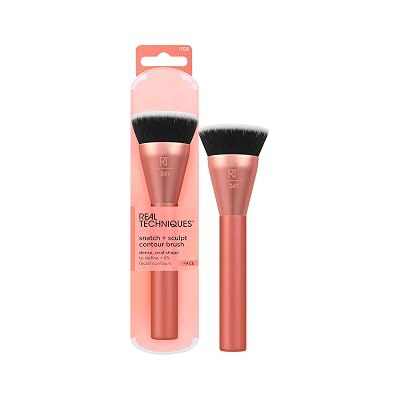
Real Techniques’ Snatch and Sculpt brush is the pick for people who want definition rather than an all-over glow. The title describes it as a contour brush for a smooth, defined finish, which means a more compact head that can lay bronzer into the hollows of the cheeks, along the jaw and at the temples.
It works best with a cool-toned contour or a light hand of bronzer, then blended upwards with a larger brush if you want softness. It is the opposite of the #4 Jessup, which diffuses colour widely. Beginners may find a defined line harder to blend, so the #1 Laura Geller angled kabuki is the gentler place to start.
- Contour-shaped brush head
- Designed for smooth, defined contour
- Suits bronzer and contour products
- From a widely stocked brush brand
Pros
- Precise placement
- Good for sculpted looks
- Pairs well with a fluffy brush
Cons
- Less forgiving for beginners
- Not for all-over bronzing
Skip it if: Skip it if you just want a quick, soft warmth; the #4 Jessup suits that better.
Check Price on AmazonHow We Chose These Products
We shortlisted bronzer brushes from Amazon listings that are highly rated by a large number of shoppers, favouring established makeup brush brands and fuller-featured designs with clear details on shape, bristles and suitable formulas. We then checked each product’s listed features against the guidance in this post, including the AAD’s reminder that makeup does not replace sunscreen.
These are research-based picks, not hands-on lab tests. We did not use these brushes ourselves, so rankings reflect listing detail, shape and who each brush suits rather than personal results. We excluded brushes sold mainly for foundation or large body tanning mitts, and removed near-identical listings.
- Strong ratings from a large number of shoppers
- Established brands and fuller-featured designs preferred
- Listed features checked against the guidance cited here
- Products with thin or unclear listings excluded or ranked lower
- No more than two brushes per brand
Bronzer Brush Shapes Compared
The shape of the head decides where the bronzer lands and how soft the edges look. Most people only need one or two shapes, so start with the one that suits the way you like to wear bronzer.
| Brush shape | Best for | Finish | Ease of use |
|---|---|---|---|
| Large fluffy round or domed | All-over warmth on forehead, cheeks and jaw | Soft, diffused | Very easy |
| Angled | Following cheekbones, temples and jawline | Soft but more defined | Easy |
| Tapered or flame-shaped | Placing colour precisely, then blending | Controlled | Moderate |
| Kabuki (short, dense) | Buffing powder or cream into skin | Even, skin-like | Easy |
| Flat-top dense | Cream and liquid bronzer | Seamless, blended | Moderate |
| Fan | Very light dusting | Sheer | Easy, but low payoff |
If you want a single brush, a large domed or softly angled head is the safest bet. It covers the classic 3 shape along the temple, cheekbone and jaw in a few strokes and is hard to get wrong. Tapered and flat-top brushes are useful second brushes once you know how you like to wear bronzer.
Synthetic vs Natural Bristles
Bristle material affects how much product the brush picks up, how it feels on the skin and how well it survives washing. Modern synthetic fibres have closed most of the gap that once made natural hair the default for powder.
| Feature | Synthetic bristles | Natural hair bristles |
|---|---|---|
| Works with | Powder, cream and liquid | Mainly powder |
| Pickup | Controlled, less powder | Picks up and diffuses more powder |
| Softness | Soft in good quality brushes | Very soft when well made |
| Washing | Dries fast, keeps shape | Slower to dry, can lose shape |
| Hygiene | Absorbs less product and oil | Can hold more product |
| Suits | Beginners, cream users, vegans | Powder-only users who want a very airy finish |
For most people, synthetic is the practical choice. It works with every bronzer texture, rinses clean more easily and does not rely on animal hair. If a brush does not state what the bristles are made of, treat that as a sign to look elsewhere.
Density, Size and Handle: Features That Matter
Beyond shape and bristle type, a few details make the difference between a brush you reach for daily and one that stays in the drawer.
- Density: medium density suits powder; very loose bristles scatter product, while very tight ones deposit too much at once.
- Head size: large enough to cover the cheekbone in two or three strokes; small heads create stripes.
- Softness: bristles should feel soft when brushed across the inside of your wrist, with no scratchy tips.
- Ferrule: the metal band should be firmly crimped so the head does not wobble or detach after washing.
- Handle length: a medium handle gives control; very short handles suit travel and buffing.
- Shape memory: the head should spring back to shape after you press it and after it dries.
Brush names such as bronzer, powder, blush or contour are marketing labels, not standards. A large powder brush can make an excellent bronzer brush, so judge the head by size, shape and density rather than the name.
Matching the Brush to Powder, Cream or Liquid Bronzer
Your bronzer formula matters as much as the brush. Using the wrong pairing is a common cause of patchy, streaky or muddy results.
- Pressed or loose powder: a fluffy domed or angled brush, tapped to remove excess before applying.
- Baked powder: a slightly denser fluffy brush to pick up enough colour from the firm surface.
- Cream stick or pot: a dense flat-top, kabuki or tightly packed synthetic brush, pressed and buffed rather than swept.
- Liquid or drops: a dense synthetic buffing brush, applied in thin layers and blended quickly before it sets.
- Layering cream then powder: use a dense brush for the cream and a separate fluffy brush for the powder on top.
If you like cream bronzer, our guide to layering cream and powder products explains how to stack them so they do not lift or look cakey.
What to Avoid When Buying a Bronzer Brush
A poorly made brush can ruin even a good bronzer. These are the most common warning signs.
- Stiff or scratchy bristles that leave red marks or feel prickly on the cheek.
- Heavy shedding on the first use or first wash.
- Heads that are too small, which create harsh stripes rather than a soft glow.
- Very dense heads for powder, which grab too much colour at once.
- Loose ferrules or glued heads that come apart when wet.
- Strong chemical or glue smells that do not fade after washing.
- Large bundles of mixed brushes when you only need one good bronzer brush.
Also be wary of claims that a brush is antibacterial or never needs washing. Any brush collects oil, skin cells and product, and regular cleaning is still necessary.
How to Choose for Your Face Shape and Skill Level
There is no single perfect brush for everyone, but a few simple rules help narrow it down.
- Beginners: a large, fluffy, domed brush is the most forgiving.
- Defined cheekbones or a sculpted look: an angled brush.
- Small face or narrow cheekbones: a medium head rather than an extra-large one.
- Round face wanting some definition: an angled or tapered brush placed under the cheekbone.
- Dry or mature skin: a soft synthetic brush with cream or satin bronzer, buffed lightly.
- Oily skin: a fluffy brush with powder bronzer over a set base.
If your bronzer or contour tends to go on in patches, the brush and blending technique are often the cause. Our guide on how to fix patchy contour covers the most common fixes.
How to Apply Bronzer With a Brush
These steps work with a fluffy or angled brush and a powder bronzer. For cream, press and buff instead of sweeping.
Start with a finished base
Apply sunscreen, then foundation or tinted base, and let it settle.
Load lightly
Swirl the brush gently in the bronzer and tap off the excess on the back of your hand.
Find the high points
Place colour where the sun would naturally hit: temples, upper cheekbones and along the jaw.
Use the 3 shape
Sweep from the temple down to the cheekbone and along the jaw, on each side.
Blend the edges
Use small circles with the clean part of the brush until no line remains.
Build slowly
Add a second light layer only where you want more warmth.
Check in daylight
Look in natural light and soften any stripes before you finish.
If you have applied too much, go over the area with a clean fluffy brush or a little translucent powder to soften it rather than adding more foundation.
How to Clean and Care for a Bronzer Brush
A clean brush applies more evenly and is kinder to your skin. Built-up bronzer and oil make the bristles clump, which leads to patchy application.
- Wash with lukewarm water and a gentle shampoo or brush cleanser.
- Hold the brush bristles down so water does not run into the ferrule and loosen the glue.
- Rinse until the water runs clear, then gently squeeze out excess water.
- Reshape the head and dry the brush flat or bristles down, never upright.
- Store it dry and covered from dust between uses.
Our guide on how often makeup brushes need to be cleaned covers how often to wash brushes used with powder and cream products.
Do not share bronzer brushes, and wash them more often if you have acne or a skin infection. Stop using a brush that scratches or irritates your skin, and replace brushes that shed heavily, smell or have lost their shape.
Dos and Don’ts
Worth Doing
- Choose a large, soft head for powder bronzer
- Tap off excess product before applying
- Use a denser brush for cream bronzer
- Wash the brush regularly
- Apply sunscreen before any bronzer
Skip It
- Use a tiny or stiff brush for bronzer
- Press hard or scrub the skin
- Dry brushes upright so water seeps into the handle
- Share brushes with friends
- Rely on bronzer for sun protection
Honest Limits
A better brush makes bronzer easier to blend, but it cannot fix a shade that is too dark, too orange or too cool for your skin. If the colour looks muddy or obvious no matter which brush you use, the bronzer itself is usually the problem.
Expensive brushes are not always better. Many affordable synthetic brushes perform very well, and the best test is simple: soft bristles, no shedding, a head that keeps its shape, and an even, blended result in daylight.
Brushes also wear out. Bristles fray, heads splay and ferrules loosen with repeated washing, so even a well-made brush will eventually need replacing. There is no fixed lifespan; replace it when it sheds, scratches, smells after washing or no longer blends evenly. Buying one good brush and caring for it properly usually beats owning a drawer full of brushes that are rarely cleaned.
When to Get Professional Advice
- Your skin itches, stings or breaks out where you apply bronzer.
- You notice small bumps or redness that follow the path of your brush.
- You have acne, rosacea or eczema and struggle to find products that do not irritate.
- A rash does not settle after you stop using a product.
This article is for general information only. Patch test new makeup, stop using any product or tool that irritates your skin, and see a dermatologist if a reaction persists.
Common Questions
What is the best bronzer brush overall?
The Laura Geller Retractable Angled Kabuki suits most people because it works with powder, cream and liquid.
Is an angled brush good for bronzer?
Yes, it gives more control along the cheekbone and jaw.
Is the most expensive bronzer brush worth it?
Not always. The Laura Geller adds a retractable cover, but the Jessup MUL01 gives a soft powder finish just as well.
What brush is best for cream bronzer?
A dense flat-top or kabuki synthetic brush.
Are synthetic or natural bristles better for bronzer?
Synthetic works for all formulas and is easier to clean.
Why does my bronzer look streaky?
Usually too much product, a small brush or not enough blending.
Can I use the same brush for bronzer and blush?
Yes, but clean it between colours for a true shade.
How often should I wash my bronzer brush?
Regularly, and more often if you use cream or have acne.
Which bronzer brush is best for liquid bronzer?
The DUcare dual-ended kabuki or the Keshima dual-ended brush suit liquid and cream formulas best.
Does bronzer protect from the sun?
No, always wear sunscreen underneath.
Where This Leaves You
The best bronzer brush is usually a large, soft, medium-density synthetic brush with a domed or angled head, paired with a denser brush if you use cream bronzer.
Apply bronzer lightly over sunscreen, blend the edges well, and keep the brush clean so it keeps giving a soft, even glow.
Our top pick: Laura Geller Retractable Angled Kabuki Brush
The Laura Geller Retractable Angled Kabuki takes the top spot because its angled, no-shed head works with powder, cream and liquid bronzer and folds away safely in a makeup bag. Choose the Jessup Large Fluffy Powder Brush instead if you want the softest, most diffused all-over warmth, or the Real Techniques Angled Kabuki if you bronze your body as well as your face.
Check Price on Amazon
Written by
Registered pharmacist and founder of Facial Adviser. Rakib's pharmacy training covers how skincare actives work and interact; a later course in cosmetology turned that into a focus on facial treatments and skincare products. He plans, researches and edits every guide on the site and checks health claims against sources such as the American Academy of Dermatology, the FDA and the NIH. He is not a dermatologist; see the Editorial Policy and Medical Disclaimer.
About · Editorial policy · How we choose products · Medical disclaimer · Contact
Keep reading: Makeup brushes and tools
- 10 Best Makeup Brush Sets (2026): Soft, Well-Made Kits for Every Look
- 10 Best Eyeshadow Brushes (2026): Blend, Pack and Smoke Like a Pro
- 10 Best Body Exfoliating Brushes (2026): Smoother Skin, Gently
- 10 Best Makeup Sponges (2026): Smoother Base, Less Wasted Product
- 10 Best Powder Brushes (2026): Softer Setting, No Cakey Finish
- 10 Best Concealer Brushes (2026): Precise Cover, Seamless Blend