10 Best Makeup Brush Sets (2026): Soft, Well-Made Kits for Every Look
A makeup brush set looks like the easy answer: one purchase, every brush you could need. In practice, many sets are padded with shapes you will never use, while missing the two or three that do most of the work. This list covers 10 options, from compact face kits to full travel sets, with notes on who each suits and what good quality looks like.
The best makeup brush set for most people is a compact set of about six to twelve soft synthetic brushes that covers the essentials: a foundation brush, a concealer brush, a large powder brush, a blush brush, a flat eyeshadow shader, a fluffy blending brush and a small angled brush for brows or liner. Synthetic bristles work with powders, creams and liquids and are easy to clean. Look for tight, well-glued ferrules, bristles that do not shed and a case that lets brushes dry. Avoid huge sets padded with near-duplicate shapes, scratchy bristles and brushes with a lingering chemical smell.
In short: fewer, better brushes beat a big set, and the essentials plus good build quality are what to look for.
The US Food and Drug Administration advises washing your hands before applying cosmetics and not sharing them, since you may be sharing germs, in its guidance on microbiological safety and cosmetics. Brushes are part of that picture, because they carry product, oil and microbes from one use to the next.
Below you will find the ten picks, how we chose them, what a good set includes, how to judge quality and how to use, clean and store your brushes.
Shopping these picks?
Amazon Prime members get fast, free shipping on eligible items, plus Prime Video, Amazon Music and member deals. New members can start with a free trial.
Start a free Prime trialAged 18 to 24? Prime for Young Adults comes with a longer free trial and a lower price after it.
Affiliate link: we may earn a commission at no extra cost to you.
As an Amazon Associate we earn from qualifying purchases. This does not change which products we include.


In Brief
- Nir Beauty 15-Piece Set is our top pick for covering every core face and eye brush with a cleaning guide included.
- Laura Geller 5-Piece Full Face Set is the best small kit for people who mainly want soft, dense face brushes.
- Jessup T500 is the most versatile, with double-ended brushes that give more shapes in fewer handles.
- Six to twelve well-chosen brushes cover almost every everyday look.
- Synthetic bristles suit powders, creams and liquids and are easy to wash.
- Check ferrules, shedding, smell and softness when a set arrives.
- Wash brushes regularly, dry them flat and never share them.
Contents
- The 10 Best Makeup Brush Sets Right Now
- How We Chose These Products
- What a Good Makeup Brush Set Should Include
- Starter, Everyday or Full Kit: Choosing the Set Size
- Synthetic vs Natural Bristles in a Set
- How to Judge Quality and What to Avoid
- Choosing a Set for Your Routine
- How to Use a Makeup Brush Set in the Right Order
- How to Clean and Store a Makeup Brush Set
- How Long a Brush Set Lasts
- Dos and Don’ts
- Honest Limits
- When to See a Dermatologist
- Frequently Asked Questions
- Where This Leaves You
The 10 Best Makeup Brush Sets Right Now
These ten sets were shortlisted from widely reviewed Amazon listings and ranked by how well they cover the core face and eye brushes, build details, storage and how clearly each seller explains what is inside. Each pick notes who it suits, its trade-offs and who should skip it.
| # | Product | Best For | Standout Feature | |
|---|---|---|---|---|
| 1 | Nir Beauty 15-Piece Brush Set, Black and Rose Gold | A complete face and eye kit | Full core kit plus a cleaning guide | View |
| 2 | Laura Geller 05 Full Face Brush Set, 5-Piece | Base, blush and bronzer only | Five dense vegan face brushes | View |
| 3 | Jessup T500 Double-Ended Brush Set, 10-Piece | More shapes in fewer handles | Fourteen brush heads on ten handles | View |
| 4 | BS-MALL Kabuki and Eyeshadow Brush Set with EVA Case | Packing a full kit safely | Hard EVA case keeps brushes apart | View |
| 5 | DUcare 22-Piece Brush Set with Foldable Bag | Enthusiasts who want every shape | Twenty-two brushes, FSC-certified wood handles | View |
| 6 | Jessup T271 Vegan Face and Eye Brush Set, 21-Piece | Gifting a full brush collection | Boxed full set of vegan synthetic brushes | View |
| 7 | EIGSHOW 18-Piece Brush Set with Cylinder Holder | Dressing tables and upright storage | Labelled brushes with a two-cup holder | View |
| 8 | e.l.f. Ten Out Of Ten Brush Set, 10-Piece | Learning a simple full-face routine | Well-known brand, sponge included | View |
| 9 | Docolor 17-Piece Brush Set with Bag and Sponge | A kit with bag, sponge and protector | Numbered brushes plus sponge and protector | View |
| 10 | LORYP 18-Piece Labelled Face and Eye Brush Set | Beginners who want written guidance | Numbered, named brushes with user guide | View |
Nir Beauty 15-Piece Brush Set, Black and Rose Gold

Best for: A complete face and eye kit
The Nir Beauty set earns the top spot because its fifteen brushes line up closely with the core list in this guide: foundation, powder, blending and contour shapes for the face, plus eye brushes for shading and blending. That means few filler pieces and fewer gaps to fill later, which is the main failing of cheaper, larger kits on this list.
It also includes a printed brush and cleaning guide with tips, useful if you are not sure which brush does what. The seller describes the bristles as super-soft and backs the set with a satisfaction promise, which lowers the risk of a gift that misses. It is not as compact as the #2 Laura Geller kit, and the listing gives fewer build details than some rivals.
- Fifteen face and eye brushes in one set
- Foundation, powder, blending and contour shapes included
- Printed guide covering brush use and cleaning
- Seller satisfaction promise for gift buyers
Pros
- Covers the core brushes with little padding
- Helpful guide for learning each brush
- Good choice as a gift
Cons
- Bulkier than a small face-only kit
- Listing says less about bristle material than some picks
Skip it if: Skip it if you only wear base makeup; the smaller Laura Geller face set is more focused.
Check Price on AmazonLaura Geller 05 Full Face Brush Set, 5-Piece

Best for: Base, blush and bronzer only
The Laura Geller set is the pick for people who wear mostly face products and want fewer, better brushes. Its five synthetic, vegan brushes include an angled blush brush, a bronzer brush and an airbrush-style buffing brush, plus a retractable brush that suits a handbag for touch-ups during the day.
The listing says the brushes work with liquid, cream and powder products and are built to resist shedding, with a high bristle count. That focus is also its limit: there are no dedicated eye brushes, so anyone who wears eyeshadow will need another set such as the #3 Jessup. It is the smallest kit here, which makes it easy to keep clean and dry.
- Five synthetic, vegan face brushes
- Angled blush, bronzer and buffing brush shapes
- Suited to liquid, cream and powder formulas
- Includes a retractable brush for touch-ups
Pros
- Small, focused kit with no filler
- Dense brushes for buffing base
- Easy to wash and store
Cons
- No eye brushes
- Fewer pieces than any other pick
Skip it if: Skip it if you wear eye makeup every day; the Nir or Jessup sets cover the eyes too.
Check Price on AmazonJessup T500 Double-Ended Brush Set, 10-Piece

Best for: More shapes in fewer handles
The Jessup T500 is the most versatile set here because several brushes are double-ended, giving fourteen heads on ten handles. Three are face brushes, including a concealer brush, and seven are for the eyes, with a range of eyeshadow brushes, a two-sided brow brush and an eyeliner brush, so both face and eye looks are covered.
The double-ended design saves space in a bag and cuts down the number of handles to wash. The trade-off is that you clean both ends each time, and a dirty end can touch other brushes in a cup. It is lighter on face brushes than the #1 Nir set, so people who buff foundation and set powder daily may want one more large brush.
- Ten brushes with fourteen heads in total
- Three face brushes including a concealer brush
- Seven eye brushes, including brow and liner shapes
- Ultra-soft synthetic fibres
Pros
- Space-saving double-ended design
- Good spread of eye brushes
- Suits face and eye looks
Cons
- Both ends need cleaning each time
- Fewer large face brushes than the top pick
Skip it if: Skip it if you mainly need large powder and foundation brushes; the DUcare or Nir sets have more.
Check Price on AmazonBS-MALL Kabuki and Eyeshadow Brush Set with EVA Case

Best for: Packing a full kit safely
The BS-MALL set is the one to pick if your brushes spend a lot of time in a suitcase. It comes with a durable EVA makeup bag that keeps each brush in its own place, so bristles are less likely to be bent or pick up dirt from other items, which is a common way brush heads lose their shape.
Inside is a full kit with a kabuki and powder brush, a foundation brush, a contour brush, a concealer brush and several eyeshadow sizes plus an angled brush. It covers more face shapes than the #3 Jessup set. The listing is written in heavy marketing language, so judge softness and shedding when it arrives, and let brushes dry fully before zipping the case.
- Kabuki, powder, foundation and contour brushes
- Several eyeshadow sizes plus an angled brush
- Concealer brush for detailed coverage
- Durable EVA travel case
Pros
- Protective case for travel
- Covers face and eyes
- Good range of eyeshadow sizes
Cons
- Closed case can trap moisture if brushes go in damp
- Listing gives few material details
Skip it if: Skip it if your brushes never leave home; an open holder like the EIGSHOW set dries brushes better.
Check Price on AmazonDUcare 22-Piece Brush Set with Foldable Bag

Best for: Enthusiasts who want every shape
The DUcare set is the largest kit on this list, with twenty-two brushes covering foundation, powder, highlighter, blush and a wide spread of eyeshadow shapes for the lid, crease and outer corner. It suits people who enjoy varied looks, or who want separate brushes for light and dark colours, which saves washing between shades and keeps each colour cleaner.
Its handles are made from FSC-certified wood, which may appeal if you care about sourcing, and the foldable bag keeps every brush in its own slot. As this guide explains, big sets often include near-duplicate shapes, and that is likely here too, so a beginner may use only half. For a smaller kit with similar coverage, the #1 Nir set is simpler.
- Twenty-two brushes for face and eyes
- Foundation, powder, highlighter and blush shapes
- FSC-certified wooden handles
- Foldable bag with individual slots
Pros
- Very wide range of shapes
- Room to keep brushes per colour
- Organised travel bag
Cons
- Likely includes near-duplicate shapes
- More brushes to wash and dry
Skip it if: Skip it if you want a minimal routine; the Laura Geller or e.l.f. sets are far simpler.
Check Price on AmazonJessup T271 Vegan Face and Eye Brush Set, 21-Piece

Best for: Gifting a full brush collection
The Jessup T271 is a full twenty-one brush collection that arrives in a cardboard gift box, which makes it an easy present for someone building their first proper kit. The seller describes it as cruelty-free with fine, soft synthetic fibres designed not to shed, and includes a sculpted multi-purpose brush for base and contouring.
The listing notes the brushes can be washed in warm water with a gentle shampoo, which fits the cleaning routine in this guide. Compared with its sister set at #3, it has single-ended brushes and many more pieces, so it is bulkier and has no travel case. It is the second Jessup pick, and the two suit different buyers.
- Twenty-one face and eye brushes
- Soft, vegan synthetic fibres designed not to shed
- Sculpted multi-purpose brush for base and contour
- Gift box packaging
Pros
- Ready to give as a gift
- Large range of face and eye shapes
- Easy to wash with gentle shampoo
Cons
- No travel case or holder
- Bulkier than the double-ended #3 set
Skip it if: Skip it if you travel often; the BS-MALL or DUcare sets come with cases.
Check Price on AmazonEIGSHOW 18-Piece Brush Set with Cylinder Holder

Best for: Dressing tables and upright storage
The EIGSHOW set stands out for storage. It comes with a cylinder holder with two cups, so dry brushes can stand upright on a dressing table with air around the bristles, which this guide recommends over closed cases once brushes are completely dry. Each brush is labelled, making it easier to find the right one.
Its eighteen synthetic brushes cover eyeshadow, foundation and bronzer, and the seller says they are designed to be lightweight and easy to handle. The holder is not for wet brushes, which should dry flat first. It is less travel-friendly than the #4 BS-MALL case, and the listing is light on exact brush names.
- Eighteen synthetic face and eye brushes
- Each brush labelled for easy use
- Cylinder holder with two cups
- Lightweight handles
Pros
- Upright storage with airflow
- Labels help beginners
- Covers face and eyes
Cons
- Holder is not suited to travel
- Listing gives few brush-by-brush details
Skip it if: Skip it if you need a case for travel; the BS-MALL or Docolor sets suit that better.
Check Price on Amazone.l.f. Ten Out Of Ten Brush Set, 10-Piece

Best for: Learning a simple full-face routine
The e.l.f. Ten Out Of Ten set is the easiest place to start. It gathers popular shapes into one kit: five face brushes and a makeup sponge for base and blending, plus four eye brushes for shadow, brows and definition, which matches the everyday set size recommended in this guide.
The listing says the brushes work with powder, cream and liquid formulas, and the included sponge lets you try both application styles. It is smaller than the #5 DUcare kit, so there are fewer spare brushes per colour, and the listing says little about bristle material. For a first set from a widely known brand, it is a sensible, uncomplicated choice.
- Five face brushes and a makeup sponge
- Four eye brushes for shadow, brows and detail
- Works with powder, cream and liquid
- Ten pieces in total
Pros
- Simple, beginner-friendly selection
- Sponge included for base
- Well-known brand
Cons
- Fewer eye brushes than larger kits
- No case or holder mentioned
Skip it if: Skip it if you do detailed eye looks; the Jessup T500 or DUcare sets have more eye shapes.
Check Price on AmazonDocolor 17-Piece Brush Set with Bag and Sponge
Best for: A kit with bag, sponge and protector
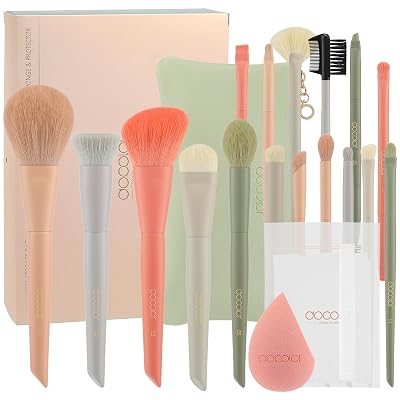
The Docolor set suits buyers who want the extras in one box. Alongside seventeen numbered face and eye brushes, it includes a makeup bag, a makeup sponge and a brush protector, which helps keep bristle heads in shape once they are dry. The numbering links each brush to its purpose, handy while learning.
The seller describes the bristles as vegan synthetic fibre. It is similar in size to the #7 EIGSHOW set but trades the upright holder for a bag, so it travels more easily. As with any kit this size, some brushes will overlap, and extra accessories mean more items to keep clean between uses.
- Seventeen numbered face and eye brushes
- Vegan synthetic bristles
- Makeup bag, sponge and brush protector included
- Suited to face and eye makeup
Pros
- Useful extras in one box
- Numbered brushes are easy to learn
- Bag makes it portable
Cons
- Some brush shapes likely overlap
- Sponge needs frequent washing and replacing
Skip it if: Skip it if you prefer a small set with no extras; the Laura Geller kit is more focused.
Check Price on AmazonLORYP 18-Piece Labelled Face and Eye Brush Set
Best for: Beginners who want written guidance
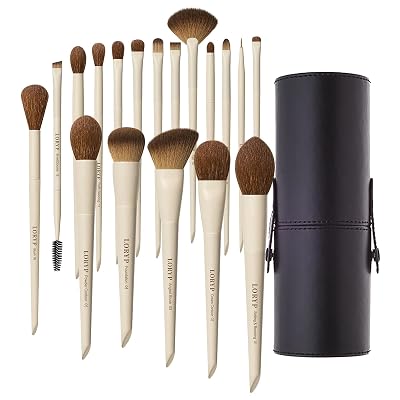
The LORYP set is built around clarity. Its eighteen brushes, six for the face and twelve for detailed work, are each numbered and named, and a user guide explains how to use them. That makes it a good match for someone who wants to learn techniques step by step alongside the order in this guide.
The seller describes the bristles as vegan and cruelty-free and the handles as lightweight birch wood. It is a less established brand than e.l.f. at #8, and the listing does not mention a case, so plan somewhere dry and airy to store the brushes. It ranks last because the listing is thinner on build details than the picks above it.
- Eighteen brushes: six face and twelve detail
- Each brush numbered and named
- User guide explains how to use each brush
- Vegan bristles and birch wood handles
Pros
- Very clear labelling
- Guide helps beginners
- Many detail brushes for eyes
Cons
- Less established brand
- No case or holder mentioned
Skip it if: Skip it if you already know your brushes; the Nir or Jessup sets offer more for experienced users.
Check Price on AmazonHow We Chose These Products
We shortlisted makeup brush sets from Amazon listings that are highly rated by a large number of shoppers, favouring established brands and fuller-featured sets that cover both face and eye brushes, use synthetic bristles and include storage. We then checked each product’s listed features against the hygiene and allergy guidance cited in this post, including the FDA’s advice on cosmetic hygiene and not sharing tools.
These are research-based picks, not hands-on lab tests. We did not wash, weigh or wear these brushes ourselves, so rankings reflect listing detail, the mix of brush shapes, build and storage rather than personal results. Where a listing is vague about bristle material or contents, we say so.
- Strong ratings from a large number of shoppers
- Established brands and fuller-featured sets preferred
- Core face and eye brushes checked against each listing
- Listed features compared with the hygiene guidance cited here
- Sets with thin or unclear listings excluded or ranked lower
What a Good Makeup Brush Set Should Include
Most everyday makeup uses the same handful of brushes. A good set includes these, and anything beyond them is optional.
| Brush | Area | Job | Essential? |
|---|---|---|---|
| Foundation brush (flat-top, kabuki or tapered) | Face | Applies and buffs liquid or cream foundation | Yes |
| Concealer brush | Under-eyes, spots | Places and blends concealer precisely | Yes |
| Large powder brush | Face | Sets makeup with a light layer of powder | Yes |
| Blush brush | Cheeks | Applies blush or bronzer | Yes |
| Flat shader brush | Eyelid | Packs eyeshadow onto the lid | Yes |
| Fluffy blending brush | Crease | Softens edges between shades | Yes |
| Angled brush | Brows, lash line | Fills brows or applies shadow liner | Useful |
| Highlighter or fan brush | Cheekbones | Places highlighter | Optional |
| Pencil or smudge brush | Lash line | Smokes out liner and detail | Optional |
| Lip brush | Lips | Precise lipstick edges | Optional |
If a set is missing a foundation or blending brush, it is likely to leave you buying extras. Check that the brush sizes suit your face too: very large eye brushes spread shadow too widely on small lids. If it contains three almost identical fluffy brushes, the extra pieces add little.
Starter, Everyday or Full Kit: Choosing the Set Size
Set size should follow how much makeup you wear and how many techniques you use.
| Set size | Typical contents | Who it suits |
|---|---|---|
| Starter (5 to 7 brushes) | Foundation, concealer, powder, blush, shader, blender | Beginners and minimal makeup routines |
| Everyday (8 to 12 brushes) | Starter set plus angled, crease and detail brushes | Most people who wear full face and eye makeup |
| Full kit (13 to 20 brushes) | Everyday set plus specialist face and eye shapes | Enthusiasts and people who do varied looks |
| Very large (over 20 brushes) | Often includes many near-duplicates | Rarely needed outside professional work |
Professionals use large kits because they need clean brushes for many clients in a row, not because every look needs twenty shapes. For personal use, a smaller set of better brushes is usually more useful. You can always add a single specialist brush later once you know which techniques you enjoy, which is cheaper than paying for a large kit up front and discovering that half of it stays in the case.
Synthetic vs Natural Bristles in a Set
Most modern sets are fully synthetic, and for good reason.
- Synthetic bristles work with powder, cream and liquid products.
- They absorb little product, so less foundation and concealer is wasted.
- They dry faster after washing and keep their shape.
- They contain no animal hair, which suits vegans and people sensitive to animal hair.
- Natural hair can feel softer with powders but soaks up liquids and needs gentler cleaning.
Labels such as professional, premium or vegan describe marketing or materials, not quality. A set can be fully synthetic and still poorly made, so judge it by softness, shape, shedding and the strength of each ferrule.
How to Judge Quality and What to Avoid
Quality problems usually show within the first few uses and washes. Check each brush when your set arrives, and return it if it fails.
- Shedding: gently tug the bristles; a few loose hairs at first is normal, constant shedding is not.
- Ferrule: the metal part should be firmly crimped and should not twist or rattle.
- Softness: brush the back of your hand; scratchy bristles will drag on the face.
- Shape: bristles should be even and spring back into shape after pressing.
- Smell: a strong chemical or glue smell that does not fade after washing is a warning sign.
- Handles: they should not crack, peel or lose their finish when wiped.
- Case: a hard case or roll with some airflow protects bristles and lets them breathe.
Avoid sets that promise dozens of brushes at a very low cost if the individual brushes feel rough or flimsy. You will likely replace most of them within months. It is also worth avoiding sets with sharp or rough ferrule edges, which can scratch skin near the eyes.
Choosing a Set for Your Routine
The right set depends on what you actually wear. Think about your routine before comparing sets, rather than choosing by the number of pieces.
- Minimal makeup: a small face set with a foundation or buffing brush, a concealer brush and a powder brush is often enough.
- Mostly eye makeup: an eye set with a shader, two blending brushes, a crease brush, a pencil brush and an angled brush.
- Full face every day: an everyday set of eight to twelve brushes covering face and eyes.
- Cream and liquid products: fully synthetic, denser brushes that do not soak up product.
- Sensitive skin: extra-soft synthetic bristles and a simple set you can wash often.
- Travel: a short-handled set in a ventilated roll or case that lets damp brushes breathe.
If you already own a few favourite brushes, compare them with the set’s contents first. Buying a set only to fill one or two gaps is rarely good value, and single brushes chosen for the job often perform better.
How to Use a Makeup Brush Set in the Right Order
Using brushes in a logical order keeps colours clean and your base smooth.
Start with clean skin and clean brushes
Apply skincare and sunscreen and let them settle; check brushes are fully dry.
Do eyes first if using dark shades
Use the shader and blending brushes first so fallout can be wiped away before base.
Apply foundation
Use the foundation brush in small buffing circles or downward strokes from the centre of the face.
Conceal where needed
Use the concealer brush to tap product onto under-eyes and spots.
Set with powder
Tap off excess and press powder onto the T-zone with the large powder brush.
Add colour
Use the blush brush for blush or bronzer and a small brush for highlighter.
Finish brows and details
Use the angled brush for brows and a clean spoolie or blender to soften edges.
Keep one brush for each type of product. Using the blush brush for bronzer or the foundation brush for concealer without cleaning it in between muddies colours and shortens the life of the bristles.
Our guide on how to properly put on face makeup explains each step of a full face in more detail.
How to Clean and Store a Makeup Brush Set
Brushes collect product, oil and dead skin cells, and damp or dirty bristles give microbes a place to grow. The FDA notes that some microorganisms grow faster in warm or damp storage conditions.
- Wash foundation and concealer brushes weekly, or after using them on breakouts.
- Wash powder, blush and eye brushes every one to two weeks.
- Wet only the bristles, lather with a gentle cleanser and rinse until clear.
- Keep water away from the ferrule to protect the glue.
- Reshape and dry flat or bristles down, never upright while wet.
- Store dry brushes in an open cup or ventilated case away from bathroom steam.
Never share brushes, and wash any brush used on skin with an active breakout, cold sore or infection before using it again. Stop using eye brushes during an eye infection, and see a doctor if you have eye pain, discharge or swelling.
Our guide on how often makeup brushes need to be cleaned gives a detailed schedule for each type.
How Long a Brush Set Lasts
A well-made set can last several years with gentle care. Individual brushes need replacing when they shed heavily, lose their shape, feel scratchy, smell after washing or develop loose ferrules.
You do not need to replace the whole set when one brush wears out. Replace the brush you use most, and keep the rest in rotation. If several brushes fail within weeks, the set was probably poorly made, and buying individual quality brushes may be better value in the long run.
Dos and Don’ts
Try This
- Choose a set that covers the core brushes
- Check ferrules, shedding and softness on arrival
- Use one brush per product type
- Wash brushes regularly and dry them flat
- Store dry brushes with airflow
Avoid This
- Buy the biggest set just for the piece count
- Keep brushes that shed or scratch
- Share your brushes
- Soak handles and ferrules in water
- Store damp brushes in a closed case
Honest Limits
A good brush set makes makeup easier to apply, but it cannot make a poorly matched foundation or a patchy eyeshadow look good. Product choice, skin prep and technique usually matter more than the tools.
Price is also a weak guide to quality. Some affordable synthetic sets perform very well, while some expensive sets include shapes few people use. The best set is the one whose brushes you actually reach for every day and keep clean. A modest set used with care will outperform a luxury kit that sits unwashed in a drawer.
When to See a Dermatologist
- Your skin itches, reddens or breaks out after using makeup and brushes.
- You get repeated eye irritation or styes.
- Breakouts cluster where you apply foundation or blush.
- You react to many products and want to find the cause.
The FDA’s information on allergens in cosmetics explains that some people react to particular ingredients, so persistent reactions are worth checking.
This article is for general information and does not replace professional medical advice. Patch test new products, stop using anything that irritates your skin or eyes, and see a doctor or board-certified dermatologist for persistent problems.
Frequently Asked Questions
What brushes should be in a makeup brush set?
Foundation, concealer, powder, blush, flat shader, blending and angled brushes.
How many brushes do I really need?
Six to twelve covers most everyday looks.
Are synthetic brush sets good?
Yes, they suit all formulas and are easy to clean.
Is the most expensive brush set worth it?
Not always. The Nir Beauty set adds a cleaning guide and a satisfaction promise, but the e.l.f. Ten Out Of Ten set covers the essentials in fewer pieces.
How can I tell if a brush set is good quality?
Soft bristles, no heavy shedding, tight ferrules and no lingering smell.
Should I wash a new brush set before use?
Yes, a gentle wash removes dust and residue.
How often should I clean my brushes?
Face brushes weekly, others every one to two weeks.
Which brush set is best for beginners?
The e.l.f. Ten Out Of Ten set or the labelled LORYP set, since both keep the shapes clear and easy to learn.
Can I use a brush set with cream products?
Yes, if the brushes are synthetic.
Which brush set is best for travel?
The BS-MALL set with its EVA case or the DUcare set with its foldable bag keep brushes separated on the move.
Where This Leaves You
The best makeup brush set is a compact set of soft synthetic brushes that covers the essentials for face and eyes and is well made, with tight ferrules and bristles that do not shed; the Nir Beauty 15-piece set is our top pick overall.
Skip oversized sets padded with duplicates, use one brush per product type, and wash and dry your brushes regularly so they stay soft, hygienic and effective.
Our top pick: Nir Beauty 15-Piece Brush Set, Black and Rose Gold
The Nir Beauty 15-piece set takes the top spot because it covers every core face and eye brush without padding, adds a written brush and cleaning guide and comes with a satisfaction promise, which suits most buyers. Choose the Laura Geller 5-piece set instead if you only want a small, high-quality face kit, or the Jessup T500 if you want double-ended brushes that pack more shapes into fewer handles.
Check Price on Amazon
Written by
Registered pharmacist and founder of Facial Adviser. Rakib's pharmacy training covers how skincare actives work and interact; a later course in cosmetology turned that into a focus on facial treatments and skincare products. He plans, researches and edits every guide on the site and checks health claims against sources such as the American Academy of Dermatology, the FDA and the NIH. He is not a dermatologist; see the Editorial Policy and Medical Disclaimer.
About · Editorial policy · How we choose products · Medical disclaimer · Contact
Keep reading: Makeup brushes and tools
- How to Sanitize Makeup Tools: Brushes, Sponges, Curlers and More
- 10 Best Tools for Base Application (2026): Sponges and Brushes Compared
- Makeup Storage Temperature Tips: How Heat, Cold and Humidity Affect Makeup
- Are You Supposed to Wash Makeup Brushes Before Using Them?
- How Often Do Makeup Brushes Need to Be Replaced?