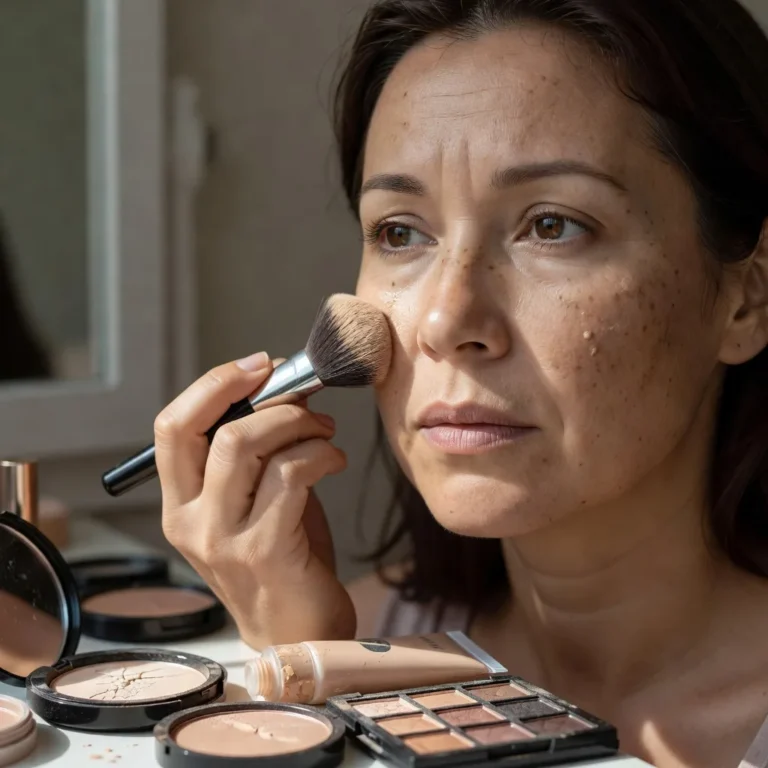
Makeup Storage Temperature Tips: How Heat, Cold and Humidity Affect Makeup
Most people keep makeup in the bathroom, a bag or a car without thinking about temperature. Yet heat, cold and humidity can change how products look and feel, shorten their life and in some cases make them less safe to use.
Part of our guide to makeup tools. Start with: 10 Best Makeup Brush Sets (2026): Soft, Well-Made Kits for Every Look
Makeup keeps best at a steady room temperature, roughly 15 to 25 degrees Celsius (59 to 77 degrees Fahrenheit), away from direct sunlight, heat sources and humidity. Heat softens lipsticks and balms, separates liquid foundations and speeds up the breakdown of preservatives and oils. Cold and freezing can thicken, split or crystallise creams and liquids. Humidity encourages microbes and makes powders cake. A cool, dry drawer or cupboard outside the bathroom is usually the best place for makeup. Avoid leaving products in cars, windowsills and steamy bathrooms, and keep caps tightly closed. A fridge is optional and only useful for a few products.
Good storage protects your money as well as your skin, since products that break down early have to be replaced sooner. A few simple changes are usually enough.
The FDA notes that cosmetics can deteriorate more quickly if they are stored improperly, for example in high temperatures, and that eye products in particular should not be kept longer than recommended.
This guide explains how temperature and humidity affect different products, the best places to store makeup, what to do when travelling and when to throw products away.
Shopping these picks?
Amazon Prime members get fast, free shipping on eligible items, plus Prime Video, Amazon Music and member deals. New members can start with a free trial.
Start a free Prime trialAged 18 to 24? Prime for Young Adults comes with a longer free trial and a lower price after it.
Affiliate link: we may earn a commission at no extra cost to you.
Recommended Storage Organisers and Travel Cases




In This Guide
- How Temperature and Humidity Affect Makeup
- The Best and Worst Places to Store Makeup
- Storage Tips by Product Type
- How to Set Up Safe Makeup Storage at Home
- Should You Store Makeup in the Fridge?
- Travel and Car Storage
- Storage, Hygiene and Shelf Life
- Adjusting Storage for Your Climate
- Signs Storage Has Damaged a Product
- Dos and Don’ts
- Honest Limits
- When to See a Doctor
- FAQ
- The Bottom Line
At a Glance
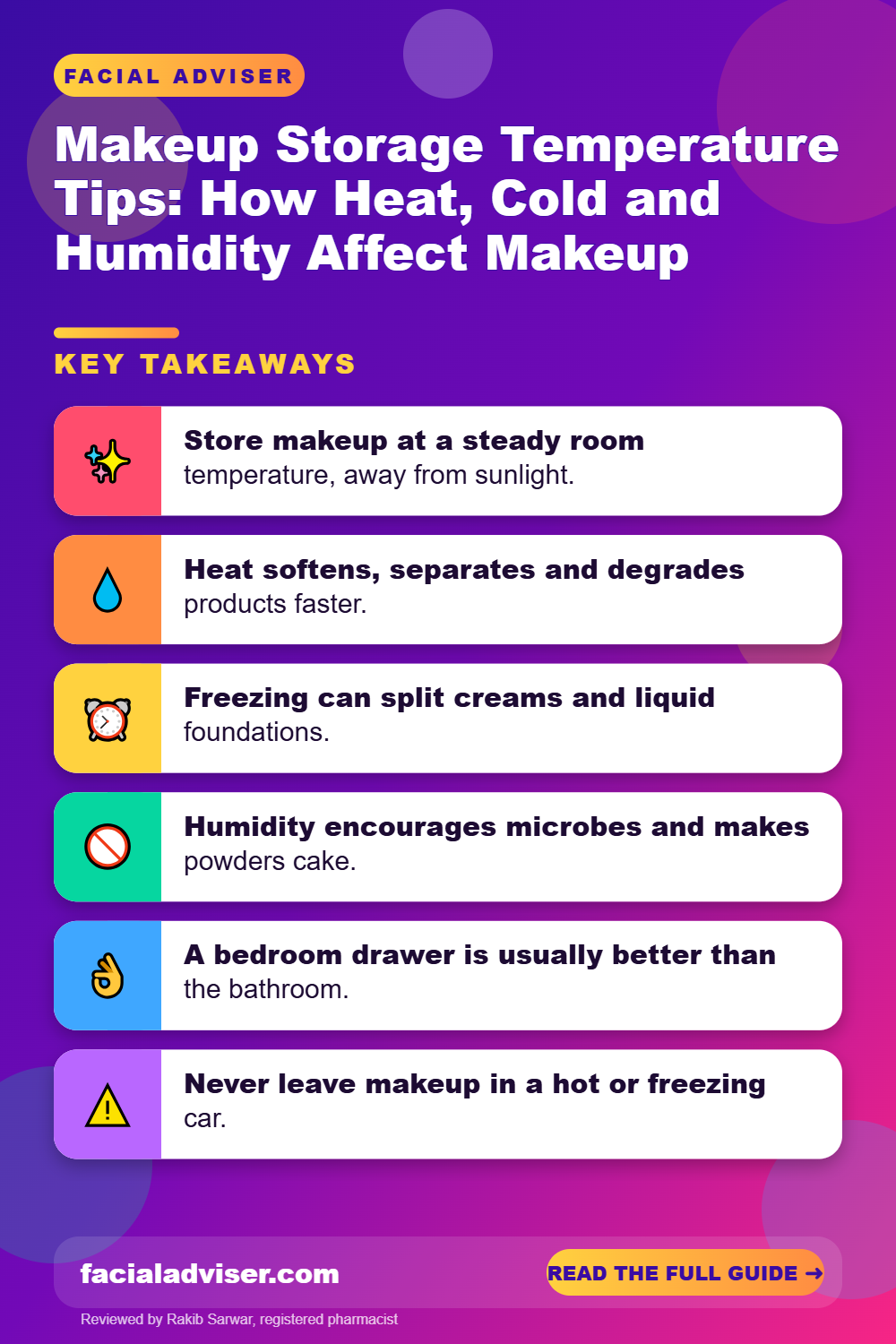
- Store makeup at a steady room temperature, away from sunlight.
- Heat softens, separates and degrades products faster.
- Freezing can split creams and liquid foundations.
- Humidity encourages microbes and makes powders cake.
- A bedroom drawer is usually better than the bathroom.
- Never leave makeup in a hot or freezing car.
- A fridge is optional and only helps a few products.
How Temperature and Humidity Affect Makeup
| Condition | What happens | Products most affected |
|---|---|---|
| Heat | Softens, melts, separates; speeds oxidation and preservative breakdown | Lipsticks, balms, liquid foundation, sunscreen |
| Direct sunlight | Heats products and can fade colours and degrade ingredients | Anything in clear packaging |
| Freezing | Ice crystals break emulsions; textures turn grainy or split | Creams, liquid foundation, mascara |
| Temperature swings | Repeated warming and cooling stresses formulas | Emulsions, balms |
| Humidity | Encourages mould and bacteria; powders cake and harden | Powders, sponges, open jars |
Temperature swings are often worse than a single warm day. A bathroom that heats up with every shower and cools down again several times a day puts constant stress on emulsions, waxes and preservatives. The damage is often gradual. A foundation kept in a warm bathroom may not look different after a week, but after a few months it may separate sooner, oxidise to a darker shade or develop an odd smell.
Our guide on why emulsions separate over time explains how heat and cold break down creams and liquid makeup.
The Best and Worst Places to Store Makeup
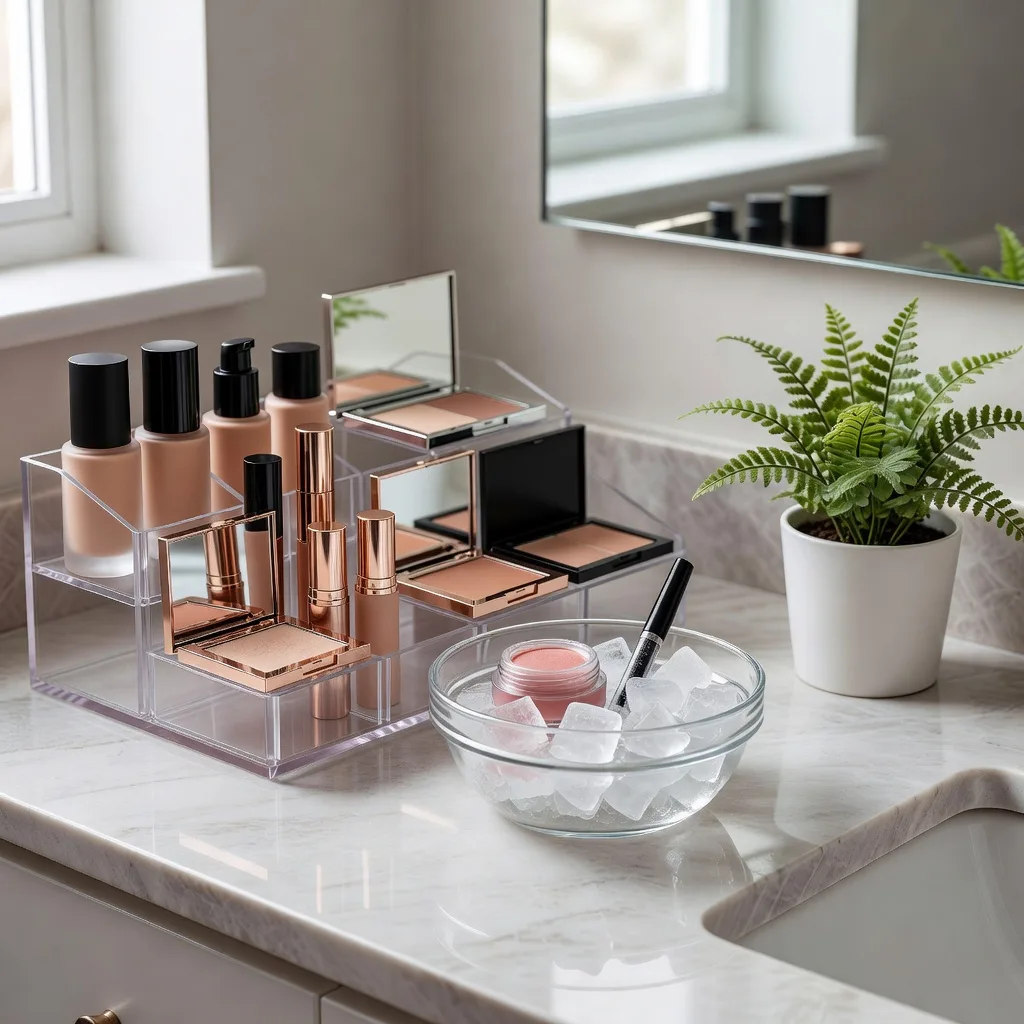
Best: a drawer, cupboard or closed organiser in a bedroom or dressing area. These spaces stay at a steady temperature, are dark and have lower humidity than a bathroom. Clear drawer dividers help you see what you have, so older products get used before newer ones. Acceptable: a bathroom cabinet away from the shower, if the room is well ventilated. Keep products closed and move heat-sensitive items elsewhere. Worst: open shelves near a shower or bath, windowsills, next to radiators or heaters, in a car and in bags left in hot or freezing places.Clear packaging looks nice on display, but light can degrade some ingredients and colours. Keep products with clear packaging in a closed drawer or cabinet.
Storage Tips by Product Type
| Product | Ideal storage | Watch out for |
|---|---|---|
| Liquid foundation and concealer | Cool, dark drawer, cap tightly closed | Separation, darkening, odd smell |
| Lipstick and balms | Away from heat and sunlight | Melting, sweating beads, softening |
| Mascara and liquid liner | Cool, dry, cap tightly closed | Drying out, contamination |
| Powders and eyeshadows | Dry place, lids closed | Caking, hard pan, mould in humid rooms |
| Cream blush and highlighter | Cool, closed | Softening, separation |
| Sunscreen and SPF makeup | Below about 25 degrees Celsius, out of the sun | Reduced protection if overheated |
| Setting sprays | Room temperature, upright | Clogged nozzle, separation |
Lipsticks that sweat small beads of oil have usually been exposed to heat. They are generally still usable once they cool, but repeated heating shortens their life.
Powders are less sensitive to temperature but more sensitive to moisture. A damp room can make powders cake or develop a hard, shiny surface that is difficult to pick up. Oils from fingers and brushes can cause the same hard surface, so clean tools help powders stay usable for longer.
How to Set Up Safe Makeup Storage at Home
Choose a cool, dark spot
A bedroom drawer or closed cupboard works best.
Move heat-sensitive items first
Liquid foundation, lipsticks, balms and sunscreen benefit most.
Close everything tightly
Caps and lids limit air, moisture and contamination.
Separate by type
Keep liquids upright and powders in a dry section.
Label opening dates
Write the date on the base of liquids and creams.
Check regularly
Look, smell and feel products every few months.
Keep a small daily kit in the bathroom and store the rest elsewhere. That way the products you use every day are convenient, while backups stay protected.
Should You Store Makeup in the Fridge?
A fridge is not necessary for most makeup and can harm some formulas. Cold can thicken or split emulsions, crystallise some ingredients and cause condensation when products are taken in and out.
A few products can benefit from cool storage if the label allows it:
- Gel eye masks and cooling tools, for a soothing effect.
- Some natural or preservative-light products, if the brand recommends refrigeration.
- Setting sprays and facial mists, which feel refreshing when cool.
Avoid refrigerating powders, which can pick up moisture, and oil-based balms, which can become hard and grainy. Follow the product label; if it does not mention refrigeration, room temperature is fine. If you do use a small skincare fridge, keep it at a moderate setting rather than very cold, and do not store makeup next to food.
Travel and Car Storage
Cars get extremely hot in summer and very cold in winter, which makes them one of the worst places to store makeup. Even a short time in a hot car can melt lipsticks and separate foundation.
- Carry makeup in your hand luggage rather than checked bags on flights.
- Use a closed, preferably insulated pouch in hot weather.
- Keep liquids upright and in sealed bags to avoid leaks from pressure changes.
- Do not leave makeup bags in the car between trips.
If a product has frozen or overheated, let it return to room temperature slowly, then check its texture, colour and smell before using it. Our guide on keeping makeup from melting in the heat covers how to wear makeup in hot weather.
Sunscreen and SPF products that have been left in high heat may not protect as well. Replace sunscreen that has changed colour, texture or smell, or that has been stored in very hot conditions for long periods.
Storage, Hygiene and Shelf Life
Temperature and hygiene work together. Warm, humid storage speeds up the growth of any microbes introduced by fingers, brushes and sponges, so a product that is both stored badly and used with dirty tools is likely to spoil fastest.
Clean tools reduce the load on a product’s preservative system. Our guide on how to sanitize makeup tools covers brushes and sponges.
The FDA’s guidance on shelf life and expiration dating of cosmetics explains that products may deteriorate before their expected shelf life if stored improperly, and that eye products should be replaced more often.
Products with gentler or fewer preservatives, including many paraben-free formulas, can be more sensitive to poor storage. Our guide on what paraben-free means explains why.
Adjusting Storage for Your Climate
Hot, humid climates: heat and moisture together are the hardest conditions for makeup. Keep products in the coolest room of your home, ideally with air conditioning or good airflow. Store powders and sponges in a closed container with a moisture-absorbing sachet, and check liquids more often for separation or odd smells. Hot, dry climates: heat is the main risk. Mascaras and liquid liners dry out faster, and lipsticks soften. Keep caps tightly closed and store products away from sunny windows and outside walls that warm up during the day. Cold climates: freezing is the main risk, especially for products left in cars, garages or near draughty windows. Keep makeup inside the heated part of the home and let products that feel very cold warm up naturally before use. Changing seasons: a spot that works well in winter may become too warm in summer. Reassess where you keep makeup when the seasons change, particularly if your bathroom or bedroom gets strong afternoon sun.Signs Storage Has Damaged a Product
Some changes are cosmetic and harmless; others mean a product should be replaced.
- Usually fine: a lipstick that softened in heat but firms up again, slight settling in a shake-well foundation, a powder with a harder surface that can be scraped back.
- Replace: oil pooling that will not mix back in, a grainy or curdled texture, colour change, mould, a sour or rancid smell, or any stinging when you apply it.
Foundation that has turned noticeably darker or more orange in the bottle may have oxidised because of heat or air exposure. It will often look different on the skin as well, so replacing it is usually the best option.
Mascara that has become dry and clumpy is best replaced rather than revived. Adding water or saliva introduces microbes and should always be avoided.
Dos and Don’ts
Good Habits
- Store makeup at steady room temperature
- Keep products away from sunlight
- Close caps and lids tightly
- Carry makeup in hand luggage when flying
- Check products for changes regularly
Common Mistakes
- Leave makeup in a hot or freezing car
- Keep open products next to the shower
- Store powders in humid rooms
- Refrigerate products that do not need it
- Use products that smell or look different
Honest Limits
The temperature range in this guide is a general guideline. Some products are more robust than others, and manufacturers test their own formulas for stability.
Not every change after heat or cold means a product is unsafe. Some changes, such as a lipstick sweating slightly, are cosmetic. Others, such as a sour smell or mould, mean the product should be thrown away.
When in doubt, especially with eye products or anything used on broken skin, replacing the product is the safest choice. Buying smaller sizes of products you use slowly also means they are finished before storage conditions have much chance to affect them.
When to See a Doctor
- You develop redness, swelling or a rash after using a product that may have spoiled.
- Your eyes become red, painful or produce discharge after using eye makeup.
- A skin reaction spreads or does not settle after stopping the product.
- You notice signs of infection such as pus or crusting.
This article is for general information and does not replace professional medical advice. See a doctor if you suspect a skin or eye infection.
FAQ
What temperature should makeup be stored at?
A steady room temperature, roughly 15 to 25 degrees Celsius.
Is the bathroom a bad place to store makeup?
It can be, because of heat and humidity; a bedroom drawer is usually better.
Can makeup go bad in a hot car?
Yes. Heat can melt, separate and degrade products.
Should I keep makeup in the fridge?
Usually no; only a few products benefit from cool storage.
What happens if foundation freezes?
It may separate or turn grainy; check it carefully before use.
Why does my lipstick have little beads on it?
Heat has caused oils to sweat out; cool storage helps.
Does humidity affect powder makeup?
Yes. It can make powders cake and encourage mould.
Does heat affect sunscreen?
Yes. High heat can reduce its effectiveness.
How should I pack makeup for flights?
In hand luggage, upright, in sealed bags.
How do I know if makeup has gone bad?
Changes in smell, colour, texture or separation that will not mix back.
The Bottom Line
Makeup lasts longest at a steady room temperature, away from sunlight, heat, freezing and humidity. A cool, dark drawer or cupboard outside the bathroom is usually ideal.
Keep caps closed, never leave products in a car and check them regularly for changes. Replace anything that smells, looks or feels wrong, especially eye products and sunscreen.

Written by
Registered pharmacist and founder of Facial Adviser. Rakib's pharmacy training covers how skincare actives work and interact; a later course in cosmetology turned that into a focus on facial treatments and skincare products. He plans, researches and edits every guide on the site and checks health claims against sources such as the American Academy of Dermatology, the FDA and the NIH. He is not a dermatologist; see the Editorial Policy and Medical Disclaimer.
About · Editorial policy · How we choose products · Medical disclaimer · Contact
Keep reading: Makeup brushes and tools
- 10 Best Makeup Brush Sets (2026): Soft, Well-Made Kits for Every Look
- Are You Supposed to Wash Makeup Brushes Before Using Them?
- How Often Do Makeup Brushes Need to Be Replaced?
- Are You Supposed to Wet Makeup Sponges? When, How, and Why
- Best Way to Dry Makeup Brushes: Flat, Angled Down and Never Upright
- How Often Do Makeup Brushes Need to Be Cleaned?