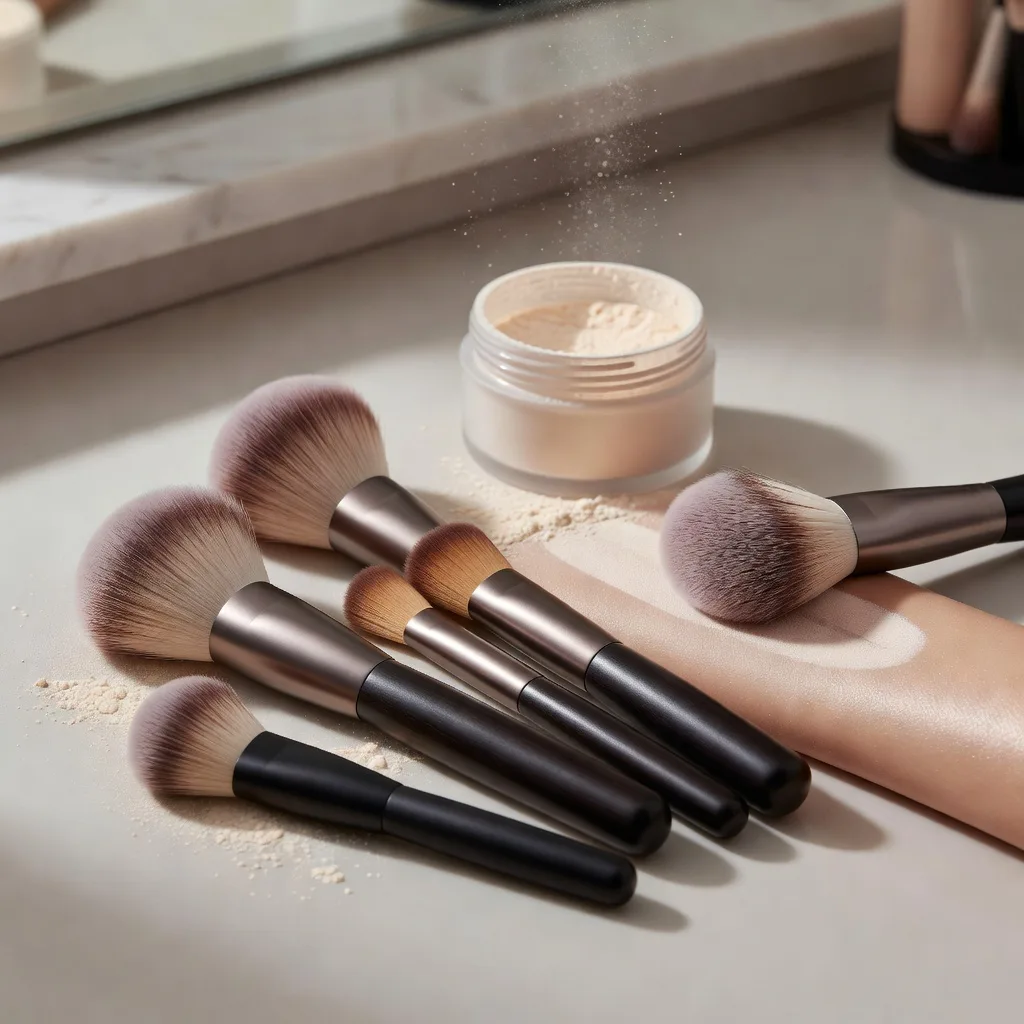
10 Best Powder Brushes (2026): Softer Setting, No Cakey Finish
Powder is meant to set makeup, control shine and soften texture, not to sit on the skin as a visible layer, and the brush decides which of those you get. This list covers 10 options, from large fluffy setting brushes to retractable kabukis and a small precision brush, with notes on who each suits and who should skip it.
Part of our guide to makeup tools. Start with: 10 Best Makeup Brush Sets (2026): Soft, Well-Made Kits for Every Look
The best powder brush for most people is a large, soft, fluffy synthetic brush with a rounded or slightly tapered head. It picks up a small amount of loose or pressed powder and spreads it thinly, which sets foundation without looking dry or cakey. Choose a dense kabuki or flat-top brush only if you want more coverage from mineral or powder foundation, and a small tapered brush for setting under the eyes and around the nose. Avoid very dense brushes for translucent setting powder, scratchy or shedding bristles and heads too small for the face. Tap off excess powder, and wash the brush regularly.
In short: a large, soft, fluffy brush for setting, a dense kabuki for powder foundation and a small tapered brush for detail cover almost every need.
The US Food and Drug Administration notes in its guidance on microbiological safety and cosmetics that some microorganisms grow faster in warm or damp storage, and advises against sharing cosmetics because you may be sharing germs. Both points apply to powder brushes kept in steamy bathrooms or passed around.
Below you will find the ten picks, how we chose them, a comparison of brush types, which brush suits which powder, how to apply powder and how to keep brushes clean.
Shopping these picks?
Amazon Prime members get fast, free shipping on eligible items, plus Prime Video, Amazon Music and member deals. New members can start with a free trial.
Start a free Prime trialAged 18 to 24? Prime for Young Adults comes with a longer free trial and a lower price after it.
Affiliate link: we may earn a commission at no extra cost to you.
As an Amazon Associate we earn from qualifying purchases. This does not change which products we include.


Quick Answer
- bareMinerals Beautiful Finish Brush is our top pick for its large skirted head that spreads loose powder thinly.
- Laura Geller Retractable Angled Kabuki is best for travel, with a protected head that also sculpts.
- Laura Geller Retractable Airbrush Kabuki suits powder foundation and fuller coverage.
- A large, soft, fluffy synthetic brush is the best all-round powder brush for setting.
- Small tapered brushes set the under-eyes and sides of the nose precisely.
- Tap off excess and press powder where you need hold; sweep lightly elsewhere.
- Wash powder brushes regularly, dry them fully and never share them.
In This Guide
- The 10 Best Powder Brushes Right Now
- How We Chose These Products
- Powder Brush Types at a Glance
- Which Brush Suits Which Powder
- Bristles and Build: What to Look For
- What to Avoid in a Powder Brush
- How to Apply Powder With a Brush
- Choosing a Powder Brush by Skin Type
- How to Clean a Powder Brush
- Powder Brush vs Puff vs Sponge
- Dos and Don’ts
- Honest Limits
- When to See a Dermatologist
- FAQ
- Summing Up
The 10 Best Powder Brushes Right Now
These ten brushes were shortlisted from widely reviewed Amazon listings and ranked by head shape, softness, density and how clearly each listing explains its use. Each pick shows who it suits, its trade-offs and who should skip it.
| # | Product | Best For | Standout Feature | |
|---|---|---|---|---|
| 1 | bareMinerals Beautiful Finish Brush | All-over setting with loose powder | Extra-large skirted head for thin coverage | View |
| 2 | Laura Geller Retractable Angled Kabuki | Handbag touch-ups and light sculpting | Retractable angled head protects the bristles | View |
| 3 | Laura Geller Retractable Airbrush Kabuki | Building coverage with powder foundation | Densely packed bristles for fuller coverage | View |
| 4 | Beauty by Earth Flat Top Kabuki Brush | Powder, bronzer and self tanner on the face | Flat top that also blends self tanner | View |
| 5 | Real Techniques Micro Setting Brush 402 | Setting concealer and small areas | Small tapered head for precise setting | View |
| 6 | Keshima Retractable Flat Top Kabuki | Gentle buffing on sensitive or mature skin | Soft yet firm flat top for buffing | View |
| 7 | Jessup Large Fluffy Powder Brush MUL01 | Diffused powder, blush and body bronzer | Full, domed head for a soft wash | View |
| 8 | Jutoe Super Large Kabuki Brush 2-Pack | Keeping one brush for powder and one for bronzer | Two large fluffy kabukis in one pack | View |
| 9 | Vela.Yue Large Round Powder Brush | Pressed and loose powder with a round head | Soft round head for loose or pressed | View |
| 10 | Matto Large Powder Brush | First powder brush for setting makeup | Large, simple brush for setting powder | View |
bareMinerals Beautiful Finish Brush

Best for: All-over setting with loose powder
The bareMinerals Beautiful Finish Brush earns the top spot because it is built around the way most people actually use powder: a rounded centre picks up loose mineral powder, and a skirt of longer fibres spreads it thinly across the face. That combination makes it hard to over-apply, which is the most common reason powder looks heavy or cakey.
The vegan synthetic fibres are easy to wash, and the large head covers the face quickly with controlled coverage. It is bigger and softer than the kabuki picks at #2 and #3, so it gives a sheerer finish rather than full coverage. If you only use pressed powder in small amounts, a smaller fluffy brush further down the list may feel easier to control.
- Rounded centre with a skirt of longer fibres
- Vegan synthetic bristles designed for loose powder
- Extra-large head for quick, even coverage
- Suits mineral foundation and setting powder
Pros
- Hard to over-apply powder
- Soft, easy-to-wash synthetic fibres
- Covers the whole face quickly
Cons
- Too large for under-eyes and the sides of the nose
- Holds water, so it needs a long drying time
Skip it if: Skip it if you want full coverage from powder foundation; the #3 Airbrush Kabuki is denser.
Check Price on AmazonLaura Geller Retractable Angled Kabuki

Best for: Handbag touch-ups and light sculpting
The Laura Geller Retractable Angled Kabuki is the pick for people who reapply powder away from home. The bristles slide back into the handle, which protects them in a bag and keeps powder from scattering. The listing describes a dense, high bristle-count head that is vegan and designed not to shed, which matters for a brush you will use over finished makeup.
The angled cut lets you press powder along the sides of the nose and sweep bronzer under the cheekbones, so it does more than the round #1 pick. It is denser than the bareMinerals brush, so tap off excess well before touching the face. Only retract it when the head is completely dry after washing, or damp bristles will stay trapped inside.
- Retractable design for travel
- Angled kabuki head for pressing and sculpting
- Vegan, high bristle-count bristles
- Listed as no-shed
Pros
- Protects bristles in a bag
- Angle reaches around the nose
- Works with powder and bronzer
Cons
- Dense head can deposit too much setting powder
- Must be fully dry before retracting
Skip it if: Skip it if you want a very sheer, airy finish; the #1 or #7 fluffy brushes are looser.
Check Price on AmazonLaura Geller Retractable Airbrush Kabuki

Best for: Building coverage with powder foundation
The Laura Geller Retractable Airbrush Kabuki is the better buy than #1 if you wear powder or mineral foundation and want real coverage rather than a light veil. Its densely packed, domed head is designed to buff product into the skin for a smooth, airbrushed look, and the listing says it also works with liquid foundation, so it can double as a base brush.
Like its angled sibling at #2 it retracts into the handle for travel, but the rounded head is better for buffing large areas than for detail. The density that makes it good for foundation also makes it easy to overdo translucent setting powder, so keep a looser brush for that job. As with any dense brush, wash it regularly because it holds more product.
- Densely packed kabuki bristles
- Designed for an airbrushed finish
- Works with powder and liquid foundation
- Retractable, travel-friendly handle
Pros
- Builds fuller coverage
- Doubles as a liquid foundation brush
- Compact for travel
Cons
- Too dense for light setting powder
- Needs thorough washing because it holds product
Skip it if: Skip it if you only use translucent setting powder; the #1 pick is gentler.
Check Price on AmazonBeauty by Earth Flat Top Kabuki Brush

Best for: Powder, bronzer and self tanner on the face
The Beauty by Earth Kabuki Brush is the most versatile pick because its listing covers loose powder, blush, bronzer, liquid foundation and self tanner. The flat, dense top buffs product in evenly, which is why it is also sold as a way to blend face tanner without a mitt. The bristles are vegan and the handle is bamboo.
That range makes it useful if you want one brush for several jobs, but it is a buffing brush, not a fluffy setting brush, so it gives more coverage than the #1 pick. Wash it between self tanner and makeup, because tanner can stain bristles and transfer colour. If you mainly set concealer, the smaller #5 Real Techniques brush is more precise.
- Flat top kabuki head for buffing
- Soft vegan bristles
- Bamboo handle
- Listed for powder, liquid, bronzer and self tanner
Pros
- Covers several products with one brush
- Even, streak-free buffing
- Plant-based handle material
Cons
- Deposits more powder than a fluffy brush
- Needs washing between tanner and makeup
Skip it if: Skip it if you want a barely-there setting finish; choose a large fluffy brush instead.
Check Price on AmazonReal Techniques Micro Setting Brush 402

Best for: Setting concealer and small areas
The Real Techniques Setting Brush is the precision pick. Its small, tapered head is designed to place a controlled dusting of powder exactly where you need it, such as under the eyes, around the nostrils and along smile lines, without powdering the rest of the face. The listing also suggests it for powder or cream highlighter on the high points of the face.
It works best alongside a large brush like the #1 pick rather than instead of one, because it would take too long to cover the whole face. A pressing motion under the eyes sets concealer with less powder than a sweep, which helps avoid creasing. It is the smallest brush on this list, so it is the easiest to overuse in one spot if you reload often.
- Small, tapered head for precise setting
- Soft, fluffy synthetic bristles
- Suits setting powder and highlighter
- Designed for a controlled dusting of powder
Pros
- Reaches under-eyes and around the nose
- Uses very little powder
- Doubles as a highlighter brush
Cons
- Too small for all-over powder
- Easy to build up too much in one spot
Skip it if: Skip it if you only want one brush for the whole face; choose #1 or #7.
Check Price on AmazonKeshima Retractable Flat Top Kabuki
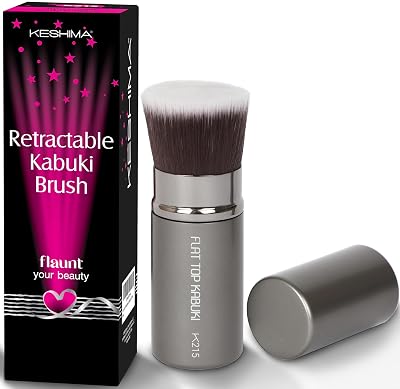
Best for: Gentle buffing on sensitive or mature skin
The Keshima Retractable Kabuki is a strong choice for mature or sensitive skin because the listing describes its synthetic bristles as soft yet firm, which lets you buff powder in with light pressure instead of dragging across the skin. A flat top gives an even, streak-free layer, and the retractable handle makes it easy to carry for touch-ups.
It is similar in purpose to the two Laura Geller picks, but its flat head buffs rather than sculpts, and it can also be used with liquid foundation. On textured or mature skin, press and roll rather than sweep, and use very little powder so it does not settle into lines. A flat top is denser than a fluffy brush, so it is not ideal for a sheer setting veil.
- Flat top kabuki head
- Soft yet firm synthetic bristles
- Retractable, portable design
- For powder and liquid foundation
Pros
- Gentle feel on sensitive skin
- Even, buffed finish
- Travels well
Cons
- Denser than a fluffy setting brush
- Small head takes longer on the whole face
Skip it if: Skip it if you want a large brush for quick all-over setting; the #7 Jessup is bigger.
Check Price on AmazonJessup Large Fluffy Powder Brush MUL01

Best for: Diffused powder, blush and body bronzer
The Jessup Large Fluffy Powder Brush is the pick for anyone who wants a big, airy brush that also handles body bronzing. Its full, domed head of synthetic bristles is designed to lay down a diffused wash of colour and a soft finish, and the listing notes it is easy to clean. It works for loose setting powder, blush and bronzer.
It is closest in feel to the #1 bareMinerals brush, with a similarly large head, but the listing puts more emphasis on bronzer and body use than on loose mineral powder. The size makes it poor for detail, so pair it with the #5 setting brush if you set concealer. Tap off excess well, because a large head can pick up a lot from a loose powder jar.
- Large, domed round head
- Synthetic bristles
- For setting powder, blush and bronzer
- Can be used for body bronzing
Pros
- Soft, diffused finish
- Covers large areas quickly
- Easy to clean
Cons
- Too big for under-eyes
- Can pick up too much loose powder
Skip it if: Skip it if you want dense coverage from powder foundation; a kabuki suits that better.
Check Price on AmazonJutoe Super Large Kabuki Brush 2-Pack

Best for: Keeping one brush for powder and one for bronzer
The Jutoe pack includes two super large, soft kabuki brushes, according to its title, sold for mineral powder, bronzer and foundation. Having two means you can keep one for translucent powder and one for bronzer, so colours do not mix, or rotate them so one is always dry while the other is being washed.
The listing gives less detail than the top picks, so we describe it only from its title. The fluffy kabuki shape sits between the airy #1 brush and the denser Laura Geller picks. Because there is less information on bristle build, check the head for shedding in the first few uses, and wash both brushes before first use to remove any loose fibres.
- Two brushes in one pack
- Super large kabuki head
- Listed for mineral powder and bronzer
- Soft, fluffy bristles
Pros
- One brush for powder, one for bronzer
- Easy to rotate while washing
- Large head covers the face quickly
Cons
- Thin listing detail
- No small brush for detail work
Skip it if: Skip it if you want detailed product information before buying; the top picks describe their build more fully.
Check Price on AmazonVela.Yue Large Round Powder Brush
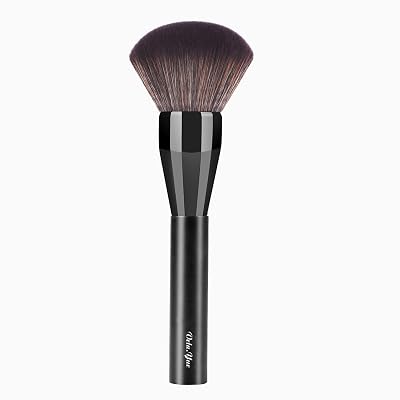
Best for: Pressed and loose powder with a round head
The Vela.Yue Large Powder Brush is a straightforward round face brush that its title lists for loose, pressed and mineral powder. A round head is easier to control than a very wide or flat one, which suits people who touch up pressed powder from a compact and want a light, even layer rather than a buffed finish.
We describe it from its title only, as the listing gives few details. It looks closest to the #7 Jessup brush in purpose but is simpler, with no body bronzing emphasis. Swirl lightly over pressed powder, since pressing hard lifts too much and can harden the surface of the compact over time. Pair it with a small setting brush if you set concealer.
- Large round face brush
- Listed for loose, pressed and mineral powder
- Soft bristles
- Simple, single-purpose design
Pros
- Easy to control round shape
- Suits pressed powder compacts
- Light, even layer
Cons
- Limited listing detail
- Not dense enough for full coverage
Skip it if: Skip it if you want a travel brush; the retractable #2, #3 or #6 picks protect the bristles.
Check Price on AmazonMatto Large Powder Brush

Best for: First powder brush for setting makeup
The Matto Large Powder Brush is a sensible first brush if you are new to powder. Its title lists it for loose, pressed and setting powder, and a large, soft head is the most forgiving shape for learning, because it spreads powder thinly and is difficult to overdo. It does one job without the learning curve of a dense kabuki.
We describe it from its title only. Compared with the #1 bareMinerals brush it has no special skirted design, so you may need a second pass on oily areas. Beginners should start with a tiny amount, tap off excess and press where they need hold. Once you know your preferences, you can add a precision brush such as the #5 pick.
- Large powder brush head
- Listed for loose, pressed and setting powder
- Soft bristles
- Simple design for everyday setting
Pros
- Forgiving shape for beginners
- Sheer, natural finish
- Works with most setting powders
Cons
- Little listing detail
- No precision for under-eyes
Skip it if: Skip it if you want fuller coverage or detailed setting; choose #3 or #5 instead.
Check Price on AmazonHow We Chose These Products
We shortlisted powder brushes from Amazon listings that are highly rated by a large number of shoppers, favouring established brands and fuller-featured models with a clear head shape, bristle type and intended use. We then checked each brush’s listed features against the hygiene and allergy guidance cited in this post, including the FDA’s advice on microbial safety and not sharing cosmetics.
These are research-based picks, not hands-on lab tests. We did not use or measure these brushes ourselves, so rankings reflect listing detail, design and fit for purpose rather than personal results. Where a listing gave little detail, we described the brush only from its title and ranked it lower.
- Strong ratings from a large number of shoppers
- Established brands and fuller-featured models preferred
- Listed features checked against the cited hygiene guidance
- Products with thin or unclear listings excluded or ranked lower
- Only one near-identical version of each brush included
Powder Brush Types at a Glance
Powder brushes vary mainly in size, density and head shape. This table shows the main types and what each is designed to do.
| Brush type | Density | Finish | Best use |
|---|---|---|---|
| Large fluffy round | Loose | Sheer, natural | All-over setting with loose or pressed powder |
| Tapered or pointed | Medium | Sheer to light, controlled | Targeted setting, T-zone, bronzer |
| Kabuki (short, dense, domed) | Dense | Fuller coverage | Mineral and powder foundation |
| Flat-top | Very dense | Airbrushed, buffed | Buffing powder foundation into skin |
| Small setting brush | Medium | Precise | Under-eyes, sides of the nose, laugh lines |
| Fan | Very loose | Barely there | Dusting off excess powder |
A large fluffy brush is the safest first buy because it is hard to over-apply powder with it. If you wear powder foundation, a kabuki or flat-top is the next brush to consider. A small setting brush is worth adding if you wear concealer daily, because a large brush cannot reach the inner corners of the eyes or the creases beside the nose without dusting powder over areas that do not need it. Most people do not need a fan brush unless they like a very sheer finish.
Which Brush Suits Which Powder
Different powders need different amounts of pressure and density. Matching the brush to the powder prevents most finish problems.
| Powder | Recommended brush | Tip |
|---|---|---|
| Loose translucent setting powder | Large fluffy or tapered | Tap into the lid, not the jar, and tap off excess |
| Pressed setting powder | Medium fluffy brush | Swirl lightly; pressing hard lifts too much |
| Mineral or powder foundation | Kabuki or flat-top | Buff in circles to build coverage |
| Blotting or finishing powder | Small fluffy brush | Apply only where shine appears |
| Under-eye setting powder | Small tapered or setting brush | Press a thin layer, then sweep away excess |
| Bronzing powder | Tapered or angled brush | Sweep where the sun would naturally hit |
Our guide on making pressed powder last longer explains how brush choice and technique also affect how quickly a compact hardens or wears out.
Bristles and Build: What to Look For
Powder brushes were traditionally made with natural hair, but good synthetic fibres now perform as well for most people.
- Soft, fine synthetic bristles pick up powder evenly and are easy to wash.
- Natural hair can feel very soft but may shed, lose shape when wet and bother people sensitive to animal hair.
- A rounded, slightly domed head is easier to control than a flat, very wide one.
- A secure, crimped ferrule stops the head twisting or shedding.
- A handle long enough to hold loosely helps you use a light touch.
Brush density is the single biggest factor in how much powder you apply. If your powder always looks heavy, try a looser brush before changing your powder.
What to Avoid in a Powder Brush
- Very dense brushes used with translucent setting powder, which press in too much.
- Small, stiff heads that leave streaks and patches across the face.
- Scratchy or uneven bristles that disturb foundation underneath.
- Brushes that shed onto freshly applied makeup.
- Heads that splay permanently after washing.
- Using one brush for bronzer, blush and setting powder without cleaning it between them.
If your face looks dusty or greyish in photos, the cause is usually too much powder or too dense a brush rather than the powder itself. Our guide on what to do when makeup looks cakey explains how to fix it.
How to Apply Powder With a Brush
This method sets makeup with the smallest amount of powder that still controls shine.
Let your base settle
Give foundation and concealer a minute or two to set before powdering.
Load the brush lightly
Tap loose powder into the lid, dip the brush and swirl it in, or swirl gently over pressed powder.
Tap off excess
Knock the handle against your wrist or the edge of the jar so loose powder falls away.
Start where you need it
Press or roll the brush over the T-zone, under the eyes and around the nose first.
Sweep the rest lightly
Use whatever is left on the brush to sweep over the cheeks and forehead.
Dust off excess
Sweep a clean fluffy or fan brush over the face to remove any visible powder.
Mist if needed
A light facial mist can take away a powdery look on dry skin.
Apply powder with a rolling or pressing motion rather than big sweeps where you need hold, such as the sides of the nose. Pressing sets makeup without moving the foundation underneath.
Choosing a Powder Brush by Skin Type
Skin type changes how much powder you need and which brush works best.
- Oily skin: a medium fluffy or tapered brush pressed into the T-zone, with lighter sweeps elsewhere.
- Dry skin: a very loose, large brush and the smallest amount of powder, only where makeup slips.
- Combination skin: a small tapered brush for the centre of the face and nothing or very little on the cheeks.
- Mature skin: a soft, fluffy brush and finely milled powder, avoiding heavy layers in lines.
- Textured skin: pressing rather than sweeping, so powder does not catch on raised areas.
Our article on layering cream and powder products covers how to add powder over cream blush and bronzer without lifting them.
How to Clean a Powder Brush
Powder brushes collect powder, oil from the skin and dead skin cells. A dirty brush deposits powder unevenly and can leave a greasy film on the face. Because powder brushes are large, they hold more water and take longer to dry than small brushes, so plan washes for the evening and let them dry overnight in open air.
- Tap out loose powder after each use.
- Wash weekly if you use it daily, or every two weeks for occasional use.
- Wet only the bristles, lather with a gentle cleanser and rinse until clear.
- Keep water away from the ferrule to protect the glue.
- Squeeze gently, reshape and dry flat or bristles down.
- Allow large brushes a full day to dry, since the centre stays damp longer.
Never use a powder brush that is still damp in the centre, and do not store brushes in a closed case or steamy bathroom. Damp, warm conditions favour microbial growth. Stop using a brush if you notice a musty smell, and never share powder brushes.
A well-made brush can last for years. Replace it when it sheds onto your face, splays after drying or still smells after washing. Retractable brushes protect the bristles in a bag, but only close them once the head is completely dry.
Powder Brush vs Puff vs Sponge
A brush is not the only way to apply powder, and each tool gives a different result. Knowing the difference helps you decide whether a brush is what you need.
A brush gives the lightest, most natural finish and is the easiest tool for all-over setting. A velour puff presses powder firmly into the skin, which gives more hold and a smoother, more matte finish, and suits oily areas or long days. A damp sponge pressed into loose powder sets concealer under the eyes with a soft finish but can leave too much product if you are not careful.
Many people use a brush for the whole face and a puff only for the T-zone or under the eyes. Puffs and sponges touch the skin directly and absorb oil, so they need washing more often than brushes, and they should be dried fully before going back into a compact.
Dos and Don’ts
Do
- Use a large, fluffy brush for setting
- Tap off excess powder
- Press powder where you need hold
- Wash and fully dry brushes
- Choose soft, well-glued synthetic bristles
Don’t
- Use a dense kabuki for translucent powder
- Sweep hard over wet foundation
- Powder the whole face if only the T-zone is shiny
- Share powder brushes
- Store damp brushes in a closed case
Honest Limits
A good powder brush helps powder look lighter and more even, but it cannot stop an oily T-zone shining all day or make a heavy or poorly matched powder look natural. Oil control, primer and the powder formula all play a part.
Blurring claims are also limited. Powder softens the look of pores and fine lines for a few hours, but too much of it makes texture more obvious, not less. Using less powder with a softer brush is usually the best fix. Expensive brushes are not automatically better either. Many affordable synthetic brushes are soft, dense enough and well glued, and the way you load and apply powder affects the result far more than the price of the handle.
When to See a Dermatologist
- Your skin itches, stings or breaks out after using powder.
- You have very oily skin and struggle with shine despite a simple routine.
- Breakouts cluster where you apply the most powder.
- You react to several makeup products and want patch testing.
The FDA’s information on allergens in cosmetics explains that some people react to particular ingredients, which is why a patch test is worth doing.
This article is for general information and does not replace professional medical advice. Patch test new products, stop using anything that irritates your skin, and see a board-certified dermatologist for persistent reactions.
FAQ
What is the best brush for loose powder?
A large, soft, fluffy synthetic brush.
Is a kabuki brush good for setting powder?
It deposits a lot, so it suits powder foundation more than translucent setting powder.
What brush is best for under-eye setting powder?
A small tapered or setting brush used with a pressing motion.
Should I use a brush or a puff for powder?
A brush gives a lighter finish; a puff gives more hold and coverage.
Why does my powder look cakey?
Too much product, too dense a brush or powder over wet foundation.
Which powder brush is best for travel?
A retractable brush, such as the Laura Geller Angled or Airbrush Kabuki or the Keshima, which protects the bristles in a bag.
How often should I wash my powder brush?
About weekly with daily use.
Is an expensive powder brush worth it?
Not always. The bareMinerals Beautiful Finish Brush has a thoughtful skirted design, but a simple large brush like the Matto sets powder well if you use a light hand.
Which powder brush is best for sensitive or mature skin?
A soft brush used with light pressure, such as the Keshima Retractable Kabuki or the large bareMinerals brush. Press rather than sweep.
When should I replace a powder brush?
When it sheds, splays or stays dirty after washing.
Summing Up
The best powder brush for most people is a large, soft, fluffy synthetic brush for setting, backed by a dense kabuki for powder foundation and a small tapered brush for the under-eyes.
Use less powder than you think, tap off excess, press where you need hold and keep the brush clean and dry, and your powder will set makeup without looking heavy.
Our top pick: bareMinerals Beautiful Finish Brush
The bareMinerals Beautiful Finish Brush takes the top spot because its extra-large skirted head holds loose powder well and spreads it thinly, which suits the widest range of powders and skin types. Choose the Laura Geller Retractable Angled Kabuki instead if you want one brush that travels well and sculpts, or the Laura Geller Airbrush Kabuki if you mainly wear powder foundation and want fuller coverage.
Check Price on Amazon
Written by
Registered pharmacist and founder of Facial Adviser. Rakib's pharmacy training covers how skincare actives work and interact; a later course in cosmetology turned that into a focus on facial treatments and skincare products. He plans, researches and edits every guide on the site and checks health claims against sources such as the American Academy of Dermatology, the FDA and the NIH. He is not a dermatologist; see the Editorial Policy and Medical Disclaimer.
About · Editorial policy · How we choose products · Medical disclaimer · Contact
Keep reading: Makeup brushes and tools
- 10 Best Concealer Brushes (2026): Precise Cover, Seamless Blend
- Best Airbrush Makeup Kit: How They Work, What to Look For and Avoid
- 10 Best Blush Brushes (2026): A Soft Flush for Powder and Cream
- 10 Best Makeup Brush Sets (2026): Soft, Well-Made Kits for Every Look
- How to Sanitize Makeup Tools: Brushes, Sponges, Curlers and More