10 Best Face and Neck LED Massagers (2026): Gentle Light, Real Limits
Face and neck LED massagers combine coloured light with gentle vibration, warmth or both, and are marketed for firmer skin along the jawline and fewer lines on the neck. This list covers 10 options, from multi-mode wands to heated gua sha tools, and explains how they differ in light type, safety features and evidence.
Part of our guide to at-home facial devices. Start with: 10 Best LED Light Therapy Masks (2026): Clearer Skin, Softer Lines
The best face and neck LED massager is a handheld or wearable device with red and near-infrared light, a clear treatment timer, gentle vibration you can switch off, and full safety instructions including eye protection. Red and near-infrared light have the most research for fine lines and skin texture, though at-home devices are weaker than clinic panels and results are subtle and gradual. Vibration and warmth mainly add comfort and help serums spread, rather than lifting skin. Choose a device labelled FDA cleared, avoid it if you are light-sensitive or on photosensitising medicines, and expect modest improvement after weeks of regular use, not an instant lift.
In short: prioritise red or near-infrared light, a timer and clear safety guidance over extra colours, gadgets and bold lifting claims.
The American Academy of Dermatology notes that at-home light devices are less powerful than professional treatments, that short-term use appears safe and that FDA cleared does not mean proven effective.
Below you will find the ten picks, how we chose them, the features to compare, what the evidence supports, who should not use these devices, and how to use and clean one safely.
Shopping these picks?
Amazon Prime members get fast, free shipping on eligible items, plus Prime Video, Amazon Music and member deals. New members can start with a free trial.
Start a free Prime trialAged 18 to 24? Prime for Young Adults comes with a longer free trial and a lower price after it.
Affiliate link: we may earn a commission at no extra cost to you.
As an Amazon Associate we earn from qualifying purchases. This does not change which products we include.


Jump to a Section
- The 10 Best Face and Neck LED Massagers Right Now
- How We Chose These Products
- What Is a Face and Neck LED Massager?
- LED Colours and What Each One Claims
- Does a Face and Neck LED Massager Work?
- Features to Compare Before You Buy
- Who Should Not Use One
- How to Use a Face and Neck LED Massager
- Cleaning and Caring for Your Device
- Getting the Most From Your Neck and Face Routine
- Dos and Don’ts
- Honest Limits
- When to See a Dermatologist
- FAQ
- The Takeaway
Key Takeaways
- INIA FLARE is our top pick for its three clearly explained modes, including red light with vibration.
- GLO24K wand is best for the jawline and neck, with light and vibration and no electrical mode.
- Ms.W massager is the easiest first device, with three simple modes and a curved head.
- Red and near-infrared are the most studied colours for lines and texture.
- Vibration and warmth add comfort, not lifting, and results need weeks of use.
- Skip microcurrent or EMS modes with a pacemaker, in pregnancy or with epilepsy.
- Daily sunscreen on the neck matters more than any device.
The 10 Best Face and Neck LED Massagers Right Now
These ten handheld devices were shortlisted from widely reviewed Amazon listings and ranked by how clearly they describe their light, modes and controls, and how well they suit the jaw and neck. Each pick lists who it suits, its trade-offs and who should skip it.
| # | Product | Best For | Standout Feature | |
|---|---|---|---|---|
| 1 | INIA FLARE 3-in-1 Face and Neck Device | A structured routine with clear modes | Three named modes including red light | View |
| 2 | GLO24K LED Face Massager and Neck Wand | Gliding along the jaw and neck with serum | Ergonomic head shaped for the jawline | View |
| 3 | Ms.W Red Light Face and Neck Massager | First-time users wanting simple modes | Three adjustable modes with a curved head | View |
| 4 | KDUNE 7-in-1 Microcurrent Gua Sha Device | Users wanting microcurrent with red light | Microcurrent, gua sha shape and red light | View |
| 5 | ZDEER GS5 Heated Red Light Gua Sha | Warm, relaxing massage with red light | Eight red light beads and three heat levels | View |
| 6 | AVORLA LED Gua Sha With Heat and Microcurrent | Trying LED, heat and microcurrent together | LED, heat and microcurrent in one tool | View |
| 7 | Cold and Heated Electric Gua Sha LED Wand | Morning depuffing with cool settings | Cold and warm settings plus LED | View |
| 8 | Pedete 7-Colour Face and Neck Massager | Trying several LED colours on face and neck | Seven colour options for face and neck | View |
| 9 | GIHWRRI 7-Colour LED Massager With EMS | Light, EMS, heat and vibration together | Seven colours with EMS, heat and vibration | View |
| 10 | 7-Colour LED Face and Neck Sculptor With Heat | Light and warmth without electrical modes | Seven colours and heat in one wand | View |
INIA FLARE 3-in-1 Face and Neck Device
Best for: A structured routine with clear modes
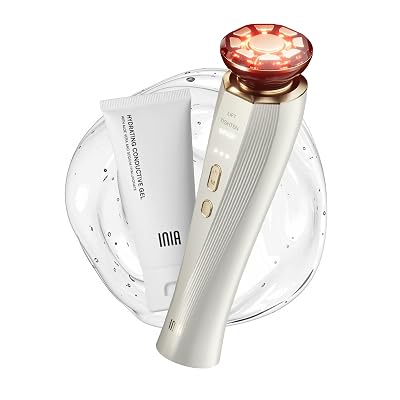
The INIA FLARE is our top pick because its listing explains each of its three modes rather than just listing features. One mode is designed for facial stimulation and contouring care, another pairs vibration with red light, and a third uses negative ions and is aimed at helping skincare spread and absorb. That clarity makes it easier to build a short, consistent routine.
It is designed for both face and neck, so it suits people who want one device for the jaw, under the chin and the front of the neck. Compared with the simpler #2 GLO24K it has more to learn, and like the other picks its listing does not state FDA clearance, so treat any firming as gradual and modest rather than a lift.
- Three modes for lifting, tightening and infusing
- Tighten mode combines red light and vibration
- Infuse mode uses negative ion technology
- Designed for face and neck
Pros
- Each mode has a clear purpose
- Covers face, jaw and neck
- Red light plus vibration in one session
Cons
- More modes to learn than simpler wands
- Listing does not state FDA clearance
Skip it if: Skip it if you want a simple one-button device; the #3 Ms.W or #8 Pedete are easier.
Check Price on AmazonGLO24K LED Face Massager and Neck Wand

Best for: Gliding along the jaw and neck with serum
The GLO24K wand is the pick if your focus is the jawline and neck. Its listing describes an ergonomic massage head designed to glide along the face, jaw and neck, with several LED light modes and gentle vibration settings. It is meant to be used over your usual serum or moisturiser, which makes it easy to fold into an evening routine.
It comes with a USB-C charging cable and a protective cover, a small but useful detail for keeping the head clean between uses. It has fewer named modes than the #1 INIA FLARE, which some people will see as a plus. It has no heat or microcurrent, so it suits people who want light and vibration only and would rather avoid electrical stimulation.
- Multiple LED light modes
- Gentle vibration settings
- Ergonomic head for face, jaw and neck
- USB-C rechargeable with protective cover
Pros
- Simple light and vibration design
- Shaped for the jaw and neck
- Protective cover helps hygiene
Cons
- No heat for those who like warmth
- Light colours are not described in detail
Skip it if: Skip it if you want warmth during sessions; the #5 ZDEER adds adjustable heat.
Check Price on AmazonMs.W Red Light Face and Neck Massager

Best for: First-time users wanting simple modes
The Ms.W massager is a sensible first device. Its listing describes three adjustable modes, a curved arc-shaped head that follows the contours of the face and neck, and use for all skin types. The modes are split between skincare use and massage, so you can use it with a serum or simply for a relaxing session at the end of the day.
It is less feature-packed than the #1 INIA FLARE and has no microcurrent, which keeps the learning curve and the list of contraindications shorter. The trade-off is less detail about the light itself, so do not expect more than a gentle, gradual change. As with any light device, protect your eyes and keep sessions to the length the instructions give.
- Three adjustable modes
- Curved arc massage head
- Designed for face and neck
- Modes for skincare and massage
Pros
- Easy to learn
- Curved head follows contours
- No electrical current mode
Cons
- Little detail on light wavelengths
- Fewer settings than the top pick
Skip it if: Skip it if you want warmth or cooling; the #5 or #7 picks offer temperature settings.
Check Price on AmazonKDUNE 7-in-1 Microcurrent Gua Sha Device

Best for: Users wanting microcurrent with red light
The KDUNE device combines a gua sha shape with microcurrent and red light for the face and neck, according to its title. That mix suits people who already enjoy gua sha and want to add light and a low electrical current in one tool. Its listing gives little detail beyond the title, so we describe it only from that.
Microcurrent brings stricter safety rules than light alone. Do not use it with a pacemaker or other implanted device, during pregnancy or with epilepsy unless your doctor agrees, and avoid long use over the front of the throat. Compared with the light-only #2 GLO24K it does more, but it also needs more care, and any toning effect is subtle and temporary.
- Microcurrent mode
- Gua sha shaped head
- Red light therapy
- Designed for face and neck
Pros
- Combines gua sha, light and microcurrent
- Suits existing gua sha users
- One tool for face and neck
Cons
- Microcurrent adds contraindications
- Thin listing detail
Skip it if: Skip it if you have an implanted device, are pregnant or want light only; choose #2 or #3.
Check Price on AmazonZDEER GS5 Heated Red Light Gua Sha

Best for: Warm, relaxing massage with red light
The ZDEER GS5 is the pick if you enjoy warmth. Its listing states eight evenly spaced red light beads in the 620 to 640 nm range, three adjustable heat levels and gentle vibration, in a brass gua sha shape with curved edges that follow the face. It is one of the few picks that states a wavelength, which makes it easier to judge.
Heat mainly adds comfort and helps oils and serums spread, rather than lifting skin, so think of this as a relaxing ritual with gentle light. Start on the lowest heat, especially on the thin skin of the neck, and skip heat on irritated skin or with active rosacea. It has no microcurrent, unlike the #4 KDUNE and #6 AVORLA.
- Eight red light beads at a stated wavelength
- Three adjustable heat levels
- Gentle vibration
- Contoured brass gua sha shape
Pros
- States its red light wavelength
- Adjustable warmth
- No electrical current mode
Cons
- Heat may not suit sensitive or rosacea-prone skin
- Covers a small area per stroke
Skip it if: Skip it if heat irritates your skin; the #3 Ms.W has no heat.
Check Price on AmazonAVORLA LED Gua Sha With Heat and Microcurrent

Best for: Trying LED, heat and microcurrent together
The AVORLA tool packs LED light, heat and microcurrent into a gua sha shaped device, according to its title, and is sold as a skin toning device. That makes it the most feature-dense option here for people who want to try several approaches without buying separate tools. Its listing gives little detail beyond the title, so we describe it only from that.
More features also mean more to check. The microcurrent mode carries the same contraindications as the #4 KDUNE, and heat may not suit sensitive skin, so read the instructions carefully and start with the gentlest settings. It is a good fit for curious users who like to experiment, but it will not tighten loose skin or remove a double chin.
- LED light
- Heat function
- Microcurrent mode
- Gua sha shaped head
Pros
- Several functions in one tool
- Gua sha shape suits the jaw
- Good for experimenting
Cons
- Microcurrent and heat add safety checks
- Thin listing detail
Skip it if: Skip it if you want the simplest, lowest-risk device; the #2 GLO24K is light and vibration only.
Check Price on AmazonCold and Heated Electric Gua Sha LED Wand

Best for: Morning depuffing with cool settings
This electric gua sha wand offers both cold and heated settings with LED light, according to its title, and is sold as a depuffing tool. A cool surface can make morning puffiness look calmer for a short time, while warmth feels relaxing in the evening, so it suits people who want different sessions at different times of day. Its listing gives little detail beyond the title, so we describe it only from that.
Cooling effects on puffiness are temporary, so treat this as a comfort and routine tool rather than a lasting change. Compared with the heat-only #5 ZDEER it adds a cold option, but it does not state wavelength details. Avoid very cold or hot settings on sensitive skin and keep sessions short on the neck.
- Cold setting
- Heated setting
- LED light modes
- Gua sha shaped wand
Pros
- Cold option for morning puffiness
- Warm option for evening routines
- Gua sha shape
Cons
- Depuffing effect is temporary
- Thin listing detail
Skip it if: Skip it if you have cold-triggered redness or want detailed light specifications.
Check Price on AmazonPedete 7-Colour Face and Neck Massager

Best for: Trying several LED colours on face and neck
The Pedete massager offers seven light colours for the face and neck, according to its title, in a silver handheld design. It suits people who are curious about colours beyond red, such as blue for breakout-prone skin. Its listing gives little detail beyond the title, so we describe it only from that.
Keep expectations measured: red and near-infrared have the most research for lines and texture, and blue has some evidence for mild acne, while the other colours have little. Seven colours is not better than two well-described ones. Compared with the #1 INIA FLARE it has less information about modes, but it may appeal to anyone who mainly wants a light device.
- Seven light colours
- For face and neck
- Handheld design
- Silver finish
Pros
- Several colour options
- Focus on light
- Simple handheld format
Cons
- Extra colours have little evidence
- Thin listing detail
Skip it if: Skip it if you want stated wavelengths; the #5 ZDEER lists its red light range.
Check Price on AmazonGIHWRRI 7-Colour LED Massager With EMS

Best for: Light, EMS, heat and vibration together
The GIHWRRI massager combines seven LED colours with EMS, heat and vibration for the face and neck, according to its title. It is an option for people who want an all-in-one device and are comfortable with electrical muscle stimulation. Its listing gives little detail beyond the title, so we describe it only from that.
EMS carries the same safety rules as microcurrent: not with a pacemaker or implant, not in pregnancy, and not over the front of the throat for long periods. Heat and vibration add comfort rather than lifting. It overlaps with the #6 AVORLA, but uses a massager format instead of a gua sha shape. Start with the lowest settings.
- Seven LED colours
- EMS mode
- Heat function
- Vibration
Pros
- Many functions in one device
- Face and neck design
- Adjustable settings
Cons
- EMS adds contraindications
- Thin listing detail
Skip it if: Skip it if you want to avoid electrical stimulation; choose the #2 or #3 picks.
Check Price on Amazon7-Colour LED Face and Neck Sculptor With Heat

Best for: Light and warmth without electrical modes
This face and neck massager combines seven LED colours with heat, according to its title, and is sold as a facial sculpting tool. It suits people who want light and warmth in one small device and prefer to avoid microcurrent or EMS. Its listing gives little detail beyond the title, so we describe it only from that.
The word sculptor is marketing: light and warmth can make skin feel soft and relaxed, but they will not reshape the jaw or remove fat. It is similar in purpose to the #5 ZDEER, which gives more detail about its light. Keep heat low on the neck, and stop if you see redness that lasts or dark patches.
- Seven LED colours
- Heat function
- For face and neck
- Handheld wand
Pros
- No electrical current mode
- Light and warmth together
- Compact handheld format
Cons
- Sculpting claims go beyond the evidence
- Thin listing detail
Skip it if: Skip it if you want detailed specifications before buying; the top picks describe more.
Check Price on AmazonHow We Chose These Products
We shortlisted handheld face and neck LED massagers from Amazon listings that are highly rated by a large number of shoppers, favouring established brands and fuller-featured models with clearly described light, vibration and heat settings. We then checked each device’s listed features against the safety guidance cited in this post, including the AAD’s advice on light-sensitive conditions and photosensitising medicines.
These are research-based picks, not hands-on lab tests. We did not measure light output ourselves, so rankings reflect listing detail, design and fit for purpose rather than personal results. None of the listings we used state FDA clearance, and we have not assumed it for any device. Full-face masks were left out because this guide covers handheld massagers.
- Strong ratings from a large number of shoppers
- Established brands and fuller-featured models preferred
- Listed features checked against the cited safety guidance
- Products with thin or unclear listings ranked lower
- Medical or lifting claims from listings not repeated as fact
What Is a Face and Neck LED Massager?
These devices usually come in two formats. Handheld massagers have a small head with LEDs and a vibrating or warming plate that you glide from the collarbone up to the jaw and over the cheeks. Wearable neck masks or collars wrap around the neck and chin and deliver light while you sit still.
Many models add extra modes: several light colours, heat, sonic vibration and sometimes a low electrical current described as EMS or microcurrent. More modes are not a sign of better results. They can make instructions more complicated and add contraindications, so read exactly what each mode does before buying.
A handheld massager suits people who like a massage ritual and want to target the jawline and under the chin. Whatever the format, choose one you will enjoy using several times a week, because consistency matters more than extra features.
If you are new to light therapy, our explainer on what an LED anti-aging facial is covers how clinic treatments work and how home devices compare.
LED Colours and What Each One Claims
Each colour is a different wavelength of light, and not all have the same level of research. Treat claims for rarer colours with caution.
| Light colour | Typical claim | How strong is the evidence? |
|---|---|---|
| Red | Fewer fine lines, smoother texture | Most studied; modest results |
| Near-infrared (often invisible) | Deeper support for red light | Some studies, usually paired with red |
| Blue | Fewer acne breakouts | Some evidence for mild acne; not a neck firming light |
| Amber or yellow | Calming redness | Limited |
| Green, purple and others | Brightening, balancing | Very limited or none |
For the neck and jaw, red and near-infrared are the colours that match the goal. A device offering seven colours is not better than one offering two well-described wavelengths.
Does a Face and Neck LED Massager Work?
The honest answer is: a little, for some people, with patience. The American Academy of Dermatology’s guide to red light therapy says some studies show subtle to noticeable improvement in fine lines and rough skin, that more research is needed, and that regular use is required because skin keeps ageing.
Studies on neck-specific devices are few and small, many are funded by manufacturers, and they often use different wavelengths, doses and session times, which makes them hard to compare. That does not mean the devices are useless, only that confident claims go beyond the data. Vibration may feel pleasant and can relax tense muscles, and warmth can make skin feel soft, but neither has good evidence for tightening loose neck skin. No LED device can remove platysmal bands, a double chin or significant sagging.
If a listing promises visible lifting in days, a V-shaped jawline or fat reduction, treat it as marketing. Realistic claims talk about gradual, subtle improvement over weeks.
Features to Compare Before You Buy
Once you know you want red or near-infrared light, compare devices on practical and safety features.
| Feature | What to look for | Why it matters |
|---|---|---|
| Wavelength | Stated in nanometres for red and near-infrared | Vague colour names hide weak specifications |
| Timer | Automatic shut-off after a set time | Prevents overuse |
| Vibration and heat | Adjustable and able to be turned off | Sensitive skin may not tolerate heat |
| Head or mask shape | Curved to fit jaw and neck | Better, more even contact |
| Clearance | Labelled FDA cleared | Signals low risk, not results |
| Instructions | Treatment time, frequency, contraindications, eye guidance | You need these to use it safely |
| Charging | Rechargeable, clear battery life | Makes regular use easier |
Ignore claims about the number of LEDs on their own; spacing, power and wavelength matter more than a headline count. Also check whether the device includes an EMS or microcurrent mode. If it does, the same safety rules as other electrical stimulation devices apply.
Who Should Not Use One
LED is generally low risk, but it is not for everyone. The AAD advises people with light-sensitive conditions such as lupus, or who take medicines that increase light sensitivity, to avoid it, and suggests people with darker skin tones talk to a dermatologist first because visible light can trigger dark patches in some skin.
Do not use a device with an EMS, microcurrent or electrical mode if you have a pacemaker or other implanted electronic device, are pregnant, have epilepsy or have a thyroid condition you are unsure about, unless your doctor agrees. Never use any mode over the front of the throat for long periods, on broken skin or on suspicious spots.
- Check medicines such as some antibiotics, retinoid tablets and certain acne or blood pressure drugs for light sensitivity.
- Avoid use over active cold sores, rashes or infected skin.
- Stop if you feel burning, see blistering or notice dark patches.
How to Use a Face and Neck LED Massager
Follow the maker’s instructions first. These general steps help you use most devices safely and consistently.
Read the contraindications
Check your medicines and health conditions before the first session.
Cleanse and dry the skin
Remove makeup and sunscreen so light reaches the skin evenly.
Apply a simple serum or gel if advised
Some devices need a conductive gel; avoid retinoids or acids straight before light.
Protect your eyes
Use the eyewear provided or close your eyes if instructed; never look into the LEDs.
Glide upwards slowly
Move from collarbone to jaw with light pressure, or sit still with a wearable mask.
Stop when the timer ends
Do not repeat sessions the same day to speed results.
Moisturise and clean the device
Apply moisturiser, then wipe the head and let it dry.
Photograph your neck and jaw in the same light and position every two weeks. It is the only reliable way to judge a slow, subtle change.
Cleaning and Caring for Your Device
Serum, sweat and skin oils build up on the head and around the LEDs. Wipe the treatment surface after every use with a soft, slightly damp cloth, then dry it. Use alcohol wipes only if the instructions allow them, because some coatings crack.
- Never submerge a device unless it is clearly labelled waterproof.
- Check the LED window for scratches or cloudiness, which can reduce light output over time.
- Charge with the cable supplied and unplug when full.
- Store in a dry drawer, away from steamy bathrooms and direct sun.
- Do not share the device, especially a wearable mask that touches the chin and mouth.
Getting the Most From Your Neck and Face Routine
A device works best as one part of a simple routine. The neck is thin-skinned, gets plenty of sun and is often forgotten when applying skincare.
- Apply sunscreen to the neck and chest every morning.
- Use a gentle retinoid at night, but not in the same session as LED unless your dermatologist agrees.
- Moisturise the neck daily; it tends to be drier than the face.
- Watch posture: long periods looking down at screens can crease the neck.
Our guide on poor posture and facial sagging explains how habits affect the jaw and neck, and our piece on whether a face massager is good for skin covers what vibration alone can and cannot do.
Dos and Don’ts
Worth Doing
- Choose red or near-infrared with stated wavelengths
- Follow the timer and frequency
- Protect your eyes as instructed
- Use sunscreen on the neck every day
- Judge results over two to three months
Skip It
- Look directly into the LEDs
- Use it with photosensitising medicines without advice
- Use electrical modes with a pacemaker or in pregnancy
- Stack sessions to speed results
- Expect it to fix sagging or a double chin
Honest Limits
At-home LED massagers are low powered by design so they can be used safely without training. That makes them gentle, and also limits what they can do. Any improvement in fine lines or texture tends to be subtle and fades if you stop.
Results also vary from person to person. Skin type, age, sun damage, consistency and the exact device all play a part, so a friend’s glowing review is no guarantee you will see the same change. Loose skin, neck bands and fat under the chin are structural changes. They respond to professional options such as radiofrequency, ultrasound, injectables or surgery, not to a handheld light. If those are your main concerns, a consultation will save money.
When to See a Dermatologist
- Burning, blistering or lasting redness after use.
- New dark patches, especially on medium or deep skin tones.
- A light-sensitive condition or medicine you are unsure about.
- A lump, swelling or change in the neck area.
- A mole or spot that changes in size, shape or colour.
This article is for general information only and does not replace medical advice. Check with a doctor or board-certified dermatologist before using light or electrical devices if you have a medical condition, implant, are pregnant or take regular medicines.
FAQ
What is the best face and neck LED massager?
One with red or near-infrared light, a timer, adjustable vibration and clear safety guidance.
Do neck LED devices really tighten skin?
Results are subtle; they may soften fine lines but do not fix sagging.
Which LED colour is best for the neck?
Red and near-infrared have the most research.
Which face and neck LED massager is best for sensitive skin?
A light and vibration device without heat or electrical modes, such as the GLO24K wand or the Ms.W massager, is the gentlest place to start.
How long until I see results?
Usually several weeks to a few months, if at all.
Is it safe to use LED on the neck?
Generally yes for short sessions; avoid long use over the front of the throat.
Which massagers on this list have microcurrent or EMS?
The KDUNE, AVORLA and GIHWRRI picks list microcurrent or EMS, so check the safety warnings before buying one.
Is the most expensive LED massager worth it?
Not necessarily. Pick for clear modes and safety information, like the INIA FLARE, rather than the longest feature list.
Who should not use an LED massager?
People who are light-sensitive or on photosensitising medicines.
Does FDA cleared mean it works?
No, it means the device is considered low risk.
The Takeaway
The best face and neck LED massager offers red or near-infrared light with clear wavelengths, a timer, optional vibration and full safety instructions, and it is honest about gentle, gradual results.
Check your medicines and health conditions first, protect your eyes, use it consistently and keep sunscreen and moisturiser on your neck every day.
Our top pick: INIA FLARE 3-in-1 Face and Neck Device
The INIA FLARE takes the top spot because it combines red light, vibration and separate modes in a face and neck design with a clearly explained purpose for each setting, which covers the most needs for most buyers. Choose the GLO24K wand instead if you want a simpler light and vibration device built to glide along the jaw and neck, or the Ms.W massager if you prefer three straightforward modes and a curved head.
Check Price on Amazon
Written by
Registered pharmacist and founder of Facial Adviser. Rakib's pharmacy training covers how skincare actives work and interact; a later course in cosmetology turned that into a focus on facial treatments and skincare products. He plans, researches and edits every guide on the site and checks health claims against sources such as the American Academy of Dermatology, the FDA and the NIH. He is not a dermatologist; see the Editorial Policy and Medical Disclaimer.
About · Editorial policy · How we choose products · Medical disclaimer · Contact
Keep reading: LED light therapy
- 10 Best Acne Light Therapy Devices (2026): Masks vs Spot Tools
- What Is an LED Anti-Aging Facial? Red Light, Results and Safety
- 10 Best LED Light Therapy Masks (2026): Clearer Skin, Softer Lines
- Best Anti-Breakout Skin Therapy Wand for Hormonal Acne: Blue Light Guide
- Best Mask-Friendly LED Therapy Cap for Combined Treatments: Buyer's Guide
- 10 Best Gua Sha Facial Tools (2026): Stone and Steel Picks Compared
- 10 Best Facial Tools (2026): LED, Cleansing, Gua Sha and More