10 Best Body Hair Removal Devices (2026): IPL, Epilators, Trimmers
Body hair removal devices range from simple trimmers to light-based machines that promise long-term reduction. Each works differently and suits different skin and hair, so the best choice depends on your skin tone, hair colour and how long you want results to last. This list covers 10 options, with who each one suits.
Part of our guide to at-home facial devices. Start with: 10 Best Products for Women's Facial Hair Removal (2026): Gentle Picks
The best body hair removal device depends on your skin and hair. At-home IPL devices give the longest-lasting reduction but work best on light to medium skin with dark hair, and are unsuitable for very dark skin or for white, grey, red or light blonde hair. Epilators pull hair from the root, giving two to four weeks of smoothness on any skin tone and hair colour, but they can sting and cause ingrown hairs. Electric trimmers and body shavers are painless, safe for all skin tones and ideal for sensitive areas, but hair returns within days. Choose a device with a skin tone sensor for IPL, wet and dry use for epilators, and guards for trimmers.
In short: IPL for long-term reduction on the right skin and hair, epilators for weeks of smoothness, trimmers for painless quick tidying.
The American Academy of Dermatology explains that laser hair removal works best for people with lighter skin and darker hair, and that treating darker skin must be done very carefully; light-based home devices follow the same basic rule.
Below you will find the ten picks, how we chose them, the skin tone limits for IPL, what to avoid and how to use and clean each device safely.
Shopping these picks?
Amazon Prime members get fast, free shipping on eligible items, plus Prime Video, Amazon Music and member deals. New members can start with a free trial.
Start a free Prime trialAged 18 to 24? Prime for Young Adults comes with a longer free trial and a lower price after it.
Affiliate link: we may earn a commission at no extra cost to you.
As an Amazon Associate we earn from qualifying purchases. This does not change which products we include.


Key Takeaways
- Nood Flasher Pro is our top pick for long-term reduction on suitable skin, with cooling and no refills.
- Braun Silk-epil 9 is the best epilator, giving weeks of smoothness on any skin tone.
- INIA HAUTE Pro suits coarse, dark hair on lighter skin, with ice-cooling and area modes.
- IPL is not suitable for very dark skin or for light, grey or red hair.
- Trimmers and shavers such as the OneBlade are painless and safe for sensitive areas.
- Never use IPL over tattoos, moles, broken skin or near the eyes.
- Exfoliate gently between sessions to help prevent ingrown hairs.
In This Guide
- The 10 Best Body Hair Removal Devices Right Now
- How We Chose These Products
- Types of Body Hair Removal Device Compared
- IPL and Skin Tone: Who It Suits and Who Should Avoid It
- Features to Look For in Each Device
- What to Avoid
- Epilators: Longer Smoothness on Any Skin Tone
- Trimmers and Shavers: Painless and Suitable for Everyone
- How to Use an At-Home IPL Device Safely
- Cleaning, Aftercare and Ingrown Hairs
- Dos and Don’ts
- Honest Limits
- When to See a Dermatologist
- Your Questions, Answered
- Where This Leaves You
The 10 Best Body Hair Removal Devices Right Now
These ten devices were shortlisted from widely reviewed Amazon listings and cover all three approaches in this guide: IPL for long-term reduction, epilators for weeks of smoothness and trimmers or shavers for painless tidying. Each pick explains who it suits, its trade-offs and who should skip it.
| # | Product | Best For | Standout Feature | |
|---|---|---|---|---|
| 1 | Nood Flasher Pro IPL Device | Long-term reduction on suitable skin and hair | Built-in cooling with no refills needed | View |
| 2 | Braun Silk-epil 9 Epilator 9-011 | Weeks of smoothness on any skin tone | Wide pivoting head with wet and dry use | View |
| 3 | INIA HAUTE Pro IPL Device | Thick, dark body hair on lighter skin | Ice-cooling with modes for different areas | View |
| 4 | INNZA IPL Hair Removal Device | Legs, arms and back | Auto mode with nine energy levels | View |
| 5 | Braun Silk-epil 5 Epilator 5-810 | First-time epilator users | Includes shaver head and bikini trimmer | View |
| 6 | Philips Norelco OneBlade Pro 360 Face + Body | Painless trimming and shaving, face and body | Flexing blade with adjustable length comb | View |
| 7 | Ubroo IPL Hair Removal Device | Buying an IPL as a present | Cooling IPL with gift-ready presentation | View |
| 8 | MANSCAPED The Lawn Mower 3.0 Plus | Trimming groin and body hair | Rounded ceramic blade for sensitive areas | View |
| 9 | Gransumr IPL Hair Removal Device | Trying IPL without the premium spend | Five energy levels and fast flashing | View |
| 10 | SHPAVVER Electric Razor for Women | Quick, painless shaving of legs and underarms | Floating head and waterproof design | View |
Nood Flasher Pro IPL Device

Best for: Long-term reduction on suitable skin and hair
The Nood Flasher Pro earns the top spot because it is the most complete at-home IPL option on this list. It uses built-in cooling to keep the treatment window cool on the skin, is sold as a one-off purchase with no cartridges to replace, and is marketed for both women and men across the legs, underarms and other body areas.
Like every IPL device, it depends on contrast: it works best on light to medium skin with darker hair and is not suitable for very dark skin or for blonde, grey, white or red hair. The listing talks about near-permanent results, but IPL reduces regrowth and needs maintenance sessions. Check the manual’s skin tone guidance before buying.
- At-home IPL device for long-term hair reduction
- Built-in cooling technology
- No refills or cartridges to buy
- Includes an extra lens attachment
Pros
- Cooling helps with comfort
- No ongoing running costs
- Covers large body areas
Cons
- Not for very dark skin or light hair
- Results fade without maintenance sessions
Skip it if: Skip it if you have very dark skin or light hair; the Braun epilators at #2 and #5 suit you better.
Check Price on AmazonBraun Silk-epil 9 Epilator 9-011

Best for: Weeks of smoothness on any skin tone
The Braun Silk-epil 9 is the best choice for anyone who cannot use IPL, because epilators pull hair from the root regardless of skin tone or hair colour. Its wide oscillating head follows the curves of the legs and knees, and the brand suggests smooth skin for up to a month between sessions.
It can be used wet in the bath or shower, which many people find less uncomfortable, and a massage roller cap is included to ease the sensation. Epilation still stings, especially the first few times, and can lead to ingrown hairs, so exfoliate gently between sessions. It is more advanced than the simpler Silk-epil 5 at #5.
- Wide oscillating head follows body contours
- Wet and dry use
- Precision grip for control when wet
- Massage roller cap to ease discomfort
Pros
- Works on all skin tones and hair colours
- Weeks between sessions
- Wet use can feel gentler
Cons
- Painful at first
- Can cause ingrown hairs
Skip it if: Skip it if you have a low pain threshold; the Philips Norelco OneBlade or SHPAVVER razor is painless.
Check Price on AmazonINIA HAUTE Pro IPL Device

Best for: Thick, dark body hair on lighter skin
The INIA HAUTE Pro is an IPL device aimed at coarse, stubborn hair, with ice-cooling to reduce discomfort on sensitive areas and modes tailored to different body zones. Despite the word laser in its title, it uses intense pulsed light, which is broader and less targeted than a clinic laser.
It follows the same rules as the #1 Nood: it needs dark hair on light to medium skin and will not work on blonde, grey or red hair. Coarse hair often needs more sessions to reduce noticeably, and results are not permanent. The listing gives less detail on skin tone limits than we would like, so read the manual carefully.
- IPL system for home use
- Ice-cooling for sensitive areas
- Modes tailored to different body areas
- Aimed at coarse, stubborn hair
Pros
- Cooling adds comfort
- Several modes for different zones
- Suited to thicker hair
Cons
- Not for very dark skin or light hair
- Listing is vague on skin tone limits
Skip it if: Skip it if your hair is fine and light; IPL will not target it and a trimmer is more useful.
Check Price on AmazonINNZA IPL Hair Removal Device

Best for: Legs, arms and back
The INNZA device is a strong choice if you mainly want to treat large areas such as the legs, arms and back. It offers an auto mode for gliding over big zones, nine energy levels so you can start low and build up, built-in ice cooling and a high flash count, so it should last for many treatment cycles.
The listing also sets out a clear schedule, with more frequent sessions at first, then weekly and then occasional maintenance, which is helpful for beginners. The usual IPL limits apply: not for very dark skin or for light, grey or red hair, and never over tattoos, moles or near the eyes.
- Nine energy levels and two modes
- Auto mode for large areas
- Built-in ice cooling
- Suggested treatment schedule on the listing
Pros
- Fast coverage of large areas
- Adjustable energy for comfort
- Clear routine to follow
Cons
- Not for very dark skin or light hair
- Needs weeks of consistent sessions
Skip it if: Skip it if you only need to tidy small areas; the MANSCAPED trimmer or OneBlade is simpler.
Check Price on AmazonBraun Silk-epil 5 Epilator 5-810
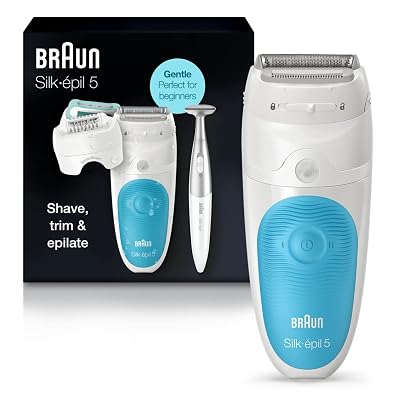
Best for: First-time epilator users
The Silk-epil 5 is a simpler, more approachable epilator than the #2 Silk-epil 9, and Braun positions it for beginners. It is fully waterproof, so you can use it in the shower or bath, and it comes with a shaver head and bikini trimmer, which makes it a small all-in-one kit for legs, underarms and the bikini line.
Like any epilator, it works on every skin tone and hair colour and can remove quite short hairs, with smoothness lasting up to about four weeks. Expect some discomfort, particularly on the first sessions and on sensitive areas, and exfoliate gently to reduce ingrown hairs.
- Waterproof for shower or bath use
- Shaver head and bikini trimmer included
- Removes short hairs
- Anti-slip grip
Pros
- Suits every skin tone
- Three tools in one kit
- Good starting point for beginners
Cons
- Fewer refinements than the Silk-epil 9
- Epilation still hurts at first
Skip it if: Skip it if you want long-term reduction and have suitable skin and hair; an IPL like the Nood fits that goal.
Check Price on AmazonPhilips Norelco OneBlade Pro 360 Face + Body

Best for: Painless trimming and shaving, face and body
The OneBlade Pro 360 trims and shaves in one tool, with a blade that flexes to follow the contours of the body and an adjustable comb that offers many length settings. It is painless, safe for all skin tones and hair colours, and it handles both the face and body, which no other pick here does as well.
It can be used wet or dry, charges by USB and comes with a travel case. The trade-off is how long results last: shaved hair returns within days, so it will not give the weeks of smoothness of the Braun epilators or the long-term reduction of IPL. It is a good companion to an IPL device for shaving between sessions.
- Trims and shaves with a flexing blade
- Adjustable comb with many lengths
- Wet and dry use with USB charging
- Travel case and travel lock
Pros
- Painless and suits all skin tones
- Face and body in one tool
- Ideal for shaving between IPL sessions
Cons
- Results last only days
- Blades need replacing over time
Skip it if: Skip it if you want smooth skin for weeks; the Braun epilators last much longer.
Check Price on AmazonUbroo IPL Hair Removal Device
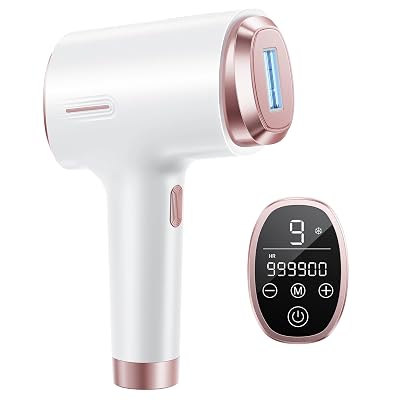
Best for: Buying an IPL as a present
The Ubroo device is an at-home IPL with cooling and several energy levels, and its listing is aimed squarely at gift buyers. If you are buying for someone else, it offers the core features of the higher-ranked IPL picks in a package designed to give as a present.
Its listing is thinner than those of the Nood, INIA and INNZA devices, with little detail on skin tone limits, so check the manual before giving it. The same rules apply: the recipient needs lighter skin with darker hair, and results require regular sessions and maintenance rather than a one-off treatment.
- At-home IPL with cooling
- Several energy levels
- Designed as a gift
- For use on body areas
Pros
- Core IPL features in a giftable package
- Cooling for comfort
- Adjustable energy
Cons
- Thin listing detail
- Not for very dark skin or light hair
Skip it if: Skip it if you are unsure of the recipient’s skin tone and hair colour; a trimmer is a safer gift.
Check Price on AmazonMANSCAPED The Lawn Mower 3.0 Plus

Best for: Trimming groin and body hair
The Lawn Mower 3.0 Plus is a body trimmer designed mainly for below-the-waist grooming, but the brand says it also works on the chest, body and back. Its rounded ceramic blade is designed to reduce nicks and snags, which matters on sensitive skin, and it is waterproof for use in the shower.
As a trimmer, it is painless and safe for every skin tone and hair colour, and it leaves a short stubble rather than a close shave. It is more specialised than the #6 OneBlade, which also shaves and handles the face, but it is the more focused choice for intimate grooming.
- Groin and body hair trimmer
- Rounded ceramic blade
- Waterproof for wet or dry use
- Also usable on the chest and back
Pros
- Designed for sensitive areas
- Painless and suits all skin tones
- Shower-friendly
Cons
- Trims rather than shaves close
- Hair returns quickly
Skip it if: Skip it if you want smooth, hair-free skin; an epilator or IPL device suits that goal.
Check Price on AmazonGransumr IPL Hair Removal Device

Best for: Trying IPL without the premium spend
The Gransumr device is a simpler IPL option with five adjustable energy levels and a fast flash rate, which helps when covering the legs. It is marketed for women and men, and the listing suggests results after several weeks of regular sessions, which is a realistic timescale for IPL.
The listing uses phrases like permanent-like effect, but IPL reduces regrowth rather than ending it, and maintenance is needed. It has fewer features than the cooling-equipped #1, #3 and #4 picks, and like all IPL it is unsuitable for very dark skin or for light, grey or red hair.
- At-home IPL device
- Five adjustable energy levels
- Fast flash rate
- Sold for women and men
Pros
- Straightforward to use
- Adjustable energy for comfort
- Realistic timescale on the listing
Cons
- No cooling feature listed
- Not for very dark skin or light hair
Skip it if: Skip it if sessions feel hot or uncomfortable; a cooling model such as the INNZA may suit you better.
Check Price on AmazonSHPAVVER Electric Razor for Women
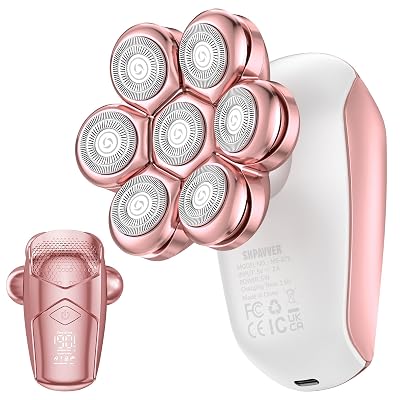
Best for: Quick, painless shaving of legs and underarms
The SHPAVVER razor is an electric shaver designed for women’s legs and underarms, with a floating head that follows the body’s curves and waterproof construction for use in the shower. It is the gentlest route to smooth skin on this list, with no pain and no skin tone or hair colour limits.
Its listing has less detail than the Braun and Philips picks, and like any shaver it only removes hair at the surface, so regrowth appears within a day or two. It is a useful choice for people with sensitive skin who find epilators too painful, or for shaving between IPL sessions.
- Electric shaver for legs and underarms
- Floating head follows curves
- Waterproof for wet use
- Painless option for sensitive skin
Pros
- Painless and quick
- Suits all skin tones and hair colours
- Good for between IPL sessions
Cons
- Results last only a day or two
- Thin listing detail
Skip it if: Skip it if you want weeks of smoothness; the Braun Silk-epil 9 lasts much longer.
Check Price on AmazonHow We Chose These Products
We shortlisted body hair removal devices from Amazon listings that are highly rated by a large number of shoppers, favouring established brands and fuller-featured models such as IPL devices with cooling and adjustable energy, epilators with wet use and trimmers with skin-friendly blades. We then checked each product’s listed features against the safety guidance cited in this post, including the AAD’s advice on light-based hair removal and skin tone.
These are research-based picks, not hands-on lab tests. We have not used these devices ourselves, so the ranking reflects listing detail, features and suitability for different skin and hair types rather than personal results. Where listings describe results as permanent or quote percentages, we have not repeated those claims.
- Strong ratings from a large number of shoppers
- Established brands and fuller-featured models preferred
- Listed features checked against the cited safety guidance
- Products with thin or unclear listings excluded or ranked lower
- A mix of IPL, epilators and painless trimmers for every skin tone
Types of Body Hair Removal Device Compared
There are three main kinds of device for home use. They differ in how they remove hair, how long results last and who they suit.
| Device | How it works | Results last | Suits | Main drawbacks |
|---|---|---|---|---|
| At-home IPL | Pulses of light heat the pigment in the hair to disrupt regrowth | Gradual reduction over months with upkeep | Light to medium skin with dark hair | Not for dark skin or light hair; needs many sessions |
| Epilator | Rotating tweezers pull hairs from the root | About 2 to 4 weeks | All skin tones and hair colours | Discomfort; ingrown hairs; redness |
| Body trimmer or groomer | Blades cut hair short above the skin | A few days | All skin, including bikini and underarms | Hair stays visible as stubble |
| Electric body shaver | Foil or rotary head shaves close to the skin | 1 to 3 days | All skin tones | Razor bumps on some skin; frequent use |
Many people use more than one: IPL on the legs and underarms, for example, and a trimmer for the bikini line or areas where IPL is not recommended.
IPL and Skin Tone: Who It Suits and Who Should Avoid It
IPL targets the dark pigment in the hair. For it to work safely, the hair must be darker than the surrounding skin. When skin is dark, it absorbs more of the light, which raises the risk of burns, blisters and changes in skin colour. When hair is light, there is too little pigment for the light to act on.
| Skin and hair | IPL suitability | Better option |
|---|---|---|
| Light to medium skin, dark hair | Usually the best candidates | IPL, following the manual |
| Olive or light brown skin, dark hair | Often possible on lower settings if the device allows | Check the skin tone chart; patch test |
| Deep brown or very dark skin | Most home IPL devices are not suitable | Epilator, trimmer, or professional laser designed for darker skin |
| Any skin, blonde, red, grey or white hair | Little or no effect | Epilator or trimmer |
| Recently tanned skin | Avoid until the tan fades | Trimmer or shaver in the meantime |
Always check the skin tone chart in the device manual; many devices include a sensor that blocks flashes on skin that is too dark. The AAD’s laser hair removal FAQs note that light-based treatment works best on light skin with dark hair and that darker skin needs careful handling by an experienced dermatologist. If you have darker skin and want long-term reduction, a professional consultation is safer than a home device. Our guide on laser versus electrolysis explains the option that works regardless of hair colour.
Features to Look For in Each Device
Once you know which type suits you, these features make the biggest difference to comfort, safety and results.
- IPL: an automatic skin tone sensor, several energy levels, a large window for legs and a smaller one for underarms and bikini.
- IPL: a safety lock that only flashes when the window is fully against the skin.
- Epilator: wet and dry use, which many people find less painful in a warm shower.
- Epilator: a pivoting head, speed settings and caps for sensitive areas.
- Trimmer: guards or combs for different lengths and a rounded tip for delicate areas.
- Shaver: a waterproof body, a pop-up trimmer and a replaceable foil or head.
- All devices: cordless, rechargeable power and a head that comes off for cleaning.
Home IPL devices are not the same as professional lasers. They use lower energy and a broader spectrum of light, so they usually need more sessions and ongoing touch-ups, and results vary between people.
What to Avoid
A few buying and usage mistakes cause most bad experiences with body hair removal devices.
- IPL devices with no skin tone guidance or safety lock.
- Using IPL on very dark skin, tanned skin or light hair against the manufacturer’s chart.
- Treating over tattoos, dark moles, birthmarks or permanent makeup.
- Large body epilators on the bikini line or face without a suitable cap.
- Old, dull trimmer blades or shaver foils that tug and cause razor bumps.
- Sharing devices, heads or blades with other people.
Never flash IPL near the eyes, over tattoos or moles, or on broken, sunburned or irritated skin. Stop immediately if you notice blistering, burning pain or skin colour changes, and seek medical advice.
Epilators: Longer Smoothness on Any Skin Tone
An epilator is a good choice if IPL is not suitable for your skin or hair, or if you want results that last longer than shaving without committing to months of light treatments.
The first sessions are the most uncomfortable. Many people find it easier on shorter hair, in a warm shower with a wet and dry model, or after a few sessions when regrowth becomes finer. Hold skin taut and move the epilator slowly against the direction of hair growth. Our guide to the best facial epilator for women covers head types and technique in more detail, and most of the advice carries over to body models. Clean the head after every session, since hair and skin cells collect between the tweezers.
Trimmers and Shavers: Painless and Suitable for Everyone
Trimmers and electric body shavers are the simplest option and the safest for sensitive areas. They do not pull hair or heat the skin, so they suit all skin tones and are a good choice before or between other methods.
- Use a trimmer with a guard for the bikini line and underarms to avoid nicks.
- Use a foil shaver for a closer finish on legs and arms.
- Shave or trim in the direction of hair growth to reduce bumps.
- Trim before an IPL session, since IPL needs hair shaved short, not plucked or waxed.
- Replace heads and foils when they start to pull.
The AAD recommends shaving in the direction of hair growth and keeping blades sharp to limit razor bumps, and the same idea applies to electric shavers. If you get bumps along the bikini line or underarms, switching from a close shave to a trimmer that leaves a little length is often the simplest fix, because the hair is less likely to curl back into the skin as it grows.
How to Use an At-Home IPL Device Safely
IPL results depend on regular, correct use. Follow the manual for your device, and use these general steps as a guide.
Check suitability
Compare your skin tone and hair colour with the device chart; stop if you are outside the range.
Patch test
Flash a small area on a low setting and wait 24 to 48 hours for any reaction.
Shave the area
Shave, do not wax or epilate, so the hair root stays in place for the light to reach.
Clean and dry the skin
Remove lotions, deodorant and oils, and make sure the skin is completely dry.
Start on a low setting
Press the window flat against the skin and flash, moving one window width each time without overlapping.
Follow the schedule
Treat every one to two weeks at first, then less often for maintenance as the manual advises.
Protect the skin
Avoid sun exposure and use sunscreen on treated areas, and do not treat tanned skin.
Keep a simple log of the date, area and setting for each session. It helps you stick to the schedule and spot whether a particular setting caused irritation.
Cleaning, Aftercare and Ingrown Hairs
Clean devices and gentle aftercare reduce spots, irritation and ingrown hairs with every method.
- Wipe the IPL window with a dry, lint-free cloth after each session.
- Brush out and wash epilator and trimmer heads as the manual allows, then let them dry.
- Apply a fragrance-free moisturiser after removing hair.
- Exfoliate gently a couple of times a week between sessions to help prevent ingrown hairs.
- Avoid tight clothing on freshly treated areas if your skin is prone to bumps.
The AAD’s guidance on how to safely exfoliate at home advises being gentle and not exfoliating sunburned or broken skin, which is worth remembering after epilating or shaving. If you want to compare methods further, our guide on epilator versus waxing explains how the two compare for pain and regrowth.
Dos and Don’ts
Try This
- Check the skin tone chart before using IPL
- Patch test every new device
- Shave before IPL sessions
- Moisturise after hair removal
- Clean heads and windows after use
Avoid This
- Use IPL on dark, tanned or broken skin
- Flash over tattoos, moles or near the eyes
- Wax or epilate between IPL sessions
- Share devices or blades
- Keep using a device that burns or blisters
Honest Limits
No home device removes body hair permanently. IPL can reduce regrowth significantly for suitable skin and hair, but most people need ongoing maintenance, and some hair usually returns, especially where growth is driven by hormones. Epilators and trimmers manage hair but do not reduce it over time.
Home IPL is also not an option for everyone. People with very dark skin or with light, red or grey hair will get little benefit and may risk harm, and marketing images rarely make this clear. For them, epilators, trimmers, professional lasers suited to darker skin, or electrolysis are more realistic choices.
When to See a Dermatologist
- You have burns, blisters or skin colour changes after IPL.
- Ingrown hairs become painful, infected or leave dark marks.
- Hair growth increases suddenly or appears in new areas.
- You have darker skin and want safe long-term hair reduction.
This article is for general information and does not replace medical advice. Follow each device’s instructions, and speak to a board-certified dermatologist before using light-based devices if you have a skin condition, take photosensitising medication or are unsure whether your skin tone is suitable.
Your Questions, Answered
What is the best body hair removal device?
The Nood Flasher Pro is our top IPL pick for suitable skin and hair; the Braun Silk-epil 9 is best for everyone else.
Does IPL work on dark skin?
Most home IPL devices are not suitable for very dark skin.
Does IPL work on blonde or grey hair?
No, there is too little pigment for the light to target.
Is the most expensive IPL device worth it?
Only if your skin and hair suit IPL. Features like the cooling on the Nood or INNZA add comfort, but none gives permanent results.
Can I use IPL on my bikini line?
Usually yes on the outer bikini area, if the manual allows.
How long does IPL take to work?
Most people see reduction after several weeks of regular sessions.
Is IPL hair removal permanent?
No, it reduces growth but needs maintenance.
Can I epilate between IPL sessions?
No; shave instead so the root stays for the light.
What is the least painful device on this list?
The Philips Norelco OneBlade Pro 360, MANSCAPED Lawn Mower and SHPAVVER razor are all painless.
Do epilators cause ingrown hairs?
They can; gentle exfoliation helps prevent them.
Where This Leaves You
The best body hair removal device is the one that suits your skin tone and hair colour: IPL for long-term reduction on lighter skin with darker hair, an epilator for weeks of smoothness on any skin, and a trimmer or shaver for painless tidying.
Check the skin tone chart, patch test, avoid tattoos, moles and the eyes, keep devices clean, and see a dermatologist for burns, persistent ingrown hairs or sudden changes in hair growth.
Our top pick: Nood Flasher Pro IPL Device
The Nood Flasher Pro takes the top spot because it is the most fully featured IPL device here, with built-in cooling, a one-off purchase with no refills and a clear focus on long-term reduction, which suits the many buyers who want to shave less often. Choose the Braun Silk-epil 9 instead if your skin is dark or your hair is light, since epilators work on any skin tone, or the Philips Norelco OneBlade Pro 360 if you want painless trimming and shaving.
Check Price on Amazon
Written by
Registered pharmacist and founder of Facial Adviser. Rakib's pharmacy training covers how skincare actives work and interact; a later course in cosmetology turned that into a focus on facial treatments and skincare products. He plans, researches and edits every guide on the site and checks health claims against sources such as the American Academy of Dermatology, the FDA and the NIH. He is not a dermatologist; see the Editorial Policy and Medical Disclaimer.
About · Editorial policy · How we choose products · Medical disclaimer · Contact
Keep reading: Facial hair removal
- 10 Best Products for Women's Facial Hair Removal (2026): Gentle Picks
- How Much Facial Hair Is Normal for a Woman?
- Dermaplaning Facial: What the Evidence Shows
- Is Home Laser Hair Removal Safe? Real Data
- Facial Bleach: What It Actually Does to Your Skin
- Dark Upper Lip Treatment: What Actually Works
- 10 Best LED Light Therapy Masks (2026): Clearer Skin, Softer Lines
- How to Incorporate Microcurrent Into Your Routine: Gel, Timing and Safety