Laser vs Electrolysis for Facial Hair: Which Works for Your Hair and Skin
If you are tired of plucking, waxing, or shaving facial hair, the two long-term options you will hear about most are laser hair removal and electrolysis. Both target the hair follicle rather than just the hair above the skin, and both can dramatically reduce how often you need to deal with unwanted hair. But they work in very different ways, and each suits different people.
Part of our guide to at-home facial devices. Start with: 10 Best Products for Women's Facial Hair Removal (2026): Gentle Picks
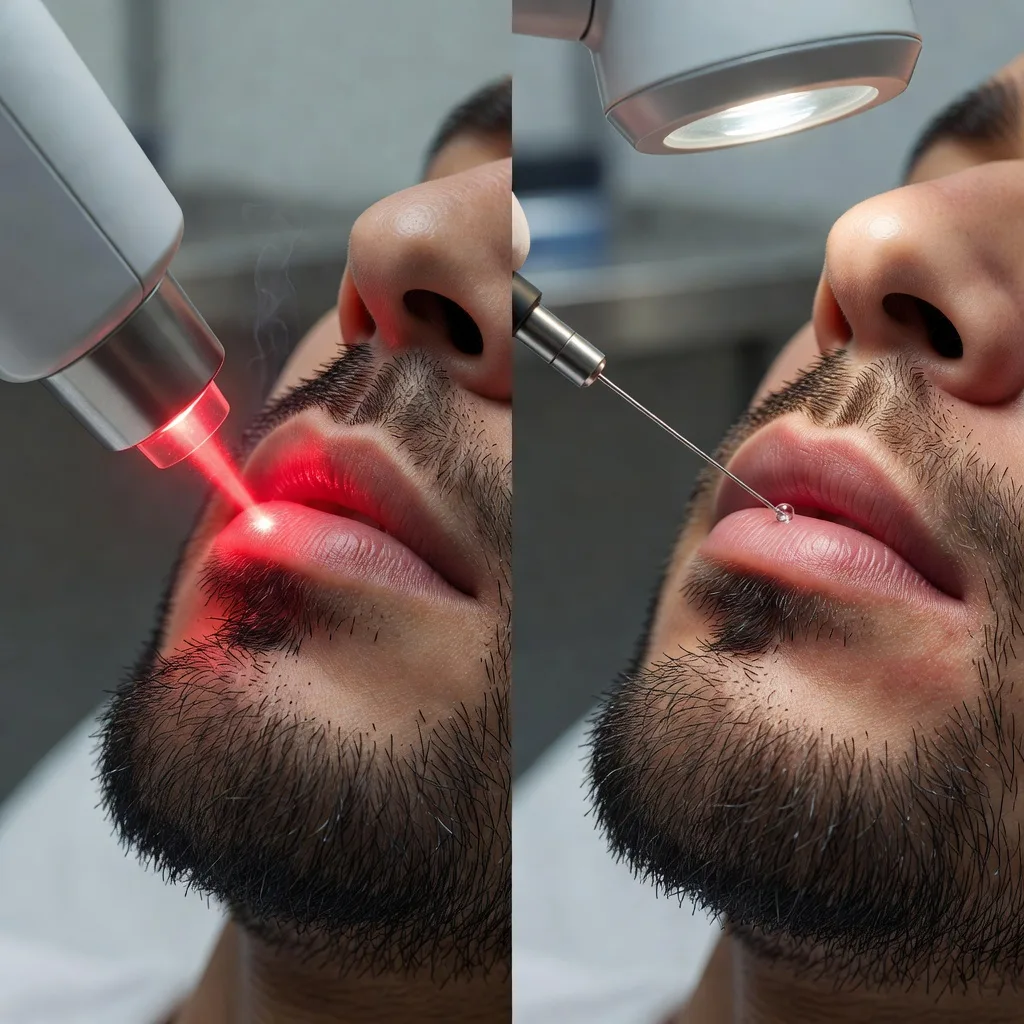
Laser uses light that is absorbed by the pigment in the hair to heat and damage the follicle, so it works best on dark hair and can treat many hairs at once. Electrolysis uses a fine probe and a small electrical current to destroy each follicle individually, so it works on any hair color, including white, gray, blonde, and red.
The wording around permanence matters. In the US, electrolysis is the only method that can be marketed as permanent hair removal. Lasers are cleared for permanent hair reduction, meaning a long-term, stable decrease in the number of hairs, often with some regrowth that needs occasional maintenance.
Your hair color, skin tone, and the amount of hair you want to remove largely decide which method makes sense. A quick look at those three factors in a mirror is often enough to point you in the right direction before you book a consultation.
This guide compares how the two work, who each suits, how many sessions to expect, side effects including a rare laser reaction that can increase hair growth, and what to consider if your facial hair is hormonal.
Shopping these picks?
Amazon Prime members get fast, free shipping on eligible items, plus Prime Video, Amazon Music and member deals. New members can start with a free trial.
Start a free Prime trialAged 18 to 24? Prime for Young Adults comes with a longer free trial and a lower price after it.
Affiliate link: we may earn a commission at no extra cost to you.
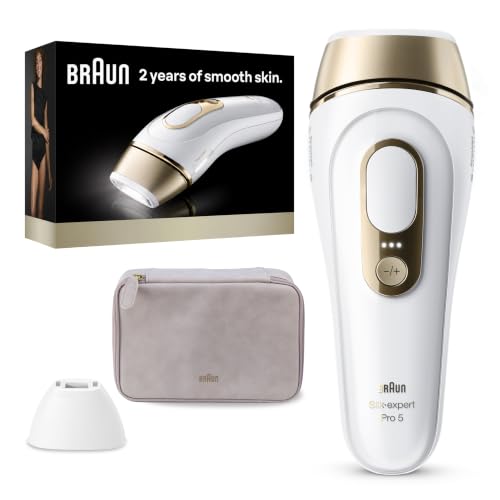
Recommended At-Home IPL Hair Removal Devices

What This Covers
- How Laser Hair Removal Works
- How Electrolysis Works
- Laser vs Electrolysis Side by Side
- The Color, Count, and Skin Check
- Laser for Darker Skin Tones
- Side Effects and Risks
- If Your Facial Hair Is Hormonal
- Preparing and Caring for Your Skin
- What Neither Can Promise
- When to See a Doctor First
- Your Questions, Answered
- The Bottom Line
What to Know First
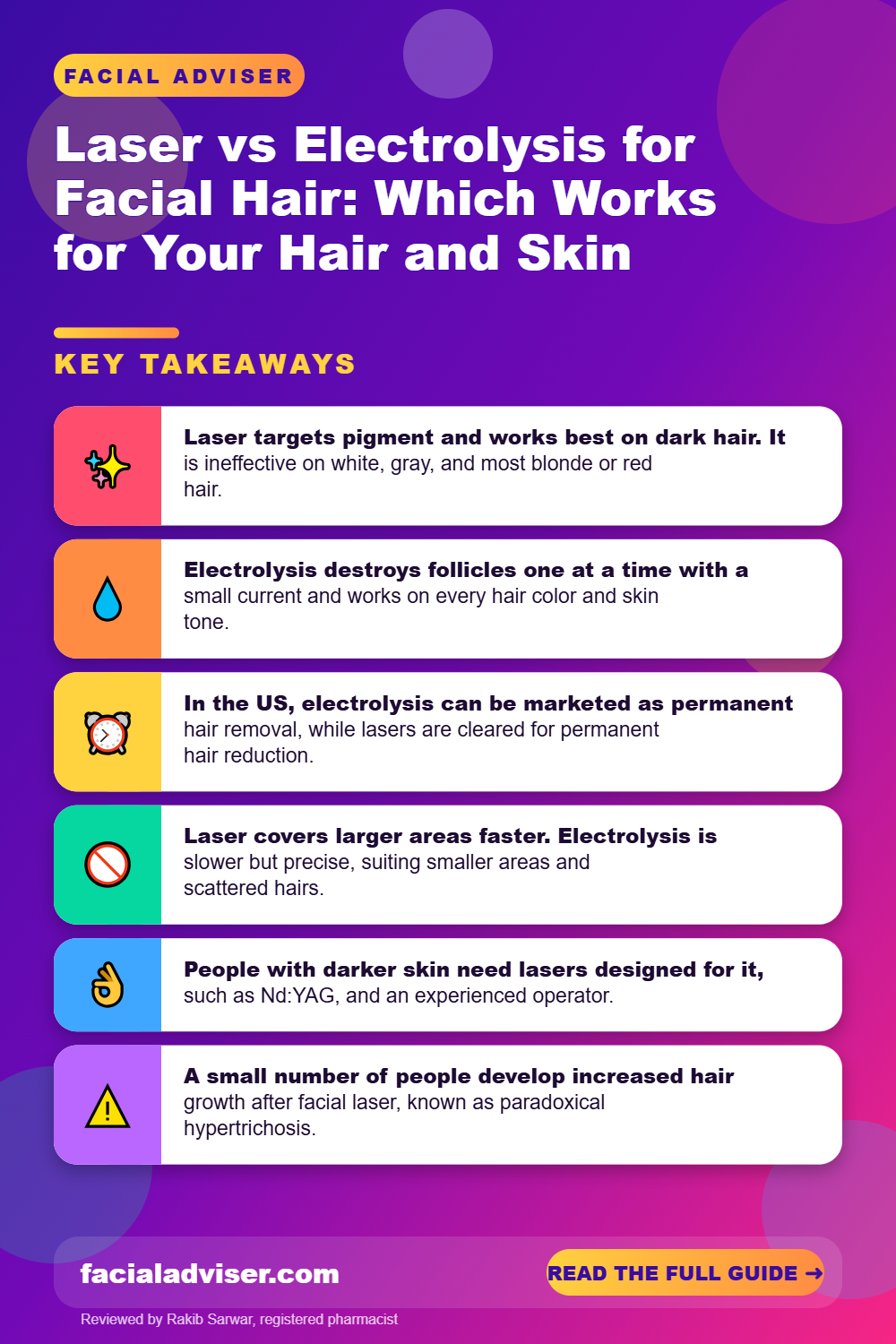
- Laser targets pigment and works best on dark hair. It is ineffective on white, gray, and most blonde or red hair.
- Electrolysis destroys follicles one at a time with a small current and works on every hair color and skin tone.
- In the US, electrolysis can be marketed as permanent hair removal, while lasers are cleared for permanent hair reduction.
- Laser covers larger areas faster. Electrolysis is slower but precise, suiting smaller areas and scattered hairs.
- People with darker skin need lasers designed for it, such as Nd:YAG, and an experienced operator.
- A small number of people develop increased hair growth after facial laser, known as paradoxical hypertrichosis.
- If facial hair is hormonal, such as with PCOS, treating the hormones helps results last longer.
How Laser Hair Removal Works
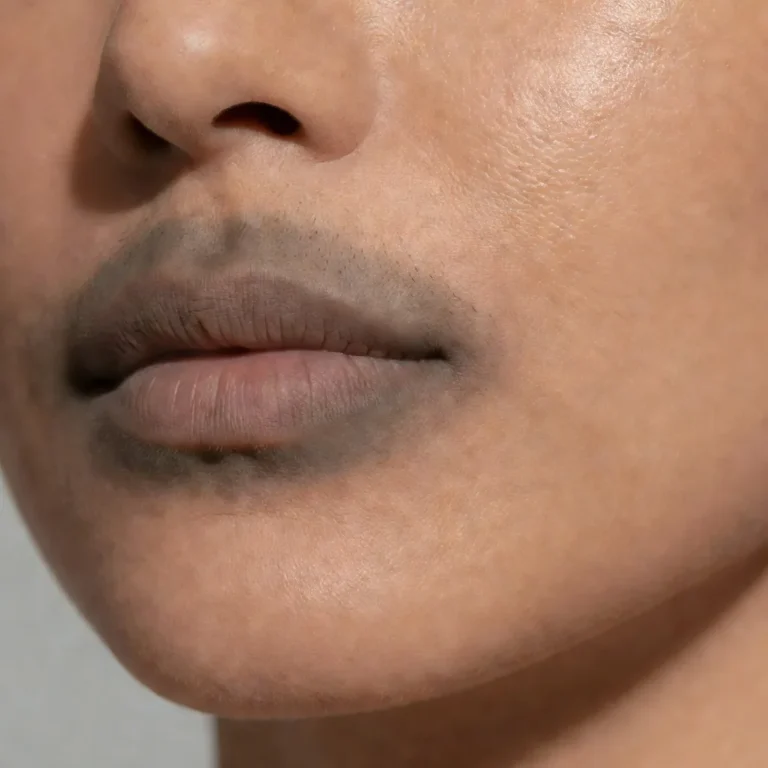
Laser hair removal uses concentrated light at wavelengths that are absorbed by melanin, the pigment in hair. The light turns into heat, which travels down the hair shaft and damages the follicle’s ability to grow a new hair. Because it works on many follicles at once, a laser can treat an area like the upper lip or chin in a few minutes.
The key requirement is contrast. The laser needs more pigment in the hair than in the surrounding skin. Dark hair on lighter skin gives the best results. Light hair has too little pigment to absorb the energy, and darker skin absorbs more of the energy itself, which raises the risk of burns and pigment changes unless the right laser and settings are used.
Hair grows in cycles, and lasers only affect follicles in the active growth phase. That is why several sessions are needed, usually spaced four to eight weeks apart for the face.
Several types of laser are used for hair removal, including alexandrite, diode, and Nd:YAG, along with intense pulsed light devices that use a broader spectrum of light. Alexandrite and diode lasers are often used for lighter skin with dark hair, while Nd:YAG is preferred for deeper skin tones.
How Electrolysis Works
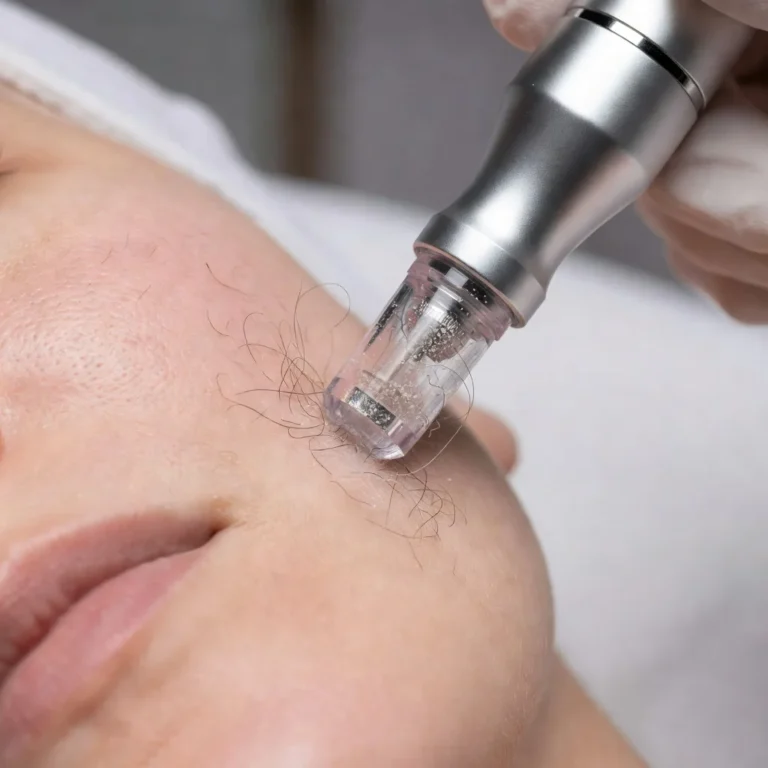
Electrolysis involves inserting an extremely fine probe into each hair follicle and delivering a small electrical current. The current destroys the cells that produce the hair. There are three main techniques: galvanic, which uses a chemical reaction, thermolysis, which uses heat, and blend, which combines the two.
Because it does not rely on pigment, electrolysis works on any hair color and any skin tone. It is precise, making it well suited to eyebrow shaping, scattered chin hairs, and fine or light hairs that lasers cannot see.
The trade-off is time. Each hair is treated individually, and some follicles need more than one treatment. A full course for an area like the chin can take many sessions over a year or more.
Finding a qualified electrologist matters. Training and licensing rules vary by country and state, so ask about certification, how many facial clients they treat, and how they sterilize or dispose of probes. A good electrologist will also check the skin between sessions and adjust the current and technique if you are healing slowly.
Laser vs Electrolysis Side by Side
| Factor | Laser | Electrolysis |
|---|---|---|
| How it works | Light absorbed by hair pigment | Electrical current in each follicle |
| Hair colors | Dark hair only | All colors, including white and gray |
| Skin tones | All, with the right laser and settings | All |
| Speed per session | Fast, many hairs at once | Slow, one hair at a time |
| Typical course for the face | Around 6 to 10 sessions plus maintenance | Frequent sessions over 12 to 18 months |
| Marketing claim in the US | Permanent hair reduction | Permanent hair removal |
| Discomfort | Snapping sensation, brief | Stinging or heat with each hair |
| Best for | Dense dark hair over an area | Light hair, few scattered hairs, precise shaping |
Many people use both. Laser can reduce the bulk of dark hair quickly, and electrolysis can then tackle the remaining light, gray, or stubborn hairs.
The Color, Count, and Skin Check
Before a consultation, look at your facial hair in daylight and work through these steps.
Check hair color
Pluck or look closely at a few hairs. Dark brown or black hair suits laser. White, gray, blonde, or red hair points to electrolysis.
Estimate the count
A handful of scattered chin hairs suits electrolysis. Dense growth across the upper lip, chin, and jaw suits laser.
Note your skin tone
Lighter skin with dark hair is ideal for most lasers. Deeper skin tones can still have laser, but need an Nd:YAG laser and an experienced operator.
Think about hormones
If hair has increased recently or you have irregular periods, get checked for a hormonal cause first, since untreated hormones drive regrowth.
Choose your starting method
Dark, dense hair: start with laser. Light or sparse hair: start with electrolysis. A mix: laser first, then electrolysis for leftovers.
Stop plucking and waxing for about four to six weeks before laser, because the hair root needs to be present for the light to target it. For electrolysis, hairs need to be long enough for the practitioner to see and grip, so ask how long to let them grow.
Laser for Darker Skin Tones
Older lasers were designed mainly for light skin, which gave laser a reputation for being unsafe on darker skin. Modern devices, especially the long-pulsed Nd:YAG laser at 1064 nanometers, penetrate deeper and are absorbed less by skin pigment, making them safer for deeper skin tones when used correctly.
Even so, the risk of burns, blisters, and dark or light patches is higher when settings are wrong. Choosing a practitioner who regularly treats your skin tone, asking which laser will be used, and having a test patch are sensible steps.
Home laser and IPL devices are generally not designed for darker skin, and many carry warnings against use on deeper skin tones. Check the device’s skin tone chart carefully, and do not use them near the eyes. Our guide on whether home laser hair removal is safe covers the details.
Side Effects and Risks
| Effect | Laser | Electrolysis |
|---|---|---|
| Redness and swelling | Common, settles within hours to days | Common, usually short-lived |
| Pigment changes | Possible, higher in darker or tanned skin | Uncommon |
| Burns or blisters | Possible with wrong settings | Rare |
| Scarring | Rare | Rare, small pitting with poor technique |
| Increased hair growth | Rare paradoxical hypertrichosis | Not reported |
| Infection | Rare | Rare, if hygiene is poor |
Paradoxical hypertrichosis is an unusual reaction in which hair grows thicker or darker in or near a treated area. It is reported most often on the face and neck, and appears more often in people with darker skin and hair or with hormonal conditions. It is uncommon, but worth discussing before starting facial laser.
If Your Facial Hair Is Hormonal
When facial hair is driven by androgens, as in polycystic ovary syndrome, hormones can keep activating new follicles. Both laser and electrolysis still work, but new hairs may appear over time, and maintenance sessions become part of the plan.
Treating the underlying cause, often with medication prescribed by a doctor, can make hair removal results last much longer. If you are not sure whether your facial hair is normal or hormonal, our guide to normal facial hair vs PCOS explains the signs worth checking.
Between sessions: shaving, dermaplaning, and trimming are fine before laser because they leave the root in place. Avoid plucking, waxing, and threading before laser. For electrolysis, follow your practitioner’s advice on how long hairs need to be.
Preparing and Caring for Your Skin
Do
- Protect your face from the sun for several weeks before and after laser.
- Shave the area before laser if your practitioner asks.
- Tell your practitioner about retinoids, antibiotics, and other medications.
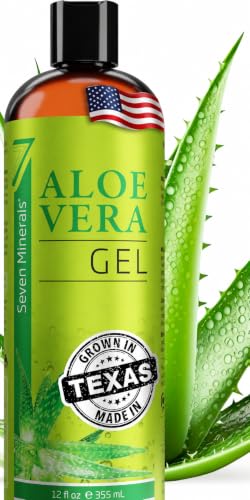
- Soothe skin afterwards with a cool compress or fragrance-free gel.
- Wear broad-spectrum sunscreen daily.
- Keep a record of sessions and results.
Don’t
- Tan or use self-tanner before laser.
- Pluck or wax in the weeks before laser.
- Use exfoliants or retinoids on treated skin for a few days.
- Pick at scabs or small crusts after electrolysis.
- Apply makeup to broken or crusted skin.
- Book sessions closer together than recommended.
What Neither Can Promise
Laser rarely removes every hair. Most people see a large reduction, and remaining hairs are often finer and lighter, but some regrowth over time is normal, especially with hormonal changes. Electrolysis can remove treated hairs permanently, but new follicles can still become active later in life, particularly around menopause.
Neither can guarantee results in a set number of sessions. Hair density, color, hormones, and the practitioner’s skill all influence the outcome, and anyone promising complete permanent removal in a few visits is overselling.
When to See a Doctor First
Speak with a doctor before starting if:
- Your facial hair increased quickly over a few months.
- You have irregular periods, acne, or scalp hair thinning alongside facial hair.
- You have a pacemaker or implanted device, which may affect electrolysis suitability.
- You have a history of keloid scars or pigmentation problems.
- You are pregnant, when most practitioners advise waiting.
- You have an active skin infection, cold sores, or a skin condition in the area.
Medical disclaimer: This article is for general information and is not a substitute for professional medical advice. Rapid hair growth or signs of hormonal change should be assessed by a doctor before cosmetic treatment.
Your Questions, Answered
Is laser or electrolysis better for facial hair?
Laser is usually better for dense, dark hair. Electrolysis is better for light, gray, or sparse hairs and works on all skin tones.
Is electrolysis permanent?
In the US, electrolysis is the only method that can be marketed as permanent hair removal, though new follicles can still become active later.
Does laser hair removal work on gray or blonde hair?
No. Laser needs pigment in the hair, so white, gray, and most blonde or red hairs do not respond.
Is laser safe for dark skin?
It can be, when an appropriate laser such as Nd:YAG is used by an experienced practitioner with careful settings.
How many sessions does facial laser take?
Often around six to ten sessions, spaced a few weeks apart, plus occasional maintenance.
How long does electrolysis take for the chin?
It varies, but a full course often involves frequent sessions over twelve to eighteen months.
Can laser make facial hair grow more?
Rarely. Paradoxical hypertrichosis can cause increased growth near treated areas, especially on the face and neck.
Can I shave between laser sessions?
Yes. Shaving is fine before laser, but avoid plucking, waxing, and threading.
Does PCOS affect laser or electrolysis results?
Yes. Hormones can activate new follicles, so maintenance may be needed unless the hormonal cause is treated.
Which is more painful, laser or electrolysis?
Both are uncomfortable. Laser feels like quick snaps, while electrolysis stings with each hair and takes longer.
The Bottom Line
Laser and electrolysis both offer long-term relief from facial hair, but they suit different hair and skin. Laser is fast and effective on dark hair, while electrolysis is slower but works on every hair color and can permanently remove treated follicles.
Look at your hair color, how much hair you want to remove, and your skin tone before choosing, and consider combining them if you have a mix. If your facial hair is increasing or comes with hormonal symptoms, see a doctor first, since treating the cause makes any removal method last longer.

Written by
Registered pharmacist and founder of Facial Adviser. Rakib's pharmacy training covers how skincare actives work and interact; a later course in cosmetology turned that into a focus on facial treatments and skincare products. He plans, researches and edits every guide on the site and checks health claims against sources such as the American Academy of Dermatology, the FDA and the NIH. He is not a dermatologist; see the Editorial Policy and Medical Disclaimer.
About · Editorial policy · How we choose products · Medical disclaimer · Contact
Keep reading: Facial hair removal
- 10 Best Products for Women's Facial Hair Removal (2026): Gentle Picks
- Epilator vs Waxing for Facial Hair: Pain, Results, and Skin Safety
- Facial Razor vs Normal Razor: Can You Use a Regular Razor on Your Face?
- 10 Best IPL Hair Removal Systems (2026): Smoother Skin at Home
- 10 Best IPL Hair Removal Devices for Sensitive Skin (2026): Gentle Picks
- 10 Best Eyebrow Razors (2026): Clean, Precise Brow Shaping
- 10 Best Gua Sha Facial Tools (2026): Stone and Steel Picks Compared
- 10 Best Facial Tools (2026): LED, Cleansing, Gua Sha and More