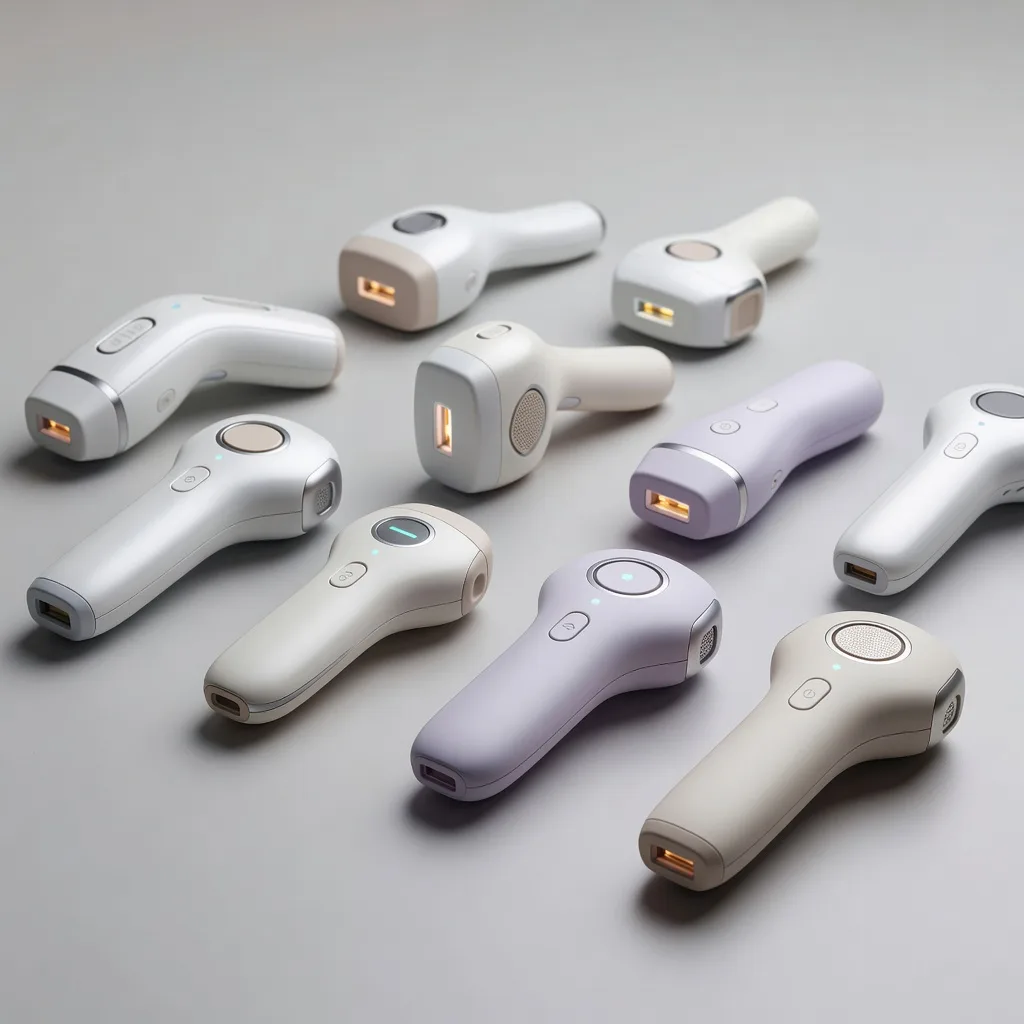
10 Best IPL Hair Removal Devices for Sensitive Skin (2026): Gentle Picks
If waxing leaves you red and shaving brings razor bumps, an at-home IPL device can look like the answer. This list covers 10 options chosen for sensitive skin, from handsets with automatic skin tone sensors to cooled devices and a soothing gel, followed by a guide to choosing and using one safely.
Part of our guide to at-home facial devices. Start with: 10 Best Products for Women's Facial Hair Removal (2026): Gentle Picks
The best IPL hair removal device for sensitive skin has a built-in skin tone sensor that adjusts or blocks flashes, several low energy levels so you can start gently, contact cooling to reduce heat and stinging, and a smaller attachment for the face or bikini line. It should come from a brand with clear safety guidance. IPL works best on light to medium skin with dark hair and usually does not work on white, grey, red or light blonde hair, and it is not suitable for very dark skin. Always patch test first, shave rather than wax before treatment, and expect long-term hair reduction rather than hair that never returns.
In short: choose an IPL with a skin tone sensor, cooling and low settings, patch test, and check that your skin and hair colour are suitable.
The American Academy of Dermatology notes that light-based hair removal works best on light skin and dark hair, that it can cause burns and colour changes in inexperienced hands, and that maintenance treatments are usually needed.
After the picks, this guide explains how IPL works, which features matter for sensitive skin, how to use a device safely and when a dermatologist is a better choice.
Shopping these picks?
Amazon Prime members get fast, free shipping on eligible items, plus Prime Video, Amazon Music and member deals. New members can start with a free trial.
Start a free Prime trialAged 18 to 24? Prime for Young Adults comes with a longer free trial and a lower price after it.
Affiliate link: we may earn a commission at no extra cost to you.
As an Amazon Associate we earn from qualifying purchases. This does not change which products we include.


On This Page
- The 10 Best IPL Devices for Sensitive Skin Right Now
- How We Chose These Products
- How IPL Hair Removal Works
- Is IPL Suitable for Your Skin and Hair?
- What Sensitive Skin Needs From an IPL Device
- IPL Compared With Other Hair Removal Methods
- How to Use an IPL Device on Sensitive Skin
- Side Effects and Safety Risks
- Using IPL on the Face
- How Long Until You See Results?
- Dos and Don’ts for Sensitive Skin
- Honest Limits
- When to See a Dermatologist
- FAQ
- Summing Up
In Brief
- Braun Smart IPL Skin i-Expert Pro 7 is the top pick because its sensor adjusts every flash to your skin tone.
- Braun Silk-Expert Pro 5 gives the same sensor protection without needing an app.
- Nood Flasher Pro suits heat-sensitive skin thanks to built-in cooling and five comfort levels.
- IPL gives long-term hair reduction, not hair that never returns, and needs maintenance.
- It works best on dark hair and light to medium skin, and is not for very dark skin.
- Patch test, start on the lowest level and shave, do not wax, before treatment.
- Avoid tanned, sunburnt, irritated or broken skin.
The 10 Best IPL Devices for Sensitive Skin Right Now
Every device below was chosen for features that help reactive skin, such as automatic skin tone sensors, contact cooling or low starting energy levels, and the list runs from the most complete sensor-led handset to a soothing gel that works with any of them. Whichever you choose, patch test on the lowest setting before a full session.
| # | Product | Best For | Standout Feature | |
|---|---|---|---|---|
| 1 | Braun Smart IPL Skin i-Expert Pro 7 PL7219 | Reactive skin that needs flash-by-flash control | Sensor adjusts energy on every single flash | View |
| 2 | Braun Silk-Expert Pro 5 IPL5347 | Sensitive skin without app fuss | Automatic skin tone reading, no app needed | View |
| 3 | Nood Flasher Pro IPL with CryoSoothe | Skin that flushes easily with heat | Cools skin while you flash | View |
| 4 | BoSidin IPL with Ice-Cooling and SR Mode | Building tolerance level by level | Six energy levels plus ice cooling | View |
| 5 | Blex IPL with Sapphire Ice-Cooling | Spreading heat more evenly | Pre-heat pulse before the main flash | View |
| 6 | INIA HAUTE Pro IPL with Ice-Cooling | Longer sessions on sensitive skin | Stays cold even after long use | View |
| 7 | INNZA IPL with Ice Cooling | Fine-tuning very gentle settings | Nine energy levels with auto and manual | View |
| 8 | Ubroo IPL 21J with 41F Ice-Cooling | Underarms and bikini line | Cooling aimed at delicate areas | View |
| 9 | Gransumr IPL Hair Removal Device | First-timers nervous about IPL | Tells you to patch test first | View |
| 10 | RoseVee Cooling Gel for Laser and IPL | Pairing with any IPL device | Thin gel layer before flashing | View |
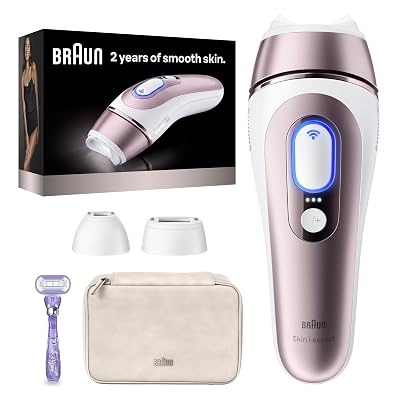
Braun Smart IPL Skin i-Expert Pro 7 PL7219
Best for: Reactive skin that needs flash-by-flash control
For sensitive skin, the safest IPL is one that decides the energy for you. This Braun reads your skin tone before each flash and scales the output to match, so a slightly tanned patch on the shin gets a softer pulse than paler skin on the thigh. That automatic adjustment is the main reason it sits at the top of this list, ahead of the cooled models further down.
The app matters here too, though not for novelty. It logs which zones you have already covered, which helps you avoid flashing the same spot twice, a common cause of redness on delicate skin. Separate heads for the face and bikini line let you keep a smaller window on thinner areas. The trade-off is that it offers no contact cooling, unlike the #3 Nood.
- Skin tone sensor adjusts each flash automatically
- App with step-by-step guidance and coverage tracker
- Several heads and settings for face, bikini and body
- UV filter built in; listed as dermatologically approved
Pros
- Removes guesswork over energy on reactive skin
- Coverage tracker helps prevent double flashing
- Smaller heads for thin facial and bikini skin
Cons
- No built-in cooling plate is listed
- Needs a phone and app for the full experience
Skip it if: Skip it if heat is your main trigger and you want active cooling, or if your skin or hair colour sits outside the device chart.
Check Price on AmazonBraun Silk-Expert Pro 5 IPL5347

Best for: Sensitive skin without app fuss
This model gives you the same core protection as the #1 pick, a sensor that reads your skin and tunes each flash, but without any app to install. For people with reactive skin who simply want the device to stop them overdoing it, that is often enough, and there are fewer steps to go wrong before you start.
Several intensity settings let you drop to a gentle level for the upper lip and underarms, and four heads cover face, body and bikini. The listing is refreshingly clear that results are long-lasting rather than complete, with occasional touch-ups. Compared with the #1 Braun, you lose the coverage tracker, so you need to be more careful about overlap.
- Skin tone sensor adapts each flash
- Different intensity settings to start gently
- Four heads for face, body and bikini
- Eye-safe design with no glasses required
Pros
- Sensor protection with very little setup
- Low intensity options for delicate zones
- Honest description of long-term reduction
Cons
- No coverage tracker, so overlap is easier
- No contact cooling for heat-sensitive skin
Skip it if: Skip it if you tend to lose track of treated areas and would benefit from app tracking, or if your skin tone is outside the Braun chart.
Check Price on AmazonNood Flasher Pro IPL with CryoSoothe

Best for: Skin that flushes easily with heat
If the warm snap of IPL is what makes your skin sting and flush, cooling is the feature to prioritise. The Nood chills the skin during each flash and pairs that with five comfort levels, so you can combine a cold contact surface with a low setting on the areas that react most, such as the bikini line or neck.
The catch for sensitive skin is that no automatic skin tone sensor is listed, so choosing the right comfort level is your job, unlike with the Braun picks. Start at level one and patch test. The extra lens for the look of fine lines and pores is a bonus, but it is best left alone until you know how your skin handles hair removal flashes.
- Built-in cooling while flashing
- Five comfort levels to build up slowly
- Swap-in lens aimed at the look of fine lines and spots
- No refills; flash replacement guarantee listed
Pros
- Cooling reduces the heat that triggers redness
- Five levels suit a slow, cautious start
- Designed for women and men
Cons
- No automatic skin tone sensor is listed
- Extra lens adds one more thing to test on reactive skin
Skip it if: Skip it if you want the device to choose the energy for you, or if you have very dark skin or light, red or grey hair.
Check Price on AmazonBoSidin IPL with Ice-Cooling and SR Mode

Best for: Building tolerance level by level
Sensitive skin usually does best when you raise energy in small steps, and BoSidin gives you six levels to do exactly that. You can begin at the very bottom on your first patch test, wait a day or two, then move up one level at a time. Ice cooling drops the contact surface to around 5C, which should take the edge off each flash.
The listing also names several product safety certifications, which is reassuring for a less familiar brand. The separate skin rejuvenation mode is best treated as optional; on reactive skin, stick to hair removal first. Compared with the #3 Nood, you get one extra energy step but more menu options to learn.
- Ice cooling to around 5C contact temperature
- Six energy levels across several modes
- Separate skin rejuvenation mode for the face
- FCC, CE and RoHS certifications listed
Pros
- Fine energy steps for a slow build-up
- Cooling makes low settings even gentler
- Certifications listed for extra reassurance
Cons
- No automatic skin tone sensor is listed
- More modes to learn than the Braun picks
Skip it if: Skip it if you would rather not manage settings manually, or your colouring falls outside the device chart.
Check Price on AmazonBlex IPL with Sapphire Ice-Cooling

Best for: Spreading heat more evenly
The Blex delivers each flash in two stages: a softer pre-heat pulse followed by the targeted one. The idea is to spread the heat rather than hit the skin with one sharp burst, which may feel easier on skin that reacts to sudden warmth. A sapphire ice-cooling surface adds a second layer of comfort, much like the #4 BoSidin.
It is also quick, with a rapid flash and a full-body session of around nine minutes, so sensitive areas spend less time under the device. The listing is short, though, and it does not mention a skin tone sensor or a set number of energy levels, which makes a careful patch test even more important than with the Braun models.
- Sapphire ice-cooling surface
- Dual-pulse flash: pre-heat then targeted pulse
- Rapid flash for quicker sessions
- Full body in about nine minutes
Pros
- Two-stage flash may feel gentler
- Cooling for heat-sensitive skin
- Short sessions mean less time on irritated areas
Cons
- Listing gives few details on energy levels
- No automatic skin tone sensor is listed
Skip it if: Skip it if you want clear, detailed guidance on settings, or if your skin is very dark or your hair is light.
Check Price on AmazonINIA HAUTE Pro IPL with Ice-Cooling

Best for: Longer sessions on sensitive skin
Some cooled devices warm up as a session goes on, which is exactly when sensitive skin starts to complain. INIA says its contact surface stays below 37F even after half an hour of use, so the last flash on your legs should feel as cool as the first. That makes it a good fit if you plan longer full-body sessions.
It is aimed at coarse hair and includes a bikini mode, which is useful because the bikini line is often both coarse and sensitive. An auto mode speeds up large areas. Compared with the #5 Blex, it gives clearer zone presets, but like most non-Braun picks there is no automatic skin tone sensor, so start low and patch test.
- Ice-cooling surface stays below 37F in long sessions
- Bikini mode for coarse hair plus a body mode
- Ten-minute auto mode for full body
- Lifetime flash guarantee listed
Pros
- Cooling holds up through longer sessions
- Bikini preset for a sensitive, coarse area
- Presets reduce setting mistakes
Cons
- Coarse-hair focus means higher output; start low
- No automatic skin tone sensor is listed
Skip it if: Skip it if your hair is fine and fair, if you only treat the face, or if your skin is very dark.
Check Price on AmazonINNZA IPL with Ice Cooling

Best for: Fine-tuning very gentle settings
With nine energy levels, INNZA offers the finest control in this list, which matters when the gap between comfortable and too warm is small. You can find a level that suits your face and a different one for your legs, and the manual mode lets you stay on a single flash rather than rapid firing over reactive patches.
Ice cooling is built in, and the listing is upfront that it suits light to medium skin with dark hair. It also sets out a clear schedule that tapers from frequent early sessions to monthly touch-ups. For sensitive skin, consider spacing those early sessions a little further apart if redness lingers. It lacks the automatic sensor of the #1 and #2 Braun picks.
- Nine energy levels with auto and manual modes
- Ice cooling during treatment
- Very high flash capacity
- Clear tapering session schedule
Pros
- Most granular energy control here
- Manual single flashes for delicate areas
- Honest guidance on suitable colouring
Cons
- Frequent early sessions may be too much for reactive skin
- No automatic skin tone sensor is listed
Skip it if: Skip it if you want the device to pick settings for you, or if you have very dark skin or fair hair.
Check Price on AmazonUbroo IPL 21J with 41F Ice-Cooling
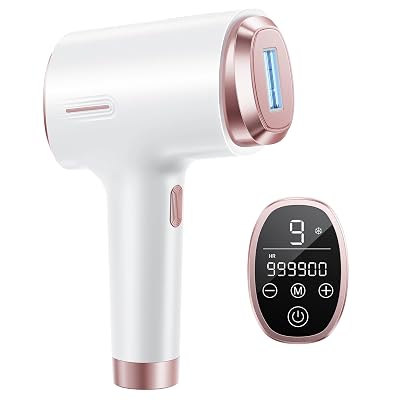
Best for: Underarms and bikini line
Ubroo pitches its ice cooling specifically at sensitive zones such as the underarms and bikini line, where skin is thin and prone to irritation. Cooling to around 41F takes the sting out of each flash, and adjustable energy levels let you run gentler settings on those areas than you would on your legs.
The flip side is that it is built around fairly high stated energy for stubborn hair, which is not what reactive skin needs at first. Treat the top setting as a ceiling you may never need, and start at the bottom. Compared with the #7 INNZA, the listing gives far less detail on levels and schedule, so read the manual closely.
- Ice cooling to around 41F
- Cooling aimed at sensitive zones
- Adjustable energy levels
- High stated energy for stubborn hair
Pros
- Cooling targets the most delicate areas
- Adjustable levels allow a gentle start
- Can still handle thicker hair later
Cons
- High maximum energy needs caution on reactive skin
- Short listing with few details on settings
Skip it if: Skip it if you want detailed setting guidance in the box, or if your skin is very dark or your hair is light.
Check Price on AmazonGransumr IPL Hair Removal Device

Best for: First-timers nervous about IPL
Gransumr keeps things simple, which suits anyone anxious about how their skin will react. Five energy levels come with plain guidance, level one for the face and level five for the legs, so you always know where to begin. The listing also tells you to shave and patch test first, which is exactly the right habit for sensitive skin.
It is honest that it works on light to medium skin with dark hair. The downside is that no cooling is listed, so it relies on low energy alone for comfort, unlike the cooled #3 Nood or #6 INIA. If you find even level one uncomfortable, pairing it with a cooling gel such as our #10 pick may help.
- Gentle flashes with five energy levels
- Clear level guidance from face to legs
- Very high flash capacity
- Instructions to shave and patch test first
Pros
- Easiest settings to understand
- Built-in patch test habit
- Realistic suitability guidance
Cons
- No cooling feature is listed
- Fewer levels than the #7 INNZA
Skip it if: Skip it if heat makes your skin flare and you want active cooling, or if your colouring is outside the chart.
Check Price on AmazonRoseVee Cooling Gel for Laser and IPL

Best for: Pairing with any IPL device
This is not a device but a companion for any of the nine above, and for sensitive skin it can make a noticeable difference. You apply a thin layer before flashing, and the gel is designed to disperse heat while letting light pass through, so it adds a cooling buffer even to handsets without built-in cooling, such as the #9 Gransumr.
The ingredient list is short, with water, glycerin, sodium hyaluronate and a ceramide, which suits skin that dislikes fragrance and long formulas. Still, patch test the gel on its own first, since any product can irritate. It will not fix a setting that is too high, so keep starting low whichever device you use.
- Water, glycerin, sodium hyaluronate and ceramide
- Designed to disperse heat
- High light transmission
- Apply a thin layer before each flash
Pros
- Adds cooling to devices that lack it
- Short, simple ingredient list
- Works with laser and IPL handsets
Cons
- An extra step in every session
- Does not replace lowering the energy level
Skip it if: Skip it if your device already has strong built-in cooling and your skin feels comfortable without extra help.
Check Price on AmazonHow We Chose These Products
We shortlisted IPL devices from Amazon listings that are highly rated and widely reviewed by a large number of shoppers, favouring established brands such as Braun and fuller-featured models. For this list we gave extra weight to the features that matter most for reactive skin: automatic skin tone sensors, contact cooling, low starting energy levels and clear instructions to patch test. Each product’s listed features were checked against the safety guidance cited in this post.
These are research-based picks, not hands-on lab tests. We did not flash any device ourselves, so our notes rely on what each listing describes and on how IPL is known to work. Where a listing promised more than long-term hair reduction, we left that claim out, and we excluded products with thin or unclear listings.
- Strong ratings from a large number of shoppers
- Skin tone sensing or clear skin tone guidance
- Cooling or a gentle mode to limit heat
- Low energy levels for a slow start
- Excluded: listings with thin or unclear details
How IPL Hair Removal Works
IPL devices release a broad spectrum of light in short flashes. The pigment in the hair, called melanin, absorbs the light and turns it into heat, which travels down to the hair follicle and weakens its ability to grow new hair. Over repeated sessions, hair grows back finer, lighter and more slowly, and some follicles stop producing hair for long periods.
Clinic lasers use a single, focused wavelength and more power. Home IPL devices use broader light at lower energy, which makes them safer for untrained users but also less powerful. Because the light targets pigment, the contrast between hair colour and skin colour matters: if the skin also has plenty of melanin, it absorbs heat too, which raises the risk of burns and dark or light patches.
Hair grows in cycles, and only hairs in the active growth phase respond well. This is why several sessions spaced a couple of weeks apart are needed to catch each follicle at the right time.
Is IPL Suitable for Your Skin and Hair?
Before looking at devices, check whether IPL is likely to work for you at all. Manufacturers use a skin tone chart, often based on the Fitzpatrick scale, to show which skin types are safe.
| Skin and hair | Likely result with home IPL | Notes |
|---|---|---|
| Light skin, dark hair | Good | The ideal combination |
| Medium skin, dark hair | Good to moderate | Use a skin tone sensor and lower settings |
| Olive or brown skin, dark hair | Varies | Many home IPLs are not suitable; check the chart carefully |
| Deep brown or black skin | Not suitable for most IPLs | Higher burn and pigment risk; see a dermatologist |
| Any skin, blonde, red, grey or white hair | Poor | Too little pigment in the hair to absorb light |
The AAD’s laser hair removal FAQs explain that dermatologists can now treat a wider range of skin tones using specific lasers and careful settings, which home IPL devices cannot replicate. If you are unsure where your skin sits on the chart, it is safer to assume the darker category or ask a professional.
What Sensitive Skin Needs From an IPL Device
Sensitive skin reacts more easily to heat, friction and products. The right features let you control the heat and reduce irritation.
- A skin tone sensor that checks each area and blocks flashes on skin that is too dark or tanned.
- Several energy levels, ideally five or more, so you can start at the lowest and step up slowly.
- A small precision or facial attachment for the upper lip, chin and jawline.
- A cooling plate or gentle mode that may make flashes feel less hot.
- A contact sensor that only flashes when the window is flat on the skin.
- Clear FDA clearance for home use stated by the seller.
- Protective eyewear or clear eye-safety instructions.
There is no official sensitive skin rating for IPL devices. When a listing says a device is for sensitive skin, it usually means it has low energy settings or a cooling feature, so check what the claim is based on.
IPL Compared With Other Hair Removal Methods
For sensitive skin, each method trades off irritation, results and effort in a different way.
| Method | How long results last | Common irritation | Sensitive skin notes |
|---|---|---|---|
| Shaving | A day or two | Razor burn, bumps | Gentle if you use a sharp blade and shaving gel |
| Waxing | Three to six weeks | Redness, lifting, ingrown hairs | Often too harsh for reactive skin |
| Hair removal cream | A few days | Stinging, chemical burns | Patch test essential; can react badly |
| Home IPL | Months with maintenance | Warmth, temporary redness | Good option if skin and hair colour suit |
| Clinic laser | Months to years with maintenance | Redness, swelling | Suits more skin tones in expert hands |
Our guide to the best facial hair removal method for sensitive skin goes further into non-light options if IPL is not right for you.
How to Use an IPL Device on Sensitive Skin
Always follow your device manual. These steps add extra care for skin that reacts easily.
Check suitability
Compare your skin tone and hair colour with the device chart and skip IPL if you are outside it.
Patch test
Flash a small area on the lowest setting and wait 24 to 48 hours for any reaction.
Shave the area
Shave the day before or on the day; do not wax, pluck or use hair removal cream.
Clean and dry the skin
Remove makeup, creams and deodorant so nothing absorbs the light.
Start low
Use the lowest energy level that feels warm but comfortable.
Flash without overlap
Place the window flat on the skin and move one window width at a time.
Soothe afterwards
Apply a plain, fragrance-free moisturiser or aloe gel, and avoid heat for the rest of the day.
Keep to a schedule
Treat every one to two weeks for the first phase, then as needed for maintenance.
Treat in the evening. Any warmth or redness has time to settle overnight, and you avoid sun exposure on freshly treated skin.
Side Effects and Safety Risks
Mild warmth, redness and a slight tingling are common and usually fade within hours. More serious reactions are uncommon but more likely on darker, tanned or sensitive skin.
Do not use IPL on tanned or sunburnt skin, tattoos, dark moles, broken or irritated skin, or near the eyes. Stop and seek medical advice if you develop blisters, burns, crusting or new light or dark patches. Check with a doctor first if you are pregnant, take medicines that increase light sensitivity or have a skin condition triggered by light.
- Burns and blisters from too high a setting or overlapping flashes.
- Temporary or lasting dark or light patches, especially on darker skin.
- Eye injury if you look at the flash or treat near the eyes.
- Rarely, paradoxical hair growth, where hair becomes thicker nearby.
Using IPL on the Face
Many people buy IPL mainly for the upper lip and chin. Facial skin is thinner and often more sensitive, so extra care is needed.
- Use the facial or precision attachment if your device has one.
- Treat below the cheekbones only; never near the eyes or eyebrows.
- Start on the lowest setting even if you use a higher one on your legs.
- Pause active products such as retinoids and acids for a few days before and after.
Sudden or increasing facial hair can be a sign of a hormonal condition. Our guide on normal facial hair vs PCOS explains when to get it checked before starting any removal method.
How Long Until You See Results?
Most people notice slower, finer regrowth after about four to six sessions, and fuller reduction after around twelve weeks of regular treatment. Results vary by hair colour, thickness, hormones and body area.
Long-term hair reduction is not the same as removing hair for good. Some hair usually returns over months, and occasional maintenance flashes are needed to keep results. Hormonally driven hair on the chin and jawline tends to be more persistent than hair on the legs or underarms.
If you want a longer-lasting option for a small area, our comparison of laser vs electrolysis for facial hair explains why electrolysis works on all hair colours.
Dos and Don’ts for Sensitive Skin
Do
- Patch test before your first session
- Shave rather than wax between sessions
- Start on the lowest setting
- Wear sunscreen on treated areas
- Keep the device window clean
Don’t
- Use IPL on tanned or sunburnt skin
- Overlap flashes on the same spot
- Treat over tattoos or dark moles
- Use it near your eyes
- Apply fragranced products straight after
Sun protection matters between sessions because tanned skin raises the risk of burns and pigment changes, and many devices will refuse to flash on recently tanned skin.
Honest Limits
Home IPL is less powerful than clinic treatment, and it will not work for everyone. It does little for light, red or grey hair, and many devices are not safe for deeper skin tones. Results are gradual and need maintenance, and the effect on hormonally driven facial hair can be modest.
Evidence on home devices comes mainly from manufacturer-supported studies and user reports rather than large independent trials. If your skin reacts strongly even on the lowest setting, IPL may simply not be the right method for you.
When to See a Dermatologist
- Your skin tone falls outside the device chart.
- You get burns, blisters or pigment changes after using IPL.
- You have sudden, new or rapidly increasing facial hair.
- You have a skin condition such as eczema or rosacea in the area.
- You want longer-lasting results or have light hair that IPL cannot treat.
This article is for general information and does not replace professional medical advice. A board-certified dermatologist can check whether light-based hair removal is safe for your skin and recommend the best method.
FAQ
Which IPL is best for sensitive skin?
The Braun Smart IPL Skin i-Expert Pro 7, because its sensor adjusts every flash to your skin tone.
Which IPL has the best cooling?
The Nood Flasher Pro and INIA HAUTE Pro both focus on cooling; INIA says it stays cold in long sessions.
Is the most expensive IPL worth it for sensitive skin?
Often, if it adds an automatic skin tone sensor like the Braun picks; cooling alone is available on simpler models.
Is IPL safe for dark skin?
Many home devices are not; check the chart and ask a dermatologist.
Does IPL work on blonde or grey hair?
Usually not, because the hair lacks pigment.
Is IPL hair removal forever?
No, it gives long-term reduction, and maintenance sessions are needed.
Can I wax between IPL sessions?
No, shave instead so the root stays in place.
Does a cooling gel help with IPL?
It can add comfort; a gel such as the RoseVee pick disperses heat, but patch test it first.
Can I use IPL on my upper lip?
Yes, with a facial attachment and a low setting.
Can I use IPL while pregnant?
Ask your doctor first.
Summing Up
The best IPL hair removal device for sensitive skin has a skin tone sensor, cooling or a gentle mode, adjustable low energy levels and a facial attachment.
Check that your skin and hair suit IPL, patch test, start low and see a dermatologist if your skin reacts or your hair colour is not suitable.
Our top pick: Braun Smart IPL Skin i-Expert Pro 7 PL7219
The Braun Smart IPL Skin i-Expert Pro 7 leads because its skin tone sensor adjusts every flash automatically, which removes the biggest risk for sensitive skin: guessing the energy yourself. Choose the Braun Silk-Expert Pro 5 if you want that same sensor protection without an app, or the Nood Flasher Pro if heat and stinging are what put you off IPL and built-in cooling matters most.
Check Price on Amazon
Written by
Registered pharmacist and founder of Facial Adviser. Rakib's pharmacy training covers how skincare actives work and interact; a later course in cosmetology turned that into a focus on facial treatments and skincare products. He plans, researches and edits every guide on the site and checks health claims against sources such as the American Academy of Dermatology, the FDA and the NIH. He is not a dermatologist; see the Editorial Policy and Medical Disclaimer.
About · Editorial policy · How we choose products · Medical disclaimer · Contact
Keep reading: Facial hair removal
- 10 Best Products for Women's Facial Hair Removal (2026): Gentle Picks
- 10 Best Eyebrow Razors (2026): Clean, Precise Brow Shaping
- 10 Best Facial Razors for Women (2026): Smooth, Fuzz-Free Skin at Home
- 10 Best Mirrors for Plucking Facial Hair (2026): See Every Fine Hair
- 10 Best Wax for Facial Hair (2026): Hard Wax Kits, Beads and Strips
- 10 Best Facial Hair Removing Creams (2026): Gentle, Quick, Precise
- 10 Best Gua Sha Facial Tools (2026): Stone and Steel Picks Compared
- 10 Best Facial Tools (2026): LED, Cleansing, Gua Sha and More