10 Best Facial Hair Removal Tools for Sensitive Skin (2026): Gentle Picks
Removing facial hair when your skin is sensitive can feel like choosing between hair and a red, stinging face. This list covers 10 options, from electric facial trimmers to single-blade face razors, with notes on who each one suits, and the guide below compares every method so you can pick the gentlest one for your skin.
Part of our guide to at-home facial devices. Start with: 10 Best Products for Women's Facial Hair Removal (2026): Gentle Picks
The best facial hair removal method for sensitive skin is usually the gentlest one that suits your hair: an electric facial trimmer for fine or light hair, careful dermaplaning or a facial razor for peach fuzz, and threading or sugaring for brows and upper lip if you tolerate a little pulling. Trimming is the least irritating because the blade does not touch the skin directly. For long-term reduction of darker hair, laser hair removal by a board-certified dermatologist is often worth considering, while electrolysis suits lighter hair. Depilatory creams and hot wax are the most likely to cause burns, rashes and stinging, so patch test carefully or avoid them.
In short: trim or shave gently for low irritation, thread or sugar for shaping, and see a professional for lasting reduction.
The American Academy of Dermatology recommends choosing a board-certified dermatologist for laser hair removal and notes that treatment usually takes several sessions.
Below you will find the ten picks, how we chose them, how each method compares for sensitive skin, the gentlest option for each area of the face, what to avoid and how to soothe your skin afterwards.
Shopping these picks?
Amazon Prime members get fast, free shipping on eligible items, plus Prime Video, Amazon Music and member deals. New members can start with a free trial.
Start a free Prime trialAged 18 to 24? Prime for Young Adults comes with a longer free trial and a lower price after it.
Affiliate link: we may earn a commission at no extra cost to you.
As an Amazon Associate we earn from qualifying purchases. This does not change which products we include.


Jump to a Section
- The 10 Best Facial Hair Removal Tools for Sensitive Skin Right Now
- How We Chose These Products
- Why Hair Removal Irritates Sensitive Skin
- Facial Hair Removal Methods Compared for Sensitive Skin
- Trimming and Dermaplaning: The Gentlest Options
- Threading, Sugaring and Tweezing
- Methods to Avoid or Use With Great Care
- Laser and Electrolysis for Long-Term Results
- How to Choose Gentle Hair Removal Tools
- How to Remove Facial Hair Gently on Sensitive Skin
- Aftercare and Dealing With Reactions
- Honest Limits
- When to See a Dermatologist
- Questions People Ask
- Where This Leaves You
Key Takeaways
- Tinkle facial razors are our top pick: a fine single blade and a big pack so blades stay sharp.
- HEBECA 3-in-1 trimmer is the most versatile, with face, eyebrow and nose heads and no blade on the skin.
- Tweezerman Facial Razor is a well-made stainless steel option for careful peach-fuzz removal.
- Trimming is the gentlest method for most sensitive skin; dermaplaning suits fine hair with a light touch.
- Depilatory creams and hot wax carry the highest risk of burns and rashes.
- Laser by a dermatologist gives long-term reduction of dark hair.
- Always patch test, work on calm skin and soothe with a fragrance-free gel.
The 10 Best Facial Hair Removal Tools for Sensitive Skin Right Now
These ten tools were shortlisted from widely reviewed Amazon listings and ranked by how gently they remove hair, blade design, safety covers and how clearly each seller explains its use. We focused on trimmers and single-blade face razors, the two lowest-irritation methods in this guide.
| # | Product | Best For | Standout Feature | |
|---|---|---|---|---|
| 1 | Tinkle Facial Razors (Pack of 36) | Peach fuzz and brow tidying on sensitive skin | Fine single blade in a large pack | View |
| 2 | HEBECA 3-in-1 Electric Facial Trimmer | Reactive skin that dislikes blades | Face, brow and nose heads in one | View |
| 3 | Tweezerman Stainless Steel Facial Razor | Careful peach-fuzz removal | Stainless steel facial razor from a tools specialist | View |
| 4 | Schick Hydro Silk Dermaplane Razor | Regular dermaplaners who prefer one handle | One handle with six refill blades | View |
| 5 | 2-in-1 Rechargeable Facial and Eyebrow Trimmer | Upper lip, cheeks and brows on reactive skin | Rechargeable face and brow trimmer | View |
| 6 | Flamingo Facial Touch-Up Razor (6 Razors) | Quick touch-ups between other methods | Small touch-up razors for quick fixes | View |
| 7 | Ennva Disposable Dermaplane Razors (6 Pack) | Occasional dermaplaners shaping brows too | Disposable razors for face and brows | View |
| 8 | MoHern Dermaplane Razors (60 Pieces) | Frequent dermaplaners and households | Very large pack for fresh blades | View |
| 9 | Foldable Dermaplane Face Razors (9 Count) | Storing razors safely in a bag | Foldable razors for peach fuzz and brows | View |
| 10 | Japonesque Stainless Steel Eyebrow Razor | Precise brow and fine facial hair work | Ultra-sharp stainless steel blade | View |
Tinkle Facial Razors (Pack of 36)

Best for: Peach fuzz and brow tidying on sensitive skin
The Tinkle razors earn the top spot because they suit the method this guide rates as gentle for fine hair: a single, sharp blade used with light pressure. The seller positions the design for sensitive skin, and each razor can remove peach fuzz, tidy the brows and lightly smooth the skin surface so makeup sits more evenly.
The big selling point is the pack size. Dull blades drag and scrape, which is a major cause of redness, so having plenty of razors makes it easy to switch to a fresh one often. The blades are rust-free. Compared with the #3 Tweezerman, these are lighter and simpler, and unlike the #2 HEBECA trimmer, the blade does touch the skin, so technique matters.
- Single-blade dermaplaning razor
- Removes fine facial hair and shapes brows
- Sharp, rust-free blades
- Large multi-pack for frequent blade changes
Pros
- Easy to use a fresh blade often
- Handles face and brows
- Designed with sensitive skin in mind
Cons
- Blade touches the skin, unlike a trimmer
- Not suited to coarse chin hair
Skip it if: Skip it if even light shaving leaves you red; an electric trimmer such as the HEBECA is gentler.
Check Price on AmazonHEBECA 3-in-1 Electric Facial Trimmer
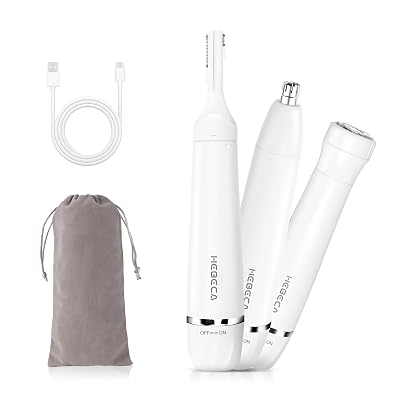
Best for: Reactive skin that dislikes blades
The HEBECA 3-in-1 is the pick for people whose skin reacts even to careful dermaplaning. Trimming is the lowest-irritation method in this guide, because the guarded blade cuts hair at the surface rather than gliding across the skin. This rechargeable trimmer includes a facial head, a double-sided eyebrow trimmer for full-size and detail work, and a nose and ear head.
The rotating cutter uses dual-edge stainless steel blades, and the head can be rinsed under running water for cleaning. Trimming leaves a little stubble and results last only days, so it suits people who are happy to trim often. It is more versatile than the #5 2-in-1 trimmer, and far gentler than the razor picks for anyone with rosacea or eczema.
- Three heads: facial, eyebrow and nose or ear
- Double-sided eyebrow trimmer for detail work
- Dual-edge stainless steel rotating blade
- Rechargeable and rinsable under water
Pros
- Lowest irritation of the tools here
- Several heads in one device
- Easy to clean
Cons
- Leaves slight stubble
- Results last only a few days
Skip it if: Skip it if you want the smoothest finish for makeup; a single-blade razor such as the Tinkle gets closer.
Check Price on AmazonTweezerman Stainless Steel Facial Razor
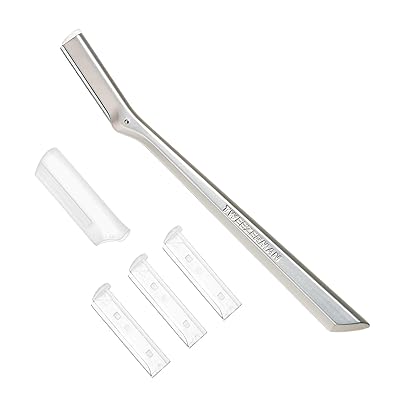
Best for: Careful peach-fuzz removal
The Tweezerman Facial Razor comes from a brand best known for grooming tools, and its title highlights stainless steel construction. It is a single-blade face razor for removing fine hair and peach fuzz, and suits people who want a slightly sturdier-feeling tool than the lightweight disposables found elsewhere on this list.
Its listing gives few further details, so we describe it only from its title. Used on clean, dry skin with short strokes and light pressure, a razor like this is one of the gentler options for fine hair. Compared with the #1 Tinkle pack you get fewer blades, so replace it as soon as it starts to drag.
- Single-blade facial razor
- Stainless steel construction
- Designed for fine facial hair
- Suited to short, light strokes
Pros
- Sturdier feel than many disposables
- Trusted tool brand
- Suits peach fuzz well
Cons
- Limited detail on the listing
- Blade touches the skin, unlike a trimmer
Skip it if: Skip it if you need many blades for frequent use; the Tinkle or MoHern packs offer more.
Check Price on AmazonSchick Hydro Silk Dermaplane Razor

Best for: Regular dermaplaners who prefer one handle
The Schick Hydro Silk Dermaplane Razor comes with one handle and six refills, which suits people who dermaplane regularly and prefer a single, comfortable handle to a pile of disposables. It is aimed at peach fuzz on the face, and a refill system makes it easy to swap in a sharp blade whenever the current one starts to drag.
The listing detail is limited, so we describe it from its title. It is a sensible middle ground between the premium feel of the #3 Tweezerman and the bulk packs at #8 and #9. As with any dermaplaning tool, keep the skin taut, use light pressure and avoid dermaplaning on the same day as other exfoliation.
- Dermaplane razor for the face
- One handle with six refill blades
- Aimed at peach fuzz
- Swap in a fresh blade when it drags
Pros
- Comfortable reusable handle
- Easy blade changes
- Widely available refills
Cons
- Limited detail on the listing
- Not for coarse or dark chin hair
Skip it if: Skip it if your skin reacts to any blade; a trimmer such as the HEBECA is gentler.
Check Price on Amazon2-in-1 Rechargeable Facial and Eyebrow Trimmer

Best for: Upper lip, cheeks and brows on reactive skin
This 2-in-1 rechargeable trimmer combines a facial hair remover with an eyebrow trimmer, so it covers the upper lip, cheeks, sideburns and brows without any blade gliding directly over the skin. For people with rosacea, eczema or skin that flushes easily, that makes it one of the gentlest tools on this list.
Its listing is brief, so we describe it from its title only, and it is sold without a well-known brand name. It is simpler than the #2 HEBECA, which adds a nose head, and it will not give the smooth finish of a razor. Trimmers leave short stubble and need using more often, but they rarely cause bumps.
- Two heads: face and eyebrow
- Rechargeable
- Suits upper lip, cheeks and brows
- Guarded trimming for low irritation
Pros
- Very low irritation
- Covers face and brows
- Rechargeable convenience
Cons
- No established brand name
- Less smooth than a razor
Skip it if: Skip it if you prefer an established brand; the HEBECA 3-in-1 offers a similar gentle approach.
Check Price on AmazonFlamingo Facial Touch-Up Razor (6 Razors)

Best for: Quick touch-ups between other methods
The Flamingo Facial Touch-up Razor is designed for quick fixes, such as a few stray hairs on the upper lip or around the brows between threading or laser appointments. The pack contains six razors, so you can keep one at home and one in a travel bag without worrying about hygiene.
The listing detail is limited, so we describe it from its title. It is aimed at small areas rather than full-face dermaplaning, where the larger #1 Tinkle or #4 Schick picks feel more natural. Its small size is handy for precision, though as with any blade, use it only on calm, unbroken skin.
- Facial touch-up razors
- Six razors in total
- Suited to small areas and stray hairs
- Compact for travel
Pros
- Good for precise touch-ups
- Travel-friendly
- Easy to keep a fresh one handy
Cons
- Limited detail on the listing
- Less efficient for the whole face
Skip it if: Skip it if you want to dermaplane the whole face; a larger-blade razor such as the Tinkle is quicker.
Check Price on AmazonEnnva Disposable Dermaplane Razors (6 Pack)

Best for: Occasional dermaplaners shaping brows too
The Ennva Disposable Dermaplane Razors are sold as a tool for both the face and the brows, which suits people who want one razor to handle peach fuzz on the cheeks and a quick brow tidy. A six-pack is a sensible amount for occasional use, and disposables make it easy to avoid using a blunt, bacteria-laden blade.
The listing is brief, so we describe it from its title only. Compared with the #1 Tinkle pack it offers fewer razors, and compared with the #10 Japonesque it is less focused on precise brow shaping. It is a simple, no-frills option for people who dermaplane every few weeks rather than weekly.
- Disposable dermaplane razors
- Designed for face and brows
- Six razors per pack
- Single-use hygiene
Pros
- Covers face and brows
- Disposable and hygienic
- Simple to use
Cons
- Limited detail on the listing
- Smaller pack than some rivals
Skip it if: Skip it if you dermaplane weekly; the MoHern or Tinkle packs last longer.
Check Price on AmazonMoHern Dermaplane Razors (60 Pieces)

Best for: Frequent dermaplaners and households
The MoHern pack of sixty face razors is the pick for frequent users or households where more than one person wants a razor. It is sold as a multipurpose eyebrow and face razor for women and men, and the large quantity means there is never a reason to keep using a dull blade that drags across sensitive skin.
The listing is brief, so we describe it from its title only. The razors are simpler than the #4 Schick handle system, but for peach fuzz and brow tidying a fresh, sharp blade matters more than a premium handle. Keep razors personal rather than sharing them, and store them dry with covers on.
- Sixty face and eyebrow razors
- For women and men
- Multipurpose face and brow use
- Disposable single blades
Pros
- Plenty of fresh blades
- Good for several users
- Handles face and brows
Cons
- Limited detail on the listing
- Basic build compared with branded handles
Skip it if: Skip it if you only remove hair occasionally; a smaller pack such as the Ennva is enough.
Check Price on AmazonFoldable Dermaplane Face Razors (9 Count)

Best for: Storing razors safely in a bag
These foldable dermaplane razors are sold for peach fuzz and eyebrows, and the foldable design with a safety feature means the blade can be tucked away between uses. That makes them handy for makeup bags and travel, and reduces the chance of accidental nicks when you reach into the bag for one.
The listing is brief and the brand is not well known, so we describe them from the title only. They do the same basic job as the #1 Tinkle and #8 MoHern razors, with the fold-away design as the main difference. As with all face razors, use them on dry, clean skin with light, short strokes.
- Foldable dermaplane razors
- For peach fuzz and eyebrows
- Safety design for storage
- Nine razors per pack
Pros
- Blade folds away safely
- Good for travel
- Handles face and brows
Cons
- Lesser-known brand
- Limited detail on the listing
Skip it if: Skip it if you prefer an established brand; the Tinkle or Schick picks are better known.
Check Price on AmazonJaponesque Stainless Steel Eyebrow Razor
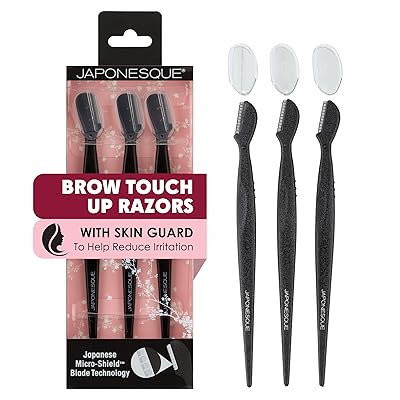
Best for: Precise brow and fine facial hair work
The Japonesque Eyebrow Razor is designed mainly for precise brow shaping, with an ultra-sharp stainless steel blade that can also remove fine facial hair. It suits people who thread or tweeze their brows but want a gentler way to tidy stray hairs in between, without the repeated pulling that can inflame sensitive hair follicles.
The listing detail is limited, so we describe it from its title. It is more precise than the full-face razors at #1 or #4 but less efficient for whole-face peach fuzz. A very sharp blade needs a light touch, so hold the skin taut and work slowly, especially around the brow bone.
- Eyebrow razor for precise shaping
- Ultra-sharp stainless steel blade
- Also removes fine facial hair
- Compact tool for small areas
Pros
- Precise brow work
- No pulling or heat
- Sharp, clean cut
Cons
- Very sharp blade needs care
- Slow for the whole face
Skip it if: Skip it if you want one tool for full-face peach fuzz; the Tinkle or Schick picks are quicker.
Check Price on AmazonHow We Chose These Products
We shortlisted facial hair removal tools from Amazon listings that are highly rated by a large number of shoppers, favouring established brands and designs with single fine blades, safety covers or guarded trimmer heads. Because this guide ranks trimming and careful dermaplaning as the gentlest methods for sensitive skin, we limited the list to those two tool types. We then checked each product’s listed features against the AAD guidance cited in this post.
These are research-based picks, not hands-on lab tests. Rankings reflect blade design, coverage and how clearly each seller explains use, rather than personal results. We left out depilatory creams, hot wax and multi-blade body razors, which this guide advises against for reactive facial skin.
- Strong ratings from a large number of shoppers
- Established brands and clear product descriptions preferred
- Only trimmers and single-blade face razors included
- Listed features checked against the cited AAD guidance
- Body trimmers, creams and wax excluded
- No medical claims from listings repeated as fact
Why Hair Removal Irritates Sensitive Skin
Sensitive skin has a weaker or more reactive barrier, so it responds more strongly to friction, heat, pulling and chemicals. Every hair removal method stresses the skin in one of these ways, which is why the method matters so much.
- Friction from blades can cause razor burn and dry patches.
- Pulling hair from the root, as in waxing, can inflame follicles.
- Heat from wax can burn or lift the top layer of skin.
- Chemicals in depilatory creams break down hair and can also harm skin.
- Fragrance and alcohol in aftercare can sting freshly treated skin.
Conditions such as rosacea, eczema and acne make reactions more likely, and so do retinoids, exfoliating acids and recent sunburn. Removing hair when skin is already irritated almost always makes things worse.
Hair type matters too. Fine, light peach fuzz is easy to trim or shave with almost no friction, while coarse, dark hairs on the chin or jaw are more likely to cause ingrown hairs and bumps when they are shaved or pulled. Knowing which you are dealing with helps you pick a method that removes hair without a fight.
Facial Hair Removal Methods Compared for Sensitive Skin
Each method trades off irritation, how long results last and how precise it is.
| Method | Irritation risk | How long results last | Best for |
|---|---|---|---|
| Electric facial trimmer | Very low | A few days | Fine hair, peach fuzz, sideburns |
| Dermaplaning or facial razor | Low with good technique | One to two weeks | Peach fuzz, smooth makeup base |
| Threading | Low to moderate | Two to four weeks | Brows, upper lip |
| Sugaring | Moderate | Three to four weeks | Upper lip, chin |
| Tweezing | Low to moderate | Two to six weeks | A few stray hairs |
| Hot or strip wax | High | Three to six weeks | Best avoided on reactive skin |
| Depilatory cream | High | Several days | Best avoided on sensitive faces |
| Laser (professional) | Moderate during treatment | Long-term reduction | Dark hair on lighter skin; careful use on deeper skin |
| Electrolysis (professional) | Moderate | Permanent for treated hairs | Any hair colour, small areas |
Our comparison of laser vs electrolysis for facial hair explains the differences between the two long-term options in more detail.
Trimming and Dermaplaning: The Gentlest Options
Electric facial trimmers use a guarded blade that cuts hair at the surface without scraping the skin, which makes them the lowest-risk choice for reactive skin. They leave slight stubble but rarely cause redness.
Dermaplaning and facial razors use a single fine blade held at an angle to remove fine hair and some dead skin cells. With light pressure on clean, dry skin, most people tolerate them well. Our guide to what dermaplaning is covers technique and how often to do it.
Shaving does not make hair grow back thicker or darker. It cuts the hair at a blunt angle, which can feel coarser as it grows, but it does not change the hair follicle.
The AAD guide to exfoliating safely at home advises matching exfoliation to your skin type, which is worth remembering because dermaplaning also exfoliates. Do not dermaplane on the same day as other exfoliation.
Threading, Sugaring and Tweezing
These methods remove hair from the root, so results last longer, but they involve pulling. For sensitive skin, they are usually better tolerated than hot wax because they do not add heat or strip the top layer of skin.
- Threading: a twisted thread lifts rows of hair with no product on the skin; good for brows and upper lip.
- Sugaring: a sugar paste applied at body temperature, removed in the direction of growth; often less irritating than wax.
- Tweezing: precise for a few stray hairs, but slow for larger areas and can cause ingrown hairs.
Redness after pulling methods usually settles within a few hours. If you get small bumps or spots afterwards, switch to trimming for a while and let the follicles calm down.
Methods to Avoid or Use With Great Care
Two methods cause most of the reactions people report on sensitive facial skin.
- Depilatory creams dissolve hair with strong alkaline chemicals and can cause burns, rashes and lasting dark marks, particularly on the upper lip.
- Hot wax can burn, lift skin and trigger breakouts, and is unsafe while using retinoids or exfoliating acids.
- At-home light devices may irritate or cause pigment changes if the settings do not suit your skin tone.
- Abrasive hair removal pads and pumice-style tools cause friction and micro-scratches.
Never use a depilatory cream or wax on broken, sunburned or inflamed skin, near the eyes or while using retinoids or strong acids. If a cream burns, remove it straight away with cool water and do not reapply.
Laser and Electrolysis for Long-Term Results
If you remove hair often and it keeps irritating your skin, reducing the amount of hair can be the gentlest option over time.
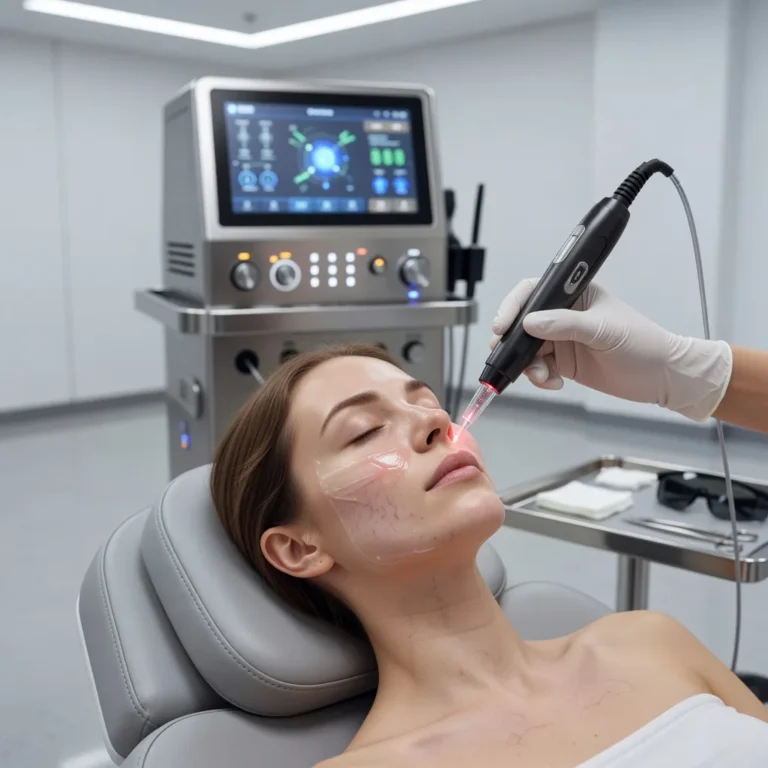
The AAD page on laser hair removal explains that most people need several treatments, that common side effects include discomfort, swelling and redness for a few days, and that treatment of darker skin must be performed very carefully. It recommends choosing a board-certified dermatologist.
Electrolysis destroys individual follicles with a fine probe and electric current. It works on any hair colour, including blonde, grey and red, but is slow and suits small areas such as the chin or upper lip.
Both options take several visits and cause short-term redness, so book sessions when you do not have events planned. Tell your provider about any skin conditions, cold sores, medicines that increase light sensitivity or recent tanning, since these can change the treatment plan.
How to Choose Gentle Hair Removal Tools
The right tool reduces friction and makes it easier to be gentle.
- Pick a trimmer with a guarded or rounded head designed for the face.
- Choose single-blade dermaplaning or facial razors with a safety guard.
- Replace blades often; dull blades drag and scrape.
- Use a fragrance-free, alcohol-free soothing gel for aftercare.
- Avoid multi-blade body razors on the face.
- Keep tools personal and clean them after every use.
Different parts of the face respond differently, so many people with sensitive skin use more than one method.
| Area | Gentlest option | Also worth considering |
|---|---|---|
| Cheeks and peach fuzz | Electric trimmer | Careful dermaplaning |
| Upper lip | Trimmer or threading | Sugaring, laser or electrolysis |
| Chin and jaw | Trimmer for stubble, tweezers for strays | Laser or electrolysis for coarse hair |
| Eyebrows | Threading or tweezing | Precision trimmer for length |
| Sideburns | Electric trimmer | Laser for dark hair |
Single-blade face razors are designed for fine hair and short, controlled strokes, while multi-blade body razors lift and cut below the surface, which increases razor burn and ingrown hairs on the face.
How to Remove Facial Hair Gently on Sensitive Skin
Follow these steps whichever at-home method you choose.
Patch test first
Try the method or product on a small area and wait 24 to 48 hours.
Pause actives
Stop retinoids and exfoliating acids for a few days before.
Cleanse and dry
Start with clean skin; use dry skin for trimmers and dermaplaning.
Hold skin taut
Gently stretch the area with your free hand.
Use light pressure
Trim or glide the blade in short strokes, following hair growth.
Soothe
Apply a cool, fragrance-free gel or simple moisturiser.
Protect and wait
Use sunscreen and avoid actives, makeup and heat for a day.
Remove facial hair in the evening. It gives your skin the night to settle before sunscreen and makeup, and makes any redness less noticeable the next day.
Aftercare and Dealing With Reactions
Most redness fades within hours. If it lasts or you get bumps, treat your skin gently for a few days.
- Cool compresses calm redness and heat.
- A plain, fragrance-free moisturiser supports the barrier.
- Avoid saunas, hot showers and workouts for the rest of the day.
- Leave small bumps alone rather than picking or squeezing.
- Switch to trimming if a method keeps causing bumps.
Ingrown hairs are a common cause of lingering bumps after shaving, tweezing or waxing, especially with curly or coarse hair. Gentle exfoliation a few days after hair removal, rather than on the same day, can help free trapped hairs, and switching to a trimmer that leaves hair just above the surface often stops them forming. If bumps become painful, fill with pus or leave dark marks, stop removing hair in that area for a while and get advice.
Keep an eye on how your skin looks the day after, not just straight away. A method that causes brief redness but no lasting bumps is usually fine to continue, while one that leaves rough patches, spots or dark marks is a sign to try something gentler.
Try This
- Patch test every new method
- Use clean, sharp tools
- Work on calm, unbroken skin
- Soothe with fragrance-free gel
- Wear sunscreen afterwards
Avoid This
- Use hot wax on reactive skin
- Apply depilatory cream near the eyes
- Shave over spots or rashes
- Exfoliate on the same day
- Share razors or trimmers
If you notice sudden new hair growth on the chin, jaw or upper lip, it may be linked to hormones rather than normal facial hair. Our guide on normal facial hair vs PCOS explains the signs to look for.
Honest Limits
No hair removal method is completely free of irritation on sensitive skin, and what suits one person may not suit another. Trimming and shaving are gentle but short-lived, root methods last longer but pull, and professional treatments cost more and need several sessions.
Laser reduces hair rather than removing it permanently for everyone, and it works less well on blonde, grey or red hair. Home light devices are generally weaker than professional lasers.
When to See a Dermatologist
- You react to every method you try.
- You get painful bumps, cysts or scarring after hair removal.
- You have sudden or increasing facial hair growth.
- You want laser or electrolysis and have a darker skin tone or a skin condition.
This article is for general information and does not replace professional medical advice. See a board-certified dermatologist for persistent reactions, unusual hair growth or before professional hair removal treatments.
Questions People Ask
What is the best facial hair removal method for sensitive skin?
Trimming is the gentlest; dermaplaning and threading also suit many people.
Is dermaplaning safe for sensitive skin?
Usually, with light pressure and no other exfoliation that day.
Is threading better than waxing for sensitive skin?
For many people, yes, because there is no heat or product.
Are hair removal creams safe for the face?
They carry a high risk of burns on sensitive skin.
Which tool on this list is best overall?
The Tinkle facial razors, for a fine single blade and a large pack that makes it easy to switch to a fresh blade often.
Is laser safe for sensitive skin?
It can be, when performed by a board-certified dermatologist.
Which tool is gentlest for very sensitive or reactive skin?
An electric trimmer such as the HEBECA 3-in-1 or the 2-in-1 rechargeable trimmer, because the blade does not touch the skin directly.
How do I prevent bumps after hair removal?
Use sharp tools, light pressure and avoid actives afterwards.
Can I remove facial hair if I have rosacea?
Trimming is safest; avoid heat and chemicals.
Is a refillable razor better than disposables?
Not necessarily. The Schick Hydro Silk uses one handle with refills, while the Tinkle and MoHern packs give plenty of fresh blades; what matters most is a sharp blade.
Where This Leaves You
The best facial hair removal method for sensitive skin is usually trimming or careful dermaplaning, with threading or sugaring for shaping and professional laser for long-term reduction; the Tinkle facial razors are our top tool pick.
Patch test, work on calm skin, avoid hot wax and depilatory creams, and soothe with a fragrance-free gel afterwards.
Our top pick: Tinkle Facial Razors (Pack of 36)
The Tinkle razors take the top spot because they pair a fine single blade with a design the seller positions for sensitive skin, and the large pack makes it easy to use a fresh, sharp blade often, which is the key to avoiding drag and redness. Choose the HEBECA 3-in-1 trimmer instead if even a razor irritates your skin, or the Schick Hydro Silk if you prefer one handle with refill blades.
Check Price on Amazon
Written by
Registered pharmacist and founder of Facial Adviser. Rakib's pharmacy training covers how skincare actives work and interact; a later course in cosmetology turned that into a focus on facial treatments and skincare products. He plans, researches and edits every guide on the site and checks health claims against sources such as the American Academy of Dermatology, the FDA and the NIH. He is not a dermatologist; see the Editorial Policy and Medical Disclaimer.
About · Editorial policy · How we choose products · Medical disclaimer · Contact
Keep reading: Facial hair removal
- Best Facial Hair Removal Cream for PCOS: How to Choose for Coarse Hair
- 10 Best Facial Hair Removal Products for Women (2026): Smooth, Simple
- 10 Best Products for Women's Facial Hair Removal (2026): Gentle Picks
- 10 Best Trimmers for Facial Hair (2026): Beard, Detail and Face Picks
- Best Facial Epilator for Women: How to Choose One for Smooth, Calm Skin
- 10 Best Facial Tools (2026): LED, Cleansing, Gua Sha and More
- 10 Best LED Light Therapy Masks (2026): Clearer Skin, Softer Lines