10 Best Professional Microdermabrasion Machines (2026): Diamond Picks
A professional microdermabrasion machine promises clinic-style exfoliation, but the listings all look alike and many overstate what the treatment can do. This list covers 10 options, from established home kits to diamond-tip, salon-style units with stronger suction, with notes on who each one suits, the trade-offs and who should skip it.
Part of our guide to facial treatments. Start with: Ultimate Guide Microdermabrasion: What to Know
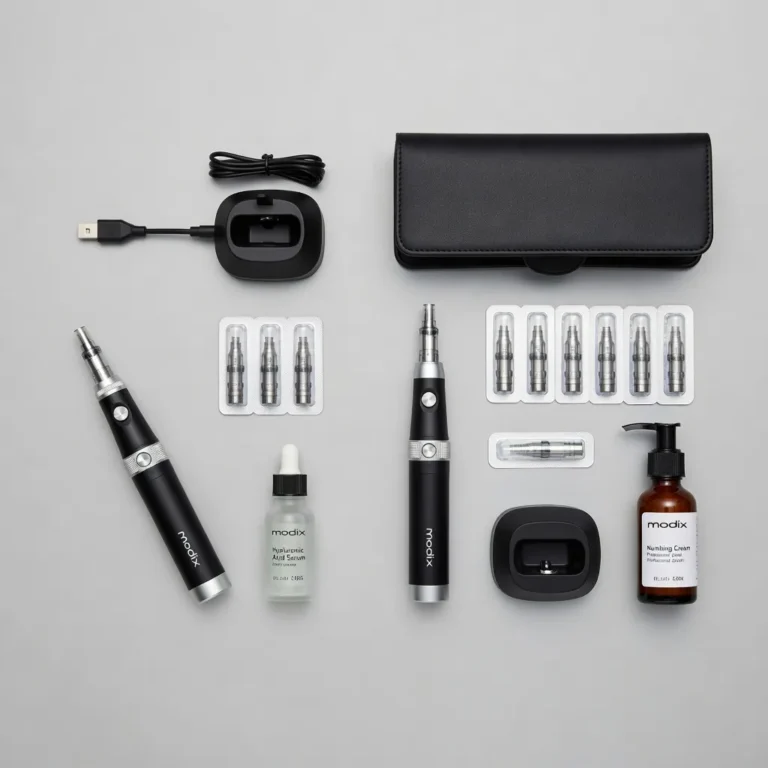
The best professional microdermabrasion machine for most people is a diamond-tip system with finely adjustable suction, several tip sizes, replaceable filters and parts that are easy to clean between uses. Diamond machines exfoliate with a textured wand and leave no loose particles, so they are tidier and easier to control than crystal machines, which blast fine crystals across the skin. Start on the lowest suction and build up slowly. Any machine only removes the outermost layer of skin, so it can brighten dullness and soften rough texture, but it will not remove deep scars or wrinkles.
In short: choose a diamond machine with precise low-end suction and good hygiene design, then learn the technique before chasing power.
The American Academy of Dermatology describes microdermabrasion as a non-invasive treatment that gently exfoliates the skin, and notes that a series of treatments can leave the complexion smoother, brighter and more even, while in-office treatment reaches deeper than at-home kits.
Below you will find the ten picks, how we chose them, diamond versus crystal, how much suction you really need, safe use and cleaning, and the honest limits of what any machine can deliver.
Buying for a salon, spa or clinic?
A free Amazon Business account gives you business-only pricing on eligible items, multi-user buying and tax-exemption tools.
Create a free Business accountAffiliate link: we may earn a commission at no extra cost to you.
As an Amazon Associate we earn from qualifying purchases. This does not change which products we include.


What This Covers
- The 10 Best Professional Microdermabrasion Machines Right Now
- How We Chose These Products
- Diamond vs Crystal Microdermabrasion Machines
- Features That Separate a Good Machine From a Poor One
- Why Suction Matters More Than Power
- What Microdermabrasion Can and Cannot Do
- Training, Licensing and Who Should Use a Professional Machine
- How to Choose a Microdermabrasion Machine
- Cleaning and Maintenance
- Professional vs Home Microdermabrasion Devices
- Dos and Don’ts
- Honest Limits
- When to See a Dermatologist
- Your Questions, Answered
- The Takeaway
In Brief
- PMD Personal Microderm Classic is our top pick for its established brand and simple, well-known home design.
- The Mcwdoit upgraded diamond machine is the pro-grade pick, with suction listed in the 65 to 68cmHg range.
- TopDirect 3-in-1 is the premium pick, pairing nine diamond tips with suction and a hydrating spray.
- Diamond-tip machines are cleaner and easier to control than crystal machines.
- Smooth, low-end suction control matters more than maximum power.
- Microdermabrasion treats dullness and mild texture, not deep scars or wrinkles.
- Many Amazon machines labelled professional are really salon-style units built for home use.
The 10 Best Professional Microdermabrasion Machines Right Now
These ten machines were shortlisted from widely reviewed Amazon listings and are ranked by brand track record, suction control, tip range and how clearly each seller explains safe use. Each pick lists who it suits, its trade-offs and who should skip it.
| # | Product | Best For | Standout Feature | |
|---|---|---|---|---|
| 1 | PMD Personal Microderm Classic | Home users who want a trusted, simple kit | Established brand built for home use | View |
| 2 | Mcwdoit Upgraded Diamond Microdermabrasion Machine | Experienced users who want strong suction | Suction listed at 65 to 68cmHg | View |
| 3 | TopDirect 3-in-1 Diamond Microdermabrasion Machine | Home spa routines with extras | Nine diamond tips plus hydrating spray | View |
| 4 | mcwdoit 3-in-1 Microdermabrasion Machine | Users who want suction tubes and a mister | Glass vacuum tubes plus toner spray | View |
| 5 | AIMENGXI Professional Diamond Microdermabrasion Machine | Small treatment rooms and trained users | Built as professional beauty equipment | View |
| 6 | UNOISETION 3-in-1 Diamond Microdermabrasion Machine | Budget-minded buyers wanting 3-in-1 | Salon-style features at a mid-range level | View |
| 7 | Microderm GLO Diamond Microdermabrasion Machine | Home users who want a popular, simple device | Widely reviewed diamond home device | View |
| 8 | Trophy Skin MicrodermMD | First-time users who want guidance | Auto Mode guides suction by area | View |
| 9 | Appolus 3-in-1 Microdermabrasion Machine | Users who want an all-in-one kit | Adds light therapy to microdermabrasion | View |
| 10 | Yofuly 3-in-1 Diamond Microdermabrasion Machine | Trying salon-style microdermabrasion | Entry point to 3-in-1 diamond machines | View |
PMD Personal Microderm Classic

Best for: Home users who want a trusted, simple kit
The PMD Personal Microderm Classic earns the top spot because it comes from one of the best-known names in home microdermabrasion and is designed from the start for self-use rather than adapted from a salon machine. That focus on home use means a simpler routine and a lower learning curve than the multi-function units further down this list.
Its listing describes it as an at-home microdermabrasion kit and facial exfoliator that can also be used on the body, which makes it handy for rough elbows or the backs of the hands as well as the face. The listing gives less technical detail than the TopDirect or mcwdoit picks, so it suits people who value a proven brand over published suction numbers.
- At-home microdermabrasion machine kit
- Facial exfoliator designed for self-use
- Can also be used on the body
- From an established home-device brand
Pros
- Simple routine with a low learning curve
- Designed for home rather than salon use
- Works on face and body
Cons
- Listing gives few technical details such as suction range
- Gentler than salon-style units, so results build slowly
Skip it if: Skip it if you want adjustable high suction and extra functions; the Mcwdoit or TopDirect picks offer more.
Check Price on AmazonMcwdoit Upgraded Diamond Microdermabrasion Machine

Best for: Experienced users who want strong suction
The Mcwdoit upgraded machine is the pick for people who want the closest thing to a salon unit on this list. Its listing positions it as a professional-style diamond microdermabrasion machine and puts suction in the 65 to 68cmHg range, which is at the top end of the machines here and well above typical home kits such as the #1 PMD or #8 Trophy Skin.
That extra power is only useful if you control it. Strong suction can cause bruising and broken capillaries on thin skin, so this machine suits people who already know the technique or who will practise on low settings first. The listing gives fewer details than the brand’s own 3-in-1 at #4, so check the tip set and filters in the manual before relying on it.
- Diamond microdermabrasion machine
- Upgraded version of the brand’s earlier unit
- Suction listed in the 65 to 68cmHg range
- Sold as a professional-style device
Pros
- Strong suction for experienced users
- Diamond tips with no loose crystals
- Newer version of an established design
Cons
- Thin listing compared with the #4 mcwdoit 3-in-1
- Strong suction is risky for beginners and thin skin
Skip it if: Skip it if you are new to microdermabrasion; the Trophy Skin or PMD picks are easier to start with.
Check Price on AmazonTopDirect 3-in-1 Diamond Microdermabrasion Machine

Best for: Home spa routines with extras
The TopDirect 3-in-1 is our premium pick because its listing is one of the clearest here and the kit covers more jobs than most rivals. It combines diamond exfoliation with a blackhead suction function and a hydrating spray, and includes nine diamond tips, so you can switch tip size for the forehead, cheeks and the smaller areas around the nose.
The seller lists upgraded suction up to 68cmHg, similar to the #2 Mcwdoit, and sensibly suggests once-a-week use with moisturiser and sun protection afterwards. The extra parts mean more to clean and store than the #1 PMD, and the spray and suction extras add little if you only want gentle exfoliation.
- Three functions: diamond exfoliation, suction and spray
- Nine diamond tips in different sizes
- Suction listed up to 68cmHg
- Seller recommends weekly use with aftercare
Pros
- Clear listing with sensible use advice
- Wide tip range for different areas
- Spray function for toner or mist
Cons
- More parts to clean than simpler kits
- High maximum suction needs careful control
Skip it if: Skip it if you want a compact, low-maintenance device; the PMD or Microderm GLO picks are simpler.
Check Price on Amazonmcwdoit 3-in-1 Microdermabrasion Machine

Best for: Users who want suction tubes and a mister
The mcwdoit 3-in-1 is a well-documented salon-style machine that suits people who want more than exfoliation alone. Alongside nine diamond heads, it adds vacuum suction through glass tubes for blackheads and excess oil, and a spray bottle that mists toner onto the skin, which makes it the most complete 3-in-1 kit on this list.
Suction is adjustable up to 68cmHg, and the seller says the internal structure has been upgraded for steadier running. A one-year manufacturer warranty is a plus that many listings leave out. Compared with the #3 TopDirect it offers a similar feature set; choose between them on availability and tip choice, and treat the suction tubes gently around delicate areas.
- Suction adjustable up to 68cmHg
- Nine diamond heads for exfoliation
- Glass vacuum tubes for blackheads and oil
- Toner spray bottle and one-year warranty
Pros
- Complete 3-in-1 feature set
- Stated one-year warranty
- Adjustable suction from a low start
Cons
- Glass tubes need careful handling and cleaning
- Bulkier than single-function home kits
Skip it if: Skip it if you only want gentle exfoliation; the PMD or Trophy Skin picks are simpler.
Check Price on AmazonAIMENGXI Professional Diamond Microdermabrasion Machine

Best for: Small treatment rooms and trained users
The AIMENGXI machine is sold as professional beauty facial equipment rather than a home gadget, which makes it a reasonable fit for a small treatment room or for a trained user who wants a dedicated diamond unit. It sits alongside the #2 Mcwdoit as one of the more salon-oriented picks on this list.
Its listing is brief, so we describe it only from its title: a diamond microdermabrasion machine positioned for professional facial care. That means you should confirm the suction range, tips and filters with the seller before buying. Compared with the #3 TopDirect and #4 mcwdoit, it offers less published detail, which is why it ranks below them.
- Diamond microdermabrasion machine
- Positioned as professional facial equipment
- Designed for facial skin care
- Suited to a dedicated treatment space
Pros
- Salon-oriented design
- Diamond tips with no crystal dust
- Established seller of microdermabrasion units
Cons
- Brief listing with few published specifications
- Better suited to trained users than beginners
Skip it if: Skip it if you want clear specs and guidance in the listing; the TopDirect or mcwdoit picks explain more.
Check Price on AmazonUNOISETION 3-in-1 Diamond Microdermabrasion Machine

Best for: Budget-minded buyers wanting 3-in-1
The UNOISETION machine is our best value pick because it brings a 3-in-1 diamond dermabrasion design into the middle of this list. Its listing presents it as a convenient at-home alternative to spa diamond treatments, for exfoliating and targeting blackheads and dull, uneven-looking skin.
The listing leans on marketing language, including claims about age spots and fine lines that microdermabrasion can only soften gradually at best, so set expectations by the AAD guidance in this post rather than the sales copy. It offers a similar idea to the #3 TopDirect and #4 mcwdoit with less technical detail, but it is a sensible middle ground for most home users.
- 3-in-1 diamond dermabrasion device
- Designed for at-home and salon-style use
- Exfoliation plus blackhead suction
- Positioned as a gentle spa alternative
Pros
- 3-in-1 design in the middle of the range
- Widely reviewed by shoppers
- Suits home users moving beyond basic kits
Cons
- Listing uses heavy marketing claims
- Less technical detail than the TopDirect or mcwdoit
Skip it if: Skip it if you want clear suction figures before buying; the mcwdoit 3-in-1 lists them.
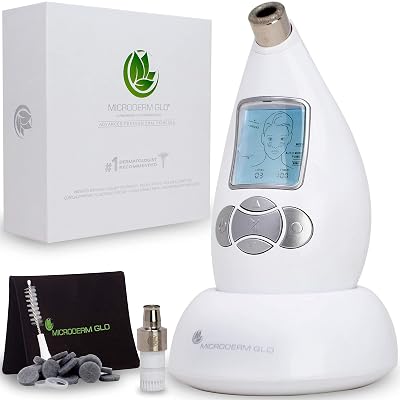
Check Price on AmazonMicroderm GLO Diamond Microdermabrasion Machine
Best for: Home users who want a popular, simple device
The Microderm GLO machine is one of the most widely reviewed home microdermabrasion devices on Amazon, which gives a broader picture of real-world use than many newer listings. It is a dedicated diamond dermabrasion device for at-home facial care, without the spray and tube extras of the 3-in-1 units higher up the list.
Its listing is short, so we describe it only from its title. That simplicity is part of the appeal for people who want one job done well, and the brand also sells replacement diamond tips. Compared with the #1 PMD it is a similar home-focused option; compared with the #3 TopDirect it gives up the extra functions.
- Diamond microdermabrasion machine
- Built for at-home facial use
- Single-purpose design without extra attachments
- Brand sells replacement diamond tips
Pros
- Widely reviewed by shoppers
- Simple, single-purpose design
- Replacement tips easy to find
Cons
- Brief listing with few specifications
- Fewer functions than the 3-in-1 machines
Skip it if: Skip it if you want salon-style suction and extras; the TopDirect or Mcwdoit picks offer more.
Check Price on AmazonTrophy Skin MicrodermMD

Best for: First-time users who want guidance
The Trophy Skin MicrodermMD is the easiest machine on this list to learn. Its LCD screen offers an Auto Mode that walks beginners through the face section by section and adjusts suction for each area, which removes much of the guesswork that makes salon-style machines risky for new users.
It has three modes and eight suction levels, a real diamond tip, a pore extraction tip and an infuser tip for applying serum after treatment. The listing mentions acne and scars, but microdermabrasion only softens shallow marks and should not be used over active breakouts. It is gentler than the #2 Mcwdoit, which is exactly why it suits beginners.
- Real diamond tip for exfoliation
- Three modes and eight suction levels
- LCD screen with infuser and pore extraction tips
- Auto Mode guides suction by face area
Pros
- Guided Auto Mode for beginners
- Eight suction levels for fine control
- Infuser tip adds a serum step
Cons
- Gentler results per session than salon-style units
- Screen-led routine may feel slow for experienced users
Skip it if: Skip it if you already know the technique and want stronger suction; the Mcwdoit or TopDirect picks suit you better.
Check Price on AmazonAppolus 3-in-1 Microdermabrasion Machine

Best for: Users who want an all-in-one kit
The Appolus kit stands out because it pairs microdermabrasion with a light therapy function and a vacuum wand in one 3-in-1 package. That suits people who like the idea of a single home kit rather than separate devices, though the light function is an extra rather than the main reason to buy it.
Its listing is short, so we describe it only from its title. Evidence for low-powered light functions in combination devices is limited, so judge it mainly on its microdermabrasion function. Compared with the #8 Trophy Skin it offers less guidance, and compared with the #3 TopDirect it gives fewer published details on tips and suction.
- 3-in-1 microdermabrasion machine
- Includes a light therapy function
- Vacuum wand for suction
- All-in-one home kit
Pros
- Several functions in one kit
- Compact home-focused design
- Vacuum wand included
Cons
- Light function has limited evidence
- Brief listing with few specifications
Skip it if: Skip it if you want proven exfoliation with clear settings; the Trophy Skin or mcwdoit picks explain theirs better.
Check Price on AmazonYofuly 3-in-1 Diamond Microdermabrasion Machine

Best for: Trying salon-style microdermabrasion
The Yofuly 3-in-1 is the most affordable salon-style diamond machine on this list, making it a sensible entry point if you want to try a professional-style unit before committing to a pricier model. Like the #3 TopDirect and #4 mcwdoit, it is sold as a 3-in-1 professional microdermabrasion machine.
Its listing is brief, so we describe it only from its title, and you should check the tips, filters and suction controls in the manual before first use. It ranks last because it offers less published detail than the machines above it, not because of a known flaw. Start on the lowest setting and build up slowly, as with every pick here.
- 3-in-1 diamond microdermabrasion machine
- Sold as a professional-style unit
- Diamond tips with suction
- Entry point to salon-style machines
Pros
- Affordable way to try a 3-in-1 machine
- Diamond tips with no crystal dust
- Similar concept to higher-ranked picks
Cons
- Brief listing with few specifications
- Less established than the PMD or Trophy Skin brands
Skip it if: Skip it if you want detailed guidance and a well-known brand; the PMD or Trophy Skin picks are safer bets.
Check Price on AmazonHow We Chose These Products
We shortlisted microdermabrasion machines from Amazon listings that are highly rated by a large number of shoppers, favouring established brands and fuller-featured models with diamond tips, adjustable suction and clear instructions. We left out scrubs, creams, replacement filters, tips and hoses, because they are not machines, and dropped near-identical colour versions of the same unit.
These are research-based picks, not hands-on lab tests. We did not measure suction ourselves, so rankings reflect listing detail, design and features rather than personal results. Many machines sold on Amazon as professional are salon-style units aimed at home users; true clinic systems are usually bought through professional suppliers, so read the section on professional versus home devices before you choose.
- Strong ratings from a large number of shoppers
- Established brands and fuller-featured models preferred
- Listed features checked against the AAD guidance cited in this post
- Products with thin or unclear listings excluded or ranked lower
- Medical claims from listings not repeated as fact
Diamond vs Crystal Microdermabrasion Machines
There are two main types of professional microdermabrasion machine. Both combine gentle abrasion with suction, which lifts dead skin cells and carries debris away, but they create that abrasion in different ways. The choice affects cleanup, consumables and how precisely you can work around delicate areas.
| Feature | Diamond-tip machine | Crystal machine |
|---|---|---|
| How it exfoliates | Textured diamond wand tip | Stream of fine crystals |
| Loose particles | None | Crystals and skin dust |
| Control | Very precise, tip by tip | Even, but depends on flow and speed |
| Around eyes and lips | Easier with small tips | Harder, risk of crystals near eyes |
| Consumables | Replacement tips and filters | Crystals, filters, waste containers |
| Cleaning | Tips washed and sterilised | Dust cleanup plus parts |
| Typical use today | Most clinics and salons | Some clinics that prefer the polish |
For most practitioners, a diamond machine is the more practical choice. It is quieter, tidier and easier to adapt to different skin types by changing tip grit and suction. Crystal machines still have fans who like the uniform finish, but they need careful handling so crystals do not reach the eyes or get inhaled.
Features That Separate a Good Machine From a Poor One
Most machines look similar in photos, so it helps to compare the details that affect safety and comfort during treatment.
- Suction control: fine, stepwise adjustment and a clear display, rather than a simple high and low switch.
- Tip range: coarse, medium and fine grits in several diameters for cheeks, forehead, nose and around the mouth.
- Filters: easy-to-see, replaceable filters that stop skin debris reaching the pump.
- Hoses and wands: comfortable to hold, easy to detach and clean.
- Build: stable base, good ventilation and a pump that does not overheat during a full day.
- Documentation: clear instructions, electrical safety marking and cleaning guidance.
- Support: availability of spare tips, filters and service.
- Seller answers: a clear suction range, tip count, cleaning method and warranty before you buy.
Some combination units add ultrasonic spatulas, high frequency, LED or spray functions. Extras can be useful, but check that the core microdermabrasion function is good on its own, because that is what you will use most.
Why Suction Matters More Than Power
Suction is what lifts the skin gently against the tip and removes debris. Too little and the treatment does very little; too much and it can cause bruising, broken capillaries and red marks, especially on thin or mature skin.
A good machine lets you start low and increase slowly, and keeps suction steady rather than pulsing unpredictably. Practitioners usually lower suction over thin areas, bony areas and around the eyes, and on clients with sensitive or redness-prone skin. The highest number on the specification sheet is far less important than smooth control at the low end, where most facial treatment happens. A steady low setting also makes treatments more comfortable, which helps clients relax and return for the full series of sessions they need to see a difference.
What Microdermabrasion Can and Cannot Do
Microdermabrasion is a surface treatment. It removes the outermost layer of dead skin cells, which is why it works best for concerns that sit near the surface.
| Concern | Likely benefit | Realistic expectation |
|---|---|---|
| Dull complexion | Good | Brighter look after a series of sessions |
| Rough texture | Good | Smoother feel, needs maintenance |
| Uneven tone and age spots | Moderate | Gradual lightening over several sessions |
| Post-acne dark marks | Moderate | Helps alongside sunscreen and skincare |
| Fine lines | Mild | Softer look, not removal |
| Deep acne scars | Minimal | Other treatments are usually needed |
| Deep wrinkles and sagging | Minimal | Not the right tool |
The AAD’s microdermabrasion overview lists dullness, uneven tone and texture, age spots, post-acne marks and melasma among the concerns it can help, and notes that dermatologist treatment reaches deeper than at-home kits. Our guide on what microdermabrasion is good for covers each concern in more detail.
Training, Licensing and Who Should Use a Professional Machine
A professional machine is only as safe as the person using it. Technique, reading the skin and choosing the right settings matter as much as the equipment.
- Complete a recognised course that includes hands-on practice, not just a video.
- Check local rules, because some areas limit who can use certain devices.
- Learn skin typing, including how darker skin tones can react with pigment changes.
- Practise consistent strokes with light pressure and stretched skin.
- Keep treatment records, including tips, suction settings and skin reactions.
- Make sure your insurance covers the treatment you offer.
Do not treat over active acne, open wounds, cold sores, sunburn, rosacea flares, eczema or skin that has recently been waxed or peeled. Clients who have taken isotretinoin recently should be referred to a doctor for advice first. Aggressive settings can cause abrasions, bruising, infection and dark marks.
How to Choose a Microdermabrasion Machine
Use these steps to narrow your options before you buy, whether you are equipping a treatment room or upgrading an older unit.
Decide on diamond or crystal
Diamond for a cleaner, more controllable treatment; crystal only if you prefer the finish and can manage dust.
Check suction control
Look for fine, steady adjustment with a clear display at low settings.
Review the tip set
Choose several grits and sizes, including small tips for delicate areas.
Inspect the hygiene design
Tips should be easy to sterilise, and filters easy to see and replace.
Confirm safety documentation
Look for electrical safety marking, a manual and cleaning instructions.
Check consumables and support
Make sure spare tips, filters and service are easy to get.
Plan your training
Book hands-on training before offering treatments to clients.
Test the machine on the inside of your own forearm at the lowest suction before using it on clients. It helps you learn how each tip and setting feels and how quickly redness appears.
Cleaning and Maintenance
Poor hygiene is one of the biggest avoidable risks with microdermabrasion, because the treatment removes part of the skin barrier.
- Clean and disinfect or sterilise tips between every client, following the manufacturer’s guidance.
- Change filters on schedule and whenever they look dirty.
- Wipe hoses, wands and the machine surface after each session.
- For crystal machines, empty waste containers and never reuse crystals.
- Store clean tips in a closed, labelled container.
Good aftercare matters too. Clients should use a gentle moisturiser and broad-spectrum sunscreen, and avoid other exfoliants for a few days. The AAD guidance on how to exfoliate safely explains why over-exfoliating can leave skin red and irritated. Give clients written aftercare so they know what is normal and what needs a call back.
Professional vs Home Microdermabrasion Devices
Most machines on this list, including the PMD, Trophy Skin and Microderm GLO picks, are built for home use, while the salon-style 3-in-1 units from TopDirect, mcwdoit, UNOISETION and others add stronger suction and extra functions. True clinic machines use the same idea, a diamond tip or crystals with suction, but with finer control, sturdier pumps and a trained operator.
Home devices also tend to have fewer, fixed tips and limited suction settings, which reduces the chance of injury but also limits how well they suit different skin areas. A home device can be a reasonable way to keep skin smooth between professional treatments, if used on a low setting no more than once a week or as instructed. People with sensitive skin should be even more cautious. Our guide on how often to exfoliate sensitive skin can help set a safe routine.
Dos and Don’ts
Worth Doing
- Start with low suction and increase slowly
- Use small tips around the nose and mouth
- Sterilise tips between clients
- Recommend daily sunscreen after treatment
- Space sessions to let skin recover
Skip It
- Chase redness as a sign of results
- Treat over active acne or broken skin
- Reuse crystals or dirty filters
- Promise scar or wrinkle removal
- Combine with strong peels on the same day
Honest Limits
Microdermabrasion has a long track record as a gentle exfoliating treatment, but its effects are modest and mostly temporary. Research is limited in size and quality, and results depend on the number of sessions, the skin concern and the skill of the practitioner more than on the machine brand.
No machine can replace sunscreen, a good skincare routine or medical treatments for deep scars, melasma or significant ageing. Clients should also understand that results fade as skin renews itself, so maintenance sessions are part of the plan. Be wary of listings that promise dramatic before-and-after results or medical-grade outcomes from a device with no clear safety documentation.
When to See a Dermatologist
- You have deep acne scars, melasma or pigment changes that have not improved.
- Skin stays red, sore or blistered for more than a day or two after treatment.
- You notice signs of infection, such as swelling, warmth or pus.
- You have darker skin and are worried about dark marks after treatment.
- You take isotretinoin or have a skin condition such as rosacea or eczema.
This article is for general information and does not replace professional medical advice. Treatment should be carried out by a trained practitioner, and anyone with a skin condition should see a board-certified dermatologist first.
Your Questions, Answered
Which is better, diamond or crystal microdermabrasion?
Diamond is cleaner and easier to control; crystal gives a similar polish with more mess.
Is the most expensive microdermabrasion machine worth it?
Not always. The PMD Personal Microderm Classic is our top pick for simplicity, but the TopDirect and mcwdoit machines add more tips and suction for a similar job.
Which machine is best for beginners?
The Trophy Skin MicrodermMD, because its Auto Mode guides suction by area, or the PMD for a simple routine.
Which machine is best for sensitive skin?
Choose one with fine low-end suction, such as the Trophy Skin, start on the lowest level and patch test first.
What suction level should I use?
Start low and adjust to the skin; thin or sensitive skin needs less.
Can microdermabrasion remove acne scars?
It may soften shallow marks, but deep scars need other treatments.
Is microdermabrasion safe for dark skin?
Usually, with gentle settings, but ask a dermatologist if you get dark marks easily.
Can I use a professional machine at home?
Only with care and low settings; home devices are gentler by design.
How often should tips be cleaned?
After every use, following the manufacturer’s instructions.
What should I avoid afterwards?
Strong exfoliants, sun exposure and harsh products for a few days.
The Takeaway
The best professional microdermabrasion machine is a diamond-tip system with smooth, adjustable suction, a good range of tips and a design that makes cleaning easy; the PMD Personal Microderm Classic is our top pick overall.
Pair the right machine with careful technique, low starting settings and honest expectations, and it can deliver reliable brightening and smoothing without harming the skin.
Our top pick: PMD Personal Microderm Classic
The PMD Personal Microderm Classic takes the top spot because it comes from an established brand, keeps the routine simple and is designed for safe home use on the face and body, which suits most buyers best. Choose the Mcwdoit upgraded machine or the TopDirect 3-in-1 instead if you want salon-style suction, a full set of diamond tips and extra functions, and are prepared to learn careful technique.
Check Price on Amazon
Written by
Registered pharmacist and founder of Facial Adviser. Rakib's pharmacy training covers how skincare actives work and interact; a later course in cosmetology turned that into a focus on facial treatments and skincare products. He plans, researches and edits every guide on the site and checks health claims against sources such as the American Academy of Dermatology, the FDA and the NIH. He is not a dermatologist; see the Editorial Policy and Medical Disclaimer.
About · Editorial policy · How we choose products · Medical disclaimer · Contact
Keep reading: Microdermabrasion and diamond peel
- Ultimate Guide Microdermabrasion: What to Know
- Kendal Microdermabrasion Machine: Features, Pros, Cons and Safety
- PMD Personal Microderm: How It Works, Pros, Cons and Who It Suits
- What Is Microdermabrasion Good For? Benefits, Limits and Who It Suits
- Do Dermatologists Recommend Microdermabrasion?
- Can Diamond Peel Remove Scars? Real Answer
- What Is a Spa Facial?
- Fruit Facial at Home: Does It Actually Work?