10 Best Hair Straighteners (2026): Smooth Hair, Less Heat Damage
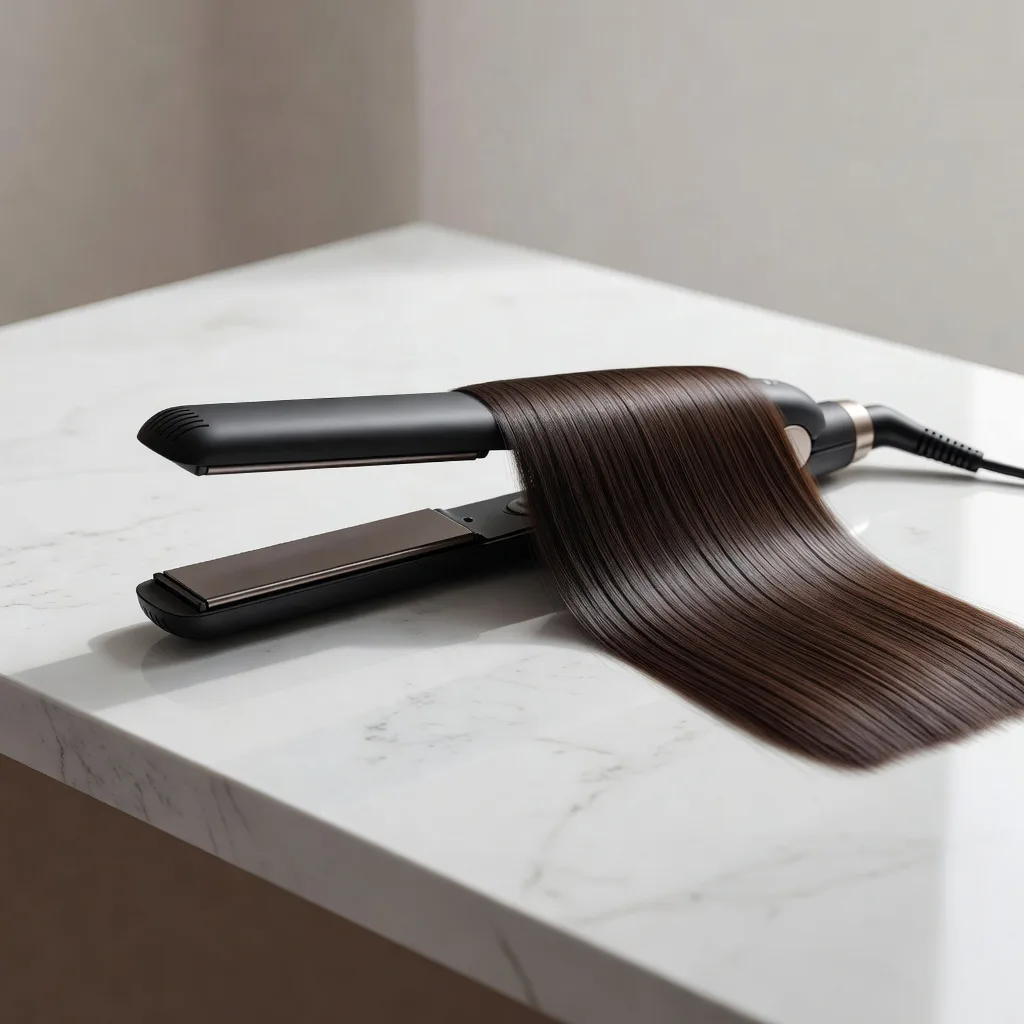
A hair straightener, also called a flat iron, presses hair between two heated plates to smooth out waves, curls and frizz. It is one of the most useful styling tools you can own, but also a common cause of dry, brittle hair. This list covers 10 options, from fixed-heat ceramic stylers to wide titanium irons, with notes on who each one suits.
Part of our guide to men's grooming tools. Start with: 10 Best Hair Dryers (2026): Faster Drying With Less Heat Damage
The best hair straightener for most people has smooth ceramic or titanium plates, an adjustable temperature dial with a clear display, floating plates that keep even contact, an automatic shut-off and a swivel cord. Ceramic plates heat evenly and suit fine, thin or damaged hair at lower temperatures. Titanium plates heat quickly and suit thick, coarse hair that needs higher heat. Choose plate width by hair length: narrow for short hair and curls, wider for long, thick hair. Whatever you buy, use the lowest heat that works and a heat protectant every time.
In short: adjustable heat and smooth, even plates matter far more than marketing claims about ions, steam or special coatings.
The American Academy of Dermatology warns that excessive heat can damage any hair type and advises limiting flat irons, using low or medium heat settings and applying a product that protects hair from heat.
Below you will find the ten picks, how we chose them, plate materials, safe temperatures by hair type, what to avoid and how to straighten with less damage.
Shopping these picks?
Amazon Prime members get fast, free shipping on eligible items, plus Prime Video, Amazon Music and member deals. New members can start with a free trial.
Start a free Prime trialAged 18 to 24? Prime for Young Adults comes with a longer free trial and a lower price after it.
Affiliate link: we may earn a commission at no extra cost to you.
As an Amazon Associate we earn from qualifying purchases. This does not change which products we include.


In Brief
- ghd Platinum+: best overall, with fixed moderate heat and floating ceramic plates.
- ghd Max: wide 2 inch plates mean fewer passes on long, thick hair.
- BaBylissPRO Nano Titanium: a titanium iron with a wide heat range for coarse hair.
- Adjustable or sensibly fixed temperature matters more than any coating claim.
- Ceramic suits fine or damaged hair; titanium suits thick, coarse hair.
- Always straighten fully dry hair with a heat protectant.
- One slow pass is kinder than several fast passes.
Contents
- The 10 Best Hair Straighteners Right Now
- How We Chose These Products
- How Heat Damages Hair
- Ceramic vs Titanium vs Tourmaline Plates
- Choosing Plate Width and Shape
- Which Temperature Is Safe for Your Hair?
- Features Worth Paying Attention To
- What to Avoid
- How to Straighten Hair With Less Damage
- Heat Protectants and Your Skin
- Dos and Don’ts
- Honest Limits
- When to See a Dermatologist
- FAQ
- The Takeaway
The 10 Best Hair Straighteners Right Now
These ten flat irons were shortlisted from widely reviewed Amazon listings and ranked by plate quality, heat control, plate width and safety features. Each pick explains who it suits, its trade-offs and who should skip it.
| # | Product | Best For | Standout Feature | |
|---|---|---|---|---|
| 1 | ghd Platinum+ Styler 1 inch Flat Iron | Most hair types, everyday straightening | Fixed moderate heat removes the guesswork | View |
| 2 | ghd Max Styler 2 inch Flat Iron | Long, thick or curly hair | Extra-wide 2 inch plates cover more hair | View |
| 3 | BaBylissPRO Nano Titanium Straightener | Thick, coarse or hard-to-straighten hair | Titanium plates with a wide heat range | View |
| 4 | Paul Mitchell Smooth+ Ceramic Flat Iron | Fine, colour-treated or damaged hair | Large digital display for precise heat | View |
| 5 | CHI Classic Tourmaline 1.5 inch Iron | Medium to long hair that needs flexible heat | 1.5 inch floating plates with a dial | View |
| 6 | CHI Lava Ceramic 1 inch Flat Iron | People trying to style at lower heat | Plates designed for lower-temperature styling | View |
| 7 | BaBylissPRO Porcelain Flat Iron | Fans of smooth ceramic-style plates | Porcelain plates from a salon brand | View |
| 8 | PYT Unicorn Pro Ceramic Flat Iron | Straightening, curling and waving with one tool | Rounded floating plates for 3-in-1 styling | View |
| 9 | Hot Tools Black Gold 1 1/4 inch Flat Iron | Travellers and people who want fine heat steps | Dual voltage with many digital heat levels | View |
| 10 | VANESSA PRO 2 inch Titanium Flat Iron | Thick hair on a tighter budget | Wide 2 inch titanium plates | View |
ghd Platinum+ Styler 1 inch Flat Iron

Best for: Most hair types, everyday straightening
The ghd Platinum+ earns the top spot because it takes the riskiest decision, choosing a temperature, out of your hands. It is locked at one moderate setting rather than offering a dial that tempts you to crank it up, and the listing says its sensors adjust the heat as you style to keep it steady across the plates.
The precision-milled ceramic plates float on a flexible hinge, which helps keep even contact on thick sections. It also switches itself off after 30 minutes, comes with a heat-resistant plate guard and works on universal voltage. The trade-off is that you cannot lower the heat for very fine or fragile hair, where the Paul Mitchell or CHI Lava picks give more control.
- Single fixed temperature, no dial to set
- Sensor technology that adjusts heat while styling
- Floating ceramic plates on a flexible hinge
- Auto shut-off after 30 minutes, universal voltage
Pros
- Hard to overheat hair by mistake
- Rounded barrel also curls and waves
- Plate guard included for safer storage
Cons
- No way to choose a lower heat for very fine hair
- One inch plates are slower on very long, thick hair
Skip it if: Skip it if your hair is fine, bleached or fragile and you want to set a lower temperature yourself.
Check Price on Amazonghd Max Styler 2 inch Flat Iron

Best for: Long, thick or curly hair
The ghd Max uses the same fixed-heat idea as the #1 pick but with plates about twice as wide. On long, thick or curly hair that matters, because each pass covers more hair and fewer passes mean less total heat exposure. It is the pick for people who find a one inch iron takes too long.
Its ceramic plates use two heat zones, and the listing highlights a quick heat-up, a long swivel cord and a sleep mode after 30 minutes. The wide plates are less nimble near the roots, around a fringe or on short hair, and the rounded barrel is harder to curl with than the slimmer Platinum+. Like the #1 pick, there is no lower heat option.
- Two inch wide ceramic plates
- Dual-zone heat control
- Pre-set moderate temperature
- Quick heat-up, long swivel cord, 30-minute sleep mode
Pros
- Fewer passes on long, thick hair
- No temperature to misjudge
- Long cord gives freedom of movement
Cons
- Too wide for short hair, fringes and tight curls
- Fixed heat cannot be lowered for fragile hair
Skip it if: Skip it if your hair is short or fine; the one inch ghd Platinum+ or CHI Lava is easier to handle.
Check Price on AmazonBaBylissPRO Nano Titanium Straightener

Best for: Thick, coarse or hard-to-straighten hair
The BaBylissPRO Nano Titanium is a long-standing salon favourite and the best pick here for coarse hair that ceramic irons struggle with. Titanium plates heat quickly and hold high heat, and the extra-long plates cover more hair per pass. Unlike the two ghd picks, you can choose your own temperature, up to a very high maximum.
That range is both its strength and its risk. Coarse hair can benefit from a higher setting, but fine or damaged hair can scorch quickly on titanium, so start low and only go up if one slow pass is not enough. The listing mentions a built-in ion generator; treat that as a minor extra rather than a reason to buy.
- Titanium plates that heat quickly
- Extra-long plates with a slim profile
- Adjustable heat up to a high maximum
- Can also create loose waves
Pros
- Powerful enough for coarse hair
- Wide temperature range
- Slim design is easy to guide
Cons
- Easy to overheat fine or damaged hair
- Very high top setting is not needed by most people
Skip it if: Skip it if your hair is fine, thin or bleached; a ceramic iron like the Paul Mitchell is gentler.
Check Price on AmazonPaul Mitchell Smooth+ Ceramic Flat Iron

Best for: Fine, colour-treated or damaged hair
The Paul Mitchell Smooth+ suits anyone who wants to know exactly how hot their plates are. Its large digital display makes it easy to set a low temperature and see it, which is the single most useful habit for protecting fine, coloured or damaged hair. The maximum is lower than the BaBylissPRO and Hot Tools picks, which is no bad thing.
CeraShine ceramic plates are designed for even heat, and bevelled edges help with waves and curls as well as straightening. Compared with the ghd irons, you gain full control but lose the fixed-heat simplicity, so it rewards people who will actually use the lower settings. Very coarse hair may need more passes than with a titanium iron.
- Ceramic plates designed for even heat
- Adjustable heat with a large digital display
- Bevelled edges for straightening, waving and curling
- Maximum setting lower than most titanium irons
Pros
- Easy to set and check a low temperature
- Good match for fine or coloured hair
- Versatile bevelled plates
Cons
- May need extra passes on very coarse hair
- Digital controls take a moment to learn
Skip it if: Skip it if your hair is very thick and coarse; the BaBylissPRO Nano Titanium will be faster.
Check Price on AmazonCHI Classic Tourmaline 1.5 inch Iron

Best for: Medium to long hair that needs flexible heat
The CHI Classic sits between the one inch irons and the two inch ghd Max. Its 1.5 inch floating plates cover shoulder-length to long hair quickly, yet are not so wide that they become awkward near the roots. Unlike the ghd Max, it has an adjustable temperature dial, so you can go lower for finer sections.
The tourmaline ceramic plates are designed for a smooth glide, and the listing suggests working in one to two inch sections with steady, fluid passes, which matches good practice. The dial is less precise than the Paul Mitchell’s digital display, so check the markings carefully. Claims about negative ions and far-infrared heat are marketing rather than proven hair benefits.
- Tourmaline ceramic plates
- 1.5 inch wide floating plates
- Adjustable temperature dial
- Straightens, smooths, curls and flips
Pros
- Wider plates without being unwieldy
- Adjustable heat for different sections
- Versatile for curls and flips
Cons
- Dial is less precise than a digital readout
- Wider plates are fiddly on short hair
Skip it if: Skip it if you want to see an exact temperature; the Paul Mitchell or Hot Tools picks have digital settings.
Check Price on AmazonCHI Lava Ceramic 1 inch Flat Iron

Best for: People trying to style at lower heat
The CHI Lava is designed around the idea of styling at lower temperatures, which is the most reliable way to limit heat damage. Its one inch plates blend volcanic lava mineral with ceramic for a smooth surface, and the listing positions it for people who want sleek results without reaching for the highest settings.
An extra-long swivel cord makes it easy to reach the back of the head. The one inch width suits short to shoulder-length hair better than long, thick hair, where the ghd Max or CHI Classic will be quicker. Claims that lava minerals strengthen or hydrate hair are not established, so buy it for the glide and lower-heat approach, not for hair repair.
- Lava mineral and ceramic fusion plates
- Designed to style at lower temperatures
- One inch plates
- Professional 11 ft swivel cord
Pros
- Encourages gentler, lower-heat styling
- Very long cord
- Nimble one inch plates
Cons
- Slow on long, thick hair
- Hair-strengthening claims are unproven
Skip it if: Skip it if your hair is very long and thick; wider plates will save you time.
Check Price on AmazonBaBylissPRO Porcelain Flat Iron

Best for: Fans of smooth ceramic-style plates
The BaBylissPRO Porcelain is the ceramic-style alternative to the #3 Nano Titanium from the same professional line. Porcelain plates are a form of ceramic, so this iron generally suits people who prefer a gentler, even-heating surface to titanium, such as those with normal to fine hair who straighten regularly and want a smooth glide without very high heat.
Its listing is brief, so check the plate width and heat range on the product page before buying. Choose it over the Nano Titanium if your hair does not need very high heat, and over the ghd picks if you want a salon-brand iron without a fixed temperature. As with any ceramic iron, avoid the top setting for routine use.
- Porcelain (ceramic-type) plates
- Professional salon-brand flat iron
- Designed for straightening
- Check the listing for plate width and heat range
Pros
- Gentler plate type than titanium
- From an established professional brand
- Simple, straightforward design
Cons
- Listing gives fewer details than most picks
- Slower than titanium on very coarse hair
Skip it if: Skip it if you want clear, detailed specifications before you buy; the Paul Mitchell listing is more complete.
Check Price on AmazonPYT Unicorn Pro Ceramic Flat Iron

Best for: Straightening, curling and waving with one tool
The PYT Unicorn Pro is the most versatile iron on this list for people who want to straighten one day and curl or wave the next. Its ceramic floating plates have gently rounded edges, and the listing describes it as a 3-in-1 tool that works as a straightener, curler or wave maker.
It offers adjustable heat for fine through to thick hair and heats up quickly. The top setting is high, so fine hair should stay near the bottom of the range. It is less refined than the ghd irons and lacks the Paul Mitchell’s large display, but it is a flexible, capable choice for mixed styling.
- Ceramic floating plates
- Adjustable heat for fine to thick hair
- Rounded edges for straightening, curls and waves
- Quick heat-up
Pros
- Handles curls and waves as well as straight styles
- Adjustable temperature
- Fast to heat
Cons
- High maximum can tempt overuse
- Less premium build than the top picks
Skip it if: Skip it if you only ever straighten and want the simplest tool; the ghd Platinum+ is easier.
Check Price on AmazonHot Tools Black Gold 1 1/4 inch Flat Iron

Best for: Travellers and people who want fine heat steps
The Hot Tools Black Gold is the travel pick thanks to universal dual voltage, so with the right plug adapter it works abroad. That makes it a sensible single iron for people who travel often and do not want a second, cheaper tool for trips. Its 1 1/4 inch floating plates are a good middle width, and rounded edges let you wave or curl as well as straighten.
It offers many digital heat levels, which makes it easy to find a precise, lower setting, similar to the Paul Mitchell. Its auto shut-off is set to two hours, much longer than the 30 minutes on the ghd irons, so still switch it off yourself. The very high top setting is best left for coarse hair only.
- Universal dual voltage for travel
- 1 1/4 inch floating plates with rounded edges
- Many digital heat levels
- Auto shut-off after two hours
Pros
- Works abroad with a plug adapter
- Fine control over temperature
- Versatile middle plate width
Cons
- Auto shut-off is slow compared with the ghd picks
- Top setting is far hotter than most hair needs
Skip it if: Skip it if you want a quick safety shut-off; the ghd irons switch off after 30 minutes.
Check Price on AmazonVANESSA PRO 2 inch Titanium Flat Iron

Best for: Thick hair on a tighter budget
The VANESSA PRO is a simpler alternative to the ghd Max for thick hair. It pairs wide 2 inch plates with titanium, and the listing positions it for one-pass styling on thick hair, which means covering more hair with less repeated heat. It is the pick for people who want a wide titanium iron without paying for a premium brand name.
It has less brand history and a shorter listing than the premium picks, so check the heat settings and safety features on the product page before buying. Titanium heats fast and hot, so fine, bleached or damaged hair is better served by the Paul Mitchell or CHI Lava. For thick hair, it is a sensible, wide-plate option.
- Two inch wide plates
- Titanium plate surface
- Designed for thick hair
- Aimed at one-pass styling
Pros
- Wide plates for long, thick hair
- Titanium heats quickly
- Simple option for thick hair
Cons
- Listing gives limited detail on settings
- Titanium can be harsh on fine hair
Skip it if: Skip it if your hair is fine or damaged; a ceramic iron is gentler.
Check Price on AmazonHow We Chose These Products
We shortlisted hair straighteners from Amazon listings that are highly rated by a large number of shoppers, favouring established brands and fuller-featured models with floating plates, clear heat control and automatic shut-off. We then checked each product’s listed features against the heat-styling guidance cited in this post, including the AAD’s advice to use lower heat and a heat protectant.
These are research-based picks, not hands-on lab tests. We did not measure plate temperatures ourselves, so rankings reflect listing detail, plate type, width and safety features rather than personal results. We removed near-duplicate models and hot-air stylers so that every pick is a true flat iron.
- Strong ratings from a large number of shoppers
- Established brands and fuller-featured models preferred
- Listed features checked against the cited heat-damage guidance
- Products with thin or unclear listings excluded or flagged
- No ‘no damage’ or hair-repair claims repeated as fact
How Heat Damages Hair
Hair is made mostly of a protein called keratin, protected by an outer layer of overlapping cells called the cuticle. Heat temporarily breaks some of the bonds that give hair its shape, which is why a straightener can smooth curls. Too much heat, or heat used too often, lifts and cracks the cuticle and can change the protein itself.
- Dryness and rough texture, because a damaged cuticle lets moisture escape.
- Frizz that seems to get worse the more you straighten.
- Split ends and breakage, especially around the face and crown.
- Loss of shine and a straw-like feel.
- Colour fading faster in dyed hair.
- A burnt smell or steam hissing from the plates, which means the hair was damp or the heat too high.
Damage builds up over time. Hair does not repair itself once it has left the scalp, so prevention is the only reliable strategy. Trimming removes damaged ends, and conditioners can make damaged hair feel smoother, but neither undoes the damage.
Ceramic vs Titanium vs Tourmaline Plates
Plate material affects how quickly the straightener heats, how evenly it holds heat and how it feels on the hair. None of them is best for everyone.
| Plate type | How it heats | Best for | Watch out for |
|---|---|---|---|
| Ceramic | Evenly, moderately fast | Fine, thin, damaged or colour-treated hair | Cheap ceramic coatings can chip over time |
| Titanium | Very fast, holds high heat | Thick, coarse or very curly hair | Easy to overheat fine hair |
| Tourmaline or ceramic-tourmaline | Evenly, often smoother glide | Frizz-prone, medium hair | Benefits are mostly about glide, not hair health |
| Solid ceramic | Even, durable surface | Frequent users who want longevity | Usually heavier |
| Basic metal or aluminium | Uneven hot spots | Not recommended | Snagging and scorching |
Claims about negative ions, infrared or special minerals are hard to verify. The features you can actually judge are how smooth the plates are, how evenly they heat and whether you can set a precise, lower temperature.
Choosing Plate Width and Shape
- Narrow plates, around half an inch to one inch, suit short hair, fringes and curling as well as straightening.
- One inch plates are the most versatile for shoulder-length hair.
- Wide plates, around one and a half to two inches, cover long or thick hair faster, which means fewer passes.
- Rounded or bevelled plate edges make it easier to add waves and curls.
- Mini straighteners are useful for travel and touch-ups but slow for a full head.
Fewer passes usually mean less damage, so a wider plate can actually be gentler on long, thick hair than a narrow one used over and over.
If you have tightly curled or coily hair, pay extra attention to temperature control. Repeated high heat can permanently loosen the curl pattern, sometimes called heat damage or heat training, and the curls may not return even after washing. Stretching hair first with a low-heat blow-dry or a tension method can mean the straightener needs less heat to finish the job.
Which Temperature Is Safe for Your Hair?
Use this table as a guide and always start at the low end. If one slow pass smooths the hair, you do not need more heat.
| Hair type | Suggested starting range | Notes |
|---|---|---|
| Fine, thin or damaged | Low, around 120 to 150 C (250 to 300 F) | Ceramic plates; avoid maximum settings |
| Colour-treated or bleached | Low to medium, around 150 to 175 C (300 to 350 F) | Colour fades faster with high heat |
| Normal or medium | Medium, around 175 to 190 C (350 to 375 F) | Most people do not need more |
| Thick, coarse or very curly | Medium to high, around 190 to 210 C (375 to 410 F) | Use thin sections rather than more heat |
| Any hair | Avoid the top setting for routine use | High heat is the main cause of damage |
These ranges are general guidance from common styling practice, not medical limits. Straighteners without a numbered display make it hard to know how hot the plates are, which is one reason to choose a model with a clear temperature readout.
Features Worth Paying Attention To
- Adjustable temperature with a digital or numbered display.
- Floating or cushioned plates that keep even pressure on the hair.
- Automatic shut-off after a period of inactivity.
- A long swivel cord that does not tangle.
- Heat-resistant tip so you can hold and guide the straightener.
- A lock to keep the plates closed for storage.
- Dual voltage if you travel abroad, used with the correct plug adapter.
Heat-up time is often advertised but matters less than it seems. A straightener that heats in a few seconds is convenient, but consistent, even heat once it is ready is what protects your hair.
Weight and grip also matter more than most listings suggest. A lighter tool with a comfortable, non-slip handle is easier to control near the face and neck, which lowers the chance of touching your skin with the hot plates. If possible, hold the straightener in a shop or read reviews that mention comfort during a full styling session.
What to Avoid
- Straighteners with no temperature control or only a single on setting.
- Rough, scratched or chipped plates that snag hair.
- Listings promising no damage at any heat.
- Very cheap tools with no safety certification mark for your country.
- Using the straightener on damp or wet hair, or products that sizzle on the plates.
- Daily high-heat use on the same sections of hair.
Be cautious with steam straighteners and add-on gadgets. Steam features release hot vapour close to the face and hands, and there is little independent evidence that they protect hair better than a good dry-plate tool at a sensible temperature.
Straightener plates can reach temperatures that cause serious skin burns in seconds. Keep them away from the scalp, ears, neck and forehead, place the tool on a heat-resistant mat, switch it off after use and keep it out of reach of children and pets.
How to Straighten Hair With Less Damage
Start with dry hair
Wash, condition and let hair dry completely, or blow-dry on a low or medium setting.
Apply heat protectant
Spray or smooth it evenly from mid-lengths to ends and let it dry.
Set the temperature
Choose the lowest setting that suits your hair type from the table above.
Section the hair
Clip hair into sections about one to two inches wide.
Make one slow pass
Close the plates gently near the root, keeping them away from the scalp, and glide steadily to the ends.
Repeat only if needed
If a section is still wavy, try a thinner section before turning up the heat.
Let hair cool
Allow each section to cool before brushing or styling so it holds its shape.
Switch off and cool the tool
Unplug it and let it cool on a heat-resistant surface before storing.
Leave at least one or two days a week without heat styling. Air-dried days give your hair a break and make it easier to notice early signs of damage.
Heat Protectants and Your Skin
Heat protectants coat the hair to reduce moisture loss and friction. They do not make hair heat-proof, but they are a sensible habit and the AAD’s healthy hair tips recommend using one. Many are sprays, creams or serums containing silicones, polymers and oils.
Some protectants contain fragrance and drying alcohols, which can irritate the forehead, hairline and neck, or trigger breakouts along the hairline. If that happens, look for fragrance-free options; our guide on how to spot fragrance in an ingredient list helps you check labels, and our article on whether alcohol is always bad in skincare explains which alcohols are drying. Apply spray protectants with your face turned away.
Dos and Don’ts
Try This
- Use the lowest effective heat
- Straighten only fully dry hair
- Apply heat protectant every time
- Use thin sections and one slow pass
- Trim split ends regularly
Avoid This
- Use maximum heat by default
- Straighten damp hair
- Hold the plates in one spot
- Leave the tool on unattended
- Ignore a burning smell
Honest Limits
No straightener is damage-free. Even the best-designed tool applies high heat to hair, and frequent use will change its texture over time. Premium plates and extra features can make styling faster and more even, but they cannot replace sensible temperatures and fewer heat days.
Heat protectants reduce, but do not prevent, damage, and most claims about their protection levels come from manufacturer testing. Treatments that promise to repair broken hair can only smooth and coat it. If your hair is already very damaged, cutting back on heat and trimming the damaged lengths will help more than any new tool.
When to See a Dermatologist
- You notice hair thinning, bald patches or breakage near the scalp.
- You burn your scalp, ear or neck and the burn blisters or does not heal.
- Your scalp is itchy, flaky or sore after using styling products.
- Hair loss continues even after you stop heat styling.
This article is for general information and does not replace professional medical advice. See a board-certified dermatologist for hair loss, scalp problems or burns that blister or do not heal.
FAQ
Are ceramic or titanium straighteners better?
Ceramic suits fine hair; titanium suits thick, coarse hair.
What temperature should I straighten my hair at?
The lowest setting that smooths your hair in one slow pass.
Do I need a heat protectant?
Yes, it reduces heat damage though it does not prevent it.
Is the most expensive straightener worth it?
Not always. The ghd Platinum+ and ghd Max add fixed moderate heat and quick shut-off, but the Paul Mitchell gives similar control with a digital display.
Which straightener is best for thick or curly hair?
The ghd Max or VANESSA PRO for long, thick hair, and the BaBylissPRO Nano Titanium for very coarse hair.
Which straightener is best for fine or damaged hair?
The Paul Mitchell Smooth+ or CHI Lava, used on a low setting with a heat protectant.
Can I straighten damp hair?
No, straighten only fully dry hair.
How often is it safe to straighten hair?
As rarely as practical; give hair heat-free days.
Do ionic straighteners work better?
The evidence is weak; smooth plates and even heat matter more.
Can straightening cause hair loss?
It can cause breakage that looks like thinning.
The Takeaway
The best hair straightener has smooth ceramic or titanium plates, a precise adjustable temperature, floating plates and an auto shut-off, with a plate width that suits your hair length.
Use it on fully dry hair with a heat protectant, choose the lowest heat that works, limit how often you straighten and keep the plates clean to protect both your hair and your skin.
Our top pick: ghd Platinum+ Styler 1 inch Flat Iron
The ghd Platinum+ takes the top spot because its fixed, moderate heat, floating ceramic plates and 30-minute auto shut-off make it hard to overheat your hair by accident. Choose the ghd Max instead if your hair is long and thick and you want fewer passes, or the BaBylissPRO Nano Titanium if coarse hair needs a titanium iron with a wider heat range.
Check Price on Amazon
Written by
Registered pharmacist and founder of Facial Adviser. Rakib's pharmacy training covers how skincare actives work and interact; a later course in cosmetology turned that into a focus on facial treatments and skincare products. He plans, researches and edits every guide on the site and checks health claims against sources such as the American Academy of Dermatology, the FDA and the NIH. He is not a dermatologist; see the Editorial Policy and Medical Disclaimer.
About · Editorial policy · How we choose products · Medical disclaimer · Contact
Keep reading: Hair tools
- 10 Best Hair Dryers (2026): Faster Drying With Less Heat Damage
- Can a Beanie Cause Hair Loss? Myths, Friction and What Actually Thins Hair
- Madison Reed Radiant Hair Color Kit: Gentler Home Colour?
- Why Does Chlorine Make My Hair Curly? Real Answer
- How Long Does a Hair Replacement System Last?
- 10 Best Beard Trimmers (2026): Even Lengths, Clean Edges
- 10 Best Safety Razors (2026): Closer, Calmer Shaves for Every Level