Is a Muscle Massage Gun Worth It? What the Evidence Says and Who Benefits
Massage guns have gone from a physiotherapy clinic novelty to a standard gym-bag item in a few short years. They promise faster recovery, less soreness and looser muscles with a few minutes of buzzing, and the marketing is persuasive. Before you spend on one, it helps to know what percussive therapy can and cannot do.
Part of our guide to body and other. Start with: 10 Best Body Tools for Skincare and Massage (2026): Smooth and Relax
A massage gun is worth it if you want a quick, convenient way to ease muscle tightness and short-term soreness, warm up before training or loosen a stiff back after a long day at a desk. Research on percussive therapy generally finds short-term improvements in range of motion and perceived soreness that are similar to foam rolling or a brief manual massage. It does not speed up tissue repair in a meaningful way, does not burn fat or break down cellulite, and does not fix injuries. The device suits people who train regularly, sit for long hours or struggle to reach their own back and legs. It is not worth it for anyone who expects it to replace rehab, stretching or sleep.
In short: a massage gun is a convenient tool for temporary relief and mobility, not a recovery miracle, and the honest answer depends on how often you would actually use it.
The National Center for Complementary and Integrative Health, part of the US National Institutes of Health, describes the evidence for massage as mixed and mostly short-term, with a low but real risk of harm when pressure is vigorous or the person is frail. That framing applies just as well to a motorised version held in your own hand.
This guide explains what percussive therapy does, who benefits and who should avoid it, how it compares with a foam roller and hands-on massage, which features actually matter, and the mistakes that turn a useful tool into a sore bruise.
Shopping these picks?
Amazon Prime members get fast, free shipping on eligible items, plus Prime Video, Amazon Music and member deals. New members can start with a free trial.
Start a free Prime trialAged 18 to 24? Prime for Young Adults comes with a longer free trial and a lower price after it.
Affiliate link: we may earn a commission at no extra cost to you.
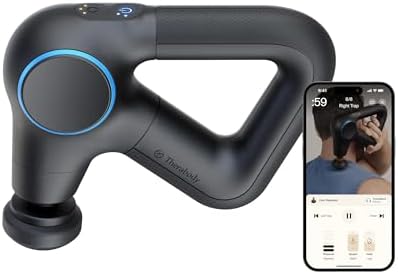
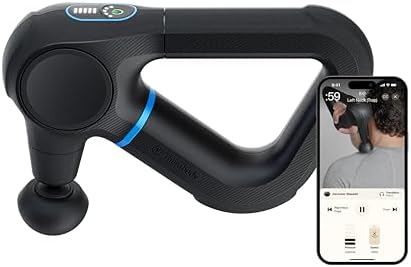
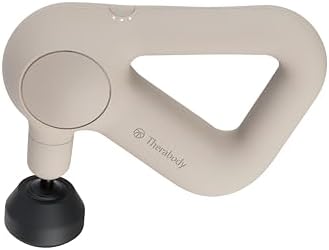
Recommended Massage Guns and Percussion Massagers



On This Page
- What a Massage Gun Actually Does
- What the Evidence Says About Recovery
- Who Benefits Most From a Massage Gun
- Who Should Avoid or Get Advice First
- How to Use a Massage Gun Safely
- Massage Gun vs Foam Roller vs Hands-On Massage
- Features That Actually Matter
- Cheap vs Premium: An Honest Comparison
- Dos and Don’ts
- Honest Limits
- When to See a Physiotherapist or Doctor
- Questions People Ask
- Summing Up
Key Takeaways
- Massage guns reliably reduce short-term soreness and improve range of motion for a few hours.
- Evidence that they speed real recovery or performance is weak and mixed.
- They do not burn fat, melt cellulite or heal injuries.
- Gym-goers, runners and desk workers get the most use from one.
- Avoid use over injuries, bones, the front of the neck and during pregnancy without medical advice.
- Stall force, amplitude, noise and battery matter more than the number of speeds.
- A foam roller does most of the same job for far less, but with more effort.
What a Massage Gun Actually Does
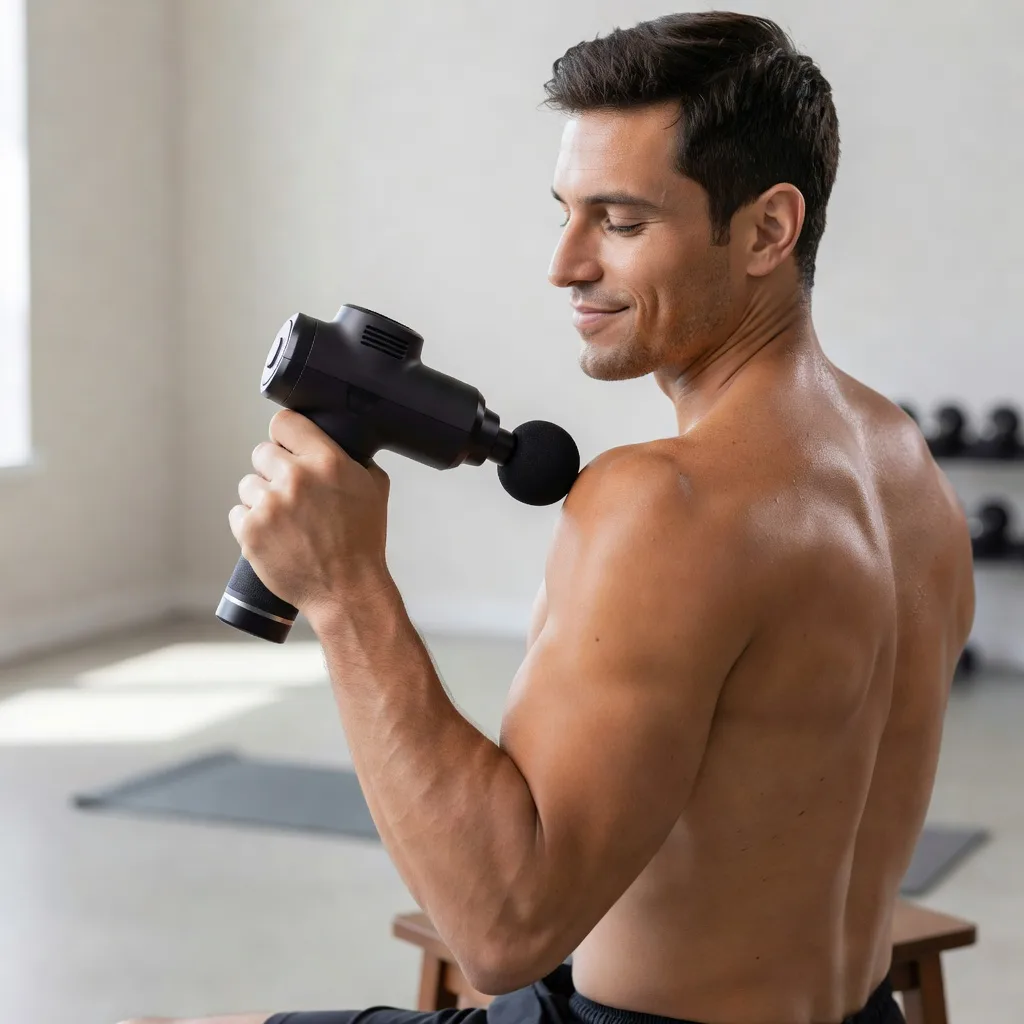
A massage gun is a handheld motor that drives a padded head back and forth very quickly. Each stroke pushes into the muscle and releases, which is why the technique is called percussive or vibration therapy.
- Increases blood flow to the area, which warms the muscle and can make it feel looser.
- Reduces the feeling of tightness by calming the nervous system’s response in the muscle, not by lengthening the tissue.
- Improves range of motion for a short period, usually measured in hours rather than days.
- Lowers the perceived intensity of delayed-onset muscle soreness after training.
What it does not do is break up scar tissue, release lactic acid, flush toxins or reshape fascia. Those claims appear on packaging and in videos but do not match what the research shows. Our guide on facials versus massage covers the same realistic view of what hands-on treatments can achieve.
What the Evidence Says About Recovery
Studies on percussive therapy are mostly small and short, and they point one way: a clear short-term effect on how muscles feel and move, and an unclear effect on anything beyond that.
| Claim | What research generally finds | Verdict |
|---|---|---|
| Less soreness after exercise | Perceived soreness drops for a few hours; similar to foam rolling | Supported, short-term |
| Better flexibility | Range of motion improves briefly after use | Supported, short-term |
| Faster muscle repair | No reliable evidence of quicker tissue healing | Not supported |
| Better strength or performance | Mixed; long sessions before training may slightly reduce power | Unclear |
| Fat loss or cellulite reduction | No effect on fat or skin structure | Not supported |
| Injury treatment | No evidence; can worsen strains and tears | Not supported |
The honest reading is that a massage gun helps you feel better and move better for the rest of the session or the evening. Whether that translates into better training over months depends far more on sleep, nutrition and sensible programming than on any device.
Who Benefits Most From a Massage Gun
The device earns its place when it solves a problem you have regularly. These groups tend to use one often enough to make it worthwhile.
- Gym-goers who train several times a week and want a faster warm-up and less stiffness the next day.
- Runners and cyclists with tight calves, hamstrings and glutes that are awkward to stretch.
- Desk workers with a stiff upper back, tight hip flexors and tense shoulders from long hours sitting.
- Anyone who struggles to reach their own back and finds a foam roller clumsy.
If you train once a week or mainly want to relax, a basic model or a foam roller will serve you just as well.
Who Should Avoid or Get Advice First
A massage gun is safe for healthy muscle but not for everything underneath it.
- Acute injuries such as strains, sprains, tears or anything swollen and bruised.
- Anyone on blood thinners or with a bleeding or clotting disorder, because percussion can cause bruising or dislodge a clot.
- Pregnancy, unless a doctor or physiotherapist has approved specific use.
- Osteoporosis, recent fractures or surgical sites.
- Varicose veins, deep vein thrombosis or known circulation problems.
- Numbness, nerve pain or a condition that reduces sensation, because you cannot feel when pressure is too much.
Never use a massage gun on the front or sides of the neck, over the throat, directly on the spine, over bones and joints, on the kidneys at the lower back, or over the abdomen. These areas contain arteries, nerves and organs that are not protected by muscle, and percussion there can cause serious harm.
How to Use a Massage Gun Safely
Most problems come from using the device too hard, too long or in the wrong place.
Start on the lowest speed
Let the head rest on the muscle with no extra pressure. Add speed only once the area feels comfortable.
Choose the right attachment
Use the large round ball for big muscles, the flat head for general work and the bullet head only on dense spots like the glutes, never near bone.
Keep it moving
Glide slowly along the length of the muscle rather than parking on one spot. Float over the skin; do not dig in.
Limit time per muscle
Spend about one to two minutes on each muscle group, and no more than roughly fifteen minutes in a session.
Use it at the right moment
Thirty seconds to a minute per muscle before training as a warm-up; a slower, longer pass afterwards or in the evening for soreness.
Stay on muscle
Avoid bones, joints, the spine, the neck and anywhere that is bruised, swollen or injured.
Stop if it hurts
Discomfort that fades is normal; sharp pain, tingling or numbness means stop immediately.
If you cannot hold a relaxed conversation while using the gun, the pressure is too high. Effective percussive therapy feels firm and slightly uncomfortable, not painful.
Massage Gun vs Foam Roller vs Hands-On Massage
Each tool delivers a similar short-term effect by a different route. The best one is the one you will use.
| Factor | Massage gun | Foam roller | Hands-on massage |
|---|---|---|---|
| Short-term soreness relief | Good | Good | Good |
| Range of motion | Improves briefly | Improves briefly | Improves briefly |
| Effort required | Low | High, uses body weight | None |
| Reach hard spots | Easy, especially back and calves | Awkward for upper back and arms | Full |
| Control of pressure | Precise | Rough | Skilled and adaptive |
| Cost over time | One purchase | Lowest | Highest, repeated sessions |
| Risk if misused | Bruising, nerve irritation | Low | Low with a qualified therapist |
| Relaxation | Moderate | Low | High |
A foam roller covers most of the same ground for anyone who is willing to put the time in. A therapist adds judgement that no device has, which matters most when something is actually wrong. Our guide to lymphatic facial massage shows how light manual techniques work on a very different principle from percussion, and why the face needs a gentler approach.
Features That Actually Matter
Spec sheets are full of numbers, and most of them do not change your experience.
- Stall force: how hard you can press before the motor stops. Low stall force is fine for calves and forearms; larger people and deep glute work need more.
- Amplitude: how far the head travels on each stroke. A deeper stroke reaches larger muscles; a shallow stroke feels more like a vibration and suits sensitive users.
- Noise: a quiet motor makes evening use in a shared home far more pleasant and is the biggest difference between budget and premium devices.
- Battery: a few hours of use per charge is plenty; look for a removable or USB-C battery if you travel.
- Weight: a heavy device is tiring to hold at awkward angles on your own back.
More speed settings are not better. Most people use the lowest two settings almost all the time. A model with three sensible speeds is easier to use than one with thirty.
Cheap vs Premium: An Honest Comparison
The gap between a basic percussion massager and a premium one is smaller than the marketing suggests, but it is not zero. The differences are in refinement, not in what the device does to your muscles.
- Basic models often have lower stall force, so they slow or stop when you lean in. For light use that rarely matters.
- Budget motors tend to be louder and vibrate more through the handle, which makes long sessions tiring.
- Premium devices usually have longer amplitude, a quieter motor, better balance and sturdier battery life.
- Mini and travel models trade power for portability and can be ideal for calves, forearms and desk-side use.
If you use a massage gun daily, a quieter and more powerful model is a reasonable upgrade. If you are unsure whether you will use one at all, start basic and see whether it becomes a habit. Our roundup of hot and cold therapy wands for tension relief covers a gentler alternative for the face, jaw and temples where a percussion device should never go.
Dos and Don’ts
Do
- Start on the lowest setting and build slowly
- Keep the head moving along the muscle
- Limit each muscle to a minute or two
- Use it to warm up or wind down, not to treat injuries
- Stop at the first sign of sharp pain or numbness
Don’t
- Use it on the neck, spine, bones or abdomen
- Press hard enough to leave a bruise
- Use it over a strain, sprain or swelling
- Rely on it instead of rest and rehab
- Share attachments without cleaning them
Honest Limits
A massage gun is a comfort and mobility tool. It makes sore muscles feel better for a while and helps stiff joints move more freely before a workout, and that is genuinely useful. It does not change how fast muscle fibres repair, it does not prevent injury on its own, and it has no effect on fat, cellulite or skin.
The studies that support percussive therapy are small and short, and the effects they report overlap almost entirely with what a foam roller or a few minutes of hands-on massage can achieve. If a device makes you more likely to warm up, cool down and look after tight muscles, it is worth it. If you buy it hoping to skip those things, it is not.
When to See a Physiotherapist or Doctor
- Pain that lasts more than a week or two despite rest and gentle movement.
- Sharp, shooting or radiating pain, numbness or tingling in an arm or leg.
- Swelling, heat or a visible bruise after using the device.
- Any pain that started with a pop, tear or sudden weakness.
- Calf pain with swelling or warmth, which can signal a clot and needs urgent assessment.
This article is for general information and does not replace professional medical advice. Speak to a doctor or physiotherapist before using a massage gun if you are pregnant, take blood thinners, have a circulatory, bone or nerve condition, or are recovering from injury or surgery.
Questions People Ask
Is a massage gun worth it?
Yes for regular exercisers and desk workers who want quick, short-term relief from tight muscles; no if you expect it to speed healing.
Do massage guns actually work?
They reduce short-term soreness and improve range of motion for a few hours, but do not speed up real recovery.
Is a massage gun better than a foam roller?
It is more convenient and easier on hard-to-reach areas, but the effects are similar.
How long should I use a massage gun on one muscle?
About one to two minutes per muscle, up to around fifteen minutes in total.
Can a massage gun break up fat or cellulite?
No. It has no effect on fat or skin structure.
Can you use a massage gun on your neck?
Only lightly on the muscles at the back and sides, never on the front or over the spine.
Can a massage gun cause damage?
Yes if used too hard, too long or over bones, nerves, injuries or blood vessels.
Should I use a massage gun before or after a workout?
Both: briefly before as a warm-up, slower and longer afterwards for soreness.
Can I use a massage gun every day?
Yes, if you keep sessions short and the pressure moderate.
Who should not use a massage gun?
People with acute injuries, clotting problems, blood thinners, osteoporosis, nerve conditions or pregnancy without medical advice.
Summing Up
A massage gun is worth it for people who train regularly or sit for long hours and want an easy way to ease tightness and short-term soreness, as long as they understand that the benefit is temporary comfort and mobility rather than faster healing.
Use it gently, keep it moving, stay on muscle and away from the neck, spine and injuries, and treat it as one small part of recovery alongside sleep, strength work and, when needed, a physiotherapist.

Written by
Registered pharmacist and founder of Facial Adviser. Rakib's pharmacy training covers how skincare actives work and interact; a later course in cosmetology turned that into a focus on facial treatments and skincare products. He plans, researches and edits every guide on the site and checks health claims against sources such as the American Academy of Dermatology, the FDA and the NIH. He is not a dermatologist; see the Editorial Policy and Medical Disclaimer.
About · Editorial policy · How we choose products · Medical disclaimer · Contact
Keep reading: Body care and more