10 Best Silicone Facial Brushes (2026): Gentle Sonic and Manual Picks
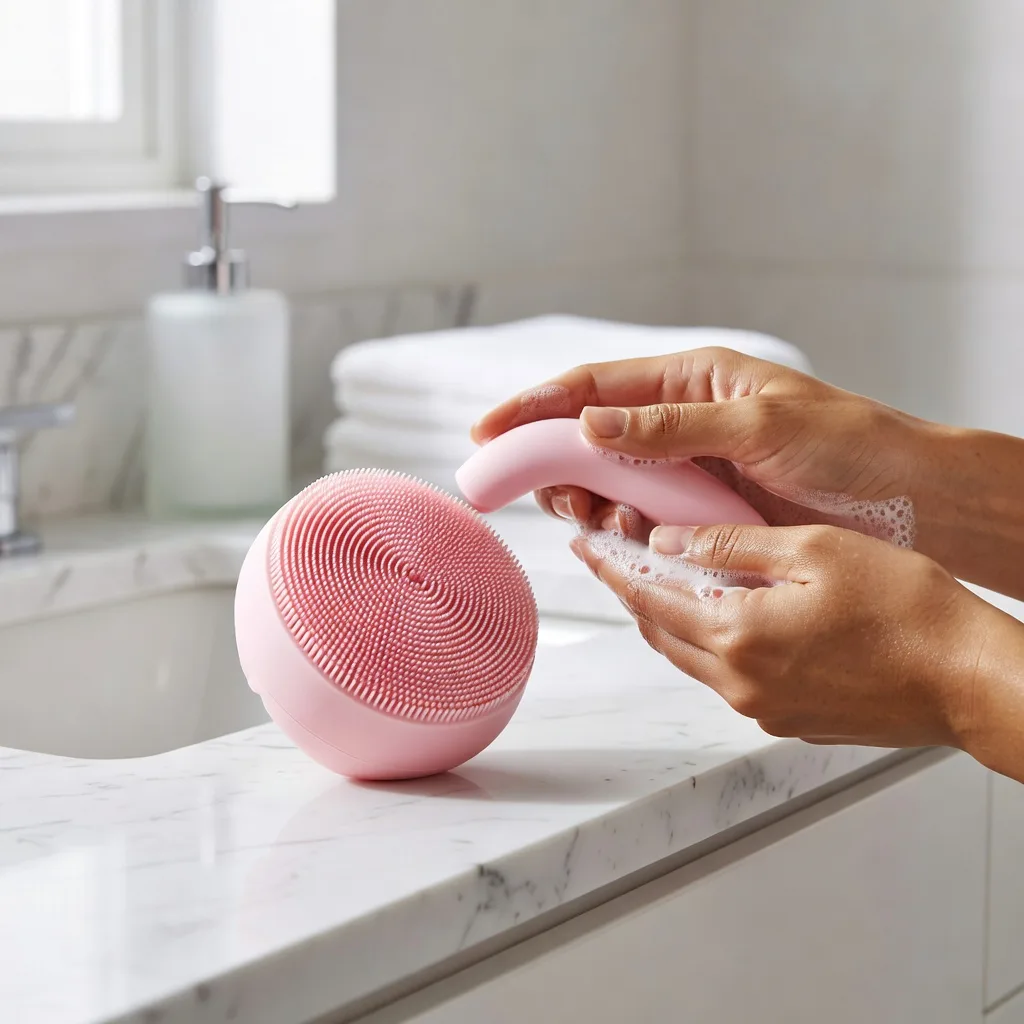
Silicone facial brushes replaced many older nylon-bristle cleansing devices because they are softer, dry quickly and are easier to keep clean. This list covers 10 options, from rechargeable sonic brushes to simple manual scrubbers, with notes on who each one suits and who should skip it, because both types can irritate skin if overused.
Part of our guide to at-home facial devices. Start with: 10 Best Facial Tools (2026): LED, Cleansing, Gua Sha and More
The best silicone facial brush has soft, fine, flexible bristles, a comfortable shape and, if it is electric, low speed settings, a timer and a waterproof body. Silicone is gentler and more hygienic than nylon bristles because it is non-porous and dries fast. For most people a sonic brush used for about a minute once a day, or a manual pad used a few times a week, is plenty. Brushes suit normal, oily and combination skin best. Sensitive skin, rosacea, eczema and active acne often do better with fingertips, so start slowly and stop if your face turns red or stings.
In short: choose soft silicone, use gentle speeds and short sessions, clean the brush every time, and skip it on irritated or acne-prone skin.
The American Academy of Dermatology suggests washing acne-prone skin with fingertips because scrubbing with washcloths, sponges and other tools can irritate it.
After the picks, this buyer’s guide compares manual and sonic designs, explains which features matter, who should skip a brush, and how to use and clean one without damaging your skin.
Shopping these picks?
Amazon Prime members get fast, free shipping on eligible items, plus Prime Video, Amazon Music and member deals. New members can start with a free trial.
Start a free Prime trialAged 18 to 24? Prime for Young Adults comes with a longer free trial and a lower price after it.
Affiliate link: we may earn a commission at no extra cost to you.
As an Amazon Associate we earn from qualifying purchases. This does not change which products we include.


At a Glance
- EZBASICS Silicone Facial Cleansing Brush is our top pick for its five speeds and waterproof, rechargeable body.
- COSLUS JMY05 is the most feature-rich, with four cleansing modes and a warming eye zone.
- Sud Scrub is our favourite manual scrubber, with antimicrobial silicone and a secure finger strap.
- Silicone is gentler and more hygienic than nylon bristles.
- About a minute per session is enough for the whole face.
- Active acne, rosacea and eczema usually do better with fingertips.
- Wash and dry the brush after every use.
Jump to a Section
- The 10 Best Silicone Facial Brushes Right Now
- How We Chose These Products
- Manual vs Sonic Silicone Facial Brushes
- Why Silicone Instead of Nylon Bristles?
- Features to Compare Before You Buy
- Who Should Use a Silicone Facial Brush, and Who Should Not
- What to Avoid
- Is a Silicone Brush a Form of Exfoliation?
- How to Use a Silicone Facial Brush
- How to Clean and Store a Silicone Brush
- Dos and Don’ts
- Honest Limits
- When to See a Dermatologist
- Common Questions
- Final Word
The 10 Best Silicone Facial Brushes Right Now
These ten brushes were shortlisted from widely reviewed Amazon listings and ranked by bristle softness, settings, waterproofing, ease of cleaning and how clearly each listing explains its use. Each pick shows who it suits and who should skip it.
| # | Product | Best For | Standout Feature | |
|---|---|---|---|---|
| 1 | EZBASICS Sonic Silicone Cleansing Brush | Normal, oily and combination skin | Five speeds in a sealed waterproof body | View |
| 2 | COSLUS JMY05 Silicone Cleansing Brush | People who want modes and extras | Four modes plus a warming eye zone | View |
| 3 | Sud Scrub Antimicrobial Face Scrubber | Anyone who wants no batteries | Antimicrobial silicone with a finger strap | View |
| 4 | The Man Silicone Face Scrubber | Oily skin and quick daily cleansing | Short platinum-cured bristles | View |
| 5 | PRITECH Rechargeable Silicone Brush | A sonic brush with a warming end | Five levels plus a heated massage end | View |
| 6 | COSLUS FBS01 Compact Cleansing Brush | Wash bags and small bathrooms | Compact waterproof sonic design | View |
| 7 | medicube Multi Silicone Jelly Brush | Cleansing plus clay or mud masks | Four textures including a mask applicator | View |
| 8 | VWMYQ Silicone Face and Body Scrubber | Using one tool from face to body | Hand-clip handle with hanging hole | View |
| 9 | HIEERBUS Silicone Face Scrubber 2-Pack | Trying manual brushing for the first time | Two manual scrubbers in one pack | View |
| 10 | APRILSKIN Pore Cleansing Silicone Brush | Sensitive or dry skin, used sparingly | Soft manual brush for light exfoliation | View |
EZBASICS Sonic Silicone Cleansing Brush

Best for: Normal, oily and combination skin
The EZBASICS brush earns the top spot because it gets the fundamentals of a sonic brush right. Soft silicone bristles, five vibration speeds and a rechargeable body sealed to IPX7 waterproofing mean you can start on a very low setting, use it in the shower and not worry about water reaching the battery, which is a common failure point on cheaper devices.
Its listing is mostly focused on gentle cleansing and massage, and wisely it is meant to be used with your usual cleanser rather than replacing it. It lacks the heated extras of the #2 COSLUS and #5 PRITECH, but those are not essential. For most people who want a simple, consistent sonic routine, this is the easiest one to recommend.
- Soft, hygienic silicone exterior
- Five vibration speeds
- IPX7 waterproof, rechargeable body
- Designed for use with your usual cleanser
Pros
- Low speeds suit cautious beginners
- Fully waterproof for shower use
- Simple to clean
Cons
- No heated or massage extras
- Listing is light on timer details
Skip it if: Skip it if you have active acne or rosacea; fingertips are gentler for inflamed skin.
Check Price on AmazonCOSLUS JMY05 Silicone Cleansing Brush
Best for: People who want modes and extras
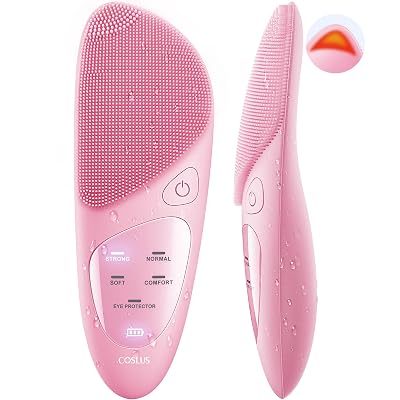
The COSLUS JMY05 packs in more features than any other pick here. It offers four cleansing modes, thicker soft bristles on the tip for the sides of the nose and T-zone, and a warming zone for massaging the eye area after cleansing. A large battery and short charge time mean it can go weeks between charges, and it arrives with a storage box.
The extra features make it more versatile than the #1 EZBASICS, but also more to learn. The warming zone is a comfort feature, not a treatment, and the seller’s cleaning percentage is marketing rather than independent data. The adapter is not included, so you will need a standard USB plug.
- Four cleansing modes
- Soft food-grade silicone with a thicker tip for the nose
- Warming zone for gentle eye-area massage
- Long battery life and a storage box
Pros
- Most versatile brush on the list
- Tip reaches around the nose
- Long time between charges
Cons
- No plug adapter in the box
- More settings than most people need
Skip it if: Skip it if you want a one-button device; the EZBASICS or a manual pad is simpler.
Check Price on AmazonSud Scrub Antimicrobial Face Scrubber

Best for: Anyone who wants no batteries
Sud Scrub is our favourite manual option because it addresses the biggest worry with any face tool, hygiene. Its silicone is infused with silver and zinc to resist odour-causing bacteria and fungi growing on the surface, and the food-grade material is made to last around a year. A fitted finger strap and textured grip stop it slipping in wet hands.
Being manual, it relies on your own pressure, so go lightly, especially if your skin is sensitive. The listing suggests it suits oily and acne-prone skin, but anyone with active breakouts should follow AAD advice and use fingertips instead. It is a simpler, cheaper way to try brush cleansing than the #1 or #2 sonic picks.
- Silicone infused with antimicrobial silver and zinc
- Soft bristles for gentle cleansing
- Food-grade silicone built to last about a year
- Finger strap and textured grip
Pros
- No charging or batteries
- Surface resists odour-causing microbes
- Secure grip in the shower
Cons
- Easy to press too hard without a speed setting
- Antimicrobial surface still needs washing and drying
Skip it if: Skip it if you prefer the consistency of a sonic brush; the EZBASICS suits you better.
Check Price on AmazonThe Man Silicone Face Scrubber
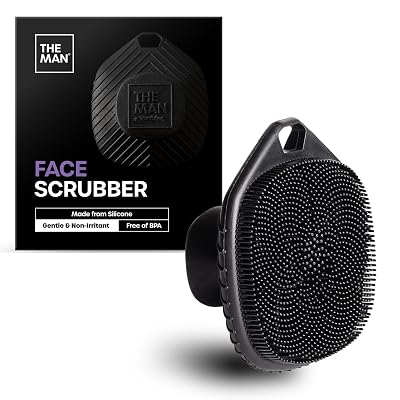
Best for: Oily skin and quick daily cleansing
This manual scrubber from Vanibiss is aimed at men, but the design works for anyone who wants a compact, simple brush. Platinum-cured silicone with short bristles helps lift oil and dead skin without harsh scrubbing, and a built-in hanging loop means it dries properly after each use instead of sitting in a damp pool.
The listing sensibly suggests light pressure for daily use and slightly firmer pressure only for rough, dry patches. Its compact shape reaches the jawline, chin and around the nose, which is handy for shaving routines. It is smaller than the #3 Sud Scrub, with no finger strap, so grip may be less secure in a wet shower.
- Platinum-cured silicone with short bristles
- Manual brush used with your face wash
- Built-in hanging loop for drying
- Compact shape for jawline, chin and nose
Pros
- Dries well thanks to the hanging loop
- Compact and easy to control
- No charging needed
Cons
- No strap, so grip is less secure
- Short bristles may feel firm on thin skin
Skip it if: Skip it if you have very sensitive skin; the APRILSKIN brush is a gentler manual option.
Check Price on AmazonPRITECH Rechargeable Silicone Brush

Best for: A sonic brush with a warming end
The PRITECH brush brings many sonic features to a lower-cost device. Five vibration levels split into a gentler cleansing mode and stronger settings, soft silicone bristles and a waterproof, rechargeable body cover the essentials, and a stand keeps it upright and dry between uses, which is better for hygiene than lying flat in a wet dish.
Its other end is a warming metal head for massaging in serum after cleansing. That feels pleasant but is a comfort feature rather than a proven boost for skincare. Compared with the #1 EZBASICS, it offers similar speed choice plus the warming end, but from a less established brand with more gift-focused marketing.
- Five vibration levels with a cleansing mode
- Soft silicone bristles for all skin types
- Warming metal end for post-cleanse massage
- Waterproof, rechargeable, with a stand
Pros
- Many features for a compact brush
- Stand keeps it upright and dry
- Travel friendly
Cons
- Warming end adds little proven benefit
- Less established brand than EZBASICS
Skip it if: Skip it if you only want a basic cleanser; the heated end is wasted on you.
Check Price on AmazonCOSLUS FBS01 Compact Cleansing Brush

Best for: Wash bags and small bathrooms
The COSLUS FBS01 is a smaller, simpler sibling to the #2 JMY05. Based on its listing title, it is a compact, waterproof facial cleansing brush designed with travel in mind, which makes it a good fit for wash bags, gym kits and anyone who wants a powered brush without the bulk of a full-size device.
Its listing on this list gives less detail than the other picks, so check the product page for speed settings and charging before buying. The smaller head suits the nose and chin but will take a little longer on the cheeks and forehead. If you want more modes at home, the JMY05 is the better COSLUS choice.
- Compact, travel-friendly design
- Waterproof body
- Silicone cleansing head
- Electric face scrubber format
Pros
- Small enough for any wash bag
- Waterproof for shower use
- Handy for nose and chin
Cons
- Listing gives few details on settings
- Small head is slower on larger areas
Skip it if: Skip it if you want the most modes; the COSLUS JMY05 has more.
Check Price on Amazonmedicube Multi Silicone Jelly Brush

Best for: Cleansing plus clay or mud masks
The medicube Multi brush is a clever manual tool that does more than cleanse. A flat silicone head spreads clay, mud and sleeping masks evenly without getting product on your fingers, while three textured surfaces handle gentle cleansing and massage, with a narrow tip for the nose and a grooved edge for the jawline.
Because it doubles as a mask applicator, it is a practical choice for people who already use wash-off masks and want one easy-to-clean tool. Its listing pairs it with the brand’s own products, but it works with any gentle cleanser or mask. It has fewer cleansing bristles than the #3 Sud Scrub, so it is gentler but less thorough.
- Flat head for applying masks evenly
- Three textured surfaces for cleansing and massage
- Narrow tip for the nose, grooved edge for the jaw
- Soft silicone that is easy to rinse
Pros
- Doubles as a mess-free mask applicator
- Gentle manual control
- Very easy to clean
Cons
- Less thorough than a bristled pad
- Small, so may be easy to misplace
Skip it if: Skip it if you never use face masks; a simple scrubber will serve you just as well.
Check Price on AmazonVWMYQ Silicone Face and Body Scrubber

Best for: Using one tool from face to body
The VWMYQ scrubber is sold as a face brush for men, and its listing also describes it as a body scrubber for the shower, so it suits anyone who wants one silicone tool for both. Food-grade silicone is quick-drying and easy to rinse, and a hand-clip handle, non-slip points and a hanging hole make it easy to hold and store.
Using the same tool on body and face is fine as long as you wash it well in between, but many people will prefer a dedicated face brush for hygiene. Its broader design is less precise around the nose than the #4 The Man scrubber or the #7 medicube, and it offers no speed control.
- Soft silicone suitable for sensitive skin
- Food-grade, quick-drying material
- Hand-clip handle, non-slip points and hanging hole
- Works on the face and in the shower
Pros
- One tool for face and body
- Easy grip and storage
- Dries quickly
Cons
- Larger shape is less precise on the face
- Listing mixes face and body uses
Skip it if: Skip it if you want a dedicated face-only brush for hygiene reasons.
Check Price on AmazonHIEERBUS Silicone Face Scrubber 2-Pack

Best for: Trying manual brushing for the first time
HIEERBUS sells its manual silicone face scrubbers in a two-pack, which makes it an easy, low-commitment way to try brush cleansing. One can live by the sink and one in the shower or a travel bag, or you can replace the first when it starts to wear, which is useful because torn or sticky silicone should be thrown away.
The listing on this list gives only its title, so we cannot confirm bristle length or shape, and it ranks lower for that reason. Treat it as a simple manual exfoliating pad and use light pressure. If you like the routine after a few weeks, the #1 EZBASICS is the natural upgrade.
- Two manual silicone scrubbers
- Marketed for women and men
- Manual face exfoliator format
- No batteries or charging
Pros
- Spare included for travel or replacement
- Easy entry to brush cleansing
- Nothing to charge
Cons
- Listing gives few details
- Manual use makes it easy to press too hard
Skip it if: Skip it if you want speeds and a timer; a sonic brush suits you better.
Check Price on AmazonAPRILSKIN Pore Cleansing Silicone Brush

Best for: Sensitive or dry skin, used sparingly
APRILSKIN’s silicone brush rounds out the list as a soft, manual option framed around gentle exfoliation and pore cleansing. From its title, it is a handheld silicone brush meant to be used with cleanser, which gives cautious users full control over pressure and time, the two things that most often cause irritation.
It cannot shrink pores or clear blackheads permanently, whatever the name suggests, and its listing here is brief, so check the product page for size and shape. Use it lightly a few times a week if your skin is dry or sensitive. It is simpler than the #7 medicube, with no mask-applicator side.
- Manual silicone cleansing brush
- Framed around gentle exfoliation
- Used with your usual cleanser
- No batteries or charging
Pros
- Full control over pressure
- Simple and easy to clean
- Suits careful, occasional use
Cons
- Listing gives few details
- Will not change pore size despite the name
Skip it if: Skip it if you want a thorough daily clean from a powered brush.
Check Price on AmazonHow We Chose These Products
We shortlisted silicone facial brushes from Amazon listings that are highly rated by a large number of shoppers, favouring established brands and fuller-featured models with soft silicone, adjustable speeds, waterproof bodies and designs that are easy to clean. We then checked each product’s listed features against the AAD guidance on gentle cleansing and safe exfoliation cited in this post.
These are research-based picks, not hands-on lab tests. We did not measure vibration or cleansing performance ourselves, so rankings reflect listing detail, design and features rather than personal results. Where a listing claims to remove a set percentage of dirt or to transform skin, we have not repeated that as fact.
- Strong ratings from a large number of shoppers
- Established brands and fuller-featured models preferred
- Softness, speeds and cleaning checked against the cited guidance
- Products with thin or unclear listings excluded or ranked lower
- Cleansing percentages and skin-transformation claims ignored
Manual vs Sonic Silicone Facial Brushes
Silicone brushes come in two main designs. Both use soft silicone nubs or bristles, but they work and cost very differently.
| Type | How it works | Pros | Cons |
|---|---|---|---|
| Manual silicone pad or scrubber | You move it in circles with your fingers | Cheap, simple, no charging, travel friendly | Easy to press too hard; no timer |
| Sonic silicone brush | Vibrates at set speeds as you glide it | Even, consistent cleansing; timer; less effort | Costs more; needs charging; more to go wrong |
| Dual-sided brush | Fine bristles one side, smooth or ridged side for massage | Versatile | Coarser side may be too rough for some |
| Mini or travel brush | Small sonic head | Good for nose and chin | Slower on larger areas |
A manual pad is a sensible way to find out whether you like brush cleansing at all before paying for a sonic version. If you find yourself reaching for it most evenings and your skin stays calm, a sonic brush may be worth the upgrade for its timer and more even movement. If you rarely use the pad, a sonic device is unlikely to change that.
Why Silicone Instead of Nylon Bristles?
Older spinning brushes used nylon bristle heads that trapped water, soap and skin cells, could feel scratchy on thinner skin and needed replacing every few months. Silicone has several practical advantages.
- It is non-porous, so it holds less water and dries quickly.
- Soft, rounded tips are less scratchy on facial skin.
- It is easy to wash with soap and water.
- Most silicone heads do not need regular replacement.
- It tolerates gentle cleansers, oils and balms without clumping.
- It feels smooth rather than prickly, which many people find more comfortable on the nose and around the mouth.
Silicone reduces, but does not remove, hygiene risks. A brush left wet in a sealed case or a steamy bathroom can still grow bacteria, so drying and storage still matter.
Features to Compare Before You Buy
Once you choose manual or sonic, look closely at the details that affect comfort and safety.
| Feature | What to look for | Why it matters |
|---|---|---|
| Bristle softness | Fine, thin, flexible nubs | Thicker, stiff nubs feel scratchy on thin skin |
| Speed settings | Several levels, including a very low one | Lets sensitive areas get a gentler clean |
| Timer | Pauses or pulses to move areas, stops after about a minute | Prevents over-cleansing |
| Waterproofing | Fully sealed and rated for shower use | Protects the battery and the user |
| Shape and size | Fits your palm; slim edge for nose | Better control and reach |
| Charging | Sealed port or magnetic charger | Fewer places for water and grime |
Battery life matters less than it seems, because sessions are short; a brush that holds charge for several weeks is fine. What matters more is a sealed design, as water getting into a cheap device is a common reason for early failure. Ignore claims that a brush cleans a set percentage more than hands. Those figures usually come from brand-run tests measuring makeup removal, not skin health.
Who Should Use a Silicone Facial Brush, and Who Should Not
A brush can make cleansing feel more thorough and help remove sunscreen and light makeup. It is not right for every skin type, and your skin can change with the seasons, so a brush you use daily in a humid summer may need to be cut back in cold, dry weather.
- Normal and oily skin: usually tolerate daily use at low to medium speed.
- Combination skin: focus on the T-zone and go lighter on dry cheeks.
- Dry skin: a few times a week with a creamy cleanser.
- Sensitive skin or rosacea: fingertips are often better; if you try a brush, use the lowest speed once or twice a week.
- Active acne: the AAD’s acne skin care tips advise fingertips rather than tools, which can irritate skin.
- Eczema, dermatitis or a damaged barrier: skip brushing until skin has healed.
If you are unsure whether your cleanser itself is the problem, our guide on how to tell if a cleanser is too harsh helps you separate the product from the tool.
What to Avoid
Most problems with facial brushes come from how they are used rather than the brush itself. Irritation often builds slowly, so a brush that felt fine in the first week can cause tightness and redness a month later if you use it too often or too firmly.
- Pressing hard: let the bristles or vibration do the work.
- Using it twice a day and adding scrubs or acid toners on top.
- Using it on active breakouts, cold sores, sunburn or broken skin.
- Using it straight after retinoids, peels, waxing or dermaplaning.
- Sharing a brush with anyone else.
- Keeping a brush with torn, sticky or discoloured silicone.
Do not use a facial brush on broken, sunburned, infected or inflamed skin, or over cold sores. Brushing can spread infection and worsen irritation. If you use prescription retinoids or benzoyl peroxide, ask your dermatologist before adding a brush.
Is a Silicone Brush a Form of Exfoliation?
Yes, mildly. Any brush that moves across the skin lifts loose surface cells, which is mechanical exfoliation. The effect depends on speed, pressure and how long you spend on each area, so two people with the same brush can get very different results. Silicone is softer than nylon, but it still counts, so it adds to anything else in your routine that exfoliates.
The AAD’s guide on how to safely exfoliate at home recommends short, light strokes with brushes, taking care if you use retinoids or benzoyl peroxide, and moisturising straight afterwards.
If you already use an acid toner or retinoid, a brush may tip your skin into irritation. Our guide on facial redness after exfoliation explains how to calm skin if that happens.
How to Use a Silicone Facial Brush
Short, gentle sessions give the best balance between a thorough clean and a comfortable face.
Remove eye makeup first
Use a separate remover; keep the brush away from the eye area.
Wet your face and the brush
Lukewarm water helps the cleanser spread.
Apply cleanser to your face
Use a small amount on skin rather than on the brush to avoid waste.
Choose the lowest comfortable speed
Increase only if your skin stays calm.
Glide in small circles
Spend about 20 seconds on the forehead, 20 on the nose and chin, and 10 on each cheek.
Rinse and pat dry
Rinse your face well and pat dry with a clean towel.
Moisturise and clean the brush
Apply moisturiser, then wash, rinse and dry the brush.
Start with once a day for a week or every other day. If your skin feels tight, looks pink or stings with your usual products, cut back to two or three times a week.
How to Clean and Store a Silicone Brush
Silicone is easy to clean, which is one of its main advantages, but only if you actually do it. Makeup, sunscreen and oil cleansers can leave a film that builds up between the nubs and around the edge of the head, where it is easy to miss.
- After each use, lather a drop of mild soap or cleanser on the bristles and rinse well.
- Shake off water and dry with a clean towel; leave it upright or face up to air dry.
- Once a week, clean around the base of the bristles and the charging port area.
- Store it outside the shower and out of a closed, damp case.
- Use a travel cap only once the brush is completely dry.
- Stop using it if the silicone tears, feels sticky or stays discoloured after washing.
Pair any brush with a gentle, fragrance-free cleanser: gel or foam for oily skin, cream or milk for dry and sensitive skin, and never a gritty scrub, which doubles the friction. Our comparison of facial cleanser vs face wash explains which formulas are gentlest.
Dos and Don’ts
Try This
- Choose soft, fine silicone bristles
- Use the lowest speed that feels clean
- Keep sessions to about a minute
- Clean and dry the brush every time
- Moisturise afterwards
Avoid This
- Press hard or scrub
- Use it on active acne or broken skin
- Combine it with scrubs and acid toners
- Use it right after retinoids or peels
- Share your brush
Honest Limits
A silicone facial brush can make cleansing feel more thorough and may remove makeup and sunscreen more evenly than a quick splash. That is a modest, real benefit for some people. Many people get perfectly clean skin with their fingertips and a good cleanser.
It is also worth remembering that most listings and before-and-after photos come from sellers, not independent research. A brush does not shrink pores, permanently clear blackheads, treat acne or reverse ageing. Claims about serums absorbing better after brushing are mostly about slightly more permeable, freshly exfoliated skin, which can also mean more stinging. If a concern persists, targeted skincare or a dermatologist will help more than a device.
When to See a Dermatologist
- Redness, burning or peeling that lasts after using a brush.
- Acne that worsens after starting brush cleansing.
- Flushing, visible blood vessels or bumps that may be rosacea.
- Dry, itchy patches that may be eczema or dermatitis.
- A mole or spot that changes in size, shape or colour.
This article is for general information only and does not replace medical advice. See a doctor or board-certified dermatologist for persistent irritation, acne or skin conditions.
Common Questions
What is the best silicone facial brush?
Our top pick is the EZBASICS brush for its soft silicone, five speeds and waterproof body; the COSLUS JMY05 adds more modes.
Is silicone better than a bristle brush?
Usually, because it is softer, dries faster and is easier to clean.
Can I use a silicone brush every day?
Many normal and oily skin types can; sensitive skin should use it less.
How long should I use a face brush?
About a minute for the whole face.
Is a silicone brush good for acne?
Usually not on active breakouts; fingertips are gentler.
Can a silicone brush shrink pores?
No, pore size is mostly genetic.
Which silicone brush is best for sensitive skin?
A soft manual pad such as the Sud Scrub or APRILSKIN brush gives you most control; use it gently a few times a week.
Is a sonic brush worth it over a manual one?
Only if you will use it regularly; the EZBASICS or PRITECH add speeds and timing, while manual pads like HIEERBUS cost less.
Can I use it with an oil cleanser?
Yes, but wash the brush thoroughly afterwards.
Should I use a brush with retinol?
Be cautious and ask your dermatologist; both can irritate.
Final Word
The best silicone facial brush is soft, simple and easy to clean; the EZBASICS sonic brush is our top pick overall, and the Sud Scrub is the best manual option.
Keep sessions short and gentle, skip irritated or breakout-prone skin, clean the brush after every use and moisturise afterwards.
Our top pick: EZBASICS Sonic Silicone Cleansing Brush
The EZBASICS brush takes the top spot because it combines soft silicone with five vibration speeds, a waterproof sealed body and rechargeable convenience, which covers what most people need from a sonic brush. If you want extra modes and a warming eye zone, the COSLUS JMY05 is the better buy, while the manual Sud Scrub suits anyone who prefers no batteries and gentle control.
Check Price on Amazon
Written by
Registered pharmacist and founder of Facial Adviser. Rakib's pharmacy training covers how skincare actives work and interact; a later course in cosmetology turned that into a focus on facial treatments and skincare products. He plans, researches and edits every guide on the site and checks health claims against sources such as the American Academy of Dermatology, the FDA and the NIH. He is not a dermatologist; see the Editorial Policy and Medical Disclaimer.
About · Editorial policy · How we choose products · Medical disclaimer · Contact
Keep reading: Cleansing brushes and skin tools
- 10 Best Facial Tools (2026): LED, Cleansing, Gua Sha and More
- 10 Best Skincare Serum Applicators (2026): Cleaner Use, Less Waste
- FOREO LUNA mini 2: Is This Compact Silicone Cleanser Worth It?
- FOREO LUNA 4: Features, Pros, Cons and Who It Really Suits
- Are Face Brushes Good for Acne?
- How to Use a Comedone Extractor on Your Face
- 10 Best Gua Sha Facial Tools (2026): Stone and Steel Picks Compared
- 10 Best LED Light Therapy Masks (2026): Clearer Skin, Softer Lines