10 Best Dermaplaning Tools (2026): Safer Blades for Smooth Skin
Dermaplaning tools have moved from salon trays into bathroom cabinets, promising smoother skin and easier makeup application in a few minutes. This list covers 10 options, from an electric tool to manual razors, refill handles and value packs, and explains how blade design and hygiene affect safety.
Part of our guide to at-home facial devices. Start with: 10 Best Products for Women's Facial Hair Removal (2026): Gentle Picks
The best dermaplaning tool for home use is a small, single-edge facial blade with a safety guard or micro-guard along the edge, a comfortable grip and replaceable or disposable heads so you always work with a sharp, clean blade. Manual guarded blades give the most control and are easy to replace; electric dermaplaning tools add a vibrating or rotating head that some beginners find easier, but they still cut only at the surface. Avoid unguarded scalpel-style blades, which belong in trained hands. Dermaplaning is not suitable over active acne, rosacea flares, cold sores, sunburn or broken skin, and hair does not grow back thicker or darker afterwards.
In short: choose a guarded, single-use blade, use it on clean, calm skin, and replace it often.
The American Academy of Dermatology advises choosing exfoliation methods that suit your skin type, being gentle and following up with moisturiser, which applies to dermaplaning too because the blade exfoliates as it shaves.
Below you will find the ten picks, how we chose them, the types of tool, which features matter, who should skip dermaplaning, how to use a tool safely and how to keep the blade clean.
Shopping these picks?
Amazon Prime members get fast, free shipping on eligible items, plus Prime Video, Amazon Music and member deals. New members can start with a free trial.
Start a free Prime trialAged 18 to 24? Prime for Young Adults comes with a longer free trial and a lower price after it.
Affiliate link: we may earn a commission at no extra cost to you.
As an Amazon Associate we earn from qualifying purchases. This does not change which products we include.


In This Guide
- The 10 Best Dermaplaning Tools Right Now
- How We Chose These Products
- What a Dermaplaning Tool Does
- Types of Dermaplaning Tool Compared
- Features to Look For
- Does Hair Grow Back Thicker After Dermaplaning?
- Who Should Avoid Dermaplaning
- How to Dermaplane at Home Safely
- Aftercare and How Often to Dermaplane
- How to Clean and Store Your Tool
- Dos and Don’ts
- Honest Limits
- When to See a Dermatologist
- Frequently Asked Questions
- Summing Up
The Short Version
- WUXO Sonic Dermaplaning Tool is our top pick, with replaceable heads, three speeds and a magnetic holder.
- Tinkle 36-Pack is the best bulk option, so you can always use a fresh, sharp blade.
- Flamingo Starter Set is the best reusable handle, with clear guidance on how often to change blades.
- Dermaplaning shaves fine hair and removes some surface dead skin; hair does not grow back thicker.
- Guarded single-edge blades are the safest choice at home; avoid unguarded scalpels.
- Skip it over active acne, rosacea flares, cold sores or broken skin.
- Use a fresh or cleaned blade every time, never share it, and leave three to four weeks between sessions.
The 10 Best Dermaplaning Tools Right Now
These ten tools were shortlisted from widely reviewed Amazon listings and ranked by blade design, ease of control, how easy it is to use a fresh edge and how clearly each seller explains safe use. Each pick shows who it suits, its trade-offs and who should skip it.
| # | Product | Best For | Standout Feature | |
|---|---|---|---|---|
| 1 | WUXO Sonic Electric Dermaplaning Tool | Regular users who want an electric tool | Three speeds and replaceable blade heads | View |
| 2 | Tinkle Dermaplaning Razors, 36 Pack | Frequent users who want a fresh blade | 36 single-blade razors from Dorco | View |
| 3 | Flamingo Dermaplane Starter Set | Manual users who want refills | Handle with Japanese steel refill blades | View |
| 4 | Tweezerman Stainless Steel Facial Razor | Buyers who want a durable tool | Clear cleaning and blade-change advice | View |
| 5 | Schick Hydro Silk Dermaplane Razor Set | First-time dermaplaners | Handle plus six refills from Schick | View |
| 6 | COSYLIFE Dermaplane Razor with 20 Blades | Regular users on a reusable handle | Twenty replaceable blades included | View |
| 7 | MoHern Dermaplane Razor, 60 Pieces | Households using razors for face and brows | Sixty razors for face and brows | View |
| 8 | Schick Hydro Silk Touch-Up Dermaplane Razor | Brow shaping and quick touch-ups | Described as a 3-in-1 dermaplaning tool | View |
| 9 | About Face Pro-Premium Facial Razors | Trying dermaplaning for the first time | Three premium facial groomers | View |
| 10 | Amazon Basics Women’s Dermaplaning Tool | A basic, low-cost starter razor | Simple peach fuzz remover | View |
WUXO Sonic Electric Dermaplaning Tool

Best for: Regular users who want an electric tool
The WUXO tool earns the top spot because it makes the two most important habits in this guide, a fresh blade and clean storage, easy to keep up. It comes with replacement blade heads and a one-touch release, and a magnetic holder keeps it upright by the mirror rather than rolling around in a damp drawer.
Its sonic motion and three speed settings are designed to help the blade glide over the cheeks and chin, which some beginners find easier than holding a manual angle. It still cuts only at the surface, so technique and gentle pressure matter just as much. It is rechargeable by USB-C, but bulkier than the manual razors below and harder to use around the nose.
- Electric dermaplaning tool with sonic motion
- 3 speed settings for different areas
- One-touch blade release and replacement heads
- Magnetic holder; rechargeable via USB-C
Pros
- Easy to swap in a fresh blade head
- Magnetic holder keeps it clean and upright
- Speed options for different areas
Cons
- Bulkier than a manual blade around the nose
- Needs charging and careful head cleaning
Skip it if: Skip it if you only dermaplane occasionally; a simple guarded razor like the Tinkle or Schick picks is enough.
Check Price on AmazonTinkle Dermaplaning Razors, 36 Pack

Best for: Frequent users who want a fresh blade
Tinkle razors are one of the best-known disposable dermaplaning tools, made by the blade maker Dorco, and this 36-pack means you can always reach for a sharp, clean blade rather than stretching one past its best. That matters because a dull blade drags, and dragging is what causes nicks and irritation.
Each razor has a single rust-free blade on a slim handle, designed for shaping brows and removing fine facial hair before makeup. The listing describes it as suitable for sensitive skin, but light pressure is still essential. Compared with the #1 electric tool it is simpler and quieter, and a pack this size is easy to share out as individual razors, never as used ones.
- Single-blade razor for brows and fine facial hair
- Rust-free blades
- Helps prep skin for smoother makeup
- Slim, discreet design for travel
Pros
- Large pack makes fresh blades easy
- Light and simple to control
- Well-established blade maker
Cons
- Disposable, so more plastic waste
- No guard is described in the listing
Skip it if: Skip it if you prefer a reusable handle; the Flamingo or Schick Hydro Silk sets suit you better.
Check Price on AmazonFlamingo Dermaplane Starter Set

Best for: Manual users who want refills
Flamingo’s starter set pairs a reusable handle with four refillable blades, which is the setup many dermatologists suggest for regular home use: a comfortable grip plus a sharp edge each time. The blades are Japanese stainless steel, and the seller says each one can be used up to three times before it should be replaced.
The listing states it is dermatologist tested, which is a useful signal but not a guarantee it suits your skin. As a manual tool it gives more direct feedback than the #1 electric pick, so you can feel if you are pressing too hard. Refills are specific to the Flamingo handle, so check that replacement blades are easy for you to buy.
- Reusable handle with 4 refillable blades
- Japanese stainless steel blades
- Each blade usable up to three times
- Listing states it is dermatologist tested
Pros
- Comfortable reusable handle
- Clear guidance on blade replacement
- Direct control of pressure
Cons
- Refills only fit the Flamingo handle
- Only four blades in the starter set
Skip it if: Skip it if you want a large supply of blades straight away; the Tinkle or COSYLIFE packs include far more.
Check Price on AmazonTweezerman Stainless Steel Facial Razor
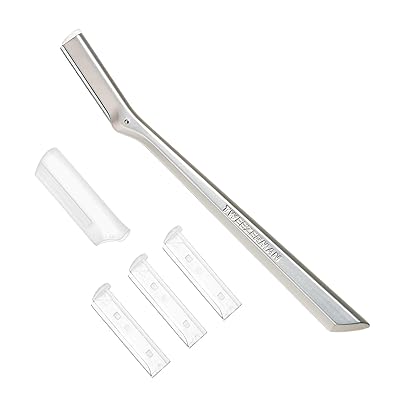
Best for: Buyers who want a durable tool
Tweezerman’s facial razor stands out for how clearly its listing covers hygiene. It advises cleaning the blade with alcohol before and after each use, putting the cap back on and replacing blades every two to three months or sooner, and it includes three replacement blades. Those habits match the cleaning advice later in this guide.
It is designed to remove peach fuzz and gently exfoliate dead surface skin, and the stainless steel blades are easy to clean. The listing also suggests using it on moisturised skin or with face wash on, which differs from the dry-skin method in our how-to, so choose one approach and stick with it. It is sturdier than disposable razors, but pricier than most.
- Facial razor for peach fuzz and light exfoliation
- 3 replacement blades included
- Stainless steel blades that are easy to clean
- Protective cap for storage
Pros
- Very clear cleaning instructions
- Durable stainless steel build
- Replacement blades included
Cons
- Costs more than disposable packs
- Blade-change interval may be too long for frequent users
Skip it if: Skip it if you want single-use blades with no upkeep; the Tinkle or Schick Touch-Up razors are simpler.
Check Price on AmazonSchick Hydro Silk Dermaplane Razor Set

Best for: First-time dermaplaners
The Schick Hydro Silk set combines a reusable handle with six refills from a major razor brand, which makes it an easy, low-risk way to try dermaplaning. Having refills on hand encourages you to use a sharp edge rather than a dull one, and a handle gives a steadier grip than a tiny disposable razor.
We only have the listing title for this pick, so check the photos for guard details before buying. It is aimed at peach fuzz on the face rather than coarse hair. Compared with the #3 Flamingo set it offers more refills in the box, while the Flamingo gives more detail about its blades. Either suits a beginner who wants a manual tool.
- Reusable dermaplane handle
- 6 refill blades included
- Designed for peach fuzz on the face
- From an established razor brand
Pros
- Refills included for fresh blades
- Steady handle for beginners
- Trusted brand
Cons
- Listing gives limited detail
- Refills are brand-specific
Skip it if: Skip it if you want an electric tool; the WUXO pick is the only powered option here.
Check Price on AmazonCOSYLIFE Dermaplane Razor with 20 Blades

Best for: Regular users on a reusable handle
COSYLIFE’s set is built around a generous supply of replaceable blades, twenty in total, which makes it easy to follow the golden rule of using a fresh, sharp edge. For someone who dermaplanes every few weeks, that could cover a long stretch without needing to reorder, and it cuts down on the plastic of fully disposable razors.
We only have the listing title for this one, so check the photos for the handle and guard design. It is a manual tool, so it gives the same direct control as the #3 and #5 picks. Choose it over those if blade supply matters more to you than brand, but always store spare blades dry and capped.
- Dermaplane razor for the face
- 20 replaceable blades
- Reusable handle design
- Designed for women’s facial hair
Pros
- Large blade supply
- Less waste than disposable razors
- Manual control
Cons
- Limited detail in the listing
- Lesser-known brand than Schick or Tweezerman
Skip it if: Skip it if you want detailed safety information from the seller; the Tweezerman listing explains more.
Check Price on AmazonMoHern Dermaplane Razor, 60 Pieces

Best for: Households using razors for face and brows
MoHern’s 60-piece pack is marketed for both women and men and for several uses, including brows and face. For a household where more than one person dermaplanes or tidies brows, a large pack means everyone has their own razors, which is important because dermaplaning tools should never be shared, even within a family.
We only have the listing title, so check the photos for guard details before buying. With this many razors you have no excuse to reuse a dull blade. It is a simpler, more basic option than the #2 Tinkle pack from a less established brand, but covers the same job of removing fine hair at the surface.
- 60 face razors in one pack
- Marketed for women and men
- Multipurpose: face and eyebrows
- Disposable single razors
Pros
- Enough razors for several people
- Easy to use a fresh blade
- Works for brows and face
Cons
- Few details in the listing
- Lots of disposable plastic
Skip it if: Skip it if you want a premium handle; the Tweezerman or Flamingo picks feel sturdier.
Check Price on AmazonSchick Hydro Silk Touch-Up Dermaplane Razor

Best for: Brow shaping and quick touch-ups
The Schick Hydro Silk Touch-Up is one of the most widely reviewed facial razors on Amazon and is described in its title as a three-in-1 dermaplaning tool. It is a compact, disposable option for quick touch-ups on brows and peach fuzz, and the three-pack keeps a fresh razor to hand.
We only have the title for this pick, so check the photos for its guard and brow features. It is smaller and simpler than the #5 Schick handle set, which makes it better for travel and quick jobs than for a full-face session. As with every blade here, use it on calm skin only and never over spots or moles.
- Disposable dermaplane razor for the face
- Described as a 3-in-1 tool
- Pack of 3
- Compact for touch-ups
Pros
- Handy for brows and quick jobs
- Widely reviewed
- Easy to pack for travel
Cons
- Only three razors in the pack
- Less grip than a full handle
Skip it if: Skip it if you want a full-face routine tool; the Schick Hydro Silk set or Flamingo handle suit better.
Check Price on AmazonAbout Face Pro-Premium Facial Razors
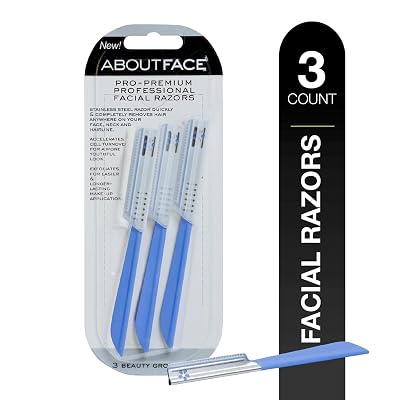
Best for: Trying dermaplaning for the first time
About Face’s Pro-Premium pack contains three facial groomers, which is a sensible amount for someone who wants to try dermaplaning before committing to a larger pack or a handle system. The title describes them as premium razors for hair removal and shaving, so they should suit peach fuzz and light brow tidying.
We only have the listing title, so check the photos for the blade guard. A small pack means you are less likely to keep a dull blade out of thrift, but you will reorder sooner than with the #2 or #7 packs. It is a middle ground between tiny disposables and the refill systems higher up the list.
- Pack of 3 facial razors
- Designed for facial hair removal
- Suits peach fuzz and brow tidying
- Disposable format
Pros
- Low-commitment way to try dermaplaning
- Small pack stays fresh
- Simple to use
Cons
- Limited listing detail
- Runs out quickly for regular users
Skip it if: Skip it if you dermaplane often; the Tinkle 36-pack or COSYLIFE set last much longer.
Check Price on AmazonAmazon Basics Women’s Dermaplaning Tool

Best for: A basic, low-cost starter razor
The Amazon Basics dermaplaning tool is the plainest option on this list: a simple peach fuzz remover designed for facial hair removal and light exfoliation. It is a low-risk way to find out whether you like dermaplaning at all, before spending more on a handle system or an electric device.
We only have the listing title, so check the pack contents and guard details in the photos. It offers none of the extras of the higher picks, such as refills, speed settings or detailed cleaning advice, but it covers the basic job. Use it gently on clean, dry skin and replace it as soon as it starts to drag.
- Dermaplaning tool for women
- Designed as a peach fuzz remover
- Facial hair removal
- Light surface exfoliation
Pros
- Easy, low-risk starter option
- Simple design
- Widely available
Cons
- Very limited listing detail
- No refills or extras
Skip it if: Skip it if you want clear safety and cleaning guidance; the Tweezerman or Flamingo listings explain more.
Check Price on AmazonHow We Chose These Products
We shortlisted dermaplaning tools from Amazon listings that are highly rated by a large number of shoppers, favouring established brands and fuller-featured options such as refill handles and tools with replaceable heads. We then checked each product’s listed features against the safety guidance cited in this post, including the AAD’s advice to exfoliate gently and choose methods that suit your skin.
These are research-based picks, not hands-on lab tests. Rankings reflect blade design, ease of control and how easy each tool makes it to use a sharp, clean edge, rather than personal results. Refill-only packs, body razors, oils and colour variants of the same tool were left out, and six picks are described from their titles because their listings gave little else.
- Strong ratings from a large number of shoppers
- Established brands and fuller-featured tools preferred
- Listed features checked against the cited safety guidance
- Products with thin or unclear listings excluded or ranked lower
- Unguarded scalpel-style blades not recommended
What a Dermaplaning Tool Does
A dermaplaning tool is a small, sharp blade held at a low angle and stroked across dry, clean skin. It shaves vellus hair, often called peach fuzz, and scrapes away some of the loose dead cells on the surface. The immediate result is skin that feels smoother and reflects light more evenly, and makeup often glides on more easily.
At home you are using a gentler version of what a clinician does. Professional dermaplaning uses a scalpel and can go further; home tools are designed with guards and shorter blades to reduce the risk of cuts. Our guide on what dermaplaning is covers the treatment itself in more detail, including how it differs in a clinic.
Types of Dermaplaning Tool Compared
Most home tools fall into four groups. The right one depends on your confidence, how often you plan to use it and how much control you want.
| Type | How it works | Best for | Watch out for |
|---|---|---|---|
| Disposable guarded facial razor | Short single blade with micro-guard, thrown away after a few uses | Beginners and occasional use | Dulls quickly; replace often |
| Handle with replaceable blades | Reusable handle, snap-on single blades | Regular users who want a sharp blade each time | Blade must lock firmly; buy the correct refills |
| Electric dermaplaning tool | Battery head that vibrates or moves the blade | People who find manual angles hard | Still cuts only at the surface; clean the head well |
| Unguarded scalpel-style blade | Surgical-style edge with no guard | Trained professionals | High risk of nicks at home; not recommended |
For most people, a guarded single-edge blade on a comfortable handle is the best balance of safety, control and cost over time.
Features to Look For
Small details make a big difference when a blade is moving across your face.
- A micro-guard or safety comb along the edge to reduce nicks.
- A short, narrow blade that fits around the nose, chin and jawline.
- A non-slip handle you can hold at a steady angle.
- Replaceable or disposable blades so the edge stays sharp.
- A protective cap for storage and travel.
- For electric tools, a removable head that can be cleaned and replaced.
Tools sold as eyebrow razors and those sold as dermaplaning tools are often very similar. What matters is a guarded single edge, not the label on the pack.
Manual or electric? Manual guarded blades are light, quiet and let you feel if you are pressing too hard, while electric tools add movement that some beginners find easier but need careful cleaning around the head. Skill and hygiene matter more than the motor. People with darker skin tones should be especially gentle, since the AAD notes that aggressive exfoliation can increase dark spots.
Does Hair Grow Back Thicker After Dermaplaning?
No. This is one of the most common worries, and it is a myth. Dermaplaning cuts the hair at the surface and does not touch the follicle, so it cannot change how many hairs you grow, their colour or their thickness.
Regrowth can feel slightly stubbly for a few days because the hair was cut straight across rather than growing to its natural tapered tip. That blunt edge can make it seem coarser at first, but it is the same hair. If you notice dark, coarse or rapidly increasing hair on the chin, jaw or upper lip, that is a separate issue, and our guide to peach fuzz versus facial hair explains when it may be worth mentioning to a doctor.
Who Should Avoid Dermaplaning
Dermaplaning is safe for many people, but some skin conditions make it more likely to cause harm than benefit.
| Situation | Why to avoid or wait | Better option |
|---|---|---|
| Active acne or inflamed spots | Blade can cut spots and spread bacteria | Treat acne first; ask a dermatologist |
| Rosacea or very reactive skin | Friction can trigger flushing and irritation | Gentle skincare; trimming if hair bothers you |
| Cold sores | Can spread the virus to other areas | Wait until fully healed |
| Sunburn, cuts or broken skin | Increases pain and infection risk | Wait until skin has healed |
| Using prescription retinoids or recent peels | Skin is thinner and more sensitive | Pause and check with your prescriber |
| Eczema or psoriasis on the face | Can worsen flares | Speak to a dermatologist |
| Raised moles or skin tags | Blade can nick them | Work around them carefully |
Never dermaplane over a mole, a spot, a cold sore or broken skin. If you nick yourself, stop, apply gentle pressure with clean gauze and leave the area alone until it heals.
How to Dermaplane at Home Safely
Take your time the first few sessions. Short, light strokes on clean, dry skin give the best result with the least irritation.
Cleanse and dry your face
Wash with a gentle cleanser and pat skin completely dry; dermaplaning works best on dry skin.
Check the blade
Use a new or cleaned blade and make sure the guard is intact.
Hold skin taut
Gently stretch the area with your free hand to create a flat surface.
Angle the blade low
Hold the blade at roughly 45 degrees or lower against the skin.
Use short, light strokes
Move downwards in short feathery strokes; do not press or go over the same spot repeatedly.
Avoid sensitive areas
Keep away from eyelids, the edge of the lips, moles and any spots.
Soothe and protect
Apply a plain, fragrance-free moisturiser, skip acids and retinoids for a day or two and wear sunscreen.
Work in good light, ideally with a mirror by a window, and do one side of the face at a time. Rushing is the most common cause of nicks.
Aftercare and How Often to Dermaplane
Freshly dermaplaned skin can be more sensitive for a day or two, because some of the outer dead layer has been removed.
- Use a gentle, fragrance-free moisturiser straight afterwards.
- Wear broad-spectrum sunscreen of SPF 30 or higher every day.
- Skip exfoliating acids, scrubs and retinoids for 24 to 48 hours.
- Avoid heavy makeup for a few hours if your skin feels tender.
- Leave three to four weeks between sessions for most skin types.
The AAD’s advice on how to safely exfoliate at home recommends being gentle, choosing a method that suits your skin type and following up with moisturiser, and warns that over-exfoliating can cause redness and irritation. Dermaplaning counts as exfoliation, so do not combine it with other exfoliants on the same day.
How to Clean and Store Your Tool
A dirty or dull blade is the main cause of spots and irritation after dermaplaning. Clean handling matters as much as technique.
- Wipe the blade with isopropyl alcohol before and after each use, and let it air dry.
- Replace disposable blades after one to three uses, or sooner if they drag.
- Keep the cap on between uses and store the tool somewhere dry.
- Never share a dermaplaning tool, even with family.
- Throw away any blade that is rusty, bent or chipped.
If you are weighing dermaplaning against other options, our comparison of facial waxing versus dermaplaning explains how long each lasts and which suits sensitive skin better.
Dos and Don’ts
Helps
- Choose a guarded single-edge blade
- Dermaplane on clean, dry, calm skin
- Use short, light, downward strokes
- Moisturise and wear sunscreen afterwards
- Replace blades often
Backfires
- Use an unguarded scalpel at home
- Shave over spots, moles or cold sores
- Press hard or repeat strokes on one area
- Combine with acids or retinoids the same day
- Share your tool with anyone
Honest Limits
Dermaplaning is a surface treatment. Its smoothness lasts only until the hair grows back and new dead cells build up, usually a few weeks. It will not treat acne, deep wrinkles, pigmentation or scarring, and home tools remove far less than a professional treatment.
The claim that dermaplaning helps skincare products absorb better is often repeated, but the effect is modest and short-lived. If you want lasting changes in texture or tone, a consistent routine with sunscreen and, where appropriate, retinoids or professional treatments will do more than any blade.
It is also worth being realistic about hair. Dermaplaning is a good way to remove light peach fuzz before makeup, but it is not an efficient method for thicker, darker hair on the chin or upper lip, which returns quickly and can feel stubbly. For that kind of hair, methods that work at the root or on the follicle usually suit better, and a doctor can check whether the growth has a medical cause.
When to See a Dermatologist
- You get repeated breakouts, bumps or ingrown hairs after dermaplaning.
- A nick becomes red, swollen, hot or oozes.
- You notice sudden or coarse hair growth on the face.
- You have acne, rosacea or eczema and want to know if dermaplaning is safe for you.
This article is for general information and does not replace professional medical advice. Stop dermaplaning if your skin becomes irritated, and see a board-certified dermatologist for persistent skin problems or unusual hair growth.
Frequently Asked Questions
What is the best dermaplaning tool for beginners?
A guarded manual blade with refills, such as the Schick Hydro Silk set or the Flamingo starter set, gives beginners the most control.
Does hair grow back thicker after dermaplaning?
No, it only feels blunter for a few days.
Is electric dermaplaning better than manual?
Not necessarily; the WUXO electric tool may feel easier to glide, but it cuts at the surface just like the Tweezerman or Flamingo manual razors.
How often should I dermaplane?
About every three to four weeks.
Can I dermaplane with acne?
Not over active spots; treat the acne first.
Should I dermaplane on wet or dry skin?
Clean, dry skin gives the best control.
How often should I replace the blade?
After one to three uses, or when it drags.
Can dermaplaning cause breakouts?
Yes, if the blade is dirty or you shave over spots.
Is the most expensive dermaplaning tool worth it?
Only if you want extras such as the replaceable heads and speeds of the WUXO; a fresh blade from a pack like the Tinkle razors does the same basic job.
Can I wear makeup after dermaplaning?
Yes, but wait a few hours if your skin feels tender.
Summing Up
The best dermaplaning tool for home is one you keep clean and use with a fresh blade, gently, on calm, dry skin; the WUXO sonic tool is our top pick overall, with the Flamingo and Schick handles the best manual choices.
Skip it over acne, rosacea flares, cold sores or broken skin, moisturise and wear sunscreen afterwards, and remember that hair will not grow back thicker, only feel blunter for a few days.
Our top pick: WUXO Sonic Electric Dermaplaning Tool
The WUXO sonic tool takes the top spot because it combines replaceable heads, three speed settings, a one-touch blade release and a magnetic holder, which makes a fresh, clean blade easy to maintain. Choose the Flamingo starter set instead if you prefer a manual handle with refillable blades, or the Tweezerman facial razor if you want a simple stainless steel tool with clear cleaning advice.
Check Price on Amazon
Written by
Registered pharmacist and founder of Facial Adviser. Rakib's pharmacy training covers how skincare actives work and interact; a later course in cosmetology turned that into a focus on facial treatments and skincare products. He plans, researches and edits every guide on the site and checks health claims against sources such as the American Academy of Dermatology, the FDA and the NIH. He is not a dermatologist; see the Editorial Policy and Medical Disclaimer.
About · Editorial policy · How we choose products · Medical disclaimer · Contact
Keep reading: Facial hair removal
- 10 Best Products for Women's Facial Hair Removal (2026): Gentle Picks
- 10 Best Body Hair Removal Devices (2026): IPL, Epilators, Trimmers
- How Much Facial Hair Is Normal for a Woman?
- Dermaplaning Facial: What the Evidence Shows
- Is Home Laser Hair Removal Safe? Real Data
- Facial Bleach: What It Actually Does to Your Skin
- 10 Best LED Light Therapy Masks (2026): Clearer Skin, Softer Lines
- How to Incorporate Microcurrent Into Your Routine: Gel, Timing and Safety