10 Best Pre-Shave Oils (2026): Smoother Glide, Less Razor Irritation
A pre-shave oil is a thin layer of oil you massage into damp stubble before your shaving cream or gel. It is a small step, but for people who get razor burn, tugging or a tight, dry feeling after shaving, it can make a noticeable difference. This list covers 10 options, from fragrance-free oils to scented barbershop blends.
Part of our guide to men's grooming tools. Start with: 10 Best Safety Razors (2026): Closer, Calmer Shaves for Every Level
The best pre-shave oil is a light, fragrance-free blend of non-greasy plant oils, such as jojoba, grapeseed, sunflower or squalane, that spreads easily, lets the blade glide and rinses off without clogging your razor. It works by adding a slick layer between skin and blade and by helping keep stubble soft while your lather sits. It suits wet shavers with coarse hair or sensitive skin best. Choose a short ingredient list, avoid heavy fragrance and high levels of essential oils, use only a few drops on wet skin, and always follow it with a proper shaving cream or gel rather than shaving on oil alone.
In short: a simple, unscented oil used in small amounts under your usual lather is what most people need.
The American Academy of Dermatology advises softening hair with water, using a shaving cream or gel and shaving in the direction of growth to reduce bumps and irritation. A pre-shave oil is an optional extra that supports those basics rather than replacing them.
Below you will find the ten picks, how we chose them, which oil types work, which ingredients to avoid, how to match an oil to your skin and how to apply, clean up and store it.
Shopping these picks?
Amazon Prime members get fast, free shipping on eligible items, plus Prime Video, Amazon Music and member deals. New members can start with a free trial.
Start a free Prime trialAged 18 to 24? Prime for Young Adults comes with a longer free trial and a lower price after it.
Affiliate link: we may earn a commission at no extra cost to you.
As an Amazon Associate we earn from qualifying purchases. This does not change which products we include.


What This Covers
- The 10 Best Pre-Shave Oils Right Now
- How We Chose These Products
- What Pre-Shave Oil Does and Does Not Do
- Types of Pre-Shave Oil Compared
- How to Choose the Best Pre-Shave Oil for Your Skin
- What to Avoid When Buying Pre-Shave Oil
- How to Use Pre-Shave Oil Step by Step
- Pre-Shave Oil With Different Razors
- Cleaning Up and Storing Your Oil
- Pre-Shave Oil vs Other Pre-Shave Products
- Dos and Don’ts
- Honest Limits
- When to See a Dermatologist
- FAQ
- Summing Up
Key Takeaways
- The Art of Shaving oil is our top pick for its olive oil base and no added fragrance.
- Bevel is the pick for coarse hair, with castor, olive and tea tree oils.
- The Henna Guys oil gives the most product per bottle, with jojoba, grapeseed and avocado oils.
- Pre-shave oil adds glide and helps keep stubble soft under lather.
- Fragrance-free is the safest choice for sensitive or reactive skin.
- Use only a few drops and always follow with cream or gel.
- Oil cannot fix a dull blade or poor technique.
The 10 Best Pre-Shave Oils Right Now
These ten pre-shave oils were shortlisted from widely reviewed Amazon listings and ranked by ingredient clarity, fragrance, bottle size and how clearly each listing explains its use. Each pick shows who it suits, its trade-offs and who should skip it.
| # | Product | Best For | Standout Feature | |
|---|---|---|---|---|
| 1 | The Art of Shaving Pre-Shave Oil | Sensitive skin and everyday wet shaving | Olive oil base, no added fragrance | View |
| 2 | Bevel Pre-Shave Oil | Thick, coarse or curly beards | Castor, olive and tea tree oil blend | View |
| 3 | The Henna Guys Pre-Shave Oil | Frequent shavers and shared bathrooms | Big bottle of light, mixed oils | View |
| 4 | Lather and Wood Unscented Pre-Shave Oil | Sensitive skin, face and head | Unscented blend for face and head | View |
| 5 | Athena Club Pre-Shave Oil for Women | Legs, underarms and body shaving | Oil-serum texture for body shaving | View |
| 6 | Taconic Shave Unscented Pre-Shave Oil | Cartridge and safety razor users | Barbershop favourite in a two-ounce bottle | View |
| 7 | American Crew Ultra Gliding Shave Oil | People who dislike an oily residue | Light oil that works under cream or gel | View |
| 8 | Freebird Pre-Shave Oil | A warm, traditional shaving scent | Natural sandalwood in a small bottle | View |
| 9 | Viking Revolution Pre-Shave Oil | Travel kits and trying pre-shave oil | One-ounce sandalwood oil, easy to pack | View |
| 10 | Clubman Pinaud Pre-Shave Oil | A simple, low-cost barbershop oil | Classic barbershop brand, simple oil | View |
The Art of Shaving Pre-Shave Oil

Best for: Sensitive skin and everyday wet shaving
The Art of Shaving oil earns the top spot because it keeps the formula simple where it matters. Its listing describes an olive fruit oil base that softens facial hair before shaving and states that it is free from added fragrance, which is the most important detail for anyone whose skin reacts to scented grooming products.
The seller also says it has been tested for sensitive skin and is non-comedogenic. It is a long-established shaving brand, so the oil sits comfortably alongside its creams and balms. The trade-off is that it costs more per bottle than simpler oils like Clubman or Viking Revolution, which do much the same basic job.
- Olive fruit oil base
- Designed to soften stubble before lather
- No added fragrance
- Tested for sensitive skin, non-comedogenic
Pros
- No added fragrance
- Simple, gentle formula
- Established shaving brand
Cons
- Costs more than simpler oils
- Olive oil can feel rich on very oily skin
Skip it if: Skip it if you want the most oil for your money; the Henna Guys bottle is much larger.
Check Price on AmazonBevel Pre-Shave Oil

Best for: Thick, coarse or curly beards
Bevel’s oil is aimed at coarse and curly beards, which are more prone to tugging and razor bumps. Its listing describes a blend of castor, olive and tea tree oils designed to soften coarse hair so the blade glides rather than drags, and it comes in a compact two-ounce bottle that is easy to travel with.
The main trade-off is scent. The listing highlights a fresh tea tree aroma, and essential oils like tea tree can irritate sensitive skin in some people. Castor oil is also thick, so a few drops go a long way. If fragrance bothers you, the #1 or #4 picks are gentler choices.
- Castor, olive and tea tree oils
- Helps soften coarse hair for glide
- Designed to help protect against irritation
- Compact two-ounce bottle
Pros
- Made with coarse hair in mind
- Rich oils for extra glide
- Travel-friendly bottle
Cons
- Tea tree scent may irritate sensitive skin
- Thicker feel than light oils
Skip it if: Skip it if your skin reacts to essential oils; choose an unscented pick instead.
Check Price on AmazonThe Henna Guys Pre-Shave Oil

Best for: Frequent shavers and shared bathrooms
The Henna Guys oil stands out for sheer quantity: an eight-ounce bottle lasts far longer than the one- and two-ounce bottles elsewhere on this list. Its listing describes a blend of jojoba, grapeseed and avocado oils, which are light carrier oils that suit most skin types and rinse away more easily than heavier oils.
It has an easy-pour cap and a sandalwood scent. That scent is the trade-off for sensitive skin, and a large bottle means the oil needs to stay fresh for longer, so store it away from heat and light. For people who shave daily and like a mild scent, it is a practical choice.
- Jojoba, grapeseed and avocado oils
- Large eight-ounce bottle
- Easy-pour cap
- Sandalwood scent
Pros
- Lasts a long time
- Light oils suit most skin types
- Easy to dispense
Cons
- Scented, so less ideal for reactive skin
- Large bottle must be stored carefully
Skip it if: Skip it if you shave only now and then; a one-ounce bottle will stay fresher.
Check Price on AmazonLather and Wood Unscented Pre-Shave Oil

Best for: Sensitive skin, face and head
Lather and Wood’s unscented oil is a strong alternative to the top pick for anyone with fragrance-sensitive skin or a dislike of scent. Its listing describes an unscented blend of natural oils with only their own mild smell, designed to soften tough beards for wet shaving, and it notes that one pump is usually enough.
It is also pitched as a head shaving oil, which makes it a good fit if you shave your scalp as well as your face. The listing does not name every oil in the blend on the front, so check the full ingredient list if you have known allergies. It is less widely known than The Art of Shaving.
- Unscented natural oil blend
- Designed for tough beards and wet shaving
- Pump dispensing, a little per shave
- Suitable for head shaving too
Pros
- No added scent
- Works on face and scalp
- Pump helps avoid overuse
Cons
- Individual oils not highlighted on the listing
- Smaller brand than the top pick
Skip it if: Skip it if you enjoy a scented shave; the Henna Guys or Freebird oils add a sandalwood note.
Check Price on AmazonAthena Club Pre-Shave Oil for Women
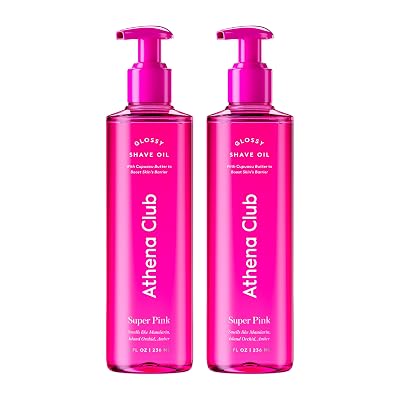
Best for: Legs, underarms and body shaving
Athena Club’s oil is the one pick on this list designed for women and for body shaving rather than for beards. Its listing describes an oil-serum hybrid made with jojoba, avocado and sunflower seed oils plus shea butter, designed to give a smooth glide on legs and underarms and leave skin feeling soft afterwards.
It comes as a two-pack with a tropical floral scent and says it is dermatologist tested. That scent is the main drawback for reactive skin, especially on freshly shaved underarms, so patch test it first. It is not designed for coarse beards, where the Bevel or Lather and Wood oils are better matched.
- Jojoba, avocado and sunflower oils with shea butter
- Oil-serum texture for glide
- Two-pack of larger bottles
- Dermatologist tested
Pros
- Made for body and leg shaving
- Nourishing oil and butter blend
- Two bottles included
Cons
- Noticeable floral scent
- Not intended for beards
Skip it if: Skip it if fragrance irritates your skin; an unscented oil is safer for underarms.
Check Price on AmazonTaconic Shave Unscented Pre-Shave Oil

Best for: Cartridge and safety razor users
Taconic’s unscented oil is the pick for people who like a traditional, barbershop-style shave. Its listing says the oil forms a protective, lubricating film under lather, notes that it is used in professional barbershops, and highlights organic and natural ingredients in a two-ounce bottle, which is larger than many rivals.
Because it is unscented, it is a good match for sensitive skin, like the #1 and #4 picks. The listing focuses on use with a cartridge razor and lather, so it is less relevant for dry electric shaving. It is a smaller brand, so it may be harder to find in shops.
- Forms a lubricating film under lather
- Used by professional barbershops
- Organic and natural ingredients
- Two-ounce bottle, unscented
Pros
- Unscented for sensitive skin
- Traditional barbershop formula
- Generous bottle size
Cons
- Aimed at blade shaving, not dry electric use
- Smaller, less widely stocked brand
Skip it if: Skip it if you shave dry with an electric shaver; most work best on dry skin.
Check Price on AmazonAmerican Crew Ultra Gliding Shave Oil

Best for: People who dislike an oily residue
American Crew’s shave oil is a good choice if you have tried pre-shave oils and disliked the greasy feel. Its listing says it softens the beard and prepares skin for shaving without leaving an oily residue, and that it can be used under shaving cream or gel, which is how pre-shave oil works best.
It is made with botanical ingredients and essential oils and is described as suitable for all beard types. Those essential oils are the trade-off for sensitive skin, as with the Bevel pick. The bottle is smaller than the Henna Guys or Taconic options, so heavy users will need to replace it more often.
- Softens the beard before shaving
- Can be used under cream or gel
- Non-oily finish
- Botanical ingredients and essential oils
Pros
- Light, non-greasy feel
- Established grooming brand
- Simple to use
Cons
- Essential oils may irritate reactive skin
- Smaller bottle than some picks
Skip it if: Skip it if your skin reacts to essential oils; choose an unscented oil.
Check Price on AmazonFreebird Pre-Shave Oil

Best for: A warm, traditional shaving scent
Freebird’s oil suits shavers who enjoy a traditional scent as part of the routine. Its listing presents it as a pre-shave oil for men with natural sandalwood in a 30 ml bottle, designed to give a smoother shave. A small bottle keeps the oil fresh and is easy to pack for travel.
The listing is short, so it does not name the carrier oils on the front; check the full ingredient list before buying if you have allergies. Scented oils are less suitable for sensitive skin than the unscented #1, #4 and #6 picks, but for people with resilient skin who like a pleasant scent, it is an easy choice.
- Pre-shave oil for face shaving
- Natural sandalwood scent
- Small 30 ml bottle
- Designed for a smoother shave
Pros
- Pleasant traditional scent
- Travel-friendly size
- Keeps fresh between uses
Cons
- Short listing with few ingredient details
- Scent may not suit sensitive skin
Skip it if: Skip it if you want a fragrance-free oil; the top pick is a safer match.
Check Price on AmazonViking Revolution Pre-Shave Oil

Best for: Travel kits and trying pre-shave oil
Viking Revolution’s oil is a good, low-risk way to try pre-shave oil for the first time without committing to a large bottle. Its listing describes a one-ounce sandalwood pre-shave oil for men aimed at a smooth shave with less irritation, and the small size fits easily in a wash bag or gym kit.
It is widely reviewed by shoppers, which makes it a safe first purchase. The listing gives few details about the oils inside, and the sandalwood scent will not suit everyone with reactive skin. It is similar in spirit to the Freebird pick; choose between them on scent preference and availability.
- Pre-shave oil for men
- Sandalwood scent
- One-ounce bottle
- Designed for a smoother, calmer shave
Pros
- Easy to pack
- Good first oil to try
- Widely reviewed
Cons
- Few ingredient details on the listing
- Scented formula
Skip it if: Skip it if you shave daily and want a bottle that lasts; the Henna Guys oil is far larger.
Check Price on AmazonClubman Pinaud Pre-Shave Oil

Best for: A simple, low-cost barbershop oil
Clubman Pinaud’s oil is the budget pick on this list, and it comes from a long-established barbershop brand with a traditional following. Its listing describes a one-ounce pre-shave oil for men that moisturises the skin and is designed to help reduce razor burn, and it is one of the most widely reviewed oils on the list.
The listing is brief and does not break down the oils or state whether it is fragrance-free, so read the label if you have sensitive skin. It is a sensible choice for someone who wants the basic benefit of pre-shave oil, extra glide and softer stubble, without paying for premium packaging like the #1 pick.
- Pre-shave oil for men
- Moisturises before shaving
- Designed to reduce razor irritation
- One-ounce bottle
Pros
- Widely reviewed classic brand
- Simple, no-frills oil
- Small bottle stays fresh
Cons
- Brief listing with few ingredient details
- Small bottle for frequent shavers
Skip it if: Skip it if you need a clearly fragrance-free oil; the Art of Shaving or Taconic picks state it.
Check Price on AmazonHow We Chose These Products
We shortlisted pre-shave oils from Amazon listings that are highly rated by a large number of shoppers, favouring established shaving brands and fuller formulas with clearly named carrier oils. We then checked each product’s listed ingredients and claims against the skin and shaving guidance cited in this post, including the AAD’s advice on shaving and on avoiding irritating fragrance.
These are research-based picks, not hands-on lab tests. We did not shave with each oil ourselves, so rankings reflect ingredient lists, fragrance, bottle size and listing detail rather than personal results. Where a listing makes stronger promises, such as preventing razor burn, we describe what the oil is designed to do instead.
- Strong ratings from a large number of shoppers
- Established brands and fuller formulas preferred
- Ingredients checked against the cited skin guidance
- Pre-shave gels and creams excluded to keep the list to oils
- One scent per product line, with no more than two per brand
What Pre-Shave Oil Does and Does Not Do
Pre-shave oil sits underneath your shaving cream. It does not replace lather, and it does not soften hair on its own the way warm water does. Its main jobs are to reduce friction and to hold moisture against the skin while you work up your lather and make your first passes.
- Adds a slick film so the blade glides with less drag.
- Helps stop lather from drying out on the skin during a slow shave.
- Can reduce the tight, stripped feeling some people get afterwards.
- Makes it easier to see and feel where you have already shaved on coarse stubble.
- Does not cure ingrown hairs or razor bumps caused by poor technique.
- Does not make a dull blade sharp again.
Think of it as comfort insurance. If your shaves are already smooth and calm, you may not notice much benefit. If you shave daily, have coarse or curly hair, or use a single-blade razor, it is more likely to help. Our comparison of a facial razor vs a normal razor covers which blade types tend to drag most.
Types of Pre-Shave Oil Compared
Most products are blends of a few carrier oils, sometimes with a scent or a small amount of essential oil. The base oil decides how the product feels and rinses, so it is worth knowing what each common option brings.
| Base oil type | Feel | Rinses off | Best for |
|---|---|---|---|
| Jojoba | Light, close to skin’s own oils | Easily | Most skin types, including oily |
| Grapeseed | Very light, thin | Easily | Oily or combination skin |
| Sunflower (high linoleic) | Light | Easily | Dry or sensitive skin |
| Squalane | Silky, almost weightless | Very easily | Sensitive and acne-prone skin |
| Castor | Thick, cushiony | Slowly | Very coarse stubble, used in small amounts |
| Olive | Rich | Slowly, can leave residue | Very dry skin; can clog razors |
| Coconut | Heavy, solid when cool | Poorly | Usually best avoided on the face |
Lighter oils suit most people because they glide without leaving a greasy film that stops your lather from sticking. Richer oils like castor are sometimes added in small amounts for cushion, which is fine as long as the product still feels thin in the hand.
How to Choose the Best Pre-Shave Oil for Your Skin
Start with your skin type, then look at the label. A short, clear ingredient list is usually a good sign.
| Skin type or concern | Look for | Be cautious with |
|---|---|---|
| Sensitive or reactive | Fragrance-free, squalane or jojoba | Essential oils, menthol, added perfume |
| Oily or acne-prone | Light oils, non-comedogenic claims | Coconut, heavy butters |
| Dry or tight after shaving | Sunflower, jojoba, small castor content | Alcohol-heavy after-shave |
| Coarse or curly beard | Oils with a little castor for cushion | Very thin oils used alone |
| Rosacea or eczema | Minimal, fragrance-free formulas | Cooling agents and strong scents |
If you get breakouts, the AAD’s acne skin care tips recommend oil-free or non-comedogenic products, so keep your amount small and rinse well. Our guide on whether facial oils clog pores explains which oils are least likely to cause trouble.
What to Avoid When Buying Pre-Shave Oil
Marketing on grooming products leans heavily on scent and on long lists of botanicals. Neither makes a better shave, and both raise the chance of irritation on freshly shaved skin.
- Strong fragrance or perfume listed near the top of the ingredients.
- High concentrations of essential oils such as clove, cinnamon, peppermint or tea tree.
- Coconut oil as the main base on acne-prone skin.
- Claims that the oil lets you skip shaving cream entirely.
- Oils that feel thick and sticky in the palm.
- Products with no ingredient list at all.
Essential oils are often added for scent or a tingle, and they are common triggers of irritation. Our guide on facial oil vs essential oil explains why they are not interchangeable.
Stop using a pre-shave oil that causes burning, itching, redness that lasts more than an hour, or small bumps. Patch test any new oil on your jaw for two days before using it on your whole face, especially if you have eczema, rosacea or known fragrance allergies.
How to Use Pre-Shave Oil Step by Step
Oil works best on warm, damp skin, applied just before your lather. The order matters more than the amount.
Wash and warm the skin
Shave after a shower or hold a warm, damp cloth on your beard for a minute to soften hair.
Leave the skin damp
Pat off dripping water but do not dry completely; oil spreads better on damp skin.
Apply three to five drops
Warm the oil between your fingers and massage it against the grain into the stubble.
Wait briefly
Give it thirty seconds to a minute while you prepare your lather.
Apply shaving cream or gel
Spread a thin, even layer over the oil.
Shave with the grain
Use light strokes and rinse the blade after every pass.
Rinse and moisturise
Rinse with cool water, pat dry and apply a fragrance-free moisturiser.
If your lather slides off or looks thin, you have used too much oil. Cut back to two or three drops, or wipe off the excess with a damp cloth before lathering.
Pre-Shave Oil With Different Razors
Oil helps most when a blade touches your skin directly. With other tools, the benefit changes or disappears.
- Safety razors and straight razors: the biggest benefit, as single blades drag more on coarse hair.
- Multi-blade cartridges: can help with comfort, but rinse the cartridge well to stop buildup between blades.
- Electric foil or rotary shavers: most are designed for dry skin; oil can clog the head unless the shaver is wet-and-dry rated.
- Beard trimmers: oil is not needed and can collect hair clippings in the blades.
If you use an electric shaver, look for a pre-shave product made for electric shaving, or use the shaver on clean, fully dry skin. A trimmer that leaves short stubble is another option if blade shaving keeps irritating your skin.
Cleaning Up and Storing Your Oil
Oil left behind can trap hair and soap in blades and gather in basins. A little care keeps your tools working and the oil fresh.
- Rinse the razor under hot water after every few strokes and at the end.
- Tap cartridges gently rather than wiping them on a towel, which dulls the edges.
- Store razors dry and upright; the AAD advises keeping them in a dry place.
- Keep the oil bottle closed, away from sunlight and out of a hot shower caddy.
- Replace any oil that smells sharp, stale or like crayons, a sign it has gone rancid.
Plant oils oxidise over time. A small bottle that you finish in a few months stays fresher than a large one kept for a year.
Pre-Shave Oil vs Other Pre-Shave Products
Oil is not the only way to prepare your skin. Pre-shave creams, gels and alcohol-based lotions do similar jobs in different ways, and the right one depends on your razor and skin.
- Pre-shave oil: adds glide and slip under lather; best with blade razors and coarse stubble.
- Pre-shave cream or balm: a thicker cushion; useful for very dry skin but can feel heavy.
- Pre-shave lotion for electric shavers: often alcohol-based to dry sweat and lift hairs; can sting sensitive skin.
- Plain warm water and a good lather: enough for many people, and the step dermatologists stress most.
The AAD’s dermatologist shaving tips focus on wetting skin and hair, using a shaving cream or gel, shaving with the grain, rinsing the blade after each swipe and replacing blades after five to seven shaves. If you are short of time, get those right before adding any extra product.
Dos and Don’ts
Helps
- Choose fragrance-free if your skin reacts easily
- Apply to damp, warm skin
- Use a few drops only
- Layer shaving cream or gel on top
- Rinse blades often and store them dry
Backfires
- Shave on oil alone
- Rub oil onto a dry, cold face
- Use heavy coconut oil if you break out
- Keep a rancid bottle
- Expect oil to fix a dull blade or rushed technique
Honest Limits
There is little independent research on pre-shave oil as a finished product. Most of its reputation comes from shaving tradition and user experience, and the benefit is mainly comfort. Any oil that adds glide will work in roughly the same way, so a higher price or longer ingredient list does not mean a better shave.
The biggest drivers of a comfortable shave remain the basics: softened hair, a lubricating lather, a sharp blade, light pressure and shaving with the grain. If you already get smooth, calm shaves, you may not need pre-shave oil at all.
When to See a Dermatologist
- Razor bumps or ingrown hairs keep coming back despite good technique.
- Bumps become painful, filled with pus or leave dark marks.
- Your skin reacts to every shaving product you try.
- You have acne, rosacea or eczema in the beard area that flares after shaving.
A dermatologist can check for conditions such as folliculitis or pseudofolliculitis barbae and suggest treatment or a different hair removal method.
This article is for general information and does not replace professional medical advice. See a board-certified dermatologist if shaving causes persistent bumps, infection or a reaction to products.
FAQ
Which pre-shave oil on this list is best overall?
The Art of Shaving oil, for its olive oil base and no added fragrance.
Do I still need shaving cream with pre-shave oil?
Yes, the oil goes under your cream or gel, not instead of it.
How much pre-shave oil should I use?
Usually three to five drops is enough for the face.
Is pre-shave oil good for sensitive skin?
It can help, if it is fragrance-free and free of strong essential oils.
Can pre-shave oil cause breakouts?
Heavy oils can in acne-prone skin, so choose light oils and rinse well.
Can I use pre-shave oil with an electric shaver?
Only with a wet-and-dry shaver; most electric shavers work best on dry skin.
Which pre-shave oil is best for sensitive skin?
An unscented pick such as The Art of Shaving, Lather and Wood or Taconic.
Is the most expensive pre-shave oil worth it?
Not always; simple oils like Clubman or Viking Revolution do the same basic job.
Can I make my own pre-shave oil?
Yes, plain jojoba, squalane or sunflower oil works well.
How long does pre-shave oil last?
Usually several months once opened; discard it if it smells rancid.
Summing Up
The best pre-shave oil is simple: a light, fragrance-free blend of non-greasy oils used in small amounts on damp skin, under a proper shaving cream or gel.
Pick your oil by skin type, avoid heavy scents and essential oils, keep blades clean and dry, and remember that softened hair, a sharp blade and gentle strokes do most of the work.
Our top pick: The Art of Shaving Pre-Shave Oil
The Art of Shaving oil takes the top spot because its listing pairs a simple olive oil base with no added fragrance and a sensitive-skin focus, which suits the widest range of shavers. Choose the Lather and Wood unscented oil instead if you also shave your head, or the Bevel oil if you have coarse hair and do not mind a tea tree scent.
Check Price on Amazon
Written by
Registered pharmacist and founder of Facial Adviser. Rakib's pharmacy training covers how skincare actives work and interact; a later course in cosmetology turned that into a focus on facial treatments and skincare products. He plans, researches and edits every guide on the site and checks health claims against sources such as the American Academy of Dermatology, the FDA and the NIH. He is not a dermatologist; see the Editorial Policy and Medical Disclaimer.
About · Editorial policy · How we choose products · Medical disclaimer · Contact
Keep reading: Shaving and razors
- 10 Best Safety Razors (2026): Closer, Calmer Shaves for Every Level
- 10 Best Aftershave Balms (2026): Alcohol-Free Relief for Razor Burn
- BaBylissPRO Barberology GoldFX Double Foil Shaver (FXFS2G): Pros and Cons
- The Art of Shaving After-Shave Balm for Men: Soothing and Moisturising?
- Calvin Klein Eternity for Men After Shave: Scent, Use and Skin
- BaBylissPRO Barberology FX3 Double Foil Shaver (FXX3SB): Pros, Cons and Fit
- 10 Best Beard Trimmers (2026): Even Lengths, Clean Edges
- 10 Best Hair Dryers (2026): Faster Drying With Less Heat Damage