10 Best Rotary Shavers (2026): Closer Shaves on Curves and Neck
A rotary shaver cuts hair with circular heads that spin behind a thin guard, and the heads float to follow the curves of your jaw, chin and neck. This list covers 10 options, from a flagship wet and dry face shaver to dedicated head shavers and simple budget models, with notes on who each suits.
Part of our guide to men's grooming tools. Start with: 10 Best Safety Razors (2026): Closer, Calmer Shaves for Every Level
The best rotary shaver for most people has three or more independently flexing heads, a wet-and-dry rating so you can use gel or foam on sensitive days, a battery that lasts at least a week of shaves, heads that are easy to open and rinse, and replacement heads that are simple to find. Rotary shavers handle longer stubble and curved areas like the neck well, while foil shavers usually give a slightly closer cut on straight areas. Choose by your beard, skin sensitivity and how often you shave rather than by the number of speed settings or extra accessories.
In short: flexible heads, wet-and-dry use and easy cleaning matter more than gadgets.
The American Academy of Dermatology notes that people with facial acne may do better with an electric razor or a sharp disposable blade, used gently. That makes rotary shavers worth considering if blade shaving often leaves you with bumps or irritation.
Below you will find the ten picks, how we chose them, how rotary shavers work, which features are worth paying for, and how to use, clean and maintain one so it lasts.
Shopping these picks?
Amazon Prime members get fast, free shipping on eligible items, plus Prime Video, Amazon Music and member deals. New members can start with a free trial.
Start a free Prime trialAged 18 to 24? Prime for Young Adults comes with a longer free trial and a lower price after it.
Affiliate link: we may earn a commission at no extra cost to you.
As an Amazon Associate we earn from qualifying purchases. This does not change which products we include.


What to Know First
- The Philips AquaTouch is our top pick for its flexing head, wet or dry use and click-on trimmer.
- The Freebird FlexSeries Pro is the pick for shaving your head, with a kit built around the scalp.
- The MAX-T pop-up trimmer model is a strong mid-range face shaver that is fully waterproof.
- Rotary shavers use spinning circular heads that follow facial contours and suit longer stubble.
- Look for independently flexing heads, a wet-and-dry rating and easy-open heads.
- Use small circular motions and light pressure, and allow two to four weeks to adjust.
- Replace heads when shaves get slower, rougher or start to irritate.
In This Guide
- The 10 Best Rotary Shavers Right Now
- How We Chose These Products
- How a Rotary Shaver Works
- Rotary vs Foil Shaver: Which Suits You?
- Features Worth Paying For
- What to Skip or Avoid
- Choosing a Rotary Shaver by Skin and Beard Type
- How to Shave With a Rotary Shaver
- Cleaning and Maintenance
- Battery, Charging and Travel
- Dos and Don’ts
- Honest Limits
- When to See a Dermatologist
- Frequently Asked Questions
- Final Word
The 10 Best Rotary Shavers Right Now
These ten rotary shavers were shortlisted from widely reviewed Amazon listings and ranked by head design, wet and dry use, trimmer, battery details and how clearly each listing explains the shaver. Each pick shows who it suits, its trade-offs and who should skip it.
| # | Product | Best For | Standout Feature | |
|---|---|---|---|---|
| 1 | Philips AquaTouch Wet and Dry Rotary Shaver | Everyday face shaving, wet or dry | Five-direction flex head with click-on trimmer | View |
| 2 | Freebird FlexSeries Pro Head and Body Shaver | Bald heads and body grooming | Kit built around shaving the scalp | View |
| 3 | MAX-T Rotary Shaver with Pop-Up Trimmer | Waterproof face shaving on a sensible budget | Fully waterproof with pop-up trimmer | View |
| 4 | LONKEEN Rotary Shaver with USB-C Charging | Travellers who carry one cable | USB-C fast charging and LED display | View |
| 5 | VOYOR 4-in-1 Rotary Shaver | Shaving plus beard and nose grooming | Four interchangeable heads in one handle | View |
| 6 | PRITECH Rotary Shaver With Nose and Sideburn Trimmer | Tidying nose hair and sideburns too | Nose and sideburn trimmer included | View |
| 7 | Cordless Wet and Dry Rotary Shaver | A spare shaver for the gym or travel | Rechargeable, washable and no-frills | View |
| 8 | WELIRY Rotary Shaver With Pop-Up Trimmer | First-time electric shaver users | Straightforward shaver with pop-up trimmer | View |
| 9 | 5-in-1 Bald Head Rotary Shaver | Head shaving on a smaller budget | 5D floating heads for the scalp | View |
| 10 | Hatteker Rotary Shaver With Pop-Up Trimmer | Everyday face shaving at low cost | Waterproof with LCD display and lock | View |
Philips AquaTouch Wet and Dry Rotary Shaver

Best for: Everyday face shaving, wet or dry
The Philips AquaTouch earns the top spot because it gets the fundamentals right rather than piling on gadgets. Its shaving head moves in five directions to stay in contact with the jaw and neck, and the listing describes a large number of ComfortCut blades, which is the kind of head design that makes rotary shaving comfortable on curves.
It can be used dry for speed or with foam or gel on sensitive days, and the head flips open for a quick rinse under the tap. A click-on precision trimmer handles the moustache and sideburns. The trade-off is a shorter run time per charge than some budget picks advertise, and it does not include the head-shaving attachments found on the #2 and #9 picks.
- Head flexes in five directions to follow contours
- Wet or dry use with foam or gel
- Click-on precision trimmer for sideburns
- Flip-open head rinses clean
Pros
- Established brand with easy-to-find replacement heads
- Comfortable design for curves and neck
- Simple to clean after each shave
Cons
- Run time per charge is modest
- Face shaver only, not built for scalp shaving
Skip it if: Skip it if you mainly shave your head; the Freebird FlexSeries Pro is designed for that job.
Check Price on AmazonFreebird FlexSeries Pro Head and Body Shaver

Best for: Bald heads and body grooming
The Freebird FlexSeries Pro is the pick for anyone who shaves their head rather than just the face. Its listing presents it as a head and body shaver kit with four ScalpSafe heads, and head shavers of this style are shaped to sit in the palm and glide over the curve of the scalp, which is awkward with an upright face shaver like the #1 pick.
It carries an IPX7 water rating, so it can be used in the shower with gel. Because it is a kit aimed at the head and body, it is less suited to detailed beard edges than the Philips or the pop-up trimmer on the MAX-T. Its listing is shorter than the top pick’s, so check the manual for run time and head replacement before buying.
- Head and body shaver kit
- IPX7 water rating for shower use
- Four ScalpSafe shaving heads
- Shaped for shaving the scalp
Pros
- Purpose-built for head shaving
- Can be used wet in the shower
- Kit covers head and body
Cons
- Less precise for beard edges than face shavers
- Listing gives few details on battery and heads
Skip it if: Skip it if you only shave your face; the Philips or MAX-T picks are better suited.
Check Price on AmazonMAX-T Rotary Shaver with Pop-Up Trimmer

Best for: Waterproof face shaving on a sensible budget
The MAX-T model is a strong middle ground between the premium Philips and the budget picks further down. It uses three double-ring floating rotary heads that move to follow the face, and the whole body is rated IPX7 waterproof, so you can shave dry or in the shower with foam and rinse it clean afterwards.
A double-blade pop-up trimmer handles sideburns and beard edges without a separate tool, and it charges over USB with an LED display showing the battery level. The listing notes that a wall adapter is not included. It lacks the five-direction head of the #1 pick, so it may need a few more passes under the jaw.
- Three double-ring floating rotary heads
- IPX7 waterproof for wet or dry use
- Double-blade pop-up trimmer
- USB charging with LED display
Pros
- Fully washable and shower-safe
- Built-in trimmer for edges
- Battery display avoids flat surprises
Cons
- USB adapter not included
- Heads flex less than the Philips
Skip it if: Skip it if you want the most refined head movement; the Philips AquaTouch follows curves more closely.
Check Price on AmazonLONKEEN Rotary Shaver with USB-C Charging

Best for: Travellers who carry one cable
The LONKEEN shaver stands out for practical charging details. Its listing highlights USB-C charging with a roughly two-hour fast charge and an LED battery display, which makes it easy to share a cable with a phone or laptop when you travel. A 5D floating head is designed to follow the face as you move.
It is IPX7 waterproof for wet or dry shaving and includes a built-in trimmer, much like the MAX-T above. It comes in a gift-ready kit, which suits a present. It is a newer, lesser-known brand than Philips, so replacement heads may be harder to find later; check availability before you commit.
- 5D floating rotary head
- IPX7 waterproof for wet or dry use
- USB-C charging with LED battery display
- Built-in trimmer and gift-ready kit
Pros
- Convenient USB-C charging
- Waterproof and easy to rinse
- Clear battery display
Cons
- Lesser-known brand; spare heads may be harder to source
- Listing focuses on styling over head details
Skip it if: Skip it if long-term spare part availability matters most; the Philips pick is the safer bet.
Check Price on AmazonVOYOR 4-in-1 Rotary Shaver

Best for: Shaving plus beard and nose grooming
The VOYOR shaver is the most versatile face pick here. Its listing describes four interchangeable heads, so the same handle can shave, trim the beard and handle other grooming jobs. The 3D floating rotary head is designed to adapt to the face and neck, and it can be used dry or wet with foam.
An LCD screen shows the battery level and a cleaning reminder, and the listing says a five-minute quick charge gives enough power for one shave. The extra heads add clutter compared with the simpler MAX-T, and multi-tool shavers can feel less refined at the main job than a dedicated model like the #1 pick.
- 3D floating rotary head
- Four interchangeable heads
- Wet or dry shaving
- LCD battery display and quick charge
Pros
- One handle for several grooming tasks
- Quick charge helps if you forget
- Clear battery and cleaning display
Cons
- More parts to keep clean and store
- Less refined than a dedicated premium shaver
Skip it if: Skip it if you only want a shaver; the extra heads add cost and bulk you will not use.
Check Price on AmazonPRITECH Rotary Shaver With Nose and Sideburn Trimmer

Best for: Tidying nose hair and sideburns too
The PRITECH rotary shaver makes sense if you want a single kit for shaving and small detail jobs. Its listing presents it as a rotary electric shaver that comes with a nose and sideburn trimmer, so you can tidy the edges of a beard and nose hair without buying a separate tool.
It is a simpler shaver than the MAX-T or LONKEEN picks, and its listing gives fewer details about head movement, battery or water resistance, so read the manual before you shave in the shower. For people who value the extra trimmer more than advanced head design, it is a practical, widely reviewed option.
- Rotary electric shaver for the face
- Nose trimmer included
- Sideburn trimmer included
- Cordless design
Pros
- Adds nose and sideburn trimming
- Widely reviewed by shoppers
- Simple to use
Cons
- Listing gives few details on heads and battery
- Check the manual before using it wet
Skip it if: Skip it if you want a clearly waterproof shaver; the MAX-T and LONKEEN picks state IPX7.
Check Price on AmazonCordless Wet and Dry Rotary Shaver

Best for: A spare shaver for the gym or travel
This unbranded cordless rotary shaver is a simple option for a gym bag, office drawer or travel kit. Its listing describes a rechargeable shaver that can be used wet or dry and is waterproof, which covers the basics of a comfortable rotary shave with foam or gel and easy rinsing.
Because it comes from a lesser-known seller with a short listing, details about head flex, run time and replacement heads are thin. That is why it sits below the branded picks. Treat it as a backup to a main shaver such as the Philips or MAX-T rather than your only tool for daily shaving.
- Cordless rotary shaver
- Rechargeable battery
- Wet and dry use
- Waterproof, washable body
Pros
- Handy as a spare
- Can be rinsed under the tap
- Works wet or dry
Cons
- Unbranded, with a thin listing
- Spare heads may be hard to find
Skip it if: Skip it if you want clear specifications and brand support; choose one of the top five picks.
Check Price on AmazonWELIRY Rotary Shaver With Pop-Up Trimmer

Best for: First-time electric shaver users
The WELIRY shaver suits someone switching from blades who wants a simple start. Its listing describes a rotary electric shaver with a pop-up trimmer, which covers the two jobs most beginners need: a quick daily shave and neat, tidy sideburns. Fewer features means less to learn in the first few weeks.
Its listing is brief, so it does not spell out water resistance, head flex or battery life the way the LONKEEN or VOYOR listings do. Expect a two to four week adjustment period, as with any new electric shaver, and use small circles with light pressure rather than pressing harder for closeness.
- Rotary shaving heads
- Pop-up trimmer
- Cordless design
- Simple controls
Pros
- Easy to learn
- Trimmer built in
- Compact everyday shaver
Cons
- Brief listing with few specifications
- Water use not clearly stated
Skip it if: Skip it if you want to shave in the shower; pick a model whose listing states a waterproof rating.
Check Price on Amazon5-in-1 Bald Head Rotary Shaver

Best for: Head shaving on a smaller budget
This 5-in-1 bald head shaver is a lower-cost alternative to the Freebird kit for people who want to try shaving their head without a big commitment. Its listing describes 5D floating rotary heads shaped for the scalp, cordless use and USB charging, and the 5-in-1 design suggests extra attachments for grooming beyond the head.
It comes from a lesser-known seller and the listing is short, so check the included attachments and whether it can be used wet before buying. Compared with the Freebird, it has less brand support. For someone new to head shaving who wants to try the palm-held style first, it is a sensible starting point.
- Head shaver with 5D floating rotary heads
- 5-in-1 grooming kit
- Cordless use
- USB rechargeable
Pros
- Palm-held style suits the scalp
- Extra grooming attachments
- USB charging
Cons
- Unbranded, with limited listing detail
- Wet use not clearly stated
Skip it if: Skip it if you want a known brand for head shaving; the Freebird FlexSeries Pro is the better choice.
Check Price on AmazonHatteker Rotary Shaver With Pop-Up Trimmer

Best for: Everyday face shaving at low cost
The Hatteker shaver is the best budget face shaver on the list and one of the most widely reviewed. Its listing describes a 3D rotary head that floats in four directions, a pop-up trimmer for beard and sideburns, and a fully washable, wet or dry design that can be used with gel or foam.
It charges over USB and the seller quotes around an hour of cordless use from a 90-minute charge, with an LCD battery display and a one-key travel lock. It cannot match the head design or brand support of the Philips, but for occasional shavers or students it covers the essentials well.
- Four-direction floating 3D rotary head
- Pop-up trimmer for beard and sideburns
- Washable wet or dry design
- USB charging, LCD display and travel lock
Pros
- Widely reviewed budget option
- Travel lock prevents accidental switch-on
- Wet or dry use
Cons
- Less refined than premium heads
- Charging is slower than quick-charge models
Skip it if: Skip it if you shave a dense beard every day and want the smoothest glide; step up to the Philips.
Check Price on AmazonHow We Chose These Products
We shortlisted rotary shavers from Amazon listings that are highly rated by a large number of shoppers, favouring established brands and fuller-featured models with flexing heads, wet and dry use and clear charging details. We then checked each product’s listed features against the shaving and skin guidance cited in this post, including the AAD’s advice on shaving with acne-prone or sensitive skin.
These are research-based picks, not hands-on lab tests. We did not measure closeness or battery life ourselves, so rankings reflect listing detail, design and features rather than personal results. Several budget picks come from lesser-known sellers with short listings, and we say so where it matters.
- Strong ratings from a large number of shoppers
- Established brands and fuller-featured models preferred
- Listed features checked against the cited shaving guidance
- Products with thin or unclear listings excluded or ranked lower
- One pick per near-identical model, with no more than two per brand
How a Rotary Shaver Works
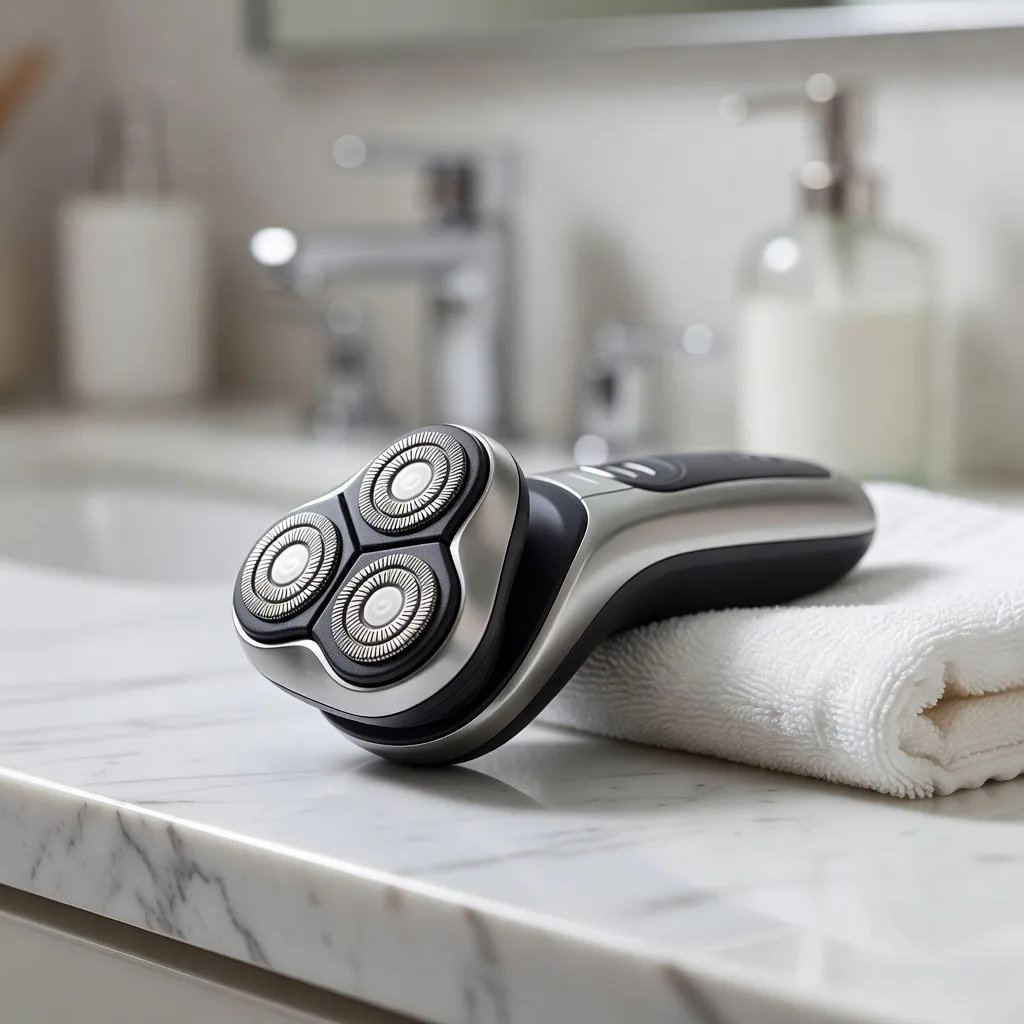
Each head has a round guard with slots and a set of small blades spinning underneath. Hairs enter the slots and are cut as the blades pass. Because the heads are round and mounted on pivots, they can tilt to stay flat against the skin as you move around your jaw and neck.
This design means you move the shaver in small circles rather than straight lines. Circles help catch hairs growing at different angles, which is common on the neck and under the jaw. The trade-off is that the cut is a little less close than a well-used blade, and some people find it takes longer on flat cheeks.
Because the blades sit behind a guard and never touch the skin directly, rotary shavers are less likely to nick or cut than blade razors. That makes them a practical option for shaving over the jawline, around moles or on skin that bleeds easily, as long as you keep pressure light and the guards are intact.
Rotary vs Foil Shaver: Which Suits You?
The other main electric shaver type uses a thin, straight metal foil with oscillating blades behind it. Neither type is better for everyone.
| Feature | Rotary shaver | Foil shaver |
|---|---|---|
| Cutting motion | Circular | Straight, back and forth |
| Best stubble length | Medium to a few days | Short, daily shaving |
| Contours and neck | Handles curves well | Can struggle under the jaw |
| Closeness on flat areas | Good | Usually slightly closer |
| Hair growth pattern | Good for mixed directions | Best for fairly even growth |
| Sensitive skin | Good if used gently | Good; foil acts as a barrier |
| Technique | Small circles | Straight strokes against the grain |
If you shave every day and your hair grows fairly evenly, a foil shaver may suit you. If you shave every two or three days or your neck hair grows in swirls, a rotary model usually feels easier. Our guide on trimming vs shaving facial hair can help if you are unsure whether you want a full shave at all.
Features Worth Paying For
Rotary shavers range from basic travel models to feature-heavy flagships. These features have the biggest effect on comfort and results.
| Feature | Why it matters | What to look for |
|---|---|---|
| Flexing heads | Keeps contact on curves, fewer passes | Heads that tilt independently in several directions |
| Wet-and-dry rating | Lets you shave with gel or foam for comfort | Clearly labelled for use in the shower |
| Battery life | Fewer interruptions and easier travel | Enough for a week or more of shaves; quick charge |
| Head design | Affects closeness and cleaning | Heads that open easily for rinsing |
| Pop-up trimmer | Tidies sideburns and moustache edges | Sturdy, easy to reach |
| Replacement heads | Keeps performance up over the years | Widely available for your model |
| Charging | Convenience and travel | Standard USB charging and a travel lock |
More heads, speed modes or app features do not automatically mean a better shave. A mid-range shaver with good flex and easy cleaning often feels as comfortable as a flagship.
What to Skip or Avoid
Some features add cost without adding much comfort, and some shavers have design flaws that make them hard to live with.
- Heads that do not flex or only tilt as one fixed block.
- Models that cannot be rinsed under the tap, which makes cleaning slow.
- Replacement heads that are hard to find or discontinued.
- Very loud motors if you shave early around other people.
- Cleaning stations that need costly cartridges, unless you value the convenience.
- Unclear claims such as clinically gentle with no explanation.
If you share a bathroom or travel often, a travel lock and a protective cap are worth more than extra modes. A dull or damaged head is also a common cause of pulling, so check whether replacements are easy to buy before you choose a model.
Choosing a Rotary Shaver by Skin and Beard Type
Your skin and hair decide which features matter most. Use this list as a guide.
- Sensitive skin: choose wet-and-dry use, shave with gel and keep pressure light.
- Acne-prone skin: an electric shaver avoids nicking spots; clean heads daily.
- Coarse or dense beard: a strong motor and heads that do not bog down.
- Curly hair that grows back into the skin: shaving less closely, or leaving short stubble, may reduce bumps.
- Longer stubble: rotary heads handle a few days of growth better than foils.
- Travel: long battery life, USB charging and a lock.
If you are acne-prone, the AAD’s acne skin care tips suggest shaving gently and only when needed, and using products labelled non-comedogenic. Our guide on calming inflamed red patches helps if shaving leaves redness behind.
How to Shave With a Rotary Shaver
Good technique matters as much as the machine. These steps work for dry or wet shaving.
Prepare the skin
For dry shaving, wash and dry your face fully. For wet shaving, wash with warm water and apply a thin layer of gel or foam.
Check the heads
Make sure they are clean and undamaged; hair buildup reduces closeness.
Hold it flat
Keep all heads in contact with the skin at a comfortable angle.
Use small circles
Move in small, overlapping circles with light pressure; let the heads do the work.
Stretch the skin on the neck
Use your free hand to flatten loose skin under the jaw.
Tidy edges with the trimmer
Use the pop-up trimmer for sideburns and moustache lines.
Rinse and moisturise
Rinse your face with cool water and apply a fragrance-free moisturiser.
When you switch from blades or from a foil shaver, give your skin two to four weeks to adjust. Redness and patchy results in the first few shaves are common and usually settle.
Cleaning and Maintenance
A clean shaver cuts better and is kinder to your skin. Hair, skin cells and oil collect under the guards quickly.
- Rinse the heads under warm water after every shave, if the model is washable.
- Open the heads and brush out trapped hair once or twice a week.
- Use a drop of light oil or a cleaning spray if the manual recommends it.
- Let the shaver air dry with the heads open before storing it.
- Replace the heads when shaving takes longer, pulls or causes new redness.
Never share an electric shaver. Nicks and tiny cuts can spread skin infections and blood-borne viruses. Stop using a shaver with cracked guards, as sharp edges can cut the skin.
Battery, Charging and Travel
Battery and charging details rarely appear in advertising photos, but they shape daily use more than most features. A shaver that dies mid-shave or needs a special plug soon becomes frustrating.
- Check how many minutes of shaving one charge gives, not only the charging time.
- A quick-charge option gives enough power for one shave in a few minutes.
- A battery level display helps you avoid running flat halfway through.
- Standard USB charging means one cable for your phone and shaver when you travel.
- A travel lock stops the motor turning on in your bag.
- Corded use while charging is handy if you often forget to charge.
Lithium-ion batteries hold charge longer and lose less power over time than older battery types. Keep the shaver out of very hot places such as a car in summer, which shortens battery life.
Dos and Don’ts
Do
- Choose independently flexing heads
- Use small circles with light pressure
- Rinse heads after every shave
- Stretch the skin on your neck
- Replace worn heads promptly
Don’t
- Press hard to get closer
- Shave over active spots or broken skin
- Share your shaver
- Store it wet in a closed case
- Expect perfect results in the first week
Honest Limits
No electric shaver gives quite the closeness of a sharp blade on every part of the face. Rotary shavers are good on curves and longer stubble but can feel slower on flat cheeks, and results vary with hair type, density and skin. Marketing claims about closeness are hard to compare between brands because there is no standard test.
An electric shaver also does not treat razor bumps or ingrown hairs on its own. It can reduce irritation for some people, but those with very curly hair may still get bumps, and leaving short stubble or choosing a different hair removal method may be needed. Our comparison of waxing vs shaving facial hair covers some alternatives.
When to See a Dermatologist
- Bumps, spots or ingrown hairs keep coming back in the beard area.
- Shaving leaves pus-filled bumps, crusting or dark marks.
- Redness or burning lasts days after every shave.
- You have acne, rosacea or eczema that flares after shaving.
A dermatologist can diagnose folliculitis or pseudofolliculitis barbae and suggest treatments, grooming changes or longer-term options such as laser hair removal. The AAD’s shaving tips are a good starting point before your visit.
This article is for general information and does not replace professional medical advice. See a board-certified dermatologist if shaving causes ongoing irritation, bumps or infection.
Frequently Asked Questions
Which rotary shaver on this list is best overall?
The Philips AquaTouch, for its flexing head, wet or dry use and trimmer.
Is a rotary shaver better than a foil shaver?
It is better for curves and longer stubble; foil is often closer for daily shaving.
Is a rotary shaver good for sensitive skin?
Yes, if used gently, ideally with gel on a wet-and-dry model.
How should I move a rotary shaver?
In small, light circles with all heads touching the skin.
Can I use a rotary shaver in the shower?
Only if it is rated wet-and-dry.
How often should I replace rotary heads?
When shaving slows, pulls or irritates; check your manual.
Why does my rotary shaver pull hairs?
Usually dirty or worn heads, or pressing too hard.
Is the most expensive rotary shaver worth it?
Often, for comfort and build; the Philips suits daily shavers, while the MAX-T or Hatteker cover basics.
Which rotary shaver is best for shaving your head?
The Freebird FlexSeries Pro, or the 5-in-1 bald head shaver for a lower spend.
How long does it take to get used to a rotary shaver?
Often two to four weeks.
Final Word
The best rotary shaver is one whose flexing heads follow your jaw and neck, that can be used wet or dry, and that is easy to rinse and maintain.
Match the features to your beard and skin, use small light circles, clean the heads daily and replace them when they wear, and give your skin a few weeks to adjust.
Our top pick: Philips AquaTouch Wet and Dry Rotary Shaver
The Philips AquaTouch takes the top spot because it pairs a five-direction flexing head and wet or dry use with a click-on trimmer and simple flip-open cleaning, which covers the most needs for most face shavers. Choose the Freebird FlexSeries Pro instead if you mainly shave your head, or the MAX-T if you want a waterproof face shaver with a pop-up trimmer at a lower spend.
Check Price on Amazon
Written by
Registered pharmacist and founder of Facial Adviser. Rakib's pharmacy training covers how skincare actives work and interact; a later course in cosmetology turned that into a focus on facial treatments and skincare products. He plans, researches and edits every guide on the site and checks health claims against sources such as the American Academy of Dermatology, the FDA and the NIH. He is not a dermatologist; see the Editorial Policy and Medical Disclaimer.
About · Editorial policy · How we choose products · Medical disclaimer · Contact
Keep reading: Shaving and razors
- 10 Best Safety Razors (2026): Closer, Calmer Shaves for Every Level
- 10 Best Pre-Shave Oils (2026): Smoother Glide, Less Razor Irritation
- 10 Best Aftershave Balms (2026): Alcohol-Free Relief for Razor Burn
- BaBylissPRO Barberology GoldFX Double Foil Shaver (FXFS2G): Pros and Cons
- The Art of Shaving After-Shave Balm for Men: Soothing and Moisturising?
- Calvin Klein Eternity for Men After Shave: Scent, Use and Skin
- 10 Best Hair Dryers (2026): Faster Drying With Less Heat Damage
- 10 Best Beard Trimmers (2026): Even Lengths, Clean Edges