10 Best Nose and Ear Trimmers (2026): Painless, Safe Grooming
Nose and ear hair tends to become more noticeable with age, and a small trimmer is the quickest, safest way to keep it tidy. This list covers 10 options, from rechargeable rotary trimmers to battery-free manual models, because the design of the blade and guard makes a big difference between a painless tidy-up and a tool that tugs or nicks.
Part of our guide to men's grooming tools. Start with: 10 Best Beard Trimmers (2026): Even Lengths, Clean Edges
The best nose and ear trimmer for most people is a slim, washable electric trimmer with blades fully enclosed behind a rounded, slotted guard, a sharp stainless steel cutter and a motor strong enough to cut without pulling. Rotary heads with dual-edge blades cut from several angles and are quick in the nostrils; vertical or side-to-side blades are better for ear edges and eyebrows. Manual twist trimmers are quiet and need no battery. Avoid exposed blades, very long heads that reach deep into the nose and cheap motors that stall and pull hairs. Trim only the hair you can see, and never pluck.
In short: choose a guarded, washable trimmer, trim only the visible ends and keep the head clean.
The American Academy of Dermatology advises letting razors dry completely and storing them in a dry place so bacteria cannot grow, which is especially important for a tool that goes inside the nose.
Below you will find the ten picks, how we chose them, how the trimmer types compare, what to avoid, and how to trim nose and ear hair safely and keep the trimmer hygienic.
Shopping these picks?
Amazon Prime members get fast, free shipping on eligible items, plus Prime Video, Amazon Music and member deals. New members can start with a free trial.
Start a free Prime trialAged 18 to 24? Prime for Young Adults comes with a longer free trial and a lower price after it.
Affiliate link: we may earn a commission at no extra cost to you.
As an Amazon Associate we earn from qualifying purchases. This does not change which products we include.


In This Guide
- The 10 Best Nose and Ear Trimmers Right Now
- How We Chose These Products
- Why Trim Instead of Plucking or Waxing
- Types of Nose and Ear Trimmer Compared
- Features to Look For
- What to Avoid
- Electric vs Manual Trimmers: Which Should You Buy?
- How to Use a Nose and Ear Trimmer Safely
- Cleaning and Hygiene
- Irritation, Dryness and Sensitive Noses
- Dos and Don’ts
- Honest Limits
- When to See a Doctor or Dermatologist
- Your Questions, Answered
- The Takeaway
What to Know First
- MANSCAPED Weed Whacker 3.0 PRO is our top pick for its dual heads, built-in light and rechargeable battery.
- Groom Mate Platinum XL is a widely reviewed specialist trimmer with a simple, no-frills design.
- Ginity Nose Hair Trimmer suits sensitive noses, with a skin-protecting foil and washable head.
- Nose hair filters air, so trim it rather than removing it completely.
- Look for fully enclosed blades behind a rounded guard.
- Plucking nose hair can lead to painful infections.
- Clean and dry the head after every use and never share it.
The 10 Best Nose and Ear Trimmers Right Now
These ten trimmers were shortlisted from widely reviewed Amazon listings and cover rechargeable, battery and manual designs. Each pick explains who it suits, its trade-offs and who should skip it.
| # | Product | Best For | Standout Feature | |
|---|---|---|---|---|
| 1 | MANSCAPED Weed Whacker 3.0 PRO | Nose, ears and brows in one tool | Dual heads plus a built-in LED light | View |
| 2 | Groom Mate Platinum XL Nose and Ear Trimmer | A simple trimmer from a specialist brand | Specialist trimmer for nose and ears only | View |
| 3 | Ginity Rechargeable Nose Hair Trimmer | Sensitive skin and quiet trimming | Skin-protecting foil and low-noise motor | View |
| 4 | HEBECA 3-in-1 Nose and Brow Trimmer | Tidying brows as well as nose and ears | Double-sided brow trimmer in a travel set | View |
| 5 | XOOMRSCP 3-in-1 Rechargeable Trimmer | First-time trimmer users | Clear usage guidance and inner rotating blades | View |
| 6 | Wahl Groomsman Precision Trimmer | Keeping nose and face heads separate | Separate detachable heads for nose and face | View |
| 7 | Panasonic Wet and Dry Nose and Ear Trimmer | Quick rinsing and wet or dry use | Vortex rinse cleans the cutter with water | View |
| 8 | ROYAL Birdie Manual Nose Hair Trimmer | Quiet, battery-free trimming | Battery-free manual design, made in Korea | View |
| 9 | Remington NE3150 Nose and Ear Clipper | A simple nose and ear tidy-up | Simple nose and ear clipper from Remington | View |
| 10 | ZORAMI Rechargeable Ear and Nose Trimmer | An affordable rechargeable all-rounder | Rechargeable trimmer for nose, ears and brows | View |
MANSCAPED Weed Whacker 3.0 PRO

Best for: Nose, ears and brows in one tool
The MANSCAPED Weed Whacker 3.0 PRO earns the top spot because it covers every job this guide discusses in one well-designed tool. Its listing describes interchangeable rotary and eyebrow heads designed to help reduce nicks, which matches our advice to choose guarded blades, and a built-in LED light makes stray hairs easier to see.
A rechargeable battery with around an hour of runtime and a travel lock make it practical for everyday use and trips. Compared with the #6 Wahl it adds the light and a dedicated brow head, and compared with the #7 Panasonic it avoids disposable batteries. The trade-off is that it costs more than most of the simpler trimmers further down.
- Interchangeable rotary nose head and eyebrow head
- Blade design intended to help reduce nicks
- Built-in LED light for hard-to-see hairs
- Rechargeable battery with a travel lock
Pros
- Covers nose, ears and brows
- Light helps you trim precisely
- Travel lock prevents accidental switch-on
Cons
- Costs more than simpler trimmers
- More parts to clean than a single-head model
Skip it if: Skip it if you only need a quick nostril tidy; the ZORAMI or Remington is simpler and cheaper.
Check Price on AmazonGroom Mate Platinum XL Nose and Ear Trimmer

Best for: A simple trimmer from a specialist brand
The Groom Mate Platinum XL is the pick for people who want a simple nose and ear trimmer from a brand that specialises in them. It is very widely reviewed among shoppers, which is a useful sign of durability for a tool that sees frequent use in a damp bathroom.
Its listing gives very little detail, so check the product page for how it operates and cleans before you buy. It lacks the extra brow head and light of the #1 MANSCAPED and the waterproof body of the #7 Panasonic. For readers who simply want a proven, straightforward tool for the nose and ears, that simplicity is part of the appeal.
- Dedicated nose and ear hair trimmer
- Platinum XL model in the Groom Mate range
- Specialist grooming brand
- Simple, single-purpose tool
Pros
- Very widely reviewed
- Specialist brand
- Simple to use
Cons
- Listing gives very little detail
- No brow head or light
Skip it if: Skip it if you want brow and facial heads in one tool; the HEBECA or MANSCAPED covers more.
Check Price on AmazonGinity Rechargeable Nose Hair Trimmer

Best for: Sensitive skin and quiet trimming
The Ginity trimmer is the pick for people with sensitive noses who dislike pulling or buzzing. Its listing describes a stainless steel, rotating cutter head with double-edged blades behind a skin-protecting foil, plus low-noise operation, which fits our advice to keep the cutting edge well away from the nostril lining.
It charges by USB-C, has a washable, removable head and comes with a separate eyebrow trimmer and cleaning brush. Compared with the #4 HEBECA it has a quieter focus but a less elaborate brow head, and compared with the #1 MANSCAPED it lacks a light. It is also designed for women and men, with a longer warranty than most.
- Rotating stainless steel cutter with double-edged blades
- Skin-protecting foil and low-noise operation
- Washable, removable head
- USB-C rechargeable, with an eyebrow trimmer included
Pros
- Gentle design for sensitive skin
- Quiet in use
- Warranty and accessories included
Cons
- Newer brand with a shorter track record
- No built-in light
Skip it if: Skip it if you want a fully waterproof body; the Panasonic is better for rinsing under the tap.
Check Price on AmazonHEBECA 3-in-1 Nose and Brow Trimmer
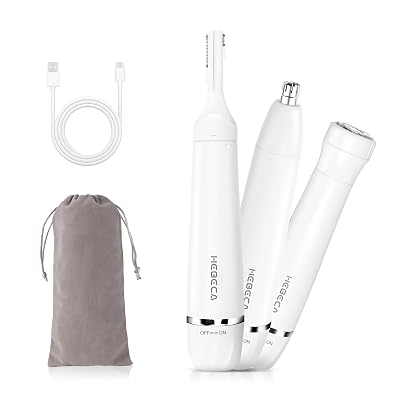
Best for: Tidying brows as well as nose and ears
The HEBECA set is the pick for people who want to tidy brows as carefully as nose and ear hair. Alongside a dual-edge, rotating nose and ear head, it includes a double-sided eyebrow trimmer with a full-size edge and a small detail edge, so you can shape brows without switching tools.
The listing describes an IPX6 waterproof design for rinsing the head, USB charging with about an hour of trimming per charge, and a travel bag. Compared with the #3 Ginity it has the better brow attachment, and compared with the #1 MANSCAPED it lacks a light. As with any brow trimmer, work slowly and use a guide comb if you have one.
- Rotating dual-edge nose and ear head
- Double-sided eyebrow trimmer
- IPX6 water resistance for rinsing
- USB rechargeable, with a travel bag
Pros
- Detailed brow trimming
- Rinseable head
- Travel-ready set
Cons
- More heads to keep track of
- Water resistant rather than fully waterproof
Skip it if: Skip it if you only trim nostrils; a single-purpose trimmer like the Remington is simpler.
Check Price on AmazonXOOMRSCP 3-in-1 Rechargeable Trimmer

Best for: First-time trimmer users
The XOOMRSCP trimmer is a good choice for first-time buyers because its listing is unusually clear about how to use it safely. It tells you to insert only the cone tip into the nostril, which matches our own guidance, and describes an inner rotating blade design that cuts without pulling.
It covers the nose, ears, brows and stray facial hair, charges by USB with a built-in battery, runs quietly and has a washable head with a cleaning brush. It is very widely reviewed. Compared with the #4 HEBECA its brow tool is less detailed, and compared with the #6 Wahl it comes from a less established brand.
- Inner rotating blades that cut without pulling
- Covers nose, ears, brows and facial hair
- USB rechargeable and low noise
- Washable head with cleaning brush
Pros
- Clear, safety-minded instructions
- Very widely reviewed
- Easy to clean
Cons
- Less established brand
- Brow trimming is basic
Skip it if: Skip it if you want a trusted legacy brand; the Wahl or Panasonic may reassure you more.
Check Price on AmazonWahl Groomsman Precision Trimmer

Best for: Keeping nose and face heads separate
The Wahl Groomsman Precision Trimmer is the pick for people who care most about hygiene. Its listing describes easily detachable heads, one reserved for the nose and another for everything else, so you are not using a head that has been inside the nostril on your brows or sideburns. Both heads rinse clean under running water.
It has a rotary head and a reciprocating head, which matches our advice that rotary suits nostrils while side-to-side blades suit ears and brows. It is rechargeable, and the listing suggests charging fully every few months to protect the battery. Compared with the #1 MANSCAPED it has no light but costs less.
- Separate heads for nose and for other areas
- Rotary and reciprocating trimming heads
- Fully rinseable heads
- Rechargeable, with no batteries to buy
Pros
- Hygienic head separation
- Both main blade types included
- Established brand
Cons
- No built-in light
- Battery needs occasional full charges
Skip it if: Skip it if you want a fully waterproof trimmer for the shower; the Panasonic suits that better.
Check Price on AmazonPanasonic Wet and Dry Nose and Ear Trimmer

Best for: Quick rinsing and wet or dry use
The Panasonic trimmer is the pick for people who want the easiest possible cleaning. Its listing describes a Vortex system that draws in tap water and spins it through the cutter head, flushing out hair and debris, and a fully waterproof body that can be used wet or dry. That makes hygiene simple, which matters for a tool used inside the nose.
The curved, dual-edge stainless steel blades are shaped to the nostril and described as hypoallergenic. It runs on a single AA battery rather than a rechargeable cell, so replace the battery as soon as the motor slows to avoid pulling. It is extremely widely reviewed, which adds confidence, and it is a sensible choice for anyone who trims in the shower.
- Vortex water-rinse cleaning system
- Fully waterproof for wet or dry use
- Curved dual-edge stainless steel blades
- Runs on one AA battery, with a protective cap
Pros
- Very easy to clean
- Waterproof body
- Extremely widely reviewed
Cons
- Needs AA batteries
- Motor weakens as the battery runs down
Skip it if: Skip it if you prefer rechargeable tools; the MANSCAPED or Wahl avoids disposable batteries.
Check Price on AmazonROYAL Birdie Manual Nose Hair Trimmer

Best for: Quiet, battery-free trimming
The ROYAL Birdie is the pick for people who dislike buzzing or vibration inside the nose. Its title describes a manual, battery-free nose hair trimmer made in Korea that is water resistant and designed to trim painlessly, so there is nothing to charge and it can go in any wash bag.
As our comparison table shows, manual trimmers are slower than electric ones but almost silent and easy to rinse. The listing is thin, so we describe it only from its title. Compared with the electric picks above it trades speed for simplicity, and it is a good backup or travel trimmer even if you own an electric model.
- Manual, battery-free operation
- Water-resistant design
- Made in Korea
- Designed for painless nose hair trimming
Pros
- Silent in use
- No batteries or charging
- Compact for travel
Cons
- Slower than electric trimmers
- Limited listing detail
Skip it if: Skip it if you trim ears and brows as well; an electric model like the HEBECA covers more areas.
Check Price on AmazonRemington NE3150 Nose and Ear Clipper

Best for: A simple nose and ear tidy-up
The Remington NE3150 is the pick for people who want a basic nose and ear clipper from a well-known grooming brand. It is a single-purpose tool without brow heads, lights or charging docks, and it is very widely reviewed, which suggests it holds up well to regular use in a damp bathroom.
Its listing gives little detail beyond the model name, so check the product page for power and cleaning details before buying. Compared with the #10 ZORAMI it comes from a longer-established brand, and compared with the #7 Panasonic it is less focused on easy rinsing. It suits readers who want a familiar name and nothing more.
- Dedicated nose and ear clipper
- Single-purpose design
- Established grooming brand
- Designed for nose and ear hair only
Pros
- Well-known brand
- Very widely reviewed
- Simple to use
Cons
- Few features
- Thin listing detail
Skip it if: Skip it if you want a brow head or rechargeable battery; the MANSCAPED or Ginity offers both.
Check Price on AmazonZORAMI Rechargeable Ear and Nose Trimmer

Best for: An affordable rechargeable all-rounder
The ZORAMI trimmer is the pick for people who want a rechargeable all-rounder without paying for premium extras. Its title describes a rechargeable ear and nose hair trimmer that also handles eyebrows and stray facial hair and is designed to trim painlessly, which covers the everyday jobs most people need a trimmer for.
It is extremely widely reviewed for a trimmer at this level, which gives some reassurance about reliability. The listing detail is limited, so we describe it only from its title. Compared with the #3 Ginity and #5 XOOMRSCP it offers similar all-round use with less information about the blade and guard, and compared with the #9 Remington it adds rechargeable power.
- Rechargeable battery
- Trims nose and ear hair
- Also used on eyebrows and facial hair
- Designed for painless trimming
Pros
- Affordable all-rounder
- No batteries to buy
- Extremely widely reviewed
Cons
- Limited detail on blades and guard
- Lesser-known brand
Skip it if: Skip it if you want a fully waterproof or light-equipped trimmer; the Panasonic or MANSCAPED fits better.
Check Price on AmazonHow We Chose These Products
We shortlisted nose and ear trimmers from Amazon listings that are highly rated by a large number of shoppers, favouring established grooming brands and fuller-featured models with guarded blades and washable heads. We then checked each product’s listed features against the hygiene and safety guidance cited in this post, including the AAD’s advice on letting blades dry fully and storing them somewhere dry.
These are research-based picks, not hands-on lab tests. We did not measure motor power or cutting speed ourselves, so rankings reflect listing detail, blade and guard design and ease of cleaning rather than personal results. We left out beard kits and body groomers that only include a nose head as an extra.
- Strong ratings from a large number of shoppers
- Established brands and fuller-featured models preferred
- Guarded blades and washable or rinseable heads favoured
- Listed features checked against the cited safety guidance
- Products with thin or unclear listings excluded or ranked lower
Why Trim Instead of Plucking or Waxing
Nose hair is not just cosmetic. It helps filter dust, pollen and other particles from the air you breathe and traps moisture. Removing it completely takes away part of that protection, which is why trimming the visible ends is the approach most doctors prefer.
Plucking pulls the whole hair out and leaves an open follicle in an area that is warm, moist and full of bacteria. This can lead to painful red bumps and infections inside the nose. Hot wax kits for the nostrils also remove hair at the root and can irritate or burn the thin lining. A trimmer cuts hair at the tip of the nostril and leaves the deeper, protective hairs in place.
Ear hair is less important for filtering, but the skin of the outer ear canal is thin and easily scratched. Trimming the visible hair on and around the ear is safer than reaching into the canal.
Types of Nose and Ear Trimmer Compared
There are three main designs. Each cuts hair in a different way and suits slightly different jobs.
| Type | How it cuts | Strengths | Weaknesses | Best for |
|---|---|---|---|---|
| Rotary electric | A spinning blade inside a slotted round guard | Quick in the nostrils, cuts from several angles | Can pull longer hairs if the motor is weak | Nose hair |
| Vertical or reciprocating electric | Blades move side to side inside a flat guard | Neat on ear edges and eyebrows, less pulling | Slightly slower inside the nostril | Ears, eyebrows and nose |
| Manual twist or squeeze | You rotate or press to make the blades cut | Quiet, no battery, easy to wash | Slower and needs more effort | Occasional use and travel |
| Rounded-tip scissors | Small scissors with blunt tips | Precise for single long hairs | Easy to slip; harder to see | Stray long hairs only |
Many electric trimmers come with an extra head for eyebrows or sideburns. That is useful if you will use it, but the quality of the main nose head matters far more than the number of attachments.
Features to Look For
These are the features that most affect comfort, safety and hygiene.
- Enclosed blades: the cutting edge should sit behind a guard so it cannot touch the skin directly.
- Rounded, smooth tip: a gently curved head slides into the nostril without scraping.
- Short head length: a compact head stops you reaching too far into the nose.
- Stainless steel or coated blades: stay sharp and resist rust from moisture.
- Washable or waterproof head: lets you rinse out hair and mucus under the tap.
- Sufficient motor power: a stronger motor cuts cleanly instead of snagging.
- Power source: rechargeable models suit frequent use; single-battery models are light and good for travel.
- Built-in light: some people find it helps them see stray hairs, though good bathroom lighting works as well.
If you also tidy brows or the edge of the beard, a trimmer with a small detail head saves buying another tool. For larger facial areas, a dedicated trimmer is better; our guide on trimming vs shaving facial hair explains which tool suits which job.
What to Avoid
Several designs and habits cause pain, nicks or infections. Keep these off your list.
- Trimmers with exposed blades or open slots wide enough for skin to enter.
- Very long, narrow heads that encourage pushing deep into the nostril.
- Weak motors that stall and pull hairs out rather than cutting them.
- Heads that cannot be removed or rinsed, so mucus and hair stay trapped inside.
- Hot wax kits for inside the nose, which remove protective hair at the root.
- Ordinary sharp scissors, which are easy to slip with inside the nose.
Cheap trimmers are not always a problem, but the combination of a poor guard and a weak motor is the most common reason people find trimming painful. A trimmer that feels scratchy or pulls on the first use is unlikely to improve.
Electric vs Manual Trimmers: Which Should You Buy?
Once you have decided on a guarded design, the next choice is how it is powered. Each option suits a different kind of user, and none is automatically better than the others.
| Factor | Rechargeable electric | Battery electric | Manual |
|---|---|---|---|
| Cutting speed | Fast | Fast while the battery is fresh | Slower |
| Pulling risk | Low with a strong motor | Rises as the battery weakens | Low if blades are sharp |
| Noise | Buzzing | Buzzing | Almost silent |
| Cleaning | Often washable head | Often washable head | Usually fully rinsable |
| Travel | Needs a charger or cable | Easy; carry a spare battery | Easiest |
| Best for | Frequent trimming | Occasional trimming | Travel, quiet use, sensitive noses |
A rechargeable model makes sense if you trim every week and want a consistent motor. A single-battery trimmer is light and cheap to run, but replace the battery as soon as the motor slows, because a weak motor is the main cause of pulling. Manual trimmers are a good choice for people who dislike noise or vibration inside the nose and for anyone who wants a simple, sturdy tool for a wash bag. Whichever you choose, the guard and blade quality still decide how comfortable it feels.
How to Use a Nose and Ear Trimmer Safely
Trimming takes a minute or two. Good light and a calm, steady hand matter more than speed.
Clean the area
Blow your nose gently and wipe around the nostrils and ears so hair is dry and visible.
Check the trimmer
Make sure the head is clean, dry and fitted properly, and that the battery is charged.
Use good light
Stand in front of a well-lit mirror, or use a magnifying mirror if you need one.
Insert only the tip
Place the rounded tip just inside the nostril opening, no deeper than the visible hair.
Move in gentle circles
Rotate the trimmer slowly around the edge of the nostril without pressing into the skin.
Trim ears from the outside
Run the trimmer over the rim and the opening of the ear, never into the canal.
Rinse and dry
Blow your nose gently to remove clippings, then rinse, dry and store the trimmer.
Tilt your head back slightly and gently lift the tip of your nose with one finger. This opens the nostril so you can see stray hairs and trim them with less poking around.
Cleaning and Hygiene
A nose trimmer collects hair, mucus and bacteria every time it is used, so cleaning is not optional. A dirty head can spread bacteria into small nicks or irritated follicles.
- Rinse the head under warm running water after each use if it is washable.
- Brush out hair from non-washable models with the small brush supplied.
- Wipe the guard with an alcohol wipe from time to time and let it dry.
- Let the head dry completely before replacing the cap.
- Store the trimmer in a dry place, not in the shower.
- Never share a nose trimmer, even within a household.
The American Academy of Dermatology guide on how to shave advises storing razors in a dry area and letting them dry completely between uses to prevent bacteria from growing. The same principle applies to any blade used on the face. Our guide on how to sanitise makeup tools covers safe disinfecting methods that also suit small grooming tools.
Irritation, Dryness and Sensitive Noses
Some people notice a sore or dry nostril edge after trimming, especially in winter or during a cold. This usually comes from pressing too hard, trimming too often or using a dull head.
Trim no more than you need to, perhaps every week or two, and pause if the skin is cracked, crusted or sore. A thin layer of plain petroleum jelly around the outside of the nostrils can help dry, flaky skin; our guide to treating dry, flaky nose skin has more gentle tips.
Stop trimming and see a doctor if you develop a painful, red, swollen or pus-filled bump inside or at the edge of the nostril. Infections in this area should be checked promptly rather than squeezed or treated at home.
Dos and Don’ts
Good Habits
- Trim only the visible ends
- Choose a trimmer with enclosed blades
- Rinse and dry the head after each use
- Use good lighting
- Keep the trimmer for your own use
Common Mistakes
- Pluck nose hairs
- Push the trimmer deep into the nostril
- Insert anything into the ear canal
- Use sharp pointed scissors
- Trim over sore or cracked skin
The safest routine is a short, regular trim rather than an occasional deep clear-out. Little and often keeps hair tidy, avoids the temptation to reach further into the nose and gives the lining of the nostril time to stay calm between sessions. If a trimmer ever feels sharp against the skin, stop and check the guard for cracks before using it again.
Honest Limits
A trimmer controls visible hair, but it does not slow regrowth. You will need to repeat it regularly, and that is normal. Hair growth in the nose and ears often increases with age and is not a sign of a health problem on its own.
Features such as higher speeds, built-in lights and many extra heads are nice to have but do not make trimming safer by themselves. The guard design, motor strength and how easily the head can be cleaned matter more than anything printed on the box. Permanent options such as laser hair removal are not used inside the nose, because nasal hair plays a protective role.
When to See a Doctor or Dermatologist
- A painful or swollen bump appears inside or at the edge of the nostril.
- You have nosebleeds or crusting that keep returning after trimming.
- The ear becomes painful, itchy or discharges after trimming.
- You notice a sore, lump or spot that does not heal.
This article is for general information and does not replace professional medical advice. See a doctor or board-certified dermatologist for infections, persistent sores or ear problems.
Your Questions, Answered
Is it safe to trim nose hair?
Yes, trimming the visible ends is safe and preferred over plucking.
Why should I not pluck nose hair?
It leaves open follicles that can become infected.
Rotary or vertical blade: which is better?
Rotary suits the nose; vertical suits ears and brows.
How often should I trim nose hair?
Usually every week or two, as needed.
Can I use a nose trimmer on my ears?
Yes, on the outer ear and rim, never inside the canal.
Do nose trimmers hurt?
A good guarded trimmer should not pull or hurt.
Which trimmer on this list suits women?
All work for everyone; the Ginity and HEBECA are designed for women and men and add brow heads.
Are manual nose trimmers any good?
Yes. The ROYAL Birdie needs no battery and is quiet, though slower than electric picks.
Which trimmer is best for eyebrows too?
The HEBECA has a double-sided brow trimmer, and the MANSCAPED adds a separate eyebrow head.
How do I clean a nose trimmer?
Rinse or brush it after each use and let it dry fully.
The Takeaway
The best nose and ear trimmer has enclosed, sharp blades behind a rounded guard, enough power to cut cleanly and a head you can rinse.
Trim only the visible hair, never pluck, stay out of the ear canal, and clean and dry the trimmer after every use.
Our top pick: MANSCAPED Weed Whacker 3.0 PRO
The MANSCAPED Weed Whacker 3.0 PRO takes the top spot because it combines a guarded rotary nose head, a separate eyebrow head and a built-in light in one rechargeable, easy-to-grip trimmer. Choose the Panasonic instead if a fully waterproof body and simple rinse cleaning matter most, or the ROYAL Birdie if you want a quiet manual trimmer with no batteries at all.
Check Price on Amazon
Written by
Registered pharmacist and founder of Facial Adviser. Rakib's pharmacy training covers how skincare actives work and interact; a later course in cosmetology turned that into a focus on facial treatments and skincare products. He plans, researches and edits every guide on the site and checks health claims against sources such as the American Academy of Dermatology, the FDA and the NIH. He is not a dermatologist; see the Editorial Policy and Medical Disclaimer.
About · Editorial policy · How we choose products · Medical disclaimer · Contact
Keep reading: Clippers, trimmers and beard care
- 10 Best Electric Hair Clippers (2026): Cleaner Fades at Home
- 10 Best Barber Storage Cases (2026): Organised, Protected, Hygienic
- 10 Best Cordless Hair Trimmers (2026): Crisp Lines, Even Beards
- 10 Best Beard Trimmers (2026): Even Lengths, Clean Edges
- 10 Best Professional Hair Clippers (2026): Clean Fades, Less Pulling
- 10 Best Safety Razors (2026): Closer, Calmer Shaves for Every Level
- 10 Best Hair Dryers (2026): Faster Drying With Less Heat Damage