Best Exfoliating Face Mitt for Glowing Skin: How to Choose and Use One
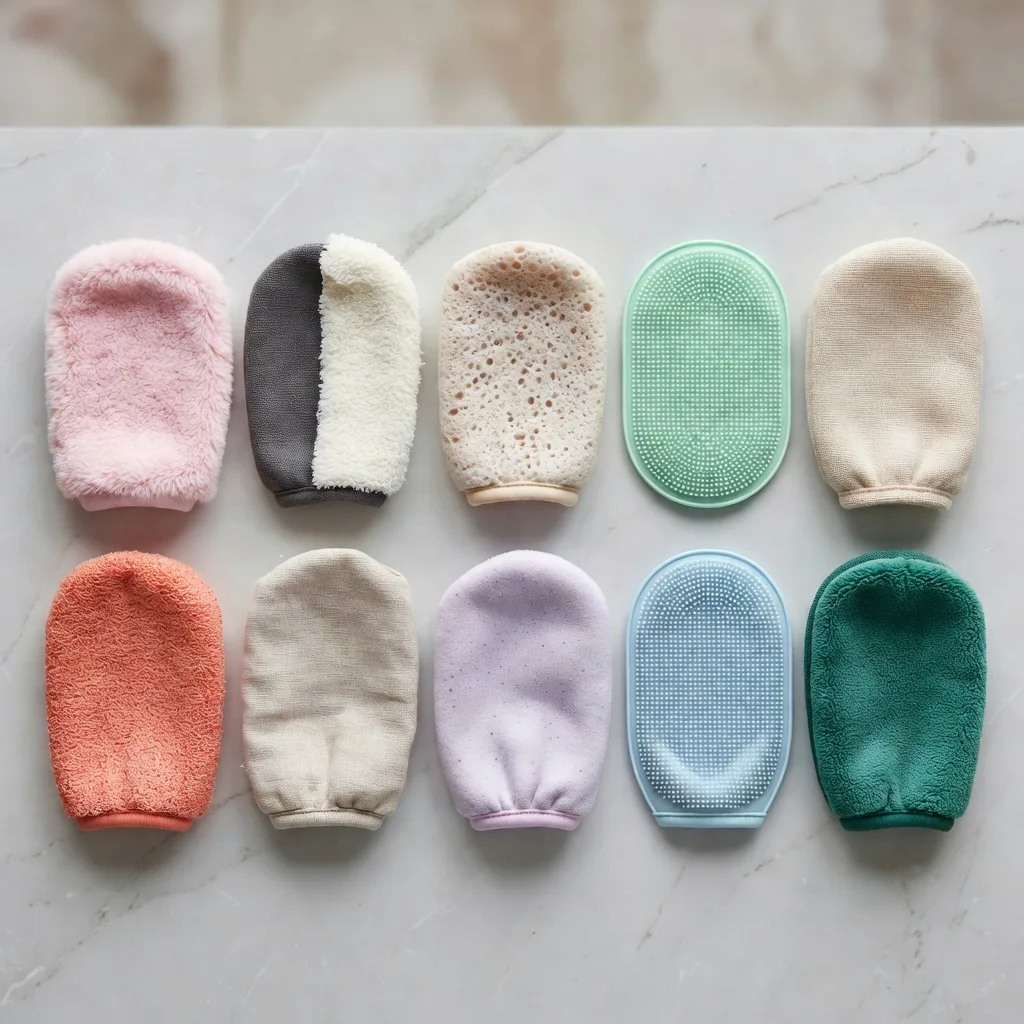
An exfoliating face mitt is a small fabric glove or pad with a slightly textured surface that lifts away dead skin cells when you move it over damp skin. It is one of the simplest forms of physical exfoliation, with no grains, acids or batteries involved. Used gently, it can leave skin feeling smoother and looking brighter.
Part of our guide to at-home facial devices. Start with: 10 Best Facial Tools (2026): LED, Cleansing, Gua Sha and More
The best exfoliating face mitt for glowing skin is a soft, fine-textured mitt made for the face, not the body, in a quick-drying fabric that you can wash easily. Face skin is thinner than body skin, so rough body mitts designed for the back and legs are too harsh. Use it on damp skin with light pressure, no more than once or twice a week to start, and skip it on active acne, rosacea flares, broken or sunburnt skin. A mitt can boost glow by removing dull surface cells, but it will not fade dark spots or wrinkles and can irritate if overused.
In short: choose a soft face-specific mitt, use it lightly and rarely, and stop at the first sign of stinging.
The American Academy of Dermatology advises choosing an exfoliation method that suits your skin type, being gentle, and applying moisturiser straight afterwards, because over-exfoliating can leave skin red and irritated.
This buyer’s guide compares mitt materials, explains who should avoid physical exfoliation and shows how to use and care for a face mitt.
Shopping these picks?
Amazon Prime members get fast, free shipping on eligible items, plus Prime Video, Amazon Music and member deals. New members can start with a free trial.
Start a free Prime trialAged 18 to 24? Prime for Young Adults comes with a longer free trial and a lower price after it.
Affiliate link: we may earn a commission at no extra cost to you.
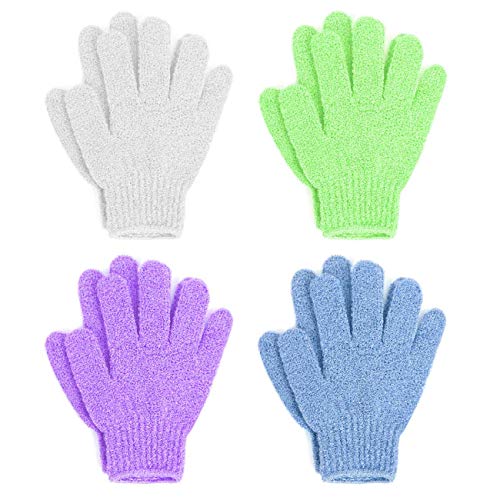
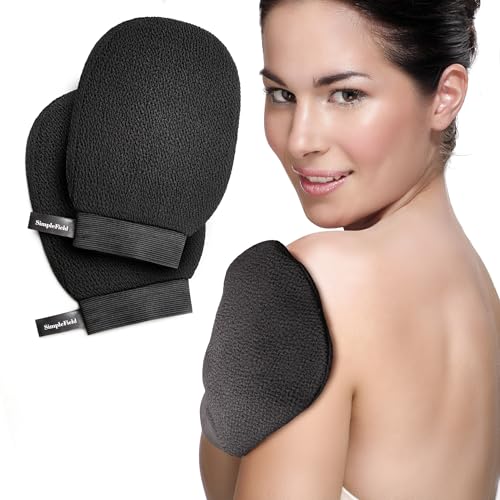
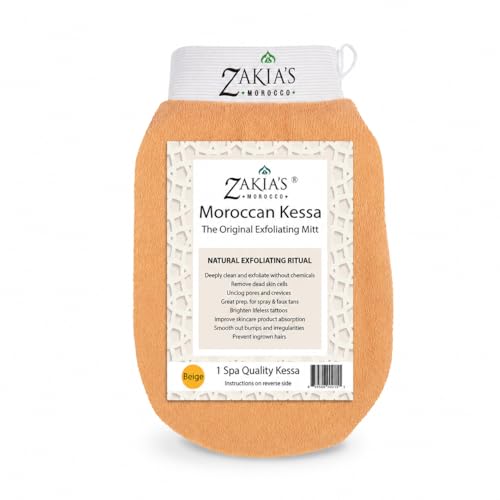
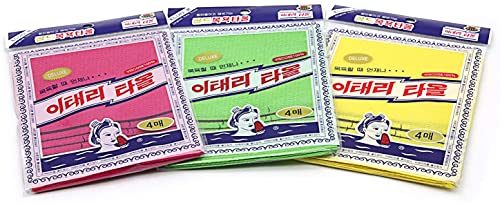
Recommended Exfoliating Face Mitts on Amazon



In Brief
- Choose a soft mitt designed for the face, not a rough body mitt.
- Use it on damp skin with light pressure.
- Start once a week and increase slowly if your skin is comfortable.
- Skip it on active acne, rosacea flares or broken skin.
- Do not combine mitt exfoliation with strong acids on the same day.
- Wash and fully dry the mitt after every use.
- Moisturise afterwards and wear sunscreen daily.
Contents
- What an Exfoliating Face Mitt Does
- Face Mitt Materials Compared
- Features to Look For
- Who Should and Should Not Use a Face Mitt
- How to Use an Exfoliating Face Mitt
- Combining a Mitt With Other Exfoliants
- Signs You Are Over-Exfoliating
- Cleaning and Replacing Your Mitt
- Other Ways to Get Glowing Skin
- Dos and Don’ts
- Honest Limits
- When to See a Dermatologist
- Common Questions
- The Bottom Line
What an Exfoliating Face Mitt Does
Your skin sheds dead cells from its surface all the time, but the process slows with age, dryness and some skin conditions. When dead cells build up, skin can look dull and feel rough, and makeup may sit unevenly. A mitt works by friction: its textured fibres catch and lift loose surface cells as you move it across damp skin.
That is why a mitt is called a physical or mechanical exfoliator. Scrubs with grains and cleansing brushes work in a similar way, while chemical exfoliants such as alpha hydroxy acids dissolve the bonds between dead cells instead. Our guide to gentler alternatives to exfoliation explains the options if friction does not suit your skin.
The glow after using a mitt comes from a smoother surface that reflects light more evenly, plus a little extra blood flow from gentle rubbing. It is real, but it is a surface effect, not a change deeper in the skin.
Face Mitt Materials Compared
The fabric decides how rough the mitt feels, how quickly it dries and how easy it is to keep clean.
| Material | Texture | Best for | Watch out for |
|---|---|---|---|
| Fine microfibre | Soft and even | Most skin types, beginners | Can hold makeup and oil if not washed well |
| Silk or silk blend | Very smooth, mild | Sensitive or dry skin | Gentle effect; needs careful washing |
| Viscose or rayon weave | Moderate grip | Normal to oily skin | Too harsh if pressed hard |
| Cotton terry | Soft loops | Everyday cleansing with light exfoliation | Slow to dry; can harbour bacteria |
| Nylon or coarse body mitt | Rough | Body only | Too abrasive for most faces |
| Konjac-style sponge | Soft when wet | Very sensitive skin | Wears out quickly; needs frequent replacement |
If you are new to mitts, start with the softest fabric you can find. You can always move to a slightly firmer texture later, but damage from a mitt that is too rough takes time to settle.
Colour and thickness matter less than you might think. A thin, tightly woven mitt can be rougher than a thicker, looser one, so judge by touch: rub it lightly across the inside of your wrist. If it scratches or leaves the skin red there, it is too harsh for your cheeks.
Features to Look For
- A face-specific size that fits over two or three fingers for control.
- Fine, even texture with no scratchy seams or loose threads.
- Quick-drying fabric to limit bacteria and mould.
- Machine-washable or easy to hand-wash.
- A hanging loop so it can air-dry fully between uses.
- A multi-pack or low replacement cost so you can swap mitts regularly.
Avoid mitts marketed for body scrubbing, back exfoliation or removing self-tan unless the label clearly says they are also suitable for the face. Those are often much coarser than facial skin can handle. Also be cautious with mitts sold as removing blackheads or pores; friction does not clear the plugs inside pores and can make them look redder.
Who Should and Should Not Use a Face Mitt
Skin tone matters too. Medium and deep skin tones are more likely to develop dark marks after irritation, so gentle pressure and less frequent use are especially important if you tend to mark easily.
| Skin type or condition | Suitability | Advice |
|---|---|---|
| Normal skin | Good | Once or twice a week |
| Oily skin | Good | Up to twice a week, light pressure |
| Dry skin | Use with care | Once a week, always moisturise after |
| Sensitive skin | Use with care | Softest mitt, less often, patch test first |
| Active inflamed acne | Avoid on spots | Use a chemical exfoliant or treatment instead |
| Rosacea or eczema | Usually avoid | Ask a dermatologist |
| Using retinoids or peels | Avoid on the same days | Pause if skin feels raw |
If you already use a retinoid, benzoyl peroxide or an exfoliating acid, your skin may not need extra friction at all. Our guide on how often to exfoliate sensitive skin helps you find a safe rhythm.
How to Use an Exfoliating Face Mitt
Remove makeup first
Take off makeup and sunscreen with your usual cleanser so the mitt only works on skin.
Wet the mitt and your face
Use lukewarm water; never use a mitt on dry skin.
Add a gentle cleanser if you like
A small amount of mild cleanser helps the mitt glide.
Use small, light circles
Let the fabric do the work with almost no pressure, avoiding the eye area.
Keep it brief
Spend about 30 seconds on the whole face, less on thin or red areas.
Rinse and pat dry
Rinse with lukewarm water and pat, rather than rub, the skin dry.
Moisturise straight away
Apply a gentle moisturiser, and sunscreen if it is morning.
Use the mitt in the evening rather than the morning. Freshly exfoliated skin is a little more reactive, and giving it the night to settle before sun exposure makes irritation less likely.
Combining a Mitt With Other Exfoliants
The most common way to overdo exfoliation is to stack methods. A mitt on its own is gentle; a mitt on the same night as a glycolic acid toner and a retinoid is not.
- Do not use a mitt on the same day as an acid peel, strong toner or scrub.
- Leave at least a day or two between mitt use and a retinoid night if your skin is sensitive.
- Skip the mitt for about a week before and after professional treatments like peels or microdermabrasion, or as your provider advises.
- Pause all exfoliation if you notice stinging, tightness or shiny skin.
The US Food and Drug Administration notes that alpha hydroxy acids can increase the skin’s sensitivity to the sun, which is another reason to keep sunscreen in your routine if you use acids as well as a mitt.
Signs You Are Over-Exfoliating
Too much exfoliation weakens the skin barrier, the outer layer that keeps moisture in and irritants out. When that happens, skin can look worse, not brighter.
- Redness or a burning feeling when you apply products.
- Tight, dry skin that flakes even after moisturiser.
- A shiny, almost waxy look on the cheeks or forehead.
- New breakouts or small bumps.
- Stinging from products that never bothered you before.
Stop using the mitt and all exfoliants if your skin stings, bleeds, blisters or stays red. Use only a gentle cleanser, a bland moisturiser and sunscreen until it settles, and see a doctor if it does not improve within a week or two.
Barrier damage can take one to several weeks to recover, depending on how irritated the skin became. During that time, even gentle products may sting, so keep the routine to a few bland basics and resist the urge to exfoliate the flakes away.
Our guide to facial redness after exfoliation explains how to calm an irritated barrier.
Cleaning and Replacing Your Mitt
A damp mitt left in the shower is an easy home for bacteria and mould, which you would then rub back onto your face. Keeping two or three mitts and rotating them makes it easier to let each one dry completely.
- Rinse the mitt thoroughly after each use and squeeze out the water.
- Hang it to dry fully in an airy spot, not balled up in the shower.
- Wash it with mild detergent at least weekly, or as the label advises.
- Replace it every few months, or sooner if it smells, stains or loses texture.
- Never share a face mitt with anyone else.
Other Ways to Get Glowing Skin
Exfoliation is only one part of a glow. Hydration, sun protection and a steady routine matter more over time.
- Moisturise daily to keep the surface smooth and plump.
- Wear sunscreen every morning to prevent dullness and dark spots.
- Consider a gentle chemical exfoliant if friction irritates you.
- Sleep, hydration and not smoking all show in skin tone.
- A professional facial can give a one-off boost before an event.
If you want a stronger, one-off result before an event, a professional facial with a gentle peel or enzyme treatment is a safer choice than scrubbing harder at home. Ask the therapist about your routine so they can avoid doubling up with anything you already use.
Dos and Don’ts
Try This
- Choose a soft, face-specific mitt
- Use it on damp skin
- Keep pressure light
- Moisturise afterwards
- Wash and dry the mitt fully
Avoid This
- Use a rough body mitt on your face
- Scrub over active spots
- Use it daily from the start
- Combine it with acids on the same night
- Share your mitt
Honest Limits
There is no strong research comparing face mitts with other exfoliation methods, so most advice is based on general dermatology guidance about physical exfoliation. A mitt removes surface dead cells and can make skin feel smoother and look brighter for a few days. It does not treat acne, fade dark spots, reduce wrinkles or shrink pores, and it cannot fix dullness caused by dryness, sun damage or lack of sleep. For those concerns, sunscreen, a good moisturiser and, where suitable, a retinoid or chemical exfoliant are more effective.
Claims that a mitt detoxifies the skin, deep cleans pores or works like a professional treatment are marketing, not evidence. Its real advantages are simplicity, low cost and control: you decide exactly how much pressure to use, which is easier to adjust than the fixed strength of an acid or scrub.
When to See a Dermatologist
- Redness, burning or peeling that lasts more than a week.
- Rough patches that do not smooth out with gentle care.
- Persistent breakouts, rosacea or eczema.
- Dark patches that appear after exfoliating.
- Any sore or rough spot that bleeds or does not heal.
The American Academy of Dermatology explains how to safely exfoliate at home, including how often and which method suits each skin type.
This article is for general information and does not replace medical advice. See a board-certified dermatologist if you have a skin condition, persistent irritation or a spot that changes or does not heal, and stop exfoliating if your skin becomes sore.
Common Questions
Are exfoliating face mitts good for your skin?
Yes, if soft and used gently once or twice a week.
How often should I use a face mitt?
Start once a week and increase to twice if comfortable.
Can I use a body mitt on my face?
No, body mitts are usually too rough.
Can I use a mitt with acne?
Avoid inflamed spots; a chemical exfoliant is usually better.
Should I use a mitt wet or dry?
Always wet, on damp skin.
Can I use a mitt with retinol?
Not on the same night; space them out.
Does a mitt remove blackheads?
No, friction does not clear clogged pores.
How long does a face mitt last?
A few months with regular washing.
Can I use a mitt in the morning?
Yes, but evenings are gentler; wear sunscreen after.
Will a mitt fade dark spots?
No, it only removes surface dead cells.
The Bottom Line
The best exfoliating face mitt for glowing skin is a soft, fine-textured, face-specific mitt that dries quickly and washes easily, used on damp skin with very light pressure once or twice a week.
Keep it simple: do not stack it with acids or retinoids on the same night, moisturise straight afterwards, wear sunscreen and stop at the first sign of stinging. That way your mitt brightens your skin without damaging its barrier.

Written by
Registered pharmacist and founder of Facial Adviser. Rakib's pharmacy training covers how skincare actives work and interact; a later course in cosmetology turned that into a focus on facial treatments and skincare products. He plans, researches and edits every guide on the site and checks health claims against sources such as the American Academy of Dermatology, the FDA and the NIH. He is not a dermatologist; see the Editorial Policy and Medical Disclaimer.
About · Editorial policy · How we choose products · Medical disclaimer · Contact
Keep reading: Cleansing brushes and skin tools
- 10 Best Facial Tools (2026): LED, Cleansing, Gua Sha and More
- 10 Best Adjustable Face Straps (2026): Secure Fit, Less Puffiness
- 10 Best Konjac Sponges for Sensitive Skin (2026): Soft, Gentle Cleansing
- 10 Best Silicone Cleansing Brushes for Pores (2026): Gentle, Hygienic
- Best Digital Skin Moisture Meters: How Accurate Are Home Skin Analysers?
- Best Sheet Mask Holder for Hands-Free Relaxation: Covers, Straps and Tips
- How to Incorporate Microcurrent Into Your Routine: Gel, Timing and Safety
- 10 Best Products for Women's Facial Hair Removal (2026): Gentle Picks