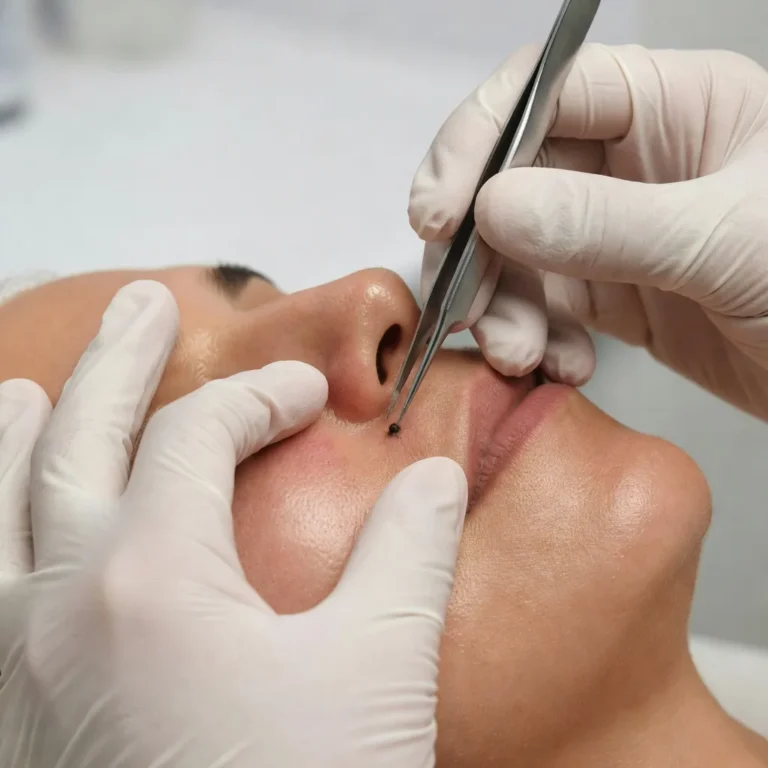
European Facial vs Basic Facial: Is There Really a Difference?
Spa menus love a good name. Classic facial, signature facial, deep cleansing facial, European facial. Read the descriptions closely and many of them list the same handful of steps in a slightly different order, which leaves a lot of people wondering whether the European version is worth choosing over the basic one.
Part of our guide to facial treatments. Start with: What Is a Spa Facial?
In most spas, a European facial and a basic facial are essentially the same treatment. Both usually include cleansing, exfoliation, steam, extractions, a mask, a short massage, and moisturizer. The European label mostly refers to the style’s roots in European skincare traditions, which emphasized cleansing, steam, and massage rather than machines or strong acids.
Where differences do appear, they tend to come from the individual spa rather than the name. One European facial might include a longer massage or more thorough extractions, while another spa’s basic facial might skip steam or extractions entirely to save time. In other words, two spas on the same street can offer very different treatments under identical names, and the same treatment under different names.
The smartest move is to ignore the name and ask what is actually included. Length, extractions, massage time, and the type of exfoliant matter far more to your results than the label on the menu.
This guide breaks down the typical steps, compares the two side by side, gives you a checklist of questions to ask before booking, and explains when it makes sense to upgrade to a more advanced treatment.
Shopping these picks?
Amazon Prime members get fast, free shipping on eligible items, plus Prime Video, Amazon Music and member deals. New members can start with a free trial.
Start a free Prime trialAged 18 to 24? Prime for Young Adults comes with a longer free trial and a lower price after it.
Affiliate link: we may earn a commission at no extra cost to you.
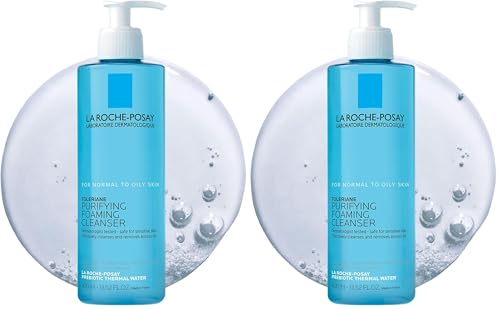
Recommended Products for a European-Style Facial at Home
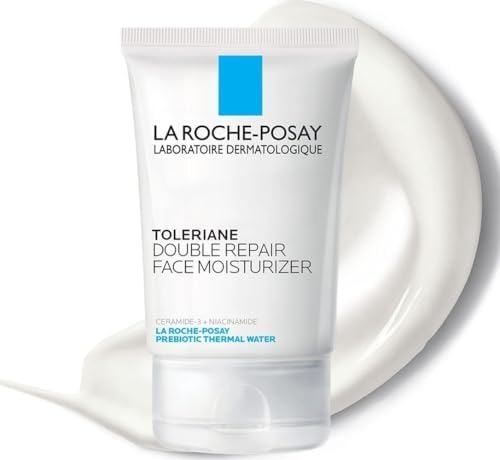

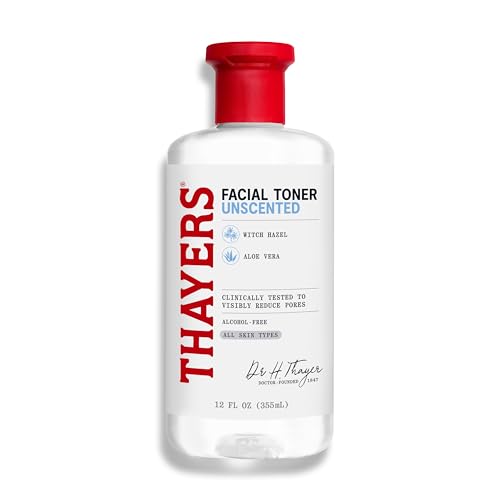

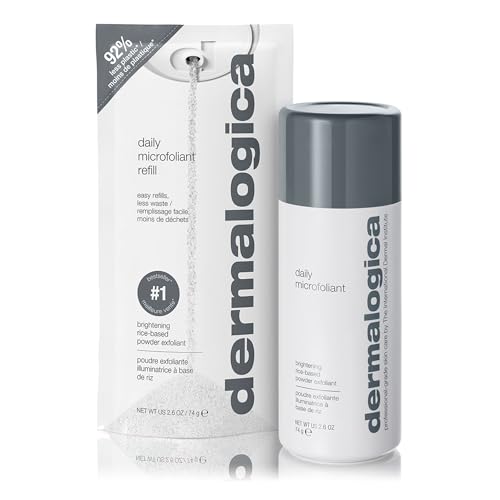

The Short Version
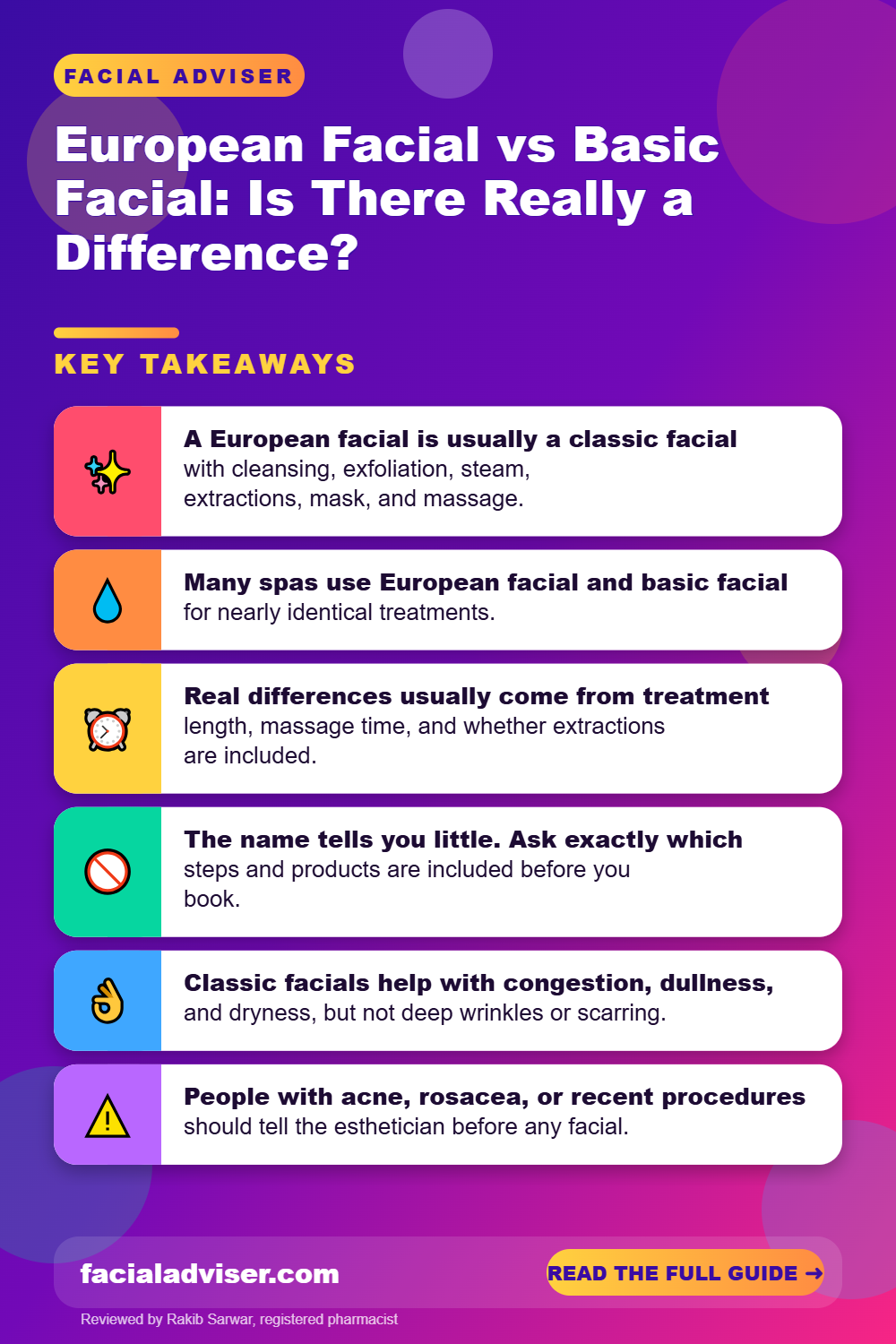
- A European facial is usually a classic facial with cleansing, exfoliation, steam, extractions, mask, and massage.
- Many spas use European facial and basic facial for nearly identical treatments.
- Real differences usually come from treatment length, massage time, and whether extractions are included.
- The name tells you little. Ask exactly which steps and products are included before you book.
- Classic facials help with congestion, dullness, and dryness, but not deep wrinkles or scarring.
- People with acne, rosacea, or recent procedures should tell the esthetician before any facial.
- A good daily routine will do more for your skin than any single facial.
Contents
- What a European Facial Usually Means
- The Typical Steps in Either Facial
- European Facial vs Basic Facial Side by Side
- Five Questions to Ask Before You Book
- What a Classic Facial Can Do for Your Skin
- How to Spot a Good Esthetician
- When to Upgrade to Something More Advanced
- What to Expect After Your Facial
- The Honest Limits of Any Facial
- Who Should Check With a Doctor First
- Questions People Ask
- Summing Up
What a European Facial Usually Means
The European facial grew out of spa traditions in countries such as France, Switzerland, and Germany, where facials centered on thorough cleansing, gentle steam, careful extractions, and relaxing massage. When the style became popular in North America, European became shorthand for this classic, hands-on approach.
Today, the term has no official definition. It is not regulated, and spas use it differently. For most, it signals a traditional facial without devices such as microdermabrasion or LED, and without strong chemical peels.
Basic facial is just as loose a term. At a busy salon it might mean a 30-minute cleanse, exfoliation, and mask. At a day spa it might be the full classic routine under a plainer name. Some spas even use basic for their entry-level option and European for the same treatment with a longer massage and a few premium products. That is why comparing the step list is more useful than comparing the titles.
If you want a deeper look at how spa facials are structured in general, our guide to what a spa facial involves explains each stage.
The Typical Steps in Either Facial
Most European and basic facials follow a similar sequence, usually over about 50 to 60 minutes:
- Skin analysis: the esthetician looks at your skin under a light and asks about concerns.
- Cleansing: often a double cleanse to remove makeup, sunscreen, and oil.
- Exfoliation: a gentle scrub, enzyme, or mild acid to smooth the surface.
- Steam: warm vapor to soften the skin before extractions.
- Extractions: manual clearing of blackheads and congested pores.
- Massage: a few minutes on the face, neck, and shoulders.
- Mask: clay for oily skin, hydrating or soothing for dry or sensitive skin.
- Finishing products: toner, serum, moisturizer, and sunscreen during the day.
Extractions are the step most likely to vary. Some basic facials leave them out entirely. If clearing blackheads is your main goal, confirm extractions are included.
European Facial vs Basic Facial Side by Side
| Feature | European facial | Basic facial |
|---|---|---|
| Core steps | Cleanse, exfoliate, steam, extract, mask, massage | Often the same, sometimes shortened |
| Typical length | About 60 minutes | About 30 to 60 minutes |
| Extractions | Usually included | Sometimes optional |
| Massage | Often longer, face, neck, shoulders | Often shorter or skipped |
| Devices or strong peels | Usually none | Usually none |
| Best for | Congestion, dullness, relaxation | Quick refresh, basic cleansing |
| Main question to ask | What exactly is included? | What exactly is included? |
If two spas list the same steps and length, the one with the more experienced esthetician is usually the better choice, whatever the name.
Five Questions to Ask Before You Book
These five questions reveal almost everything you need to know about a facial, regardless of its name. Ask them by phone, message, or at the front desk.
How long is the hands-on time?
Ask how many minutes are actually spent on your skin, not including check-in or changing. A 60-minute booking may only include 45 minutes of treatment.
Are extractions included?
If you have blackheads or congestion, extractions matter. Ask whether they are included and how long they typically spend on them.
What type of exfoliation is used?
Find out whether they use a scrub, enzyme, or acid. If you have sensitive skin, ask for the gentlest option.
Is the treatment customized?
Ask whether products change based on your skin type or whether everyone gets the same routine.
Who performs it?
Ask whether the esthetician is licensed and how long they have worked. Experience matters especially for extractions.
If the answers for a European facial and a basic facial are the same, book the one that fits your schedule and budget. You are paying for the same work.
What a Classic Facial Can Do for Your Skin
A classic facial is a practical, hands-on skin cleaning with a relaxing element. For many people, the biggest benefits are a deep clean, fewer visible blackheads, smoother texture after exfoliation, and skin that looks more hydrated for a few days.
There is also real value in the skin analysis. A good esthetician can spot things you may miss, such as dehydration, over-exfoliation, or products that do not suit you, and suggest changes to your home routine.
Scientific research on spa facials as a whole is limited. The individual steps make sense, but few studies have tested whether regular facials improve skin over time compared with a consistent home routine. That is worth remembering when a spa promises long-term results.
If your skin reacts easily, ask about fragrance in the products used. In North American Contact Dermatitis Group patch testing from 2019 to 2020, about 13 percent of tested patients reacted to a common fragrance mix, and fragrance-sensitive people were more likely to have facial dermatitis.
How to Spot a Good Esthetician
Because the name of a facial tells you so little, the person doing it matters most. A skilled esthetician adapts each step to your skin, knows when to skip extractions, and will tell you honestly if a facial is not the right tool for your concern.
- They ask about your routine, medications, allergies, and recent treatments before starting.
- They explain what they are doing and why, rather than following a script.
- They wear gloves for extractions and use clean, single-use or sterilized tools.
- They stop or adjust if something stings or hurts.
- They give simple, realistic home care advice rather than pushing a long list of products.
If an esthetician promises that a single facial will clear acne, erase wrinkles, or shrink pores for good, treat that as a warning sign. Good professionals set expectations that match what a facial can actually deliver.
When to Upgrade to Something More Advanced
A classic facial will not address deeper issues. If you are dealing with acne scars, sun damage, fine lines, or persistent acne, you may need a targeted treatment.
Good Habits
- Choose a classic facial for congestion and dullness.
- Book a chemical peel for uneven tone or mild sun damage.
- Consider microneedling for texture and shallow scars.
- See a dermatologist for persistent or cystic acne.
- Keep up a daily routine between treatments.
Common Mistakes
- Expect a facial to erase wrinkles.
- Book extractions right before a big event.
- Get a facial during an active skin infection.
- Combine multiple strong treatments in one week.
- Pick at your skin after extractions.
If you are weighing budget as well, our guide to what a European facial costs covers what affects pricing.
What to Expect After Your Facial
Mild redness, especially after extractions, usually fades within a few hours. Some people notice a few small breakouts in the following days as congested pores clear, which should settle within a week.
For the rest of the day, keep your routine simple. Skip heavy makeup, exfoliants, and retinoids for at least a day or two, and wear sunscreen, since freshly exfoliated skin is more sensitive to the sun.
Contact the spa or a doctor if redness, swelling, or pain increases after 24 hours, or if you see pus, crusting, or spreading redness, which could indicate infection.
The Honest Limits of Any Facial
No facial, European or otherwise, can permanently shrink pores, remove deep wrinkles, or clear hormonal acne. Results such as glow and smoothness usually last a few days to a week.
| Spa claim | Reality |
|---|---|
| Detoxifies the skin | Skin does not need to be detoxed; facials clean the surface |
| Shrinks pores permanently | Pores can look smaller briefly after cleansing |
| Anti-aging results | Sunscreen and retinoids do far more long term |
| Clears acne | Can help with blackheads, but acne needs ongoing treatment |
| European means higher quality | The name is not regulated; quality depends on the esthetician |
Seeing a facial as a treat and a professional check-in, rather than a cure, will help you get the most from it.
Who Should Check With a Doctor First
Talk to a dermatologist or doctor before booking a facial if you:
- Have active cystic acne, a skin infection, or cold sores.
- Have rosacea, eczema, or very sensitive skin that flares easily.
- Use prescription retinoids or took isotretinoin in the past six months.
- Had Botox, fillers, laser, or a peel in the past two weeks.
- Are pregnant and unsure which products are safe.
- Have a changing mole or a spot that bleeds or will not heal.
Medical disclaimer: This article is for general information and is not a substitute for professional medical advice. Consult a dermatologist about ongoing skin conditions before cosmetic treatments.
Questions People Ask
What is the difference between a European facial and a basic facial?
Often very little. Both usually include cleansing, exfoliation, steam, extractions, a mask, and massage. Differences depend on the spa.
Is a European facial worth it?
It can be, if it includes the steps you need, especially extractions and a good massage, and is done by an experienced esthetician.
How long does a European facial take?
Usually about 60 minutes, though the hands-on time may be a bit shorter.
Does a European facial include extractions?
Usually, but not always. Ask when booking if extractions matter to you.
How often should I get a facial?
Many estheticians suggest every four to six weeks, but a consistent home routine matters more.
Is a European facial good for acne?
It can help with blackheads and congestion, but inflammatory or cystic acne needs a dermatologist.
Can I wear makeup after a facial?
It is best to wait at least the rest of the day to let skin settle.
Will I break out after a facial?
Some people get a few spots as pores clear. Persistent breakouts may mean a product did not suit you.
Is a European facial safe during pregnancy?
Generally yes, but tell the esthetician so they can avoid certain ingredients and adjust positioning.
Can I do a European-style facial at home?
You can do a gentle version with cleansing, a mild exfoliant, a mask, and moisturizer. Skip extractions at home.
Summing Up
A European facial and a basic facial are usually the same classic treatment: cleansing, exfoliation, steam, extractions, a mask, and massage. The name signals a traditional, hands-on style, but it is not regulated, and the real differences come from the length, the steps included, and the skill of the esthetician.
Ask exactly what is included before booking, choose the option that covers what your skin needs, and treat any facial as a helpful extra to a consistent daily routine rather than a replacement for it.

Written by
Registered pharmacist and founder of Facial Adviser. Rakib's pharmacy training covers how skincare actives work and interact; a later course in cosmetology turned that into a focus on facial treatments and skincare products. He plans, researches and edits every guide on the site and checks health claims against sources such as the American Academy of Dermatology, the FDA and the NIH. He is not a dermatologist; see the Editorial Policy and Medical Disclaimer.
About · Editorial policy · How we choose products · Medical disclaimer · Contact
Keep reading: Spa and brand-name facials
- What Is a Spa Facial?
- Oxygen Facial at Home: Does It Actually Work?
- Sensiglow Facial Treatment: What It Actually Is
- Holistic Facial: What's Actually Included
- Ultrasound Facial: What the Evidence Actually Shows
- Red Carpet Facial: What You're Really Paying For
- Ultimate Guide Microdermabrasion: What to Know
- Facial vs Chemical Peel: Differences, Results and Which to Choose