Does Vitamin C Facial Cream Work?
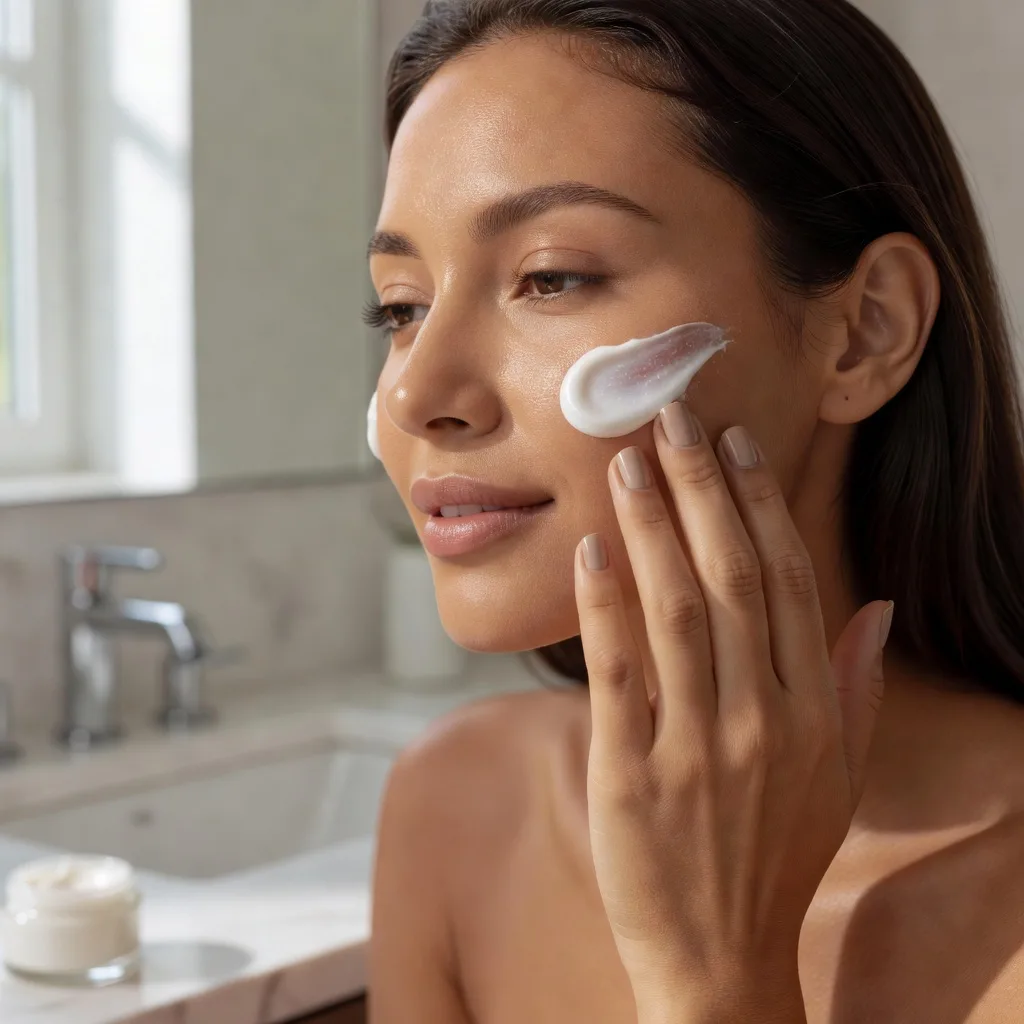
Does vitamin C facial cream work the same way a vitamin C serum does, just in a different format?
Part of our guide to skincare products. Start with: 10 Best Facial Moisturizers for Dry Skin (2026): Rich, Gentle Creams
Not exactly: a cream needs a more skin-neutral pH than a serum, which forces most vitamin C creams to rely on stabilized derivative forms with weaker proven skin-delivery evidence than pure L-ascorbic acid. A 2025 randomized trial testing an actual vitamin C cream found a real, significant pigmentation benefit over a base moisturizer, but no added benefit for wrinkles or elasticity.
That’s a more nuanced, more defensible finding than the blanket anti-aging claims common in vitamin C cream marketing.
This guide covers the real formulation chemistry behind cream vs. serum, what the one available cream-specific trial actually found, and how to judge a cream’s ingredient list for yourself.
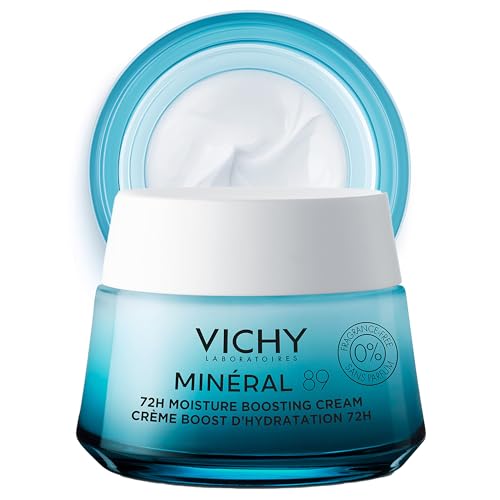
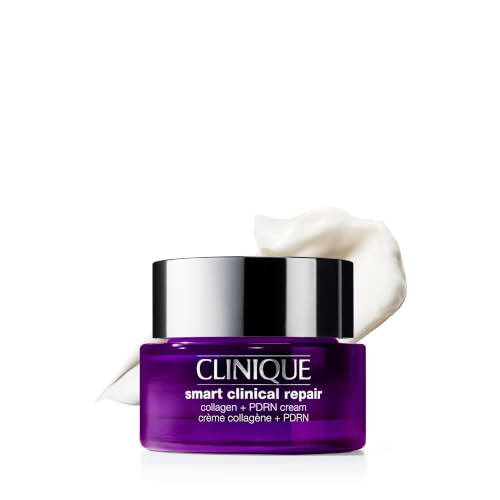
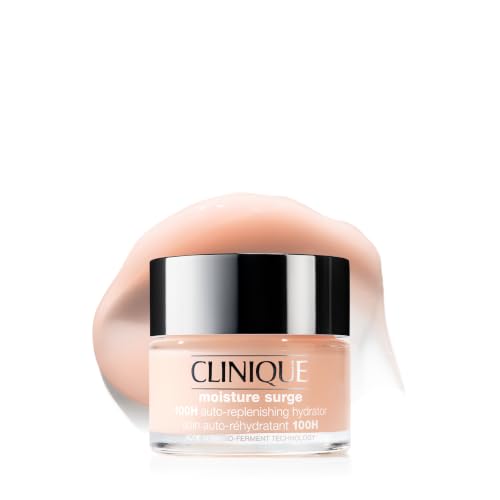
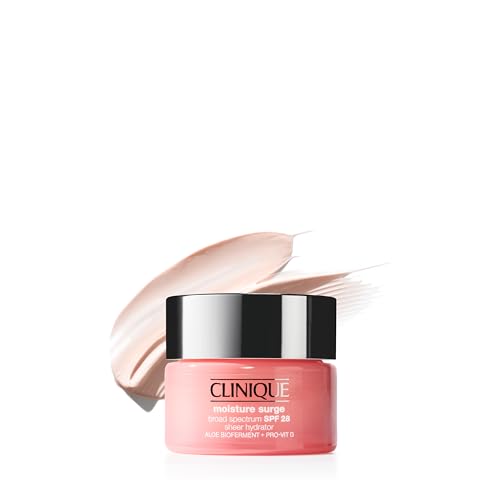
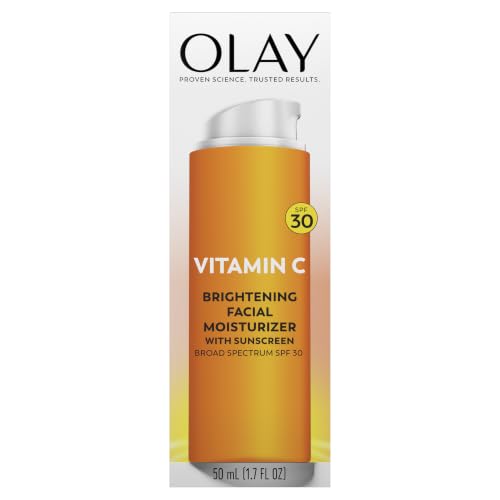
Recommended Vitamin C Creams and Moisturizers


The Core Facts
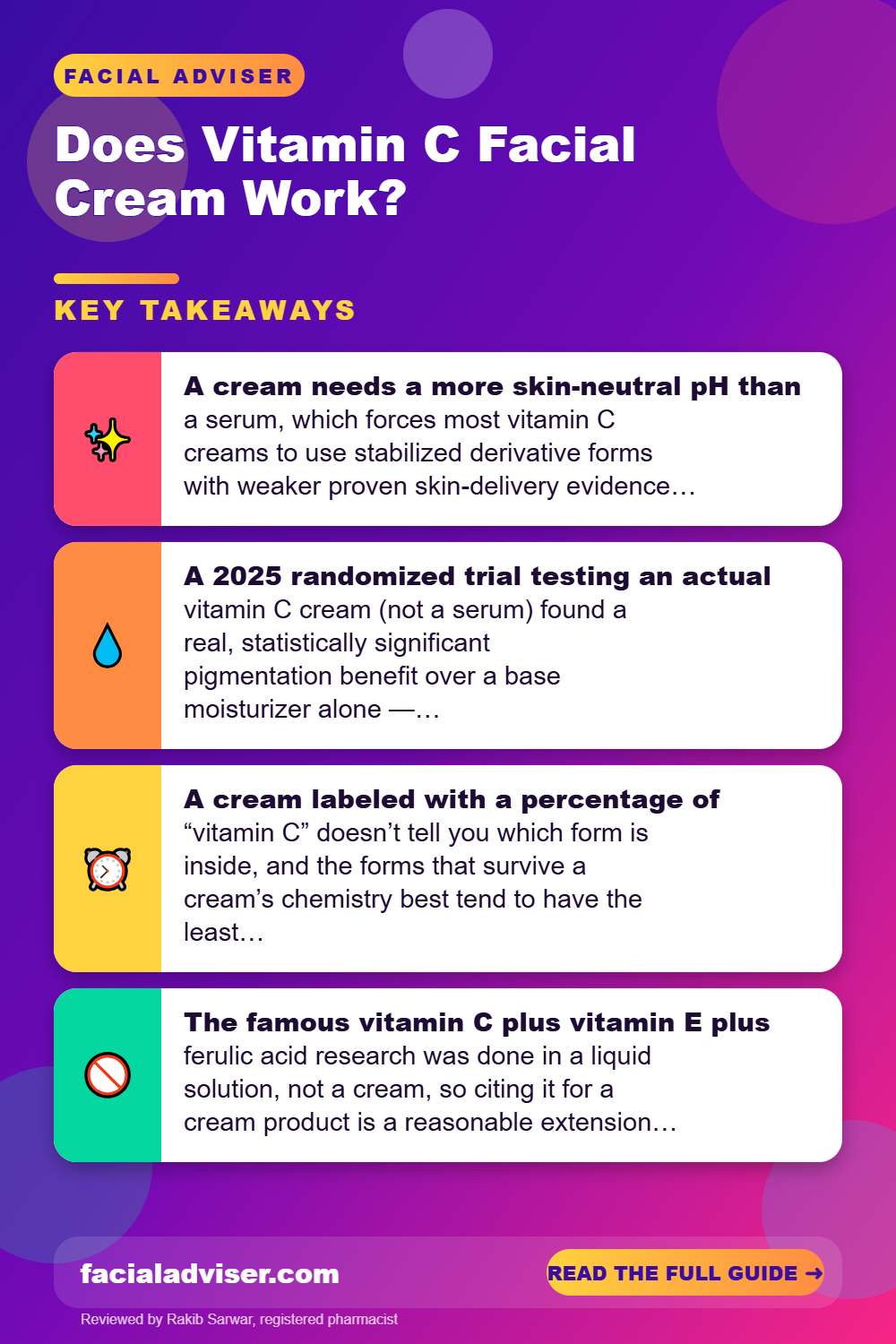
- A cream needs a more skin-neutral pH than a serum, which forces most vitamin C creams to use stabilized derivative forms with weaker proven skin-delivery evidence than pure L-ascorbic acid.
- A 2025 randomized trial testing an actual vitamin C cream (not a serum) found a real, statistically significant pigmentation benefit over a base moisturizer alone — but no added benefit for wrinkles or elasticity beyond that base cream.
- A cream labeled with a percentage of “vitamin C” doesn’t tell you which form is inside, and the forms that survive a cream’s chemistry best tend to have the least proven absorption.
- The famous vitamin C plus vitamin E plus ferulic acid research was done in a liquid solution, not a cream, so citing it for a cream product is a reasonable extension of the chemistry, not a direct replication.
Skip Ahead
- Why “Vitamin C Cream” Is a Different Question Than “Vitamin C Serum”
- The Stability Problem a Cream Base Creates
- The Forms of Vitamin C Actually Used in Creams
- What Concentration Ranges Actually Mean
- What a Real Vitamin C Cream Trial Found
- Cream-Friendly Forms, Side by Side
- The Ferulic Acid Pairing, and Its Real Origin
- Do This, Not That
- A Common Overclaim Worth Flagging
- A Practical Way to Judge a Cream’s Formulation
- How to Add a Vitamin C Cream to Your Routine
- Is There a Way to Tell If It’s Actually Working?
- When to Talk to a Dermatologist
- What This Evidence Doesn’t Tell Us
- Frequently Asked Questions
Why “Vitamin C Cream” Is a Different Question Than “Vitamin C Serum”
Vitamin C serums have a well-documented research base, largely built around L-ascorbic acid in a low-pH, water-or-alcohol-based solution. A daily-use vitamin C facial cream is a genuinely different product category, formulated as an emulsion meant to sit comfortably on skin under makeup or overnight, and that difference in vehicle changes what the vitamin C inside can actually do.
Shopping these picks?
Amazon Prime members get fast, free shipping on eligible items, plus Prime Video, Amazon Music and member deals. New members can start with a free trial.
Start a free Prime trialAged 18 to 24? Prime for Young Adults comes with a longer free trial and a lower price after it.
Affiliate link: we may earn a commission at no extra cost to you.
The Stability Problem a Cream Base Creates
L-ascorbic acid, the most biologically active and best-studied form of vitamin C, is hydrophilic and chemically unstable, degrading readily with exposure to air, heat, and light regardless of the product it’s in. Getting it to actually penetrate skin requires a formulation pH below roughly 3.5, which converts it into an uncharged, skin-penetrable form. That’s a manageable target in a simple aqueous or alcohol-based serum. It’s a much harder target in an emulsified cream, which typically needs a more skin-neutral pH to stay comfortable, stable, and non-irritating as a leave-on daily product. That single formulation constraint is the real, underlying reason vitamin C creams and vitamin C serums aren’t interchangeable products, even when both list “vitamin C” on the front label.
The Forms of Vitamin C Actually Used in Creams
Because pure L-ascorbic acid is hard to stabilize at a cream-appropriate pH, most vitamin C creams instead use derivative forms designed to survive a neutral-pH emulsion: ascorbyl palmitate, a lipophilic ester that’s stable at neutral pH but has less certain skin absorption, and magnesium ascorbyl phosphate (MAP), also stable at neutral pH. A review in the Journal of Clinical and Aesthetic Dermatology on topical vitamin C states plainly that daily application of MAP and ascorbyl palmitate “doesn’t reliably increase skin L-ascorbic acid levels” — meaning the derivative forms that survive a cream base best tend to be the ones with the weakest proven skin-delivery evidence. That’s a real tension worth knowing before assuming a cream delivers the same biological activity as a serum simply because both list a vitamin C percentage.
What Concentration Ranges Actually Mean
The same review describes biological significance generally requiring concentrations above about 8%, with an optimal range cited around 10 to 20%, and no added benefit (plus more irritation risk) above 20%. The Linus Pauling Institute, a research-focused, non-commercial reference source, reports that human trials have used concentrations from 0.6% up to 10% without adverse effects, that maximal cutaneous absorption of ascorbic acid occurs around 20%, and — a genuinely underused point — that concentrations higher than that show lower absorption, not more. Absorption isn’t a simple “more is better” curve.
| Concentration | What the research says |
|---|---|
| Below ~8% | Generally below the threshold cited for biological significance |
| ~10–20% | Cited as the optimal range for L-ascorbic acid specifically |
| Above 20% | No added benefit reported, and cutaneous absorption may actually decrease |
The practical catch for a cream shopper: a cream’s percentage claim doesn’t specify which form of vitamin C is being measured, and a “10% vitamin C cream” built on MAP or ascorbyl palmitate isn’t demonstrated to deliver the same bioactivity as a 10% L-ascorbic acid serum, even though the number on the label looks identical.
What a Real Vitamin C Cream Trial Found
Most of the strongest vitamin C research was conducted in serum or solution form, which makes a 2025 trial specifically testing a cream especially relevant here. Published in Cosmetics, the study randomized 91 women aged 30 to 50 to either a hyaluronic-acid-only cream or a hyaluronic-acid-plus-1%-vitamin-C cream, applied twice daily for eight weeks. Hyperpigmentation reduction was significantly greater in the vitamin C group — 56% versus 30%, a 26-percentage-point difference. Photoaging score, wrinkle appearance, and skin elasticity all improved in both groups by similar amounts, meaning vitamin C’s specific added value in this cream format showed up clearly for pigmentation, not for wrinkles or elasticity beyond what the base hyaluronic acid cream already delivered on its own.
That’s a more nuanced, more defensible claim than blanket “vitamin C cream erases wrinkles” marketing, and it’s worth noting the study used just 1% vitamin C — well below the 10-20% range cited as optimal for L-ascorbic acid serums, but a concentration that’s more realistic for a stable, tolerable daily cream formulation.
Cream-Friendly Forms, Side by Side
| Form | Stability at cream-neutral pH | Skin-delivery evidence |
|---|---|---|
| L-ascorbic acid | Poor; degrades quickly outside a low-pH formulation | Strongest, but mostly demonstrated in low-pH serums, not creams |
| Ascorbyl palmitate | Good | Uncertain/limited skin absorption |
| Magnesium ascorbyl phosphate (MAP) | Good | Reviewed literature states it doesn’t reliably raise skin ascorbic acid levels with daily use |
The Ferulic Acid Pairing, and Its Real Origin
A frequently cited 2005 study in the Journal of Investigative Dermatology found that ferulic acid chemically stabilized a combination of 15% L-ascorbic acid and 1% alpha-tocopherol (vitamin E), and roughly doubled its photoprotective effect against simulated solar radiation, measured through reduced sunburn-cell formation, reduced UV-triggered cell death, and reduced DNA damage. This is the research foundation behind popular vitamin C plus E plus ferulic acid serums. It’s worth being precise, though: that landmark study used a liquid solution at a high, serum-appropriate concentration and low pH — not a cream. The antioxidant-stabilization chemistry is real and reasonably extends in principle to a cream formulation, but a cream product citing this research is drawing on the same underlying chemistry, not replicating the exact study’s result in cream form.
Do This, Not That
Do
- Check the ingredient list for the specific form of vitamin C, not just the percentage on the front of the jar.
- Expect a realistic benefit profile: pigmentation and antioxidant support are better supported than dramatic wrinkle reversal from a cream specifically.
- Store your cream away from direct light and heat, and replace it if it turns noticeably darker or develops an odd smell — a sign of oxidation.
- Pair it with daily sunscreen, since vitamin C supports rather than replaces UV protection.
Don’t
- Don’t assume a higher percentage automatically means more delivered bioactivity, especially with derivative forms.
- Don’t expect a 1%-vitamin-C cream to perform like a 15-20% L-ascorbic acid serum — they’re different products with different evidence bases.
- Don’t apply it to broken or actively irritated skin without checking tolerance first.
- Don’t rely on it as your only anti-aging step; the strongest evidence still favors consistent sunscreen and, separately, retinoids.
A Common Overclaim Worth Flagging
A Practical Way to Judge a Cream’s Formulation
How to Add a Vitamin C Cream to Your Routine
Patch test first
Apply a small amount to your inner forearm for a few days before using it on your face, especially if you have sensitive skin.Apply to clean, dry skin
Use it in the morning after cleansing and before sunscreen, or as directed by the specific product.Give it time
The cream trial discussed above measured results over eight weeks, so expect a similar timeline rather than immediate change.Store it properly
Keep it away from direct sunlight and heat to slow oxidation of the vitamin C inside.Pair it with sunscreen
Vitamin C is an antioxidant support step, not a replacement for daily broad-spectrum sun protection.
Is There a Way to Tell If It’s Actually Working?
There’s no home test that measures how much active vitamin C is actually reaching your living skin cells versus sitting inert on the surface. The closest practical substitute is simply tracking visible pigmentation over the same roughly eight-week window used in the cream trial discussed above, since that’s the timeframe in which a real, measured effect showed up in that study — expecting a faster or more dramatic result isn’t supported by the available research.
When to Talk to a Dermatologist
See a dermatologist if you’re dealing with stubborn hyperpigmentation, melasma, or significant photoaging that over-the-counter vitamin C hasn’t meaningfully improved after a couple of months of consistent use — prescription-strength options like hydroquinone, tretinoin, or in-office treatments have a stronger evidence base for more significant pigmentation concerns than a daily cream alone.
What This Evidence Doesn’t Tell Us
To be direct: there’s only one identified randomized trial testing a vitamin C cream specifically (rather than a serum or solution), and it used a single, relatively low concentration (1%) paired with hyaluronic acid, over eight weeks, in 91 women. That’s a real, useful data point, not a comprehensive picture of every vitamin C cream formulation or concentration on the market. The honest position is that vitamin C creams have a real, if modest and pigmentation-specific, evidence base — not the broad anti-aging transformation implied by a lot of product marketing.
Frequently Asked Questions
Does vitamin C facial cream work?
A 2025 randomized trial found a real, significant pigmentation benefit from a vitamin C cream over a base moisturizer alone, though wrinkle and elasticity improvements were similar between groups.
Is a vitamin C cream the same as a vitamin C serum?
Not necessarily; creams often rely on different, more stable forms of vitamin C than serums, and those forms have weaker proven skin-delivery evidence than the L-ascorbic acid typically used in serums.
What concentration of vitamin C should a cream have?
Research on L-ascorbic acid cites 10 to 20% as an optimal range, though cream-specific research has tested lower concentrations like 1% with measurable pigmentation benefit.
What form of vitamin C is best in a cream?
L-ascorbic acid is the most studied and biologically active form, but it’s harder to stabilize in a cream, so many creams use magnesium ascorbyl phosphate or ascorbyl palmitate instead, which have less certain absorption.
Can vitamin C cream fade dark spots?
A randomized trial found a significantly greater reduction in hyperpigmentation with a vitamin C cream compared to a base moisturizer alone.
Does vitamin C cream reduce wrinkles?
In the available cream-specific trial, wrinkle improvement was similar between the vitamin C group and the base moisturizer group, suggesting the added wrinkle benefit specifically from vitamin C was not distinguished from the base cream’s effect.
Should I use vitamin C cream or serum?
Serums generally use higher, better-absorbed concentrations of L-ascorbic acid, while creams offer a different, more stable but often lower-potency delivery approach; both have a place depending on your goals and tolerance.
Does vitamin C cream need to be paired with vitamin E and ferulic acid?
The research behind that pairing was done in a liquid solution, not a cream, so it supports the underlying antioxidant chemistry rather than proving an identical result in cream form.
How long does it take for vitamin C cream to work?
The available randomized trial measured results over eight weeks of twice-daily use, so a similar timeline is a reasonable expectation.
When should I see a dermatologist about pigmentation instead of using a cream?
If hyperpigmentation or melasma doesn’t meaningfully improve after a couple of months of consistent vitamin C cream use, a dermatologist can offer prescription-strength options with stronger evidence for more stubborn cases.

Written by
Registered pharmacist and founder of Facial Adviser. Rakib's pharmacy training covers how skincare actives work and interact; a later course in cosmetology turned that into a focus on facial treatments and skincare products. He plans, researches and edits every guide on the site and checks health claims against sources such as the American Academy of Dermatology, the FDA and the NIH. He is not a dermatologist; see the Editorial Policy and Medical Disclaimer.
About · Editorial policy · How we choose products · Medical disclaimer · Contact
Keep reading: Moisturisers and face oils
- 10 Best Facial Moisturizers for Dry Skin (2026): Rich, Gentle Creams
- Facial Oil vs Essential Oil: Why One Moisturizes and the Other Can Irritate
- Facial Oil vs Serum: Which Does Your Skin Need, and Which Goes First?
- Facial Moisturizer vs Body Lotion: Can You Use Lotion on Your Face?
- Day Cream vs Day Lotion for Your Face: Which Texture Does Your Skin Need?
- Skincode Exclusive Cellular Night Refine and Repair Cream: Is It Worth It?
- What Does a Facial Toner Do? The Real Answer
- 10 Best Facial Cleansers for Combination Skin (2026): Balanced Picks