10 Best Facial Oils for Acne-Prone Skin (2026): Light, Low-Clog Picks
Putting oil on skin that breaks out sounds like a bad idea, and for some people it is. But not all oils behave the same way, and some lightweight oils are well tolerated by acne-prone skin, especially when it is dry from acne treatments. This list covers 10 options, from pure jojoba and squalane to rosehip oils and finished blends.
Part of our guide to skincare products. Start with: 10 Best Facial Moisturizers for Dry Skin (2026): Rich, Gentle Creams
The best facial oils for acne-prone skin are light, stable oils such as squalane, jojoba and rosehip seed oil, used in small amounts. Squalane is very light and rarely clogs pores, jojoba is a wax ester that resembles skin oil, and rosehip is rich in linoleic acid, which some research links to less clogged skin. None of them treats acne on its own. Heavy oils such as coconut oil are more likely to cause breakouts. Comedogenic ratings are only a rough guide, so patch test any new oil and stop if you notice new bumps within a few weeks.
In short: choose a light oil, use two or three drops, introduce it slowly and keep your proven acne treatments in place.
The American Academy of Dermatology advises people with acne to use skincare labelled non-comedogenic or oil-free and to avoid products that irritate the skin, so any oil you add needs to earn its place.
Below you will find the ten picks, how we chose them, which oils are lighter, what the evidence really shows, why comedogenic ratings are imperfect, what to know about tea tree oil and how to add an oil without triggering breakouts.
Shopping these picks?
Amazon Prime members get fast, free shipping on eligible items, plus Prime Video, Amazon Music and member deals. New members can start with a free trial.
Start a free Prime trialAged 18 to 24? Prime for Young Adults comes with a longer free trial and a lower price after it.
Affiliate link: we may earn a commission at no extra cost to you.
As an Amazon Associate we earn from qualifying purchases. This does not change which products we include.


What This Covers
- The 10 Best Facial Oils for Acne-Prone Skin Right Now
- How We Chose These Products
- Can You Use Facial Oil If You Have Acne?
- Lighter Oils Compared: Squalane, Jojoba and Rosehip
- The Honest Evidence on Oils and Acne
- Why Comedogenic Ratings Are Imperfect
- Tea Tree Oil: Evidence and Irritation Risk
- Oils and Products to Avoid on Acne-Prone Skin
- How to Choose a Good-Quality Facial Oil
- How to Patch Test a New Facial Oil
- How to Add a Facial Oil to an Acne-Prone Routine
- Honest Limits of Facial Oils for Acne
- When to See a Dermatologist
- Frequently Asked Questions
- Summing Up
At a Glance
- Yoken Organic Jojoba Oil is our top pick: pure, single-ingredient jojoba that is easy to patch test.
- BIOSSANCE Squalane and Vitamin C Rose oil is the premium pick, with a light squalane base.
- PAI Rosehip BioRegenerate suits skin that is dry from acne treatments.
- No facial oil clears acne by itself; keep using proven acne treatments.
- Coconut oil and other heavy oils are more likely to clog pores.
- Use two or three drops at most, and introduce a new oil on its own.
- Patch test for a few weeks and stop if you see new bumps.
The 10 Best Facial Oils for Acne-Prone Skin Right Now
These ten oils were shortlisted from widely reviewed Amazon listings and ranked by how light and simple each oil is, how clearly the listing describes it and how well it fits the lighter oils discussed in this guide. None of them treats acne, so keep your proven acne products in place.
| # | Product | Best For | Standout Feature | |
|---|---|---|---|---|
| 1 | Yoken Organic Jojoba Oil (Bulk) | Oily or combination skin needing a little moisture | Pure, single-ingredient organic jojoba | View |
| 2 | BIOSSANCE Squalane and Vitamin C Rose Oil | Dull, dehydrated acne-prone skin | Squalane base with vitamin C | View |
| 3 | PAI Organic Rosehip BioRegenerate Oil | Skin dried out by acne treatments | Organic rosehip for sensitive skin | View |
| 4 | Leven Rose Rosehip Seed Oil (Large) | Face, body, hair and cuticles | Unrefined rosehip for head to toe | View |
| 5 | OPO Olive Squalane Oil | Oily skin that dislikes any residue | Olive-derived, quick-absorbing squalane | View |
| 6 | Cliganic Organic Jojoba Oil | Jojoba fans who want a pump | USDA organic jojoba with a pump | View |
| 7 | Trilogy Certified Organic Rosehip Oil | Trying rosehip without waste | Small organic rosehip bottle | View |
| 8 | velona Golden Jojoba Oil (Unrefined) | Removing sunscreen before washing | Unrefined, fragrance-free golden jojoba | View |
| 9 | BIOSSANCE 100% Squalane Oil | Oily skin that wants minimal oil | Sugarcane-derived pure squalane | View |
| 10 | Blue Tansy Face Oil for Blemish-Prone Skin | Fans of calming botanical blends | Blue tansy blend labelled non-comedogenic | View |
Yoken Organic Jojoba Oil (Bulk)

Best for: Oily or combination skin needing a little moisture
The Yoken Organic Jojoba Oil earns the top spot because jojoba is one of the lightest, most stable oils for acne-prone skin, and this listing is clear that it is pure, cold-pressed and organic, with EWG Verified status. Jojoba is a liquid wax that resembles skin’s own oil, so many people find it moisturises without feeling heavy.
The listing describes it as light and very gentle, and a single-ingredient oil makes it easier to work out what your skin is reacting to. The gallon size is far more than a face needs, so decant a little into a small dark dropper bottle and store the rest somewhere cool. It is plainer than the #2 BIOSSANCE blend, which is the point.
- Pure, cold-pressed organic jojoba
- EWG Verified
- Light texture, described as very gentle
- Large gallon bulk size
Pros
- Single ingredient makes patch testing simple
- Light, stable oil
- Works for face, body and oil cleansing
Cons
- Gallon size is impractical without decanting
- No added skincare ingredients
Skip it if: Skip it if you want a ready-to-use face oil in a dropper; the Trilogy or BIOSSANCE picks suit you better.
Check Price on AmazonBIOSSANCE Squalane and Vitamin C Rose Oil

Best for: Dull, dehydrated acne-prone skin
The BIOSSANCE Squalane and Vitamin C Rose Advanced Facial Oil is the most complete finished product on this list. It uses squalane, one of the lightest oils for acne-prone skin, as its base, then adds a vitamin C ingredient for radiance, Chios crystal oil and Damascus rose extract for a more luxurious feel.
That makes it appealing if your skin is both breakout-prone and dull or dehydrated. The trade-off is more ingredients, and rose extract adds scent that can bother sensitive skin. It is richer and more complex than the #9 BIOSSANCE 100% Squalane, so patch test on the jaw for two to three weeks before using it all over.
- Squalane-based facial oil
- Vitamin C for a radiance boost
- Chios crystal oil
- Damascus rose extract
Pros
- Light squalane base
- Extra skincare ingredients in one step
- Elegant, finished product
Cons
- Rose extract adds scent
- More ingredients to patch test than single oils
Skip it if: Skip it if your skin reacts to fragrance; the #9 BIOSSANCE 100% Squalane is simpler.
Check Price on AmazonPAI Organic Rosehip BioRegenerate Oil

Best for: Skin dried out by acne treatments
The PAI Rosehip BioRegenerate Oil is an organic rosehip face oil that the listing describes as suitable for all skin types, even sensitive. Rosehip seed oil is rich in linoleic acid, and it contains omegas 3, 6 and 9 plus antioxidant carotenoids, which is why it is often chosen for dry, dull skin during acne treatment.
The listing makes bold claims about scars and blemish healing, which we have not repeated; any oil mainly helps with comfort and dryness. It is a smaller, more premium bottle than the #4 Leven Rose, which helps because rosehip oxidises faster than jojoba or squalane. Use two or three drops at night.
- Organic rosehip face oil
- Omegas 3, 6 and 9
- Antioxidant carotenoids
- Suitable for all skin types, including sensitive
Pros
- Linoleic-rich rosehip oil
- Good for dryness from acne treatments
- Sensible bottle size for a fresher oil
Cons
- Rosehip oxidises faster than jojoba or squalane
- Some acne-prone skin still reacts to rosehip
Skip it if: Skip it if you are very oily and not dry at all; a squalane pick will feel lighter.
Check Price on AmazonLeven Rose Rosehip Seed Oil (Large)
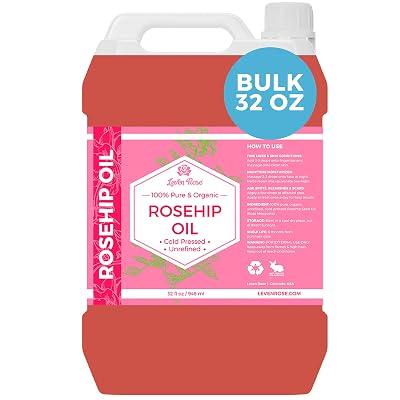
Best for: Face, body, hair and cuticles
The Leven Rose Rosehip Seed Oil is an unrefined, cold-pressed rosehip oil in a large bottle, which the listing describes as a multi-tasking oil for face, body, hair, lips and cuticles. It suggests two to three drops at night on the face, which matches the small amounts recommended in this guide.
Unrefined rosehip has a stronger colour and scent than refined oils, and it goes off faster, so this big bottle suits people who will also use it on the body or hair. Compared with the #3 PAI oil, it is less polished but more flexible. Keep it cool and out of sunlight and decant a small amount for your face.
- Unrefined, cold-pressed rosehip seed oil
- For face, body, hair, lips and cuticles
- Two to three drops at night on the face
- Large bottle size
Pros
- Very versatile
- Linoleic-rich rosehip
- Simple single-ingredient oil
Cons
- Large bottle may oxidise before you finish it
- Unrefined oil has a stronger scent
Skip it if: Skip it if you only want a face oil; the Trilogy or PAI bottles stay fresher.
Check Price on AmazonOPO Olive Squalane Oil

Best for: Oily skin that dislikes any residue
The OPO Squalane Oil is a plant-derived squalane made from olives, and the listing describes it as non-comedogenic, non-irritating and suitable for all skin types. Squalane is a stable, saturated oil that feels almost weightless, so it is one of the easiest oils to try if your skin is oily but tight from acne treatments.
It is described as quick-absorbing and super light, with no harsh additives or fillers. It is lighter in feel than jojoba picks such as the #1 Yoken or #6 Cliganic. Like the Yoken, it comes in a large bottle, so decant a small amount for daily use and keep the rest sealed and cool.
- Plant-derived squalane from olives
- Described as non-comedogenic and non-irritating
- Quick-absorbing, super light texture
- Free of harsh additives and fillers
Pros
- Very light, almost weightless feel
- Single ingredient for easy patch testing
- Suits oily and combination skin
Cons
- Large bottle is more than a face needs
- Moisturises only; no acne-fighting effect
Skip it if: Skip it if you want a small bottle to try first; the BIOSSANCE 100% Squalane is more compact.
Check Price on AmazonCliganic Organic Jojoba Oil

Best for: Jojoba fans who want a pump
The Cliganic Organic Jojoba Oil is a USDA certified organic, single-ingredient jojoba oil with no synthetic additives or fillers, according to the listing. It is also non-GMO certified, vegan and cruelty-free, and the bulk bottle comes with a pump, which makes it tidier to use than pouring from a large bottle.
It offers the same light, skin-like feel as the #1 Yoken jojoba in a more manageable size. A pump dispenses more than you need for the face, so pump once into your palm and use only two or three drops. It also works well as an oil cleanser to remove sunscreen before your usual face wash.
- USDA certified organic jojoba
- 100% pure single ingredient
- Non-GMO, vegan and cruelty-free
- Bulk bottle with pump
Pros
- Clear certification details
- Pump makes it easy to use
- Light, stable jojoba
Cons
- Pump can dispense too much for the face
- Still a large bottle for face use only
Skip it if: Skip it if you want squalane’s lighter feel; the OPO or BIOSSANCE squalane picks suit you better.
Check Price on AmazonTrilogy Certified Organic Rosehip Oil

Best for: Trying rosehip without waste
The Trilogy Certified Organic Rosehip Oil is a cold-pressed, organic rosehip seed oil in a small dropper bottle. The listing suggests just three drops twice a day and says one bottle lasts around five to six months, which suits a careful introduction on acne-prone skin and keeps the oil fresher than a large bottle.
It is rich in essential fatty acids, and the listing positions it as an intensive nourishing oil. That makes it best for dry areas rather than oily ones. Compared with the #4 Leven Rose, it is a more convenient size for the face only. Start with every other night and watch for new bumps.
- Cold-pressed certified organic rosehip
- Rich in essential fatty acids
- Three drops twice a day
- Lasts several months with daily use
Pros
- Small bottle stays fresher
- Dropper makes small doses easy
- Good for dry patches
Cons
- Rosehip can still cause breakouts in some people
- Rich feel may be too much for very oily skin
Skip it if: Skip it if your skin is very oily all over; a squalane pick will suit you better.
Check Price on Amazonvelona Golden Jojoba Oil (Unrefined)

Best for: Removing sunscreen before washing
The velona Jojoba Oil is an unrefined golden jojoba that the listing says is cold pressed, undiluted and free of additives, fragrance and alcohol. It is described as a lightweight liquid wax for daily skin and body care, and as suitable for use as part of a makeup cleansing routine, which is where it stands out.
Oil cleansing can help remove water-resistant sunscreen and makeup before a gentle wash, which suits acne-prone skin better than scrubbing. Unrefined jojoba has a slightly stronger colour and scent than the refined #6 Cliganic. Always follow oil cleansing with a gentle cleanser so no residue is left on the skin.
- Unrefined, cold-pressed golden jojoba
- No additives, fragrance or alcohol
- Lightweight liquid wax texture
- Suitable for makeup cleansing
Pros
- Fragrance-free and additive-free
- Good first step for removing sunscreen
- Also useful for body and hair
Cons
- Large bottle for face use
- Unrefined oil has a natural scent
Skip it if: Skip it if you only want a leave-on face oil; the Trilogy or BIOSSANCE picks are more convenient.
Check Price on AmazonBIOSSANCE 100% Squalane Oil

Best for: Oily skin that wants minimal oil
The BIOSSANCE 100% Squalane Oil is a vegan face and body oil made from sugarcane-derived squalane. It is the simpler sibling of the #2 BIOSSANCE blend, with no added vitamin C or rose, so it is a better choice if your skin is sensitive or you want to test squalane on its own before trying a blend.
Squalane is one of the least likely oils to clog pores, but individual reactions are always possible. It comes in a compact bottle that suits face use better than the large #5 OPO. As our information comes mainly from the listing title, read the full ingredient list to confirm it contains squalane alone.
- 100% squalane oil
- Derived from organic sugarcane
- Vegan face and body oil
- Compact bottle size
Pros
- Very light, simple formula
- Good for testing squalane alone
- Easy face-size bottle
Cons
- Limited listing detail beyond the title
- Moisturises only; no acne treatment effect
Skip it if: Skip it if you want added skincare ingredients; the #2 BIOSSANCE blend offers more.
Check Price on AmazonBlue Tansy Face Oil for Blemish-Prone Skin

Best for: Fans of calming botanical blends
The Blue Tansy Face Oil is a vegan facial serum oil that its title describes as calming and made for blemish-prone skin, and it is labelled non-comedogenic. It suits people who want a finished blend aimed specifically at breakouts rather than a single carrier oil like the jojoba and squalane picks.
Botanical blends carry a higher chance of irritation than single oils, and plant extracts can bother sensitive skin. Our information comes mainly from the listing title, so read the full ingredient list for essential oils before use. Compared with the #9 BIOSSANCE squalane, it is more complex, so patch test for a few weeks.
- Blue tansy facial oil blend
- Labelled non-comedogenic
- Aimed at blemish-prone skin
- Vegan formula
Pros
- Designed with blemish-prone skin in mind
- Finished blend in one bottle
- Non-comedogenic label
Cons
- Botanical blend has higher irritation risk
- Limited listing detail beyond the title
Skip it if: Skip it if your skin is sensitive or reacts to plant extracts; choose a single oil such as squalane.
Check Price on AmazonHow We Chose These Products
We shortlisted facial oils from Amazon listings that are highly rated by a large number of shoppers, favouring established brands and the lighter oils discussed in this guide: jojoba, squalane and rosehip seed oil. We then checked each product’s listed features against the guidance cited in this post, including the AAD’s advice that people with acne choose non-comedogenic products and avoid irritation.
These are research-based picks, not hands-on lab tests. We have not assessed how any oil behaves on acne-prone skin ourselves, and none of these oils treats acne. We left out sunscreens and other off-topic items, heavy oils such as coconut, and near-duplicate sizes, and we have not repeated listing claims about scars or blemish healing.
- Strong ratings from a large number of shoppers
- Established brands and lighter oils preferred
- Single-ingredient oils favoured for easier patch testing
- Listed features checked against the cited AAD guidance
- Products with thin or unclear listings excluded or ranked lower
Can You Use Facial Oil If You Have Acne?
Acne develops when oil, dead skin cells and bacteria block hair follicles, leading to inflammation. It is reasonable to worry that adding more oil would make this worse, and heavy, pore-clogging oils can.
However, many people with acne also have dry, flaky or irritated skin, especially if they use benzoyl peroxide, salicylic acid or retinoids. For them, a small amount of a light oil can make skin feel more comfortable and help them stick with their acne treatment. Oil is not essential, though. A non-comedogenic moisturiser does the same job for most people. Our guide on whether facial oils clog pores covers the basics.
Facial oils are emollients: they soften skin and reduce water loss. They do not add water. If your skin feels tight and dehydrated, a humectant moisturiser or serum under the oil will help more than oil alone.
Lighter Oils Compared: Squalane, Jojoba and Rosehip
These three oils are the most common choices for acne-prone skin because they are light and generally well tolerated. Each has a different profile.
| Oil | What it is | Why people with acne choose it | Watch out for |
|---|---|---|---|
| Squalane | Saturated, stable form of squalene, usually plant-derived | Very light, absorbs fast, rarely clogs pores | Only a moisturiser; no acne-fighting effect |
| Jojoba | Liquid wax ester similar to skin’s own oil | Light feel, stable, suits combination skin | A few people still break out |
| Rosehip seed | Oil rich in linoleic acid | Linoleic acid may help less clogged skin; good for dryness | Oxidises quickly; buy small bottles and store cool |
| Grapeseed, hemp seed | Light oils high in linoleic acid | Thin texture | Less research on the face; go rancid easily |
| Marula, argan | Medium-weight oils | Nourishing for dry skin | Heavier; may not suit very oily skin |
If your skin is oily and breakout prone, squalane is usually the safest place to start. If it is dry or you use a retinoid, rosehip or jojoba may feel more comforting. Our guide on which face oil suits combination skin compares more options.
The Honest Evidence on Oils and Acne
Research on facial oils and acne is limited. Most studies are small, use oils in combination with other ingredients or were done in labs rather than on real faces.
There is some evidence that people with acne have lower levels of linoleic acid in their skin oil, and one small study found that applying linoleic acid reduced the size of tiny clogged pores. This is why linoleic-rich oils such as rosehip and grapeseed are often suggested. Jojoba has been included in small studies of clay masks and wound healing, and squalane is widely used because it is stable and non-irritating. None of this shows that an oil can treat acne. The honest summary is that the right oil may be neutral or helpful for comfort, while the wrong one can make breakouts worse.
Why Comedogenic Ratings Are Imperfect
You will often see oils given a comedogenic rating from 0 to 5, where 0 means it will not clog pores and 5 means it is very likely to. These scales are useful as a rough guide, but they have real limits.
| Limitation | Why it matters |
|---|---|
| Old testing methods | Many ratings come from rabbit ear tests from decades ago, which are more sensitive than human skin |
| Pure ingredient only | Ratings test the raw oil, not a finished product at a lower concentration |
| Varied sources | Different lists give different scores for the same oil |
| Individual skin | Your skin may react to an oil rated 0 or tolerate one rated 3 |
Use ratings to steer away from obvious risks, such as coconut oil, which is widely listed as highly comedogenic, but trust how your own skin responds over several weeks more than any number.
Tea Tree Oil: Evidence and Irritation Risk
Tea tree oil is an essential oil, not a carrier oil like squalane or jojoba. It is often promoted for acne, and some small studies suggest a gel containing about 5 percent tea tree oil can reduce mild acne, though more slowly than benzoyl peroxide.
The downsides are real. Tea tree oil can cause dryness, stinging and allergic contact dermatitis, and the risk grows when it is used undiluted or after it has oxidised with age. Our guide on facial oil vs essential oil explains why these two categories behave so differently.
Never apply undiluted tea tree oil or other essential oils to your face. Neat essential oils can burn and sensitise the skin, and a reaction can make acne-prone skin look worse for weeks. If you try tea tree, choose a ready-made low-strength product and patch test it first.
Oils and Products to Avoid on Acne-Prone Skin
Some oils and oil-based products are more likely to cause problems if you break out easily.
- Coconut oil, which is widely considered highly comedogenic.
- Cocoa butter and heavy butters on the face.
- Wheat germ oil and other very rich oils.
- Blends packed with fragrance or many essential oils.
- Oils that smell rancid or have changed colour, as oxidised oils irritate skin.
Also be careful with face oils sold with acne-clearing claims but no active ingredient. An oil alone is not an acne treatment.
How to Choose a Good-Quality Facial Oil
Once you know which oil you want, the label and packaging tell you a lot about whether it will stay fresh and gentle on your skin.
- Check the ingredient list: a single-ingredient oil, such as pure squalane or pure jojoba, is the easiest to judge and patch test.
- Look for fragrance-free: added perfume or essential oils raise the risk of irritation without helping acne.
- Prefer dark glass or opaque bottles: light speeds up oxidation, especially in rosehip and other linoleic-rich oils.
- Look for cold-pressed or unrefined for rosehip and jojoba if you want more of the natural fatty acids, but store them carefully.
- Check the period-after-opening symbol and write the opening date on the bottle.
- Choose a dropper or pump so you do not touch the oil with your fingers.
If an oil smells sharp, paint-like or stale, it has probably oxidised and is more likely to irritate. Throw it away rather than using it up.
How to Patch Test a New Facial Oil
Because reactions to oils are so individual, patch testing is the most useful thing you can do before committing to a new product.
Helps
- Test on a small area, such as along the jaw or near the ear
- Use it daily on that spot for two to four weeks
- Introduce only one new product at a time
- Keep your usual acne treatments the same during the test
- Take photos in the same light to compare
Backfires
- Do not test several oils at once
- Do not judge after a single day
- Do not keep using an oil that causes new bumps
- Do not apply oil to broken or inflamed skin
- Do not mix it with strong actives until you know it suits you
Buy the smallest bottle available while testing. Light oils such as rosehip can oxidise within months of opening, and a small bottle means you will finish it while it is fresh.
How to Add a Facial Oil to an Acne-Prone Routine
Oils work best as the final or near-final step at night, when you do not need makeup or sunscreen to sit on top.
Cleanse
Wash with a gentle cleanser and pat skin dry.
Apply your acne treatment
Use your prescribed or over-the-counter treatment and let it absorb.
Moisturise if needed
Apply a light, non-comedogenic moisturiser for water-based hydration.
Warm two or three drops
Press the oil between your fingertips to warm it.
Press, do not rub
Pat the oil onto dry areas first, then elsewhere only if needed.
Watch your skin
Check for new clogged pores over the next few weeks and adjust.
Honest Limits of Facial Oils for Acne
A facial oil can help acne-prone skin feel softer and less tight, and a light one may be neutral for breakouts. It will not clear acne, reduce oil production or replace treatments that work, such as benzoyl peroxide, adapalene, salicylic acid or prescription medication. Claims that an oil balances or controls oil are largely marketing. Some people find that any added oil makes them break out, and that is a valid result. If that happens, skip oils and use a non-comedogenic moisturiser instead. The American Academy of Dermatology’s acne skin care tips are a good reminder that gentle, consistent care matters more than any single product.
When to See a Dermatologist
See a dermatologist if your acne is painful, cystic, leaving marks or scars, or not improving after a few months of over-the-counter treatment. You should also get advice if a product causes a rash, swelling or persistent irritation. A dermatologist can prescribe treatments that work far better than any skincare oil.
This article is for general information only and does not replace medical advice. Patch test all new oils, never apply undiluted essential oils to your face and see a board-certified dermatologist for persistent or severe acne.
Frequently Asked Questions
What is the best facial oil for acne-prone skin?
Our top pick is Yoken Organic Jojoba Oil; the OPO and BIOSSANCE squalane oils are lighter alternatives.
Does squalane clog pores?
Squalane is considered very unlikely to clog pores, though individual reactions are possible.
Is jojoba oil good for acne?
It is light and resembles skin oil, so many people tolerate it well, but it does not treat acne.
Can rosehip oil cause breakouts?
It can in some people. It is rich in linoleic acid and often well tolerated, but patch test first.
Is coconut oil good for acne?
No. Coconut oil is widely considered highly comedogenic and is best avoided on acne-prone skin.
Does tea tree oil work for acne?
Small studies suggest low-strength tea tree gel can help mild acne, but it can irritate and cause allergy.
Which oil on this list is best for sensitive, acne-prone skin?
A single-ingredient oil such as BIOSSANCE 100% Squalane or velona jojoba, which states it has no fragrance.
Is the most expensive facial oil worth it for acne?
Not necessarily. A pure jojoba or squalane oil is often as useful as a premium blend and easier to patch test. Use two or three drops.
Should I use oil in the morning or at night?
Night is usually best, so it does not interfere with sunscreen or makeup.
Can I use facial oil with retinoids?
Often yes. A light oil at night can ease retinoid dryness, applied after the retinoid has absorbed.
Summing Up
The best facial oil for acne-prone skin is a light, stable oil such as squalane, jojoba or rosehip seed oil, used sparingly and introduced carefully. These oils can make skin more comfortable, especially alongside drying acne treatments, but they do not treat acne themselves.
Avoid heavy oils such as coconut, never use essential oils neat, and treat comedogenic ratings as a rough guide rather than a guarantee. Patch test for a few weeks, and see a dermatologist if breakouts persist.
Our top pick: Yoken Organic Jojoba Oil (Bulk)
The Yoken Organic Jojoba Oil takes the top spot because pure, single-ingredient jojoba is one of the best-tolerated oils for breakout-prone skin, and its listing is clear about what is in the bottle. Choose the BIOSSANCE Squalane and Vitamin C Rose oil instead if you want a finished facial oil with extra skincare ingredients, or the PAI Rosehip oil if your skin is dry from acne treatments.
Check Price on Amazon
Written by
Registered pharmacist and founder of Facial Adviser. Rakib's pharmacy training covers how skincare actives work and interact; a later course in cosmetology turned that into a focus on facial treatments and skincare products. He plans, researches and edits every guide on the site and checks health claims against sources such as the American Academy of Dermatology, the FDA and the NIH. He is not a dermatologist; see the Editorial Policy and Medical Disclaimer.
About · Editorial policy · How we choose products · Medical disclaimer · Contact
Keep reading: Moisturisers and face oils
- 10 Best Facial Moisturizers for Dry Skin (2026): Rich, Gentle Creams
- 10 Best Facial Moisturizers for Rosacea (2026): Calm, Gentle Picks
- 10 Best Facial Moisturizers for Older Women (2026): Richer, Smoother Skin
- 10 Best Facial Tanning Lotions (2026): Sunless Picks, No Tanning Bed
- 10 Best Facial Creams for Men Over 50 (2026): SPF Day, Retinol Night
- 10 Best Facial Moisturizers for Teenagers (2026): Light and Oil-Free
- What Does a Facial Toner Do? The Real Answer
- 10 Best Facial Cleansers for Combination Skin (2026): Balanced Picks