10 Best Facial Moisturizers for Rosacea (2026): Calm, Gentle Picks
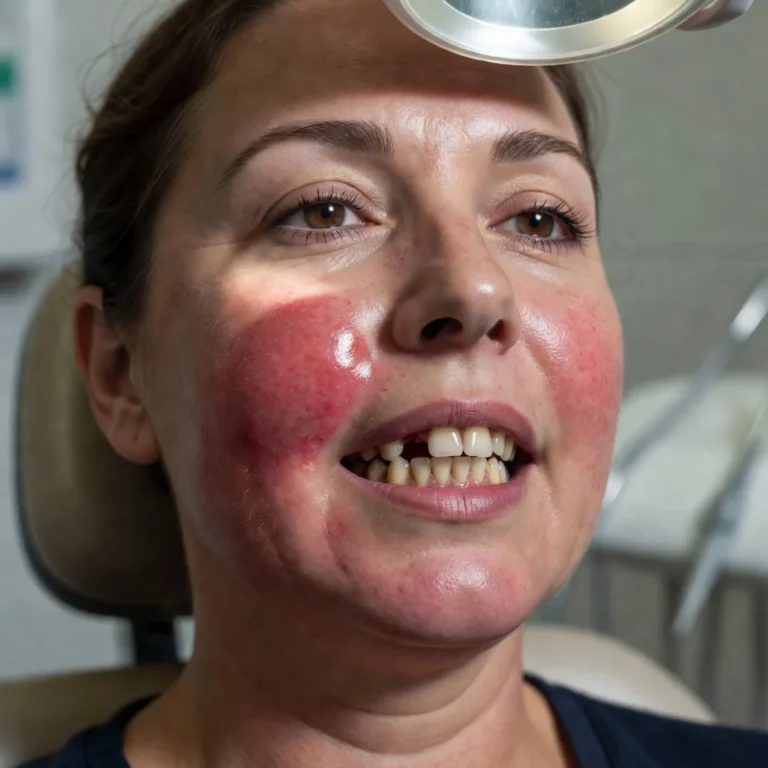
Rosacea makes skin behave unpredictably. Your cheeks may flush at the slightest trigger, products that others love can burn within seconds, and the skin can feel both oily and dry at once. This list covers 10 options, from rich barrier creams to light gel-creams, with notes on who each one suits and who should skip it.
Part of our guide to skincare products. Start with: 10 Best Facial Moisturizers for Dry Skin (2026): Rich, Gentle Creams
The best facial moisturizer for rosacea is a fragrance-free, gentle cream that supports the skin barrier without irritating it. Look for short ingredient lists with glycerin, ceramides, squalane or dimethicone, and consider calming extras such as niacinamide. Azelaic acid can help redness and bumps but is best introduced slowly. By day, a mineral sunscreen or moisturiser with zinc oxide or titanium dioxide protects against one of the most common triggers, and a green-tinted formula can help hide redness. Avoid alcohol, menthol, camphor, witch hazel, fragrance and harsh acids, which commonly sting rosacea-prone skin.
In short: keep it simple, fragrance-free and barrier focused, protect with mineral SPF every day and skip anything that tingles or burns.
The American Academy of Dermatology says moisturising is essential for rosacea whether the skin feels dry or oily, and it lists alcohol, camphor, fragrance, menthol and some acids among the ingredients people with rosacea should avoid.
Below you will find the ten picks, how we chose them, which ingredients help, how green-tinted and SPF moisturisers fit in, what to avoid and how to apply your products gently.
Shopping these picks?
Amazon Prime members get fast, free shipping on eligible items, plus Prime Video, Amazon Music and member deals. New members can start with a free trial.
Start a free Prime trialAged 18 to 24? Prime for Young Adults comes with a longer free trial and a lower price after it.
Affiliate link: we may earn a commission at no extra cost to you.
As an Amazon Associate we earn from qualifying purchases. This does not change which products we include.


What to Know First
- Hey Honey Relax is our top pick for its fragrance-free, water-based formula aimed at reactive, redness-prone skin.
- Bioderma Sensibio AR+ is the pharmacy-brand pick for visible redness on sensitive skin.
- The Cetaphil Redness Relieving set pairs a night cream with an SPF day moisturiser.
- Fragrance-free formulas with short ingredient lists are the safest choice.
- Niacinamide may help strengthen the barrier and calm the look of redness.
- Mineral sunscreen is usually better tolerated and protects against a key trigger.
- Avoid alcohol, menthol, camphor, witch hazel and harsh exfoliants.
Contents
- The 10 Best Facial Moisturisers for Rosacea Right Now
- How We Chose These Products
- What Rosacea-Prone Skin Needs From a Moisturiser
- Ingredients That Help Rosacea-Prone Skin
- Niacinamide and Azelaic Acid: Helpful Actives
- Mineral SPF Moisturisers for Daily Protection
- Green-Tinted Moisturisers: Do They Work?
- Comparing Moisturiser Types for Rosacea
- Choosing a Moisturiser for Your Rosacea Type
- Ingredients and Habits to Avoid
- How to Apply Moisturiser to Rosacea-Prone Skin
- Honest Limits: What Moisturisers Can and Cannot Do
- When to See a Dermatologist
- Your Questions, Answered
- Where This Leaves You
The 10 Best Facial Moisturisers for Rosacea Right Now
These ten moisturisers were shortlisted from widely reviewed Amazon listings aimed at sensitive, redness-prone skin, and are ranked by how clearly each listing targets redness or barrier support and how well it fits different skin types. Each pick says who it suits and who should skip it.
| # | Product | Best For | Standout Feature | |
|---|---|---|---|---|
| 1 | Hey Honey Relax Calming Face Moisturiser | Reactive, redness-prone skin of any type | Fragrance-free, water-based and oil-free | View |
| 2 | Bioderma Sensibio AR+ Redness Relief Cream | Diffuse redness on sensitive skin | Pharmacy formula aimed at facial redness | View |
| 3 | Cetaphil Redness Relieving Day and Night Set | A ready-made morning and evening routine | Night cream plus daily SPF moisturiser | View |
| 4 | Illiyoon Ceramide Ato Concentrate Cream | Dry, tight or flaky rosacea-prone skin | Ceramide cream for dry, sensitive skin | View |
| 5 | DearKlairs Blue Calming Cream | Redness with a light, calming feel | Guaiazulene cream aimed at redness | View |
| 6 | Tower 28 SOS Recovery Hydrating Face Cream | Sensitised skin after a flare | Barrier repair cream for sensitive skin | View |
| 7 | PHYSIOGEL Calming Relief Redness Relieving Cream | Daily use on redness-prone skin | Large tube of redness-relieving cream | View |
| 8 | Eucerin Skin Balance Night Cream for Sensitive Skin | Evening moisture on sensitive skin | Night cream made for sensitive skin | View |
| 9 | PURITO Oat Calming Gel Cream | Oily or combination rosacea-prone skin | Oat-based gel cream for sensitive skin | View |
| 10 | Pyunkang Yul Calming Moisture Barrier Cream | Dehydrated, sensitive skin | Barrier cream with hyaluronic acid | View |
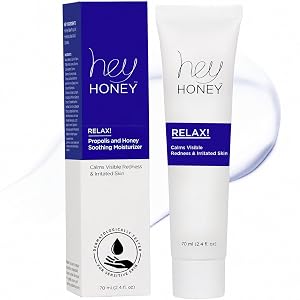
Hey Honey Relax Calming Face Moisturiser
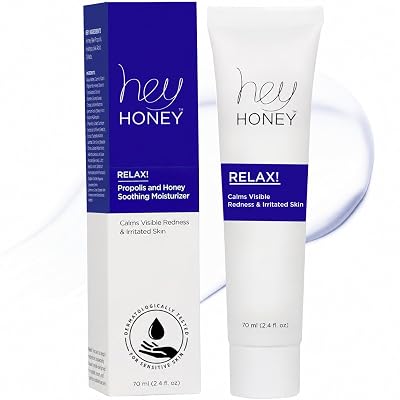
Best for: Reactive, redness-prone skin of any type
Hey Honey Relax takes the top spot because its listing is built specifically around rosacea-prone, reactive skin rather than general hydration. It is fragrance-free and water-based, with propolis and honey extract plus aloe, and the seller describes it as oil-free and suitable for all skin types, including oily skin that often struggles with rich creams.
That light texture makes it easier to wear than the barrier creams at #4 and #6, and it sits comfortably under sunscreen. The seller’s claim of instant relief should be read as marketing: moisturisers make skin more comfortable but do not treat rosacea. Propolis can trigger allergic reactions in some people, so patch test first.
- Fragrance-free formula
- Propolis and honey extract with aloe
- Light, water-based and oil-free texture
- Aimed at all skin types, including oily skin
Pros
- Clearly aimed at redness-prone skin
- Light enough for oily or combination skin
- No added fragrance
Cons
- Propolis can cause allergic reactions in some people
- May feel too light for very dry skin in winter
Skip it if: Skip it if you are allergic to bee products such as propolis or honey; choose the #4 or #8 pick instead.
Check Price on AmazonBioderma Sensibio AR+ Redness Relief Cream

Best for: Diffuse redness on sensitive skin
Bioderma’s Sensibio range is made for sensitive skin, and the AR+ cream is the version aimed at facial redness. It comes from an established pharmacy skincare brand, which appeals if you prefer formulas designed with reactive skin in mind rather than general-purpose moisturisers that are simply labelled gentle or calming.
It is a lotion-style cream, so it suits people who find heavy balms uncomfortable on flushed cheeks. Compared with the #1 Hey Honey cream it is more clinical in approach, without honey or propolis. Like every cream here it can make redness less noticeable and skin more comfortable, but it does not replace prescribed rosacea treatment.
- Cream designed for facial redness
- Made for sensitive skin
- Part of the Sensibio sensitive-skin range
- Lotion-style texture
Pros
- Targets redness specifically
- Established pharmacy brand
- Comfortable lightweight feel
Cons
- Listing gives limited ingredient detail
- Not rich enough for very dry, flaky skin
Skip it if: Skip it if your skin is very dry or flaky; the #4 Illiyoon cream is richer.
Check Price on AmazonCetaphil Redness Relieving Day and Night Set

Best for: A ready-made morning and evening routine
The Cetaphil set is the easiest way to build a full routine from one line. It pairs a redness-relieving night moisturiser with a daily facial moisturiser with SPF, so you get barrier care in the evening and sun protection in the morning, which matters because sun is one of the most common rosacea triggers.
Cetaphil is a familiar name for sensitive skin, and buying the pair saves guessing whether two brands will work together. Compared with the #1 and #2 picks you get two products rather than one. Check the SPF moisturiser’s filters and apply it generously; if you prefer mineral-only protection, pair the night cream with a mineral sunscreen instead.
- Redness-relieving night moisturiser
- Daily facial moisturiser with SPF
- Sold together as a set
- From a sensitive-skin brand
Pros
- Complete day and night routine
- Includes sun protection
- Matching formulas from one line
Cons
- Two products to use up
- SPF moisturiser may not be mineral-only
Skip it if: Skip it if you already have a sunscreen you like; a single night cream such as the #8 Eucerin pick may be enough.
Check Price on AmazonIlliyoon Ceramide Ato Concentrate Cream

Best for: Dry, tight or flaky rosacea-prone skin
Illiyoon’s Ceramide Ato Concentrate Cream is the pick for rosacea-prone skin that also feels dry, tight or rough. Ceramides are barrier lipids, and a weakened barrier is common in rosacea, so a ceramide cream is a sensible base layer, especially in cold or windy weather when many people notice more flushing and flaking.
It is one of the most widely reviewed creams on this list and is aimed at dry and sensitive skin. It is richer than the #1 Hey Honey cream or the #9 PURITO gel, so people with bumps or oily areas may prefer to use it only on drier patches. Long-lasting hydration claims on the listing are marketing; comfort varies between people.
- Ceramide-based concentrate cream
- Aimed at dry and sensitive skin
- Rich texture for barrier support
- Suitable as a face moisturiser
Pros
- Barrier-focused ceramide formula
- Very widely reviewed
- Good for cold weather
Cons
- May feel heavy on oily areas or bumps
- Not aimed at redness specifically
Skip it if: Skip it if your rosacea is mainly bumps on oily skin; a lighter option such as the #9 PURITO pick suits you better.
Check Price on AmazonDearKlairs Blue Calming Cream

Best for: Redness with a light, calming feel
The DearKlairs Blue Calming Cream is aimed at redness and uses guaiazulene, a blue compound originally associated with chamomile that gives the cream its colour. It appeals to people who want a calming moisturiser that feels different from the plain barrier creams at #4 and #6, while still being a daily face moisturiser.
It sits in the middle of the list for texture, lighter than the Illiyoon cream but richer than the PURITO gel. Because guaiazulene is linked to chamomile, anyone who reacts to chamomile or daisy-family plants should avoid it. As with any product containing plant-derived ingredients, patch test on the jaw for several days before using it on the whole face.
- Face moisturiser aimed at redness relief
- Contains guaiazulene
- Medium texture
- Designed for sensitive skin
Pros
- Targets the look of redness
- Comfortable middle-weight texture
- Distinctive calming formula
Cons
- Not suitable if you react to chamomile
- Plant-derived ingredients need a careful patch test
Skip it if: Skip it if you have a known daisy-family or chamomile allergy; choose the #2 or #7 pick.
Check Price on AmazonTower 28 SOS Recovery Hydrating Face Cream

Best for: Sensitised skin after a flare
Tower 28’s SOS Recovery cream is designed for sensitive skin and focuses on barrier repair, which makes it a good fit after a flare, over-exfoliation or a product that stung. The SOS line is known for being built around reactive skin, and this cream is its hydrating moisturiser for everyday use.
It is a more modern, beauty-brand option than the pharmacy picks at #2 and #7, and it has fewer reviews than several creams here. Compared with the #4 Illiyoon cream it is aimed more at recovery than at very dry skin. Use it with a gentle cleanser and mineral SPF, and keep the rest of your routine simple while your skin settles.
- Hydrating face cream for sensitive skin
- Focus on skin barrier repair
- Part of the SOS sensitive-skin line
- Suitable for daily use
Pros
- Aimed at sensitised, reactive skin
- Barrier-focused
- Easy to layer under SPF
Cons
- Fewer reviews than most picks
- Smaller jar than the #7 Physiogel tube
Skip it if: Skip it if you want a cream designed specifically for visible redness; the #2 Bioderma pick is more targeted.
Check Price on AmazonPHYSIOGEL Calming Relief Redness Relieving Cream

Best for: Daily use on redness-prone skin
Physiogel’s Calming Relief cream is a redness-relieving moisturiser from a brand known for sensitive-skin care. It comes in a larger tube than most picks here, which suits people who moisturise twice a day and do not want to reorder often. It is aimed at facial redness and marketed as a soothing daily moisturiser.
It is a straightforward everyday option, less distinctive than the #5 DearKlairs cream but also without plant-derived colour ingredients. Compared with the #2 Bioderma cream it offers a similar redness focus in a bigger size. As with any redness cream, expect it to calm the look of redness and make skin more comfortable rather than change rosacea itself.
- Redness-relieving facial cream
- Soothing face moisturiser
- Larger tube size
- From a sensitive-skin brand
Pros
- Redness-focused formula
- Generous tube size
- Easy everyday option
Cons
- Listing gives limited ingredient detail
- Not rich enough for very dry skin
Skip it if: Skip it if your main problem is dryness and flaking; the #4 or #8 picks are richer.
Check Price on AmazonEucerin Skin Balance Night Cream for Sensitive Skin

Best for: Evening moisture on sensitive skin
Eucerin’s Skin Balance Night Cream is a face moisturiser made for sensitive skin and designed for evening use, when skin can recover without sunscreen or makeup on top. That makes it a sensible partner for a daytime mineral SPF, or a simpler alternative to the #3 Cetaphil set if you already own a sunscreen you like.
Eucerin is a long-standing dermatological skincare brand, and this cream suits people who want a plain, dependable night moisturiser rather than a redness-specific formula. It is richer than a day lotion, so if you use a prescribed rosacea gel at night, apply that first and let it absorb before the cream, as your doctor directs.
- Night cream for the face
- Formulated for sensitive skin
- Part of the Skin Balance range
- Designed for evening use
Pros
- Made for sensitive skin
- Good partner to a daytime SPF
- Established dermatological brand
Cons
- Night use only
- Not aimed at redness specifically
Skip it if: Skip it if you want one cream for day and night; the #1 or #7 picks are more flexible.
Check Price on AmazonPURITO Oat Calming Gel Cream

Best for: Oily or combination rosacea-prone skin
PURITO’s Oat Calming Gel Cream is the lightest texture on this list, which suits rosacea-prone skin that is oily in the centre of the face or prone to bumps. Oat is a traditional soothing ingredient, and the gel-cream format feels less occlusive than richer barrier creams, so it layers easily under sunscreen.
It is widely reviewed and aimed at sensitive skin, and the listing also mentions blemish care, which may appeal if you have both redness and breakouts. It will feel too light for very dry skin in winter, where the #4 Illiyoon cream is a better fit. Avoid it if you know you react to oats.
- Gel-cream texture
- Oat-based calming formula
- Designed for sensitive skin
- Positioned for blemish-prone skin too
Pros
- Very light, comfortable texture
- Suits oily and combination skin
- Widely reviewed
Cons
- Too light for very dry skin
- Not suitable if you are sensitive to oats
Skip it if: Skip it if your skin is dry and flaky; the #4 Illiyoon or #6 Tower 28 cream is richer.
Check Price on AmazonPyunkang Yul Calming Moisture Barrier Cream

Best for: Dehydrated, sensitive skin
Pyunkang Yul’s Calming Moisture Barrier Cream combines barrier support with hyaluronic acid, a humectant that draws water into the skin. It suits rosacea-prone skin that feels tight and dehydrated rather than truly dry, and it is widely reviewed by shoppers with sensitive skin who want a simple, comfortable daily cream.
The listing says it soothes skin instantly, which is a marketing claim; any cream can make skin feel more comfortable, but it will not stop a flare. Compared with the #4 Illiyoon cream it is aimed more at hydration than rich barrier repair. Patch test before full use, as with every product here.
- Moisture barrier cream
- Contains hyaluronic acid
- Designed for sensitive skin
- Calming positioning
Pros
- Hydrating humectant formula
- Suits dehydrated sensitive skin
- Widely reviewed
Cons
- Soothing claims are marketing, not treatment
- Not as rich as a ceramide cream
Skip it if: Skip it if you need a redness-specific cream; the #2 Bioderma or #7 Physiogel pick is more targeted.
Check Price on AmazonHow We Chose These Products
We shortlisted facial moisturisers from Amazon listings that are highly rated by a large number of shoppers, favouring established brands and fuller-featured formulas aimed at redness, sensitivity or barrier repair. We then checked each product’s listed features against the rosacea guidance cited in this post, including the AAD’s advice to moisturise daily and to avoid common irritants such as fragrance, alcohol, menthol and camphor.
These are research-based picks, not hands-on lab tests. We have not used these creams on rosacea ourselves, so rankings reflect listing detail, stated ingredients and fit for different skin types rather than personal results. Rosacea is individual, so even the gentlest cream on this list may not suit everyone. We left out azelaic acid treatment creams, which belong in a separate conversation with your doctor.
- Strong ratings from a large number of shoppers
- Formulas aimed at sensitive, redness-prone or barrier-damaged skin
- Established brands and fuller-featured formulas preferred
- Listed features checked against the cited AAD guidance
- Products with thin or unclear listings excluded or ranked lower
What Rosacea-Prone Skin Needs From a Moisturiser
Rosacea is a long-term inflammatory skin condition that causes facial redness, flushing, visible blood vessels and sometimes bumps that look like acne. Many people with rosacea also have a weakened skin barrier, which means the skin loses water easily and reacts to ingredients that others tolerate.
That is why moisturiser matters so much. A good one reduces dryness and tightness, makes the skin more comfortable and helps it tolerate prescribed treatments. The American Academy of Dermatology’s rosacea skin care tips describe moisturising and daily sun protection as core parts of rosacea care.
Rosacea is often mistaken for sensitive skin, acne or a simple blush. If you have persistent redness, flushing or bumps, a diagnosis from a doctor helps you choose the right treatment as well as the right moisturiser.
Ingredients That Help Rosacea-Prone Skin
The best moisturisers for rosacea are rarely exciting. They combine a few proven, gentle ingredients that support the barrier.
| Ingredient | Role | Why it suits rosacea | Note |
|---|---|---|---|
| Glycerin | Humectant | Hydrates gently with low irritation risk | Found in most good moisturisers |
| Ceramides | Barrier lipid | Help repair a weak barrier | Often paired with cholesterol and fatty acids |
| Squalane | Emollient | Light, stable and rarely irritating | Suits combination skin |
| Dimethicone | Skin protectant | Forms a thin, breathable protective layer | Common in redness-relief formulas |
| Niacinamide | Vitamin B3 | May improve barrier function and calm redness | Start low if your skin is very reactive |
| Colloidal oatmeal | Skin protectant | Can soothe dry, itchy skin | Avoid if allergic to oats |
| Zinc oxide | Mineral UV filter | Protects from sun, a key trigger | Can leave a white cast unless tinted |
When comparing labels, look for one or two barrier ingredients near the top of the list and as few plant extracts, essential oils and fragrances as possible. Products marketed as calming often contain botanical extracts such as chamomile or tea tree, which some rosacea-prone skin tolerates and some does not, so treat them with the same caution as any other new ingredient. Our guide to niacinamide and its skin benefits explains how this vitamin supports the barrier.
Niacinamide and Azelaic Acid: Helpful Actives
If you want a moisturiser that does more than hydrate, niacinamide and azelaic acid are the two actives most often suggested for rosacea-prone skin.
Niacinamide is usually well tolerated and may help the skin retain moisture and look less red over time. Azelaic acid has stronger evidence for rosacea bumps and redness. Prescription-strength azelaic acid is an established rosacea treatment, and lower-strength versions appear in some over-the-counter creams and serums. It can cause brief stinging or itching when you start, so use it every other night at first and apply your plain moisturiser alongside it.
If an active ingredient stings, try applying a thin layer of plain moisturiser first and the active on top. This buffer can make it easier to tolerate while your skin adjusts.
Mineral SPF Moisturisers for Daily Protection
Sun exposure is one of the most common rosacea triggers, so daily sun protection is essential. Mineral filters, zinc oxide and titanium dioxide, are generally less likely to sting rosacea-prone skin than some chemical filters.
You can use a moisturiser with mineral SPF 30 or higher, or apply your usual moisturiser and follow it with a mineral sunscreen. The AAD’s guide on how to apply sunscreen explains how much to use. Tinted mineral formulas help reduce the white cast that zinc can leave, particularly on deeper skin tones. Our guide on physical vs chemical SPF compares the two filter types.
Green-Tinted Moisturisers: Do They Work?
Green is opposite red on the colour wheel, so a green-tinted moisturiser or primer can neutralise the look of redness before foundation. Many redness-relief creams combine a green tint with soothing ingredients and sometimes mineral SPF.
- They work best on diffuse redness across the cheeks and nose.
- A thin layer is enough; too much can look grey or ashy.
- They are cosmetic only and do not treat rosacea.
- Choose fragrance-free versions, as tinted products often contain added fragrance.
- On deeper skin tones, a peach or yellow corrector may look more natural.
Apply a green-tinted cream after your moisturiser and sunscreen have settled, and tap it on only where you need it. If you prefer not to wear makeup, a sheer green tint alone can take the edge off redness for the day, then wash it off gently at night.
Comparing Moisturiser Types for Rosacea
Texture affects both comfort and how your skin reacts. Rosacea skin can be dry in some areas and oily in others, so you may need more than one product. Seasons matter too: many people find they need a richer cream in cold, windy weather and a lighter one when it is hot and humid, since heat itself can trigger flushing.
| Type | Best for | Pros | Cons |
|---|---|---|---|
| Light lotion or gel-cream | Combination or oily rosacea skin | Comfortable, sits well under SPF | May not be rich enough in winter |
| Barrier cream | Dry, tight or flaky rosacea skin | Repairs and protects well | Can feel heavy on bumps |
| Mineral SPF moisturiser | Daytime use | Moisture and sun protection in one | Need a generous amount for full SPF |
| Green-tinted redness cream | Hiding redness | Evens tone quickly | Cosmetic only; check for fragrance |
Choosing a Moisturiser for Your Rosacea Type
Rosacea shows up in different ways, and the most suitable moisturiser depends on which signs bother you most.
- Mainly redness and flushing: choose a light, fragrance-free cream with niacinamide or a green tint, and focus on mineral SPF and avoiding triggers.
- Bumps and pimple-like spots: use a light, non-comedogenic lotion or gel-cream rather than a heavy balm, and ask your doctor about azelaic acid or other prescription treatments.
- Dry, rough or flaky skin: pick a richer barrier cream with ceramides and glycerin, and add an extra layer at night.
- Burning and stinging with most products: use the shortest ingredient list you can find, sometimes a plain petrolatum-based product, until the skin settles.
- Eye symptoms: keep creams away from the eyelid margin and see a doctor, as ocular rosacea needs its own treatment.
Many people have more than one type, so it is normal to use a lighter product on the centre of the face and a richer one on drier areas.
Ingredients and Habits to Avoid
Certain ingredients are well known for triggering stinging and flushing in rosacea-prone skin. Checking the label before you buy saves a lot of trial and error.
Try This
- Choose fragrance-free rather than unscented
- Patch test on the side of the neck or jaw for a few days
- Keep your routine short and consistent
- Use lukewarm water and pat skin dry
- Wear mineral SPF every day
Avoid This
- Do not use products with drying alcohol high on the list
- Do not use menthol, camphor, peppermint or eucalyptus
- Do not use witch hazel or astringent toners
- Do not use scrubs, strong glycolic or lactic acid peels
- Do not layer many new products at once
A product that tingles or burns on rosacea skin is not a sign that it is working. Stinging usually means irritation, and irritation can trigger a flare that lasts days. Rinse it off and stop using it.
Not every alcohol on a label is a problem. Drying alcohols such as alcohol denat. or ethanol high on the list are the ones to avoid, while fatty alcohols such as cetyl or cetearyl alcohol are gentle thickeners that are usually fine.
How to Apply Moisturiser to Rosacea-Prone Skin
Gentle technique helps just as much as the right product. Friction and heat can both set off flushing.
Cleanse gently
Use a mild, fragrance-free, non-foaming cleanser with lukewarm water.
Pat dry
Blot with a soft towel; do not rub.
Apply prescribed treatment
If your doctor has prescribed a cream or gel, apply it as directed and let it absorb.
Moisturise
Dot a small amount of moisturiser over the face and smooth it in with light strokes.
Add mineral SPF in the morning
Apply a generous layer of mineral sunscreen or SPF moisturiser.
Correct redness if you wish
Tap a thin layer of green-tinted cream onto red areas before makeup.
Reapply as needed
Top up moisturiser on dry patches and reapply sunscreen outdoors.
Honest Limits: What Moisturisers Can and Cannot Do
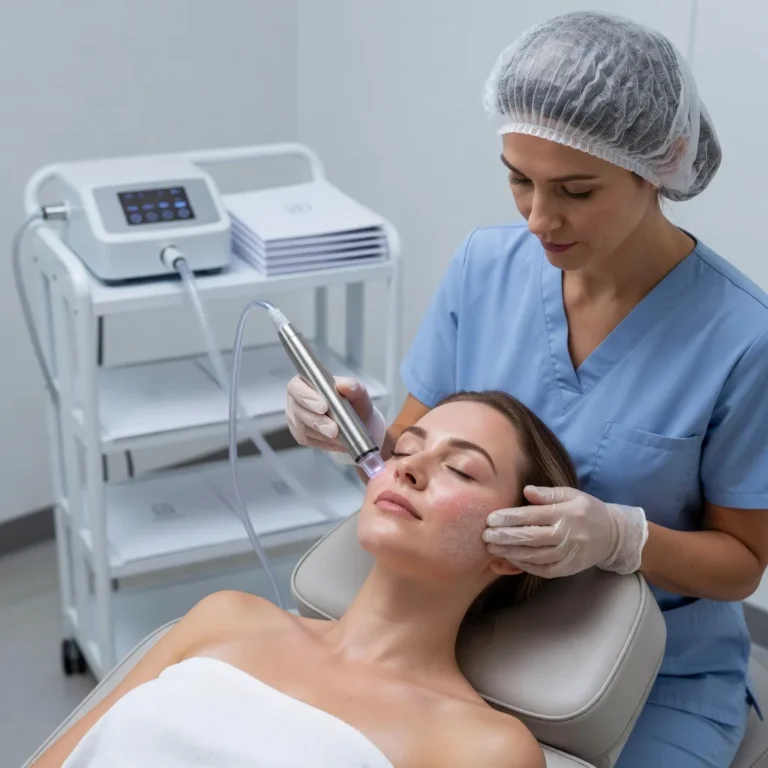
A good moisturiser can reduce dryness, stinging and tightness, and help your skin tolerate rosacea treatment. It cannot cure rosacea or remove visible blood vessels, and redness-relief creams mostly work by hiding colour rather than changing it. Lower-strength azelaic acid and niacinamide may help over time, but prescription treatments are usually more effective for moderate or severe rosacea. Persistent flushing and visible vessels often need in-clinic treatments such as laser or light therapy. Avoiding your personal triggers, such as sun, heat, spicy food or alcohol, also matters as much as any product.
When to See a Dermatologist
See a dermatologist if redness or flushing lasts, if you develop bumps, burning or swelling, if your eyes feel gritty or sore, or if skin on the nose starts to thicken. Rosacea responds best to early treatment, and a dermatologist can prescribe creams, gels or tablets and discuss laser options for visible blood vessels.
This article is for general information and does not replace medical advice. Patch test new products, stop anything that stings or burns and see a board-certified dermatologist for diagnosis and treatment of rosacea.
Your Questions, Answered
What is the best facial moisturiser for rosacea?
Our top pick is Hey Honey Relax, a fragrance-free, water-based cream aimed at reactive skin.
Is niacinamide good for rosacea?
It is often well tolerated and may help the barrier and redness, but start with a low strength.
Does azelaic acid help rosacea?
Yes. Prescription azelaic acid is an established rosacea treatment; lower strengths may also help.
Should I use mineral or chemical sunscreen with rosacea?
Mineral sunscreens with zinc oxide or titanium dioxide are usually better tolerated.
Do green-tinted moisturisers work for redness?
They hide redness temporarily by colour correction but do not treat rosacea.
What ingredients should rosacea skin avoid?
Alcohol, fragrance, menthol, camphor, witch hazel and harsh exfoliating acids.
Which moisturiser on this list suits oily rosacea skin?
The PURITO Oat Calming Gel Cream and Hey Honey Relax are lighter options; patch test first.
Which moisturiser suits very dry rosacea skin?
A richer ceramide cream such as Illiyoon Ceramide Ato or Tower 28 SOS Recovery is a better fit.
Should I moisturise oily rosacea skin?
Yes. The AAD advises moisturising rosacea whether skin is dry or oily.
Can a moisturiser cure rosacea?
No. It supports the skin and comfort, but rosacea usually needs medical treatment.
Where This Leaves You
The best facial moisturizer for rosacea is gentle, fragrance-free and focused on repairing the barrier; Hey Honey Relax is our top pick overall, with Bioderma Sensibio AR+ close behind for visible redness.
Green-tinted creams are useful for hiding redness, but they are not treatment. Skip alcohol, menthol, witch hazel and fragrance, keep your routine short and see a dermatologist for lasting redness, bumps or eye symptoms.
Our top pick: Hey Honey Relax Calming Face Moisturiser
The Hey Honey Relax cream takes the top spot because its listing is built around rosacea-prone, reactive skin, it is fragrance-free and water-based, and it suits oily as well as dry skin. Choose the Bioderma Sensibio AR+ cream instead if you want a pharmacy-brand formula aimed squarely at visible redness, or the Cetaphil set if you want a matching night cream and SPF day moisturiser.
Check Price on Amazon
Written by
Registered pharmacist and founder of Facial Adviser. Rakib's pharmacy training covers how skincare actives work and interact; a later course in cosmetology turned that into a focus on facial treatments and skincare products. He plans, researches and edits every guide on the site and checks health claims against sources such as the American Academy of Dermatology, the FDA and the NIH. He is not a dermatologist; see the Editorial Policy and Medical Disclaimer.
About · Editorial policy · How we choose products · Medical disclaimer · Contact
Keep reading: Moisturisers and face oils
- 10 Best Facial Moisturizers for Dry Skin (2026): Rich, Gentle Creams
- 10 Best Facial Moisturizers for Older Women (2026): Richer, Smoother Skin
- 10 Best Facial Tanning Lotions (2026): Sunless Picks, No Tanning Bed
- 10 Best Facial Creams for Men Over 50 (2026): SPF Day, Retinol Night
- 10 Best Facial Moisturizers for Teenagers (2026): Light and Oil-Free
- 10 Best Facial Oils for Dry Skin (2026): Softer, Comfortable Skin
- 10 Best Facial Cleansers for Combination Skin (2026): Balanced Picks
- 10 Best Facial Serums for Aging Skin (2026): Picks by Concern