10 Best Facial Oils for Dry Skin (2026): Softer, Comfortable Skin
Dry skin can feel tight, rough and dull even after moisturiser, especially in cold weather or heated rooms. Facial oils promise a quick fix, but they work in a specific way. This list covers 10 options, from light squalane and jojoba to richer marula and rosehip, with notes on who each suits and who should skip it.
Part of our guide to skincare products. Start with: 10 Best Facial Moisturizers for Dry Skin (2026): Rich, Gentle Creams
The best facial oils for dry skin are simple, fragrance-free oils that soften and seal in moisture, such as squalane, jojoba, marula, argan and rosehip seed oil. Oils are emollients and partial occlusives: they fill gaps between dry skin cells and slow water loss, but they do not add water themselves. That is why they work best as the last step over a hydrating serum or moisturiser, using just a few drops. Squalane and jojoba feel lightest, marula and argan are richer, and rosehip suits dull or uneven skin but oxidises faster. Avoid oils heavy in fragrance or essential oils if your skin is sensitive.
In short: choose a plain, fragrance-free oil, apply a few drops over moisturiser, and let it seal in hydration rather than replace it.
The US Food and Drug Administration notes that fragrance ingredients are among the allergens that can cause reactions to cosmetics, so fragrance-free oils are usually the safest starting point for dry or sensitive skin.
Below you will find the ten picks, how we chose them, a comparison of the main oil types, what to look for and avoid on the label, and how to fit an oil into your routine without clogging pores or irritating dry skin.
Shopping these picks?
Amazon Prime members get fast, free shipping on eligible items, plus Prime Video, Amazon Music and member deals. New members can start with a free trial.
Start a free Prime trialAged 18 to 24? Prime for Young Adults comes with a longer free trial and a lower price after it.
Affiliate link: we may earn a commission at no extra cost to you.
As an Amazon Associate we earn from qualifying purchases. This does not change which products we include.


What to Know First
- Biossance Squalane + Vitamin C Rose oil is our top pick for its light squalane base and finished formula.
- PAI Rosehip BioRegenerate oil is the best organic rosehip pick and is aimed at sensitive skin.
- Cliganic Organic Argan oil is the best single-ingredient pick for face, body and hair.
- Oils soften skin and slow water loss but do not hydrate on their own.
- Apply two to four drops as the last step, over a moisturiser or hydrating serum.
- Fragrance and essential oils are common irritants for dry, sensitive skin.
- Choose dark or airless packaging and use rosehip within its shelf life.
In This Guide
- The 10 Best Facial Oils for Dry Skin Right Now
- How We Chose These Products
- How Facial Oils Help Dry Skin
- The Best Oils for Dry Skin Compared
- What to Look For on the Label
- What to Avoid: Fragrance and Essential Oils
- Where Oil Goes in Your Routine
- How to Apply Facial Oil to Dry Skin
- Facial Oil vs Moisturiser: Do You Need Both?
- Keeping Your Facial Oil Fresh
- Dos and Don’ts
- Honest Limits
- When to See a Dermatologist
- Common Questions
- Where This Leaves You
The 10 Best Facial Oils for Dry Skin Right Now
These ten oils were shortlisted from widely reviewed Amazon listings and ranked by ingredient quality, texture, fragrance, packaging and how clearly each seller explains its use. Each pick says who it suits, its trade-offs and who should skip it.
| # | Product | Best For | Standout Feature | |
|---|---|---|---|---|
| 1 | Biossance Squalane + Vitamin C Rose Oil | Dull, dry skin wanting a finished oil | Squalane base with added vitamin C | View |
| 2 | Cliganic Organic Argan Oil (32 oz) | Face, body and hair in one bottle | Certified organic single-ingredient argan | View |
| 3 | PAI Rosehip BioRegenerate Facial Oil | Dry, sensitive or uneven skin | Organic rosehip aimed at sensitive skin | View |
| 4 | Leven Rose Rosehip Seed Oil (32 oz) | Dry skin on face, lips and body | Unrefined cold-pressed rosehip, big bottle | View |
| 5 | SKINN Luminous Face Oil with Vitamin C | Dry skin that dislikes heavy oils | Lightweight blend with manuka honey | View |
| 6 | OPO Plant-Derived Squalane Oil (32 oz) | Sensitive dry skin and layering | Pure olive-derived squalane, fast absorbing | View |
| 7 | Shankara Kumkumadi Face Oil (18ml) | Gua sha and facial massage | Ayurvedic saffron and flower blend | View |
| 8 | Cliganic Organic Jojoba Oil (32 oz) | Everyday use and mixing into creams | Certified organic jojoba with pump | View |
| 9 | Trilogy Certified Organic Rosehip Oil | Daily use under moisturiser | Clear layering and drop-count guidance | View |
| 10 | Drunk Elephant Virgin Marula Facial Oil | Very dry skin wanting a richer oil | Virgin marula without essential oils | View |
Biossance Squalane + Vitamin C Rose Oil

Best for: Dull, dry skin wanting a finished oil
The Biossance oil earns the top spot because it builds on squalane, one of the lightest and most widely tolerated emollients for dry skin, and adds vitamin C for a brighter-looking finish. That makes it a complete, ready-to-use oil rather than a raw ingredient you need to work into a routine yourself.
Its listing also includes Chios crystal oil and Damascus rose extract. The rose adds scent, which some people enjoy but which can bother reactive skin, so it is less neutral than the single-ingredient #6 or #8 picks. Use a few drops over moisturiser at night and patch test first if you have had reactions to fragranced products.
- Squalane to replenish moisture in dry skin
- Vitamin C for a brighter-looking complexion
- Chios crystal oil included
- Damascus rose extract adds scent
Pros
- Light squalane base suits most dry skin
- Finished formula needs no mixing
- Adds a brightening ingredient in one step
Cons
- Rose extract adds scent that may irritate sensitive skin
- Small bottle compared with the bulk oils here
Skip it if: Skip it if your skin reacts to scented products; the OPO Squalane gives you the same base oil without extras.
Check Price on AmazonCliganic Organic Argan Oil (32 oz)

Best for: Face, body and hair in one bottle
The Cliganic Argan oil is a single-ingredient, certified organic oil, which makes it easy to understand and easy to patch test. Argan sits in the middle of the texture range: richer than squalane or jojoba, lighter than heavy plant butters, so it suits skin that is dry rather than just a little tight.
The big bottle is the main trade-off. It is designed for hair, face and body, so it is excellent value if you will use it everywhere, but an open bottle of any oil slowly oxidises, so a face-only user may not finish it while it is fresh. Decant a small amount and keep the rest cool and dark.
- USDA certified organic argan oil
- Single ingredient with no additives
- For hair, face and skin
- Non-GMO, vegan and cruelty-free
Pros
- Nothing added, so easy to patch test
- Richer feel for very dry patches
- Covers face, body and hair
Cons
- Very large bottle may oxidise before a face-only user finishes it
- Heavier than squalane on oily areas
Skip it if: Skip it if you only want a small oil for your face; the Trilogy or PAI bottles are better sized.
Check Price on AmazonPAI Rosehip BioRegenerate Facial Oil

Best for: Dry, sensitive or uneven skin
PAI’s rosehip oil is aimed squarely at sensitive skin, which matters because dry skin often becomes reactive too. Rosehip is rich in essential fatty acids and antioxidants and is often chosen for dull or uneven-looking skin, making it a good match if dryness is not your only concern and you also want a more even-looking tone.
Rosehip is more fragile than squalane or jojoba and oxidises faster once opened, so buy a size you will finish and keep it away from heat and sunlight. Compared with the Trilogy rosehip at #9, PAI leans more towards sensitive skin; the listing makes some repair claims, which we treat as marketing rather than proven results.
- Multi-tasking organic rosehip face oil
- Omegas 3, 6 and 9 with antioxidants
- Aimed at all skin types, including sensitive
- Vegan, organic ingredients
Pros
- Aimed at sensitive, reactive skin
- Good for dull or uneven-looking skin
- Certified organic formula
Cons
- Rosehip oxidises faster than squalane or jojoba
- Listing claims go beyond what oils can prove
Skip it if: Skip it if you want the lightest feel possible; the OPO Squalane or Cliganic Jojoba absorb more quickly.
Check Price on AmazonLeven Rose Rosehip Seed Oil (32 oz)
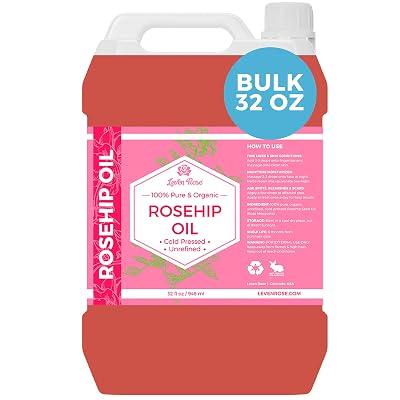
Best for: Dry skin on face, lips and body
Leven Rose sells an unrefined, cold-pressed rosehip seed oil in a very large bottle, pitched for skin, hair, lips and nails. It is a plain, single-ingredient option, so you know exactly what you are putting on your face, and the listing suggests two or three drops at night, which fits the way oils work best.
Unrefined rosehip has a natural colour and smell and a shorter life once opened than squalane. In a bottle this size, that is a real issue for face-only use, so it makes most sense if you will also use it on the body. For a face-only rosehip, the PAI (#3) or Trilogy (#9) are more practical sizes.
- Unrefined, cold-pressed rosehip seed oil
- Multi-use for skin, hair, lips and nails
- Suggested use of 2-3 drops at night
- Large 32 oz bottle
Pros
- Single ingredient, easy to patch test
- Versatile across face and body
- Clear night-time use guidance
Cons
- Large size may oxidise before it is used up
- Unrefined oil has a natural scent some dislike
Skip it if: Skip it if you only want a facial oil; a smaller rosehip bottle will stay fresher.
Check Price on AmazonSKINN Luminous Face Oil with Vitamin C

Best for: Dry skin that dislikes heavy oils
SKINN’s face oil is described as lightweight but nourishing, which suits people who like the softness of an oil but not a greasy finish. It blends botanical oils with vitamin C and manuka honey, so it works as a finishing step for dull, dry skin rather than a plain single oil.
The listing also mentions a proprietary technology and anti-ageing claims that we cannot verify, so judge it on its texture and ingredients rather than the promises. It is a blend, so it is harder to patch test than the single-ingredient picks; if you react, you will not know which component caused it. Compared with the Biossance pick, it is lighter-feeling but less clearly explained.
- Lightweight, nourishing facial oil
- Vitamin C and manuka honey
- Botanical oils to lock in moisture
- Marketed for all skin types
Pros
- Light finish for oil-shy dry skin
- Several ingredients in one step
- Works under moisturiser or alone at night
Cons
- Blend is harder to patch test than a single oil
- Proprietary technology claims are not explained
Skip it if: Skip it if you prefer transparent, single-ingredient oils; the Cliganic Jojoba or OPO Squalane are simpler.
Check Price on AmazonOPO Plant-Derived Squalane Oil (32 oz)

Best for: Sensitive dry skin and layering
The OPO Squalane is the gentlest-feeling pick on this list. Squalane is a light, stable emollient that sinks in quickly and rarely feels greasy, which makes it easy to use under makeup or over a moisturiser in the morning. This version is plant-derived from olives and sold as a single ingredient.
Because it is so plain, it is also one of the easiest oils to patch test and to add a few drops of to a moisturiser you already like. The large size is good value for regular users, though, like every bulk oil here, it is worth decanting a small amount. It offers the same base as the #1 Biossance oil without the scent or extras.
- Plant-derived squalane from olives
- Vegan, cruelty-free and described as non-irritating
- Light and quick absorbing
- Can be mixed into other products
Pros
- Very light and non-greasy
- Single ingredient for easy patch testing
- Mixes well with moisturiser
Cons
- May not feel rich enough for very dry, flaky skin
- Large bottle for face-only use
Skip it if: Skip it if your skin is very dry and craves a richer feel; the Cliganic Argan or Drunk Elephant Marula suit you better.
Check Price on AmazonShankara Kumkumadi Face Oil (18ml)

Best for: Gua sha and facial massage
Shankara’s Kumkumadi oil is a traditional Ayurvedic blend made with saffron, lotus, turmeric and many flower extracts. The listing suggests using just one or two drops and describes it as suitable for gua sha massage, so it is a good pick if you enjoy a slow evening routine and want an oil that also gives slip for facial tools.
It is naturally scented, and blends with many botanicals carry a higher chance of irritation than a single oil, so it is not the first choice for reactive skin. Patch test for a few days before full use. Compared with the plain oils on this list, it is more of a ritual product than a simple moisture seal.
- Saffron, lotus, turmeric and flower extracts
- Only 1-2 drops needed per use
- Suitable as a gua sha massage oil
- No synthetic fragrance or dyes
Pros
- Good slip for gua sha and massage
- Small amount goes a long way
- Pleasant ritual for evening routines
Cons
- Natural scent and many botanicals may irritate sensitive skin
- Small 18ml bottle
Skip it if: Skip it if your skin is sensitive to fragrance or plant extracts; the OPO Squalane is far simpler.
Check Price on AmazonCliganic Organic Jojoba Oil (32 oz)

Best for: Everyday use and mixing into creams
Jojoba is technically a liquid wax that resembles skin’s own oils, so it tends to feel balanced rather than heavy and suits combination skin with dry patches. Cliganic sells it as a certified organic single ingredient in a large bottle with a pump, which keeps application tidy and reduces exposure to air.
It is one of the most practical everyday oils on this list and easy to patch test. As with the argan from the same brand at #2, the bulk size is best if you will use it on hair or body too. Choose the argan if your skin is drier, or this jojoba if you want a lighter, more balanced feel.
- Bulk 32 oz bottle with pump
- USDA certified organic jojoba
- Single ingredient, no synthetic additives
- Non-GMO, vegan and cruelty-free
Pros
- Balanced feel suits combination skin with dry patches
- Pump reduces mess and air exposure
- Easy to patch test
Cons
- Bulk size is more than most people need for the face
- Less rich than argan or marula for very dry skin
Skip it if: Skip it if you want a small bottle to carry in your bag; the Trilogy Rosehip is more compact.
Check Price on AmazonTrilogy Certified Organic Rosehip Oil

Best for: Daily use under moisturiser
Trilogy’s rosehip oil stands out for how clearly it explains use: three drops twice a day, applied after serums and before moisturiser. That clarity makes it a good starter oil for people who are unsure where oil fits in a routine. It is a cold-pressed, certified organic rosehip rich in omega fatty acids.
The listing says it pairs with most other actives, which is helpful for anyone already using a serum. Like the PAI pick, it is rosehip, so it will oxidise faster than squalane; keep the cap tight and store it away from heat. It is a more compact, face-sized bottle than the Leven Rose rosehip at #4.
- Cold-pressed certified organic rosehip seed oil
- Rich in omega 3, 6 and 9
- Three drops twice a day suggested
- Designed to layer over serums
Pros
- Very clear usage instructions
- Face-sized bottle stays fresher
- Layers with most routines
Cons
- Rosehip oxidises faster than squalane
- Twice-daily use may feel too much on combination skin
Skip it if: Skip it if you want a very neutral, long-lasting oil; squalane or jojoba keep better.
Check Price on AmazonDrunk Elephant Virgin Marula Facial Oil

Best for: Very dry skin wanting a richer oil
Drunk Elephant’s Virgin Marula oil is a richer, antioxidant-containing oil that suits skin that feels properly dry rather than just a little tight. The brand says it avoids essential oils and several other ingredient groups, which is a useful signal for anyone who has reacted to fragranced oils or scented blends before.
Marula absorbs more quickly than its richness suggests, and the listing suggests two or three drops on the face, neck, chest or hands. It is a small, single-purpose bottle aimed at the face. Compared with the #2 argan, it is lighter on the skin and more refined; compared with the #6 squalane, it feels more nourishing.
- Virgin marula oil with antioxidants
- Omegas 6 and 9
- 2-3 drops for face, neck, chest or hands
- Formulated without essential oils
Pros
- Richer feel for very dry skin
- No essential oils, per the brand
- Absorbs without a greasy film
Cons
- Small bottle for its category
- Anti-wrinkle wording on the listing overstates what an oil can do
Skip it if: Skip it if you want a large bottle for face and body; the Cliganic oils cover more ground.
Check Price on AmazonHow We Chose These Products
We shortlisted facial oils from Amazon listings that are highly rated by a large number of shoppers, favouring established brands and fuller-featured or premium oils with clear ingredient lists. We then checked each product’s listed features against the guidance cited in this post, including the FDA’s note that fragrance ingredients are a common cause of reactions to cosmetics.
These are research-based picks, not hands-on lab tests. We did not measure absorption or moisture levels ourselves, so the ranking reflects ingredient choice, texture described on the listing, packaging and how well each oil fits dry skin, rather than personal results. Several picks are single-ingredient oils, which are often the easiest to patch test.
- Strong ratings from a large number of shoppers
- Established brands and fuller-featured or premium oils preferred
- Listed ingredients checked against the fragrance and irritation guidance cited here
- Oils with thin or unclear listings excluded
- No medical or anti-ageing claims from listings repeated as fact
How Facial Oils Help Dry Skin
Dry skin is short of oil and often of water too. Its outer layer has gaps between cells, which lets moisture escape and makes skin feel rough. A facial oil works in two ways: as an emollient, it smooths those gaps so skin feels softer, and as a partial occlusive, it forms a thin layer that slows water evaporating from the surface.
What an oil does not do is add water. If your skin is dehydrated as well as dry, you need a humectant, such as glycerin or hyaluronic acid, underneath. That is why oils work best as a finishing layer. Our guide on emollients and examples explains how emollients, humectants and occlusives work together, and our comparison of facial oil versus serum shows where each fits.
The Best Oils for Dry Skin Compared
Several plant-derived oils are popular for dry skin. They differ in texture, how quickly they absorb and how stable they are once opened.
| Oil | Texture | Best for | Things to know |
|---|---|---|---|
| Squalane | Very light, silky | All dry skin, including sensitive | Very stable; plant-derived versions widely available |
| Jojoba | Light, liquid wax | Dry skin that also breaks out | Chemically a wax ester similar to skin’s own oils |
| Marula | Medium, rich but absorbs well | Very dry, tight skin | Rich in oleic acid; fairly stable |
| Argan | Medium | Dry and mature skin | Choose cosmetic grade, cold pressed, unscented |
| Rosehip seed | Light to medium | Dull, uneven or rough dry skin | Oxidises quickly; store cool and use within months |
| Sunflower seed | Light | Budget option, sensitive skin | High in linoleic acid; often in blends |
If you are new to facial oils, squalane or jojoba are forgiving starting points because they feel light and rarely irritate. If your skin is very dry and tight, a richer oil such as marula or argan may feel more comforting, especially at night and in winter.
What to Look For on the Label
Oil quality and packaging make a real difference to how well a product performs and how long it stays fresh.
- Fragrance-free or unscented, with no added essential oils if your skin is sensitive.
- A short ingredient list, ideally one to a few oils.
- Cold pressed or cosmetic grade for plant oils.
- Dark glass, opaque or airless packaging to protect against light and air.
- Added vitamin E (tocopherol), which helps slow oxidation.
- A clear period-after-opening symbol so you know when to replace it.
If you want to check a label for hidden scent, look for words such as parfum, fragrance or long botanical names ending in oil that describe essential oils, for example lavender, peppermint or citrus peel oils.
What to Avoid: Fragrance and Essential Oils
Many facial oils smell lovely because they include essential oils. These are concentrated plant extracts, not nourishing oils, and they are a common source of irritation and allergy, especially on dry skin with a weakened barrier.
- Blends where essential oils are listed high on the ingredient list.
- Citrus oils such as bergamot, lemon or lime, which can make skin sensitive to sunlight.
- Strongly scented oils such as peppermint, cinnamon or clove on the face.
- Undiluted essential oils applied directly to skin.
- Kitchen oils that have gone rancid or smell off.
Stop using a facial oil if you notice itching, burning, redness or a rash, and patch test any new oil on your jaw or behind the ear for a few days first. Dry skin with eczema is especially prone to reactions. The FDA lists fragrance ingredients among the common allergens in cosmetics.
Where Oil Goes in Your Routine
Order matters with oils. Because they slow water loss and can block lighter water-based products from absorbing, oils usually go near the end of a routine.
| Step | Morning | Evening |
|---|---|---|
| 1 | Gentle cleanser | Gentle cleanser |
| 2 | Hydrating serum or toner | Hydrating serum or treatment |
| 3 | Moisturiser | Moisturiser |
| 4 | Oil (optional, one or two drops) | Oil, two to four drops |
| 5 | Sunscreen | None |
In the morning, oil can make sunscreen slide or pill and may dilute it. Many people with dry skin keep oil for the evening, or mix a single drop into their moisturiser instead of layering it on top before sunscreen.
How to Apply Facial Oil to Dry Skin
These steps help an oil do its job without leaving your skin greasy or your pillow shiny.
Cleanse gently
Use a mild, non-stripping cleanser so you are not removing the oils you are trying to replace.
Apply a hydrating layer
Pat on a hydrating toner, serum or moisturiser while skin is slightly damp.
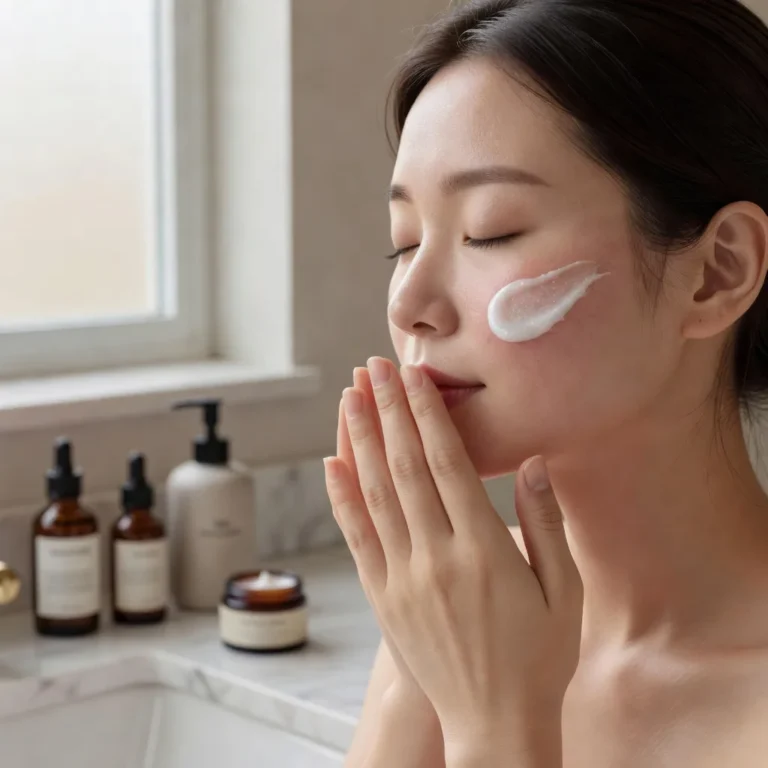
Warm two to four drops
Place the oil in your palms and rub them together briefly.
Press, do not rub
Press your palms onto your cheeks, forehead and jaw, then smooth any excess over dry areas.
Focus on the driest zones
Add an extra drop to flaky patches around the nose, mouth or brows.
Let it settle
Give it a few minutes before bed or before sunscreen in the morning.
If your skin still feels tight after moisturiser but greasy after oil, try mixing one drop of oil into your moisturiser. It often gives the comfort of both with less shine.
Facial Oil vs Moisturiser: Do You Need Both?
A moisturiser and a facial oil overlap, but they are not the same thing. A moisturiser is usually an emulsion of water and oil that contains humectants to draw water in, emollients to smooth the surface and occlusives to hold moisture in. A facial oil provides emollient and occlusive benefits only.
For most dry skin, that means an oil is an upgrade rather than a replacement. If your moisturiser already feels comfortable all day, you may not need an oil at all. If your skin still feels tight by the afternoon, or if you live somewhere cold and windy, adding a few drops of oil on top at night can make a noticeable difference.
Some people with dry but otherwise easy skin do use oil alone over a hydrating serum. This can work well in humid weather, but in dry air or heated rooms most skin does better with the full combination of serum, moisturiser and oil.
Keeping Your Facial Oil Fresh
Plant oils react with air, light and heat over time, a process called oxidation. An oxidised oil smells stale, crayon-like or sour and may irritate skin rather than soothe it. Oils rich in delicate fatty acids, such as rosehip, go off faster than stable ones such as squalane or jojoba.
- Keep the cap closed tightly and avoid leaving the bottle open.
- Store it away from windows, radiators and hot bathrooms.
- Use a dropper rather than your fingers to keep it clean.
- Buy a smaller bottle if you only use a few drops a night.
- Refrigerate very delicate oils such as rosehip if the label allows.
- Throw it away if the smell or colour changes noticeably.
Checking the period-after-opening symbol, usually a small open jar with a number of months, gives you a rough guide, but your nose is often the best test. A fresh oil should smell faintly nutty, earthy or of almost nothing at all. If you notice a sharp, bitter or paint-like smell, the oil has likely oxidised and is better replaced than used up, even if it is still well within its stated shelf life.
Dos and Don’ts
Worth Doing
- Choose a plain, fragrance-free oil
- Apply it over a hydrating layer
- Use only a few drops
- Store it away from heat and sunlight
- Patch test new oils
Skip It
- Rely on oil alone to hydrate
- Use essential oil blends on sensitive skin
- Apply a thick layer before sunscreen
- Keep using an oil that smells rancid
- Apply undiluted essential oils to your face
Honest Limits
A facial oil can make dry skin feel softer and look healthier, but it cannot repair a badly damaged barrier on its own or replace a well-formulated moisturiser. Moisturisers combine humectants, emollients and occlusives in one product, which is why most dry skin benefits from both.
Claims that a particular oil erases wrinkles, fades scars or rebalances skin are often overstated. Some oils contain antioxidants and fatty acids that may help the skin, but the effects are usually modest. Choose an oil for comfort and texture, not miracle results. Price and packaging are not reliable guides either: a plain, well-stored bottle of a single oil can serve dry skin just as well as a luxury blend.
When to See a Dermatologist
- Your skin stays dry, cracked or itchy despite gentle care.
- You have red, scaly or weeping patches that may be eczema or dermatitis.
- Dryness came on suddenly or is spreading.
- Oils or skin care products keep causing reactions.
This article is for general information and does not replace professional medical advice. See a board-certified dermatologist if dry skin is severe, painful or persistent, or if you react to skin care products.
Common Questions
What is the best facial oil for dry skin?
Squalane, jojoba, marula, argan or rosehip, in a fragrance-free form.
Is the most expensive facial oil worth it?
Not always. The Biossance oil adds vitamin C and a finished feel, but a plain oil such as the Cliganic Jojoba or OPO Squalane softens dry skin just as well for many people.
Which facial oil is best for sensitive dry skin?
Start with a single-ingredient oil such as the OPO Squalane or Cliganic Jojoba, or the PAI Rosehip, which is aimed at sensitive skin. Patch test first.
Which oil on this list feels lightest?
The OPO Squalane and Cliganic Jojoba feel lightest; the Drunk Elephant Marula and Trilogy Rosehip feel a little richer.
Do facial oils hydrate skin?
No, they seal in hydration but do not add water.
Should I apply oil before or after moisturiser?
Usually after, as the last step at night.
How many drops of facial oil should I use?
Two to four drops for the whole face.
Is rosehip oil good for dry skin?
Yes, especially for dull, uneven skin; store it carefully.
Are essential oils good for dry skin?
No, they are a common cause of irritation.
Can facial oil replace moisturiser?
Not for most people; they work best together.
Where This Leaves You
The best facial oils for dry skin are simple, fragrance-free or lightly scented oils such as squalane, jojoba, marula, argan and rosehip, used as the final layer to soften skin and seal in moisture; the Biossance Squalane + Vitamin C Rose oil is our top pick overall.
Apply a few drops over a hydrating serum or moisturiser, skip essential oil blends if your skin is sensitive, and keep your oil fresh so it stays comfortable and effective.
Our top pick: Biossance Squalane + Vitamin C Rose Oil
The Biossance Squalane + Vitamin C Rose oil takes the top spot because it pairs squalane, one of the lightest and best-tolerated emollients, with a finished, ready-to-use formula for dull, dry skin. Choose the PAI Rosehip oil instead if you want a certified organic rosehip designed for sensitive skin, or the Cliganic Argan oil if you prefer a single-ingredient oil in a large size for face and body.
Check Price on Amazon
Written by
Registered pharmacist and founder of Facial Adviser. Rakib's pharmacy training covers how skincare actives work and interact; a later course in cosmetology turned that into a focus on facial treatments and skincare products. He plans, researches and edits every guide on the site and checks health claims against sources such as the American Academy of Dermatology, the FDA and the NIH. He is not a dermatologist; see the Editorial Policy and Medical Disclaimer.
About · Editorial policy · How we choose products · Medical disclaimer · Contact
Keep reading: Moisturisers and face oils
- 10 Best Moisturisers for Acne-Prone Skin (2026): Light, Oil-Free Picks
- 10 Best Facial Oils for Oily Skin (2026): Light Oils That Won't Clog
- 10 Best Facial Creams for Men (2026): Calm Shaved, Oily or Dry Skin
- 10 Best Facial Moisturizers for Dry Skin (2026): Rich, Gentle Creams
- Why My Face Feels Waxy: Texture Causes, Buildup and How to Fix It
- What Does a Facial Toner Do? The Real Answer
- 10 Best Facial Cleansers for Combination Skin (2026): Balanced Picks