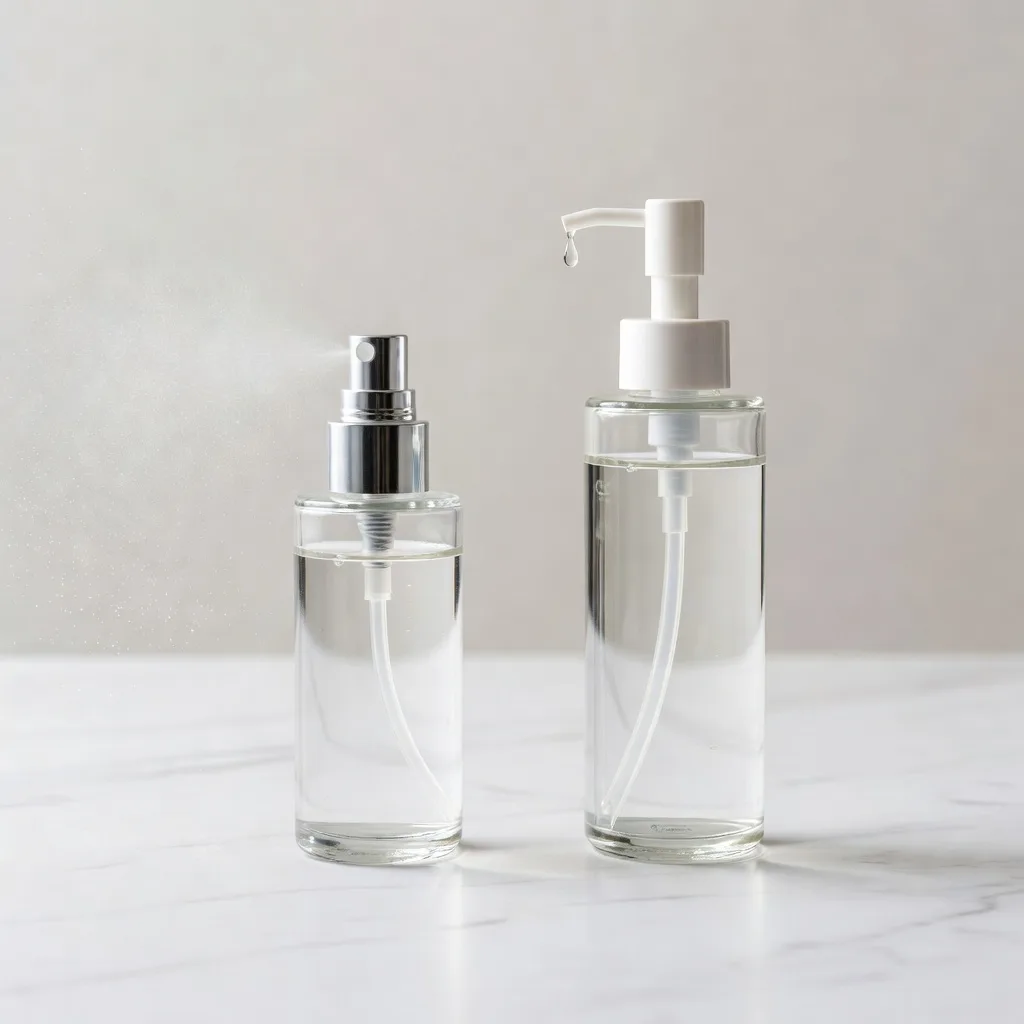
Facial Mist vs Toner: Differences, Benefits and Whether to Use Both
Facial mists and toners both come in bottles of watery liquid, both promise fresher skin and both sit somewhere between cleansing and moisturising. It is easy to assume they are the same product in different packaging, but they are designed for different moments in your day and often contain different ingredients.
Part of our guide to skincare products. Start with: What Does a Facial Toner Do? The Real Answer
The main difference between a facial mist and a toner is purpose and timing. A toner is used once or twice a day on freshly cleansed skin to remove leftover residue, rebalance the surface and prepare it for serums and moisturiser, and it may contain active ingredients such as mild acids or niacinamide. A facial mist is a light, sprayable liquid designed to hydrate, soothe or refresh skin at any time, including over makeup. Toners are applied with hands or a cotton pad; mists are sprayed. You can use both, and alcohol-free versions of either suit most skin types best.
In short: toner is a routine step after cleansing, mist is a quick top-up whenever you need it.
The American Academy of Dermatology advises people with acne-prone skin to use gentle, alcohol-free products and to avoid irritating products such as astringents and toners that dry out the skin, which is why the formula matters more than the label.
This guide compares formulas and application, explains when each one actually helps, flags the alcohol problem and shows how to use a toner and a mist together without overdoing it.
Shopping these picks?
Amazon Prime members get fast, free shipping on eligible items, plus Prime Video, Amazon Music and member deals. New members can start with a free trial.
Start a free Prime trialAged 18 to 24? Prime for Young Adults comes with a longer free trial and a lower price after it.
Affiliate link: we may earn a commission at no extra cost to you.
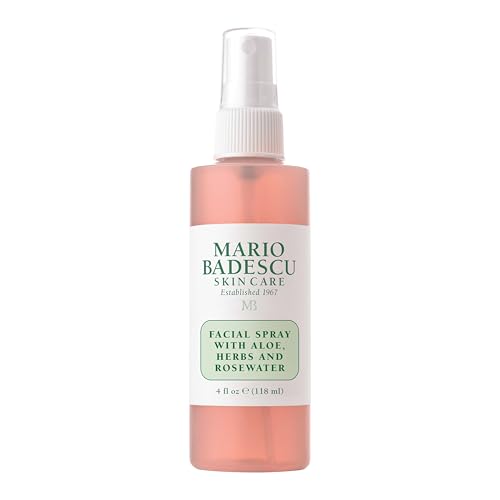
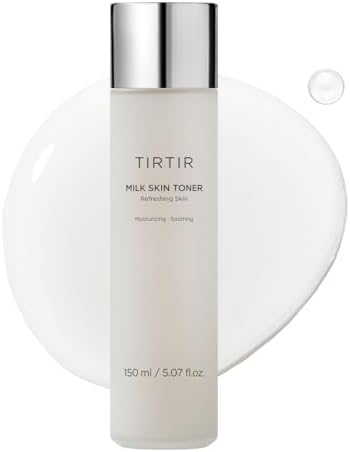
Recommended Facial Mists and Hydrating Toners on Amazon




In This Guide
- Facial Mist vs Toner at a Glance
- What a Toner Does
- What a Facial Mist Does
- How the Formulas Differ
- Alcohol and Fragrance Cautions
- When a Toner Helps and When a Mist Helps
- Which Is Better for Your Skin Type?
- How to Use a Toner and a Facial Mist in One Routine
- Common Mistakes With Mists and Toners
- Dos and Don’ts
- Honest Limits
- When to See a Dermatologist
- FAQ
- The Bottom Line
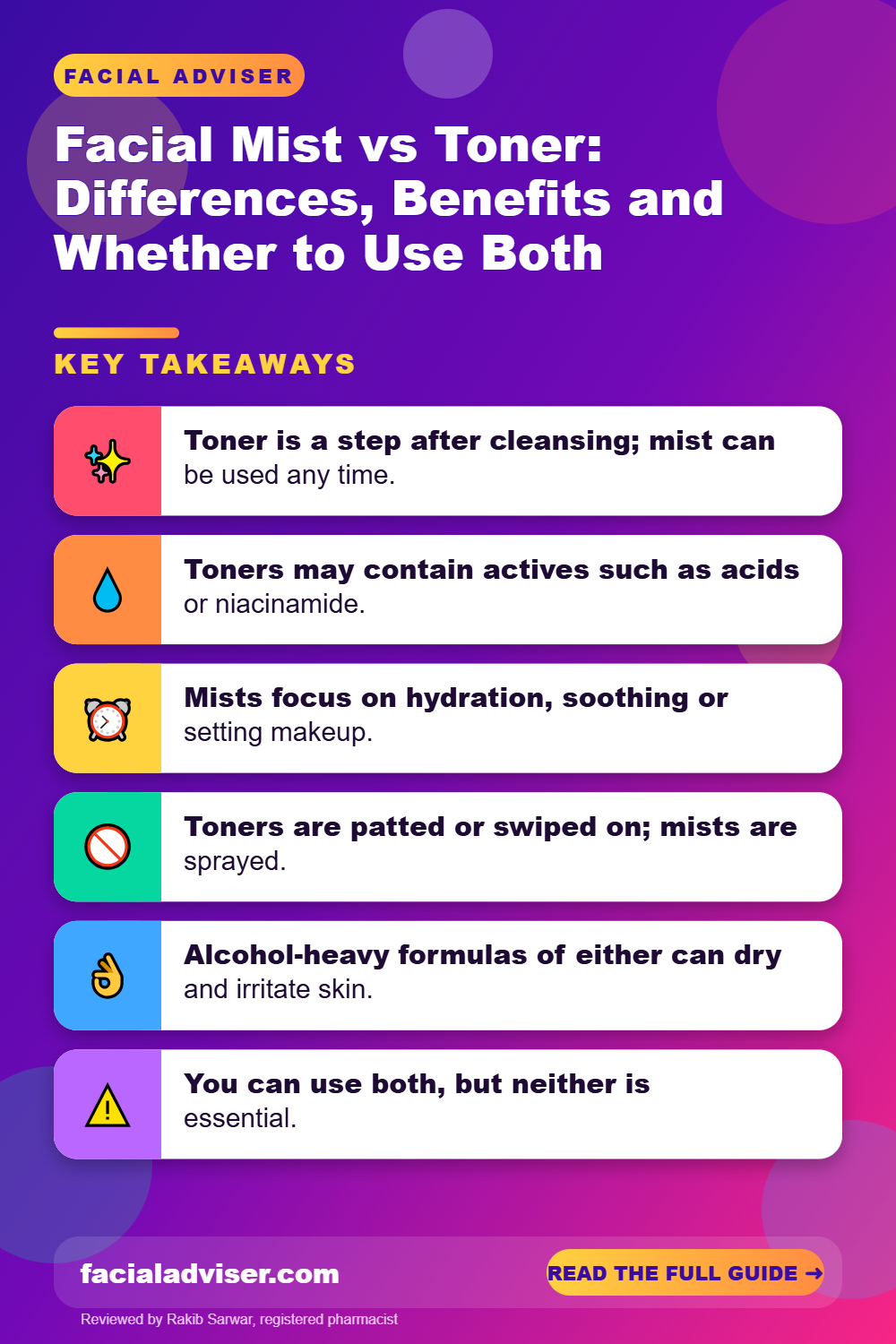
In Brief
- Toner is a step after cleansing; mist can be used any time.
- Toners may contain actives such as acids or niacinamide.
- Mists focus on hydration, soothing or setting makeup.
- Toners are patted or swiped on; mists are sprayed.
- Alcohol-heavy formulas of either can dry and irritate skin.
- You can use both, but neither is essential.
- Always follow a mist with moisturiser if skin is dry.
Facial Mist vs Toner at a Glance
Formulas overlap a lot, and some products are sold as both. This table compares a typical toner with a typical facial mist to show where the real differences lie.
| Feature | Toner | Facial mist |
|---|---|---|
| Main purpose | Prep and balance skin after cleansing | Hydrate, soothe or refresh on the go |
| When used | Morning and or evening, after cleansing | Any time, including over makeup |
| Application | Hands, cotton pad or patting | Sprayed from a fine nozzle |
| Common ingredients | Humectants, niacinamide, mild acids, soothing extracts | Water, humectants, botanical waters, sometimes oils |
| Active ingredients | Often | Usually few or none |
| Texture | Watery to slightly milky | Very light, fast-drying |
| Can go over makeup | No, it would disturb makeup | Yes, many are designed for it |
| Essential? | No, optional | No, optional |
The labels are not regulated terms, so always check the ingredient list. A hydrating toner can be almost identical to a mist, and some mists contain exfoliating acids or alcohol.
What a Toner Does
Toners began as alcohol-based astringents designed to remove oil and residue left by harsh soaps. Modern toners are usually much gentler and are best thought of as a thin first layer of treatment.
- Remove the last traces of cleanser, makeup or hard-water minerals.
- Add a first layer of hydration with humectants such as glycerin or hyaluronic acid.
- Deliver actives such as niacinamide, mild AHAs, BHA or PHAs.
- Help serums spread more easily over damp skin.
- Soothe with ingredients such as panthenol, allantoin or centella.
Exfoliating toners are closer to treatments than refreshers, so they need the same care as any acid product, including sunscreen during the day. Our guide on facial spray vs toner looks at the overlap between these product types in more detail.
What a Facial Mist Does
A facial mist is designed for convenience. It delivers a fine layer of liquid that can refresh skin during the day without disturbing makeup or needing cotton pads.
- Adds a quick hit of hydration in dry air, on flights or in air-conditioned offices.
- Cools and refreshes skin in hot weather or after exercise.
- Softens a powdery look and helps makeup melt into skin.
- Dampens skin before serums so they spread more easily.
- Soothes skin with calming ingredients in some formulas.
Pure water mists evaporate quickly and can leave skin feeling tighter than before if nothing seals the moisture in. A mist with humectants such as glycerin works better, and following it with moisturiser locks in the benefit.
How the Formulas Differ
Both products are mostly water, so the difference lies in what else is added and how much. Reading the first five or six ingredients tells you most of what you need to know.
| Ingredient type | Found in toners | Found in mists | What to know |
|---|---|---|---|
| Humectants (glycerin, hyaluronic acid) | Common | Common | Hydrating; good for most skin |
| Niacinamide | Common | Sometimes | Helps oil, redness and barrier |
| AHA, BHA, PHA | Common in exfoliating toners | Rare | Raise sensitivity; not for frequent spritzing |
| Denatured alcohol | Some older-style toners | Some setting mists | Can dry and irritate |
| Fragrance and essential oils | Sometimes | Often | Common cause of irritation |
| Botanical waters | Sometimes | Very common | Pleasant but mostly refreshing |
| Film formers | Rare | In setting sprays | Help makeup last, not skincare |
If a mist lists alcohol near the top and promises to set makeup, it is really a setting spray, which is fine over makeup but not a hydrating skincare step.
Alcohol and Fragrance Cautions
The biggest risk with either product is a harsh formula used often. Denatured alcohol, listed as alcohol denat or SD alcohol, gives a fresh, fast-drying feel but can strip oil and weaken the skin barrier over time.
Avoid high-alcohol toners and mists if you have dry, sensitive or acne-prone skin, eczema or rosacea. Stop using any product that stings, burns or leaves skin red and tight, and patch test new products first, since fragrance and essential oils are frequent triggers.
The AAD’s acne skin care tips recommend alcohol-free products and warn that astringents and toners can irritate acne-prone skin, which applies equally to harsh mists. Fatty alcohols such as cetyl or cetearyl alcohol are different: they are gentle and help soften skin. If a product stings, our guide on why toner stings sometimes explains the likely causes.
When a Toner Helps and When a Mist Helps
Neither product is essential, but each can earn its place in the right situation.
- Toner helps if you have hard water, use a heavier cleanser or want a simple way to add niacinamide or a mild acid.
- Toner helps oily or combination skin that likes a lightweight, layered routine.
- Mist helps if your skin feels tight in dry, air-conditioned or heated rooms.
- Mist helps when you want to refresh or soften makeup during the day.
- Mist helps during travel, exercise or hot weather.
- Neither is needed if your skin feels comfortable with cleanser, moisturiser and sunscreen alone.
If you have to choose one, pick the toner for routine benefits and the mist for daytime comfort. Our guide on whether facial sprays are useful looks at which situations genuinely benefit from a mist.
Which Is Better for Your Skin Type?
Your skin type and the ingredients inside the bottle matter more than whether it is called a mist or a toner.
- Dry skin: a hydrating, alcohol-free toner, plus a humectant mist sealed with moisturiser.
- Oily skin: a light toner with niacinamide or low-strength BHA; a mist mainly for refreshing makeup.
- Combination skin: a balancing toner all over, a mist on dry areas as needed.
- Sensitive skin: fragrance-free, alcohol-free formulas with soothing ingredients; skip acids at first.
- Acne-prone skin: gentle, alcohol-free toner and non-comedogenic products; avoid astringents.
- Mature skin: hydrating toners and mists help fine lines look softer, followed by moisturiser.
Whatever your skin type, introduce one new product at a time and give it a few weeks before judging it. If your routine already has a hydrating serum, a simple mist may add little, while a toner with niacinamide may be the easier way to add that ingredient without buying another serum.
How to Use a Toner and a Facial Mist in One Routine
You can use both without overcomplicating things. The toner goes into your routine; the mist is an extra you reach for when you need it.
Cleanse
Wash with a gentle cleanser and pat skin dry.
Apply toner
Pat a few drops into skin with your hands or sweep gently with a soft pad.
Apply serum
Use any serum while skin is still slightly damp.
Moisturise
Seal in hydration with a moisturiser suited to your skin.
Apply sunscreen in the morning
Use broad-spectrum SPF 30 or higher as your last skincare step.
Mist during the day
Hold the bottle at arm’s length, close your eyes and spray lightly.
Let it dry or press it in
Pat gently or let it air dry rather than wiping.
If you use an exfoliating toner, keep it to the evening and use a plain hydrating mist during the day. That way you get the benefit of the active without spraying acids onto your skin repeatedly.
Common Mistakes With Mists and Toners
Most problems with these products come from how they are used rather than the products themselves. A few small changes usually fix them.
- Spraying a mist on dry skin many times a day without moisturiser, which can leave skin feeling tighter as the water evaporates.
- Swiping hard with a cotton pad, which adds friction and wastes product; patting with clean hands is gentler.
- Using an exfoliating toner morning and night along with other acids or a retinoid.
- Choosing a mist for its scent, when fragrance is one of the most common causes of irritation.
- Keeping a mist in a hot car or sharing it, which can shorten its life and spread bacteria.
- Spraying too close to the face, which gives large drops and can reach the eyes.
Store both products closed and away from heat, and replace them if the smell, colour or texture changes. If you use a toner on a pad, choose a soft, lint-free one and press rather than rub. These simple habits make even a basic formula feel more pleasant and reduce the risk of irritation.
Dos and Don’ts
Good Habits
- Choose alcohol-free, fragrance-free formulas
- Use toner right after cleansing
- Follow a mist with moisturiser if skin is dry
- Mist at arm’s length with eyes closed
- Check ingredient lists, not product names
Common Mistakes
- Spritz exfoliating mists many times a day
- Use a harsh astringent on dry or sensitive skin
- Rely on a mist instead of moisturiser
- Spray and let pure water evaporate on dry skin
- Use both products if your skin already feels irritated
Honest Limits
Neither a toner nor a facial mist is a must-have. Most of the benefit of both comes from humectants and a few actives that could just as easily be in your serum or moisturiser. If your routine already hydrates and protects well, adding either may make little visible difference.
Marketing claims can also go too far. Mists do not deeply hydrate on their own, do not shrink pores and do not control oil for long. Toners do not close pores or restore a precise pH in a way you will see. Both are pleasant, sometimes useful extras, not treatments for acne, pigmentation or wrinkles. For those concerns, sunscreen, retinoids and targeted treatments do far more.
When to See a Dermatologist
- Your skin stings, burns or turns red with most toners and mists.
- You have persistent dryness or tightness despite a gentle routine.
- You have acne, rosacea or eczema and are unsure which products are safe.
- You develop a rash or itching after using a new product.
This article is for general information and does not replace professional medical advice. Patch test new products, and see a board-certified dermatologist if you have a skin condition or react to skincare.
FAQ
What is the difference between a facial mist and a toner?
Toner preps skin after cleansing; a mist refreshes and hydrates any time.
Can I use a facial mist instead of toner?
Yes, if it has hydrating ingredients and you do not need actives.
Can I use toner as a face mist?
Only if it is gentle and alcohol-free, and not an exfoliating toner.
Can I use both toner and facial mist?
Yes, toner in your routine and mist during the day.
Is a toner necessary?
No, it is optional for most people.
Do facial mists hydrate skin?
Briefly, especially with humectants, but seal with moisturiser.
Is alcohol in toner bad?
Denatured alcohol can dry and irritate skin; fatty alcohols are fine.
Can I spray a mist over makeup?
Yes, many mists are designed for that.
Which is better for oily skin?
A light toner with niacinamide or BHA usually helps more.
Which is better for dry skin?
A hydrating toner and a humectant mist, both followed by moisturiser.
The Bottom Line
A toner is a routine step used after cleansing to remove residue, hydrate and deliver actives, while a facial mist is a sprayable refresher you can use any time, even over makeup.
Choose alcohol-free, fragrance-free formulas, use a toner for routine benefits and a mist for comfort during the day, and remember that neither replaces a good moisturiser and daily sunscreen.

Written by
Registered pharmacist and founder of Facial Adviser. Rakib's pharmacy training covers how skincare actives work and interact; a later course in cosmetology turned that into a focus on facial treatments and skincare products. He plans, researches and edits every guide on the site and checks health claims against sources such as the American Academy of Dermatology, the FDA and the NIH. He is not a dermatologist; see the Editorial Policy and Medical Disclaimer.
About · Editorial policy · How we choose products · Medical disclaimer · Contact
Keep reading: Toners, mists and sunscreen
- What Does a Facial Toner Do? The Real Answer
- Facial Toner vs Astringent: Which One Your Skin Actually Needs
- Facial Spray vs Toner: What Each Does and Whether You Need Either
- 10 Best Facial Toners for Pores (2026): Smoother, Clearer-Looking Skin
- 10 Best Facial Toners for Sensitive Skin (2026): Gentle, No Sting
- 10 Best Sunscreens for Sensitive Facial Skin (2026): Gentle Mineral SPF
- 10 Best Face Masks for Every Skin Type (2026): Clay, Gel and Sheet
- 10 Best Facial Cleansers for Combination Skin (2026): Balanced Picks