
How Many Sessions of Diamond Peel Is Needed?
How many sessions of diamond peel is needed before you actually see a change? Most people need an initial course of roughly 6 to 12 sessions spaced about two weeks apart, followed by maintenance every 2 to 3 months, though that range comes from clinical consensus rather than a controlled trial.
Part of our guide to facial treatments. Start with: Ultimate Guide Microdermabrasion: What to Know
There is no rigorous randomized-controlled-trial literature establishing one scientifically optimal session count for diamond-tip microdermabrasion, a genuine evidence gap worth knowing before committing to a long, expensive package. The guidance below reflects standard-of-care practice, still useful, just not the same as trial-backed data.
Your actual goal changes the math considerably: a general glow needs far fewer sessions than clearing mild comedones or fading hyperpigmentation, and none of these goals include structural acne scarring, which the mechanism simply can’t reach regardless of session count.
This guide breaks down what practitioners actually converge on, how to budget and track a full course, and the real signal that tells you when to stop adding sessions and switch to something else entirely.
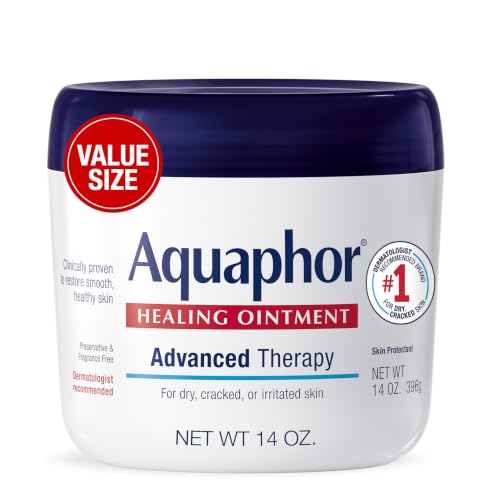
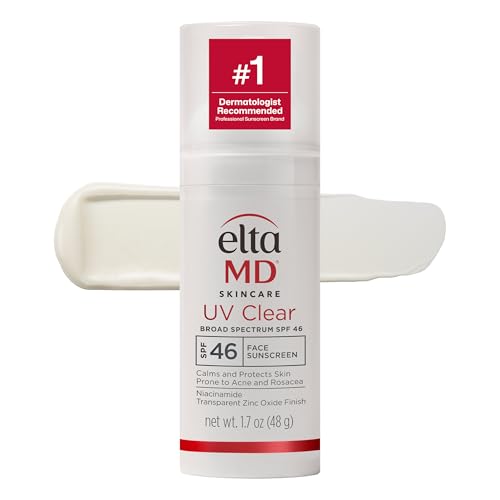
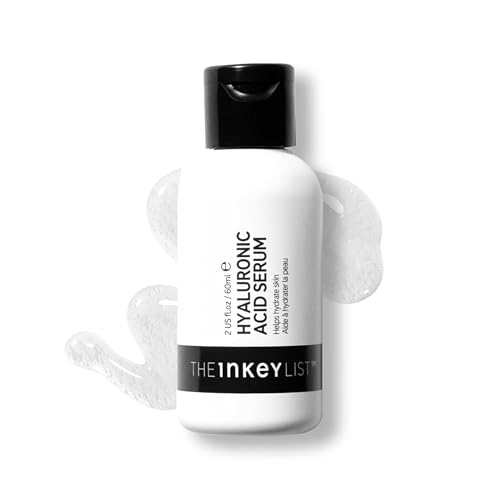
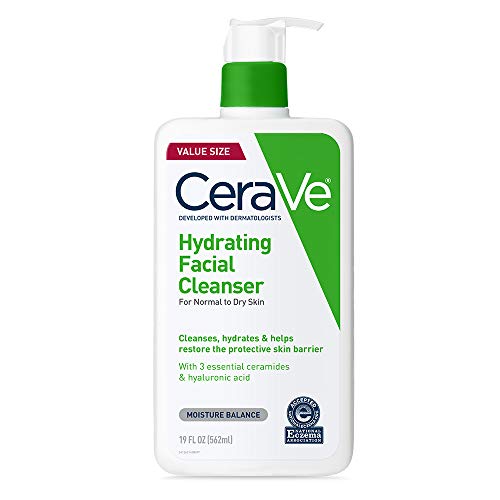
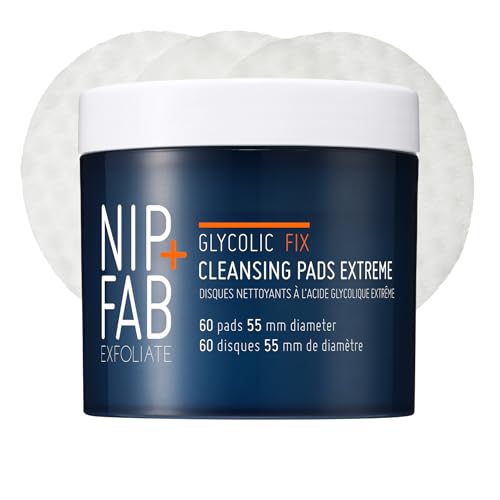
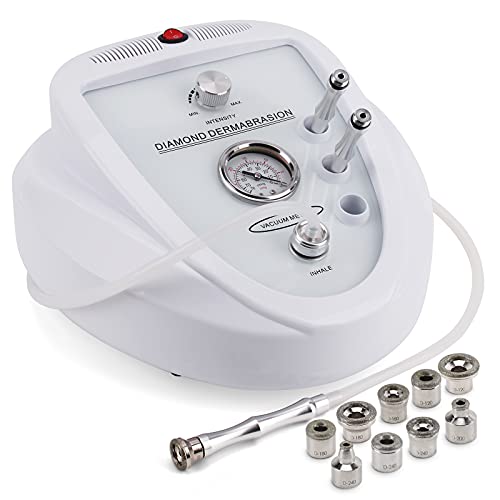
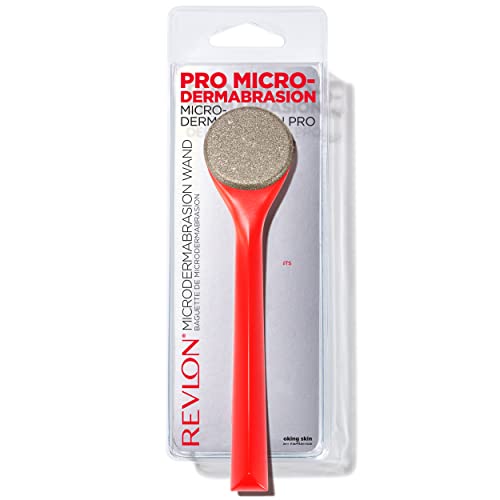
Recommended At-Home Diamond Peel and Microdermabrasion Tools
Key Takeaways
- There’s no rigorous clinical-trial literature establishing an “optimal” session count for diamond peel; the guidance available is clinical-consensus practice, not controlled research.
- An initial corrective course commonly runs 6 to 12 sessions spaced about two weeks apart, according to practitioner-facing sources.
- Maintenance afterward is typically every 2 to 3 months, a real physiological match to skin’s roughly 28 to 40 day turnover cycle.
- How many sessions you need depends heavily on your actual goal: general polish, mild comedones, or mild hyperpigmentation each call for a different course length.
- A dermatologist interviewed independently described the treatment’s effect as a temporary “polish,” needing renewal roughly every 3 to 4 weeks to sustain any visible result.
- If a full course isn’t producing durable improvement, that’s a signal to switch to a deeper modality, not to keep adding more sessions of the same treatment.
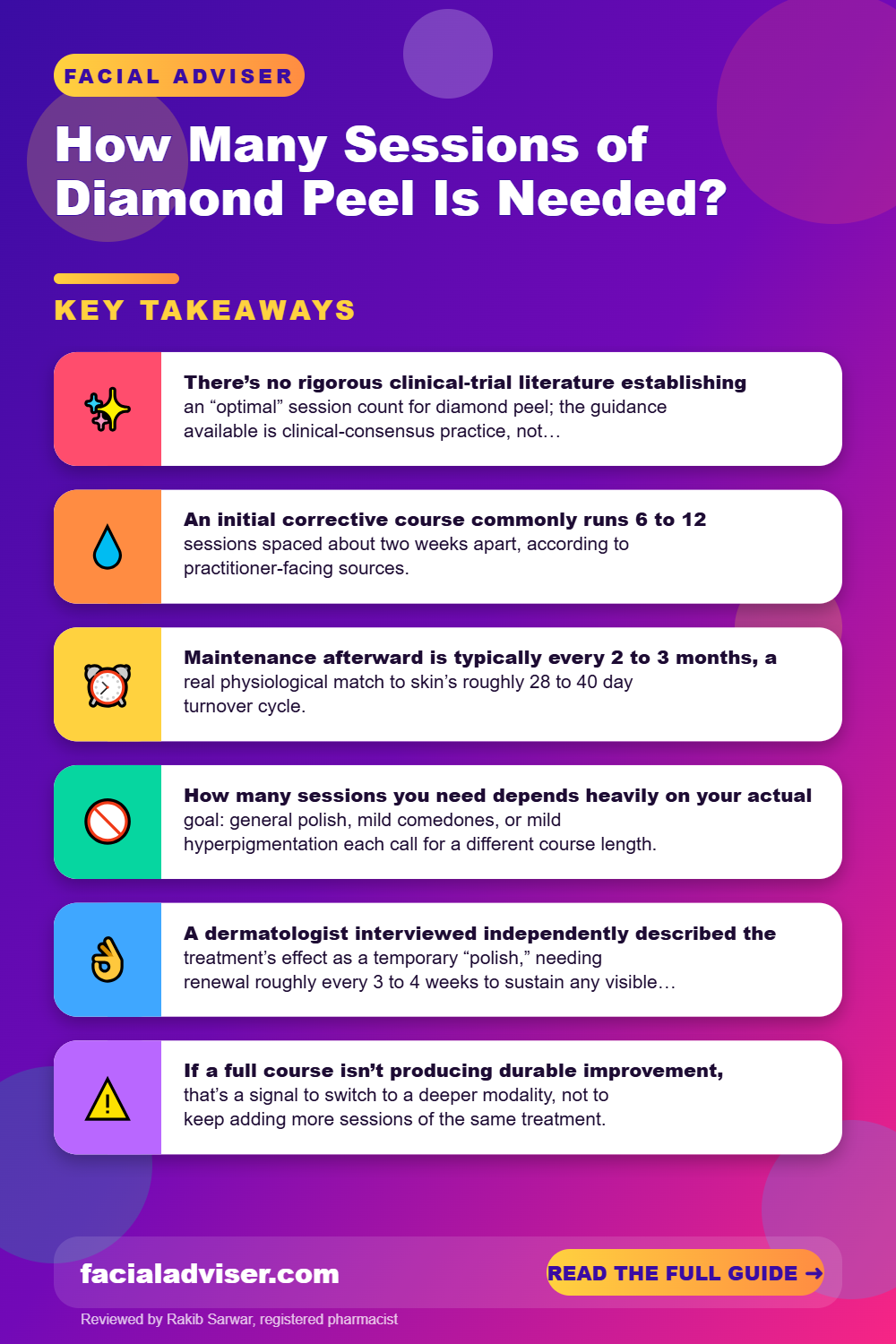
Table of Contents
- How Many Sessions Does Diamond Peel Actually Take?
- The Real Evidence Gap Worth Knowing
- Initial Course: What Practitioners Converge On
- Maintenance: Why Every 2 to 3 Months Makes Sense
- Sessions by Goal
- Diminishing Returns and When to Switch
- Budgeting for a Full Course
- How to Actually Tell If It’s Working
- Do This, Not That
- Planning Your Own Session Schedule
- When to See a Dermatologist
- Frequently Asked Questions
- The Bottom Line
How Many Sessions Does Diamond Peel Actually Take?
Most people need an initial course of roughly 6 to 12 sessions spaced about two weeks apart to see a meaningful change in texture or tone, followed by maintenance sessions every 2 to 3 months to sustain it. That range comes from practitioner-facing clinical consensus rather than a controlled trial, a distinction worth being upfront about before setting expectations.
Shopping these picks?
Amazon Prime members get fast, free shipping on eligible items, plus Prime Video, Amazon Music and member deals. New members can start with a free trial.
Start a free Prime trialAged 18 to 24? Prime for Young Adults comes with a longer free trial and a lower price after it.
Affiliate link: we may earn a commission at no extra cost to you.
This guide covers what the available guidance actually converges on, how your specific goal changes the course length, and the real signal that tells you when to stop adding more diamond-peel sessions and switch to something else.
The Real Evidence Gap Worth Knowing
Note: Unlike some other treatment questions on this site, there is no rigorous randomized-controlled-trial literature establishing an evidence-based “optimal session count” specifically for diamond-tip microdermabrasion. The session guidance below reflects standard-of-care and clinical consensus from dermatology and spa practice, not controlled research. That’s a genuine departure from how confidently some marketing pages present an exact number, and it’s worth knowing before you commit to a long, expensive course expecting guaranteed results.
This gap doesn’t mean the guidance is unreliable, practitioner consensus built from repeated clinical experience is still useful information. It means the specific numbers below should be read as a reasonable starting framework to discuss with your provider, not a scientifically established formula.
Initial Course: What Practitioners Converge On
Across practitioner-facing sources, an initial corrective course commonly runs 6 to 12 sessions, spaced roughly two weeks apart, for meaningfully changing skin texture or tone. This spacing gives the skin enough time to regenerate between passes while still building cumulative improvement across the course.
| Source guidance | Recommended interval |
|---|---|
| General practitioner consensus, corrective course | 6 to 12 sessions, about every 2 weeks |
| Combination device (e.g., DiamondGlow) protocol | Every 2 weeks, or as the provider suggests, for a defined course |
| General maintenance guidance | Every 4 to 6 weeks for upkeep |
| Physiological maintenance interval | Every 2 to 3 months, matching the skin’s turnover cycle |
Maintenance: Why Every 2 to 3 Months Makes Sense
Once an initial corrective course is done, maintenance sessions every 2 to 3 months are the commonly cited interval, and there’s a real physiological reason behind it rather than an arbitrary marketing number: skin’s natural turnover cycle runs roughly 28 to 40 days. Treating more often than that gives the epidermis no meaningful time to regenerate before it’s abraded again, adding irritation risk without adding benefit.
This is the same logic that shows up across skin-renewal treatments generally: the biological clock of cell turnover sets a real floor on how often re-treatment can add value, independent of how the treatment is marketed.
Sessions by Goal
| Goal | Typical course | Notes |
|---|---|---|
| General glow / texture polish | Single sessions monthly to every 6 weeks | No extended course needed; a maintenance-only goal |
| Mild comedones (non-inflamed congestion) | Course of about 6 sessions, every 2 weeks | Not a primary acne treatment; won’t touch inflammatory or cystic acne |
| Mild hyperpigmentation / PIH | Course of 6 to 10 sessions | Pigment clearance depends on cumulative turnover cycles, not one pass |
Notice that none of these goals include structural acne scarring, that’s a separate topic with its own honest answer covered in our diamond-peel-and-scars guide, since the mechanism simply doesn’t reach deep enough for that concern regardless of session count.
Diminishing Returns and When to Switch
Independent, non-commercial dermatologist commentary is genuinely useful here. One dermatologist described microdermabrasion’s effect as comparable to “a polishing treatment for your car,” superficial and temporary, needing repeat sessions roughly every 3 to 4 weeks just to maintain any visible effect, an explicit flag that the result’s longevity is limited by design, not a shortcoming of any particular provider.
Warning: If a full 6 to 10 session course isn’t producing durable improvement in texture or pigment, that’s the signal to escalate to a modality that reaches deeper tissue, such as a chemical peel using a higher-percentage acid, or laser resurfacing, rather than continuing to add more diamond-peel sessions expecting a different result. Repeating an ineffective treatment past its reasonable course length adds cumulative irritation risk without adding benefit.
Another independent dermatologist’s framing is worth applying directly: people with otherwise healthy, unremarkable skin are often better served starting with, or sticking to, a solid home routine before committing to a long professional course. Professional treatments are a supplement to good home care, not a replacement for one.
Budgeting for a Full Course
Because a corrective course commonly runs 6 to 12 sessions rather than a single visit, it’s worth planning the total cost before committing rather than pricing out one session in isolation, per-session pricing multiplied across a full course frequently rivals or exceeds the cost of a smaller number of sessions with a deeper modality like a chemical peel. Many providers offer a package rate for a pre-agreed number of sessions, which can lower the per-visit cost but also creates pressure to complete the full package even if a reassessment partway through suggests switching direction.
Ask whether a package is refundable or transferable to a different treatment before paying for a full course upfront, and treat any provider who won’t build in a reassessment checkpoint partway through a long package as a reason for caution rather than reassurance.
How to Actually Tell If It’s Working
The most reliable way to judge progress across a multi-session course is consistent, well-lit photos taken from the same angle and distance before starting and at regular intervals, since day-to-day lighting and makeup make it easy to either overestimate or completely miss real, gradual change. Comparing session-6 photos against the original baseline is far more informative than comparing each session to the one immediately before it, since the week-to-week difference is often too small to judge reliably on its own.
A provider willing to review that photo record with you honestly, rather than simply recommending you continue the package regardless of visible change, is a good sign you’re getting an accurate read on whether the treatment is actually working for your specific goal.
Do This, Not That
Do
- Define your actual goal (polish, comedones, or pigmentation) before booking a course
- Space sessions roughly two weeks apart during an initial corrective course
- Move to maintenance spacing (every 2-3 months) once your course is complete
- Reassess with your provider if a full course isn’t producing durable change
- Ask your provider to state their reasoning for a specific session count, not just a fixed package
Don’t
- Book sessions more often than every 2-3 months once in maintenance mode
- Expect a session-count guarantee backed by controlled clinical trial data
- Keep repeating an ineffective course expecting eventual results
- Use a comedones-focused course to treat inflammatory or cystic acne
- Expect any session count to resolve structural acne scarring
Planning Your Own Session Schedule
Define your goal
General polish, mild comedones, or mild hyperpigmentation each point to a different course length.
Start with the initial course
Plan for roughly 6 to 12 sessions spaced about two weeks apart, depending on your specific goal.
Watch for the skin’s own turnover timing
Avoid scheduling sessions closer together than the skin’s roughly 28 to 40 day regeneration cycle allows.
Tip: Ask your provider to set a specific reassessment point, such as after session 6, rather than an open-ended ongoing package.
Transition to maintenance
Move to sessions every 2 to 3 months once your initial course goal has been met.
Reassess or switch modality if needed
If a full course hasn’t produced durable improvement, discuss a deeper option like a chemical peel or laser resurfacing instead.
When to See a Dermatologist
See a dermatologist or skin specialist if a full course of sessions isn’t producing the improvement you expected, or if you’re unsure whether your specific concern is one diamond peel can actually address. If your concern is really about acne scarring rather than texture or tone, our guide on whether diamond peel can remove scars covers what this treatment can and can’t reach.
Frequently Asked Questions
How many sessions of diamond peel are needed for results?
An initial course commonly runs 6 to 12 sessions spaced about two weeks apart, depending on your goal.
Is there clinical trial evidence for this session count?
No, the guidance reflects clinical-consensus practice, not a controlled trial establishing an optimal number.
How often should maintenance sessions be scheduled?
Every 2 to 3 months, matching the skin’s natural turnover cycle.
Can I get sessions more often than every 2-3 months for maintenance?
It’s not recommended; more frequent treatment adds irritation risk without added benefit once skin hasn’t had time to regenerate.
Does the session count differ for acne versus pigmentation goals?
Yes, comedones typically need about 6 sessions, while pigmentation often needs 6 to 10.
What if a full course doesn’t improve my skin?
That’s a signal to switch to a deeper modality, such as a chemical peel or laser resurfacing, rather than repeating the course.
Is diamond peel a permanent treatment after enough sessions?
No, its effect is temporary by nature and requires ongoing maintenance regardless of how many sessions you’ve had.
Can more sessions treat acne scarring?
No, additional sessions don’t change the fact that the treatment doesn’t reach the dermal tissue where true scarring lives.
Should everyone with normal skin get a full session course?
Not necessarily; people with an already solid home routine may not need an extended professional course.
How do I know if I should reassess my course?
Set a specific checkpoint with your provider, such as after session 6, rather than continuing an open-ended package.
The Bottom Line
Diamond peel session guidance is real, practical, clinical-consensus advice, not controlled-trial-backed data, and it’s worth knowing that distinction going in. An initial course of roughly 6 to 12 sessions, spaced two weeks apart, followed by maintenance every 2 to 3 months, is a reasonable framework matched to your specific goal.
The most useful rule isn’t a session number at all: if a full course isn’t producing durable improvement, that’s the signal to switch to a deeper modality rather than adding more of the same treatment.

Written by
Registered pharmacist and founder of Facial Adviser. Rakib's pharmacy training covers how skincare actives work and interact; a later course in cosmetology turned that into a focus on facial treatments and skincare products. He plans, researches and edits every guide on the site and checks health claims against sources such as the American Academy of Dermatology, the FDA and the NIH. He is not a dermatologist; see the Editorial Policy and Medical Disclaimer.
About · Editorial policy · How we choose products · Medical disclaimer · Contact
Keep reading: Microdermabrasion and diamond peel
- Ultimate Guide Microdermabrasion: What to Know
- Microderm Infusion vs Facial: Differences, Results and Which One to Book
- Microdermabrasion vs Facial: Which Treatment Does Your Skin Need?
- European Facial vs Microdermabrasion: Which Treatment Is Right for Your Skin?
- Fire and Ice Facial vs Microdermabrasion: Differences, Results and Which to Choose
- Diamond Facial: Diamond-Tip Microdermabrasion vs Diamond Dust Facials
- What Is the Best Anti-Aging Facial Treatment? Options Compared by Goal
- What Is a Spa Facial?