Carbon Peel Laser Benefits: What the Evidence Shows
Carbon peel laser benefits are widely marketed, but what does the underlying evidence actually show once you separate the strong claims from the thin ones?
Part of our guide to facial treatments. Start with: Microneedling Facial: Real Results, Explained
A 2023 study of 35 acne patients found carbon peel treatment produced an 80% rate of major improvement with no reported pigmentation complications, but that evidence is specific to inflammatory acne, not the broader pore-size and oil-control claims used to sell the treatment. The lasers used are typically FDA-cleared for tattoo removal, not a dedicated cosmetic indication.
No controlled trial has isolated how much of any benefit comes from the carbon suspension itself versus the laser energy alone.
This guide covers the real mechanism, the acne evidence specifically, and where the marketing runs ahead of what’s actually been tested.
Recommended At-Home Care to Pair With In-Office Treatment


The Core Facts
- Carbon peel devices are Q-switched Nd:YAG lasers — the same technology used for tattoo removal — typically cleared by the FDA for pigmented lesions and tattoos, not specifically for pore or oil-control claims.
- The strongest published evidence (a 35-patient study) supports carbon peel specifically for inflammatory acne, with an 80% rate of major improvement and no reported pigmentation complications.
- No controlled trial has isolated how much of any benefit comes from the carbon suspension itself versus the laser energy alone.
- Broader marketing claims about pore size reduction and general “skin rejuvenation” rest mainly on device-maker material rather than independent controlled trials.
Article Roadmap
- What a Carbon Peel Actually Is
- The Physics Behind It
- The Regulatory Reality Marketing Skips
- The Real Evidence: Acne
- The Weaker Evidence: Pores and Oil Control
- Carbon Peel vs. Other Resurfacing Options
- What a Typical Session Involves
- Do This, Not That
- Steps of a Typical Treatment Session
- Who Is (and Isn’t) a Good Candidate
- Safety Considerations
- Cost and Session Count
- When to Talk to a Dermatologist First
- What This Article Can’t Tell You
- Frequently Asked Questions
What a Carbon Peel Actually Is
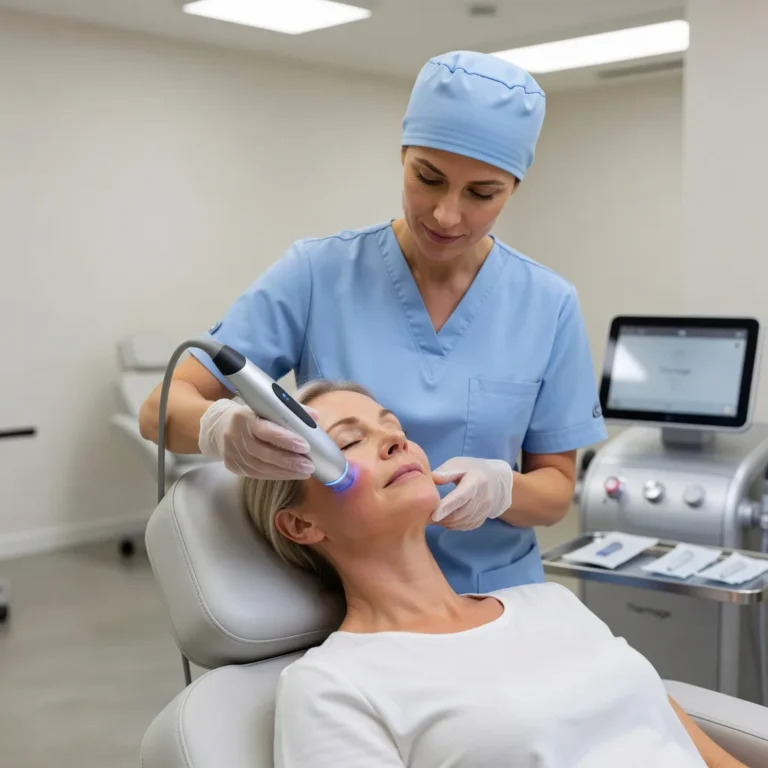
A carbon peel — sometimes marketed as a “Hollywood peel” or “carbon laser facial” — involves painting a liquid carbon suspension onto the skin, letting it dry and seep into pores for several minutes, then passing a laser over the treated area. Despite the name, it isn’t a chemical peel in the traditional acid-based sense; there’s no exfoliating acid and no neutralization step. The “peel” language in the marketing is a carryover from the broader resurfacing-treatment category, not a description of the actual mechanism at work.
Shopping these picks?
Amazon Prime members get fast, free shipping on eligible items, plus Prime Video, Amazon Music and member deals. New members can start with a free trial.
Start a free Prime trialAged 18 to 24? Prime for Young Adults comes with a longer free trial and a lower price after it.
Affiliate link: we may earn a commission at no extra cost to you.
The Physics Behind It
The laser used is a Q-switched Nd:YAG device operating at 1064 nanometers, delivering extremely short, nanosecond-duration pulses. Carbon particles absorb this specific wavelength strongly, so when the laser passes over carbon-coated skin, the energy is preferentially absorbed by the carbon rather than by surrounding tissue. That absorption creates a photoacoustic and photothermal effect that fragments the carbon, produces light superficial exfoliation, and generates some follicular heating. This is fundamentally the same physics used in laser tattoo removal, since carbon-based black tattoo ink responds particularly well to the same 1064nm Q-switched wavelength — which is why practitioners sometimes describe carbon peel treatment as tattoo-removal technology repurposed for facial pores and oil control.
The Regulatory Reality Marketing Skips
Q-switched Nd:YAG lasers are most commonly FDA-cleared for tattoo removal and treatment of pigmented lesions. Using that same cleared device for pore reduction, oil control, or general skin rejuvenation via a topical carbon suspension is, in regulatory terms, an off-label application of an already-cleared device rather than a treatment with its own dedicated clearance for those specific cosmetic claims. That distinction doesn’t make the treatment unsafe, but it does mean marketing language implying regulatory validation for “skin rejuvenation” or “pore minimizing” claims is overstating what the device’s actual clearance covers.
The Real Evidence: Acne
The best available clinical evidence for carbon peel treatment comes from a 2023 prospective study of 35 patients with Grade II to IV acne vulgaris who had responded poorly to prior topical or systemic therapy. The protocol applied topical carbon gel for 20 to 25 minutes, then treated with the Q-switched Nd:YAG laser in quasi-long-pulse and Q-switched modes, at a fluence of 1.5 to 2.5 J/cm², across three sessions spaced two weeks apart. The results were notable: the Investigator’s Static Global Assessment score improved from an average of 3.657 to 1.342, a highly statistically significant change, with 80 percent of patients showing more than 80 percent improvement and the remaining 20 percent showing 50 to 80 percent improvement — zero non-responders in the cohort. Side effects were limited to erythema in 20 percent of patients and mild pain in about 3 percent, and notably, no post-inflammatory hyperpigmentation was reported even though this was a skin-of-color cohort, a population where pigmentation-related side effects are a genuine, elevated concern with many resurfacing treatments. A companion paper published the same year reinforced acne as the area with the most, if still limited, supporting literature for this specific treatment.
It’s worth being precise about what this study does and doesn’t prove: it’s a small, single-arm study with no placebo or sham-laser comparison group, so the improvement can’t be confidently attributed to the carbon component specifically as opposed to the laser energy alone doing most of the work.
The Weaker Evidence: Pores and Oil Control
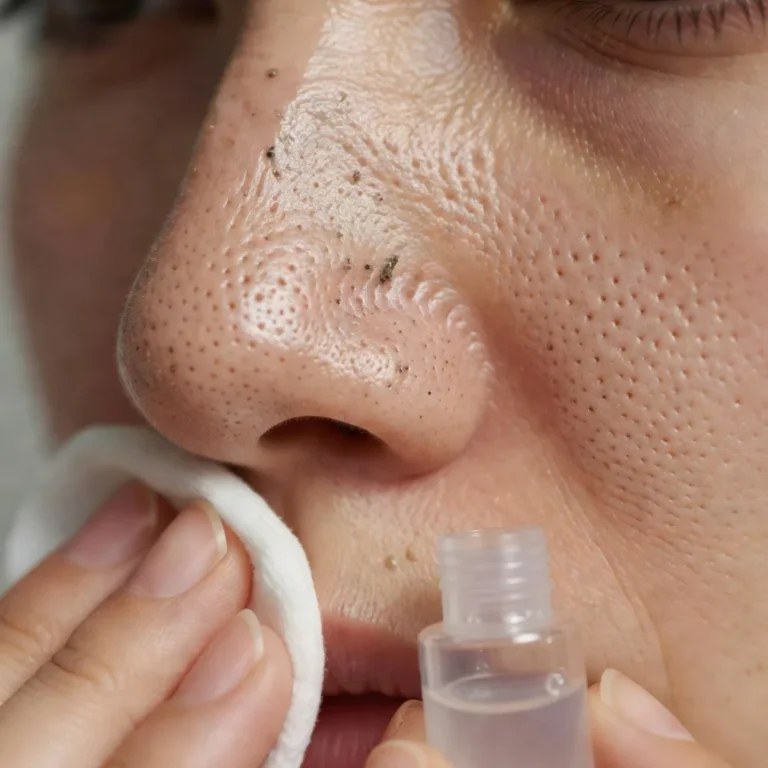
The acne study above measured acne lesion severity only — it did not quantitatively measure sebum production or pore size at all, despite those being two of the most commonly repeated marketing claims for this treatment. A split-face trial design specifically testing whether adding carbon suspension improves enlarged-pore outcomes over the Nd:YAG laser alone does exist in the dermatology literature, which at least confirms researchers have directly questioned whether the carbon adds anything beyond what the laser does by itself. The existence of that research question, more than any specific number, is the honest takeaway here: the field itself isn’t settled on whether carbon adds a measurable benefit for pores, and broad “pore minimizing” and “oil control” claims in carbon peel marketing are running well ahead of what’s been rigorously isolated and confirmed in controlled trials.
Carbon Peel vs. Other Resurfacing Options
| Treatment | Mechanism | Best-evidenced use |
|---|---|---|
| Carbon peel (Q-switched Nd:YAG + carbon) | Laser-carbon photothermal exfoliation | Inflammatory acne (small study evidence) |
| Chemical peel (glycolic/salicylic) | Acid-driven exfoliation | Pigmentation, mild texture, superficial acne |
| Microdermabrasion | Mechanical abrasion of stratum corneum | Superficial texture/polish, not deep pigmentation |
| Fractional laser resurfacing | Controlled thermal micro-injury, deeper reach | Scarring, deeper texture and pigment changes |
What a Typical Session Involves
| Step | Typical duration | What it does |
|---|---|---|
| Carbon suspension application | 20-25 minutes | Lets carbon particles seep into pores/follicles |
| Laser pass | A few minutes | Fragments carbon, produces light exfoliation and follicular heating |
| Post-treatment care | Immediate | Calming products, sun protection for the following days |
Do This, Not That
Do
- Ask specifically what the laser is FDA-cleared for and confirm the practitioner is using it within a reasonable off-label scope
- Consider this treatment primarily if you have inflammatory acne that hasn’t responded well to standard topical or oral therapy
- Confirm your provider’s experience treating your specific skin tone, since pigmentation-related side effects are a real risk with many resurfacing lasers
Don’t
- Expect a single session to meaningfully shrink pore size — that specific claim isn’t well isolated in controlled research
- Assume “FDA-cleared laser” means the pore/oil-control claim itself was FDA-reviewed
- Skip patch testing or a consultation if you have a history of keloid scarring or active pigmentation concerns
Steps of a Typical Treatment Session
Cleanse and assess
Skin is cleaned and assessed for suitability, including checking for active infections or recent sun exposure.Apply carbon suspension
A thin, even layer is applied and left to dry and settle into pores for roughly 20 to 25 minutes.Laser pass
The Q-switched Nd:YAG laser is passed over the treated area, fragmenting the carbon and producing mild exfoliation.Calm and protect
A soothing product is applied, followed by broad-spectrum sunscreen before the patient leaves.Space subsequent sessions
Published acne protocols used sessions roughly two weeks apart across a three-session course.
Who Is (and Isn’t) a Good Candidate
Based on the strongest available evidence, the clearest candidates are patients with inflammatory acne who haven’t responded well to conventional topical or oral treatment. People with active cold sores, open wounds, recent sunburn, or a history of keloid scarring are generally poor candidates for any laser-based resurfacing treatment, carbon peel included. Because the acne study’s reassuring pigmentation safety data came from one specific 35-patient cohort, it’s still worth a direct conversation with your provider about their specific experience treating your skin tone, rather than assuming that result generalizes automatically to every practice and every laser setting.
Safety Considerations
The published acne study reported a favorable safety profile — mild erythema and occasional pain, with no post-inflammatory hyperpigmentation in that cohort — but it’s a single, small, uncontrolled study, and safety outcomes with laser-based treatments are highly dependent on device settings, practitioner skill, and individual skin characteristics. As with any Nd:YAG-based treatment, incorrect settings or technique carry a real risk of burns, pigment changes, or scarring, which is why practitioner experience and appropriate device settings matter more than the treatment name on a menu.
Cost and Session Count
Published protocols for acne used three sessions spaced two weeks apart, though exact session counts and total cost vary by provider, geography, and how severe the acne is. Because no controlled trial has established an “optimal” number of sessions for pore or oil-control goals specifically, be cautious of packages sold with a fixed, large number of sessions promised to deliver a specific cosmetic outcome that isn’t the one this treatment has actual trial support for.
When to Talk to a Dermatologist First
A dermatologist consultation before booking a carbon peel is especially worthwhile if you have active or cystic acne beyond what topical treatment addresses, a history of keloid or hypertrophic scarring, darker skin tones where pigmentation-related side effects carry more consequence, or if you’re mainly chasing pore-size or oil-control claims that the current evidence doesn’t strongly support for this specific treatment — a dermatologist can point you toward options with a clearer trial record for those particular goals.
What This Article Can’t Tell You
Frequently Asked Questions
What is a carbon peel laser treatment?
It’s a treatment where a liquid carbon suspension is applied to the skin, allowed to settle into pores, then treated with a Q-switched Nd:YAG laser that fragments the carbon and produces light exfoliation.
Is carbon peel FDA-approved?
The laser device itself is typically FDA-cleared for tattoo removal and pigmented lesions, not for a separate, dedicated cosmetic pore-reduction or skin-rejuvenation indication. Using it for those cosmetic goals is generally an off-label application.
Does carbon peel actually shrink pores?
That specific claim hasn’t been well isolated in controlled trials. The strongest published study measured acne severity, not pore size or sebum production.
What condition has the best evidence for carbon peel?
Inflammatory acne, based on a 35-patient study showing an 80 percent rate of major improvement and no reported pigmentation complications.
Is carbon peel safe for darker skin tones?
The one available acne study reported no post-inflammatory hyperpigmentation in a skin-of-color cohort, a reassuring but limited signal from a single small study. Practitioner experience with your specific skin tone still matters.
How many sessions of carbon peel are needed?
Published acne protocols used three sessions spaced two weeks apart. No trial has established an optimal count for pore or oil-control goals specifically.
Does carbon peel hurt?
The acne study reported mild pain in about 3 percent of patients and erythema in about 20 percent, generally described as tolerable.
Is carbon peel the same as a chemical peel?
No. There’s no acid-based exfoliation or neutralization step involved — the mechanism is laser-carbon photothermal interaction, not chemical exfoliation.
How is carbon peel related to tattoo removal lasers?
It uses the same Q-switched Nd:YAG 1064nm laser technology, since carbon-based tattoo ink and the carbon suspension used in this treatment both respond strongly to that specific wavelength.
Who should avoid carbon peel treatment?
People with active cold sores, open wounds, recent sunburn, or a history of keloid scarring are generally poor candidates for any laser-based resurfacing treatment, and should discuss alternatives with a provider.

Written by
Registered pharmacist and founder of Facial Adviser. Rakib's pharmacy training covers how skincare actives work and interact; a later course in cosmetology turned that into a focus on facial treatments and skincare products. He plans, researches and edits every guide on the site and checks health claims against sources such as the American Academy of Dermatology, the FDA and the NIH. He is not a dermatologist; see the Editorial Policy and Medical Disclaimer.
About · Editorial policy · How we choose products · Medical disclaimer · Contact
Keep reading: Microneedling, PRP and lasers
- Microneedling Facial: Real Results, Explained
- Rezenerate Facial vs Microneedling: Differences, Results and Which to Choose
- Vampire Facial vs CO2 Laser: Results, Downtime, Risks and Which to Choose
- Vampire Facial vs Vampire Facelift: What Each One Actually Does
- Vampire Facial vs Microneedling: Safety Check First
- Laser Facial vs Microneedling: Results, Downtime, and Skin Tone Safety
- What Is the Best Anti-Aging Facial Treatment? Options Compared by Goal
- What Is a Spa Facial?