Waterless Skincare: Real Benefits and Marketing Myths
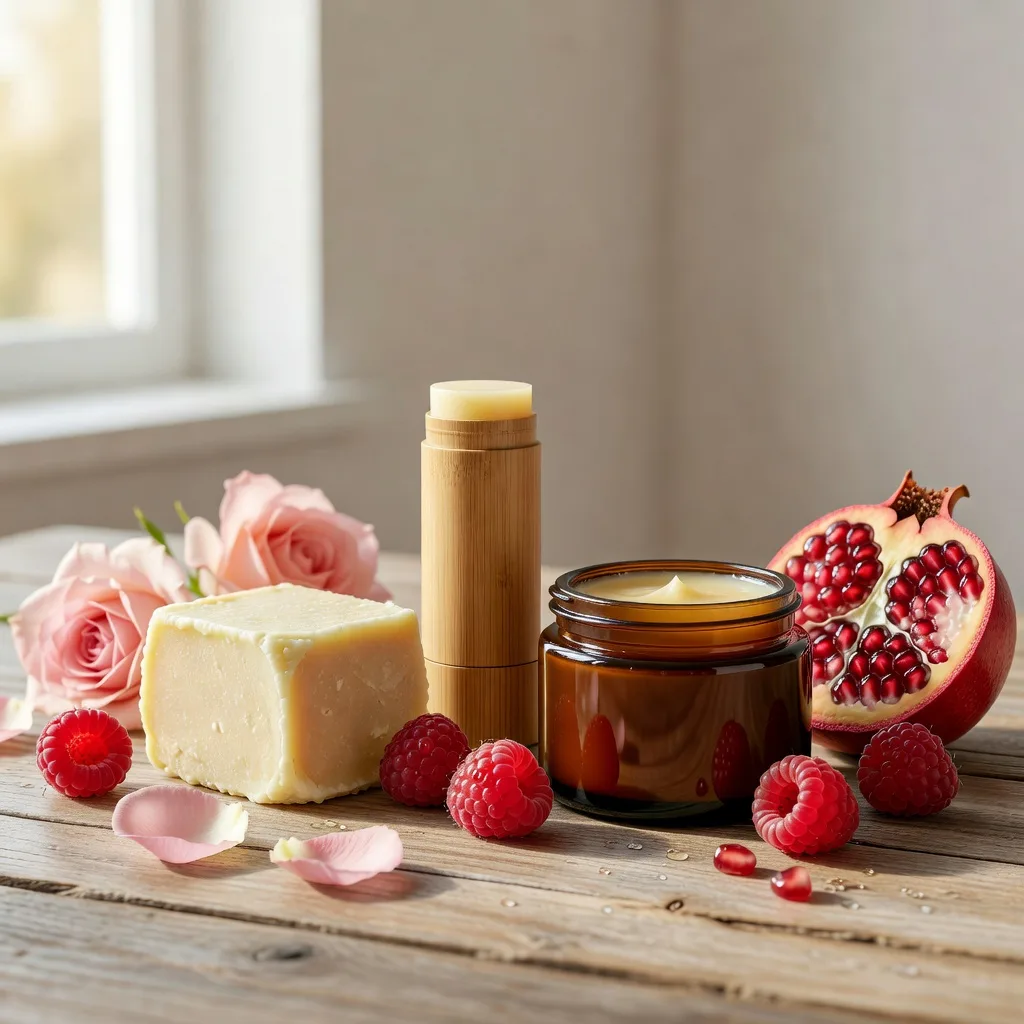
Waterless skincare has become a trend, with brands selling balms, oils, powders and solid bars under labels such as anhydrous, water-free or concentrated. The pitch is often that ordinary products are mostly water, so you are paying for filler, while waterless ones are purer, stronger and better for the planet.
Part of our guide to skincare routines and ingredients. Start with: Best Skin Care Routine: Simple AM and PM Steps for Every Skin Type
Waterless, or anhydrous, skincare has some real benefits: it can keep certain active ingredients more stable, may need fewer preservatives, is often more compact for travel and can suit very dry skin well, since balms and ointments are good at sealing in moisture. But water is not a useless filler. It helps dissolve ingredients, gives products a lighter feel and hydrates the skin surface. Waterless products are a useful option for some needs, not an upgrade for everyone.
The American Academy of Dermatology’s advice for dry skin notes that ointments and creams tend to be more effective and less irritating than lotions. Many ointments are waterless, which is one reason balms and ointments are often recommended for very dry or cracked skin.
On the other hand, oily and acne-prone skin often does better with lighter, water-based products, and many of the most effective everyday formulas, from gentle cleansers to lightweight sunscreens, rely on water. The right choice depends on your skin, not on the label.
This guide explains what waterless skincare is, where it helps, where the marketing overstates things, and how to use these products in your routine.
Shopping these picks?
Amazon Prime members get fast, free shipping on eligible items, plus Prime Video, Amazon Music and member deals. New members can start with a free trial.
Start a free Prime trialAged 18 to 24? Prime for Young Adults comes with a longer free trial and a lower price after it.
Affiliate link: we may earn a commission at no extra cost to you.
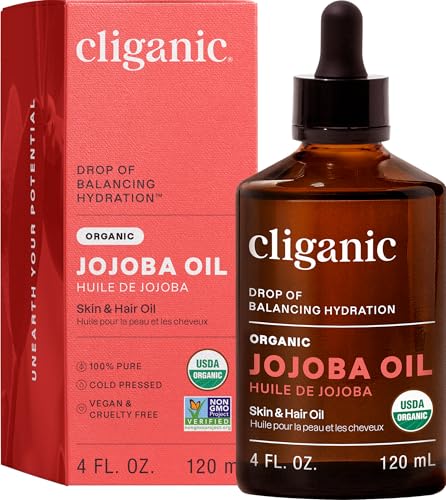
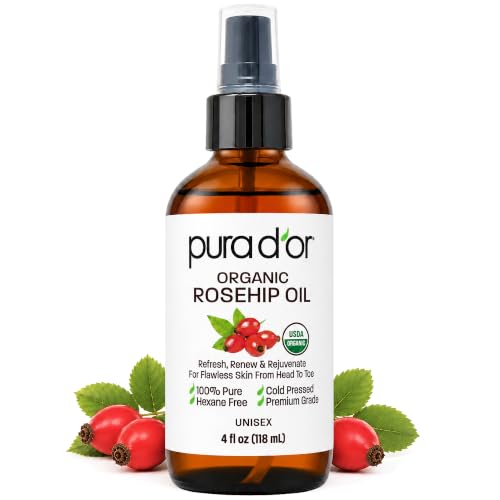
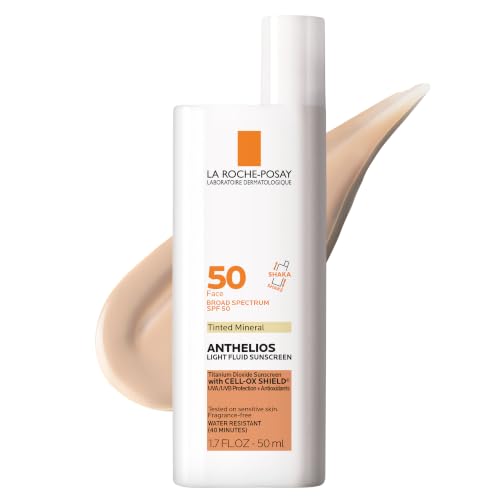
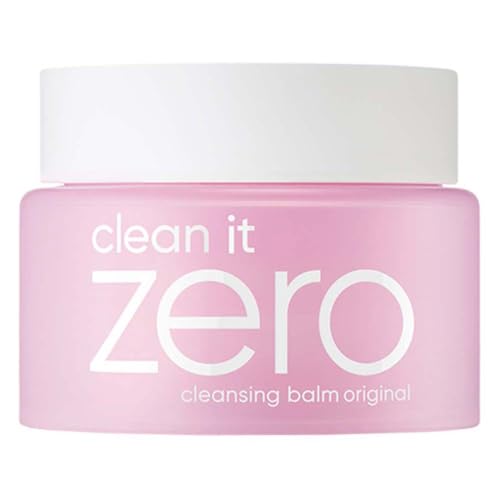
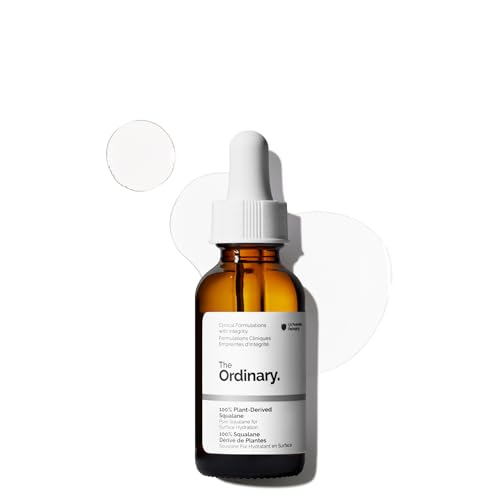
Recommended Waterless Balms, Oils and Cleansers
On This Page
- What Waterless Skincare Means
- The Real Benefits
- The Marketing Myths
- Who Waterless Skincare Suits
- How to Use Waterless Skincare Products
- Waterless Formulas for Actives
- Waterless Cleansers
- Dos and Don’ts
- Is Waterless Skincare Better for the Environment?
- Honest Limits
- When to See a Dermatologist
- Common Questions
- The Bottom Line
At a Glance
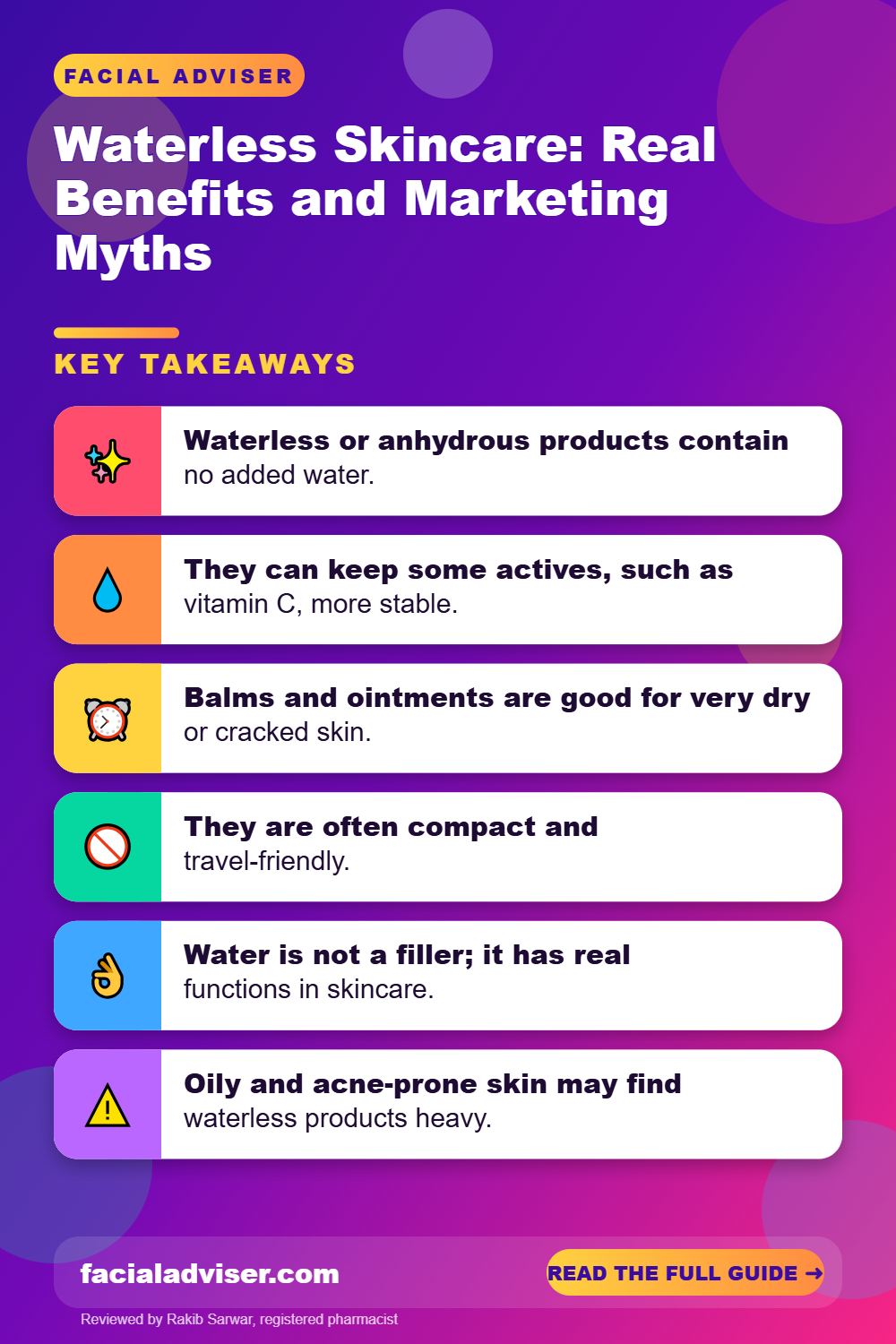
- Waterless or anhydrous products contain no added water.
- They can keep some actives, such as vitamin C, more stable.
- Balms and ointments are good for very dry or cracked skin.
- They are often compact and travel-friendly.
- Water is not a filler; it has real functions in skincare.
- Oily and acne-prone skin may find waterless products heavy.
- Apply balms and oils to damp skin for better hydration.
What Waterless Skincare Means
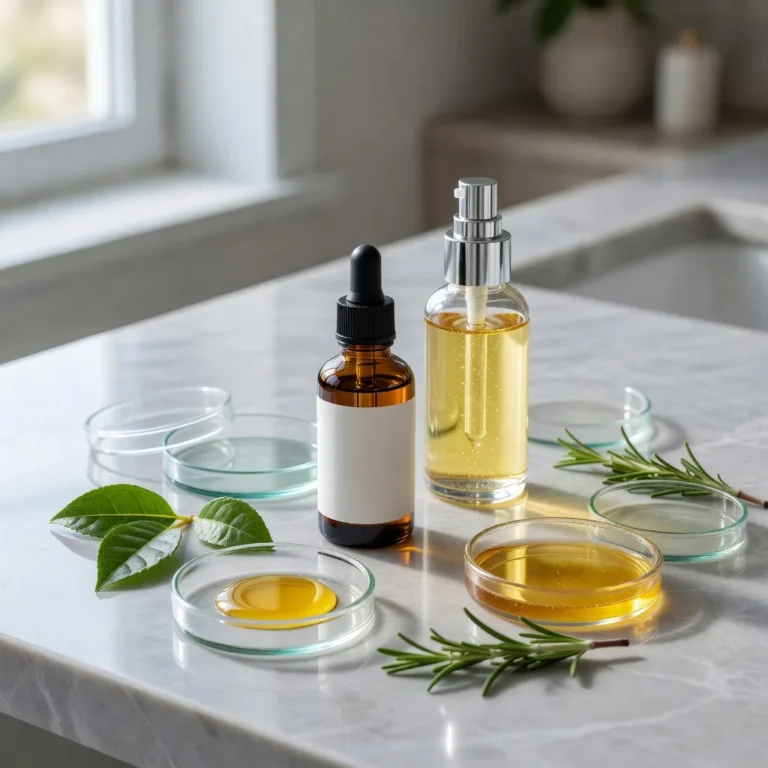
Waterless or anhydrous products are formulated without added water. Instead, they are built on oils, butters, waxes, silicones, glycols or powders.
| Format | Examples | Typical use |
|---|---|---|
| Ointments and balms | Petrolatum-based ointments, cleansing balms | Very dry skin, lips, removing makeup |
| Oils | Squalane, jojoba, rosehip, cleansing oils | Softening, sealing moisture, cleansing |
| Solid bars and sticks | Cleansing bars, moisturising sticks, sunscreen sticks | Travel, low-waste routines |
| Powders | Powder cleansers, powdered vitamin C | Mix with water at the time of use |
| Water-free serums | Silicone-based vitamin C or retinol serums | Keeping unstable actives stable |
Some of these, such as ointments and facial oils, have been around for decades. The trend is mainly in marketing them as a category and in new formats such as solid bars and activated powders.
A product listed as water-free may still contain aloe juice, floral waters or other water-based ingredients. Check the full ingredient list if you want to be sure.
The Real Benefits
Stability for some actives. Ingredients such as L-ascorbic acid and some forms of retinol break down faster in water. Water-free formulas can help them stay effective for longer. Our guide on how to store vitamin C serum explains why water-free formulas often oxidise more slowly. Fewer preservatives needed. Bacteria and mould need water to grow, so anhydrous products generally need less preservation. That can suit some people who react to certain preservatives, although many waterless products still contain them, especially if they may come into contact with wet hands. Better for very dry skin. Ointments and balms form an effective seal that slows water loss, which is why they are often recommended for cracked, flaky or eczema-prone skin. The AAD’s tips for relieving dry skin favour ointments and creams over lotions for this reason. Travel and packaging. Solid bars, sticks and powders are often lighter to carry and easier to take through airport security. Some come in paper or tin packaging instead of plastic. A little goes a long way. Because there is no water, a small amount of balm or oil often covers the face, so products can last a long time.None of these benefits is unique to waterless products. Plenty of water-based formulas are stable, gentle and well packaged. But for specific needs, especially very dry skin and fragile actives, removing the water can genuinely help.
The Marketing Myths
| Claim | Reality |
|---|---|
| Water is just a cheap filler | Water dissolves ingredients, lightens texture and hydrates the skin surface |
| Waterless means more concentrated and effective | Concentration depends on the active, not the absence of water |
| Waterless is always better for sensitive skin | Some oils and essential oils in waterless products can irritate |
| Waterless is always more sustainable | It depends on sourcing, packaging and how long you use the product |
| Waterless products hydrate better | Oils and balms seal in water; they do not add it on their own |
Hydration and moisture are not quite the same thing. Humectants such as glycerin and hyaluronic acid draw water into the skin, and they work best when water is present. Occlusive ingredients in balms keep that water in. A waterless balm on bone-dry skin can feel comfortable but does not add hydration on its own.
That is why many dermatologists suggest applying moisturiser, including balms, to slightly damp skin after washing.
Who Waterless Skincare Suits
| Skin or situation | Waterless products worth trying | Things to watch |
|---|---|---|
| Very dry or cracked skin | Ointments, balms | Can feel greasy by day |
| Eczema-prone skin | Plain ointments without fragrance | Avoid essential oils |
| Makeup wearers | Cleansing balms and oils | Rinse thoroughly |
| Frequent travellers | Solid cleansers, sticks, small balms | Store sticks away from heat |
| Oily or acne-prone skin | Cleansing oils that rinse off | Leave-on balms may clog pores |
| Sensitive skin | Simple, fragrance-free ointments | Botanical blends may irritate |
For oily or acne-prone skin, waterless cleansers that rinse off, such as cleansing oils and balms, are usually a better fit than leave-on balms. Our guide on whether facial oils clog pores explains which oils tend to be lighter.
Climate plays a part as well. In cold, dry weather, a waterless balm can feel like a relief, while the same balm in hot, humid weather may feel heavy and greasy. Many people find they use waterless products more in winter and switch to lighter, water-based moisturisers in summer, which is a sensible way to get the best of both.
How to Use Waterless Skincare Products
Start with damp skin
After cleansing, leave your face slightly damp so the balm or oil can seal in water.
Warm a small amount
Rub a pea-sized amount of balm or a few drops of oil between your fingertips.
Press, do not rub
Press the product onto your skin to spread it evenly without tugging.
Layer after water-based products
If you use a serum or moisturiser, apply the balm or oil on top.
Use at night if it feels heavy
Many people save rich balms for the evening.
Keep sunscreen separate
In the morning, finish with a broad-spectrum sunscreen of SPF 30 or higher.
Keep a small tin of plain ointment for dry patches, lips and the corners of the nose. It is one of the most useful waterless products for almost everyone, even if the rest of your routine is water-based.
Waterless Formulas for Actives
Some of the most practical waterless products are serums that deliver unstable active ingredients. Water-free vitamin C serums, often based on silicones or oils, and powdered vitamin C that you mix into your moisturiser, can stay effective much longer than water-based versions.
Retinol is also sometimes supplied in oil or silicone bases for the same reason. These formulas can feel different, often silkier or slightly oily, and may need a moment to absorb before sunscreen.
The trade-off is texture and, sometimes, strength. A water-free vitamin C serum may use a derivative that is more stable but less studied. Our guide to antioxidant synergy covers which forms have the most evidence.
Waterless Cleansers
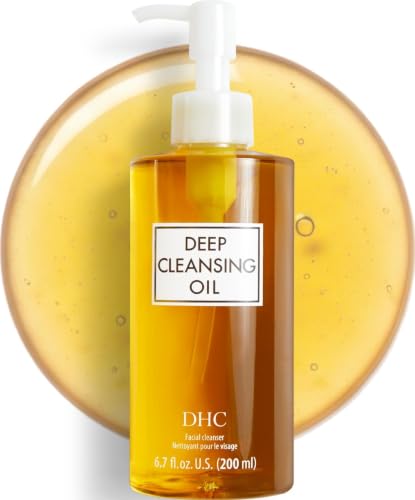
Cleansing is where waterless products are most widely used. Cleansing balms and oils dissolve makeup and sunscreen, then emulsify with water and rinse away. Powder cleansers foam up when mixed with water in your palm, and solid cleansing bars work much like soap but are often gentler.
These formats can be very convenient. A cleansing balm in a tin is hard to spill, a solid bar takes up little space in a washbag, and a powder can be taken through airport security without worrying about liquid limits.
The main thing to check is how they feel after rinsing. A good waterless cleanser should leave your skin clean but comfortable, not tight or squeaky and not coated in oil. If a cleansing balm leaves a film, a second cleanse with a gentle water-based cleanser usually solves it. Our guide on cleansing oils versus micellar water explains how to use oil-based cleansers well.
Solid bars vary widely. Traditional soap has a high pH that can dry and irritate the face, while syndet bars are formulated to be milder. If you like the idea of a bar, look for one described as a gentle or syndet facial bar rather than ordinary soap.
Dos and Don’ts
Helps
- Apply balms and oils to damp skin
- Use ointments for very dry or cracked patches
- Choose rinse-off cleansing balms if acne-prone
- Keep waterless products away from heat
- Check the full ingredient list
Backfires
- Assume water is a useless filler
- Use heavy leave-on balms on acne-prone skin
- Rely on waterless products for hydration alone
- Dip wet fingers into jars if you can avoid it
- Choose products full of essential oils for sensitive skin
Is Waterless Skincare Better for the Environment?
Waterless products can reduce shipping weight and packaging, particularly solid bars and powders. That may lower some environmental costs.
However, the overall impact depends on many things, including how the ingredients are grown and processed, where they are shipped from, and whether you actually use the product up. Some oils and butters have their own sourcing concerns.
If sustainability is important to you, buying fewer products, finishing what you have and choosing recyclable or refillable packaging often matter as much as whether a product contains water.
Do not replace sunscreen with an oil or balm that claims natural sun protection. Only products tested and labelled with an SPF provide reliable protection.
Honest Limits
There is little independent research comparing waterless and water-based skincare directly. Most claims are based on the known properties of ingredients rather than head-to-head studies of finished products.
Waterless products are one option among many. For most people, a simple routine with a gentle cleanser, a moisturiser suited to their skin and daily sunscreen matters far more than whether those products contain water.
If a waterless product feels good and suits your skin, there is no reason not to use it. Just do not assume it is automatically stronger, purer or better because of the label.
When to See a Dermatologist
- Your skin is cracked, bleeding or painfully dry despite regular moisturising.
- You have itchy, inflamed patches that may be eczema.
- You break out after switching to balms or oils.
- A product causes redness, swelling or a rash.
This article is for general information and does not replace professional medical advice. See a dermatologist for persistent skin concerns.
Common Questions
What is waterless skincare?
Products made without added water, such as balms, oils, ointments, solid bars and powders.
Is waterless skincare better?
It has benefits for some needs, such as very dry skin and unstable actives, but it is not better for everyone.
Is water just a filler in skincare?
No. Water dissolves ingredients, lightens texture and helps hydrate the skin surface.
Does waterless skincare hydrate skin?
Balms and oils seal in moisture but do not add water on their own; apply them to damp skin.
Is waterless skincare good for acne-prone skin?
Rinse-off cleansing oils and balms can be; heavy leave-on balms may clog pores.
Do waterless products need preservatives?
They generally need fewer, but many still contain some.
Is waterless skincare better for the environment?
It can reduce packaging and shipping weight, but the full impact depends on many factors.
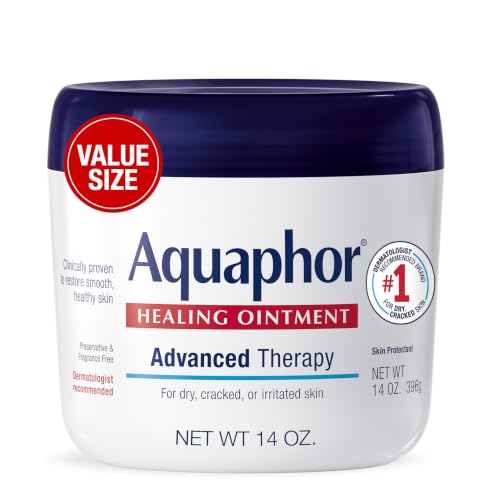
Is Aquaphor waterless?
Ointments like it are generally water-free, which is why they seal in moisture well.
Are waterless vitamin C serums better?
They can be more stable, though they may use less-studied forms of vitamin C.
Can I mix waterless and water-based products?
Yes. Apply water-based products first and waterless balms or oils on top.
The Bottom Line
Waterless skincare has real advantages for very dry skin, travel and keeping some active ingredients stable, but water is not a filler and waterless products are not automatically better.
Use balms and oils on damp skin, choose rinse-off formats if you are acne-prone, and focus on what suits your skin rather than on whether a product contains water.

Written by
Registered pharmacist and founder of Facial Adviser. Rakib's pharmacy training covers how skincare actives work and interact; a later course in cosmetology turned that into a focus on facial treatments and skincare products. He plans, researches and edits every guide on the site and checks health claims against sources such as the American Academy of Dermatology, the FDA and the NIH. He is not a dermatologist; see the Editorial Policy and Medical Disclaimer.
About · Editorial policy · How we choose products · Medical disclaimer · Contact
Keep reading: Skincare routine basics