
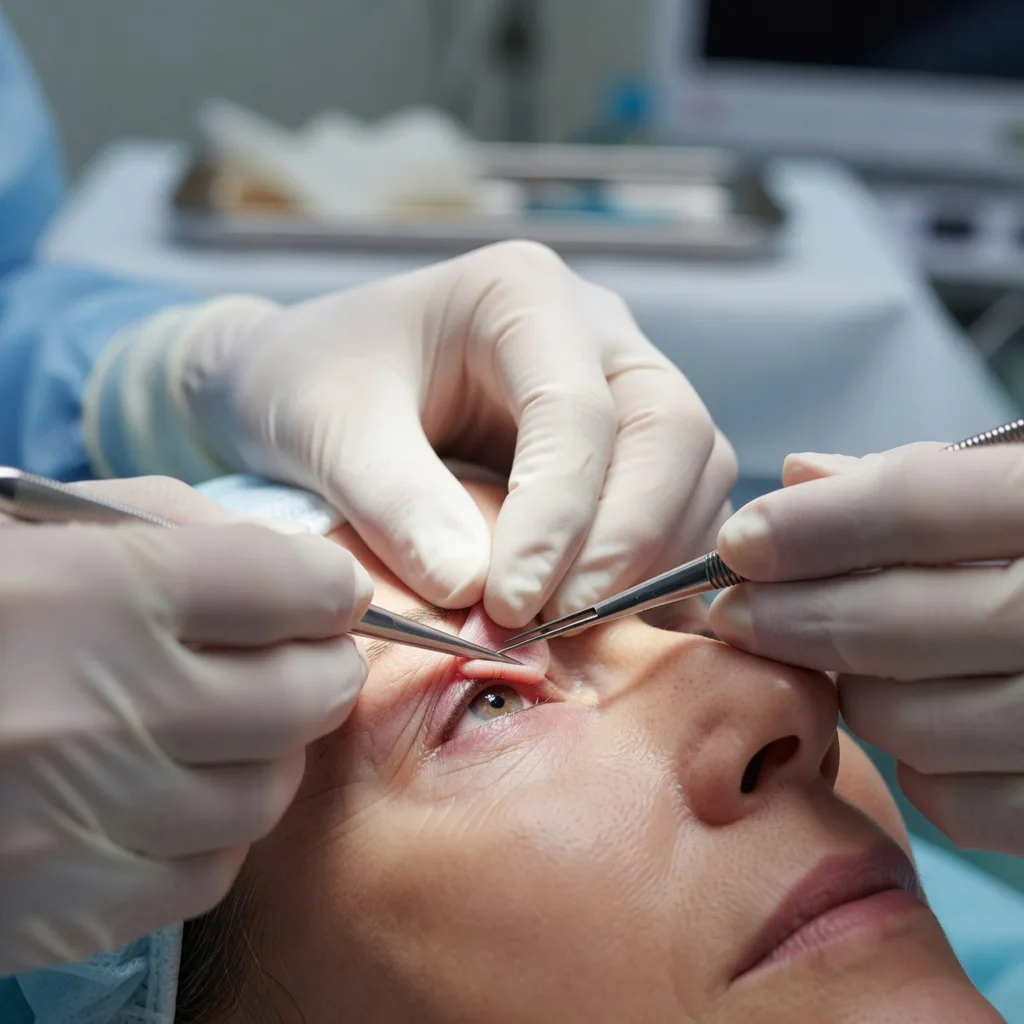
Under Eye Skin Pinch Test: What It Reveals
The under eye skin pinch test sounds like a piece of skincare-influencer folklore, but it’s actually a real clinical maneuver, the same one facial plastic surgeons use before blepharoplasty to assess how much loose eyelid skin is present.
Part of our guide to makeup how-to. Start with: How to Choose the Right Eye Makeup Color for Your Eyes and Skin
Applied to yourself, a simple pinch and release tells you something genuinely useful: how quickly your under-eye skin recoils, which is a real indicator of collagen and elastin quality in one of the thinnest areas of skin on your face. Fast recoil means good elasticity. Slow recoil, or skin that stays tented for a second or two, points to sun damage and collagen loss.
What the test doesn’t tell you is just as important. Under-eye bags and dark circles are caused by completely different mechanisms, fat herniation and pigment or volume loss respectively, and confusing all three is exactly how people end up trying a treatment that was never going to fix what’s actually bothering them.
This guide covers how to run the pinch test properly, how it differs from the related snap-back test, how to tell loose skin apart from bags and dark circles, and which treatment actually matches each one.
Recommended Products for Under-Eye Skin Care


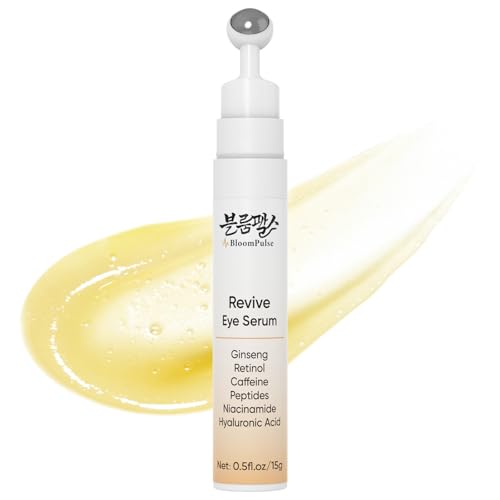
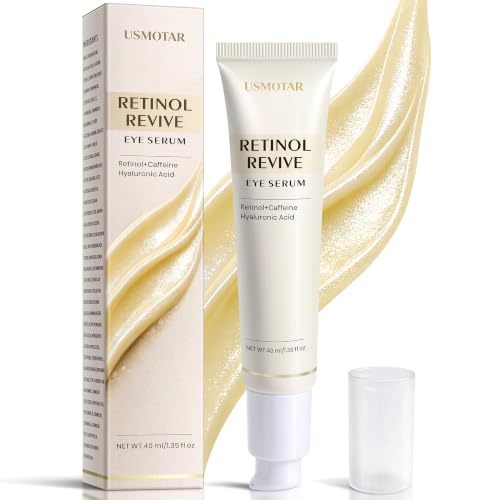

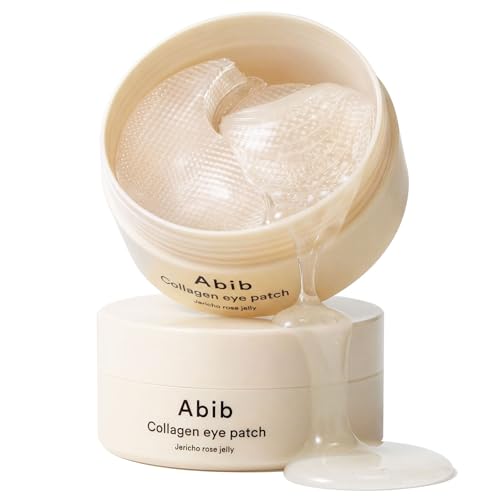
Key Takeaways
- The under eye skin pinch test is a real clinical maneuver, typically used before blepharoplasty, to assess how much loose lower-eyelid skin is present.
- Gently pinching and releasing the lower-eyelid skin in under a minute tells you whether your skin has good elastic recoil or reduced elasticity consistent with sun damage and collagen loss.
- A related but distinct maneuver, the snap-back test, pulls the eyelid margin away from the eye to assess tendon laxity rather than skin looseness specifically.
- Under-eye “bags” are usually fat pad herniation through a weakened septum, a completely different issue from the loose skin the pinch test measures.
- Dark circles are typically caused by thin skin revealing underlying vessels or pigment, or shadowing from volume loss, neither of which the pinch test evaluates either.
- Each of these three under-eye concerns, skin laxity, fat herniation, and dark circles, needs a different fix, which is why an accurate self-assessment matters before choosing a treatment.
- Slow skin recoil points toward tightening-focused treatments, while volume loss points toward filler rather than skin-tightening approaches.
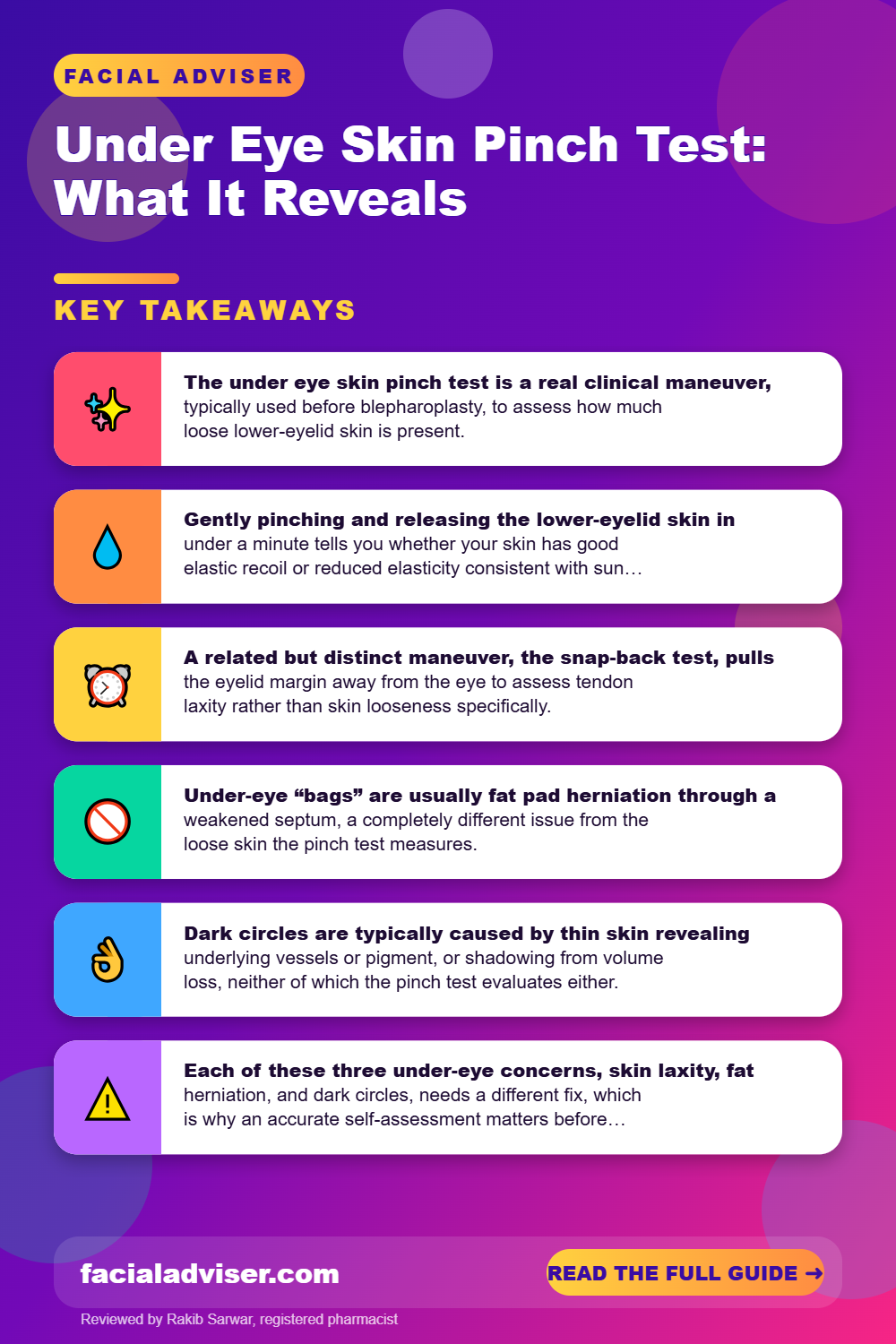
Table of Contents
- What the Pinch Test Actually Measures
- The 60-Second Pinch Test You Can Do Right Now
- Loose Skin vs. Eye Bags vs. Dark Circles
- The Snap-Back Test: A Related but Different Check
- Do This, Not That: Choosing a Treatment Based on Your Result
- How a Clinical Pinch Assessment Works
- What the Pinch Test Can’t Tell You
- When to See a Specialist
- Frequently Asked Questions
- The Bottom Line
What the Pinch Test Actually Measures
The pinch test is a manual exam maneuver, most often used by facial plastic surgeons before blepharoplasty, that assesses how much loose lower-eyelid skin, called dermatochalasis, is present and how much can safely be removed. The examiner gently grasps and lifts the lower-eyelid skin away from the eyeball, sometimes with the patient looking upward, to judge redundant skin volume without creating tension on the eye itself.
Shopping these picks?
Amazon Prime members get fast, free shipping on eligible items, plus Prime Video, Amazon Music and member deals. New members can start with a free trial.
Start a free Prime trialAged 18 to 24? Prime for Young Adults comes with a longer free trial and a lower price after it.
Affiliate link: we may earn a commission at no extra cost to you.
Applied to yourself at home, a simplified version of this same pinch tells you about elastic recoil, how quickly the skin returns to place after being stretched. That recoil speed is a genuine, real indicator of collagen and elastin quality in an area of the face where skin is exceptionally thin, the same area affected by expression lines like crow’s feet just to the side of it.
The 60-Second Pinch Test You Can Do Right Now
Gently pinch and pull the lower-eyelid skin away from your eye, then release:
- Snaps back into place almost instantly: good elastic recoil, consistent with well-preserved collagen and elastin in that area.
- Returns slowly, or stays visibly tented or wrinkled for a couple of seconds: reduced elasticity, consistent with sun damage, collagen loss, or general skin aging.
This result is genuinely useful for deciding between a tightening-focused approach and a volume-focused approach to under-eye concerns, not just a curiosity.
Loose Skin vs. Eye Bags vs. Dark Circles
| Loose skin (laxity) | Eye bags | Dark circles | |
|---|---|---|---|
| What it actually is | Reduced skin elasticity/excess skin | Fat pad herniation through weakened septum | Thin skin showing vessels/pigment, or volume-loss shadowing |
| How it’s assessed | Pinch test | Visual/palpation exam for fat protrusion | Visual assessment of pigment vs. shadow vs. thinness |
| Typical fix | Skin-tightening treatment or surgical excision | Fat repositioning or removal | Topical treatment, laser, or volume-restoring filler |
These three concerns get lumped together as “tired-looking eyes” constantly, but they’re mechanically distinct problems, and treating the wrong one won’t fix what’s actually bothering you.
The Snap-Back Test: A Related but Different Check
A separate clinical maneuver, the snap-back or lid-distraction test, pulls the eyelid margin outward and downward, away from the eye, then releases it to see how quickly it returns. This is graded on a scale from immediate return to never fully returning, and it specifically measures horizontal eyelid tendon laxity rather than the skin looseness the pinch test evaluates.
Note: The pinch test and the snap-back test are often confused because both involve pulling on eyelid tissue, but they’re assessing different structures, skin versus the tendon holding the lid in position, which matters for surgical planning around ectropion risk.
Do This, Not That: Choosing a Treatment Based on Your Result
Do
- Run the pinch test on both eyes since asymmetry can matter
- Consider retinoids or RF microneedling if recoil is slow, that’s a laxity-focused problem
- Consider filler or volume-restoring approaches if the issue is shadowing rather than loose skin
- Get a fat-pad assessment separately if visible bagginess doesn’t change with the pinch test
- Bring your pinch-test observations to a consultation, it helps focus the conversation
Don’t
- Assume all under-eye concerns are the same problem
- Expect a filler to fix loose, crepey skin, that’s a laxity issue filler doesn’t address
- Expect a tightening treatment to fix fat-pad herniation, that needs a different approach
- Confuse the pinch test with the snap-back test, they measure different things
- Pull hard enough to cause pain or bruising when self-testing
How a Clinical Pinch Assessment Works
Visual inspection
The provider first looks at overall lower-eyelid appearance, checking for visible fullness, hollowing, or discoloration.
Pinch maneuver
Lower-eyelid skin is gently grasped and lifted away from the eyeball to assess redundant skin volume.
Recoil observation
The speed and completeness of the skin’s return to position is noted.
Tip: Ask your provider to show you the difference between your result and a fast-recoil example if you’re unsure how to interpret what you’re feeling.
Fat pad assessment
A separate check, often gentle pressure on the closed eye, assesses whether visible bagginess is from fat herniation.
Pigment and volume assessment
The provider evaluates whether darkness is from pigment, thin skin, or shadowing from volume loss.
Treatment discussion
Findings from all three assessments are combined to recommend a treatment matched to the actual cause.
What the Pinch Test Can’t Tell You
The pinch test only assesses skin laxity. It won’t tell you whether visible puffiness is from fat herniation, whether darkness is pigment or shadow, or whether an underlying medical condition is contributing to under-eye appearance. A full assessment needs all three checks together, not the pinch test alone, and it says nothing about ordinary morning puffiness either, which is a separate question a lymphatic facial massage is more relevant to than skin laxity.
When to See a Specialist
Warning: Sudden, one-sided, or rapidly worsening under-eye swelling, swelling accompanied by pain or vision changes, or dark circles that appear suddenly rather than gradually all warrant evaluation by a dermatologist or specialist rather than a cosmetic consultation alone.
Frequently Asked Questions
What is the pinch test for under-eye skin?
A manual exam maneuver that assesses how much loose lower-eyelid skin is present by gently pinching and observing how quickly it recoils.
How do I do the under-eye pinch test at home?
Gently pinch and pull the lower-eyelid skin away from your eye, then release. Fast recoil suggests good elasticity, slow recoil suggests reduced elasticity.
Is the pinch test the same as the snap-back test?
No. The pinch test assesses loose skin specifically, while the snap-back test assesses eyelid tendon laxity by pulling the lid margin away from the eye.
What causes under-eye bags?
Bags are typically caused by fat pad herniation through a weakened septum, a different mechanism from the loose skin the pinch test measures.
What causes dark circles under the eyes?
Thin skin revealing underlying blood vessels or pigment, or shadowing from volume loss in the tear-trough area, are the two main causes.
Can retinoids improve under-eye skin laxity?
Retinoids can help stimulate collagen production over time, which may modestly improve elasticity in cases of mild to moderate laxity.
Does filler help with loose under-eye skin?
Filler addresses volume loss and shadowing, not skin laxity. Loose, crepey skin needs a tightening-focused treatment instead.
What does slow skin recoil in the pinch test mean?
It indicates reduced skin elasticity, typically from sun damage, collagen loss, or general aging, and points toward tightening-focused treatments.
Is the pinch test used before eyelid surgery?
Yes, it’s a standard pre-blepharoplasty assessment to determine how much excess skin is present and can be safely removed.
When should under-eye swelling be checked by a doctor?
Sudden, one-sided, or rapidly worsening swelling, or swelling with pain or vision changes, should be evaluated promptly rather than assumed to be cosmetic.
The Bottom Line
The under eye skin pinch test is a genuine, real assessment tool, not a gimmick, and it takes about sixty seconds to run on yourself. What it tells you, elastic recoil and skin laxity, is one piece of a three-part picture that also includes fat herniation and pigment or volume-related darkness.
Getting the diagnosis right before choosing a treatment matters here specifically because the fixes don’t overlap: a tightening treatment won’t help fat-pad bagginess, and filler won’t help genuinely loose, crepey skin. Match the treatment to what your own pinch test and a proper assessment actually show.

Written by
Registered pharmacist and founder of Facial Adviser. Rakib's pharmacy training covers how skincare actives work and interact; a later course in cosmetology turned that into a focus on facial treatments and skincare products. He plans, researches and edits every guide on the site and checks health claims against sources such as the American Academy of Dermatology, the FDA and the NIH. He is not a dermatologist; see the Editorial Policy and Medical Disclaimer.
About · Editorial policy · How we choose products · Medical disclaimer · Contact
Keep reading: Eye makeup
- How to Avoid Makeup Creasing Under Your Eyes
- Is It Safe to Put Makeup on Your Waterline?
- Best Way to Do Makeup for Hooded Eyes: Shadow, Liner and Lash Tips
- How to Choose the Right Eye Makeup Color for Your Eyes and Skin
- Puffy Eyes After Salty Food: Why It Happens and How to De-Puff Fast
- How to Get Started as a Freelance Makeup Artist: Training, Kit and Clients
- Best Way to Use Makeup Remover: Micellar Water, Balms, Oils and Eye Removers


One Comment