

Can Vitamin Deficiency Cause a Dull Face? What the Evidence Says
When your face looks flat, grey or tired no matter what you put on it, it is natural to wonder whether something is missing from your diet. Social media is full of claims that a single vitamin will bring back your glow, and supplement aisles are stocked with products promising radiant skin from the inside out.
Part of our guide to lifestyle and skin. Start with: How Diet Impacts the Skin Microbiome: What the Science Actually Shows
Yes, some vitamin and mineral deficiencies can make the face look dull or pale, but they are rarely the only cause. Iron deficiency and vitamin B12 deficiency can both cause anaemia, which often shows as pale, washed-out skin. Severe vitamin C deficiency affects collagen and skin healing, and low zinc can cause rashes and slow healing. The link between vitamin D and skin brightness is much weaker. More often, dullness comes from dead skin build-up, dehydration, sun damage, poor sleep or smoking. If you suspect a deficiency, ask a doctor for a blood test rather than taking high-dose supplements, and use simple topical care for the surface dullness.
In short: a deficiency can play a part, but test before you supplement, and treat the skin surface directly at the same time.
The American Academy of Dermatology recommends daily broad-spectrum sunscreen and gentle exfoliation as part of basic skin care, and the FDA notes that alpha hydroxy acids can increase sun sensitivity, which matters if you use them to brighten dull skin.
This guide explains which nutrients are genuinely linked to how your skin looks, the signs that point to a medical cause, why megadoses are a bad idea and which topical steps help most.
Shopping these picks?
Amazon Prime members get fast, free shipping on eligible items, plus Prime Video, Amazon Music and member deals. New members can start with a free trial.
Start a free Prime trialAged 18 to 24? Prime for Young Adults comes with a longer free trial and a lower price after it.
Affiliate link: we may earn a commission at no extra cost to you.
Recommended Products for Dull Skin


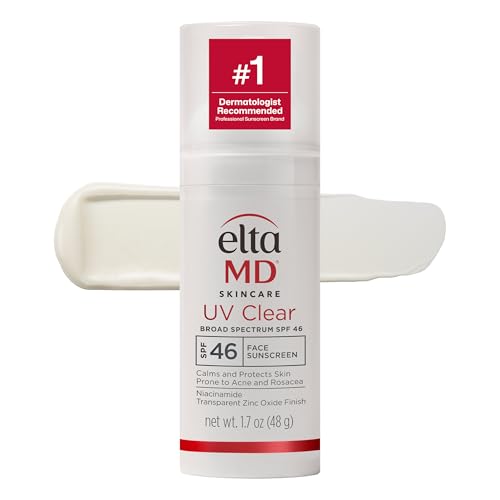
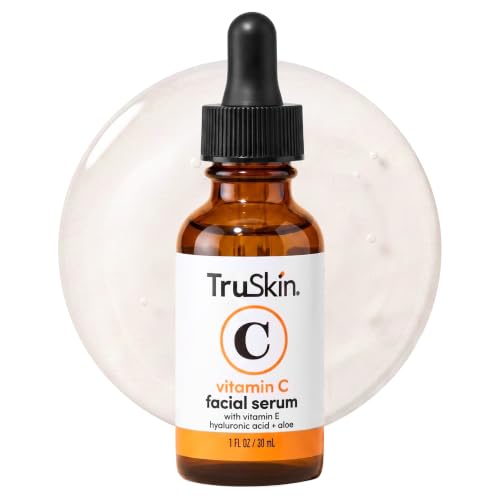

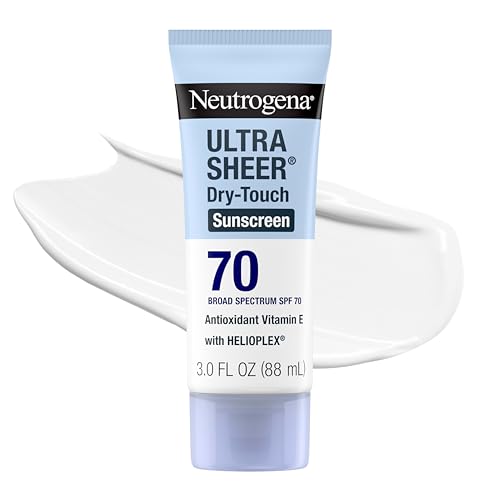
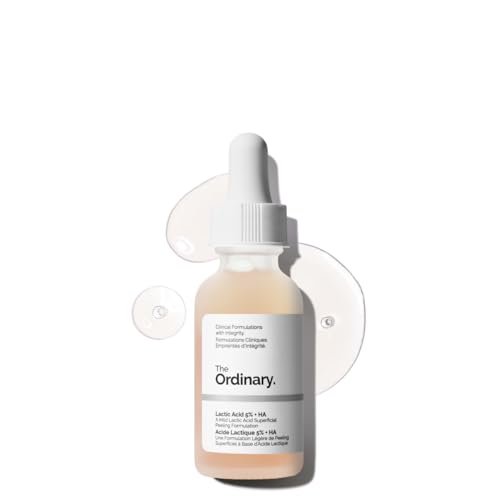
In Brief
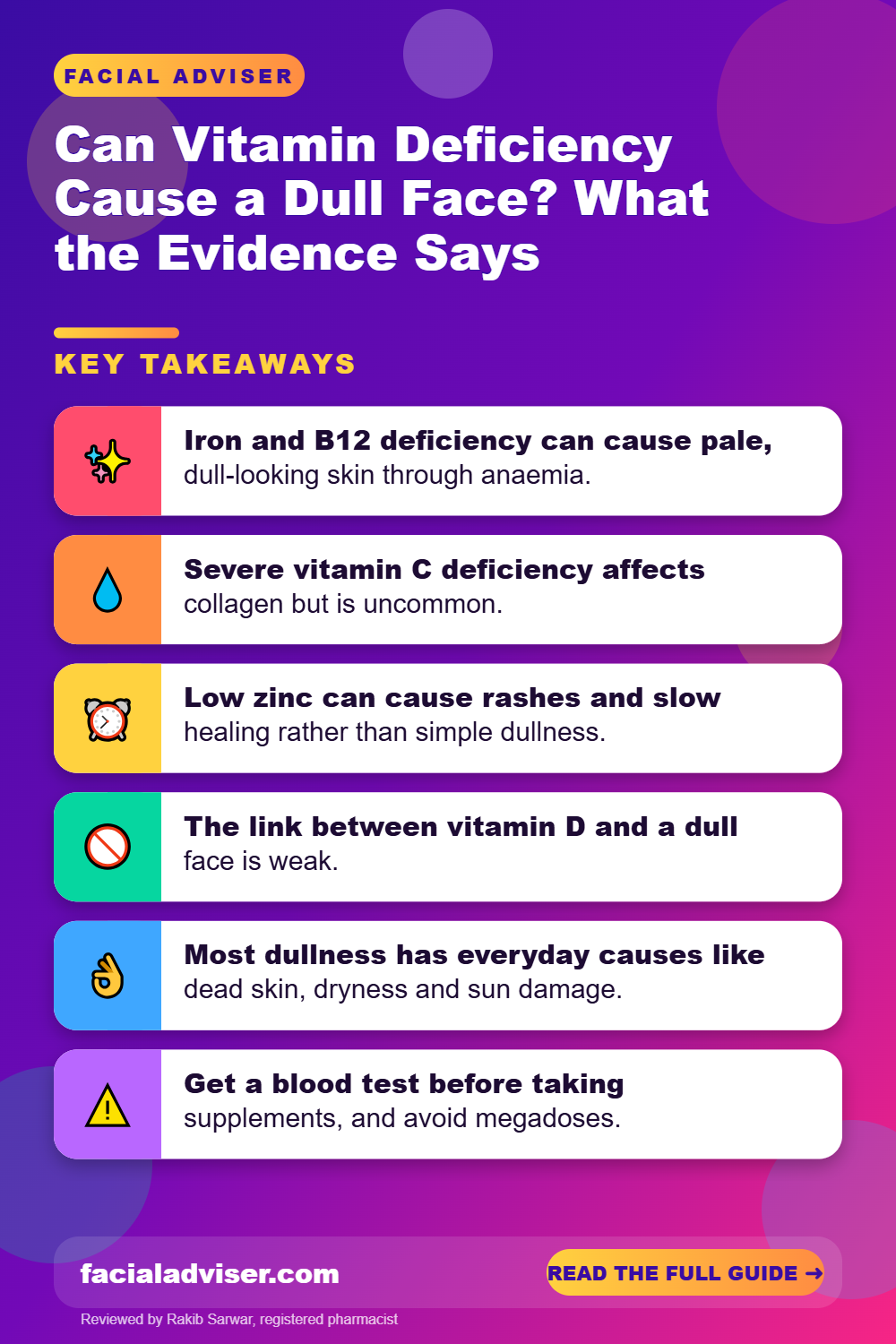
- Iron and B12 deficiency can cause pale, dull-looking skin through anaemia.
- Severe vitamin C deficiency affects collagen but is uncommon.
- Low zinc can cause rashes and slow healing rather than simple dullness.
- The link between vitamin D and a dull face is weak.
- Most dullness has everyday causes like dead skin, dryness and sun damage.
- Get a blood test before taking supplements, and avoid megadoses.
- Vitamin C serum, gentle exfoliation, moisturiser and sunscreen help the surface.
On This Page
- What Makes a Face Look Dull?
- Which Deficiencies Are Linked to Dull or Pale Skin?
- Iron and B12: The Strongest Links
- Vitamin C, Zinc and Vitamin D: What Is Real
- Why You Should Get Tested Instead of Taking Megadoses
- More Common Causes of a Dull Face
- Topical Fixes That Help Dullness
- How to Brighten a Dull Face While You Check Your Nutrients
- Eating for Healthy-Looking Skin
- Dos and Don’ts for a Dull Face
- Honest Limits
- When to See a Doctor or Dermatologist
- Frequently Asked Questions
- The Takeaway
What Makes a Face Look Dull?
Healthy-looking skin reflects light evenly. Anything that roughens the surface, changes blood flow or adds uneven pigment makes the face look flatter and less radiant. Dullness is a description rather than a diagnosis, so it helps to think about the possible layers involved.
- Surface: a build-up of dead skin cells scatters light and looks grey or rough.
- Hydration: dehydrated skin looks less plump and reflects less light.
- Colour: uneven pigment from sun damage makes the complexion look blotchy.
- Blood flow: reduced circulation or low haemoglobin can make skin look pale.
- Lifestyle: poor sleep, smoking and stress all show on the face.
A nutrient deficiency mostly affects the colour and blood-flow layers, which is why it tends to cause paleness rather than roughness. That difference is a useful clue: if your skin feels rough and flaky, look at your routine first.
Which Deficiencies Are Linked to Dull or Pale Skin?
The evidence varies a lot from one nutrient to another. This table summarises the most common claims honestly.
| Nutrient | Link to skin appearance | Strength of link | Other common signs |
|---|---|---|---|
| Iron | Anaemia can cause pale skin and pale inner eyelids | Well established | Tiredness, breathlessness, cold hands, brittle nails |
| Vitamin B12 | Anaemia can cause pale or slightly yellowish skin; sometimes darker patches | Well established | Fatigue, tingling hands or feet, sore tongue |
| Folate | Can cause anaemia and pallor | Well established | Fatigue, mouth sores |
| Vitamin C | Severe deficiency causes rough skin, easy bruising and poor healing | Established but rare | Bleeding gums, joint pain |
| Zinc | Deficiency can cause rashes, especially around the mouth, and slow healing | Established but uncommon | Hair loss, poor appetite |
| Vitamin D | Links to skin brightness are not well supported | Weak | Bone pain, muscle weakness in severe cases |
Many of these deficiencies share symptoms such as fatigue. Tiredness alone can make you look dull, so it is hard to separate the effect of the deficiency from the effect of simply feeling unwell.
Iron and B12: The Strongest Links
Iron deficiency is one of the most common nutritional problems worldwide, particularly in people with heavy periods, pregnant people, vegetarians and vegans, and people with certain gut conditions. When iron is low, the body makes less haemoglobin, the red pigment in blood that gives skin some of its warm colour. The result can be a pale, sallow look that no highlighter fully fixes.
Vitamin B12 deficiency can also cause anaemia and pallor. It is more likely in people following a vegan diet without fortified foods or supplements, older adults and people taking certain long-term medicines, such as some diabetes and acid-reflux treatments. B12 deficiency can also cause nerve symptoms, which is one reason it should be diagnosed and treated properly rather than guessed at.
Vitamin C, Zinc and Vitamin D: What Is Real
Vitamin C is needed to build collagen, and severe deficiency (scurvy) causes rough skin, bruising and poor wound healing. However, scurvy is rare in people who eat some fruit and vegetables. Eating more vitamin C is unlikely to brighten skin if you are not deficient, but applying it topically is a different matter, as covered below.
Zinc supports wound healing and skin repair. Genuine zinc deficiency tends to cause red, scaly rashes around the mouth and hands, hair loss and slow healing rather than simple dullness. It is uncommon outside certain health conditions and very restrictive diets.
Vitamin D is often blamed for dull skin online, but the evidence is thin. Low vitamin D is common, and it matters for bone and muscle health, but there is no good evidence that correcting it makes the face look brighter. Our article on whether vitamin D deficiency can cause acne looks at a similar claim.
Why You Should Get Tested Instead of Taking Megadoses
It is tempting to buy a high-strength multivitamin or single supplement and hope for the best. The problem is that guessing can hide the real cause, delay treatment and, in some cases, cause harm.
- A blood test can confirm iron, B12, folate and vitamin D levels.
- Iron deficiency sometimes signals blood loss or a gut problem that needs investigating.
- Too much iron can be harmful and is a common cause of accidental poisoning in children.
- Vitamins A and D can build up in the body and cause toxicity at high doses.
- High-dose biotin can interfere with some blood test results, so tell your doctor if you take it.
Do not start high-dose iron, vitamin A or vitamin D supplements without medical advice. If you are pregnant, planning pregnancy or have a health condition, speak to your doctor or pharmacist before taking any supplement.
More Common Causes of a Dull Face
For most people with a dull complexion, the cause is everyday rather than nutritional. These are worth ruling out, because they are easy to change and often give quicker results.
| Cause | How it dulls skin | What helps |
|---|---|---|
| Dead skin build-up | Rough surface scatters light | Gentle exfoliation once or twice a week |
| Dehydration and dryness | Skin looks flat and fine lines show more | Moisturiser with humectants and ceramides |
| Sun damage | Uneven pigment and rough texture | Daily broad-spectrum sunscreen |
| Poor sleep | Reduced circulation, puffiness, darker under-eyes | Regular sleep schedule |
| Smoking | Reduces blood flow and damages collagen | Stopping smoking |
| Harsh products | Irritation and flaking | Simpler, gentler routine |
Sleep in particular has a visible effect on the face. Many people have two or three of these at once, which is why a single change rarely transforms the skin overnight. Our guide on how sleep deprivation causes dull skin explains why a few bad nights can show so clearly.
Topical Fixes That Help Dullness
While you check your nutrient levels, you can improve the surface of your skin directly. These steps work regardless of whether a deficiency is involved.
- Vitamin C serum in the morning: an antioxidant that can brighten and even tone over weeks.
- Lactic acid once or twice a week: a gentle alpha hydroxy acid that loosens dead skin cells.
- A hydrating moisturiser: plumps the surface so it reflects light more evenly.
- Daily sunscreen: prevents new pigment and protects the results of your other steps.
The FDA page on alpha hydroxy acids explains that these ingredients can increase sensitivity to the sun, so pair lactic acid with daily broad-spectrum sunscreen. The AAD guide to exfoliating safely at home also recommends choosing a method that suits your skin type and not overdoing it.
How to Brighten a Dull Face While You Check Your Nutrients
This plan combines a sensible medical check with a simple skin routine, so you are not relying on either one alone.
Note your symptoms
Write down tiredness, paleness, breathlessness, hair loss or tingling to share with your doctor.
Ask for a blood test
Request checks for iron, B12, folate and vitamin D if your doctor agrees they are relevant.
Cleanse gently
Use a mild cleanser and lukewarm water morning and night.
Add vitamin C in the morning
Apply a vitamin C serum before moisturiser and sunscreen.
Exfoliate lightly
Use a lactic acid product once or twice a week at night.
Moisturise and protect
Use a hydrating moisturiser and broad-spectrum SPF 30 or higher every day.
Give a new routine at least six to eight weeks before judging it. Skin renews slowly, and switching products every week makes it impossible to tell what is working.
Eating for Healthy-Looking Skin
A varied diet is the most reliable way to cover the nutrients linked to skin health, and it avoids the risks of high-dose supplements. You do not need special skin foods; you need enough of the basics.
- Iron: red meat, poultry, fish, beans, lentils, tofu and fortified cereals.
- Vitamin C: citrus fruit, berries, peppers, broccoli and tomatoes, which also help absorb plant iron.
- Vitamin B12: meat, fish, eggs, dairy and fortified plant foods.
- Zinc: shellfish, meat, seeds, nuts and whole grains.
- Vitamin D: oily fish, eggs and fortified foods, plus supplements if your doctor recommends them.
Dos and Don’ts for a Dull Face
Helps
- Ask a doctor about a blood test if you feel unwell
- Eat a varied diet with iron and vitamin C sources
- Use vitamin C serum and sunscreen daily
- Exfoliate gently once or twice a week
- Give changes six to eight weeks
Backfires
- Self-diagnose from photos online
- Take high-dose iron or vitamin A without advice
- Rely on supplements to fix surface dullness
- Over-exfoliate to force a glow
- Ignore fatigue, breathlessness or unusual paleness
Honest Limits
Correcting a genuine deficiency can improve how you feel and, in the case of anaemia, how pale you look. But if your levels are normal, extra vitamins are unlikely to make your face brighter. Supplements marketed for glowing skin are generally not backed by strong evidence, and their effects are hard to separate from better sleep, hydration or a new skincare routine.
Topical products work on the surface only. They can make skin smoother and more even, but they will not fix anaemia or another medical cause. If you want a professional boost, our guide on which facial is best for glowing skin compares the options.
When to See a Doctor or Dermatologist
- Your skin or inner eyelids look unusually pale.
- You feel tired, breathless, dizzy or have a racing heart.
- You notice tingling, numbness or a sore, smooth tongue.
- You have rashes around the mouth, slow-healing wounds or unexplained bruising.
- Dullness comes with sudden changes in pigment, weight or hair.
This article is for general information and does not replace professional medical advice. See your doctor for blood tests and supplement advice, and a board-certified dermatologist for persistent skin changes.
Frequently Asked Questions
Can vitamin deficiency cause a dull face?
Some can, especially iron and B12 deficiency, which cause pale skin.
Which vitamin deficiency makes skin look pale?
Iron, B12 and folate deficiencies can cause anaemia and pallor.
Does low vitamin D cause dull skin?
There is little evidence that it does.
Should I take a supplement for glowing skin?
Only if a blood test shows you need it.
Can too many vitamins harm my skin or health?
Yes, high doses of iron, vitamin A and vitamin D can be harmful.
Does vitamin C serum help dull skin?
Yes, it can brighten and even tone over several weeks.
Is lactic acid good for dull skin?
Yes, it is a gentle exfoliant that helps remove dead skin.
How long does it take to see a brighter face?
Usually six to eight weeks with a consistent routine.
Can drinking more water fix a dull face?
It helps if you are dehydrated, but moisturiser matters more for the surface.
When should I see a doctor about dull skin?
If paleness comes with fatigue, breathlessness or other symptoms.
The Takeaway
A vitamin deficiency can cause a dull or pale face, particularly low iron or B12, but most dullness has everyday causes such as dead skin, dryness, sun damage and poor sleep.
If you suspect a deficiency, get a blood test rather than taking megadoses. Meanwhile, a vitamin C serum, gentle lactic acid exfoliation, a good moisturiser and daily sunscreen can help your skin look brighter.

Written by
Registered pharmacist and founder of Facial Adviser. Rakib's pharmacy training covers how skincare actives work and interact; a later course in cosmetology turned that into a focus on facial treatments and skincare products. He plans, researches and edits every guide on the site and checks health claims against sources such as the American Academy of Dermatology, the FDA and the NIH. He is not a dermatologist; see the Editorial Policy and Medical Disclaimer.
About · Editorial policy · How we choose products · Medical disclaimer · Contact
Keep reading: Diet, sleep, stress and skin
- How Diet Impacts the Skin Microbiome: What the Science Actually Shows
- Hormonal Facial Skin Changes During Your Cycle: A Phase-by-Phase Guide
- How Do You Get Cell Nutrition? The Real Answer
- Does Stress Make Your Skin Darker?
- Is Daily Massage Harmful for Your Face?
- Can Teeth Change the Way You Look? The Real Answer




One Comment