How Long Is a Facial Appointment?
How long is a facial appointment, and how much of that booked time is actually spent working on your skin versus just letting a mask or steam sit?
Part of our guide to facials: what to expect. Start with: How Often Should You Get a Professional Facial? A Guide by Skin Type and Goal
An express facial typically runs about 30 minutes, a standard classic facial about 60, and a deep-cleansing or specialty facial 75 to 90 minutes or more — but there’s no clinical or regulatory standard behind any of these figures, and roughly half of a 60-minute session is passive dwell time rather than active hands-on work. HydraFacial runs on the shorter end at around 30 minutes because of its different suction-based mechanism.
First-time visits commonly run 15 to 20 minutes longer than repeat ones because of a more thorough skin consultation.
This guide breaks down real duration ranges by facial type, what’s actually happening minute by minute, and how to plan your schedule around an appointment realistically.
Recommended At-Home Facial Products



Fast Facts
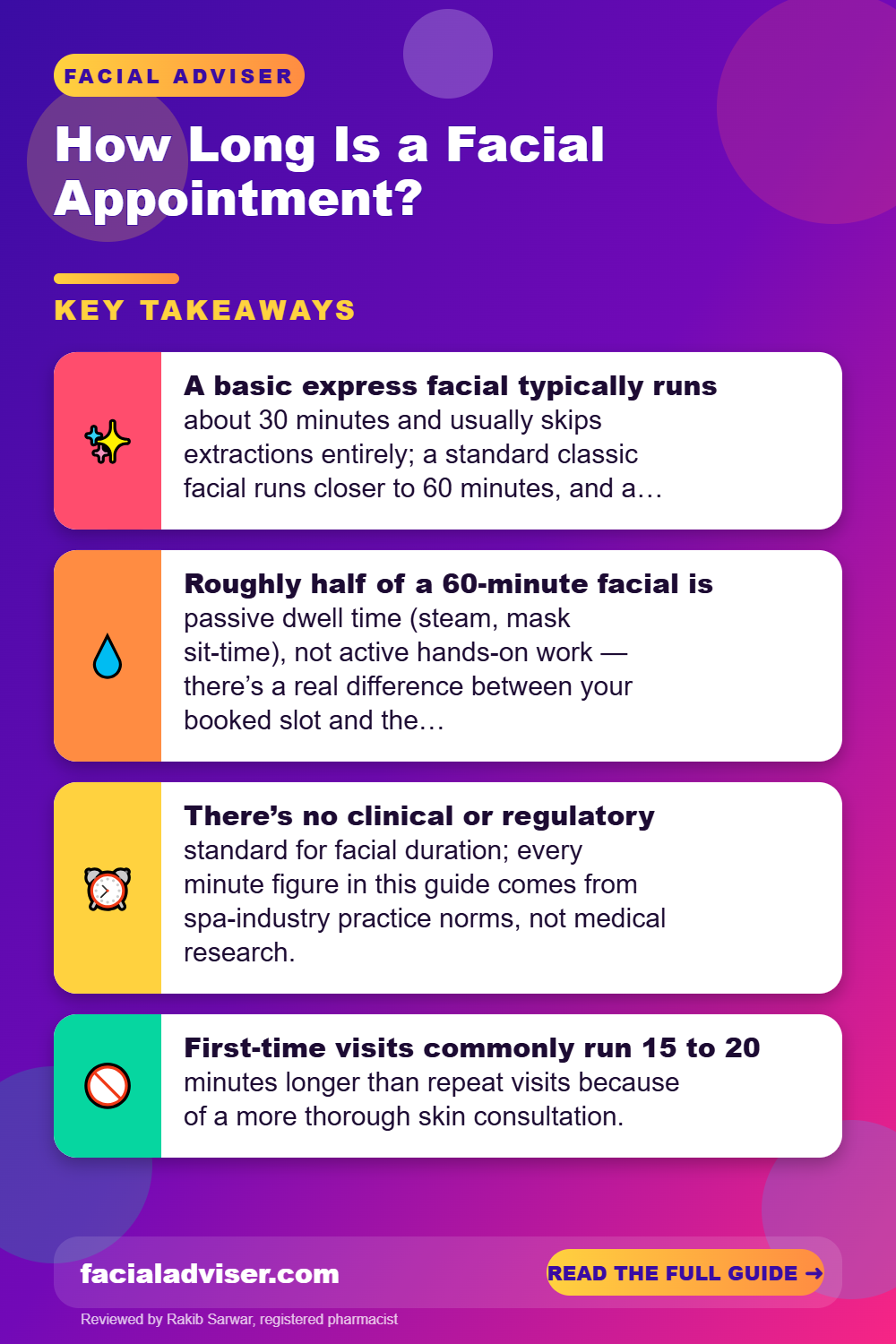
- A basic express facial typically runs about 30 minutes and usually skips extractions entirely; a standard classic facial runs closer to 60 minutes, and a deep-cleansing or specialty facial can run 75 to 120 minutes.
- Roughly half of a 60-minute facial is passive dwell time (steam, mask sit-time), not active hands-on work — there’s a real difference between your booked slot and the time actually spent on your skin.
- There’s no clinical or regulatory standard for facial duration; every minute figure in this guide comes from spa-industry practice norms, not medical research.
- First-time visits commonly run 15 to 20 minutes longer than repeat visits because of a more thorough skin consultation.
Skip Ahead
- What “How Long Is a Facial” Actually Means
- Express and Basic Facials: The Short End
- The Standard 60-Minute Classic Facial
- Deep-Cleansing and Specialty Facials
- How Long a HydraFacial Actually Takes
- Peels, Microdermabrasion, and Other Add-Ons
- Minute by Minute: Inside a 60-Minute Facial
- Booked Time vs. Hands-On-Skin Time
- Facial Type and Typical Duration, Side by Side
- Why Your First Appointment Runs Longer
- What Makes an Appointment Run Short or Long
- Provider Type and Typical Session Length
- Do This, Not That
- Planning Your Day Around a Facial Appointment
- What This Article Can’t Tell You
- Frequently Asked Questions
What “How Long Is a Facial” Actually Means
The honest first answer to this question is that “a facial” isn’t one fixed service, so there isn’t one fixed duration. Spas and med-spas use the word loosely to cover everything from a 30-minute express cleanse-and-mask to a 90-minute multi-step specialty treatment with extractions, a peel, and LED. The duration figures in this guide come almost entirely from spa and med-spa business pages describing their own menus, not from any clinical or regulatory source — there is no dermatology-society standard dictating how long a facial should take. Treat every number here as typical industry practice, not medical fact, and always confirm the specific service length when you book.
Shopping these picks?
Amazon Prime members get fast, free shipping on eligible items, plus Prime Video, Amazon Music and member deals. New members can start with a free trial.
Start a free Prime trialAged 18 to 24? Prime for Young Adults comes with a longer free trial and a lower price after it.
Affiliate link: we may earn a commission at no extra cost to you.
Express and Basic Facials: The Short End
An express or basic facial is the shortest common option, typically running around 30 minutes. This version usually includes a cleanse, a light exfoliation, and a mask, but often skips manual extractions and a full massage sequence entirely — it’s built for people who want a quick refresh rather than a deep treatment. If your goal is specifically comedone extraction or addressing a particular skin concern, a 30-minute express facial is often not long enough to include that step at all, so it’s worth asking directly whether extractions are part of the express menu before booking one expecting that result.
The Standard 60-Minute Classic Facial
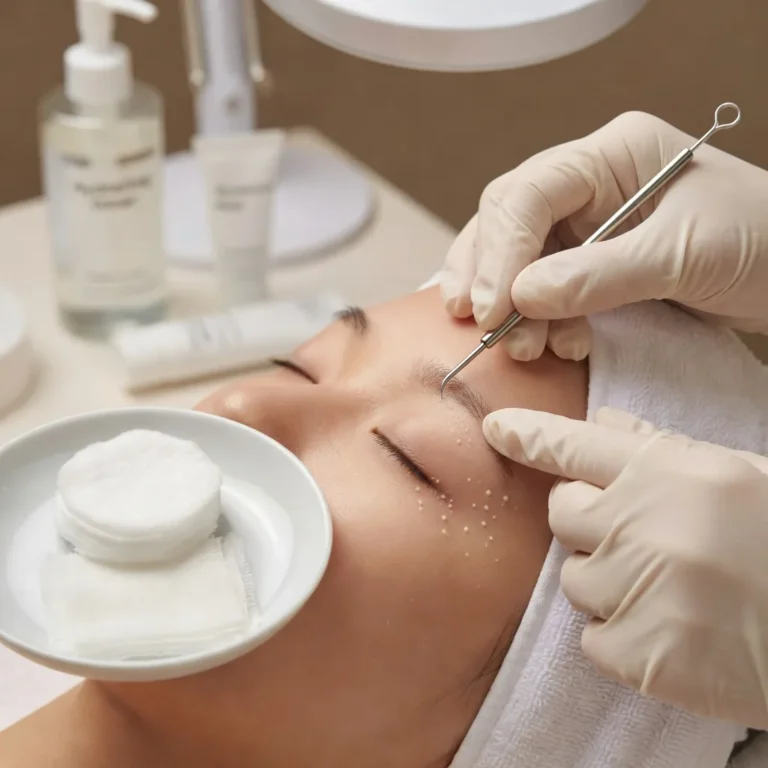
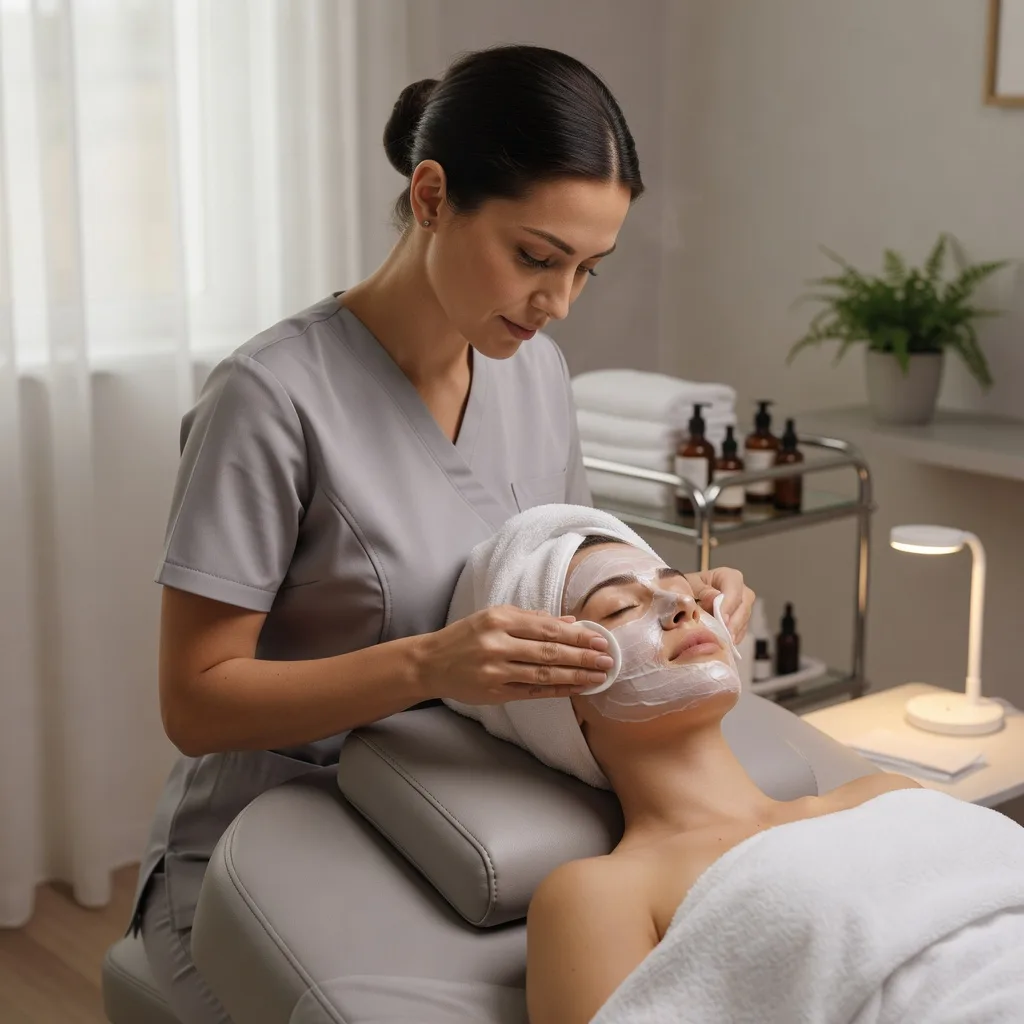
A classic or standard facial is the most commonly booked full-service option, and it typically runs about 60 minutes from consultation to finish. This is the version most people picture when they think “getting a facial”: cleanse, exfoliation, steam, extractions, a treatment mask, and a finishing massage and moisturizer/SPF application. Because this is the most complete common version, it’s also the one used as the reference point for the minute-by-minute breakdown later in this guide.
Deep-Cleansing and Specialty Facials
A deep-cleansing or specialty facial (sometimes marketed around a specific concern, like congestion or acne) typically runs longer, commonly 75 to 90 minutes, and can stretch to two hours with add-ons layered in. The extra time isn’t a different mechanism so much as more of the same mechanism: more extraction time for more congested skin, a longer steam step, and often an additional treatment mask or serum layer. If you have visibly congested skin and are booking specifically to address it, budgeting for the longer end of this range is more realistic than assuming a standard 60-minute slot will be enough.
How Long a HydraFacial Actually Takes
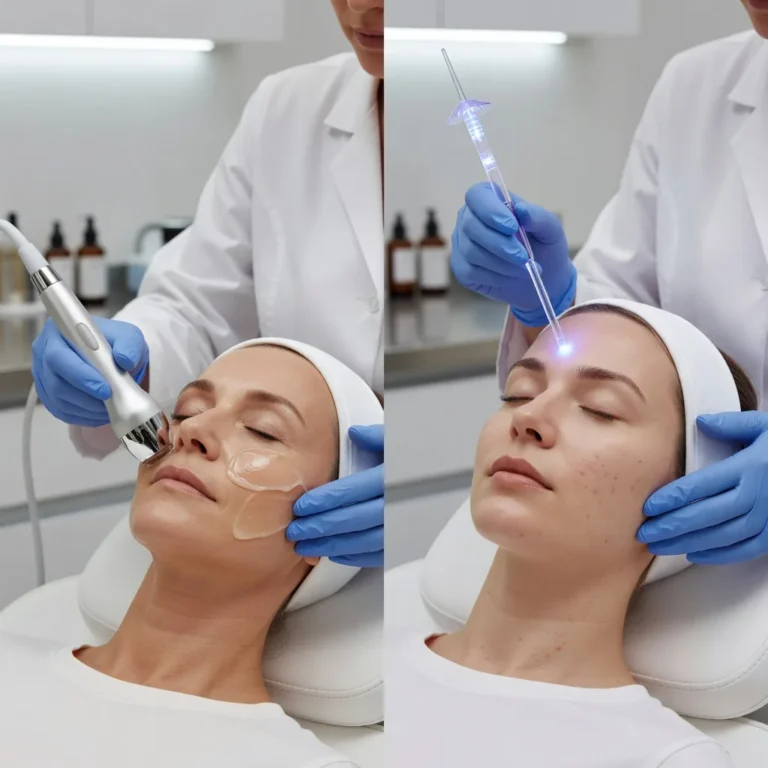
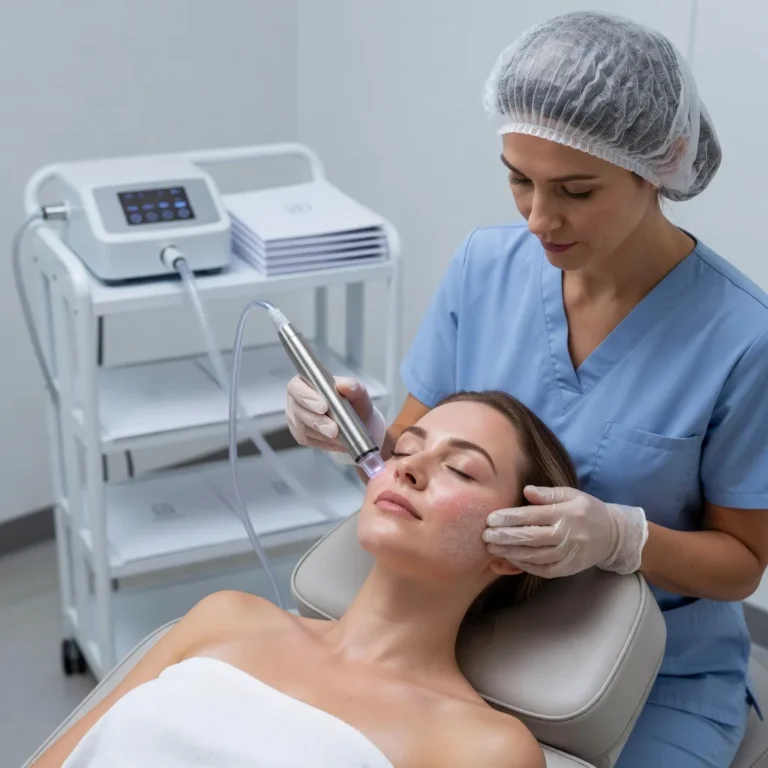
HydraFacial is frequently described as one of the fastest professional treatments available, with the core vortex-fusion treatment itself commonly cited at around 30 minutes. Total appointment time, including a brief consultation, often runs closer to 30 to 45 minutes in practice. This is a genuinely different device mechanism from a manual extraction-based facial (liquid suction rather than hands-on extraction), which is part of why it tends to run shorter even though it markets itself as a deeper treatment.
Peels, Microdermabrasion, and Other Add-Ons
A light chemical peel added onto a standard facial typically adds another 15 to 30 minutes, largely for application and the required neutralization or observation time. As a standalone treatment, light peels are commonly described as running 15 to 45 minutes depending on the peel’s strength. Microdermabrasion, whether added to a facial or booked on its own, is commonly cited in the 30 to 60 minute range. None of these add-on figures come from a standardized protocol; they vary by provider, strength of product used, and how much surface area is being treated.
Minute by Minute: Inside a 60-Minute Facial
Breaking a standard 60-minute facial into its component steps makes the time allocation clearer: roughly 5 minutes for consultation and skin analysis, 5 to 10 minutes for a double cleanse, 5 to 10 minutes for exfoliation, 10 to 15 minutes for steam combined with extractions, 10 to 15 minutes for a mask and treatment serums, and 5 to 10 minutes for a finishing massage. Add those ranges up and you land close to the full hour, but notice how much of that time is genuinely passive rather than active.
Booked Time vs. Hands-On-Skin Time
This is the most useful distinction in this whole guide, and one that’s easy to miss when you’re comparing menu prices across providers: the booked appointment slot and the time your esthetician is actually working on your skin are two different numbers. Steam dwell time and mask sit-time are passive by design — they’re doing real work (softening debris, letting an active ingredient sit), but no one is touching your face during those minutes. Adding up only the genuinely hands-on steps (cleanse, exfoliation, extraction, massage) in a 60-minute facial gets you to roughly 30 to 40 minutes of active manipulation, with the rest being dwell time. That’s not a flaw in the service; it’s simply how the mechanisms involved (steam softening sebum, a mask’s ingredients absorbing) actually work, and it explains why a “60-minute facial” and a “60-minute massage” can feel very different in terms of continuous physical contact.
Facial Type and Typical Duration, Side by Side
| Facial type | Typical total time | Usually includes extractions? |
|---|---|---|
| Express/basic facial | ~30 minutes | Often not |
| Classic/standard facial | ~60 minutes | Yes, typically |
| Deep-cleansing/specialty facial | 75–90 minutes (up to 120 with add-ons) | Yes, often extended |
| HydraFacial | ~30–45 minutes | No (vortex suction, not manual) |
| Light chemical peel add-on | +15–30 minutes | No |
| Microdermabrasion | 30–60 minutes | No |
Why Your First Appointment Runs Longer
If this is your first visit with a particular esthetician or spa, budget for the appointment to run 15 to 20 minutes longer than the menu time suggests. A first-visit consultation is more thorough by necessity: your esthetician needs to assess your skin type, ask about your history (allergies, current products, any recent procedures like Botox or a chemical peel), and explain what they’re planning to do and why, none of which is needed in the same depth on a repeat visit where they already know your skin.
What Makes an Appointment Run Short or Long
Beyond the base service type, a handful of practical factors genuinely change how long an appointment takes: how congested your skin is (more comedones mean more extraction time), whether extractions are included in the booked service at all, how many add-ons are layered in, whether it’s a first visit requiring a fuller consultation, and simply how thorough an individual provider tends to be. None of these factors are measured or standardized anywhere; they’re practical, provider-specific variables worth asking about directly if your schedule is tight.
Provider Type and Typical Session Length
| Provider type | Typical session length | What tends to differ |
|---|---|---|
| Day spa / wellness spa | 60–90 minutes | More emphasis on relaxation, longer massage segments |
| Med-spa | 30–60 minutes | Often built around a specific device (HydraFacial, microdermabrasion), less massage time |
| Dermatology office | 15–45 minutes | Extraction-focused, minimal or no relaxation massage, often paired with a medical consultation |
Worth naming honestly: the type of provider you book with changes not just the price, but the actual shape of the appointment. A day spa’s version of a “facial” often allocates more time to massage and ambiance, while a dermatology office’s extraction-focused visit is built for efficiency and medical outcome rather than a spa experience. Neither is objectively better; they’re built around different goals, and knowing which one you’re booking helps set realistic expectations for both the length and the feel of the appointment.
Do This, Not That
Do
- Ask directly whether your booked service includes extractions before assuming it does.
- Budget 15–20 extra minutes for a first-time visit.
- Arrive a few minutes early rather than expecting your treatment time to absorb a late arrival.
Don’t
- Don’t book a same-day facial before an important event if extraction is involved.
- Don’t assume a longer appointment is automatically a “deeper” or more effective one for your specific skin.
- Don’t compare menu-listed times across providers as if they’re standardized — they aren’t.
Planning Your Day Around a Facial Appointment
Confirm the exact service and its listed time
Ask specifically what’s included (extractions, steam, mask type) rather than booking off a generic name like “facial.”
Add a buffer for a first visit
Plan for 15–20 minutes beyond the listed time if this is a new provider.
Avoid scheduling right before an event
Leave at least a day of buffer if extractions are part of the plan.
Arrive a few minutes early
This protects your actual treatment time rather than eating into it.
Ask about add-on time separately
If you’re considering a peel or microdermabrasion add-on, ask how much extra time it needs before booking.
What This Article Can’t Tell You
This guide can’t tell you exactly how long your specific appointment will take, because that number depends on your provider’s individual menu, your skin’s condition on that particular day, and factors like whether extractions turn out to be more involved than expected once your esthetician gets a close look. All of the duration figures here are industry-typical ranges pulled from spa and med-spa service descriptions, not a clinical standard, so the most reliable way to get an accurate number is to ask your specific provider directly what their version of a given service includes and how long it runs.
Frequently Asked Questions
How long does a basic facial take?
A basic or express facial typically takes about 30 minutes and often does not include manual extractions.
How long does a standard facial take?
A standard or classic facial typically takes about 60 minutes, including consultation, cleansing, exfoliation, steam, extractions, a mask, and finishing massage.
How long does a deep-cleansing facial take?
A deep-cleansing or specialty facial typically takes 75 to 90 minutes, and can run up to two hours with add-ons.
How long does a HydraFacial take?
A HydraFacial’s core treatment is commonly around 30 minutes, with total appointment time (including consultation) often closer to 30 to 45 minutes.
Why does my first facial appointment take longer than the listed time?
A first visit typically includes a more thorough skin consultation, since your esthetician doesn’t yet know your skin type or history, which commonly adds 15 to 20 minutes.
Is more of a facial’s time spent actively working on my skin or just letting products sit?
In a typical 60-minute facial, roughly half the time is active hands-on work (cleansing, exfoliation, extraction, massage) and roughly half is passive dwell time for steam and mask absorption.
Does a longer facial mean a better result?
Not necessarily. A longer appointment usually reflects more congestion needing extraction time or more add-on steps, not a universally superior treatment for every skin type.
How much extra time should I add for a chemical peel add-on?
A light peel added to a facial commonly adds another 15 to 30 minutes for application and required observation or neutralization time.
Should I book a facial the same day as an event?
It’s generally safer not to, especially if extractions are involved, since temporary redness and slight puffiness are common immediately afterward and benefit from a day or two to settle.
Is there an official standard for how long a facial should take?
No. There is no clinical or regulatory standard for facial duration; every duration figure in circulation comes from individual spa and med-spa business practice, not medical guidance.

Written by
Registered pharmacist and founder of Facial Adviser. Rakib's pharmacy training covers how skincare actives work and interact; a later course in cosmetology turned that into a focus on facial treatments and skincare products. He plans, researches and edits every guide on the site and checks health claims against sources such as the American Academy of Dermatology, the FDA and the NIH. He is not a dermatologist; see the Editorial Policy and Medical Disclaimer.
About · Editorial policy · How we choose products · Medical disclaimer · Contact
Keep reading: Facials: what to expect
- How Often Should You Get a Professional Facial? A Guide by Skin Type and Goal
- What to Do After Getting a Facial
- What Should I Expect From My First Facial?
- How Should I Prepare for a Facial? A Simple Before-Appointment Checklist
- What Products Are Used in a Facial?
- Is a Facial Harmful? Real Risks, Who Should Avoid Them and How to Stay Safe