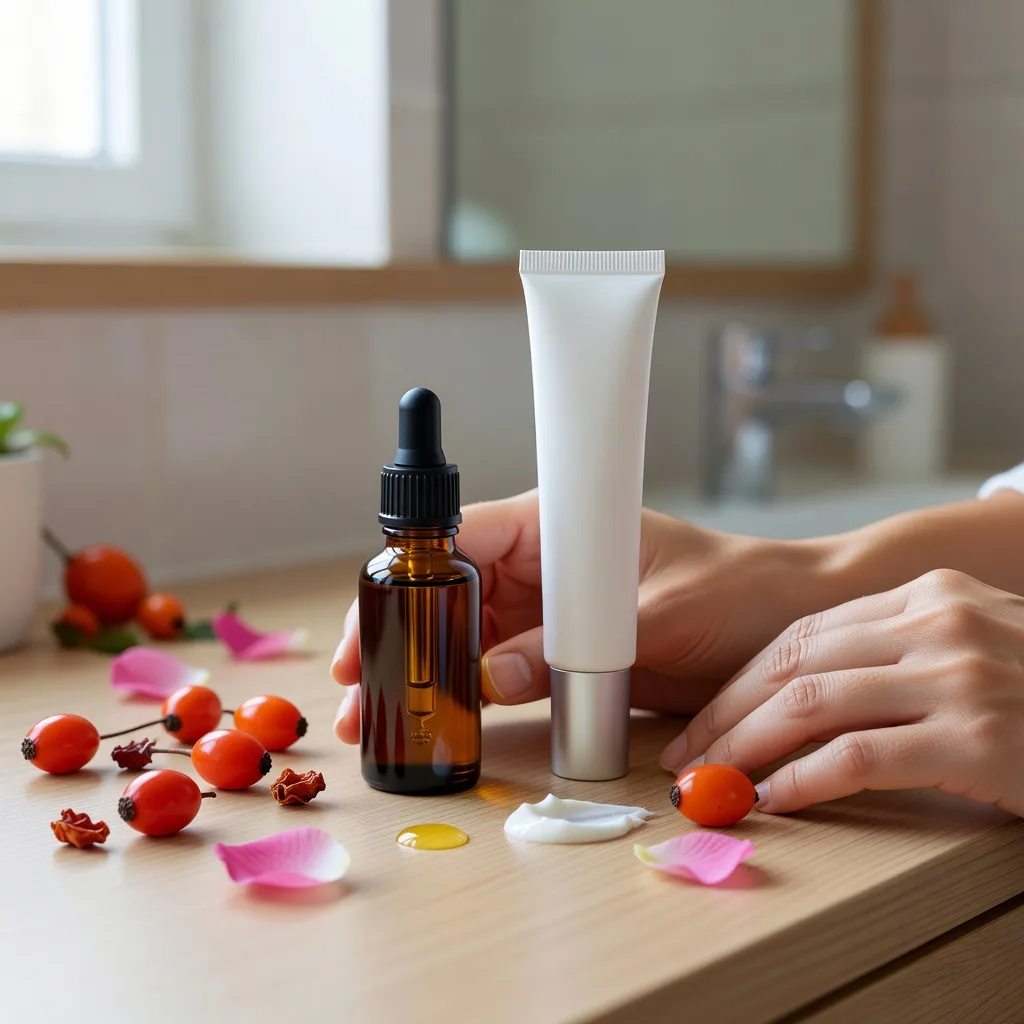
Can You Use Rosehip Oil With Retinol?
Can you use rosehip oil with retinol, or does one cancel the other out?
Part of our guide to skincare products. Start with: 10 Best Facial Moisturizers for Dry Skin (2026): Rich, Gentle Creams
Yes, generally: applied on top of retinol as a buffering layer, rosehip oil can reduce dryness and flaking without meaningfully diluting the retinol’s effect. What it can’t do is replace retinol, despite common “natural retinol” marketing claims.
Rosehip oil’s actual vitamin-A-related content is provitamin-A carotenoids, not synthesized retinoic acid, and its evidence base is real but far smaller than the decades of large trials behind retinoids.
This guide covers the real chemistry distinction, the correct layering order, and why your specific bottle of rosehip oil might not match the research at all.
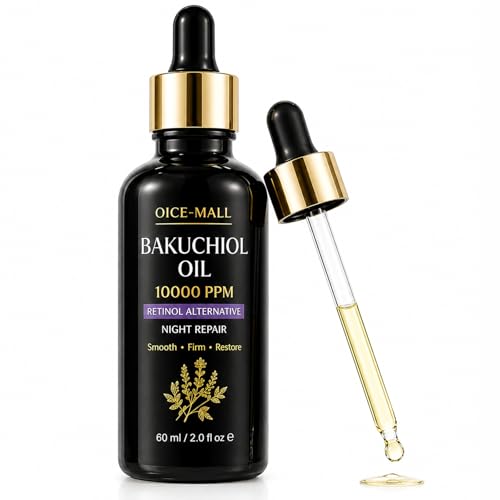
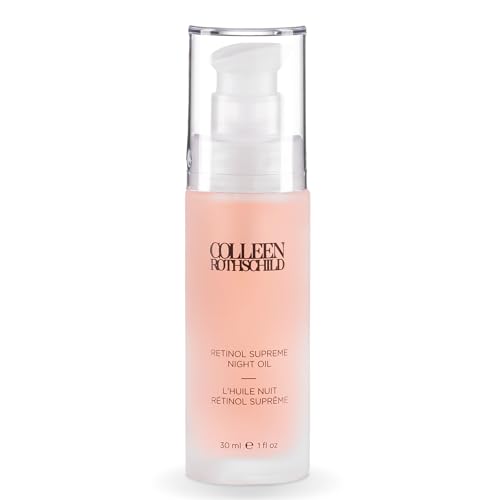
Recommended Rosehip Oils and Retinol Products
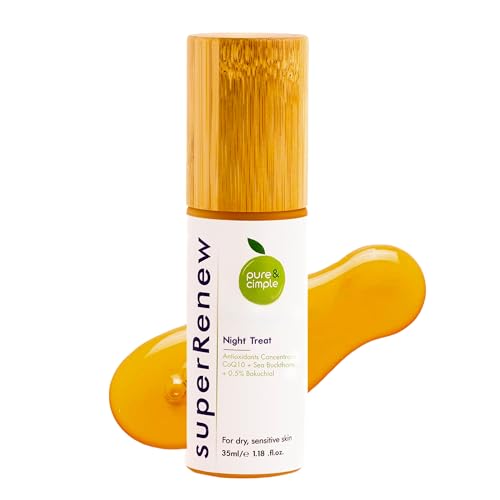
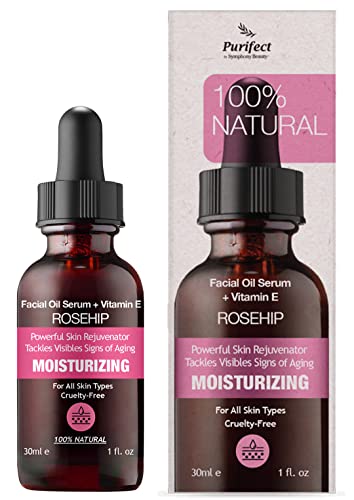
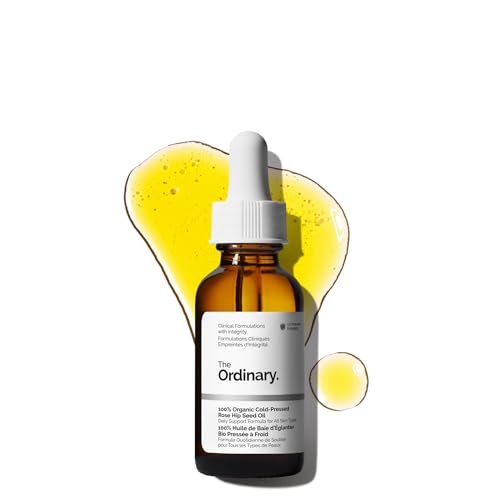
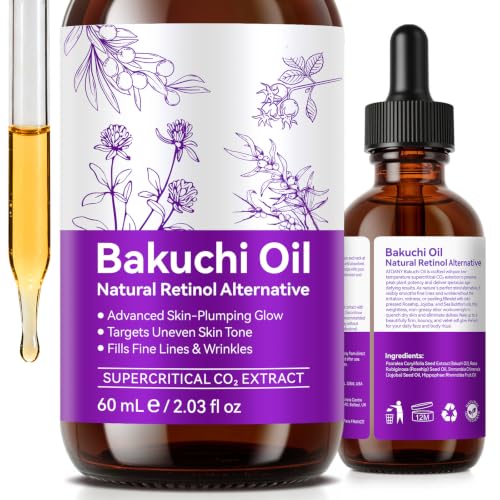
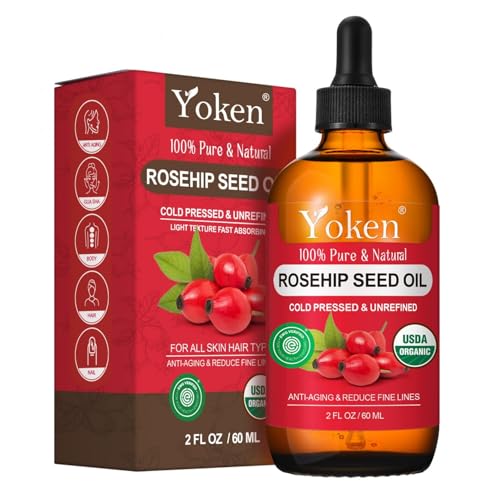
What Matters Most
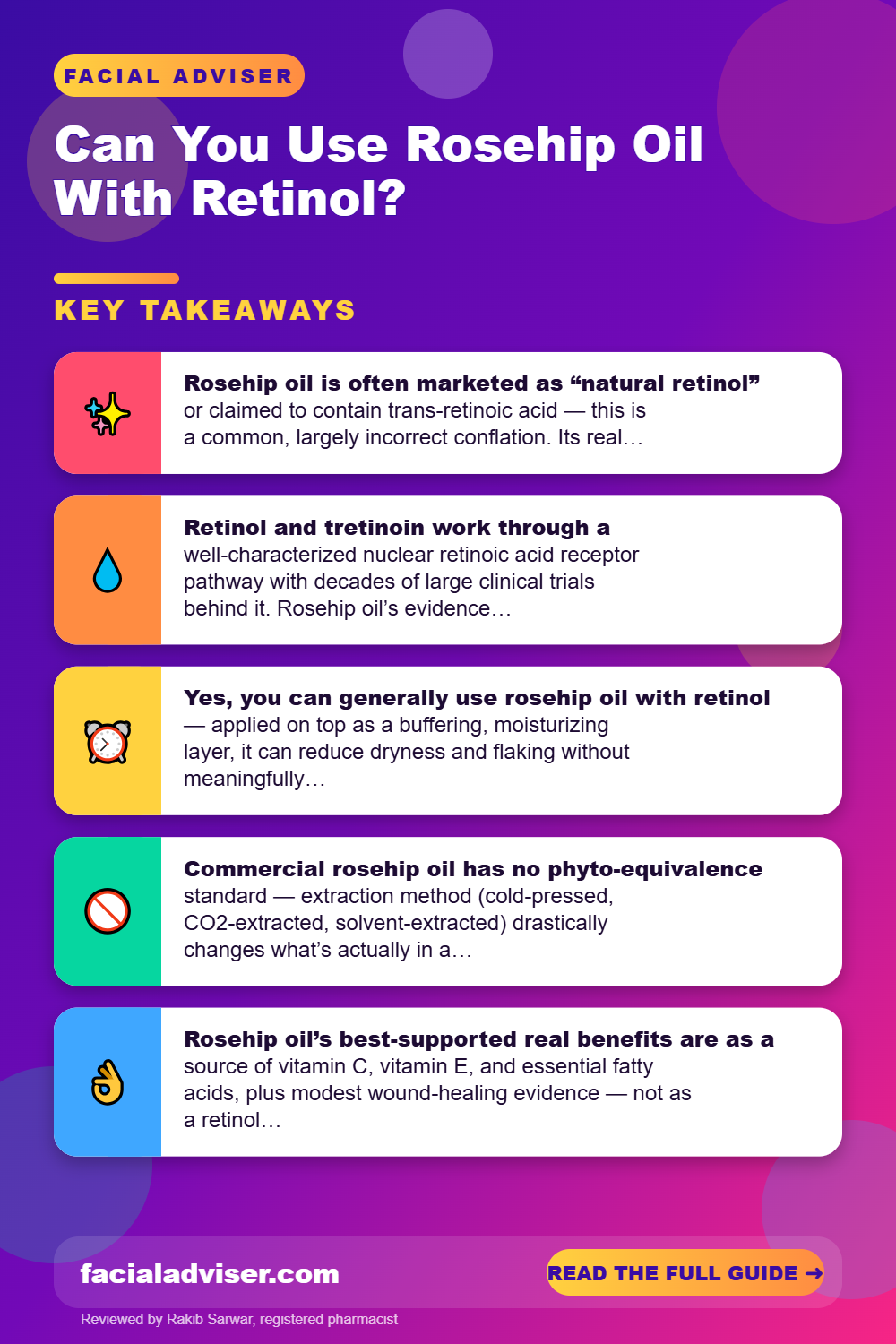
- Rosehip oil is often marketed as “natural retinol” or claimed to contain trans-retinoic acid — this is a common, largely incorrect conflation. Its real vitamin-A-related content is provitamin-A carotenoids like beta-carotene, not synthesized retinoic acid or retinol.
- Retinol and tretinoin work through a well-characterized nuclear retinoic acid receptor pathway with decades of large clinical trials behind it. Rosehip oil’s evidence base is real but far thinner: mostly small human trials, animal models, and lab studies.
- Yes, you can generally use rosehip oil with retinol — applied on top as a buffering, moisturizing layer, it can reduce dryness and flaking without meaningfully diluting the retinol’s effect.
- Commercial rosehip oil has no phyto-equivalence standard — extraction method (cold-pressed, CO2-extracted, solvent-extracted) drastically changes what’s actually in a given bottle, so even research showing benefit for one extract doesn’t guarantee your bottle matches it.
- Rosehip oil’s best-supported real benefits are as a source of vitamin C, vitamin E, and essential fatty acids, plus modest wound-healing evidence — not as a retinol substitute.
Skip Ahead
- The “Natural Retinol” Claim, Corrected
- What’s Actually In Rosehip Oil
- Rosehip’s Real, Modest Evidence Base
- Retinol’s Evidence Base, By Comparison
- Can You Actually Use Them Together?
- The Right Layering Order
- Why Your Bottle Might Not Match the Research
- Rosehip Oil vs. Retinol, Side by Side
- Who Should Be Cautious
- How to Introduce Both Safely
- Do’s and Don’ts
- A Practical Check for Irritation
- What the Evidence Can’t Settle
- Frequently Asked Questions
The “Natural Retinol” Claim, Corrected
Rosehip oil is frequently marketed with claims that it’s a “natural retinol” alternative or that it contains trans-retinoic acid, the active compound in prescription tretinoin. This is a common and largely incorrect conflation. Rosehip seed oil’s actual vitamin-A-related content is made up of provitamin-A carotenoids — primarily beta-carotene — not synthesized retinoic acid or retinol itself. Beta-carotene requires an enzymatic conversion process in the body to eventually become retinaldehyde and then retinoic acid, and that conversion is inefficient and not well-established to occur meaningfully when a carotenoid-containing oil is simply applied topically to skin.
Shopping these picks?
Amazon Prime members get fast, free shipping on eligible items, plus Prime Video, Amazon Music and member deals. New members can start with a free trial.
Start a free Prime trialAged 18 to 24? Prime for Young Adults comes with a longer free trial and a lower price after it.
Affiliate link: we may earn a commission at no extra cost to you.
A 2024 review in Frontiers in Pharmacology examining rosehip-based dermatological products does use “trans-retinoic acid” language in places when discussing rosehip seed essential oil, but the review doesn’t clearly distinguish that from the provitamin-A precursor content actually present, and it explicitly flags that rosehip products broadly “require dose-dependent investigations due to lack of phyto-equivalence” — meaning the composition varies so much by extraction method that a single blanket claim about “retinoic acid content” doesn’t hold up across commercial products.
What’s Actually In Rosehip Oil
Setting the retinol conflation aside, rosehip oil’s honestly defensible composition is genuinely useful: it’s rich in vitamin C, vitamin E, and essential fatty acids, specifically linoleic and linolenic acid. These compounds support skin barrier function and have real antioxidant properties, which is a legitimate reason to include rosehip oil in a routine — just not the reason most marketing leads with.
Rosehip’s Real, Modest Evidence Base
Rosehip does have some genuine research behind it, though it’s a much smaller and less definitive body of evidence than marketing implies. A randomized, double-blind human trial using standardized rose hip powder at 45 grams per day, taken orally over 8 weeks, found statistically significant improvement in wrinkle depth, forehead moisture, and skin elasticity, comparable to astaxanthin in the same study. That’s a real, positive finding — but it was an oral supplement trial, not a topical oil, and it’s a single small study, not a large replicated body of evidence.
Separately, animal-model research has found that rosehip oil promotes excisional wound healing through anti-inflammatory and cell-proliferation-supporting mechanisms — a genuinely interesting finding, but animal-model evidence for wound healing is a different claim entirely from “reverses photoaging like retinol does,” and shouldn’t be stretched to support that broader marketing claim.
Retinol’s Evidence Base, By Comparison
Retinoids — tretinoin specifically — have multiple decades of large randomized controlled trials behind them for both photoaging and acne, forming the basis of actual FDA drug approval. That’s an entirely different evidentiary tier from rosehip oil’s preliminary research base. This asymmetry is the central honest point of this whole topic: rosehip oil and retinol are not interchangeable-strength alternatives at different price points. One is a well-proven pharmaceutical-grade active with a well-characterized mechanism; the other is a modestly-evidenced botanical oil with real but much more limited supporting research.
Can You Actually Use Them Together?
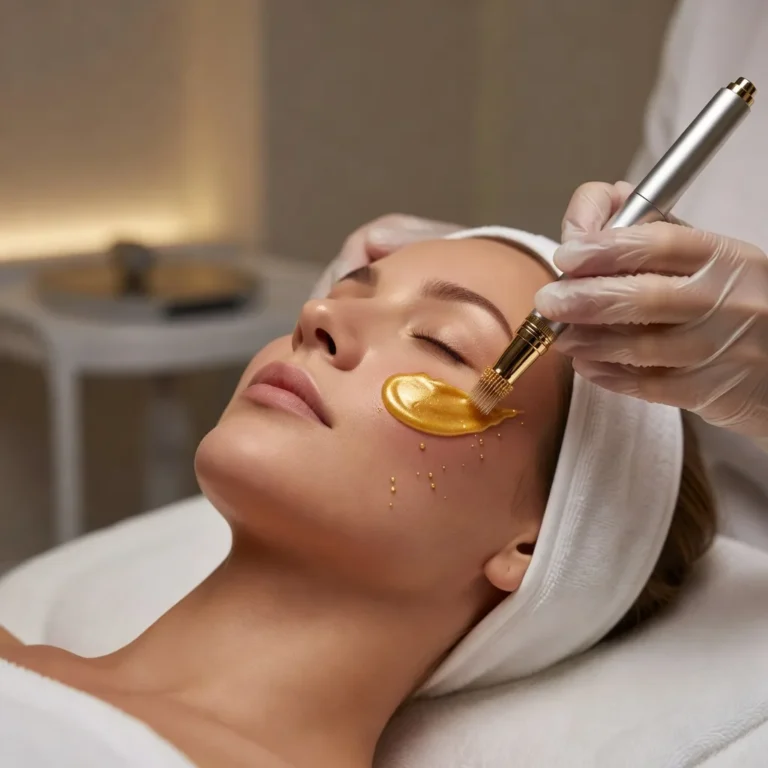
Yes — using rosehip oil alongside retinol is a common and generally reasonable practice, and it’s not the same claim as using rosehip oil instead of retinol. Dermatologist-sourced consensus (not a single dedicated clinical trial, but consistent practical guidance) typically recommends applying retinol first to clean, dry skin, then layering rosehip oil on top as a buffering emollient. The oil’s fatty-acid-rich, occlusive texture can meaningfully reduce the visible dryness and flaking that retinol commonly causes, without meaningfully diluting the retinol’s own efficacy — because oils generally sit on top of water-based actives rather than blocking their initial absorption, provided the application order is followed correctly.
The Right Layering Order
The order matters more than people expect: applying rosehip oil first can create a barrier that reduces how well the retinol penetrates afterward, working against the point of using retinol at all. Applying it after gives you the buffering benefit without meaningfully undermining the retinol’s own effect.
Why Your Bottle Might Not Match the Research
Here’s the most underused, genuinely important honest point in this topic: even where research has found some benefit in a specific rosehip extract, there’s no phyto-equivalence standard across commercial rosehip oil products. Cold-pressed extraction, CO2 extraction, and solvent extraction all produce oils with meaningfully different compositions from the same starting seeds. That means even if a research-grade extract showed some retinoid-adjacent activity in a lab, a random drugstore bottle labeled “rosehip oil” has no guarantee of matching that specific composition. This absence of standardization — not just the retinoic-acid mislabeling itself — is the deeper reason to treat any specific product claim skeptically rather than assuming all “rosehip oil” is functionally identical.
| Extraction method | General composition impact | Common product positioning |
|---|---|---|
| Cold-pressed | Retains more fatty acids and heat-sensitive compounds | Marketed as “pure” or “virgin” oil |
| CO2-extracted | Can concentrate different compounds than cold-pressing | Often marketed as higher-potency |
| Solvent-extracted | May leave trace solvent residue depending on processing | Typically the least expensive option |
Rosehip Oil vs. Retinol, Side by Side
| Factor | Rosehip oil | Retinol / retinoids |
|---|---|---|
| Active mechanism | Provitamin-A carotenoids, essential fatty acids, vitamin C/E | Direct nuclear retinoic acid receptor binding |
| Evidence base | Small human trials, animal models, lab studies | Decades of large RCTs, FDA drug approval |
| Best-supported use | Barrier support, antioxidant benefit, buffering retinol | Acne treatment, photoaging, collagen stimulation |
| Standardization | None across commercial products | Regulated, consistent pharmaceutical formulation |
Who Should Be Cautious
Anyone with a known sensitivity to plant oils, or anyone already managing significant retinol-related irritation, should introduce rosehip oil gradually rather than adding it at the same time as starting a new retinol product — layering two new variables at once makes it harder to identify which one is causing any reaction that shows up. People using rosehip oil specifically hoping it will replace a prescribed retinoid for a diagnosed skin condition should talk to their prescriber first, since the evidence doesn’t support that substitution.
How to Introduce Both Safely
Start with retinol alone first
If you’re new to both, establish tolerance to retinol on its own for a couple of weeks before adding rosehip oil, so you can tell what’s causing any irritation.Patch-test the rosehip oil separately
Apply a small amount to your inner forearm and wait 24-48 hours before using it on your face, standard practice for any new topical oil.Apply retinol first, to clean dry skin
Give it a few minutes to absorb before adding anything on top.Layer rosehip oil on top as the final step
A few drops massaged in after retinol has absorbed provides the buffering benefit without blocking initial penetration.Reduce frequency if irritation appears
Cutting back retinol to every other night while continuing rosehip oil nightly is a reasonable adjustment if dryness or flaking becomes uncomfortable.
Do’s and Don’ts
Do
- Apply rosehip oil after retinol, not before, to avoid blocking retinol’s penetration.
- Treat rosehip oil as a genuine source of vitamin C, vitamin E, and essential fatty acids in its own right.
- Patch-test a new rosehip oil product separately from starting a new retinol product.
Don’t
- Substitute rosehip oil for a prescribed retinoid treating a diagnosed condition.
- Assume “contains retinol-like compounds” on a label means the same thing as synthesized retinoic acid.
- Assume all commercial rosehip oil products have identical composition — extraction method changes what’s actually in the bottle.
A Practical Check for Irritation
There’s no lab test you can run at home to check whether a specific rosehip oil batch will suit your skin — that’s a genuine limit, not something this guide can shortcut. The practical substitute is a simple patch test: apply a small amount to your inner forearm, wait 24-48 hours, and check for redness, itching, or bumps before applying it to your face, especially if you’re already managing retinol-related sensitivity elsewhere on your skin.
What the Evidence Can’t Settle
This guide can tell you the honest chemistry distinction between rosehip oil and retinol, and the reasonable, low-risk way to combine them. It can’t tell you exactly how a specific commercial rosehip oil product will perform, since no standardization exists across extraction methods, and it can’t substitute for medical guidance if you’re managing a diagnosed skin condition with a prescribed retinoid.
Frequently Asked Questions
Can you use rosehip oil with retinol?
Yes, generally. Applying rosehip oil on top of retinol as a buffering, moisturizing layer can reduce dryness and flaking without meaningfully diluting the retinol’s effect, as long as the retinol is applied first.
Does rosehip oil actually contain retinol?
No, not in the synthesized sense marketing sometimes implies. Rosehip oil’s vitamin-A-related content is provitamin-A carotenoids like beta-carotene, which require an inefficient conversion process to become active retinoic acid, not the direct retinol or tretinoin found in skincare products.
Is rosehip oil a good substitute for retinol?
No. Retinoids have decades of large clinical trials supporting their effectiveness for acne and photoaging, while rosehip oil’s evidence base is much smaller and more preliminary — it shouldn’t replace a prescribed retinoid for a diagnosed condition.
What order should I apply rosehip oil and retinol?
Apply retinol first to clean, dry skin, then layer rosehip oil on top once the retinol has absorbed. Applying the oil first can create a barrier that reduces how well the retinol penetrates.
What does rosehip oil actually do for skin?
Its best-supported benefits come from its vitamin C, vitamin E, and essential fatty acid content, which support skin barrier function and offer real antioxidant properties, along with modest evidence for wound healing.
Why doesn’t every rosehip oil product perform the same way?
There’s no phyto-equivalence standard across commercial rosehip oil products — cold-pressed, CO2-extracted, and solvent-extracted oils have meaningfully different compositions from the same starting seeds, so research on one extract doesn’t guarantee the same results from a different bottle.
Can rosehip oil help with retinol-related dryness?
Yes, this is one of its more legitimate uses. Its fatty-acid-rich, occlusive texture can buffer the dryness and flaking retinol commonly causes when layered on top after the retinol has absorbed.
Is there clinical research on oral rosehip supplementation?
Yes, a randomized, double-blind trial using 45 grams per day of standardized rose hip powder over 8 weeks found significant improvement in wrinkle depth, moisture, and elasticity, though this was a single small oral-supplement study, not topical oil.
Should I patch-test rosehip oil before using it on my face?
Yes. Applying a small amount to your inner forearm and waiting 24-48 hours before facial use is a reasonable precaution, especially if you’re already managing retinol-related skin sensitivity.
Can I use rosehip oil and retinol on the same night as a beginner?
It’s generally better to establish tolerance to retinol alone for a couple of weeks first, then introduce rosehip oil separately, so you can tell which product is responsible if any irritation appears.

Written by
Registered pharmacist and founder of Facial Adviser. Rakib's pharmacy training covers how skincare actives work and interact; a later course in cosmetology turned that into a focus on facial treatments and skincare products. He plans, researches and edits every guide on the site and checks health claims against sources such as the American Academy of Dermatology, the FDA and the NIH. He is not a dermatologist; see the Editorial Policy and Medical Disclaimer.
About · Editorial policy · How we choose products · Medical disclaimer · Contact
Keep reading: Moisturisers and face oils
- 10 Best Facial Moisturizers for Dry Skin (2026): Rich, Gentle Creams
- Does Vitamin C Facial Cream Work?
- Facial Oil vs Essential Oil: Why One Moisturizes and the Other Can Irritate
- Facial Oil vs Serum: Which Does Your Skin Need, and Which Goes First?
- Facial Moisturizer vs Body Lotion: Can You Use Lotion on Your Face?
- Day Cream vs Day Lotion for Your Face: Which Texture Does Your Skin Need?
- What Does a Facial Toner Do? The Real Answer
- 10 Best Facial Cleansers for Combination Skin (2026): Balanced Picks