Does Skin Get Used to Skincare Products? The Truth About Tolerance
The serum that transformed your skin in the first month does not seem to be doing much anymore. The retinol that made you peel now feels like nothing. It is easy to conclude that your skin has got used to it and that you need something new or stronger.
Part of our guide to skincare routines and ingredients. Start with: Best Skin Care Routine: Simple AM and PM Steps for Every Skin Type
Skin does adapt to some products, but not in the way people often think. With retinoids and acids, skin builds tolerance to the irritation, so peeling and stinging fade while the product keeps working. Visible results also tend to be fastest early and then level off, which can feel like the product has stopped. True resistance is rare for most skincare ingredients. Switching products often usually does more harm than good; consistency matters more.
The idea that skin becomes immune to products comes partly from how results feel. Early changes, such as smoother texture or fewer spots, are easy to notice. Later improvements, such as slowly fading marks or gradual collagen changes, are much harder to see day to day.
The American Academy of Dermatology warns that trying new acne treatments too often can irritate the skin and cause breakouts, and advises giving a treatment several weeks to months before judging it. The same principle applies to most skincare.
This guide explains what adaptation really means, how different ingredients behave over time, and how to tell whether a product has truly stopped working or simply reached its natural plateau.
Shopping these picks?
Amazon Prime members get fast, free shipping on eligible items, plus Prime Video, Amazon Music and member deals. New members can start with a free trial.
Start a free Prime trialAged 18 to 24? Prime for Young Adults comes with a longer free trial and a lower price after it.
Affiliate link: we may earn a commission at no extra cost to you.
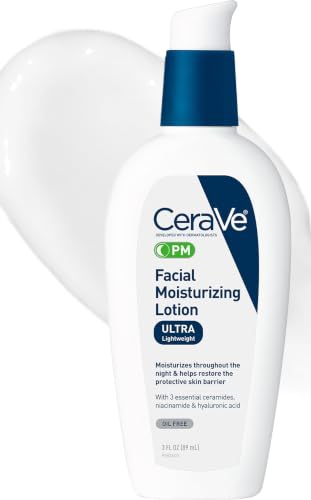
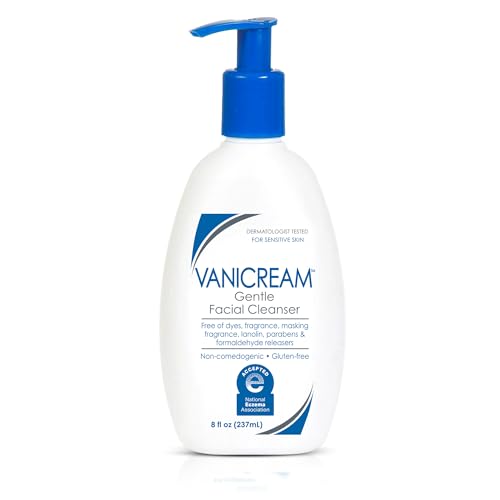
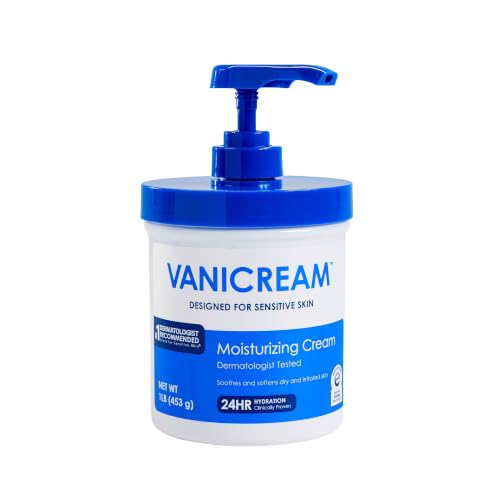
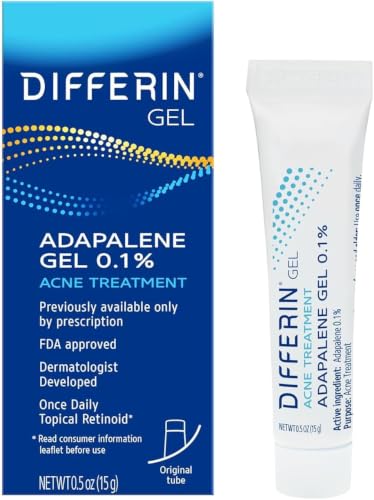
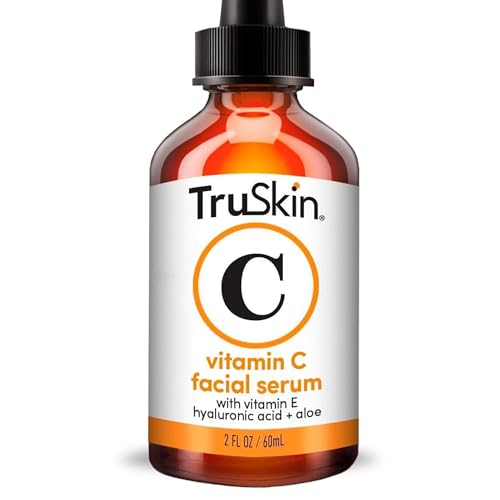
Recommended Reliable Skincare Staples

Jump to a Section
- What Adaptation Really Means
- How Common Ingredients Behave Over Time
- How to Tell Whether a Product Has Stopped Working
- Why Results Plateau
- The Problem With Switching Products Often
- Dos and Don’ts for Long-Term Results
- When It Is Your Skin That Has Changed
- When to Step Up or Change
- Common Beliefs About Skin Adaptation
- Building a Routine That Keeps Working
- Honest Limits
- When to See a Dermatologist
- Common Questions
- Final Word
What to Know First
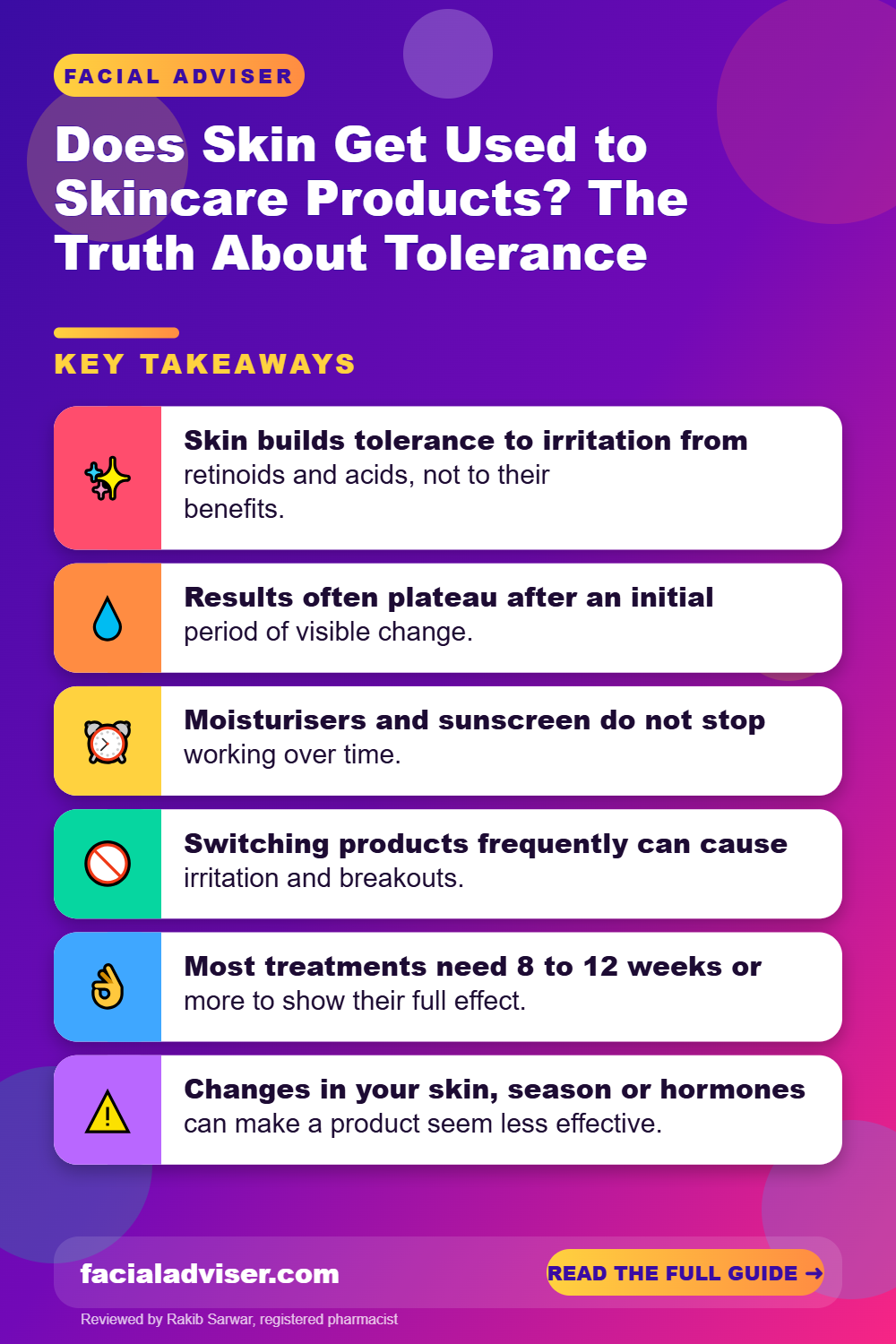
- Skin builds tolerance to irritation from retinoids and acids, not to their benefits.
- Results often plateau after an initial period of visible change.
- Moisturisers and sunscreen do not stop working over time.
- Switching products frequently can cause irritation and breakouts.
- Most treatments need 8 to 12 weeks or more to show their full effect.
- Changes in your skin, season or hormones can make a product seem less effective.
- If a product truly is not helping after a fair trial, adjusting the plan is reasonable.
What Adaptation Really Means
| What people notice | What is actually happening |
|---|---|
| Retinoid no longer causes peeling | Skin has built tolerance to irritation; the retinoid still works |
| Acid toner no longer tingles | Tolerance to the sensation; exfoliation continues |
| Serum results have slowed | Early gains were fast; later gains are slower and subtler |
| Moisturiser does not feel as good | Your skin, season or environment may have changed |
| Acne treatment seems weaker | Hormones, stress or a new trigger may be at play |
In most cases, the product has not stopped working. Either your skin has stopped reacting to it, which is a good thing, or the easy wins have already happened and further progress is slower.
There is also a psychological side. Once an improvement becomes your new normal, it stops feeling like a result. Many people only realise how much a product was doing when they stop using it and their old problems gradually return.
How Common Ingredients Behave Over Time
| Ingredient | Early phase | Longer term |
|---|---|---|
| Retinoids | Dryness, peeling, possible purging | Irritation settles; texture, acne and pigment continue to improve |
| AHA and BHA acids | Tingling, smoother feel quickly | Steady maintenance; overuse can cause irritation |
| Vitamin C | Brighter look within weeks | Gradual, subtle benefits; product can oxidise |
| Niacinamide | Less oiliness and redness over weeks | Ongoing maintenance benefits |
| Moisturisers | Immediate comfort | Continue to work every time you use them |
| Sunscreen | Protects from day one | Protection continues as long as it is applied |
Retinoids are a good example. The early peeling phase, sometimes called retinisation, fades as the skin adjusts. That does not mean the retinoid has stopped working; it means the skin is no longer being overwhelmed by it. Our guide to starting retinol smoothly explains this adjustment period.
How to Tell Whether a Product Has Stopped Working
Check how long you have used it
Most active products need at least 8 to 12 weeks before you can judge them.
Compare photos, not memories
Look at photos taken in the same light from before you started and now.
Look at what else has changed
New products, stress, hormones, weather, diet or medication can all affect skin.
Check the product itself
Look at the expiry date and whether it has changed colour, smell or texture.
Review how you use it
Are you applying the right amount, at the right time, consistently?
Change one thing at a time
If you decide to switch, change a single product and give the new one a fair trial.
Take a photo every four weeks in the same spot, light and angle. Gradual improvements that are invisible day to day become obvious when you compare months.
Why Results Plateau
Many skin changes follow a curve: quick improvement at first, then a slower phase. Acne often improves noticeably in the first two to three months of treatment, then more gradually. Brightening products can make skin look fresher fairly quickly, but fading deeper pigment takes much longer.
A plateau can also mean you have reached what that product can realistically do. A mild over-the-counter retinol will not deliver the same results as a prescription retinoid, and no topical product can fully erase deep wrinkles or pitted scars.
Product condition matters too. Vitamin C serums can oxidise and turn orange or brown once opened, becoming less effective, and sunscreens and actives can lose strength if stored in heat or kept past their expiry date. Sometimes the product really has changed, and replacing it with a fresh bottle of the same thing is all you need.
Reaching a plateau is not a failure. Maintaining good results is itself an important goal, especially for acne, pigmentation and sun damage, which tend to return if treatment stops.
The Problem With Switching Products Often
Constantly rotating products makes it hard to tell what is working and increases the chance of irritation. Every new product brings new ingredients, preservatives and fragrance your skin must deal with.
The AAD specifically warns that trying new acne treatments too often can irritate the skin and trigger breakouts, and recommends giving treatments time to work (AAD). If you have recently started several new products and your skin is peeling or reactive, our guide on peeling after new products can help.
Increasing strength too quickly, such as jumping from a mild retinol to a strong one because the first no longer stings, is a common cause of irritation and barrier damage.
Dos and Don’ts for Long-Term Results
Worth Doing
- Stick with a routine for at least two to three months
- Change only one product at a time
- Take regular comparison photos
- Keep using sunscreen daily
- Store products properly and replace expired ones
Skip It
- Switch products every few weeks
- Increase strength just because irritation has stopped
- Judge results from the mirror each morning
- Stack several new actives at once
- Assume a plateau means failure
When It Is Your Skin That Has Changed
Sometimes a product seems less effective because your skin, not the product, has changed. Hormonal shifts, pregnancy, menopause, new medication, stress, a move to a different climate or a change of season can all alter how skin behaves.
A moisturiser that was perfect in summer may feel too light in winter, and an acne routine that worked at 22 may need adjusting at 35. That is not adaptation; it is your skin’s needs moving. Our guide on how hormones affect sebum explains one common reason.
Keeping a short note of major life changes alongside your skin photos can make these patterns much clearer. A breakout that coincides with a new job, a new medication or a move is often easier to understand when you can see the timing.
When to Step Up or Change
There are good reasons to adjust a routine. If you have used a product consistently for three months without any improvement, it may not suit your concern. If your goals have changed, or your skin is reacting, a change makes sense.
- Move up in strength gradually, only when your skin tolerates the current product well.
- Consider a different active that targets the same concern, rather than a stronger version of the same thing.
- For persistent acne, pigmentation or signs of aging, a dermatologist can offer prescription options.
- Keep the supporting basics, such as gentle cleanser, moisturiser and sunscreen, the same.
Common Beliefs About Skin Adaptation
- You need to change your cleanser every few months: there is no evidence for this; a gentle cleanser that suits you can be used indefinitely.
- Skin gets addicted to moisturiser: skin does not become dependent on moisturiser; if it feels dry without one, it was probably dry to begin with.
- Lip balm makes lips need more lip balm: irritating ingredients such as menthol or fragrance can dry lips, but plain balms do not create dependence.
- Tingling means a product is working: tingling is irritation, and its absence does not mean a product has stopped working.
- More expensive means longer-lasting results: price does not predict how well a product works over time.
Most of these beliefs come from mistaking a change in sensation, or a change in the skin itself, for the product losing its effect.
Building a Routine That Keeps Working
A routine that lasts is usually simple. A gentle cleanser, a moisturiser that suits your skin, daily sunscreen and one or two targeted actives for your main concern are enough for most people.
| Step | Role | How often to review |
|---|---|---|
| Cleanser | Removes dirt and oil without stripping | Only if skin feels tight or oily |
| Moisturiser | Supports the barrier | Each season |
| Sunscreen | Prevents damage | Keep daily; switch only for texture |
| Targeted active | Treats acne, pigment or aging | After 3 months of consistent use |
| Optional extras | Masks, toners, serums | Whenever the routine feels too long |
Reviewing your routine a few times a year, rather than every few weeks, gives products time to work and makes it much easier to spot what is helping.
Honest Limits
There is limited research on long-term adaptation to most cosmetic ingredients, so some questions do not have firm answers. What is well established is that tolerance to irritation from retinoids develops, that consistent use matters for results, and that frequent switching increases the risk of problems.
Expectations also matter. Skincare can improve and maintain skin, but it will not keep producing dramatic changes indefinitely. Thinking of your routine as maintenance, like brushing your teeth, rather than a series of transformations, makes it easier to stay consistent and to judge products fairly.
When to See a Dermatologist
- Acne has not improved after three months of consistent over-the-counter treatment.
- A product that previously suited you now causes redness, itching or a rash.
- Your skin has changed suddenly without an obvious reason.
- You want to move to prescription treatments.
This article is for general information and does not replace professional medical advice. See a dermatologist for persistent or changing skin concerns.
Common Questions
Does skin get used to skincare products?
It builds tolerance to irritation from some actives, but products usually keep working.
Should I rotate my skincare products?
Frequent rotation is not needed and can irritate skin; consistency usually works better.
Does retinol stop working after a while?
No. Irritation settles as skin adjusts, but the retinol keeps working.
Why has my serum stopped working?
Results may have plateaued, your skin may have changed, or the product may have expired or oxidised.
How long should I use a product before judging it?
Usually 8 to 12 weeks, and longer for pigmentation or signs of aging.
Do I need a stronger retinol if mine no longer stings?
Not necessarily. Lack of stinging means tolerance, not that it has stopped working.
Can skin become resistant to acne treatments?
Bacterial resistance can develop with antibiotics, which is why doctors combine them with other treatments; most topical non-antibiotic products do not lose effect.
Does moisturiser stop working over time?
No, but your skin’s needs may change with season or age.
Is it bad to switch skincare often?
It can cause irritation and makes it hard to tell what is working.
What should I do if a product no longer helps?
Review how long and how consistently you have used it, check for other changes, then change one product at a time.
Final Word
Skin does adapt, but mostly by becoming more tolerant of the irritation some active ingredients cause. The benefits of retinoids, acids, niacinamide, moisturisers and sunscreen usually continue, even when you stop noticing dramatic changes.
Give products a fair trial, compare photos rather than memories, change one thing at a time and keep the basics consistent. If a product truly has not helped after a few months, adjust the plan or ask a dermatologist about stronger options.

Written by
Registered pharmacist and founder of Facial Adviser. Rakib's pharmacy training covers how skincare actives work and interact; a later course in cosmetology turned that into a focus on facial treatments and skincare products. He plans, researches and edits every guide on the site and checks health claims against sources such as the American Academy of Dermatology, the FDA and the NIH. He is not a dermatologist; see the Editorial Policy and Medical Disclaimer.
About · Editorial policy · How we choose products · Medical disclaimer · Contact
Keep reading: Skincare routine basics
- Best Skin Care Routine: Simple AM and PM Steps for Every Skin Type
- Morning vs Night Skincare Routine: The Right Order Explained
- Is Alcohol Always Bad in Skincare? Good vs Drying Alcohols
- Best Skincare Layering Order for Beginners: Simple AM and PM Routines
- Waterless Skincare: Real Benefits and Marketing Myths
- How to Adjust Your Skincare Routine for Seasonal Changes