Does Skipping Cleanser at Night Matter?
It is late, you are tired, and the bathroom sink feels a long way off. Skipping your evening cleanse once in a while seems harmless, and for many people it is. But if it becomes a habit, or if you are going to bed in makeup and sunscreen, it can start to show.
Part of our guide to skincare products. Start with: 10 Best Facial Cleansers for Combination Skin (2026): Balanced Picks
For most people, the evening cleanse matters more than the morning one. By night, your skin has collected sunscreen, makeup, sweat, excess oil and pollution, and leaving them on overnight can contribute to clogged pores, breakouts and dullness, and can stop night-time treatments from working evenly. Skipping it once is unlikely to cause lasting harm, but making a habit of it, especially with makeup on, is worth avoiding. On very tired nights, micellar water or a quick rinse with a gentle cleanser is far better than nothing.
The American Academy of Dermatology recommends washing your face twice a day, and after sweating, with a gentle, non-abrasive cleanser and lukewarm water. The evening wash is the one that removes the day’s build-up.
How much skipping matters depends on your day. If you wore no makeup, used a light sunscreen and stayed indoors, the effect is smaller. If you wore long-wear foundation, water-resistant sunscreen or spent the day in heat and traffic, it matters more.
This guide explains what happens when you skip your evening cleanse, who is most affected, and how to make cleansing quick enough that you rarely need to skip it.
Shopping these picks?
Amazon Prime members get fast, free shipping on eligible items, plus Prime Video, Amazon Music and member deals. New members can start with a free trial.
Start a free Prime trialAged 18 to 24? Prime for Young Adults comes with a longer free trial and a lower price after it.
Affiliate link: we may earn a commission at no extra cost to you.
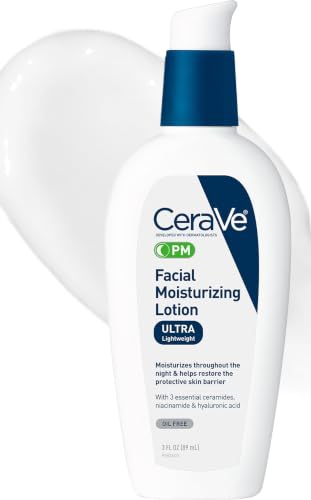
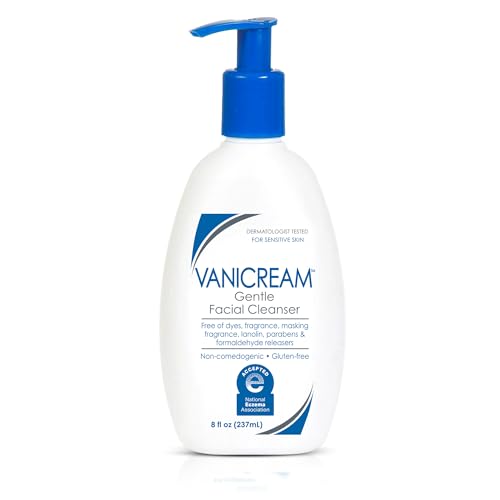
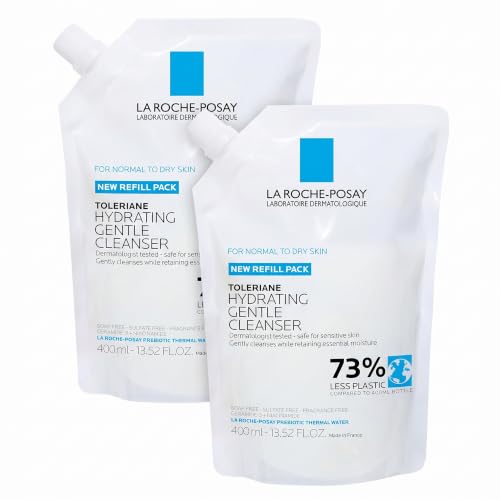
Recommended Evening Cleansers and Removers



Quick Answer
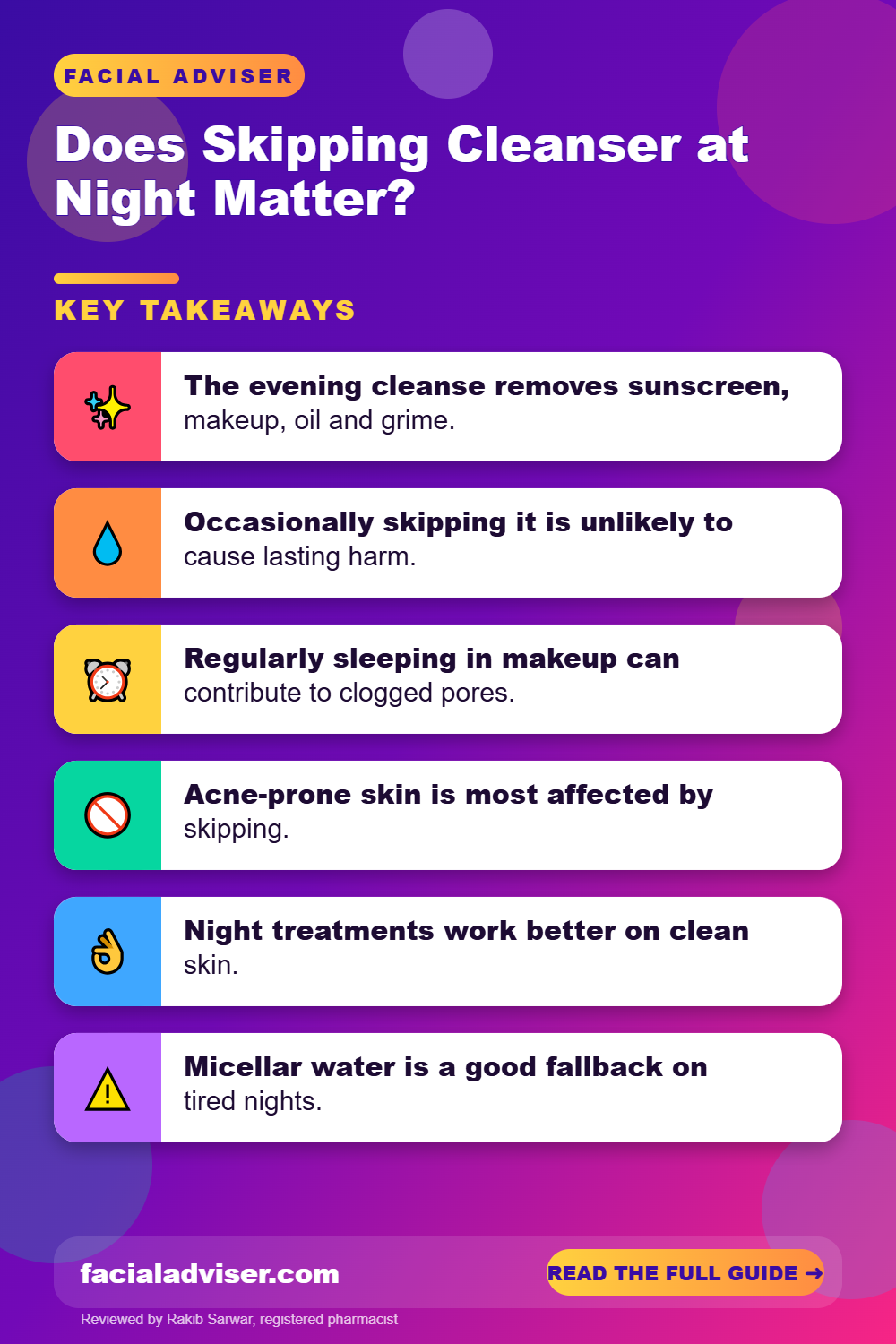
- The evening cleanse removes sunscreen, makeup, oil and grime.
- Occasionally skipping it is unlikely to cause lasting harm.
- Regularly sleeping in makeup can contribute to clogged pores.
- Acne-prone skin is most affected by skipping.
- Night treatments work better on clean skin.
- Micellar water is a good fallback on tired nights.
- Gentle cleansing matters more than long routines.
In This Guide
- What Happens When You Skip Your Evening Cleanse
- Who Is Most Affected
- Why Clean Skin Helps Night Treatments
- Is the Morning Cleanse More or Less Important?
- How to Cleanse at Night in Under Two Minutes
- What to Do on Nights You Are Too Tired
- Making Evening Cleansing Easy
- Dos and Don’ts
- Can You Cleanse Too Much?
- Honest Limits
- When to See a Dermatologist
- FAQ
- The Bottom Line
What Happens When You Skip Your Evening Cleanse
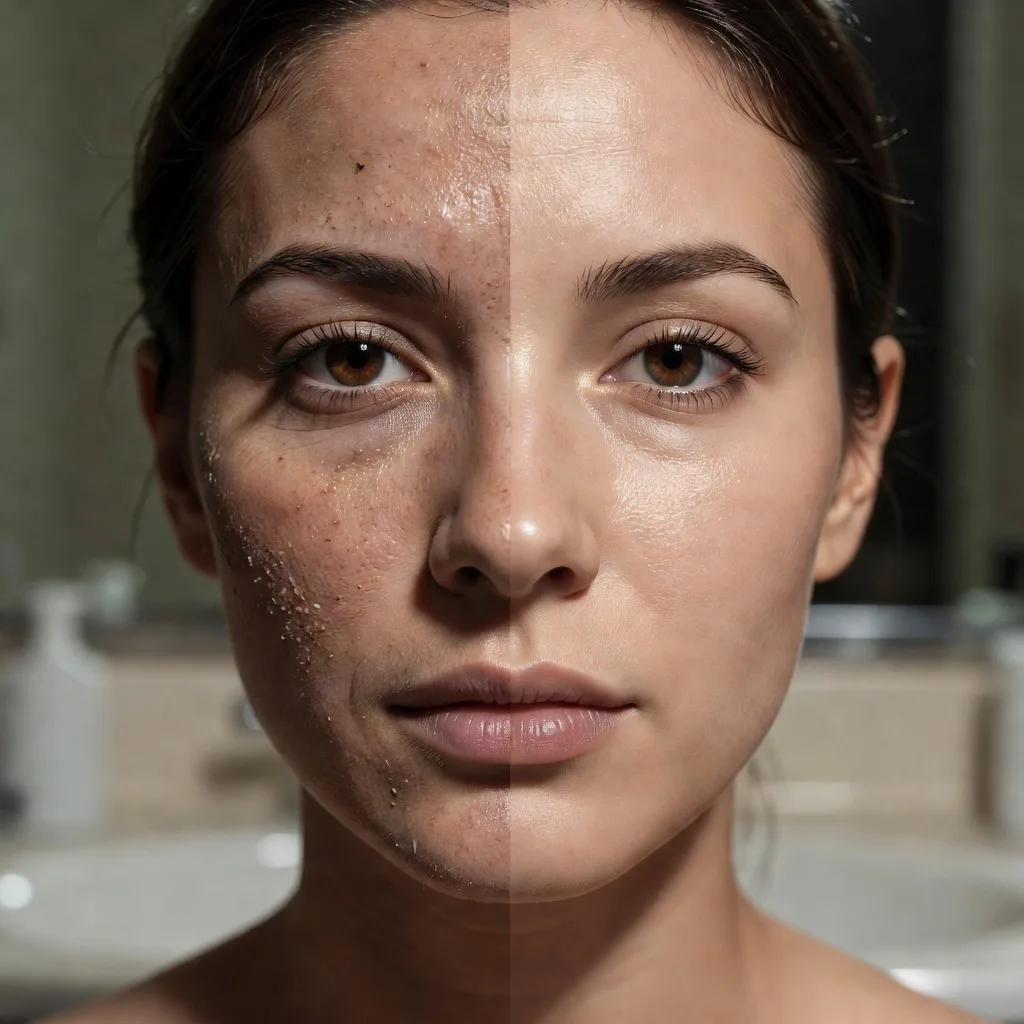
Through the day, your skin collects a mix of your own oil and sweat, dead skin cells, the products you applied, and whatever is in the air around you. Left overnight, that mix sits on the skin while you sleep, pressed into your pillow.
| What stays on your skin | Possible effect overnight |
|---|---|
| Makeup, especially foundation | Can contribute to clogged pores and breakouts |
| Water-resistant sunscreen | Can feel heavy and trap oil |
| Excess oil and sweat | Can build up in pores, especially in oily skin |
| Pollution and grime | May add to dullness and irritation |
| Dead skin cells | Can make skin look dull and rough |
| Mascara and eye makeup | Can irritate the eyes and lashes |
One night rarely causes visible problems. The effects tend to build up over repeated nights, particularly in people who are already prone to breakouts.
Your pillowcase absorbs some of what is on your skin. Skipping cleansing means more oil and product transfer to the fabric, which then touches your face again the next night.
Who Is Most Affected
| Situation | How much skipping matters | Why |
|---|---|---|
| Acne-prone skin | A lot | Oil and product build-up can worsen breakouts |
| Wore full makeup | A lot | Makeup can clog pores and irritate eyes |
| Used water-resistant sunscreen | Moderately | It is designed to stay on the skin |
| Oily skin | Moderately | More oil builds up over the day |
| Dry or sensitive skin, no makeup | Less | Less build-up; over-cleansing can be a bigger risk |
| Stayed indoors, light moisturiser only | Less | Little to remove |
If you are in one of the lower-risk groups, a quick rinse with water or micellar water on nights you are exhausted is reasonable. If you are acne-prone or wore makeup, a proper cleanse is worth the two minutes.
Heat and exercise change the picture too. On days when you have sweated a lot, whether from a workout, a hot commute or working outdoors, sweat and oil mix with sunscreen and can sit in pores overnight. The AAD recommends washing after sweating, and on those days the evening cleanse is particularly worthwhile, even if your skin is not usually prone to breakouts.
Our guide on whether makeup damages your skin covers why removing it each night matters.
Why Clean Skin Helps Night Treatments
Many people use their most active products at night, such as retinoids, acne treatments or exfoliating acids. These are designed to go on clean skin.
Applying them over a layer of sunscreen, makeup and oil can make them spread unevenly and may reduce how well they work. It can also trap irritating ingredients against the skin in an uneven way.
Moisturisers and night creams also sit better on clean skin. Our guide to night cream versus leave-on treatment explains where each fits in an evening routine.
If you skip cleansing, it usually makes sense to skip your active treatment that night too, rather than applying it over the day’s build-up. Missing one night of a retinoid or acne treatment will not set your progress back in any meaningful way.
Is the Morning Cleanse More or Less Important?
For many people, the morning cleanse is the one that can be simplified. Overnight, your skin has mainly been in contact with your night products and pillowcase. A splash of lukewarm water or a quick, gentle wash is often enough, especially for dry or sensitive skin.
The evening cleanse does the heavier lifting, removing everything the day added. If you need to cut a step, the morning wash is usually the better one to make lighter.
Oily or acne-prone skin may still benefit from a proper cleanse in both the morning and evening, as the AAD recommends washing twice a day and after sweating.
How to Cleanse at Night in Under Two Minutes
Keep your cleanser by the sink
Remove the friction of having to look for it.
Remove makeup first if needed
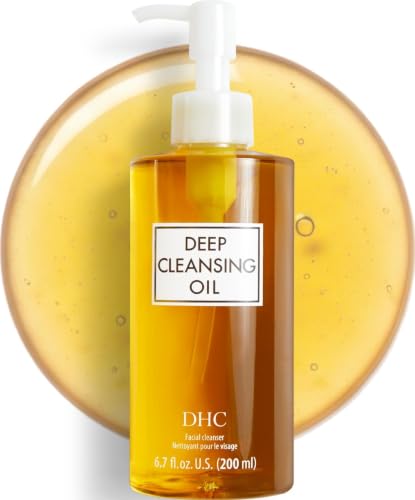
Use micellar water or a cleansing oil to lift makeup and water-resistant sunscreen.
Wash with a gentle cleanser
Massage with your fingertips for about 30 seconds using lukewarm water.
Rinse thoroughly
Make sure no cleanser or residue remains along the hairline and jaw.
Pat dry
Use a clean towel and pat rather than rub.
Moisturise
Apply your moisturiser or night treatment while skin is still slightly damp.
The AAD’s face washing tips recommend using your fingertips, lukewarm water and a gentle cleanser, which also keeps the routine quick.
Wash your face earlier in the evening, when you get home or after dinner, rather than right before bed. It is much easier to do when you are not already exhausted.
What to Do on Nights You Are Too Tired
Some nights, a full cleanse will not happen. A quick fallback is still far better than nothing.
- Micellar water on a cotton pad: removes light makeup and sunscreen without a sink.
- A quick rinse with water: better than nothing if you wore little or no makeup.
- Cleansing wipes, occasionally: convenient, but they can be harsh with regular use and often leave residue.
Our comparison of cleansing oils and micellar water covers which option suits heavy versus light makeup.
Keeping micellar water and cotton pads on your bedside table can make the difference on nights when you cannot face the bathroom.
Do not sleep in eye makeup regularly. Mascara and eyeliner left on overnight can irritate the eyes and lashes and may contribute to eye infections.
Making Evening Cleansing Easy
Most people who skip their evening cleanse do not do it because they think it is unimportant. They do it because the routine has become too long, the products are in an awkward place, or bedtime arrives before they have the energy.
- Cut the routine down. One gentle cleanser and one moisturiser are enough for most nights. Save extra steps for when you have time.
- Move the timing. Cleansing as soon as you get home, or right after dinner, avoids the late-night slump.
- Make it visible. Keep your cleanser and a clean towel beside the sink rather than in a cabinet.
- Pair it with an existing habit. Wash your face straight after brushing your teeth, every night, without deciding each time.
- Keep a backup. Micellar water and cotton pads by the bed cover the nights when you really cannot manage the sink.
Small changes like these tend to work better than willpower. Once the evening cleanse takes less than two minutes and happens at a fixed point in your evening, skipping it becomes much less likely.
Dos and Don’ts
Try This
- Cleanse every evening if you wore makeup or sunscreen
- Use a gentle cleanser and lukewarm water
- Keep a fallback such as micellar water nearby
- Wash earlier in the evening if you tend to skip
- Change your pillowcase regularly
Avoid This
- Sleep in makeup as a habit
- Apply retinoids or acids over an uncleansed face
- Scrub hard to make up for skipped nights
- Use harsh wipes every night
- Over-cleanse dry or sensitive skin
Can You Cleanse Too Much?
Yes. Washing more than twice a day, using hot water or choosing a harsh foaming cleanser can strip your skin’s natural oils and disrupt the barrier, leading to tightness, dryness and even more oil production in some people.
If your skin feels tight or squeaky after cleansing, your cleanser may be too strong. Our guide on how to tell if a cleanser is too harsh explains the signs and what to switch to.
The goal is a gentle, thorough evening cleanse, not a vigorous one. For most people, once in the evening and a lighter wash in the morning is the right balance.
Honest Limits
There is limited research on exactly what happens to the skin after skipping cleansing for a single night. Most of the advice here is based on dermatologists’ general guidance and on how makeup, sunscreen and oil are known to behave on the skin.
Skipping one night will not undo good skin, and cleansing every night will not prevent all breakouts, which are also influenced by hormones, genetics and other factors.
If skipping has become a pattern, it is worth asking why. Often the routine has become too long or tiring. Simplifying it to one gentle cleanser and one moisturiser can make evening cleansing easy enough to become automatic.
It can also help to link cleansing to something you already do every night, such as brushing your teeth. Keeping the two side by side makes it much less likely that you will forget or talk yourself out of it.
When to See a Dermatologist
- Breakouts persist even with a consistent cleansing routine.
- Your skin stings, burns or peels after cleansing.
- Your eyes or eyelids are frequently red, itchy or swollen.
- You are unsure which cleanser suits acne-prone or sensitive skin.
This article is for general information and does not replace professional medical advice. See a dermatologist for persistent skin concerns.
FAQ
Does it matter if I skip cleansing at night?
Occasionally skipping is unlikely to cause lasting harm, but making it a habit, especially with makeup on, can contribute to breakouts.
Is it bad to sleep in makeup?
Doing it regularly can clog pores and irritate the eyes. Remove it whenever you can.
Which is more important, morning or night cleansing?
For most people, the evening cleanse matters more because it removes the day’s build-up.
Can I just use micellar water at night?
Yes, on light-makeup or tired nights it is a good option.
Is rinsing with water enough at night?
It can be if you wore no makeup or sunscreen, but it will not remove water-resistant products.
Should I apply retinol if I skipped cleansing?
It is better to skip the treatment that night than apply it over an uncleansed face.
Can skipping cleansing cause acne?
It can contribute to breakouts in acne-prone skin, especially with makeup and sunscreen left on.
Are makeup wipes okay at night?
Occasionally, yes, but they can be harsh and leave residue with regular use.
How long should I wash my face at night?
About 30 seconds of gentle massage with a mild cleanser is usually enough.
Can I over-cleanse my face?
Yes. Washing too often or with harsh cleansers can dry and irritate the skin.
The Bottom Line
The evening cleanse is the most important one for most people, because it removes sunscreen, makeup, oil and grime before your night products and before your face spends hours on a pillow.
Skipping it once is not a disaster, but try not to make it a habit, especially if you wear makeup or are prone to breakouts. Keep it quick and gentle, and have micellar water on hand for nights when that is all you can manage.

Written by
Registered pharmacist and founder of Facial Adviser. Rakib's pharmacy training covers how skincare actives work and interact; a later course in cosmetology turned that into a focus on facial treatments and skincare products. He plans, researches and edits every guide on the site and checks health claims against sources such as the American Academy of Dermatology, the FDA and the NIH. He is not a dermatologist; see the Editorial Policy and Medical Disclaimer.
About · Editorial policy · How we choose products · Medical disclaimer · Contact
Keep reading: Cleansers and face wash
- 10 Best Facial Cleansers for Combination Skin (2026): Balanced Picks
- Deep Pore Cleansing Facial at Home, Done Right
- Face Cleansing Steps: The Real Routine, Explained
- What Does a Deep Cleansing Facial Do?
- What Is the Difference Between Cleansing and a Facial?
- Facial Cleanser vs Face Wash: What Is the Difference and Which Do You Need?
- 10 Best Face Masks for Every Skin Type (2026): Clay, Gel and Sheet
- What Does a Facial Toner Do? The Real Answer