Is Mineral Water Good for Your Skin? What the Evidence Says
Bottled mineral water, thermal spring water sprays and face mists all promise calmer, brighter skin. Some people swear by rinsing their face with mineral water instead of tap water, or drinking a particular brand for a clearer complexion. It is a tempting idea, because water is simple and feels gentle.
Part of our guide to skincare routines and ingredients. Start with: Best Skin Care Routine: Simple AM and PM Steps for Every Skin Type
Mineral water is not harmful to skin, but there is little evidence that washing with it or drinking it makes a noticeable difference for most people. What matters more is how gently you cleanse and whether you moisturise afterwards. Very hard tap water, which is high in calcium and magnesium, has been linked to a weaker skin barrier and a higher risk of eczema in children, so people with dry or eczema-prone skin in hard-water areas may benefit from gentler cleansing habits.
The word mineral sounds nourishing, but the minerals in water are present in small amounts, and skin does not absorb them in any meaningful way from a quick rinse. Thermal spring waters used in skincare brands contain particular mineral mixes, and some small studies suggest they may be soothing, but most of this research is funded by the brands themselves.
Hard water is a different story. A systematic review led by researchers at King’s College London found that most studies linked living in hard-water areas with a higher risk of eczema in children, and that hard water leaves more detergent residue on the skin. The same review noted, though, that installing a water softener did not improve eczema once it had already developed.
This guide explains what mineral and thermal water can and cannot do, how water hardness affects skin, and the habits that matter more than the water you use.
Shopping these picks?
Amazon Prime members get fast, free shipping on eligible items, plus Prime Video, Amazon Music and member deals. New members can start with a free trial.
Start a free Prime trialAged 18 to 24? Prime for Young Adults comes with a longer free trial and a lower price after it.
Affiliate link: we may earn a commission at no extra cost to you.
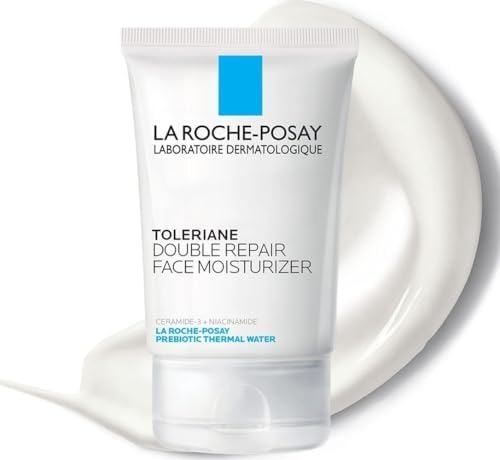
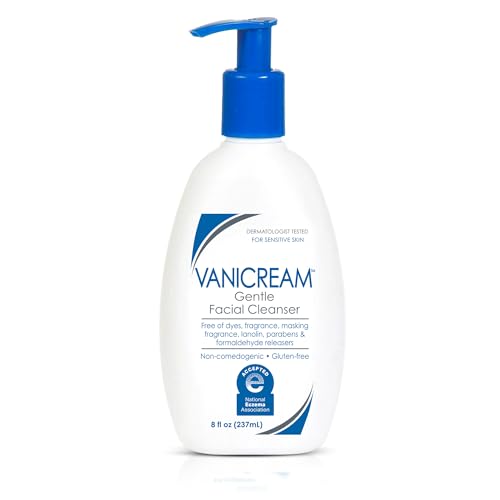
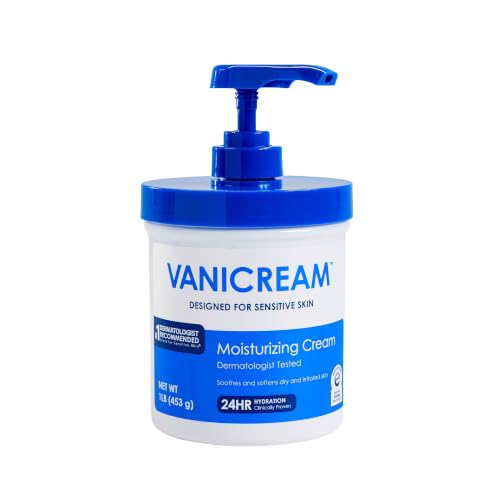
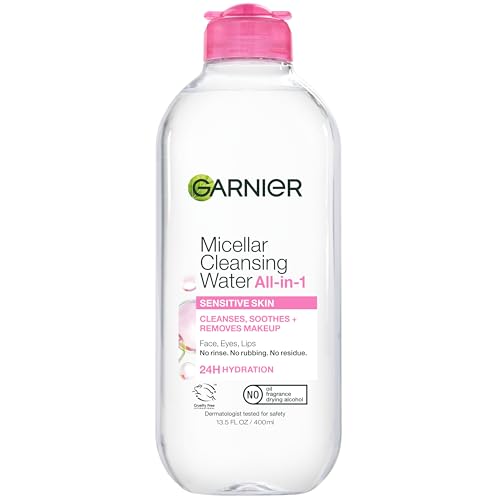
Recommended Products for Gentle Cleansing



At a Glance
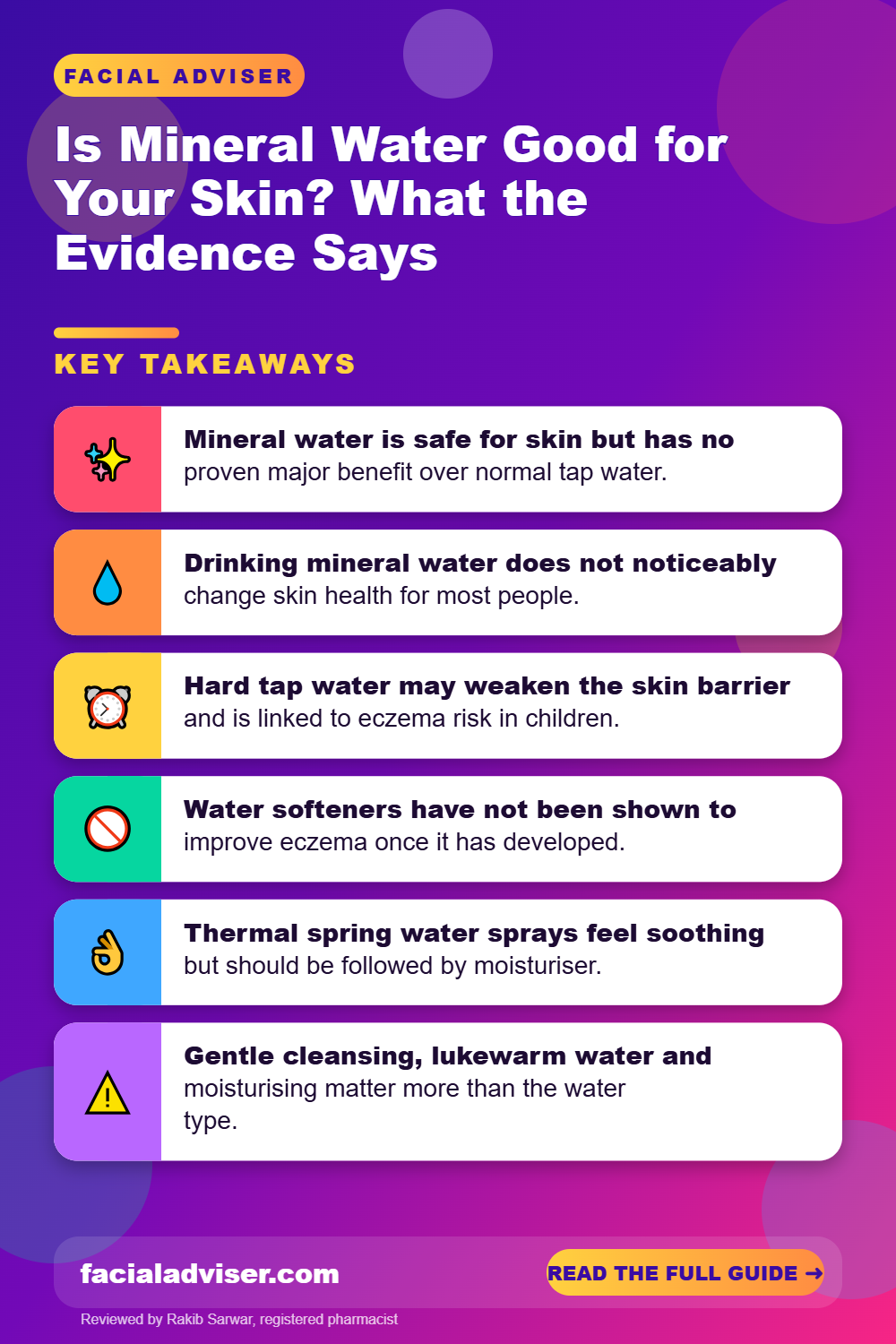
- Mineral water is safe for skin but has no proven major benefit over normal tap water.
- Drinking mineral water does not noticeably change skin health for most people.
- Hard tap water may weaken the skin barrier and is linked to eczema risk in children.
- Water softeners have not been shown to improve eczema once it has developed.
- Thermal spring water sprays feel soothing but should be followed by moisturiser.
- Gentle cleansing, lukewarm water and moisturising matter more than the water type.
- Micellar water is a useful rinse-free option if your tap water irritates your skin.
What This Covers
- Mineral, Thermal and Tap Water: What Is the Difference?
- Washing Your Face With Mineral Water
- Does Drinking Mineral Water Help Your Skin?
- Hard Water and Your Skin
- How to Wash Your Face Well, Whatever Your Water
- Thermal Spring Water Sprays
- What Helps and What Does Not
- If You Have Eczema or Sensitive Skin
- Why Skin Changes When You Travel or Move
- Common Water Myths
- Honest Limits
- When to See a Doctor
- FAQ
- The Takeaway
Mineral, Thermal and Tap Water: What Is the Difference?
| Water type | What it contains | Typical claims | What we know |
|---|---|---|---|
| Tap water | Varies by area; can be soft or hard | None | Fine for most people |
| Hard tap water | More calcium and magnesium | None | Linked to barrier damage and eczema risk in children |
| Bottled mineral water | Naturally occurring minerals | Healthier skin when drunk | No clear skin benefit shown |
| Thermal spring water spray | Specific mineral mixes, e.g. selenium | Soothing, anti-irritant | Small, often brand-funded studies |
| Micellar water | Water plus mild cleansing micelles | Gentle cleansing | Useful rinse-free cleanser |
In short, most water is fine for washing your face. Its temperature and what you use with it tend to matter more than its mineral content.
You can usually find out how hard your local water is from your water supplier, and many people can tell from limescale on taps and kettles. Soft water, by contrast, can feel slippery when rinsing off soap, which is simply because there are fewer minerals for the soap to react with.
Washing Your Face With Mineral Water
Rinsing with bottled mineral water will not harm your skin, but it is expensive and there is no good evidence that it improves acne, dryness or aging compared with normal tap water. Its minerals mostly stay on the surface and are rinsed or wiped away.
If your tap water is very hard and you notice tightness or dryness after washing, there are cheaper ways to help: use a mild, non-foaming cleanser, keep the water lukewarm, pat dry and apply moisturiser straight away. Some people prefer to cleanse with micellar water and skip tap water altogether on the face.
If you use bottled water for your face while travelling in areas where tap water is not safe to drink, that is a sensible hygiene choice rather than a skincare one.
Does Drinking Mineral Water Help Your Skin?
Staying hydrated supports your overall health, and severe dehydration can make skin look dull and slack. But for people who already drink enough fluids, drinking more water, mineral or otherwise, does not appear to make skin noticeably more hydrated or clear.
Skin hydration depends mainly on the outer barrier holding water in, which is why moisturisers and gentle cleansing make a bigger difference than your choice of drinking water. If you enjoy a particular mineral water, there is no reason to stop, but it is unlikely to change your skin.
The same applies to alkaline water, hydrogen water and other specialist drinking waters marketed for skin. None has good evidence of visible skin benefits, and a balanced diet, enough sleep and sun protection will do far more.
Hard Water and Your Skin
Hard water contains higher levels of calcium and magnesium. These minerals react with soap and some cleansers to form a residue that is harder to rinse off, and they can make skin feel tight and dry.
The King’s College London review found that most observational studies linked hard water with a higher risk of eczema in children, and experiments showed hard water leaves more detergent on the skin, damaging the barrier (King’s College London). However, once eczema is established, using a water softener did not reduce its severity.
- Use gentle, low-foam or soap-free cleansers that rinse off easily.
- Rinse thoroughly so cleanser residue is not left on the skin.
- Moisturise within a few minutes of washing.
- Keep showers short and lukewarm.
- Consider micellar water for the face if tap water feels harsh.
How to Wash Your Face Well, Whatever Your Water
Use lukewarm water
Hot water strips oils and makes dryness worse, whatever its mineral content.
Choose a gentle cleanser
A mild, fragrance-free, low-foam cleanser suits most skin types.
Cleanse with fingertips
Massage gently for 20 to 30 seconds without scrubbing.
Rinse thoroughly
Make sure no cleanser is left along the hairline, jaw and nose.
Pat dry
Use a clean, soft towel and pat rather than rub.
Moisturise straight away
Apply moisturiser while skin is still slightly damp to lock in water.
If your skin feels tight straight after washing, your cleanser or water temperature is probably the problem, not the type of water.
Thermal Spring Water Sprays
Thermal water sprays are popular for calming sensitive skin and refreshing makeup. They feel pleasant and cooling, and some people with sensitive skin find them soothing.
The catch is that water left to evaporate from the skin can draw moisture out with it. If you use a face mist, follow it with a moisturiser, or use it before your moisturiser rather than on its own. Our comparison of facial sprays and toners explains what these products can and cannot do.
Many face mists contain fragrance, alcohol or essential oils, which can irritate sensitive skin. Check the ingredient list, and choose fragrance-free options if your skin reacts easily.
What Helps and What Does Not
Worth Doing
- Use lukewarm water and a gentle cleanser
- Moisturise after every wash
- Rinse thoroughly in hard-water areas
- Use micellar water if tap water irritates
- Drink enough fluids for general health
Skip It
- Spend heavily on bottled water for washing
- Rely on mists without moisturiser
- Use hot water on your face
- Expect drinking water to cure acne or dryness
- Believe mineral claims without evidence
If You Have Eczema or Sensitive Skin
People with eczema or very sensitive skin are the ones most likely to notice a difference between hard and soft water. In hard-water areas, soap-free cleansers, generous moisturising and short, lukewarm showers are especially important.
For babies and young children with dry skin in hard-water areas, bathing in lukewarm water for a short time, using a soap-free wash and applying a bland moisturiser straight afterwards is a sensible routine. A health visitor, pharmacist or doctor can advise if a child’s skin stays dry or itchy.
If you are struggling with red, inflamed patches, our guide to calming inflamed red patches on the face covers gentle routines and when to see a doctor.
Why Skin Changes When You Travel or Move
Many people notice their skin behaves differently on holiday or after moving house, and blame the water. Water can play a part, especially if you go from a soft-water area to a hard-water one, but it is rarely the only change.
- Climate: humidity, heat, cold and sun exposure often change far more than the water does.
- Hotel products: fragranced soaps and shampoos can irritate skin that is used to milder products.
- Air travel: cabin air is very dry and can leave skin tight for a day or two.
- Routine changes: late nights, different food, more alcohol and forgotten skincare steps all show up on the skin.
- Water quality: harder or more heavily treated water can leave skin feeling tight.
Packing your usual cleanser and moisturiser, and a small bottle of micellar water for days when the local water feels harsh, solves most travel-related skin changes.
Common Water Myths
Water attracts plenty of skincare myths. A few of the most common ones are worth clearing up.
| Claim | What is actually true |
|---|---|
| Drinking eight glasses a day clears acne | No good evidence; acne has other causes |
| Cold water closes pores | Pores do not open and close; cold water only tightens skin briefly |
| Mineral water feeds the skin minerals | Minerals are not meaningfully absorbed from a rinse |
| Face mists hydrate skin all day | Water evaporates quickly without a moisturiser |
| Filtered shower water cures dry skin | Evidence is limited; cleanser and moisturiser matter more |
Our guide to whether cold water closes pores looks at another popular water myth in more detail.
Honest Limits
Much of the research on thermal and mineral waters is small and funded by skincare companies, so claims should be treated with caution. There is better evidence for the link between hard water and eczema risk in children, but even there, softening water has not been shown to fix established eczema.
For most people, the quality of the cleanser, the temperature of the water and the use of a moisturiser matter far more than the source of the water. If you are considering spending money on special water for your face, a good fragrance-free moisturiser and a daily sunscreen are almost always a better investment. They address the things that actually drive dryness, sensitivity and visible aging.
When to See a Doctor
- Your skin is red, itchy, cracked or weeping after washing.
- A child has persistent dry, itchy patches that could be eczema.
- Dryness does not improve despite gentle cleansing and moisturising.
- You notice a rash after using a particular water spray or mist.
This article is for general information and does not replace professional medical advice. See a doctor or dermatologist for persistent skin problems.
FAQ
Is mineral water good for washing your face?
It is safe, but there is no strong evidence it is better than normal tap water for most people.
Does drinking mineral water improve skin?
Not noticeably for people who already drink enough fluids.
Is hard water bad for skin?
Hard water can leave more cleanser residue and has been linked to barrier damage and eczema risk in children.
Will a water softener help my eczema?
Research suggests softening water does not improve eczema once it has developed.
Is thermal spring water worth it?
It can feel soothing, but evidence is limited and it should be followed by moisturiser.
Can face mists dry out skin?
Yes, if the water evaporates without a moisturiser to seal it in.
Should I use bottled water to wash my face?
Only if tap water is unsafe or you notice clear irritation; otherwise it is usually unnecessary.
What water temperature is best for washing your face?
Lukewarm water is gentlest; hot water strips natural oils.
Is micellar water better than tap water?
It is a useful rinse-free option if tap water irritates your skin.
How can I protect my skin in a hard-water area?
Use a gentle, soap-free cleanser, rinse well and moisturise straight after washing.
The Takeaway
Mineral water is fine for skin, but it is not a skincare shortcut. Neither washing with it nor drinking it has been shown to make a real difference for most people, and thermal water sprays offer at most a mild soothing effect.
Water hardness is the part that genuinely matters for some people, particularly those with eczema-prone skin. Gentle cleansers, lukewarm water, thorough rinsing and a moisturiser straight after washing will do far more for your skin than the label on a bottle.

Written by
Registered pharmacist and founder of Facial Adviser. Rakib's pharmacy training covers how skincare actives work and interact; a later course in cosmetology turned that into a focus on facial treatments and skincare products. He plans, researches and edits every guide on the site and checks health claims against sources such as the American Academy of Dermatology, the FDA and the NIH. He is not a dermatologist; see the Editorial Policy and Medical Disclaimer.
About · Editorial policy · How we choose products · Medical disclaimer · Contact
Keep reading: Skincare routine basics
- Best Skin Care Routine: Simple AM and PM Steps for Every Skin Type
- Best Way to Patch Test Skincare: Where, How Long and What Reactions Mean
- Does Skin Get Used to Skincare Products? The Truth About Tolerance
- Morning vs Night Skincare Routine: The Right Order Explained
- Is Alcohol Always Bad in Skincare? Good vs Drying Alcohols
- Best Skincare Layering Order for Beginners: Simple AM and PM Routines