How to Choose a Preservative for DIY Cosmetics Safely
Making your own creams, lotions and mists can be satisfying, and it lets you control exactly what goes on your skin. But the moment a recipe contains water, aloe juice, floral water or anything water-based, it becomes a place where bacteria, yeast and mould can grow, often without any visible sign.
Part of our guide to cosmetic science. Start with: How to Read a Cosmetic Ingredient List: A Beginner Guide
If a DIY cosmetic contains any water-based ingredient, it needs a broad-spectrum preservative that controls bacteria, yeast and mould, used at the supplier’s recommended level and within its effective pH range. Common choices for home formulators include blends based on phenoxyethanol with ethylhexylglycerin, or benzyl alcohol with dehydroacetic acid, sold ready-mixed by cosmetic ingredient suppliers. Vitamin E, grapefruit seed extract and essential oils are not reliable preservatives. Water-free recipes such as oils and balms do not usually need one, but they still benefit from an antioxidant.
The FDA explains that cosmetics can become contaminated with microorganisms during manufacture or use, and that contaminated products can cause infections, particularly around the eyes. That risk applies to homemade products as much as to commercial ones, and often more, because home kitchens are not controlled environments.
Choosing a preservative is only part of the job. Clean equipment, careful measuring, correct pH and small batches all matter just as much.
This guide explains when a DIY product needs a preservative, what makes a preservative suitable, common options and pitfalls, and when it is simpler and safer to buy a ready-made product instead.
Shopping these picks?
Amazon Prime members get fast, free shipping on eligible items, plus Prime Video, Amazon Music and member deals. New members can start with a free trial.
Start a free Prime trialAged 18 to 24? Prime for Young Adults comes with a longer free trial and a lower price after it.
Affiliate link: we may earn a commission at no extra cost to you.
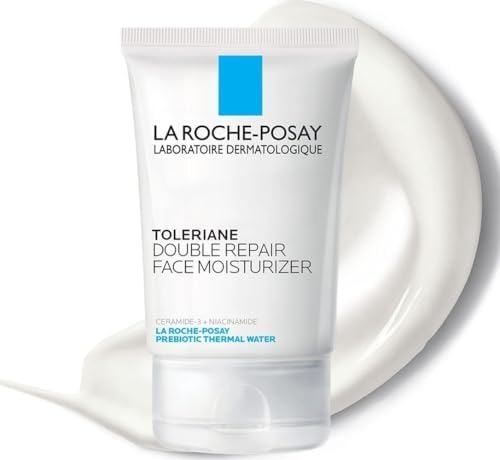
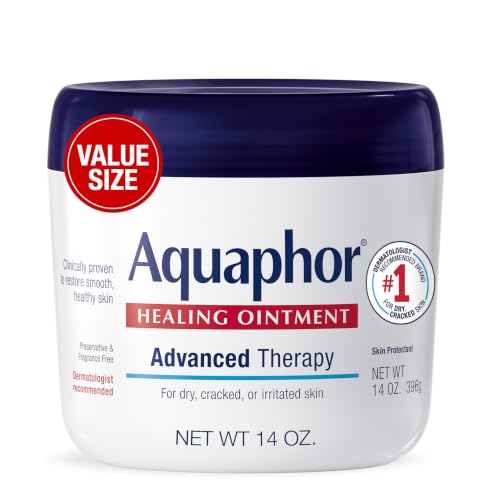
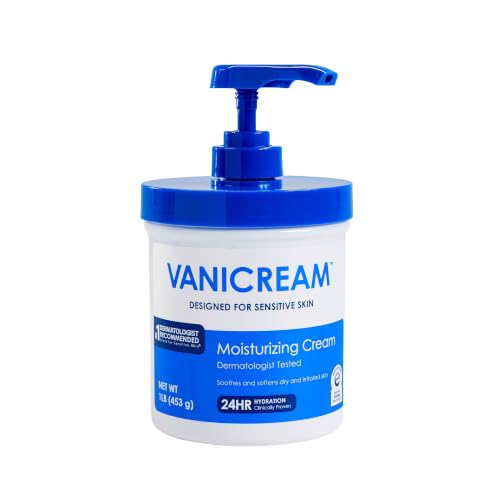
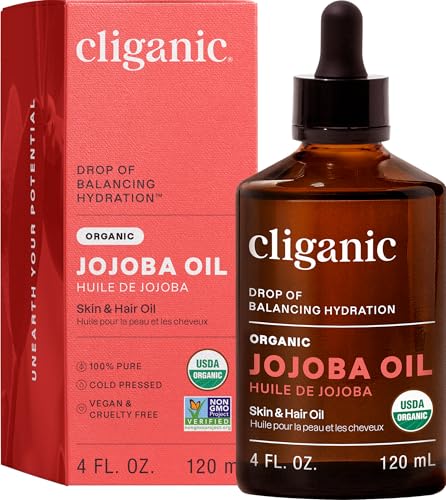
Recommended DIY Tools and Ready-Made Alternatives
On This Page
- When a DIY Product Needs a Preservative
- What Makes a Preservative Suitable
- Common Preservative Options for Home Formulators
- What Does Not Work as a Preservative
- How to Choose and Use a Preservative in a DIY Recipe
- Hygiene Matters as Much as the Preservative
- Water-Free Recipes
- Signs a Homemade Product Has Spoiled
- When Buying Ready-Made Makes More Sense
- Dos and Don’ts
- Honest Limits
- When to See a Doctor
- Common Questions
- Where This Leaves You
Quick Answer
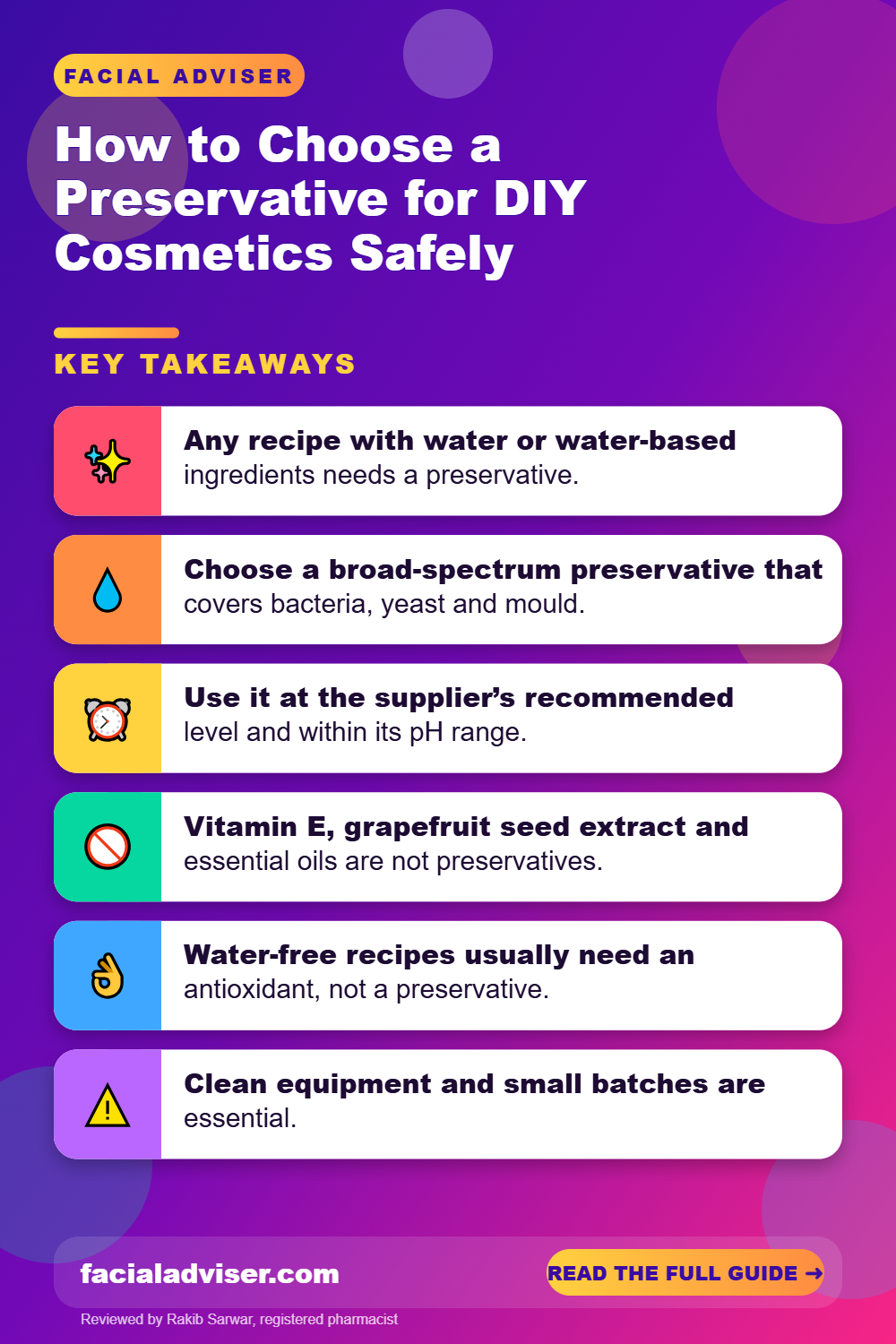
- Any recipe with water or water-based ingredients needs a preservative.
- Choose a broad-spectrum preservative that covers bacteria, yeast and mould.
- Use it at the supplier’s recommended level and within its pH range.
- Vitamin E, grapefruit seed extract and essential oils are not preservatives.
- Water-free recipes usually need an antioxidant, not a preservative.
- Clean equipment and small batches are essential.
- Discard anything that changes in smell, colour or texture.
When a DIY Product Needs a Preservative
| Recipe type | Needs a preservative? | Why |
|---|---|---|
| Lotion or cream (oil and water) | Yes | Water supports microbial growth |
| Toner, mist or hydrosol blend | Yes | Mostly water |
| Gel with aloe or water | Yes | Water-based |
| Face oil blend | Usually no | No water; add an antioxidant |
| Balm or salve (oils, butters, waxes) | Usually no | No water; keep dry |
| Scrub with oil and sugar | Often yes | Water can get in during use in the shower |
| Clay mask powder, mixed fresh | No, if used immediately | Mix only what you need each time |
The key question is whether water is present or likely to get into the product. Products used in the shower or scooped with wet fingers can pick up water even if the recipe is water-free. Ingredients such as aloe juice, hydrosols, floral waters and plant infusions all count as water for this purpose.
If you make a water-based product without a preservative, treat it like fresh food: keep it in the fridge and use it within a few days. Even then, contamination is possible.
What Makes a Preservative Suitable
- Broad spectrum: it should control bacteria, yeast and mould, not just one of them.
- Right pH range: many preservatives only work within a certain pH, so check that your recipe falls inside it.
- Compatible with your ingredients: some preservatives do not work well with certain emulsifiers, gums or high oil content.
- Clear usage rate: reputable suppliers state a recommended percentage; stay within it.
- Suitable for your product type: some are intended for rinse-off products only.
- Tolerated by your skin: patch test the finished product.
Cosmetic ingredient suppliers usually provide a data sheet for each preservative, listing its spectrum, pH range, usage rate and compatibility. Reading it before you buy saves a lot of trial and error.
It is also worth buying preservatives from suppliers that sell to small cosmetic makers, rather than from general marketplaces where labelling and quality can be inconsistent. A clearly labelled product with a named composition and usage instructions is far easier to use correctly.
Common Preservative Options for Home Formulators
| Preservative type | Typical pH range | Notes |
|---|---|---|
| Phenoxyethanol with ethylhexylglycerin blends | Wide range | Widely used and generally well tolerated |
| Benzyl alcohol with dehydroacetic acid blends | Acidic to near neutral | Often marketed to natural formulators |
| Sodium benzoate with potassium sorbate | Acidic only | Needs a low pH to work; weaker against some microbes |
| Parabens (in ready-made blends) | Wide range | Effective and low-allergy on intact skin; controversial in media |
| Preservatives not recommended | Various | Vitamin E, grapefruit seed extract, essential oils alone |
Our guide on which cosmetic preservatives are mild covers how these compare for skin tolerance.
Avoid preservatives that are commonly linked to allergies, such as methylisothiazolinone, particularly in leave-on products for the face.
Whichever option you choose, stick to one preservative system per recipe unless the supplier recommends combining them. Adding extra preservatives in the hope of more protection can increase the risk of irritation without making the product any safer.
What Does Not Work as a Preservative
Vitamin E (tocopherol) is an antioxidant. It slows oils going rancid but does not stop bacteria or mould. Grapefruit seed extract has been promoted as a natural preservative, but some commercial versions have been found to contain synthetic preservatives, and its effectiveness on its own is doubtful. Essential oils can have some antimicrobial activity, but not reliably enough at levels that are safe on the skin. Using them in high amounts to preserve a product risks irritation and allergy. Rosemary extract is an antioxidant, like vitamin E, not a broad-spectrum preservative.Do not rely on vitamin E, essential oils or plant extracts to preserve water-based products. Contaminated homemade creams can cause skin or eye infections even if they look and smell normal.
How to Choose and Use a Preservative in a DIY Recipe
Decide if you need one
If the recipe contains water or water-based ingredients, you do.
Choose a broad-spectrum preservative
Buy from a cosmetic ingredient supplier that provides a data sheet.
Check pH and compatibility
Make sure your recipe’s pH falls within the preservative’s working range.
Measure accurately
Use a scale that measures small amounts and follow the recommended percentage.
Add at the right stage
Many preservatives are added during the cool-down phase; follow the supplier’s instructions.
Check the final pH
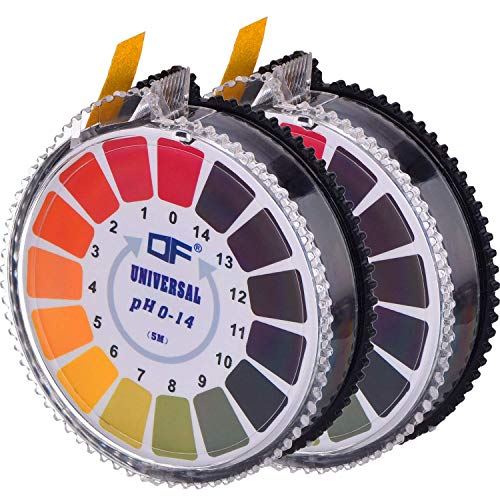
Use pH strips or a meter and adjust if needed.
Make small batches
Use within a few weeks, label with the date and discard if anything changes.
Weigh ingredients rather than measuring by volume. Preservatives work at specific percentages, and spoons or droppers are not accurate enough for small batches.
Hygiene Matters as Much as the Preservative
The FDA’s page on microbiological safety and cosmetics explains how contamination can happen during making and use, and why eye products are a particular concern.
A preservative is designed to control the small amount of contamination that happens during normal use. It is not meant to rescue a product made with dirty equipment.
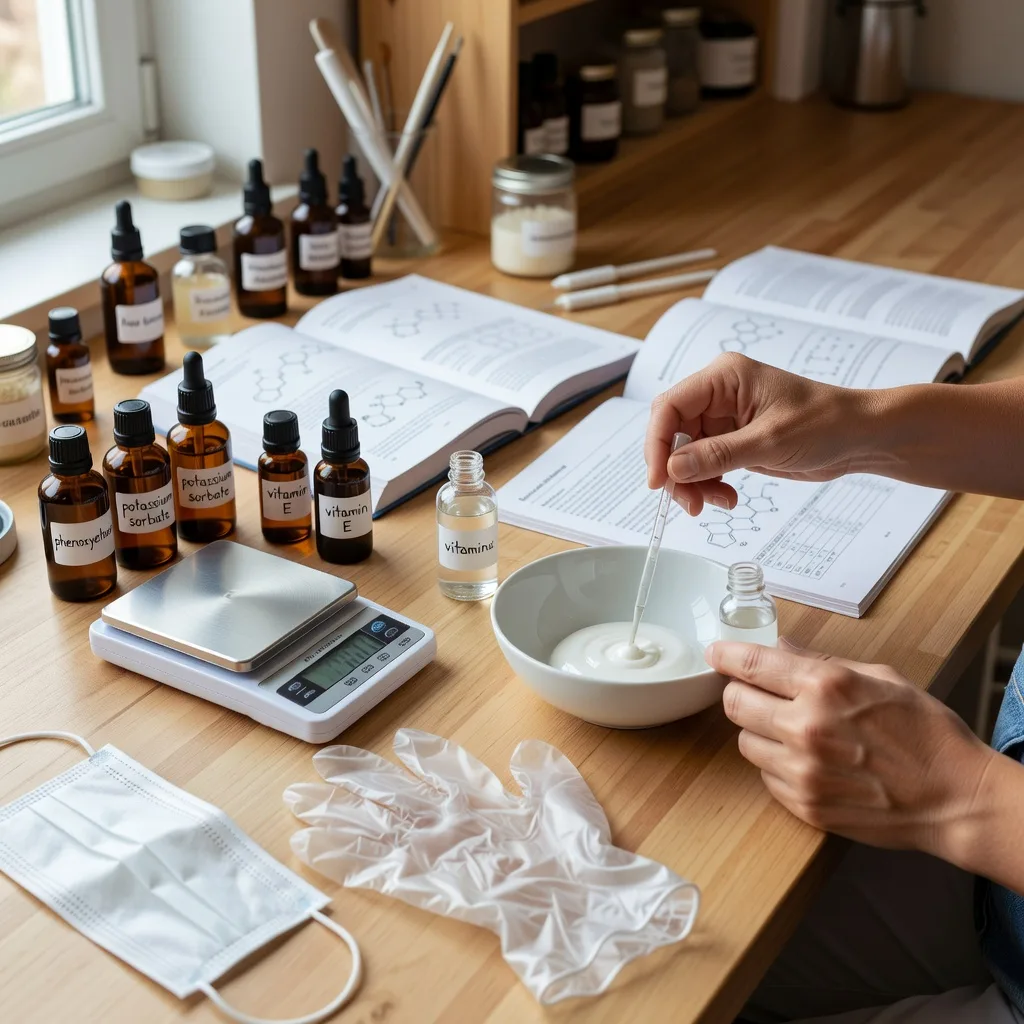
Sanitise bowls, spatulas and containers, for example with hot soapy water followed by a wipe of rubbing alcohol, and let them dry fully. Use distilled or freshly boiled and cooled water rather than tap water. Wash your hands and consider wearing gloves.
Pumps and squeeze tubes keep products cleaner than open jars. If you use a jar, scoop product out with a clean spatula rather than your fingers.
Our guide on why stability testing matters explains how commercial products are checked for contamination and shelf life.
Water-Free Recipes
Oils, balms, butters and powders without any water are much less likely to grow microbes, so they generally do not need a preservative. They can still go rancid, though, which is where an antioxidant such as vitamin E helps.
Keep water-free products dry, with the lid on between uses. Do not dip wet fingers into them, and store them away from steamy bathrooms. If a balm or oil smells stale, sharp or like old crayons, it has likely oxidised.
Our guide to waterless skincare covers the benefits and limits of these formats.
Signs a Homemade Product Has Spoiled
- A sour, musty or unusual smell.
- Spots of mould or a fuzzy film on the surface.
- Cloudiness in a product that was clear.
- Separation in a cream or lotion that used to be smooth.
- A change in colour.
- Stinging, itching or redness when you apply it.
Contamination is not always visible. Bacteria can grow to high levels before you notice any change, which is why dating each batch and throwing it away after a set time is safer than waiting for signs.
If a product shows any of these signs, throw it away and sanitise the container thoroughly before reusing it, or use a new one. Do not try to rescue a spoiled batch by adding more preservative, as the contamination is already present.
When Buying Ready-Made Makes More Sense
DIY skincare can be fun, but for some products the effort and risk outweigh the benefits. Water-based creams and eye products are the hardest to make safely at home, while simple oil blends and balms are much easier.
Many ready-made products with short, simple ingredient lists offer the same control over what goes on your skin, with the advantage of professional preservation and stability testing. If your main reason for DIY is avoiding fragrance or harsh ingredients, a well-chosen fragrance-free moisturiser may meet the same goal more reliably.
Our guide on how to tell if a product is really fragrance-free can help you find simple commercial options.
Dos and Don’ts
Helps
- Use a broad-spectrum preservative in any water-based recipe
- Follow supplier data sheets for usage and pH
- Weigh ingredients accurately
- Sanitise equipment and containers
- Make small batches and date them
Backfires
- Rely on vitamin E or essential oils to preserve
- Guess preservative amounts
- Use tap water in water-based recipes
- Store homemade creams in warm bathrooms
- Use a product that changes in smell, colour or texture
Honest Limits
Even with a good preservative and careful hygiene, home formulators cannot usually carry out the preservative efficacy testing that commercial brands use. That means there is always some uncertainty about how well a homemade product is protected.
This article gives general guidance, not a formulation manual. Preservative performance depends on the whole recipe, and different suppliers’ blends behave differently.
For products used around the eyes, on broken skin or by people with weakened immune systems, buying a tested, commercially made product is the safer choice. DIY is best kept to simple, water-free recipes if you have any doubts.
It is also worth remembering that a preservative protects the product, not your skin. A perfectly preserved homemade cream can still irritate if the recipe contains too many essential oils, a strong acid or an ingredient you are sensitive to, so patch testing the finished product is still important.
When to See a Doctor
- You develop redness, swelling, pus or pain after using a homemade product.
- Your eyes become red, sore or sticky after using a DIY product near them.
- A rash appears and spreads after using a homemade cream.
- You have a weakened immune system and have used a homemade product that may be contaminated.
This article is for general information and does not replace professional medical advice. See a doctor or dermatologist for skin or eye concerns.
Common Questions
Do DIY cosmetics need preservatives?
Yes, if they contain water or water-based ingredients.
Is vitamin E a preservative?
No. It is an antioxidant that slows rancidity but does not stop microbes.
Can I use essential oils as a preservative?
Not reliably, and the amounts needed can irritate skin.
Is grapefruit seed extract a good preservative?
Its effectiveness on its own is doubtful.
What is a broad-spectrum preservative?
One that controls bacteria, yeast and mould.
Why does pH matter for preservatives?
Many preservatives only work within a specific pH range.
Do oil-only recipes need a preservative?
Usually not, but they benefit from an antioxidant.
How long do homemade creams last?
With a good preservative, often a few weeks; without one, only days in the fridge.
Should I use tap water in DIY skincare?
It is better to use distilled or boiled and cooled water.
Is DIY skincare safe for the eye area?
It is safer to use tested commercial products around the eyes.
Where This Leaves You
Any DIY cosmetic with water or water-based ingredients needs a broad-spectrum preservative, used at the recommended level and within its working pH range. Vitamin E, grapefruit seed extract and essential oils are not reliable substitutes.
Sanitise equipment, weigh accurately, check pH, make small batches and discard anything that changes. For eye products and sensitive situations, tested commercial products are the safer choice.

Written by
Registered pharmacist and founder of Facial Adviser. Rakib's pharmacy training covers how skincare actives work and interact; a later course in cosmetology turned that into a focus on facial treatments and skincare products. He plans, researches and edits every guide on the site and checks health claims against sources such as the American Academy of Dermatology, the FDA and the NIH. He is not a dermatologist; see the Editorial Policy and Medical Disclaimer.
About · Editorial policy · How we choose products · Medical disclaimer · Contact