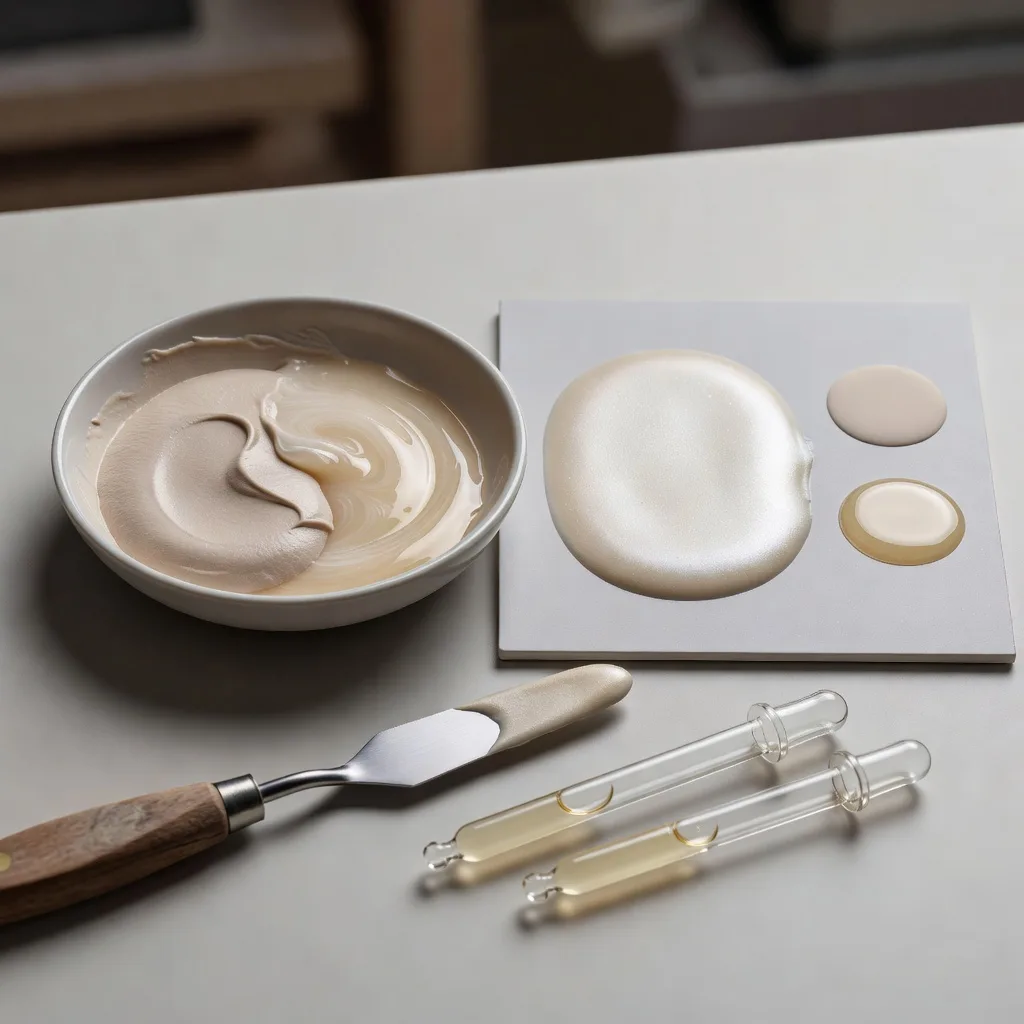
How Mixing Two Products Changes Your Makeup Finish
Mixing makeup is one of the easiest ways to get exactly the finish you want. A drop of illuminator makes a matte foundation glow, a little moisturiser turns full coverage into a skin tint, and two shades combined can give a better match than either alone. But not every mix works, and some can make makeup separate, slide or protect you less from the sun.
Part of our guide to cosmetic science. Start with: How to Read a Cosmetic Ingredient List: A Beginner Guide
Mixing two products changes the finish because you change the balance of pigment, oils, water, silicones and film formers. Adding moisturiser or a liquid illuminator usually makes foundation sheerer, dewier and shorter-wearing; adding a mattifying primer or a matte foundation makes it flatter and longer-wearing; mixing two shades adjusts colour. Mixes work best when both products share a similar base, such as water-based with water-based. Mix a small amount fresh on the back of your hand or a palette each time, and never dilute sunscreen with makeup.
Custom mixing is common among makeup artists because it lets one product do several jobs. At home, a few simple combinations can stretch a small makeup collection a long way and help you get more use from products that are not quite right on their own.
The key is understanding what each product contributes. Foundation brings pigment and coverage, moisturisers and oils bring slip and glow, primers and powders bring grip and matte finish.
This guide covers the most common mixes, what each does to finish and wear, which combinations to avoid and how to mix without wasting product or making your makeup separate.
Shopping these picks?
Amazon Prime members get fast, free shipping on eligible items, plus Prime Video, Amazon Music and member deals. New members can start with a free trial.
Start a free Prime trialAged 18 to 24? Prime for Young Adults comes with a longer free trial and a lower price after it.
Affiliate link: we may earn a commission at no extra cost to you.
Recommended Products and Tools for Custom Mixing





On This Page
- Common Mixes and What They Do
- Why Matching Bases Matters
- How to Mix Makeup Products for a Custom Finish
- Mixes to Avoid
- Getting Sun Protection Right When You Mix
- Mixing Shades for a Better Match
- Choosing Mixes by Skin Type
- Mixing Concealer, Blush and Other Products
- Hygiene and Storage When Mixing
- Dos and Don’ts
- Honest Limits
- When to See a Dermatologist
- FAQ
- Summing Up
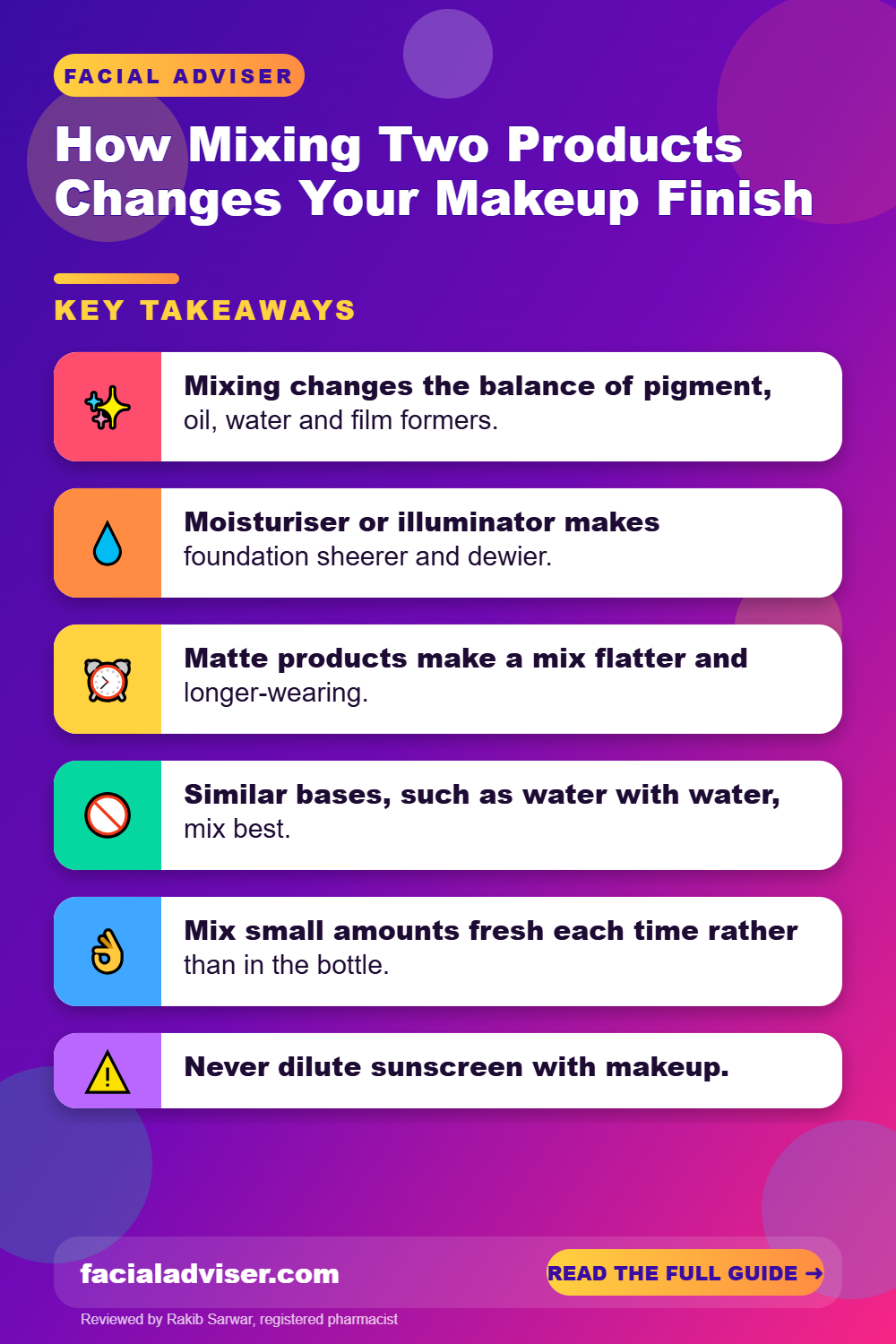
At a Glance
- Mixing changes the balance of pigment, oil, water and film formers.
- Moisturiser or illuminator makes foundation sheerer and dewier.
- Matte products make a mix flatter and longer-wearing.
- Similar bases, such as water with water, mix best.
- Mix small amounts fresh each time rather than in the bottle.
- Never dilute sunscreen with makeup.
- Test a new mix on a normal day before an event.
Common Mixes and What They Do
| Mix | Finish | Coverage | Wear |
|---|---|---|---|
| Foundation + moisturiser | Dewier, more natural | Lighter | Shorter |
| Foundation + liquid illuminator | Glowing, radiant | Slightly lighter | Similar or shorter |
| Foundation + facial oil | Very dewy | Lighter | Shorter; can slide |
| Foundation + mattifying primer | Flatter, more matte | Similar | Longer on oily skin |
| Two foundation shades | Depends on the formulas | Similar | Similar |
| Foundation + concealer | More opaque | Heavier | Similar |
| Matte + dewy foundation | Satin, in between | Similar | In between |
Our guide on what makes makeup high coverage explains why adding non-pigmented products makes foundation sheerer: the same pigment is spread over more product.
Wear time changes too. Moisturisers, oils and many illuminators contain ingredients that stay slightly slippery on the skin, which can soften the film that holds foundation in place. That is why dewy mixes often look beautiful in the morning but need a touch-up sooner than foundation used on its own.
Most foundations are formulated as a finished product, with a careful balance of ingredients. Mixing changes that balance, so results can be less predictable than using each product on its own.
Why Matching Bases Matters
Makeup and skincare are built on different bases: some are mainly water, some are mainly silicone, some are oil-based. Products with similar bases tend to blend smoothly together. Products with very different bases can separate, bead up or pill.
| Product A | Product B | Likely result |
|---|---|---|
| Water-based foundation | Water-based moisturiser | Usually mixes smoothly |
| Silicone-based foundation | Silicone primer | Usually mixes smoothly |
| Water-based foundation | Heavy silicone primer | May bead up; test first |
| Long-wear foundation | Facial oil | Often separates or slides |
| Any foundation | Sunscreen | Avoid; dilutes protection |
A quick way to tell is to read the first few ingredients. If both start with water, they usually mix well. If one starts with water and the other with a silicone such as dimethicone or cyclopentasiloxane, they may still work, but test first.
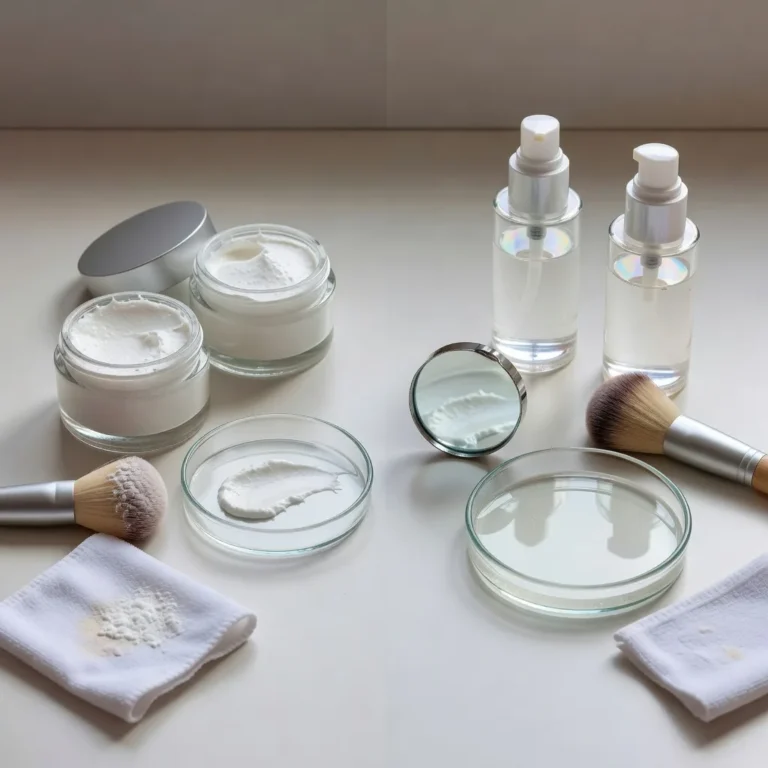
Mix a small amount on the back of your hand. If the mixture looks smooth and even, it is likely to wear well. If it separates, looks curdled or beads up, it will probably pill or separate on your face.
Our guide on how to stop skincare pilling explains why some combinations roll up on the skin.
Temperature and time also matter. A mix that looks fine when first combined may separate if left for several minutes, so apply it promptly. Warming the mix slightly between your fingers can help it spread more evenly.
How to Mix Makeup Products for a Custom Finish
Choose compatible products
Pick products with similar bases where possible.
Use a clean surface
Mix on the back of your hand, a clean palette or a mixing plate.
Start with foundation
Dispense your usual amount of foundation first.
Add the second product gradually
Add a small amount, mix, and check before adding more.
Apply as usual
Use a damp sponge, brush or fingers to press the mix into the skin.
Check in daylight
Look at the finish and colour after a few minutes.
Mix fresh each time
Do not store mixed products; make only what you need.
Start with a ratio of roughly three parts foundation to one part of the second product. It is easier to add more than to correct a mix that has become too sheer or too shiny.
Mixes to Avoid
Sunscreen and makeup. Mixing sunscreen into foundation or moisturiser dilutes it, so you get less protection than the label states. Apply sunscreen as its own layer, in a generous amount, and let it set before any makeup goes on top. Active treatments and makeup. Adding retinoids, exfoliating acids or vitamin C to foundation can change how both products perform and may cause irritation. Large batches in the bottle. Pouring a second product into your foundation bottle can upset the formula’s preservative balance and stability, and you cannot undo it if you dislike the result. Very different bases. Heavy oil with a long-wear water-in-silicone foundation, for example, often separates.Never dilute sunscreen by mixing it with foundation, moisturiser or primer. The AAD recommends applying sunscreen generously as its own step to get the protection on the label.
Getting Sun Protection Right When You Mix
If you enjoy mixing your base, keep sunscreen separate. Apply it as the last step of your skincare, let it set for a few minutes, then apply your custom foundation mix on top.
The AAD’s guide on how to apply sunscreen recommends using enough to cover all exposed skin and reapplying when outdoors, which is only possible if sunscreen is applied on its own.
Our guide to physical versus chemical SPF in cosmetics explains why SPF in makeup is best treated as a bonus rather than your main protection. The same applies to a foundation mix: whatever SPF the foundation carries is diluted further once you add another product.
Mixing Shades for a Better Match
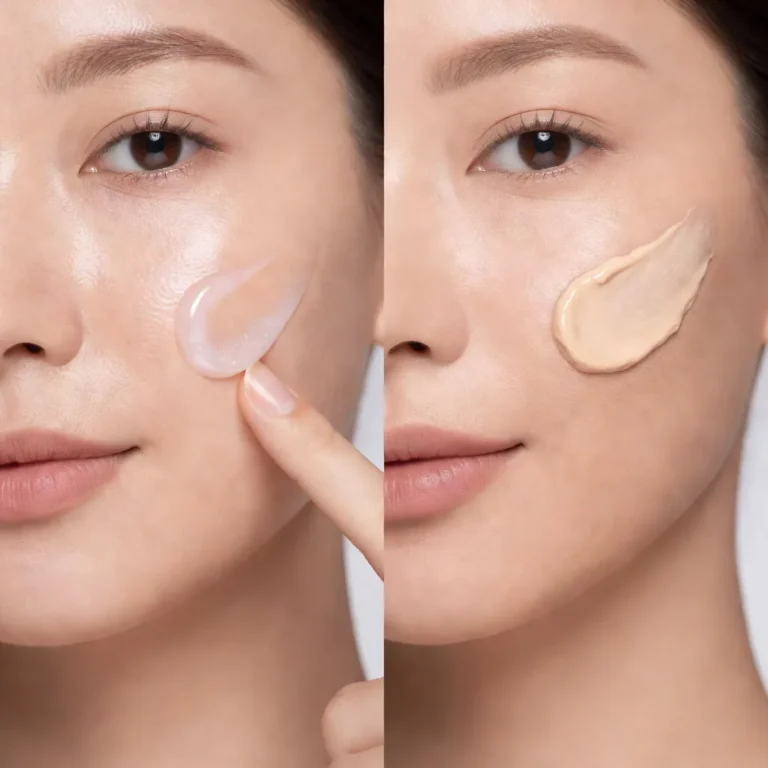
Mixing two foundation shades is one of the most useful tricks for getting a perfect match, especially between seasons when your skin tone shifts.
Mixing works best with two shades from the same foundation range, since they share the same base and finish. Mixing across brands can work but is more likely to separate or change finish. If you do mix across brands, check that both have a similar texture and finish, and test on your jaw before committing to a full face.
If your undertone falls between two options, mixing a warmer and a cooler shade of the same depth can also help. Our guide on how foundation shades are formulated explains why undertone matters so much.
Choosing Mixes by Skin Type
Dry skin: adding a drop of moisturiser or liquid illuminator can make foundation more comfortable and less likely to cling to dry patches. Oily skin: avoid adding oils or rich moisturisers. A mattifying primer mixed into foundation, or applied underneath, usually works better and helps the base last through the day. Combination skin: you can use two mixes: a dewier mix on the cheeks and a more matte one on the T-zone. Mature skin: sheerer, dewier mixes often look more natural and settle less into fine lines than heavy full-coverage foundation. A drop of liquid illuminator mixed into foundation, applied only to the high points of the face, can add life without emphasising texture.Mixing Concealer, Blush and Other Products
The same principles apply beyond foundation. Mixing a little concealer into foundation gives more coverage without a separate step, which is useful for covering redness across the cheeks.
Cream or liquid blush can be mixed with a drop of foundation to create a sheer, natural flush that blends seamlessly. Liquid highlighters can be mixed into moisturiser for an all-over glow on bare skin days.
Lip products can also be mixed. A little balm softens a matte liquid lipstick, although it will reduce its long-wear properties.
In each case, start with a small amount of the second product and build up gradually. It is easy to go too far and end up with something too sheer, too shiny or the wrong shade. Mixing on the back of your hand lets you check the colour against your skin before it goes on your face.
Hygiene and Storage When Mixing
Mixing on a clean surface keeps bacteria out of your products. The back of a clean hand works for a single use; a metal palette is easier to wipe clean and does not absorb product.
Clean your palette, spatula and sponges regularly. A damp sponge that sits in a warm bathroom is a good environment for microbes, so wash it often and let it dry fully.
Do not store a mixed product for later. Mixing can change how well the preservatives work, and a custom blend left in an open container can spoil. Make what you need, use it and clean up.
Our guide on why stability testing matters explains why products are tested as finished formulas rather than mixes.
Dos and Don’ts
Good Habits
- Mix small amounts fresh each time
- Choose products with similar bases
- Test the mix on your hand first
- Keep sunscreen as a separate step
- Clean your palette and tools regularly
Common Mistakes
- Mix sunscreen into foundation
- Pour products into each other’s bottles
- Add actives such as retinol to makeup
- Mix heavy oils into long-wear foundation
- Try a new mix for the first time before an event
Honest Limits
Mixing changes a formula that has been designed and tested as a single product. Wear time, finish and even colour can change in ways that are hard to predict.
Not every mix works for everyone. A combination that looks beautiful on one person may separate on another because of differences in skin type, skincare and climate. Treat online mixing tips as ideas to test rather than guaranteed results.
If you find yourself always mixing to fix a foundation, it may be worth trying a formula that gives you the finish you want on its own. Tinted moisturisers, skin tints and satin-finish foundations already offer many of the effects people try to create by mixing.
When to See a Dermatologist
- You break out after starting a new makeup mix.
- Your skin becomes red, itchy or irritated after applying makeup.
- You have persistent dry or flaky patches that makeup clings to.
- You are unsure whether a reaction is to makeup or skincare.
This article is for general information and does not replace professional medical advice. See a dermatologist for persistent skin concerns.
FAQ
What happens when you mix foundation with moisturiser?
It becomes sheerer and dewier, with shorter wear.
Can I mix foundation with an illuminator?
Yes. It adds glow, though it may slightly reduce coverage.
Can I mix sunscreen with foundation?
No. It dilutes the sunscreen and reduces protection.
Why does my foundation mix separate?
The products probably have very different bases.
Can I mix two foundation shades?
Yes, ideally two shades from the same range.
Should I mix products in the bottle?
No. Mix small amounts fresh each time on your hand or a palette.
How do I make foundation more matte?
Mix in or apply a mattifying primer, or set with powder.
Can I add face oil to foundation?
It adds glow but can make foundation slide, especially on oily skin.
Does mixing products shorten wear time?
Adding moisturiser or oil usually does; adding matte products can lengthen it.
What ratio should I use?
Start with about three parts foundation to one part of the second product.
Summing Up
Mixing two products changes the balance of pigment, oils, water and film formers, which is why it can make foundation sheerer, dewier, more matte or a better colour match.
Mix small amounts fresh each time, choose products with similar bases, test the mix on your hand and keep sunscreen as its own layer. If a mix separates or shortens wear too much, adjust the ratio or switch products.

Written by
Registered pharmacist and founder of Facial Adviser. Rakib's pharmacy training covers how skincare actives work and interact; a later course in cosmetology turned that into a focus on facial treatments and skincare products. He plans, researches and edits every guide on the site and checks health claims against sources such as the American Academy of Dermatology, the FDA and the NIH. He is not a dermatologist; see the Editorial Policy and Medical Disclaimer.
About · Editorial policy · How we choose products · Medical disclaimer · Contact
Keep reading: How cosmetics are made
- How to Read a Cosmetic Ingredient List: A Beginner Guide
- Wax Base vs Oil Base in Cosmetics: What Is the Difference?
- Matte vs Satin Finish: Which Foundation Finish Suits You?
- How to Create a Glossy Finish Without Oil: A Dewy Look for Any Skin
- Does Talc Cause Breakouts? What the Evidence Says About Talc in Makeup
- What Is Hypoallergenic Makeup? What the Label Really Means