How to Sanitize Lipstick: Alcohol Method, After Illness and Testers
Lipsticks get passed between friends, tried on at make-up counters and carried around in bags for months. It is natural to wonder whether yours is hygienic, especially after a cold, a cold sore or letting someone else borrow it.
Part of our guide to makeup how-to. Start with: How to Choose Lipstick Shade: Undertone, Skin Tone and Testing Tips
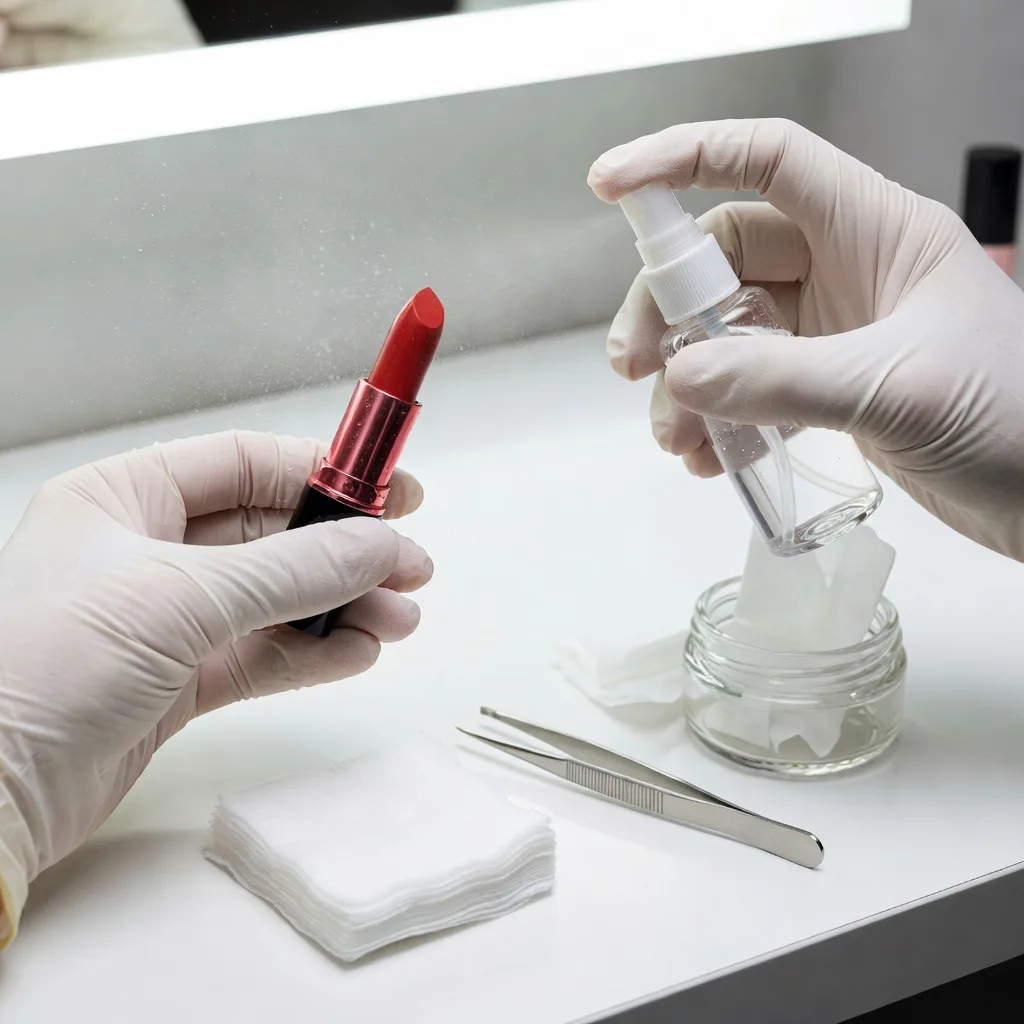
To sanitize lipstick, wipe off the top layer with a clean tissue, then dip or spray the bullet with 70% isopropyl alcohol, leave it for about 30 seconds to a minute and let it air dry for a few minutes before capping. Wipe the tube and cap with alcohol too. Seventy per cent alcohol works better than stronger solutions because the water in it helps it act on microbes, and it evaporates without melting the wax. This method lowers germs on the surface, but it does not sterilise the whole bullet, so after a cold sore or a bad infection, or for liquid lipstick and gloss, replacing the product is the safer choice.
In short: a quick 70% alcohol dip cleans the surface of a lipstick, but it is not a guarantee against every germ.
The US Food and Drug Administration advises consumers not to share cosmetics and to take care with shared testers, because makeup can carry bacteria and viruses from one person to another.
This guide covers the alcohol method step by step, what to do after illness, how to try testers safely, and the signs that a lipstick belongs in the bin.
Shopping these picks?
Amazon Prime members get fast, free shipping on eligible items, plus Prime Video, Amazon Music and member deals. New members can start with a free trial.
Start a free Prime trialAged 18 to 24? Prime for Young Adults comes with a longer free trial and a lower price after it.
Affiliate link: we may earn a commission at no extra cost to you.
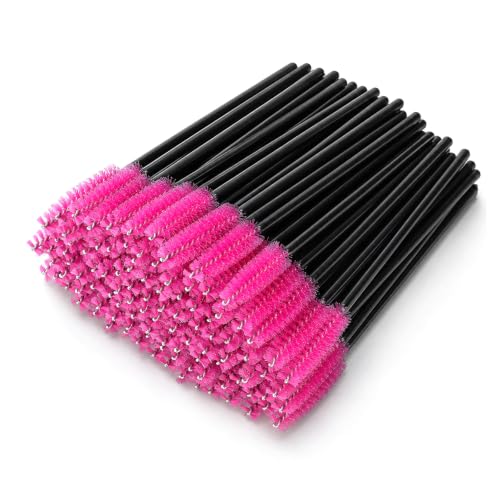
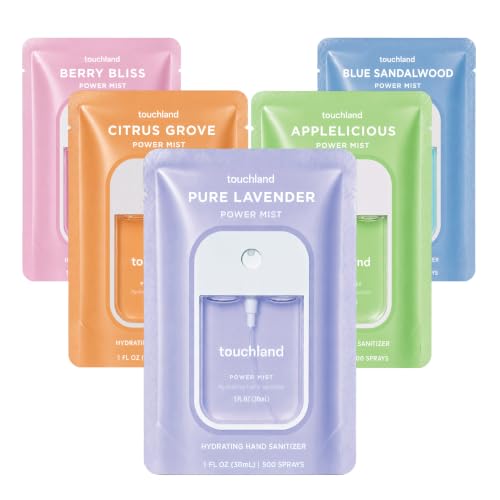
Recommended Lipstick Sanitising Supplies




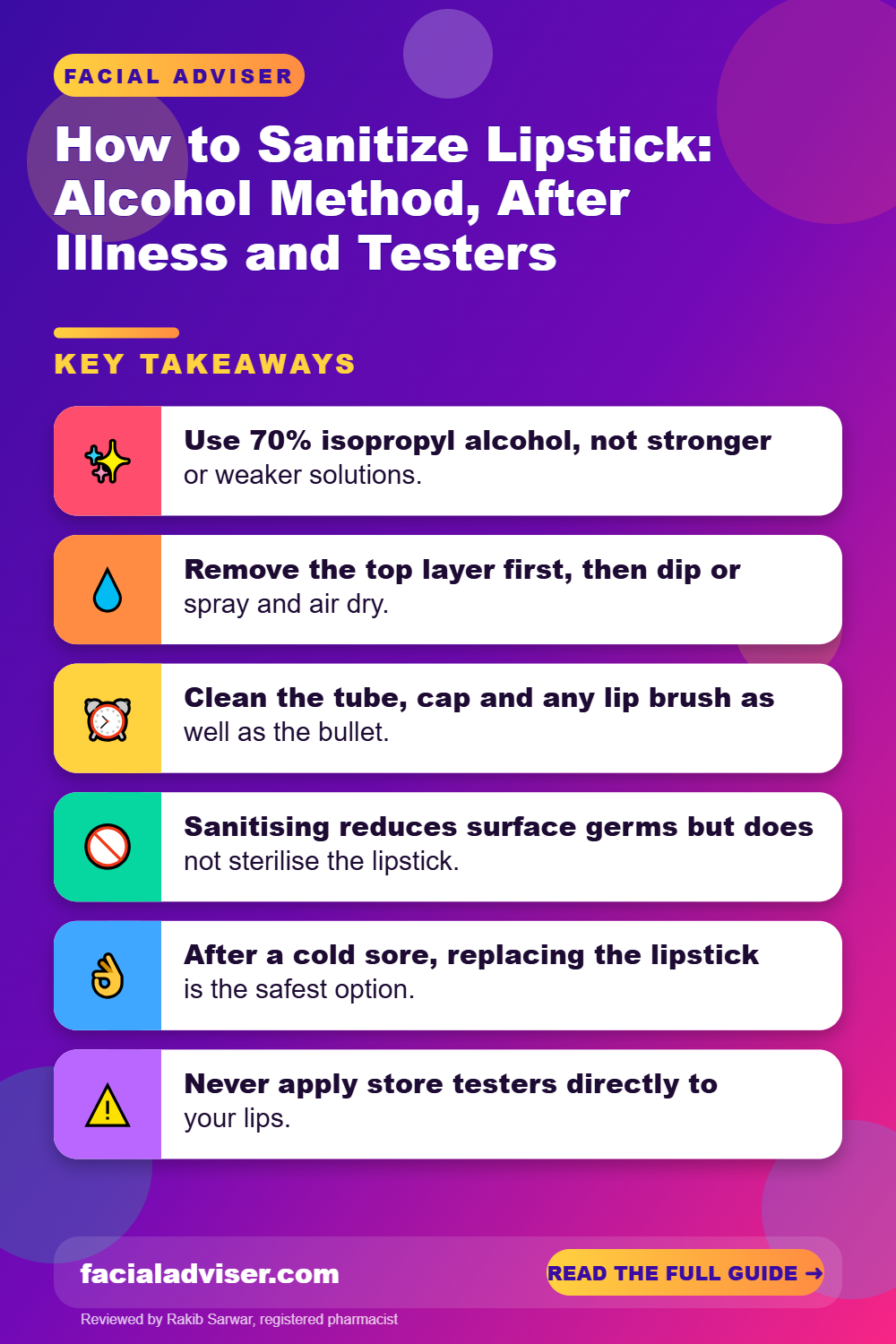
Key Takeaways
- Use 70% isopropyl alcohol, not stronger or weaker solutions.
- Remove the top layer first, then dip or spray and air dry.
- Clean the tube, cap and any lip brush as well as the bullet.
- Sanitising reduces surface germs but does not sterilise the lipstick.
- After a cold sore, replacing the lipstick is the safest option.
- Never apply store testers directly to your lips.
- Throw away lipstick that smells off, changes texture or is past its best.
In This Guide
- Why Sanitize Lipstick at All?
- Why 70% Isopropyl Alcohol Works Best
- How to Sanitize Lipstick With Isopropyl Alcohol
- Sanitizing Lipstick After a Cold, Flu or Cold Sore
- How to Try Lipstick Testers Safely
- Can You Sanitize Liquid Lipstick and Lip Gloss?
- Sanitizing Lip Liners, Balms and Lip Brushes
- When to Throw Away Lipstick
- Everyday Lipstick Hygiene Habits
- Dos and Don’ts
- Honest Limits
- When to See a Dermatologist
- Your Questions, Answered
- The Takeaway
Why Sanitize Lipstick at All?
Lipstick touches your lips and the moist skin around your mouth, which carry bacteria from saliva, food and your hands. Most of the time this is harmless, because your own germs are already on your lips. Problems start when a lipstick is shared, used during illness or kept for too long.
- Sharing: passes bacteria and viruses, including the virus that causes cold sores.
- Illness: you can reintroduce germs to your own lips after a cold, flu or mouth infection.
- Store testers: used by many people and often poorly cleaned.
- Old products: oils can go rancid and the surface collects dust and debris.
- Dropped lipsticks: floors and bags add dirt and microbes.
The good news is that traditional bullet lipstick is mostly wax and oil with little water, which makes it a less friendly place for bacteria to grow than water-based products such as liquid lipsticks or glosses. That is why a bullet can be cleaned reasonably well, while wand products are harder to rescue.
Why 70% Isopropyl Alcohol Works Best
Isopropyl alcohol is the standard choice for sanitising lipstick and other makeup. The concentration matters more than most people realise.
| Option | Works on lipstick? | Why |
|---|---|---|
| 70% isopropyl alcohol | Best choice | Water content helps it act on microbes; evaporates quickly without melting wax |
| 90 to 99% isopropyl alcohol | Less effective | Evaporates too fast and acts less well on many germs |
| Makeup sanitizer spray | Good | Usually alcohol-based and designed for cosmetics |
| Rubbing alcohol with added scent or glycerin | Not ideal | Additives can leave residue or taste |
| Hand sanitizer gel | No | Contains thickeners and fragrance that stay on the bullet |
| Hot water or heat | No | Melts or softens the lipstick |
| Bleach or household cleaners | Never | Unsafe on lips and may damage the product |
Check the label says isopropyl alcohol, also called isopropanol, at 70%. Some bottles sold as rubbing alcohol are ethyl alcohol or contain additives. Plain 70% isopropyl alcohol is inexpensive and widely available in pharmacies.
How to Sanitize Lipstick With Isopropyl Alcohol
This method takes a few minutes and works for bullet lipsticks, lip crayons and many lip balms in sticks.
Wash your hands
Start with clean hands so you do not add new germs.
Remove the top layer
Wipe the tip with a clean tissue, or shave off a thin slice with a clean knife or spatula if it has been shared.
Dip or spray
Dip the bullet into a small glass of 70% isopropyl alcohol for about 30 seconds, or spray it thoroughly with a fine mist.
Clean the tube and cap
Wipe the inside of the cap and the tube with an alcohol-soaked cotton pad or alcohol wipe.
Air dry
Leave the lipstick uncapped on a clean tissue for several minutes until the alcohol has fully evaporated.
Wipe any tools
Clean lip brushes with soap and water, then mist with alcohol and let them dry.
Cap and store
Replace the lid and store the lipstick somewhere cool and dry.
Do not throw away the alcohol after dipping and reuse it for another lipstick. Pour a small fresh amount for each product, or use a spray bottle so you never contaminate the whole supply.
Sanitizing Lipstick After a Cold, Flu or Cold Sore
What to do after illness depends on what you had and how much you care about the product.
| Situation | What to do | Safest option |
|---|---|---|
| Common cold or sore throat | Remove top layer and sanitise with 70% alcohol | Sanitise, or replace if you prefer |
| Flu or stomach bug | Sanitise bullet, tube and cap | Replace inexpensive products |
| Cold sore on the lips | Stop using it until healed | Replace the lipstick |
| Mouth or lip infection treated by a doctor | Follow medical advice | Replace the lipstick |
| Liquid lipstick or gloss used while ill | Wand products cannot be sanitised fully | Replace |
Cold sores need special care. The virus that causes them spreads through direct contact and shared items that touch the lips. Stop using lipstick and lip balm on a cold sore, never share lip products while you have one, and replace any lipstick you used during the outbreak. A cleaned lipstick used on your own healed lips is lower risk, but many people prefer a fresh start.
Never share lipstick with someone who has a cold sore or any sore on the lips, and never use lipstick on broken, blistered or infected skin. Sanitising lowers germs on the surface but cannot be relied on to remove every virus.
How to Try Lipstick Testers Safely
Store testers are handled and applied by many people, sometimes directly to their lips. Even if staff sanitise them, the next person may use them before the alcohol has worked.
- Never apply a tester directly to your lips.
- Ask staff to sanitise the tester with alcohol and slice off the top layer.
- Swatch on your fingertip or the inside of your wrist to judge colour.
- Use a fresh disposable lip applicator for each shade if you want to see it on your lips.
- Throw away the applicator after one use and never double-dip.
- Avoid testers that look damaged, smudged or visibly dirty.
Disposable applicators are inexpensive and also useful at home when you share lipstick with friends or a partner. Each person takes colour with their own applicator, so no one touches the bullet with their lips.
Can You Sanitize Liquid Lipstick and Lip Gloss?
Liquid lipsticks and glosses are harder to clean than bullets. The wand touches your lips and goes back into the tube, carrying germs into the product itself.
- You can wipe the wand and the neck of the tube with alcohol.
- You cannot sanitise the product inside the tube without ruining it.
- Water-based formulas can support microbial growth once contaminated.
- After illness, sharing or a cold sore, replace liquid lipsticks and glosses.
- For everyday hygiene, avoid sharing wand products at all.
Tools are easier. Our guide on how to sanitize makeup tools covers brushes, sponges and applicators in more detail.
Sanitizing Lip Liners, Balms and Lip Brushes
Other lip products need slightly different care, because their shape and packaging change what can be cleaned.
- Lip liner pencils: sharpen to remove the used surface, then mist the tip and the sharpener blades with 70% alcohol.
- Stick lip balms: treat them like lipstick, wiping the top and giving the surface a quick alcohol mist.
- Balms in pots: scoop the product out with a clean spatula rather than your finger, and replace the pot after illness.
- Lip brushes: wash with gentle soap and warm water, rinse well, mist with alcohol and dry flat.
- Retractable lip brushes: clean the bristles the same way and wipe the cap before closing.
Pots and squeeze tubes are the hardest to keep clean because fingers and lips touch the product directly. If you are prone to cold sores, a stick or tube balm used only by you is a more hygienic choice than a shared pot.
When to Throw Away Lipstick
Sanitising cannot rescue a lipstick that has gone bad. Lipstick does not last forever, and old products can irritate the lips.
- It smells sour, waxy or like old cooking oil.
- The texture has turned grainy, sticky, crumbly or beaded with moisture.
- You see spots, fuzz or discolouration that could be mould.
- The colour applies differently or looks patchy.
- It was used during a cold sore or mouth infection.
- It is well past its period-after-opening symbol, often 12 to 24 months for bullets and less for liquids.
Our guide on how to know if makeup is expired explains the jar symbol and other signs across different products.
Everyday Lipstick Hygiene Habits
A few habits keep lipstick cleaner between deep cleans and reduce the need to sanitise often.
- Apply lipstick to clean, dry lips rather than over food or crumbs.
- Keep the cap on and store lipstick in a clean pouch.
- Wipe the tip with a tissue every few uses.
- Sanitise once a month if you use it daily.
- Use a lip brush if you like to share colour, and clean it weekly.
- Keep lipsticks away from heat so they do not sweat or change texture.
Breakouts around the mouth are sometimes blamed on lipstick when heavy balms or poor makeup removal are the real cause. The AAD’s acne tips recommend removing makeup before bed and choosing products that will not clog pores.
Dos and Don’ts
Worth Doing
- Use 70% isopropyl alcohol
- Remove the top layer first
- Let lipstick air dry before capping
- Use disposable applicators for testers
- Replace lipstick after a cold sore
Skip It
- Use hand sanitizer gel on lipstick
- Heat lipstick to clean it
- Apply testers straight to your lips
- Share lipstick during illness
- Keep lipstick that smells rancid
Honest Limits
Alcohol sanitising reduces microbes on the surface of a lipstick, but it does not sterilise the entire bullet. Germs pressed deeper into the wax, or viruses that survive brief contact, may not be fully removed, and there is little direct research on how well home methods work on lipstick specifically.
For most people who use their own lipstick, simple hygiene is enough. Sanitising matters most after sharing or illness, and even then, replacing an inexpensive lipstick is the lowest-risk option. No cleaning method makes it safe to share lipstick with someone who has an active cold sore.
When to See a Dermatologist
- You get frequent cold sores or they are slow to heal.
- Your lips develop a rash, crusting or swelling after using a lip product.
- The corners of your mouth crack and stay sore.
- A sore or patch on the lip does not heal within a few weeks.
This article is for general information and does not replace professional medical advice. See a doctor or board-certified dermatologist for cold sores, lip infections or reactions to cosmetic products.
Your Questions, Answered
How do you sanitize lipstick?
Remove the top layer, dip or spray with 70% isopropyl alcohol and air dry.
Can I use 99% alcohol to sanitize lipstick?
70% is more effective and evaporates at a better rate.
Does sanitizing lipstick kill cold sore virus?
It reduces it, but replacing the lipstick is safer.
Can I use hand sanitizer on lipstick?
No, gels leave thickeners and fragrance on the bullet.
How long should lipstick soak in alcohol?
About 30 seconds to a minute, then air dry.
Will alcohol ruin my lipstick?
No, a brief dip evaporates without changing the colour or texture.
Should I throw out lipstick after being sick?
After a cold sore or mouth infection, yes; after a cold, sanitising is usually enough.
Can you sanitize lip gloss?
Only the wand; the product inside cannot be fully cleaned.
Are makeup store testers safe?
Only if you use a fresh disposable applicator and never apply directly.
How often should I sanitize lipstick?
About once a month, and after sharing or illness.
The Takeaway
To sanitize lipstick, remove the top layer, dip or spray it with 70% isopropyl alcohol, clean the tube and cap, and let it air dry before capping.
Sanitising lowers surface germs but is not a guarantee, so replace lipstick after a cold sore or infection, never share it during illness, use disposable applicators for testers and throw away anything that smells or looks off.

Written by
Registered pharmacist and founder of Facial Adviser. Rakib's pharmacy training covers how skincare actives work and interact; a later course in cosmetology turned that into a focus on facial treatments and skincare products. He plans, researches and edits every guide on the site and checks health claims against sources such as the American Academy of Dermatology, the FDA and the NIH. He is not a dermatologist; see the Editorial Policy and Medical Disclaimer.
About · Editorial policy · How we choose products · Medical disclaimer · Contact
Keep reading: Lipstick
- How to Choose Lipstick Shade: Undertone, Skin Tone and Testing Tips
- What Lipstick Goes With Green Eyeshadow? Shades for Every Occasion
- What Is the Most Expensive Lipstick in the World? Luxury Lipsticks Explained
- How Much Lipstick Does a Woman Eat in a Lifetime? The Real Numbers
- Why Does Red Lipstick Look Pink on Me? Undertones, Lip Colour and Lighting
- What Is Matte Lipstick? Finish, Formulas, Dryness and How to Wear It
- How to Choose the Right Eye Makeup Color for Your Eyes and Skin
- What Can You Use to Make Your Makeup Stay On All Day? 9 Products and Tricks