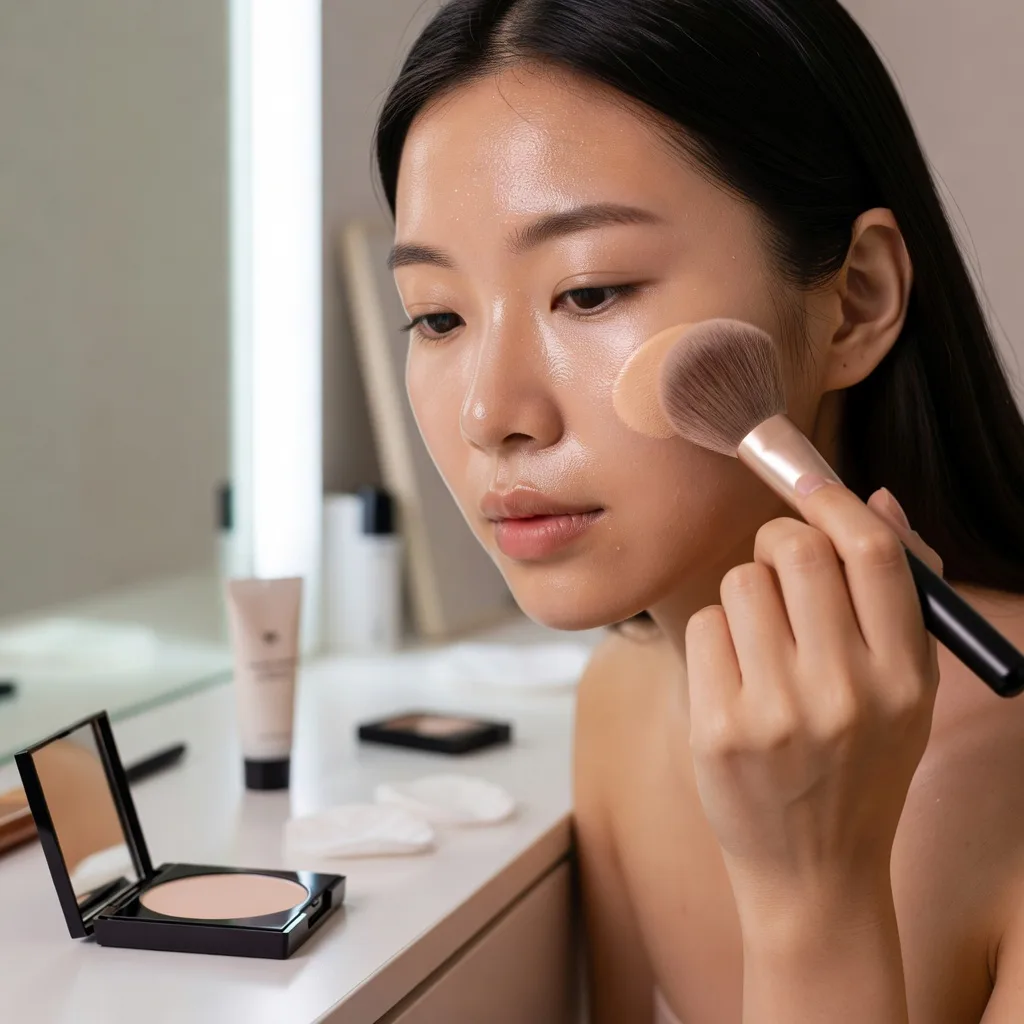
Best Way to Apply Makeup for Oily Skin: Prep, Prime, Set and Blot
If your foundation slides off by lunchtime, turns orange around the nose or breaks up into patches on your forehead, the problem is usually not the product alone. On oily skin, the order you apply things, how much you use and what you do at midday matter as much as the formula.
Part of our guide to makeup how-to. Start with: How to Properly Put On Face Makeup: The Right Order, Step by Step
The best way to apply makeup for oily skin is to keep every layer thin and to control oil at each stage. Cleanse gently, use a light gel moisturiser, and let it absorb fully. Press a mattifying primer only where you get shiny, usually the T-zone. Apply a thin layer of oil-free foundation with a damp sponge or dense brush, add concealer only where needed, then press translucent powder into oily areas rather than dusting it everywhere. During the day, blot oil with papers before adding any more powder, so the base stays thin instead of turning cakey.
In short: prep lightly, prime the oily zones, apply thin oil-free layers, set with powder where you shine and blot before you touch up.
The American Academy of Dermatology suggests that people with acne-prone or oily skin choose makeup labelled non-comedogenic or oil-free and remove it fully before bed, which is a sensible rule for any oily-skin routine.
This guide walks through prep, product choice, application tools, setting and midday touch-ups, and it is honest about what makeup can and cannot do for an oily complexion.
Shopping these picks?
Amazon Prime members get fast, free shipping on eligible items, plus Prime Video, Amazon Music and member deals. New members can start with a free trial.
Start a free Prime trialAged 18 to 24? Prime for Young Adults comes with a longer free trial and a lower price after it.
Affiliate link: we may earn a commission at no extra cost to you.
Recommended Mattifying Primers, Oil-Free Foundations, Setting Powders and Blotting Papers on Amazon


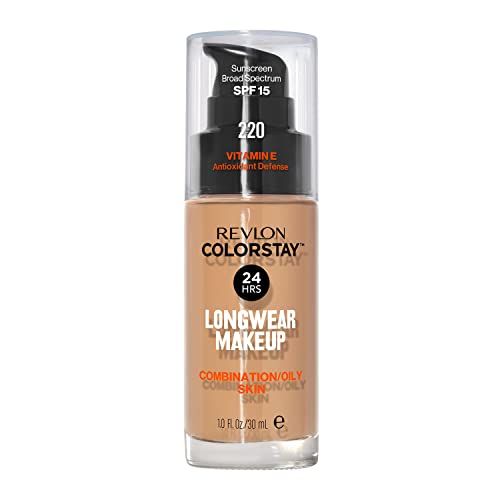

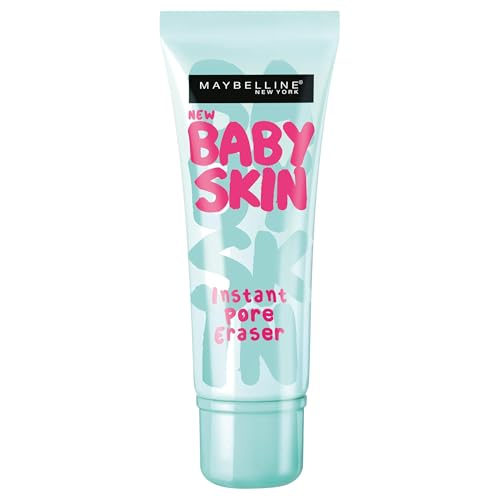
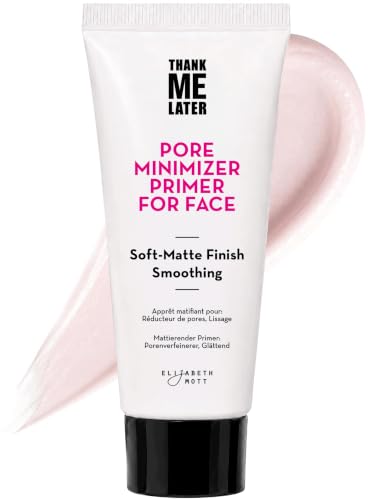

The Short Version
- Thin layers last longer on oily skin than thick ones.
- Skipping moisturiser often makes skin shinier, not less.
- Mattifying primer works best only where you get oily.
- Choose foundation labelled oil-free and non-comedogenic.
- Press powder into the T-zone instead of sweeping it all over.
- Blot first, powder second when you touch up.
- No product stops oil completely; the goal is control, not a dry face.
Jump to a Section
- Why Makeup Breaks Down on Oily Skin
- Skin Prep: Cleanse, Hydrate Lightly, Then Wait
- Choosing and Applying a Mattifying Primer
- Foundation: Formula, Finish and Coverage
- Sponge, Brush or Fingers?
- How to Apply Makeup on Oily Skin Step by Step
- Setting Powder, Sprays and Cream Products
- Touching Up Without Looking Cakey
- Dos and Don’ts for Oily Skin Makeup
- Honest Limits
- When to See a Dermatologist
- Your Questions, Answered
- The Takeaway
Why Makeup Breaks Down on Oily Skin
Oily skin produces more sebum, especially across the forehead, nose and chin. That oil mixes with foundation over a few hours, thinning it out, shifting the pigment and creating the familiar shiny patches and gaps around the nose. Heat, humidity and touching your face all speed this up.
Several common habits make it worse. Heavy creams under makeup add slip, thick foundation has more to lose, and repeatedly piling powder on top of oil creates a paste that looks cakey by the afternoon. Some foundations also appear to darken or turn orange as they mix with oil, a change often called oxidation.
- Too much moisturiser or a rich cream under foundation.
- A dewy or hydrating foundation on the T-zone.
- Applying a thick layer to cover texture or pores.
- Powdering over oil again and again instead of blotting.
- Touching the face often through the day.
The fix is less about finding one miracle product and more about building a thin, well-set base that has less to break down.
Skin Prep: Cleanse, Hydrate Lightly, Then Wait
Good makeup on oily skin starts with a clean, balanced surface. Stripping the skin with harsh cleansers or alcohol toners can leave it tight and irritated without reducing oil much over the day.
- Wash with a gentle foaming or gel cleanser in the morning.
- Use a lightweight gel or lotion moisturiser labelled oil-free.
- Apply sunscreen next, choosing a fluid or gel formula with a matte or natural finish.
- Wait a few minutes so each layer absorbs before primer goes on.
- Blot any remaining surface oil with a tissue before starting makeup.
Skipping moisturiser is a common mistake. Dehydrated skin can look both oily and flaky, and foundation clings to dry patches while sliding off oily ones. A light gel moisturiser usually helps makeup sit more evenly.
The AAD acne skin care tips also recommend oil-free, non-comedogenic products. Our guide on how to tell if makeup is oil-free explains what those labels mean and why they are worth checking for every step, from sunscreen to concealer.
Choosing and Applying a Mattifying Primer
A mattifying primer creates a smooth, slightly grippy layer that helps foundation stay put and softens the look of pores. Many contain silicones that blur texture, and some add oil-absorbing powders. It will not stop oil production, but it can delay shine for a few hours.
| Primer type | What it does | Best use on oily skin |
|---|---|---|
| Mattifying | Absorbs surface oil and reduces shine | T-zone and anywhere that gets shiny |
| Pore-blurring | Fills pores and fine texture with a smooth film | Nose, inner cheeks, chin |
| Gripping or tacky | Helps foundation adhere | Whole face if makeup slides quickly |
| Hydrating | Adds moisture and glow | Only on dry areas of combination skin |
| Colour-correcting | Tones down redness or sallowness | Spot use under foundation |
Use a small amount, about the size of a pea for the T-zone, and press it in with fingertips rather than rubbing. Too much primer can pill or make foundation slip. If your cheeks are drier, leave them unprimed or use a hydrating primer there instead. Our guide on what primer actually does covers the different types in more detail.
Foundation: Formula, Finish and Coverage
The foundation you choose decides how much work the rest of the routine has to do. Oil-free, long-wear formulas with a matte or soft-matte finish are usually the easiest to manage, while dewy and heavily hydrating formulas tend to slip.
| Foundation feature | Good sign for oily skin | Be cautious with |
|---|---|---|
| Label | Oil-free, non-comedogenic | Rich, nourishing, oil-based |
| Finish | Matte, soft-matte, natural | Dewy, luminous, glow |
| Texture | Fluid, water-based, lightweight | Thick cream or balm |
| Coverage | Light to medium, buildable | Full coverage in one heavy layer |
| Wear claim | Long-wear, transfer-resistant | No wear claim on a hydrating formula |
Coverage matters too. A thin layer of medium coverage foundation, plus concealer on specific spots, generally lasts longer than a full-coverage layer across the whole face. If you like a skin-like finish, mix a drop of foundation into a mattifying primer for a sheer tint on the areas that shine most.
Shade matching is worth extra care because some foundations look darker after an hour or two on oily skin. Test on your jawline and check it again after a couple of hours in daylight before buying a full bottle.
Sponge, Brush or Fingers?
Any tool can work, but each changes how much product ends up on your face. On oily skin, thinner is almost always better.
- Damp sponge: presses foundation in and absorbs excess, giving a thin, natural layer.
- Dense flat or buffing brush: gives more coverage and a smooth finish; use light pressure and small amounts.
- Fingers: warm the product and melt it in, but can add oil from the hands; wash hands first.
- Powder puff: best for pressing setting powder into the T-zone rather than dusting.
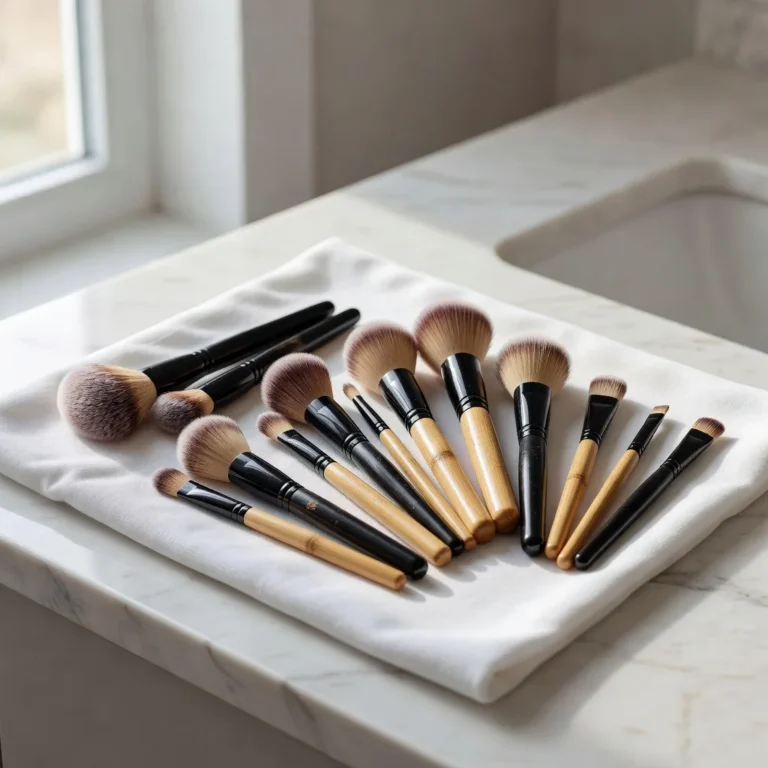
Whatever you use, keep it clean. Dirty sponges and brushes hold oil and bacteria, which can make makeup look patchy and may contribute to breakouts. Our guide on makeup hacks for an oily T-zone has more ideas for the areas that shine first.
How to Apply Makeup on Oily Skin Step by Step
Follow this order for a thin, long-lasting base. Give each layer a minute or two to settle before the next.
Cleanse and moisturise
Use a gentle cleanser and a light gel moisturiser, then let it absorb.
Apply sunscreen
Choose a fluid or gel formula and let it dry down fully.
Prime the oily zones
Press a pea-sized amount of mattifying primer into the forehead, nose and chin.
Apply thin foundation
Use a damp sponge or dense brush to press in a small amount, starting in the centre.
Spot conceal
Add concealer only on blemishes, redness or under the eyes, and blend the edges.
Set with powder
Press translucent powder into the T-zone with a puff; use a light dusting elsewhere.
Add powder colour
Choose powder blush and bronzer over creams if you shine quickly.
Blot during the day
Press blotting paper onto shiny areas before adding any more powder.
Bake only where you need it. Leaving a little extra translucent powder on the sides of the nose and the centre of the forehead for a few minutes, then brushing it off, can help those areas stay matte longer.
Setting Powder, Sprays and Cream Products
Setting is where many oily-skin routines go wrong. Too little powder and the base slides; too much and it looks dry and heavy, especially around the eyes and smile lines.
- Use a finely milled translucent powder to avoid changing the foundation shade.
- Press it in with a puff or sponge on the T-zone for longer hold.
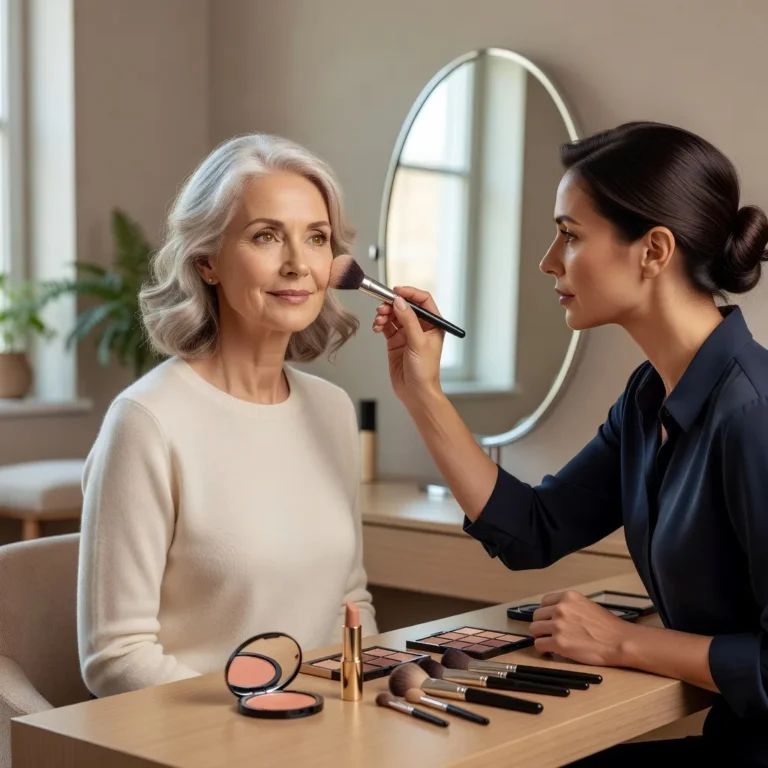
- Use a fluffy brush and a light touch on the cheeks and outer face.
- Choose powder blush and bronzer if cream products melt on you.
- A setting spray can melt powder into the skin so it looks less flat.
Cream blush and highlighter are not off limits, but they wear faster on oily skin. Apply them before powder so they are set in place, and keep highlighter to the tops of the cheekbones rather than the nose or forehead, where shine builds naturally.
Touching Up Without Looking Cakey
Most people with oily skin will need at least one touch-up. The key is removing oil first, then adding the smallest amount of product possible.
- Press, do not rub, a blotting paper onto the shiny area.
- Use a fresh sheet for each area so you are not moving oil around.
- If the base has broken up, press a clean damp sponge over it to smooth it out.
- Add a small amount of powder only where you need it.
- Re-apply concealer on specific spots rather than more foundation all over.
Do not keep layering powder over oil all day. It can build into a heavy, cakey layer that looks worse than the original shine and is harder to remove at night, which may leave residue in pores.
Dos and Don’ts for Oily Skin Makeup
Do
- Use a light gel moisturiser before makeup
- Choose oil-free and non-comedogenic products
- Keep foundation layers thin
- Blot before adding more powder
- Remove makeup completely every night
Don’t
- Skip moisturiser to fight oil
- Use heavy dewy foundations on the T-zone
- Pile powder on top of shine
- Use harsh alcohol toners to dry the skin
- Sleep in makeup
Honest Limits
No primer, foundation or powder can stop oily skin from producing oil. The best routine will delay shine and keep makeup looking neater for longer, but most people with very oily skin will still need to blot at some point during the day, especially in heat or humidity.
Claims such as all-day, 24-hour or shine-free are tested under specific conditions and rarely reflect a hot commute or a long day at work. If your skin is very oily or you also have frequent breakouts, a skincare routine aimed at oil and acne, and advice from a dermatologist, will make a bigger difference than any single makeup product.
Everyone’s skin is different, so treat the steps above as a framework. Adjust the amount of primer and powder until you find the balance between matte and natural that suits you.
When to See a Dermatologist
- Your skin is extremely oily and nothing you try helps.
- You have frequent breakouts that seem linked to makeup.
- You notice redness, itching or stinging after applying products.
- You have acne scars or marks you want to treat rather than cover.
This article is for general information and does not replace professional medical advice. Patch test new makeup, stop using anything that irritates your skin, and see a board-certified dermatologist for acne or persistent skin concerns.
Your Questions, Answered
What is the best way to apply makeup for oily skin?
Thin layers: light prep, mattifying primer, oil-free foundation, targeted powder and blotting.
Should I use moisturiser if I have oily skin?
Yes, a light gel or oil-free moisturiser helps makeup sit evenly.
Is primer necessary for oily skin?
Not essential, but a mattifying primer on the T-zone can delay shine.
What foundation finish is best for oily skin?
Matte or soft-matte, oil-free formulas usually last longest.
Is a sponge or brush better for oily skin?
Either works; a damp sponge often gives the thinnest layer.
Should I use powder all over my face?
Press it into oily areas and dust lightly elsewhere.
How do I stop foundation separating on my nose?
Use less product, prime lightly, set with powder and blot during the day.
Can I use cream blush on oily skin?
Yes, but apply it before powder so it is set in place.
How do I touch up makeup on oily skin?
Blot first, then add a small amount of powder only where needed.
Can makeup cause breakouts on oily skin?
It can; choose non-comedogenic products and remove makeup every night.
The Takeaway
The best way to apply makeup for oily skin is to build a thin, well-set base: light gel moisturiser, mattifying primer on the T-zone, oil-free foundation, targeted powder and blotting before touch-ups.
Expect to control shine rather than eliminate it, keep your tools clean, remove makeup fully at night and see a dermatologist if breakouts or irritation keep coming back.

Written by
Registered pharmacist and founder of Facial Adviser. Rakib's pharmacy training covers how skincare actives work and interact; a later course in cosmetology turned that into a focus on facial treatments and skincare products. He plans, researches and edits every guide on the site and checks health claims against sources such as the American Academy of Dermatology, the FDA and the NIH. He is not a dermatologist; see the Editorial Policy and Medical Disclaimer.
About · Editorial policy · How we choose products · Medical disclaimer · Contact
Keep reading: Makeup basics and skin
- How to Properly Put On Face Makeup: The Right Order, Step by Step
- What to Do If Makeup Gets in Your Eye: First Aid and Warning Signs
- Why Does Makeup Make Me Look Tired? Causes and Easy Fixes
- How Do You Know If Makeup Is Oil-Free? Reading Labels and Ingredients
- Is It Safe to Wear Makeup While Pregnant? What to Use and Avoid
- What to Do If Makeup Is Causing Acne: Find the Culprit and Fix It
- How to Choose Lipstick Shade: Undertone, Skin Tone and Testing Tips
- How to Find the Right Shade of Makeup: Undertone, Depth and Testing