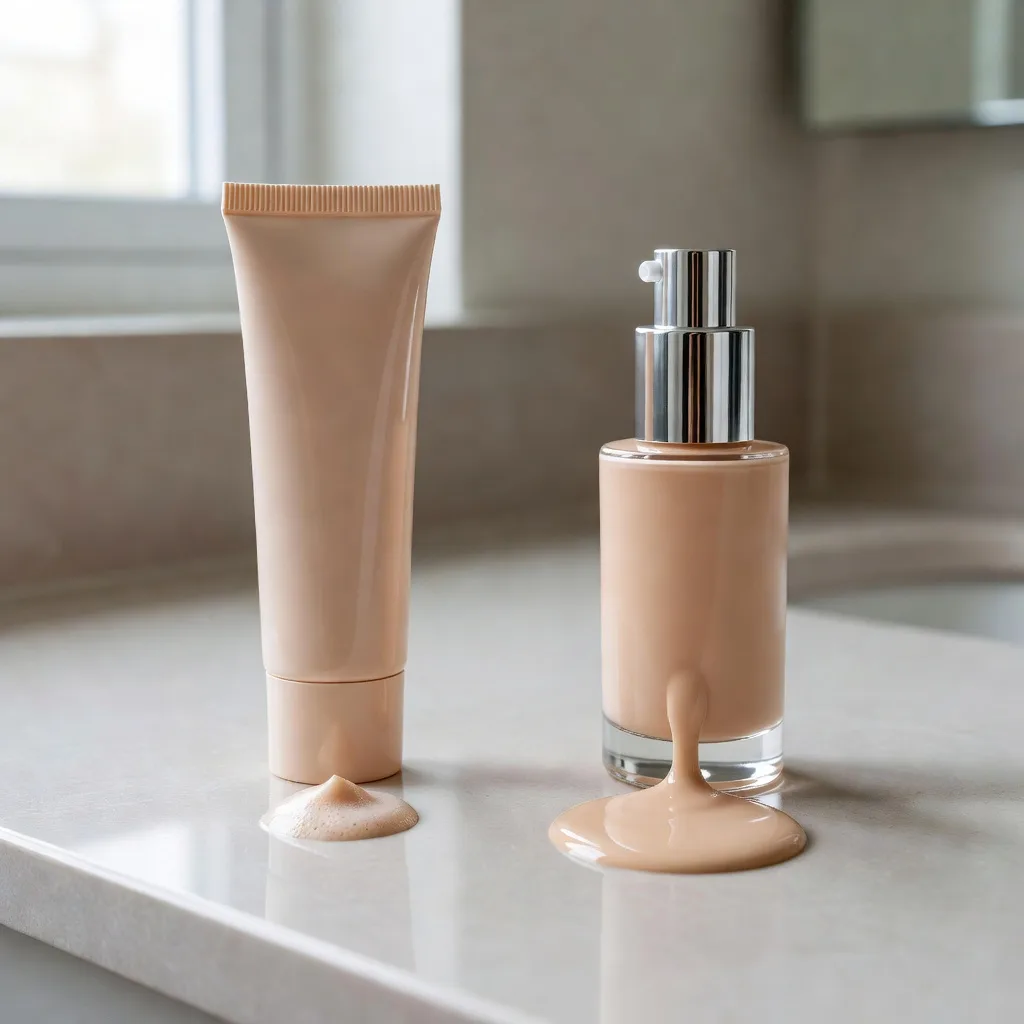
Is BB Cream the Same as Foundation?
Is BB cream the same as foundation, or just marketed like it is?
Part of our guide to makeup how-to. Start with: How to Find the Right Shade of Makeup: Undertone, Depth and Testing
They’re built for different jobs: BB cream is a hybrid of primer, tinted coverage, moisturizer, and often SPF, while foundation is a single-purpose color-match coverage product with a much wider shade range. Neither one fully replaces the other.
An EWG ingredient audit found real consolidation benefits from using a combo product instead of layering three separate ones, but also found real gaps worth knowing before you rely on either product’s printed SPF for a full day outdoors.
This guide covers the real formulation difference, where CC cream and tinted moisturizer fit in, and a practical way to test either product before committing to it as your daily routine.
Recommended BB Creams and Foundations by Skin Type

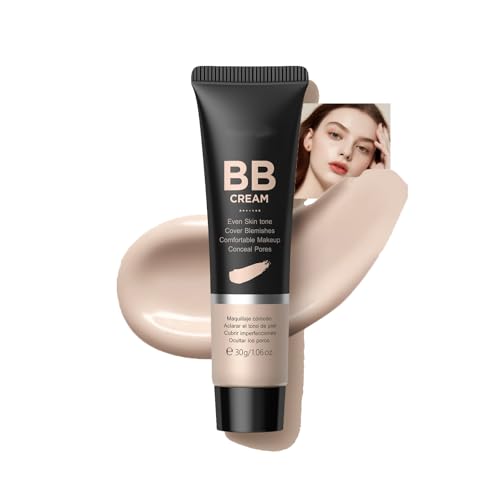
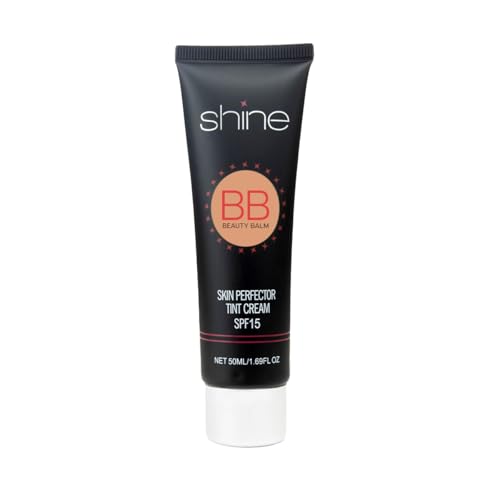
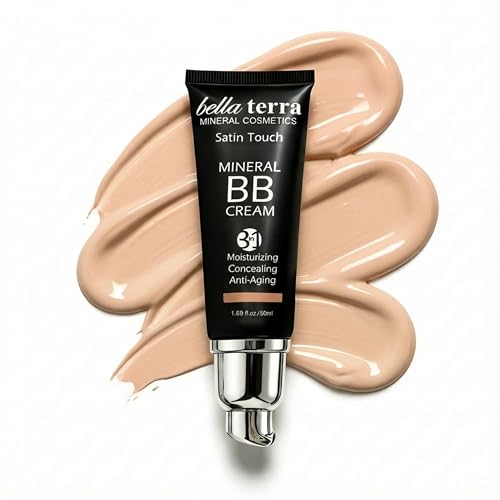
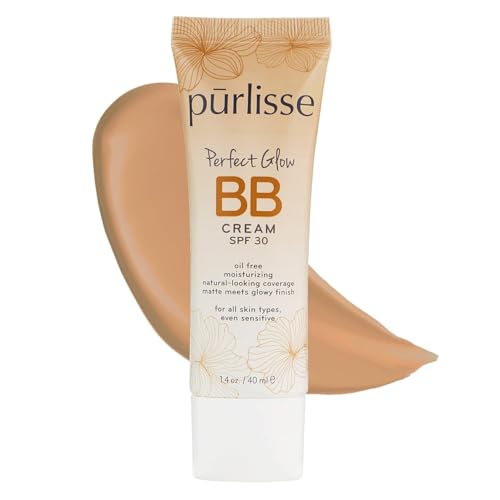
In a Hurry?
- BB cream is a hybrid product — primer, tinted coverage, moisturizer, and often SPF combined in one formula. Foundation is a single-purpose color-match product with no built-in skincare actives.
- An EWG ingredient audit found combining products into one BB cream cut total ingredient exposure from around 70 (three layered products) to around 40, and cut flagged “hazardous” ingredients from three to one.
- 12% of the BB and CC creams EWG evaluated had unbalanced UVA/UVB protection — the printed SPF number on a tinted cosmetic should not be trusted the way a dedicated sunscreen’s SPF is.
- CC cream and tinted moisturizer are lighter-coverage relatives of BB cream, and in 2025-2026 product lines the three categories blur together heavily — the name on the bottle is often a marketing choice, not a fixed formulation standard.
- Foundation still wins on shade range and finish control; BB cream still ships in far fewer undertone-matched shades than most modern foundation lines.
Table of Contents
- The Real Chemistry Difference
- Where BB Cream Actually Came From
- What an Ingredient Audit Actually Found
- The SPF Number You Shouldn’t Fully Trust
- CC Cream and Tinted Moisturizer: The Blurred Middle
- Side-by-Side Comparison
- Which One Suits Your Skin
- The Shade-Range Gap
- How to Apply Either One Correctly
- Do’s and Don’ts
- A Practical Check Before You Buy
- What This Guide Can’t Tell You
- Frequently Asked Questions
The Real Chemistry Difference
BB cream — short for “beauty balm” or “blemish balm” — is formulated as a multi-function hybrid. A single tube is meant to replace several steps: it typically combines a primer-like silicone base, light-to-medium tinted pigment for coverage, moisturizing emollients, and frequently a sunscreen filter, all in one product. Foundation, by contrast, is engineered for one job: color-matched coverage. It comes in a much wider range of shades and undertones, offers buildable opacity from sheer to full, and is available in specific finishes — matte, dewy, satin — matched to skin type and personal preference. Most foundations contain no meaningful skincare actives at all; they are a color-and-texture product, not a hybrid one.
Shopping these picks?
Amazon Prime members get fast, free shipping on eligible items, plus Prime Video, Amazon Music and member deals. New members can start with a free trial.
Start a free Prime trialAged 18 to 24? Prime for Young Adults comes with a longer free trial and a lower price after it.
Affiliate link: we may earn a commission at no extra cost to you.
This distinction matters more than it sounds like it should, because the two products are frequently marketed as interchangeable — “BB cream: your foundation and skincare in one” — when they are actually solving different problems. A foundation user who switches to BB cream expecting identical coverage will often be disappointed by how sheer it looks; a BB cream user who expects it to replace a real moisturizer and sunscreen underneath is skipping steps that a hybrid formula usually can’t fully substitute for.
Where BB Cream Actually Came From
BB cream didn’t start as a Korean beauty trend, though that’s how most Western consumers encountered it. It originated decades earlier in German dermatology clinics, where it was used as a soothing, camouflaging balm for patients recovering from laser resurfacing or chemical peels — someone with visibly red, healing skin needed light coverage plus calming, protective ingredients in one step, since a full skincare-then-makeup routine wasn’t practical on freshly treated skin. Korean cosmetic brands later adapted and popularized the concept for general daily wear in the 2000s, and it entered the US and European markets from there as a “your skincare and makeup in one” convenience product rather than a post-procedure recovery item.
That origin story is a useful sanity check on the marketing: BB cream was never designed to out-cover a real foundation. It was designed to be gentle and multi-functional for compromised skin, and the coverage was always meant to be secondary to the skincare-adjacent benefits.
What an Ingredient Audit Actually Found
The Environmental Working Group has directly compared the ingredient load of using one combination BB or CC cream against layering three separate products — moisturizer, primer, and foundation. Their research found that the combined product route exposed users to roughly 40 total ingredients, versus roughly 70 when three separate products were used, and that the number of ingredients EWG flags as potentially hazardous dropped from three down to one with the combo approach. That’s a genuine, quantified consolidation benefit — fewer total ingredients generally means fewer opportunities for a reaction or interaction.
The SPF Number You Shouldn’t Fully Trust
This is the single most underused honest point in the whole BB-cream conversation: EWG’s assessment found that 12% of the BB and CC creams it evaluated had unbalanced UVA/UVB protection, meaning the printed SPF number oversold the product’s actual broad-spectrum coverage. More broadly, BB cream is not formulated or tested for extended outdoor sun exposure the way a dedicated facial sunscreen is. Its SPF is a bonus feature riding on a cosmetic base — not a photostability-tested standalone sunscreen.
There’s also a practical application-thickness problem. Sunscreen SPF ratings are tested at a specific, fairly heavy application thickness — about 2 milligrams per square centimeter of skin. Almost nobody applies a tinted cosmetic at that thickness, because it would look chalky and overdone. In practice, people apply BB cream far more thinly than the tested SPF assumes, and they reapply it far less consistently than they would a dedicated sunscreen, since reapplying makeup midday is inconvenient. The real-world sun protection you get from a BB cream’s printed SPF number is very likely lower than the label implies — not because the number is fabricated, but because the way people actually use the product doesn’t match the way it was tested.
CC Cream and Tinted Moisturizer: The Blurred Middle
CC cream (“color-correcting cream” or “complexion corrector”) emerged as a marketing evolution of BB cream, aimed at more precise color-correcting pigments and often light-diffusing or optical-blurring particles, typically with lighter coverage than BB cream. Tinted moisturizer sits at the lightest end of the spectrum — fundamentally a moisturizer with a small amount of pigment mixed in, usually offering the least coverage of the group and often no meaningful sun protection at all.
In practice, current-market formulations blur these three categories heavily. Several popular 2025-2026 “BB creams” function almost identically to a tinted moisturizer with SPF added — same texture, similar coverage, similar ingredient list — just marketed under a different name. The category label on the bottle is often more of a brand positioning choice than a meaningful, standardized formulation difference, which is why reading the actual ingredient list and coverage description matters more than trusting the category name alone.
| Category | Typical coverage | Typical SPF presence |
|---|---|---|
| Tinted moisturizer | Lightest, sheer | Rarely meaningful |
| CC cream | Light, color-correcting | Sometimes, variable strength |
| BB cream | Light to medium | Often included, reliability varies |
| Foundation | Sheer to full, buildable | Occasionally, usually not primary purpose |
Side-by-Side Comparison
| Factor | BB Cream | Foundation |
|---|---|---|
| Primary purpose | Multi-function hybrid (primer + tint + moisturizer + often SPF) | Single-purpose color-match coverage |
| Coverage level | Light to medium, usually not buildable to full | Sheer to full, buildable |
| Shade range | Historically narrow, still catching up | Wide, many undertone-matched options |
| Built-in skincare actives | Common (moisturizers, sometimes antioxidants, often SPF) | Rare |
| Best suited for | Low-maintenance daily wear, normal-to-dry skin | Precision coverage, any skin type with the right finish chosen |
Which One Suits Your Skin
BB cream tends to suit normal-to-dry skin looking for a low-maintenance routine and light, breathable coverage. Its typically dewy finish and, in some formulas, comedogenic-leaning oils can be a real problem for acne-prone or oily skin, where that same dewy texture can read as shiny rather than glowing, and richer emollients can contribute to clogged pores over the course of a day.
Foundation suits anyone who needs precise color-match coverage — for melasma, post-inflammatory hyperpigmentation, acne scarring, or simply a fuller finish for photos or events — and lets you choose a finish that actually works with your skin type: matte for oily skin prone to midday shine, radiant or dewy formulas for dry or dull-looking skin. The tradeoff is that foundation alone doesn’t carry the same “one-step” convenience BB cream offers.
The Shade-Range Gap
One of the most persistent, real limitations of BB cream as a category is shade range. Early BB cream lines shipped in astonishingly few shades — sometimes as few as two or three — compared with foundation lines that had already expanded to dozens of shade and undertone combinations. That gap has narrowed somewhat as BB cream has become more mainstream, but it hasn’t closed. If your skin tone or undertone sits outside the small handful of options a given BB cream line offers, foundation remains the more reliable route to an actual color match, not just an “close enough” tint.
How to Apply Either One Correctly
Start with a clean, moisturized face
Both products perform better and blend more evenly over skin that’s been cleansed and given a few minutes for moisturizer to absorb, rather than applied directly over a bare or over-oily surface.Apply a pea-sized amount and build gradually
Whether it’s BB cream or foundation, starting with less than you think you need and building up avoids the caked, heavy look that comes from overapplying either product at once.Use a damp sponge or fingertips for BB cream
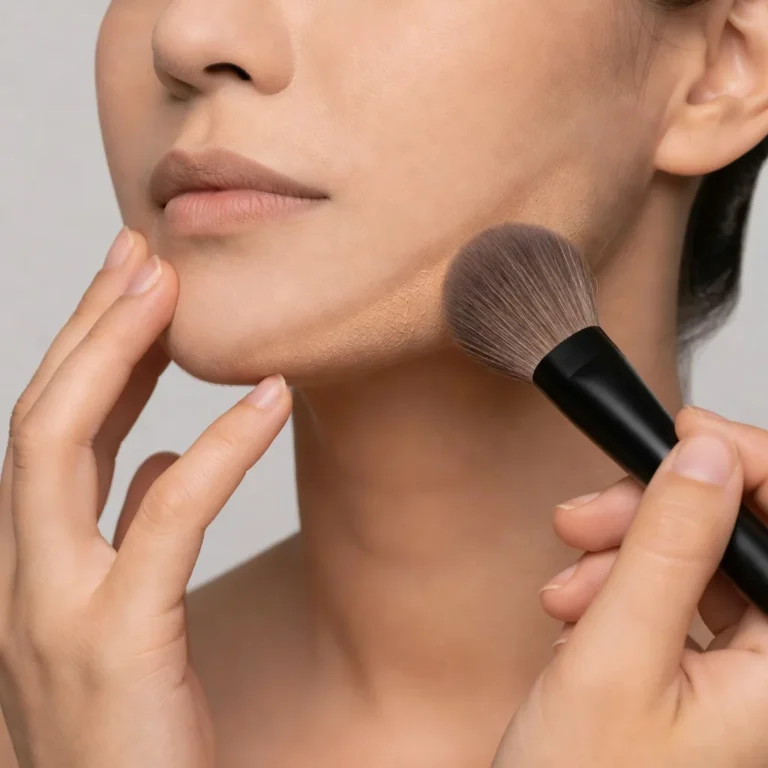
BB cream’s thinner, more fluid texture blends most naturally with a damp makeup sponge or warm fingertips, which help it melt into skin rather than sit on top of it.Use a brush or sponge for full-coverage foundation
A dense buffing brush or a foundation-specific sponge gives more control over building coverage in areas that need it (redness, discoloration) without overapplying everywhere else.Add a dedicated sunscreen underneath if sun exposure is more than incidental
Given the SPF-reliability issue described above, anyone spending real time outdoors should treat a BB cream’s SPF as a bonus, not a substitute, and apply a separately tested sunscreen underneath first.
Do’s and Don’ts
Do
- Read the actual ingredient list rather than trusting “BB,” “CC,” or “tinted moisturizer” as a guarantee of formulation.
- Apply a separate, properly tested sunscreen if you’ll be outdoors for more than a short walk.
- Patch-test a new BB cream if you have acne-prone or reactive skin, since some formulas skew comedogenic.
Don’t
- Assume a BB cream’s printed SPF number performs like a dedicated sunscreen applied at the tested thickness.
- Expect BB cream to fully replace foundation for photos, events, or coverage of visible discoloration.
- Assume every “hybrid” product is automatically gentler — some still contain the same UV filters or preservatives found in separate products.
A Practical Check Before You Buy
There’s no clinical diagnostic test for “which coverage product is right for you” — this is a preference and skin-type match, not a medical question. But there is a simple, practical check worth doing before buying either product: apply a small amount to freshly cleansed skin on the back of your hand or along your jawline, wait 10-15 minutes, and look at how it oxidizes and settles. Both BB cream and foundation can shift shade slightly as they interact with your skin’s natural oils; testing on your face rather than trusting the swatch on the back of the bottle avoids an expensive mismatch. If you have acne-prone skin, wear a small amount on your jaw for a full day to see whether it contributes to congestion before committing to it as a daily product.
What This Guide Can’t Tell You
This guide can tell you the real chemistry and evidence behind BB cream, CC cream, tinted moisturizer, and foundation categories, but it can’t tell you which specific product will look best on your specific skin tone, texture, and lifestyle — that’s a matter of in-person testing, not category-level research. It also can’t resolve the fact that “BB cream,” “CC cream,” and even “foundation” are not strictly regulated formulation categories; a specific product’s actual composition always needs to be checked against its own ingredient list rather than assumed from its category name.
Frequently Asked Questions
Is BB cream the same as foundation?
No. BB cream is a hybrid product combining primer, tinted coverage, moisturizer, and often SPF in one formula, while foundation is a single-purpose color-match coverage product with a wider shade and finish range and typically no built-in skincare actives.
Can BB cream fully replace my moisturizer and sunscreen?
Not reliably. BB cream’s moisturizing and SPF benefits are real but secondary to its coverage function, and its printed SPF number is less trustworthy than a dedicated, separately tested sunscreen due to thinner real-world application and less frequent reapplication.
What’s the difference between BB cream and CC cream?
CC cream generally offers lighter, more color-correcting coverage with optical-blurring pigments, while BB cream offers slightly heavier hybrid coverage. In practice, many current products blur this distinction and the category name is often a marketing choice rather than a fixed formulation standard.
Is tinted moisturizer basically the same as BB cream?
They’re closely related but not identical. Tinted moisturizer generally offers the lightest coverage of the group with minimal pigment and often no meaningful SPF, while BB cream typically has more coverage and more frequently includes a sunscreen filter.
Does BB cream work for oily or acne-prone skin?
It can, but with caution. Some BB cream formulas contain comedogenic-leaning oils and have a dewy finish that can read as shiny rather than glowing on oily skin, so patch-testing and checking the ingredient list matters more than for foundation.
Why does BB cream come in fewer shades than foundation?
This is a real, persistent gap. Early BB cream lines shipped in very few shades compared to established foundation lines, and while the gap has narrowed as the category matured, most BB cream lines still offer fewer undertone-matched options than comparable foundation lines.
Is the SPF in BB cream trustworthy?
Only partially. Research auditing BB and CC creams found some had unbalanced UVA/UVB protection, and even accurate SPF numbers are tested at an application thickness most people don’t actually use on their face, so real-world protection is typically lower than the label implies.
Where did BB cream originally come from?
BB cream originated in German dermatology clinics as a soothing, camouflaging balm for patients recovering from laser resurfacing or chemical peels, before Korean cosmetic brands adapted it for general daily wear and popularized it internationally.
Can I use BB cream and foundation together?
Yes, some people layer a thin BB cream as a skin-perfecting base and add foundation only where they want more targeted coverage, though this adds a step rather than saving one, which works against BB cream’s usual low-maintenance appeal.
How do I know if a BB cream will match my actual skin tone?
Test a small amount on your jawline or the back of your hand and wait 10-15 minutes before judging the match, since both BB cream and foundation can oxidize and shift shade slightly as they interact with your skin’s natural oils.

Written by
Registered pharmacist and founder of Facial Adviser. Rakib's pharmacy training covers how skincare actives work and interact; a later course in cosmetology turned that into a focus on facial treatments and skincare products. He plans, researches and edits every guide on the site and checks health claims against sources such as the American Academy of Dermatology, the FDA and the NIH. He is not a dermatologist; see the Editorial Policy and Medical Disclaimer.
About · Editorial policy · How we choose products · Medical disclaimer · Contact
Keep reading: Foundation, BB cream and base
- What to Do When Makeup Oxidizes
- How to Find the Right Shade of Makeup for Your Skin
- Why Your Makeup Looks Cakey and How to Fix It
- What Is the Purpose of Makeup Foundation? What It Does and Does Not Do
- How to Find the Right Shade of Makeup: Undertone, Depth and Testing
- How to Get Started as a Freelance Makeup Artist: Training, Kit and Clients
- Best Way to Use Makeup Remover: Micellar Water, Balms, Oils and Eye Removers