How Do You Know If Makeup Is Water Based or Oil Based?
Foundation labels rarely say “water-based” or “oil-based” outright, so how do you actually know if makeup is water based or oil based once you’re standing in front of the ingredient list?
Part of our guide to makeup how-to. Start with: How to Properly Put On Face Makeup: The Right Order, Step by Step
US cosmetic labeling regulations require ingredients to be listed in descending order by concentration, so checking whether “aqua” or an oil sits first on the list is a genuinely reliable, regulation-backed identification method — not a guess. The popular “apply water-based products before oil-based ones” layering rule has real chemistry behind it, since silicones and oils are hydrophobic, but cosmetic chemists note the full mechanism is more precisely about absorption time and surface friction than the simplified one-line version most routines repeat.
A genuinely useful distinction worth naming directly: the formulation-industry consensus that silicones are broadly non-comedogenic is an accepted convention in cosmetic chemistry, not a clinical dermatology finding, which matters for anyone weighing that claim against their own reactive skin.
This guide covers how to read an ingredient list to identify the true base, a practical hands-on test, which skin types tend to do better with each formula type, and an honest look at where the water-before-oil layering rule holds up and where it oversimplifies.
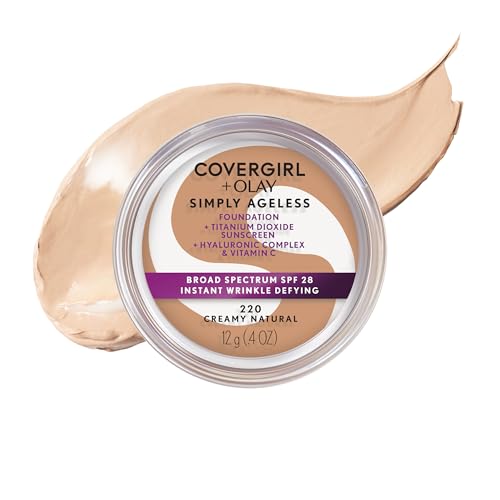
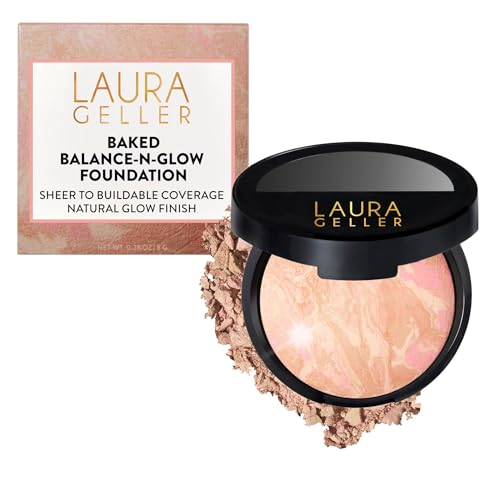
Recommended Oil-Free and Water-Based Foundations




At a Glance
- The ingredient list tells you the base type directly: whatever is listed first is present in the highest concentration, by law.
- Genuinely oil-based foundations and primers are now fairly rare; most modern base products are actually water-based or silicone-based.
- The “water-based before oil-based” layering rule has a real chemical basis, but the one-line version most people repeat oversimplifies it.
- Silicones are widely described as too large to enter pores and are not considered comedogenic, despite the “silicone suffocates skin” claim that circulates online.
Sections
- Why Base Type Actually Matters
- How to Read an Ingredient List
- Identifying Water, Silicone, and Oil Bases
- Why True Oil-Based Formulas Are Rare Now
- The Silicone “Suffocates Skin” Myth
- A Simple Arm Test You Can Run Yourself
- Why Pilling Happens
- Is the Layering Rule Real or Oversimplified?
- What “Waterproof” Actually Means
- Why Base Type Affects Removal
- Which Base Suits Which Skin Type
- Quick Reference Checklist
- How to Identify Your Product’s Base Type
- Frequently Asked Questions
- Bottom Line
Why Base Type Actually Matters
Whether a foundation, primer, or sunscreen is water-based, silicone-based, or oil-based is not just formulation trivia. It determines how a product feels on skin, how it interacts with whatever you layer over or under it, and whether it pills, separates, or blends smoothly with the rest of your routine. Most of the frustration people describe as “my makeup just won’t blend today” traces back to two incompatible base types meeting on the same patch of skin, not to a flaw in either product individually.
Shopping these picks?
Amazon Prime members get fast, free shipping on eligible items, plus Prime Video, Amazon Music and member deals. New members can start with a free trial.
Start a free Prime trialAged 18 to 24? Prime for Young Adults comes with a longer free trial and a lower price after it.
Affiliate link: we may earn a commission at no extra cost to you.
How to Read an Ingredient List
Cosmetic ingredient lists are legally ordered by concentration, highest to lowest. That single fact is the entire method here: whatever appears first, or very near first, is present in the greatest quantity and effectively defines the base of the product. You do not need to identify every ingredient on a label to determine base type; you only need to correctly read the first two or three entries.
Identifying Water, Silicone, and Oil Bases
Once you know to look at the top of the list, the three base types have distinct, recognizable signatures.
| Base Type | Look For | Typical Feel |
|---|---|---|
| Water-based | “Aqua” or “Water” listed first or near first | Lightweight, breathable |
| Silicone-based | Ingredients ending in “-cone,” “-siloxane,” or “-conol” near the top, e.g. dimethicone, cyclopentasiloxane | Smooth, blurring, satin finish |
| Oil-based | Named oils prominent near the top, e.g. jojoba oil, mineral oil, lanolin oil | Rich, emollient, often heavier |
Why True Oil-Based Formulas Are Rare Now
Here is a genuinely underused point: readers searching “is my foundation oil-based” are, more often than not, actually dealing with a silicone-based product, not a true oil-based one. One hands-on beauty blogger who has spent time cataloguing base products describes finding a genuinely oil-based foundation or primer on shelves today as like spotting “unicorns.” Most mainstream base products marketed now are water-based or silicone-based; oil-based formulas are comparatively uncommon. That matters because water-based, silicone-based, and oil-based products behave differently in layering and removal, and mistaking a silicone finish for an oily one leads to the wrong troubleshooting.
The Silicone “Suffocates Skin” Myth
Silicone-based formulas are frequently marketed toward combination and oily skin for their blurring, pore-filling visual effect and lightweight after-feel. A persistent online claim holds that silicones “suffocate” skin or clog pores, but formulation sources consistently describe silicone molecules as too large to penetrate into a pore, meaning they are not considered comedogenic in the traditional sense.
A Simple Arm Test You Can Run Yourself
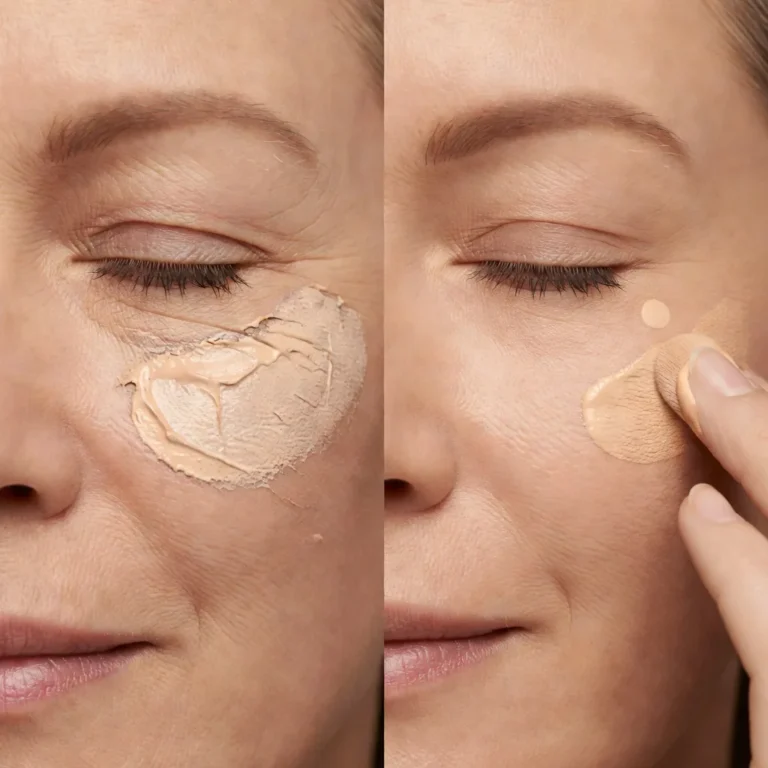
Beyond reading labels, there is a low-effort physical test that tells you a great deal about compatibility. Apply primer to your inner arm, let it set, then apply foundation over it. Wait about thirty seconds and watch what happens. If the top layer pills, meaning it balls up, sits on the surface, and does not blend smoothly, the two products are base-incompatible, most commonly a water-based product layered over a silicone-based one.
Why Pilling Happens
The chemistry behind pilling is real and fairly straightforward. Silicones are hydrophobic and largely chemically inert, and an industry ingredient-technology resource describes their relevant properties as low surface tension, chemical inertness, and thermal stability, forming a thin, continuous film that sticks to skin rather than absorbing into it. A water-based product applied on top of that film genuinely can bead up or separate rather than spreading evenly, because it has nowhere to be absorbed into and nothing compatible to blend with on the surface.
Is the Layering Rule Real or Oversimplified?
The popular rule “always apply water-based before oil-based or silicone-based” deserves a nuanced answer rather than a flat yes or no. The underlying chemistry is real: silicone films are genuinely incompatible with water-based layers on top of them, and this causes visible pilling. But Ada Ooi, founder of 001 Skincare, frames the rule more carefully as practical guidance rather than an absolute chemistry law. Her actual point is more specific than a blanket sequencing rule: pilling happens because occlusive or silicone ingredients sit unabsorbed on the surface, and friction from continued rubbing, not simply the order of application, causes buildup to roll. Gel-form products in particular need adequate drying and absorption time before the next layer goes on.
No formal peer-reviewed source was found rigorously testing the rule itself; it is established, repeated formulation-industry practical knowledge with a real underlying mechanism, not a laboratory-validated law. The honest version is: sequencing matters, but so does giving each layer time to actually absorb before adding friction on top of it.
What “Waterproof” Actually Means
Waterproof performance comes from hydrophobic polymers, such as polyvinyl chloride, PTFE, and polydimethylsiloxane (a silicone), that do not dissolve in polar solvents like water, combined with film-forming agents that create a resilient, adherent coating on skin. Wax components, carnauba wax, beeswax, or synthetic equivalents, add toughness and resistance to water, perspiration, and tears, and are particularly relevant to mascara specifically.
Why Base Type Affects Removal
Base type is not just a wearing-and-layering question; it directly determines what removes a product efficiently. A hydrophobic wax or silicone film is most effectively broken down by an oil-based solvent, following the basic “like dissolves like” principle, not by a surfactant-in-water system alone. This is exactly why oil-based or bi-phase removers are the more reliable choice specifically for waterproof formulas, while a water-based cleanser or micellar water alone tends to underperform on them. Newer waterproof formulations increasingly balance gentler waxes with emollients to keep water resistance while making removal somewhat easier, though “waterproof” still generally signals “needs an oil-based step,” not “impossible to remove without harsh scrubbing.”
Which Base Suits Which Skin Type
Base type and skin type have a reasonably consistent, if not clinically studied, relationship worth laying out plainly.
| Skin Type | Generally Recommended Base | Why |
|---|---|---|
| Normal to oily, acne-prone | Water-based | Lighter feel, no occlusive film, lower perceived clogging risk |
| Combination or oily, texture-focused | Silicone-based | Blurring, pore-filling visual effect, lightweight after-feel |
| Dry | Oil-based (where available) | Supplies emollient content dry skin lacks |
Oil-based formulas, being comparatively less common now, are the most likely to feel heavy or occlusive on oily or acne-prone skin and are the least likely to be waterproof on their own without added wax or polymer content.
Quick Reference Checklist
Do
- Check the first two or three ingredients before assuming a product’s base type.
- Run the thirty-second inner-arm test before pairing a new primer and foundation.
- Use an oil-based or bi-phase remover on waterproof formulas.
Don’t
- Assume “silicone” and “oil-based” are the same thing; they behave very differently.
- Rub a pilling product harder hoping it will absorb; that friction is often part of the problem.
- Rely on water-based cleanser alone to remove a waterproof, wax- or polymer-heavy formula.
How to Identify Your Product’s Base Type
If you want a repeatable process rather than a one-time check, this sequence covers both the label method and the physical test.
Find the ingredient list
Locate the full ingredient list on the packaging or the brand’s product page; it is legally required and ordered by concentration.
Read the first two or three entries
Identify whether water, a silicone (look for “-cone,” “-siloxane,” or “-conol”), or a named oil appears first.
Classify the base
Match what you found against water-based, silicone-based, or oil-based signatures to determine the product’s primary base.
Run the arm test with any product you plan to layer
Apply the two products in sequence on your inner arm and watch for pilling after about thirty seconds.
Adjust your routine if needed
If pilling occurs, try reversing the order, allowing more absorption time between layers, or switching one product for a compatible base type.
Frequently Asked Questions
How can I tell if my foundation is water-based?
Check the ingredient list; if “aqua” or “water” is listed first or very near first, the product is water-based.
What ingredients signal a silicone-based product?
Look for ingredient names ending in “-cone,” “-siloxane,” or “-conol,” such as dimethicone or cyclopentasiloxane, appearing near the top of the list.
Are oil-based foundations still common?
Not really; genuinely oil-based base products are now fairly rare, and most modern foundations and primers are water-based or silicone-based instead.
Do silicones clog pores?
Formulation sources describe silicone molecules as too large to penetrate pores and generally not comedogenic, though no dedicated peer-reviewed dermatology source confirms this specifically.
What is the inner-arm pilling test?
Apply one product over another on your inner arm, wait about thirty seconds, and watch whether the top layer blends smoothly or balls up.
Is “water-based before oil-based” always true?
The underlying chemistry is real, but the rule as usually stated oversimplifies it; absorption time and friction matter as much as strict sequencing.
What makes a makeup formula waterproof?
Hydrophobic polymers and film-forming agents, often combined with waxes like carnauba or beeswax, create a resilient coating that resists water and sweat.
Why is waterproof mascara harder to remove with a regular cleanser?
Its wax or silicone film is hydrophobic, so an oil-based solvent breaks it down far more effectively than a water-based cleanser alone.
Which base type is best for oily, acne-prone skin?
Water-based products are generally recommended for oily or acne-prone skin since they skip the occlusive film silicones and oils leave behind.
Which base type is best for dry skin?
Oil-based formulas, where available, are generally positioned for dry skin because they supply emollient content the skin itself lacks.
Bottom Line
You do not need a chemistry degree to identify whether your makeup is water-based, silicone-based, or oil-based; you need to read the first two or three ingredients on the label, since they are legally ordered by concentration. Genuinely oil-based products are rarer than people assume, and much of what gets blamed on “oil” is actually a silicone film behaving the way silicone films behave.
The water-before-oil layering rule has a real chemical basis but is more accurately a question of absorption time and friction than a rigid sequence. When in doubt, the thirty-second arm test settles the question faster than debating ingredient lists, and matching your removal method, oil-based for waterproof and wax-heavy formulas, water-based for everyday wear, to the base type you actually identified will solve more routine problems than switching products at random.

Written by
Registered pharmacist and founder of Facial Adviser. Rakib's pharmacy training covers how skincare actives work and interact; a later course in cosmetology turned that into a focus on facial treatments and skincare products. He plans, researches and edits every guide on the site and checks health claims against sources such as the American Academy of Dermatology, the FDA and the NIH. He is not a dermatologist; see the Editorial Policy and Medical Disclaimer.
About · Editorial policy · How we choose products · Medical disclaimer · Contact
Keep reading: Makeup basics and skin
- How to Properly Put On Face Makeup: The Right Order, Step by Step
- 10 Best Makeup for Acne-Prone Skin (2026): Coverage That Won't Clog
- Is It Safe to Buy Makeup From AliExpress?
- When Can You Wear Makeup After Pink Eye? A Safe Timeline
- When Can You Wear Makeup After Cataract Surgery?
- How Do You Know If Makeup Is Non-Comedogenic?
- How to Choose Lipstick Shade: Undertone, Skin Tone and Testing Tips
- How to Find the Right Shade of Makeup: Undertone, Depth and Testing