How Color Correctors Neutralize Undertones: Which Shade Fixes What
Green concealer on red skin sounds like a strange idea until you see it work. Colour correctors can make redness, dark circles and dull patches almost disappear under foundation, but only if you choose the right shade and use very little of it.
Part of our guide to makeup how-to. Start with: How to Find the Right Shade of Makeup: Undertone, Depth and Testing
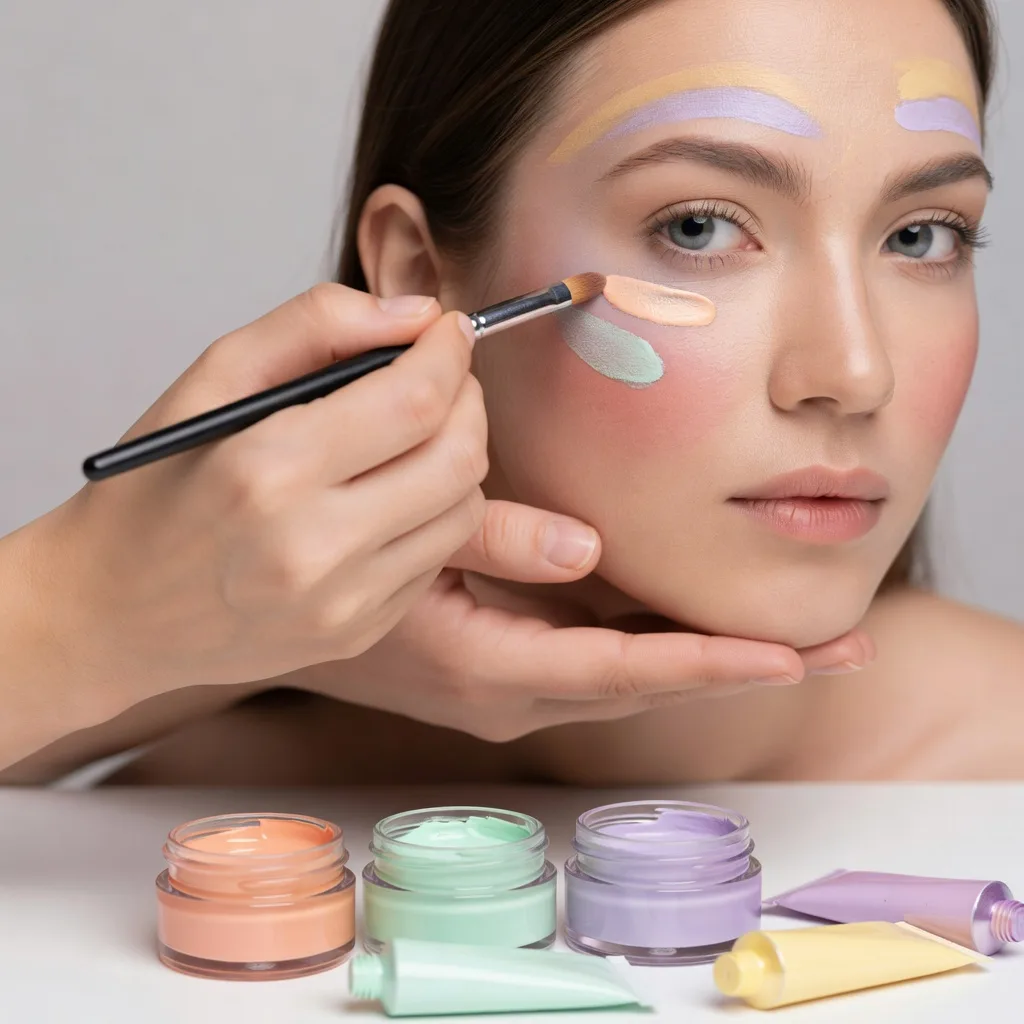
Colour correctors neutralise unwanted undertones by using the colour opposite on the colour wheel. Opposite colours cancel each other out when layered thinly, leaving a more neutral base for foundation. Green cancels redness from blemishes, rosacea or broken capillaries. Peach and orange cancel blue, purple or grey tones in dark circles and hyperpigmentation, with peach suiting lighter skin and orange or red suiting deeper skin. Yellow brightens mild purple or dull areas and evens out light discolouration. Lavender brightens sallow, yellowish skin. Apply a thin layer only where needed, blend the edges, then cover with foundation or concealer.
In short: pick the opposite colour, use a tiny amount and always cover it.
The American Academy of Dermatology notes that a green-tinted concealer can camouflage redness and a yellow-tinted concealer can mask discolouration on skin tones from light to dark, in its skin care tips for people with rosacea.
Used well, correctors can let you wear lighter foundation overall, because you no longer need heavy coverage to hide colour.
Shopping these picks?
Amazon Prime members get fast, free shipping on eligible items, plus Prime Video, Amazon Music and member deals. New members can start with a free trial.
Start a free Prime trialAged 18 to 24? Prime for Young Adults comes with a longer free trial and a lower price after it.
Affiliate link: we may earn a commission at no extra cost to you.
This guide explains the colour theory behind correcting, which shade fixes which problem, how to match correctors to your skin tone and how to apply them without looking cakey.
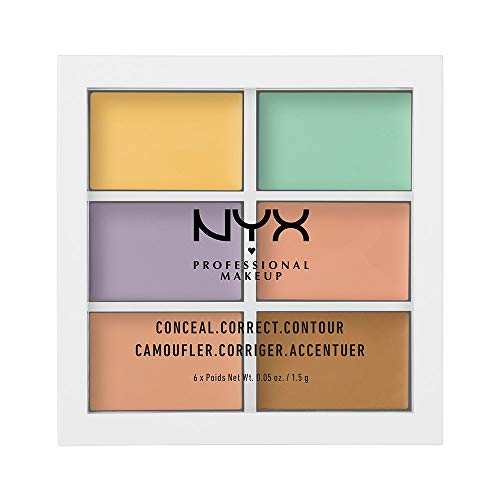
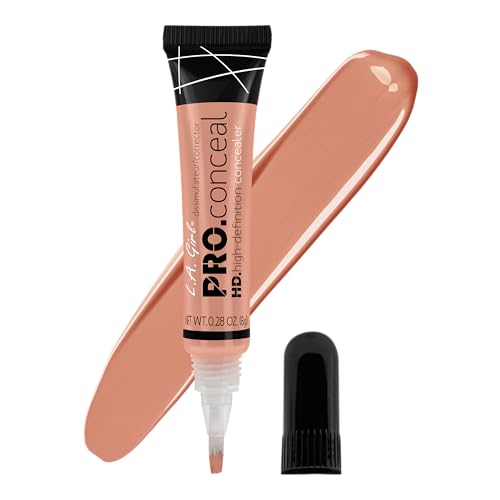
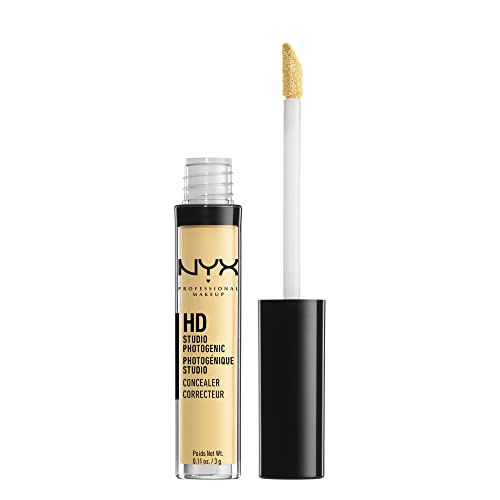
Recommended Colour Correctors for Every Concern




In Brief
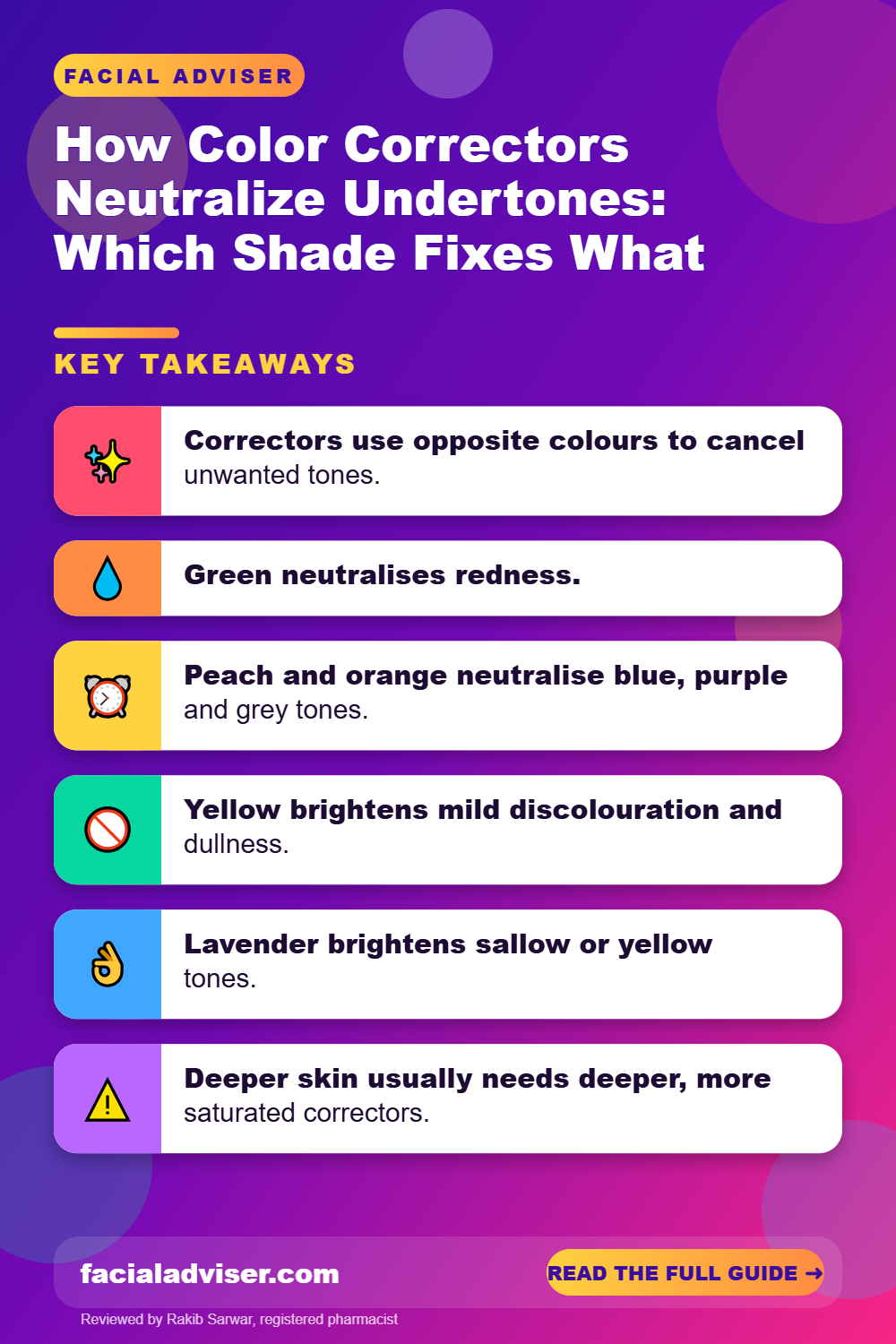
- Correctors use opposite colours to cancel unwanted tones.
- Green neutralises redness.
- Peach and orange neutralise blue, purple and grey tones.
- Yellow brightens mild discolouration and dullness.
- Lavender brightens sallow or yellow tones.
- Deeper skin usually needs deeper, more saturated correctors.
- Use a thin layer and always cover with foundation or concealer.
Jump to a Section
- The Colour Theory Behind Correctors
- Which Colour Corrector Fixes What
- Matching Correctors to Your Skin Tone
- How to Apply Colour Corrector
- Does Corrector Go Before or After Foundation?
- Common Colour Correcting Mistakes
- Types of Colour Correcting Products
- When Redness or Dark Circles Need More Than Makeup
- Colour Correcting for Specific Concerns
- Dos and Don’ts
- Honest Limits
- When to See a Dermatologist
- Common Questions
- The Takeaway
The Colour Theory Behind Correctors
Colour correcting borrows a principle that painters and makeup artists have used for a long time. It is based on the colour wheel. Colours that sit opposite each other are called complementary colours. When they are mixed or layered in the right amounts, they cancel each other out and look more neutral or grey.
- Red is opposite green, so green cancels redness.
- Blue is opposite orange, so peach and orange cancel blue and purple shadows.
- Purple is opposite yellow, so yellow cancels mild purple tones.
- Lavender sits opposite yellow, so lavender cancels sallow, yellowish skin.
The key word is neutralise, not cover. A corrector does not hide a mark on its own; it removes the unwanted tone so that a thin layer of foundation or concealer can finish the job. Using too much corrector swaps one colour problem for another, such as a greenish or orange cast. The strength of the unwanted colour matters too: faint redness needs only a sheer green, while a deep purple under-eye shadow may need a richer orange.
Which Colour Corrector Fixes What
Use this chart to match the corrector to the problem you want to fix. If you are unsure which tone you are seeing, look at the area in daylight and compare it with the skin around it.
| Corrector colour | Neutralises | Common uses |
|---|---|---|
| Green | Red | Blemishes, rosacea, broken capillaries, redness around the nose |
| Peach or salmon | Blue and purple on light to medium skin | Dark circles, light hyperpigmentation |
| Orange or red | Blue, grey and deep purple on medium to deep skin | Dark circles, dark spots, beard shadow |
| Yellow | Mild purple and dullness | Light discolouration, uneven tone, veins |
| Lavender or purple | Yellow and sallow tones | Dull, sallow skin, yellowish bruising |
| Pink | Grey and dull tones on fair skin | Tired-looking under-eyes on light skin |
Our guide on makeup tips for uneven skin tone explains how to combine correctors with foundation for an even base.
Matching Correctors to Your Skin Tone
The depth of your skin changes which corrector will work best. A pale peach that works on fair skin can look ashy on deep skin, while a strong orange can look too bright on light skin.
| Skin depth | Dark circles and spots | Redness |
|---|---|---|
| Fair to light | Pink or light peach | Light, sheer green |
| Light to medium | Peach or bisque | Green |
| Medium to tan | Deeper peach or light orange | Green, used very thinly |
| Deep | Orange or red | Green is often unnecessary; a warm concealer may be enough |
On deeper skin, redness is often less visible, and the main concern is usually dark circles or hyperpigmentation, where orange and red correctors perform best. Our guide on how to find the right shade of makeup helps you choose the foundation to go on top. If you are between two corrector shades, the slightly deeper one usually looks more natural once foundation is on top, because pale correctors tend to show through as a grey or chalky patch.
How to Apply Colour Corrector
A light hand is the secret to natural-looking colour correcting. Start with less than you think you need; you can always add a little more.
Prep your skin
Cleanse, moisturise and apply sunscreen, then let it settle.
Apply primer if you use one
Keep it thin so the corrector does not slide.
Dot corrector only where needed
Use a tiny amount directly on the area you want to neutralise.
Tap to blend
Use a fingertip or small brush to press and soften the edges.
Check the tone
The area should look neutral or slightly grey, not bright green or orange.
Apply foundation on top
Pat foundation over the area rather than rubbing, so the corrector stays in place.
Conceal and set if needed
Add a little concealer if needed, then set lightly with powder.
Warm corrector between your fingers before applying. Creamy correctors blend more thinly when warm, which means less product and less risk of caking.
Does Corrector Go Before or After Foundation?
Most people apply colour corrector before foundation. This lets foundation even out the neutralised area and blend it into the rest of the face. The exception is when you wear very little makeup, where a corrector followed by a small amount of concealer can be enough on its own.
- Before foundation: best for most looks and liquid or cream foundations.
- After foundation: useful if you only use a light tint and need targeted correction, followed by concealer on top.
- Under concealer only: works well for dark circles if you do not wear foundation.
Whichever order you use, the corrector should always be covered by a skin-toned product. Our guide on why concealer creases easily explains how to stop under-eye layers from settling into lines.
Common Colour Correcting Mistakes
Colour correctors are easy to overdo. These mistakes are the most common reasons they look obvious, and each one is easy to fix once you know what to look for.
- Using too much, so the corrector shows through foundation.
- Choosing a shade too light for your skin, which looks ashy or grey.
- Rubbing foundation on top, which smears the corrector around.
- Using green on large areas of deep skin, which can look grey.
- Skipping setting powder, so layers crease and move.
If you only have mild redness or faint shadows, you may not need a corrector at all. A good concealer with a slightly warmer or peachier tone can often do the job on its own.
Types of Colour Correcting Products
Correctors come in several formats, and each suits different needs. The right format depends on the size of the area and how much coverage you want.
- Cream palettes: several colours in one, useful if you have more than one concern.
- Liquid wands: lightweight and easy to blend, good for under-eyes.
- Sticks and pencils: precise for small spots and around the nose.
- Tinted primers and treatments: sheer green or lavender tints for all-over redness or dullness.
- Colour-correcting powders: set makeup while adding a light neutralising tint.
For all-over redness, a green-tinted primer or treatment often looks more natural than a thick green cream spread over the whole face. For small spots, a precise stick or a fine brush dipped in a cream palette gives the most control and uses the least product.
When Redness or Dark Circles Need More Than Makeup
Colour correctors hide colour; they do not treat its cause. Persistent redness, dark patches or darkening under the eyes can have medical causes, and treating the cause often means you need less makeup over time.
Redness that burns, flushes easily, comes with bumps or spreads can be rosacea, dermatitis or another skin condition. New dark patches can be melasma or hyperpigmentation. Covering them with makeup is fine, but see a dermatologist for diagnosis and treatment, and patch test correctors if your skin is sensitive.
The American Academy of Dermatology’s rosacea skin care tips suggest testing makeup before applying it to your face and note that water-based or powder formulas tend to be less irritating for sensitive skin.
Colour Correcting for Specific Concerns
Here is how to approach the most common problems people use correctors for. Each one needs a slightly different placement and amount.
- Blemishes and red spots: dot a little green directly on the spot with a small brush, tap the edges, then conceal with a skin-matched shade.
- Redness around the nose and cheeks: use a sheer green primer or a very thin layer of green cream, then a light foundation.
- Dark circles: apply peach or orange only on the darkest inner corner and along the hollow, not the whole under-eye area.
- Dark spots and hyperpigmentation: pat a small amount of peach, orange or red on each spot before foundation.
- Beard shadow: a thin layer of orange or red corrector can neutralise blue-grey stubble tones before foundation.
- Sallow or dull skin: use a lavender primer or a light dusting of lavender powder over foundation.
Work on one concern at a time and check the result in daylight. Combining too many colours at once is the quickest way to end up with a heavy, uneven base. Most people only need one or two corrector shades for their everyday routine.
Dos and Don’ts
Helps
- Choose the colour opposite the problem
- Match the corrector depth to your skin
- Use a thin layer only where needed
- Tap and press to blend
- Cover with foundation or concealer
Backfires
- Use a thick layer over large areas
- Leave corrector uncovered
- Rub foundation over corrector
- Use pale correctors on deep skin
- Rely on makeup to treat persistent redness
Honest Limits
Colour correcting is based on simple colour theory, but real skin is more complex. Lighting, the exact shade of the corrector and the foundation you use all change the result.
There is little formal research on colour correctors, and most advice comes from makeup artists and colour theory rather than clinical studies. They work well for many people, but they add another layer, and some people find a well-matched concealer alone gives a more natural result. Experiment on a day off before relying on correctors for an important event. Photos taken in daylight are a useful check, because a slight green or orange cast that is hard to see in a mirror often shows clearly on camera.
When to See a Dermatologist
- You have persistent facial redness, flushing or visible blood vessels.
- You have new or spreading dark patches.
- Dark circles appear suddenly or come with swelling.
- Makeup or correctors cause stinging, itching or a rash.
This article is for general information and does not replace professional medical advice. See a board-certified dermatologist for persistent redness, pigmentation or reactions to makeup.
Common Questions
How do colour correctors work?
They use complementary colours to cancel unwanted tones.
What does green corrector do?
It neutralises redness.
What colour corrects dark circles?
Peach on lighter skin; orange or red on deeper skin.
What does lavender corrector do?
It brightens sallow or yellowish skin.
What does yellow corrector do?
It evens out mild purple tones and dullness.
Does corrector go before foundation?
Usually yes, then foundation or concealer on top.
Can I use corrector without foundation?
Yes, but cover it with concealer.
Why does my corrector look grey?
The shade is too light or too much was used.
Do I need a colour corrector?
Only if concealer alone does not hide the tone.
Is green corrector good for rosacea?
It can camouflage redness; see a dermatologist for treatment.
The Takeaway
Colour correctors neutralise unwanted undertones by using the opposite colour on the colour wheel: green for redness, peach or orange for dark circles, yellow for mild discolouration and lavender for sallowness.
Choose a shade that suits your skin depth, apply a thin layer only where needed and always cover it with foundation or concealer.

Written by
Registered pharmacist and founder of Facial Adviser. Rakib's pharmacy training covers how skincare actives work and interact; a later course in cosmetology turned that into a focus on facial treatments and skincare products. He plans, researches and edits every guide on the site and checks health claims against sources such as the American Academy of Dermatology, the FDA and the NIH. He is not a dermatologist; see the Editorial Policy and Medical Disclaimer.
About · Editorial policy · How we choose products · Medical disclaimer · Contact
Keep reading: Foundation, BB cream and base
- How to Find the Right Shade of Makeup: Undertone, Depth and Testing
- Why Foundation Oxidizes on Skin (and How to Stop It Turning Orange)
- How Particle Size Affects Foundation Finish, Coverage and Wear
- Makeup Base Order: Primer vs Sunscreen, Which Goes First?
- How to Match Makeup to Your Undertone: Foundation, Blush, Bronzer and Lips
- How to Fix Patchy Contour: Causes, Quick Fixes and Better Blending
- How to Choose the Right Eye Makeup Color for Your Eyes and Skin
- What Can You Use to Make Your Makeup Stay On All Day? 9 Products and Tricks