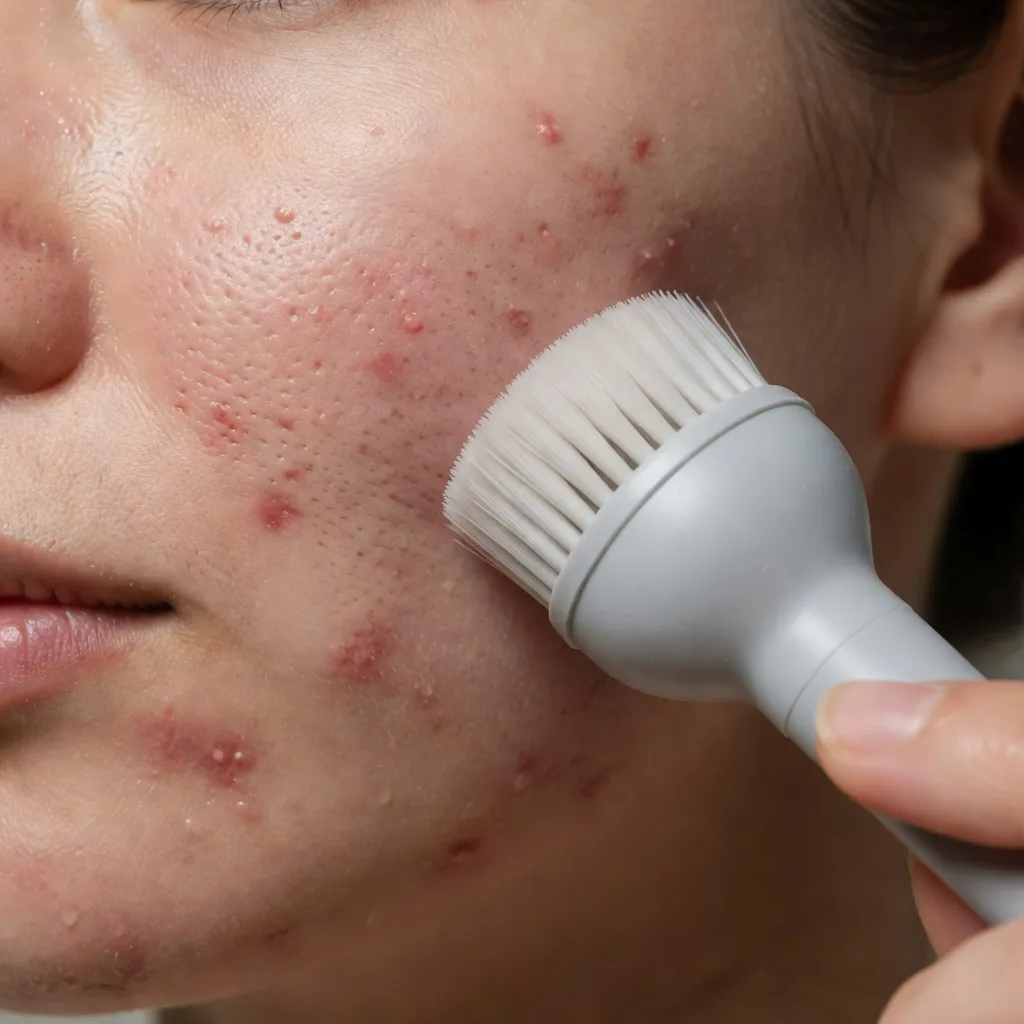
Are Face Brushes Good for Acne?
Are face brushes good for acne, or is the evidence thinner than the marketing suggests?
Part of our guide to at-home facial devices. Start with: 10 Best Facial Tools (2026): LED, Cleansing, Gua Sha and More
The main published study is a single 46-person cohort trial with no brush-free comparison group, so while it reported real improvement over four weeks, it can’t isolate the brush itself as the cause. A separate, well-documented condition called acne mechanica shows friction against skin can independently trigger acne-like breakouts, a plausible risk with vigorous brush use.
Brush hygiene, not the brush concept itself, turns out to be the more concretely documented variable within your control.
This guide covers what the research actually found, the real risk side of the story, and how to introduce a facial brush safely if you want to try one.
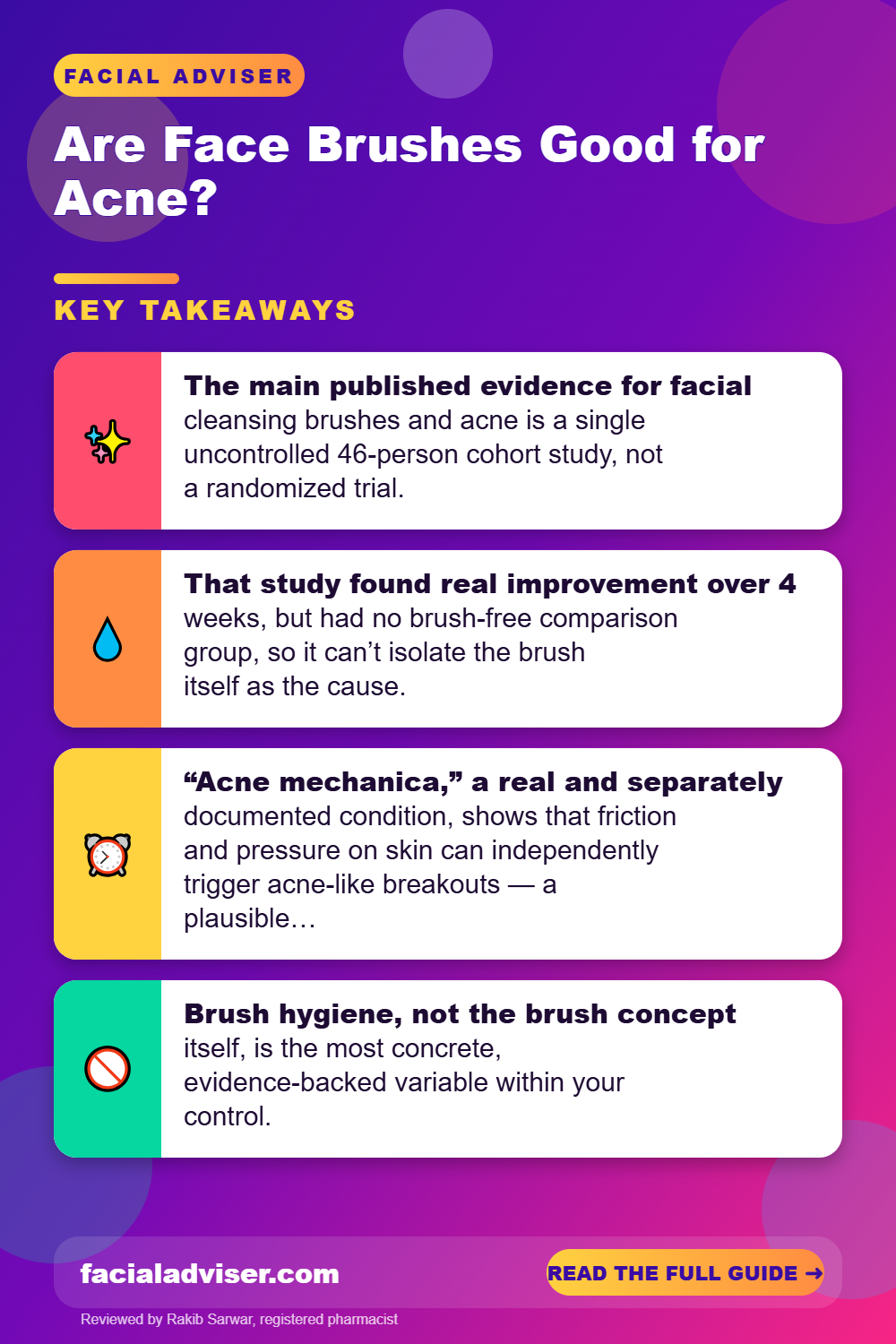
Recommended Facial Cleansing Brushes for Acne-Prone Skin




The Quick Read
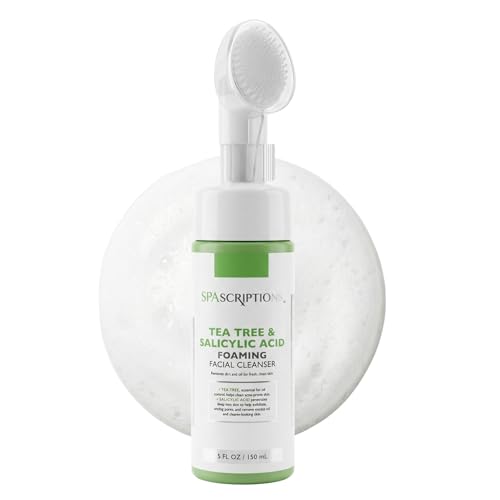
- The main published evidence for facial cleansing brushes and acne is a single uncontrolled 46-person cohort study, not a randomized trial.
- That study found real improvement over 4 weeks, but had no brush-free comparison group, so it can’t isolate the brush itself as the cause.
- “Acne mechanica,” a real and separately documented condition, shows that friction and pressure on skin can independently trigger acne-like breakouts — a plausible risk mechanism for vigorous brush use that hasn’t been directly tested for brushes specifically.
- Brush hygiene, not the brush concept itself, is the most concrete, evidence-backed variable within your control.
Contents at a Glance
- The Question Behind “Are Face Brushes Good for Acne”
- What the Main Published Study Actually Found
- Why an Uncontrolled Study Can’t Settle the Question
- Sonic Brush vs. Manual Cleansing, Side by Side
- The Risk Side: What “Acne Mechanica” Tells Us
- Brush Types and What’s Actually Been Studied
- Do This, Not That
- The Hygiene Risk That’s More Documented Than the Benefit
- A Practical Way to Test One on Your Own Skin
- How to Use a Facial Brush If You Want to Try One
- Is There a Real Test for Whether It’s Working?
- When to See a Dermatologist Instead
- What This Evidence Doesn’t Tell Us
- Frequently Asked Questions
The Question Behind “Are Face Brushes Good for Acne”
Sonic and rotating facial cleansing brushes are marketed as a step up from washing with your hands — deeper cleaning, better makeup removal, smoother texture. For acne-prone skin specifically, the pitch is that mechanical cleansing clears pore-clogging debris more effectively than fingertips alone. Whether that pitch holds up against real acne research is a narrower, more answerable question, and the honest answer is: the evidence is thinner than the marketing suggests, in both directions.
Shopping these picks?
Amazon Prime members get fast, free shipping on eligible items, plus Prime Video, Amazon Music and member deals. New members can start with a free trial.
Start a free Prime trialAged 18 to 24? Prime for Young Adults comes with a longer free trial and a lower price after it.
Affiliate link: we may earn a commission at no extra cost to you.
What the Main Published Study Actually Found
The most directly relevant published research is a cohort study using a facial cleansing brush with an acne-specific brush head, paired with a gel cleanser, in subjects with mild-to-moderate acne and acne-prone skin. Forty-six subjects completed twice-daily use over four weeks. The results were genuinely positive: about 76% of participants (35 of 46) reached “cleared or nearly cleared” status by the study’s acne-severity scale, with statistically significant improvement in both inflammatory and non-inflammatory lesion counts, and no adverse events reported.
Those numbers look encouraging on their face, and there’s no reason to dismiss them outright. But it’s worth reading the study design carefully before treating it as proof the brush itself is what helped.
Why an Uncontrolled Study Can’t Settle the Question
The 46-person study had no comparison arm — there was no group using the same gel cleanser applied by hand, with no brush, to see whether the improvement showed up just the same without the mechanical device. That’s a real, structural limitation: acne can fluctuate on its own over four weeks, a new cleansing routine of any kind (brush or no brush) can plausibly help simply by being more consistent than whatever routine came before it, and device-specific studies like this one are frequently funded or supported by the manufacturer, which isn’t necessarily disclosed in every summary. None of that means the result is false. It means the study can’t tell you whether the brush added anything beyond what a consistent twice-daily cleanse with the same gel, done by hand, would have achieved on its own.
A separate, broader literature review on facial cleansing with sonic brushes, published in the Journal of Cosmetic Dermatology, is the closest thing to a comprehensive look at this category, and even that review is working from a genuinely thin base of device-specific clinical research compared to how widely these products are sold.
Sonic Brush vs. Manual Cleansing, Side by Side
| Factor | Manual (hands/washcloth) | Sonic or rotating brush |
|---|---|---|
| Mechanical exfoliation force | Lower, user-controlled | Higher, device-controlled, less variable by user pressure |
| Direct RCT evidence for acne | Not specifically isolated as its own study arm | One uncontrolled cohort study; no randomized comparison found |
| Hygiene/contamination risk | Lower if hands are washed first | Higher if brush head isn’t cleaned and replaced on schedule |
| Cost | Effectively free | Device plus recurring brush-head replacement cost |
The Risk Side: What “Acne Mechanica” Tells Us
There’s a real, separately documented dermatological condition called acne mechanica — acneiform eruptions caused or worsened by repetitive friction, pressure, heat, or occlusion against the skin, classically described in contexts like chin straps, sports helmets, and tight clothing. It’s a well-established category in the dermatology literature, distinct from ordinary acne vulgaris. No study has directly tested whether a vibrating facial brush produces the same friction-driven irritation in acne-prone skin, but the mechanism is directly analogous: repetitive mechanical friction against skin is an established, real trigger for acneiform breakouts in other contexts, which makes it a biologically plausible risk for vigorous or frequent brush use, even without a brush-specific trial proving it happens.
Brush Types and What’s Actually Been Studied
Not all “face brushes” are the same device. Sonic brushes vibrate at high frequency without full rotation; rotating brushes spin continuously; some devices combine both bristle types and silicone touch-points in a single head. The published cohort study used a specific sonic device with an acne-specific brush head attachment, not a generic rotating brush, and its results shouldn’t be assumed to transfer automatically to every brush on the market — different bristle stiffness, rotation speed, and head design plausibly change how much mechanical force reaches the skin.
| Brush type | Motion | Typical mechanical force | Studied in the acne cohort trial? |
|---|---|---|---|
| Sonic vibrating | High-frequency oscillation, no rotation | Lower, more even | Yes, the device used in the published study |
| Rotating/spinning | Continuous rotation | Higher, more variable by pressure applied | No |
| Silicone touch-point | Sonic pulses through silicone nubs, no bristles | Lowest, gentlest contact | No |
Do This, Not That
Do
- Use a soft brush head and light pressure, letting the device do the work rather than pressing hard.
- Replace brush heads on the manufacturer’s recommended schedule, typically around every three months.
- Let the brush head air-dry fully between uses rather than leaving it damp in an enclosed case.
- Stop using it on any area with an active inflamed or cystic breakout until it calms down.
Don’t
- Don’t use a facial brush daily if your skin is already irritated, dry, or reactive to other products.
- Don’t share a brush head with anyone else.
- Don’t assume a higher price or more attachments means better acne outcomes; the underlying evidence doesn’t distinguish between devices this way.
- Don’t scrub harder or longer expecting faster results; more mechanical force isn’t the studied variable behind the reported improvement.
The Hygiene Risk That’s More Documented Than the Benefit
A Practical Way to Test One on Your Own Skin
How to Use a Facial Brush If You Want to Try One
Start with a soft brush head
Choose the gentlest bristle or silicone option your device offers, especially if you have active acne.Wet your face and apply cleanser first
Don’t dry-brush; use it with a gentle, non-comedogenic cleanser as intended.Use light pressure for under a minute
Let the device’s motion do the work rather than pressing it firmly into the skin.Rinse and dry the brush head fully
Store it somewhere it can air-dry completely rather than in a closed, damp case.Replace the head on schedule
Follow the manufacturer’s replacement interval, typically about every three months, regardless of how it looks.
Is There a Real Test for Whether It’s Working?
There’s no validated at-home diagnostic that isolates a brush’s specific contribution to your skin’s improvement or irritation — acne fluctuates for many reasons at once (hormonal cycles, product changes, stress, weather), so a change after starting a brush can’t be cleanly attributed to the brush itself without a controlled comparison, which isn’t practical to run on your own face. The most honest practical substitute is the gradual-introduction approach above, paired with simply discontinuing use if you notice new or worsening breakouts within the first few weeks.
When to See a Dermatologist Instead
If your acne is moderate to severe, cystic, or leaving scarring, a mechanical cleansing device isn’t likely to meaningfully change that picture, and it’s worth seeing a dermatologist for treatments with a stronger evidence base — topical retinoids, benzoyl peroxide, or oral options where appropriate. A dermatologist can also help you figure out whether what looks like acne is actually a friction-related or cosmetic-related eruption that a brush could be actively contributing to.
What This Evidence Doesn’t Tell Us
To be direct about the gap: there is no randomized controlled trial comparing a facial brush against manual cleansing with the same product for acne outcomes. The one closely relevant study is uncontrolled, short (four weeks), and likely industry-supported. The honest position is that a facial brush’s benefit for acne specifically hasn’t been isolated from the benefit of simply having a more consistent cleansing routine, and the friction-related risk is inferred from a related condition (acne mechanica) rather than measured directly in brush users.
Frequently Asked Questions
Are face brushes good for acne?
The main published evidence is a single uncontrolled cohort study showing improvement, but without a comparison group it can’t prove the brush itself was the cause.
Can a facial brush make acne worse?
No brush-specific trial has confirmed this, but a related, well-documented condition called acne mechanica shows that friction against skin can trigger acne-like breakouts, making it a plausible risk.
How often should I use a facial cleansing brush?
Many dermatologist commentators suggest starting a few times a week rather than twice daily immediately, especially on acne-prone or sensitive skin.
Do facial brushes clean better than washing with hands?
Mechanical brushes apply more consistent force than hands, but no study has directly proven this translates into better acne outcomes specifically.
How often should I replace my brush head?
Most manufacturers recommend roughly every three months, since brush heads are porous and can harbor bacteria if used past that point.
Is the acne improvement in facial brush studies reliable?
The main study reporting improvement had no brush-free comparison group, so the result could partly reflect the cleanser or a more consistent routine rather than the brush itself.
Should I use a facial brush on active cystic acne?
It’s generally best avoided on actively inflamed or cystic areas, since mechanical pressure could aggravate already-inflamed lesions.
What’s the difference between sonic and rotating facial brushes?
Sonic brushes vibrate at high frequency without full rotation, while rotating brushes spin continuously; the published research used a specific sonic device, not a generic rotating one.
Is there a way to test if a facial brush is right for my skin?
There’s no validated at-home test; introducing it gradually and watching for new or worsening breakouts is the most practical approach.
When should I see a dermatologist instead of trying a facial brush?
If your acne is moderate to severe, cystic, or scarring, a dermatologist can offer treatments with a stronger evidence base than a cleansing device.

Written by
Registered pharmacist and founder of Facial Adviser. Rakib's pharmacy training covers how skincare actives work and interact; a later course in cosmetology turned that into a focus on facial treatments and skincare products. He plans, researches and edits every guide on the site and checks health claims against sources such as the American Academy of Dermatology, the FDA and the NIH. He is not a dermatologist; see the Editorial Policy and Medical Disclaimer.
About · Editorial policy · How we choose products · Medical disclaimer · Contact
Keep reading: Cleansing brushes and skin tools
- 10 Best Facial Tools (2026): LED, Cleansing, Gua Sha and More
- How to Use a Comedone Extractor on Your Face
- Is Steaming Your Face Good for Your Skin? Benefits, Myths and Safe Use
- Facial Steamer vs Humidifier: Which Is Better for Dry Skin?
- Best Skin Scrubber: How to Choose an Ultrasonic Spatula for Your Skin
- 10 Best Blackhead Extractor Tools for Beginners (2026): Gentle Picks
- 10 Best Gua Sha Facial Tools (2026): Stone and Steel Picks Compared
- 10 Best LED Light Therapy Masks (2026): Clearer Skin, Softer Lines