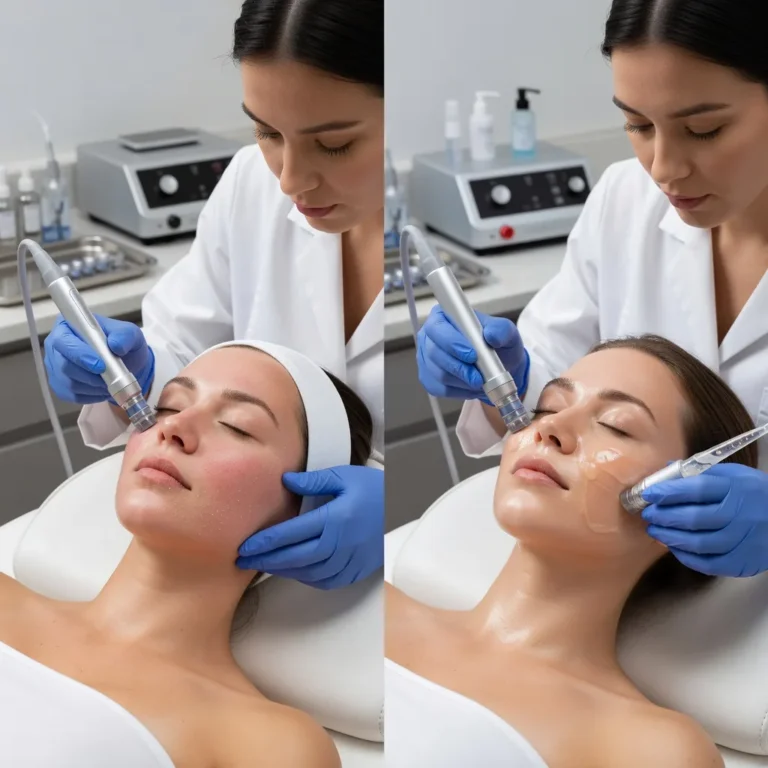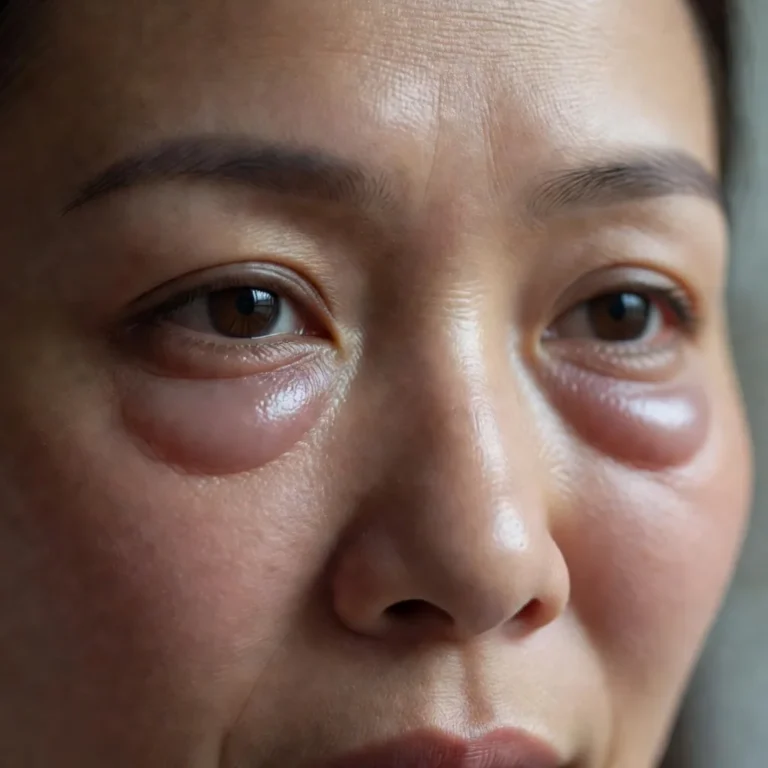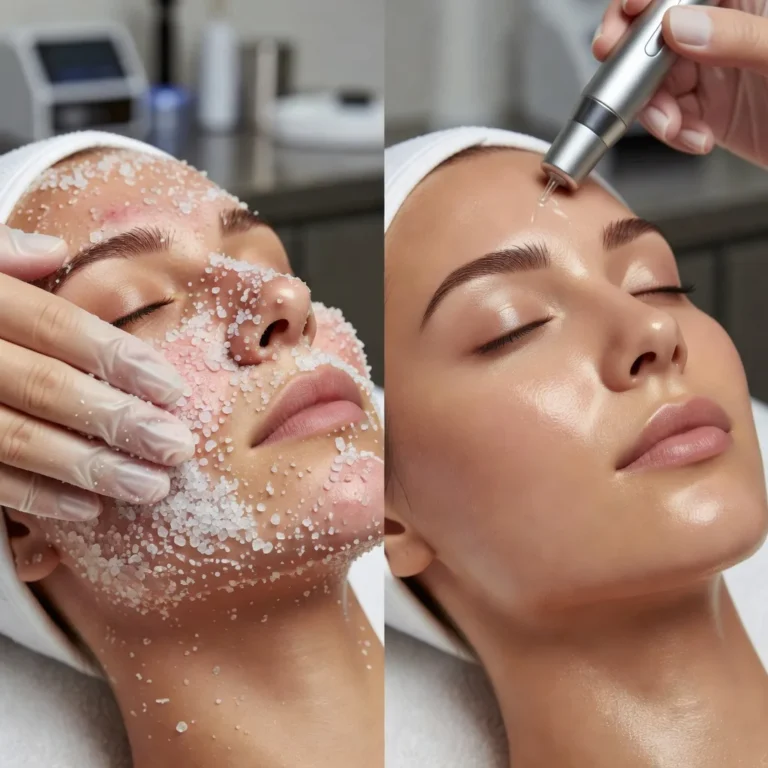
What Is a Cool Beam Facial?
What is a Cool Beam facial, and is it a single, defined treatment you can expect to get consistently, or does the name mean something different depending on where you book it?
Part of our guide to facial treatments. Start with: What Is a Spa Facial?
At least two genuinely unrelated meanings exist. One laser clinic uses “Cool Beam Therapy” as its own branded name for a specific combination of a proprietary fractional laser mode plus a separate cold-laser step, while elsewhere the same phrase is used as a vague, generic descriptor for unspecified laser resurfacing. No federal trademark for “Cool Beam” as a facial treatment was found, which helps explain why the term has drifted into such inconsistent use.
The underlying real technologies — fractional laser resurfacing and low-level laser therapy — each carry genuine, separate human clinical evidence, but conflating the two, or assuming either one just because a provider says “laser,” is exactly the mistake this guide is built to prevent.
This guide walks through both meanings side by side, the real evidence behind each underlying technology, and the specific questions worth asking before booking anything marketed under this name.
Recommended Post-Laser Calming and Recovery Products
![SKIN1004 [Hudson's Pick] Madagascar Centella Ampoule, Korean Face...](https://m.media-amazon.com/images/I/31wXJRmtjAL.jpg)
![SKIN1004 [Hudson's Pick] Centella Ampoule, Korean Face Serum, 3.3...](https://m.media-amazon.com/images/I/31Kxg2RcOgL.jpg)

Here’s What Matters
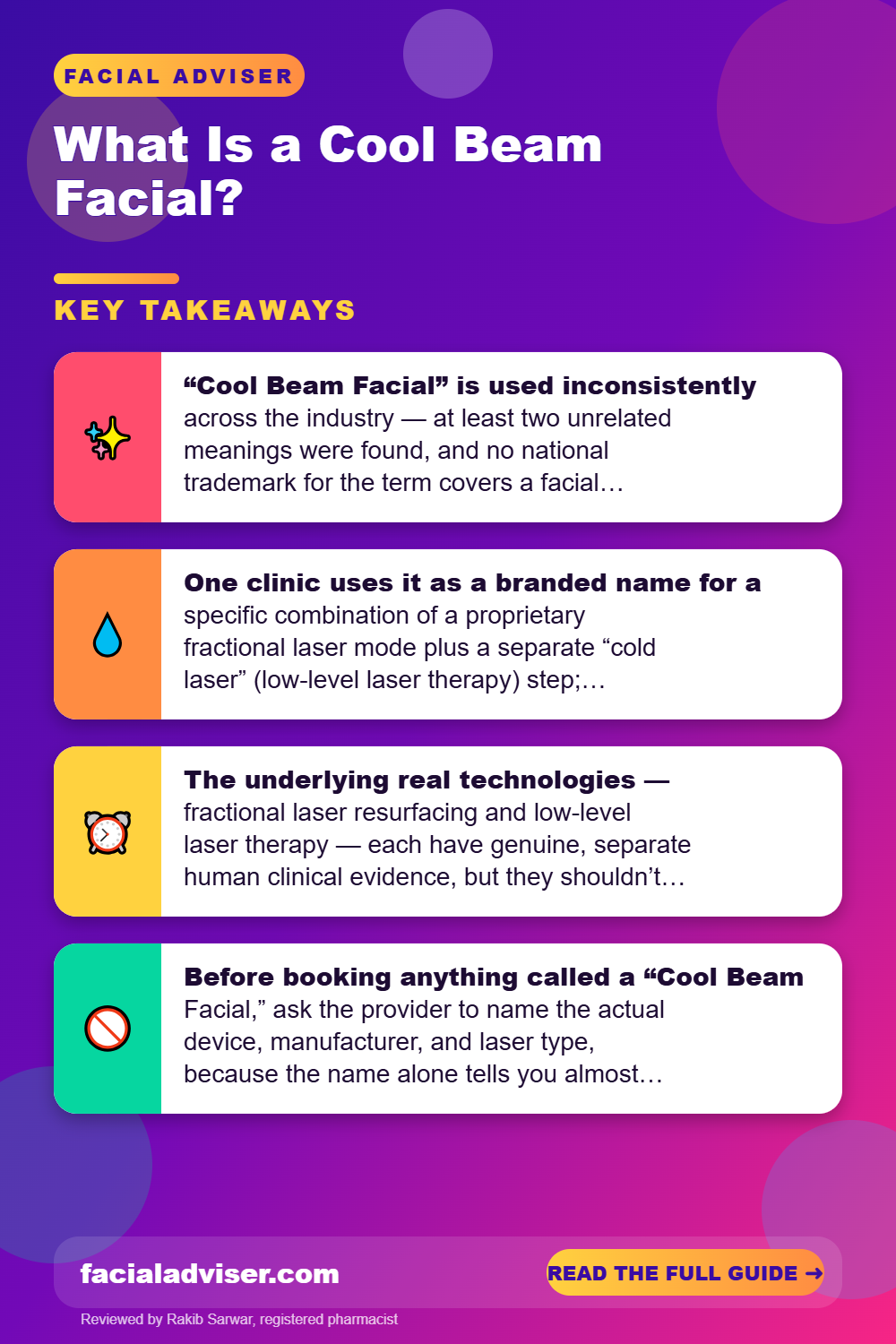
- “Cool Beam Facial” is used inconsistently across the industry — at least two unrelated meanings were found, and no national trademark for the term covers a facial treatment.
- One clinic uses it as a branded name for a specific combination of a proprietary fractional laser mode plus a separate “cold laser” (low-level laser therapy) step; elsewhere it’s used as a generic, vague descriptor for “some kind of laser resurfacing.”
- The underlying real technologies — fractional laser resurfacing and low-level laser therapy — each have genuine, separate human clinical evidence, but they shouldn’t be conflated with each other.
- Before booking anything called a “Cool Beam Facial,” ask the provider to name the actual device, manufacturer, and laser type, because the name alone tells you almost nothing about what’s happening to your skin.
Skip Ahead
- What “Cool Beam Facial” Actually Refers To
- Meaning One: A Clinic’s Branded Combination Protocol
- Meaning Two: A Generic Descriptor
- Why the Trademark Search Came Up Empty
- The Real Evidence Behind Fractional Laser Resurfacing
- The Real Evidence Behind “Cold Laser” Therapy
- Meaning One vs. Meaning Two, Side by Side
- A Related, Better-Evidenced Redness Treatment
- Who Might Actually Benefit
- How to Ask the Right Questions Before Booking
- Do This, Not That
- When to See a Dermatologist Instead
- Frequently Asked Questions
- The Bottom Line
What “Cool Beam Facial” Actually Refers To
Unlike some branded facial names that converge cleanly on one trademark holder, “Cool Beam Facial” turns out to be genuinely inconsistent across the industry. Research for this guide found at least two distinct, unrelated meanings for the phrase, with no consistent device, wavelength, or protocol connecting them. That’s a real, useful finding worth stating plainly before diving into either version: the name itself is not a reliable signal of what treatment you’re actually going to receive.
Shopping these picks?
Amazon Prime members get fast, free shipping on eligible items, plus Prime Video, Amazon Music and member deals. New members can start with a free trial.
Start a free Prime trialAged 18 to 24? Prime for Young Adults comes with a longer free trial and a lower price after it.
Affiliate link: we may earn a commission at no extra cost to you.
Meaning One: A Clinic’s Branded Combination Protocol
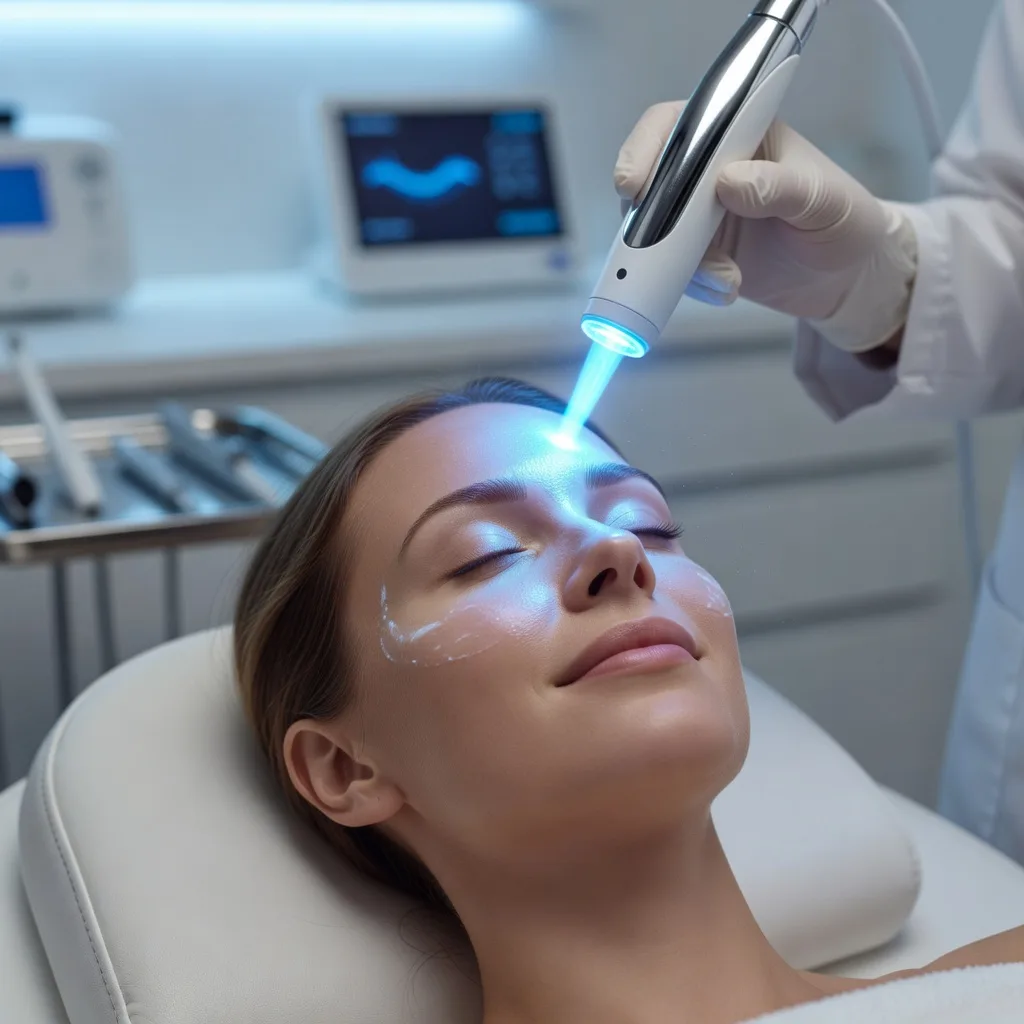
One specific laser clinic markets “Cool Beam Therapy” as a named combination treatment built on two real technologies used together in a single session. The first is a proprietary fractional Er:YAG laser mode from an established manufacturer, which creates a controlled grid of microthermal “damage islands” in the epidermis and dermis to stimulate collagen remodeling, with less downtime than older, fully ablative fractional systems. The second is a separate “cold laser” component — low-level laser therapy — applied afterward specifically to calm inflammation and redness from the fractional pass. The clinic markets this combination for acne-prone, oily, and reactive skin, claiming reduced oil production, fewer breakouts, calmer redness, no real downtime, and monthly maintenance sessions.
Meaning Two: A Generic Descriptor
Separately, other providers use “Cool Beam” as plain, generic marketing language for fractional laser resurfacing in general — thousands of small heated beams stimulating collagen while sparing the surrounding tissue — applied to sun damage, acne scarring, and fine lines, without naming any specific device, wavelength, or manufacturer behind the phrase. A different provider entirely uses the same phrase to describe resurfacing for stretch marks and flank skin — an entirely different anatomical application with no connection to the facial-focused usage. These two generic uses share only the vague marketing phrase, not any consistent underlying technology.
Why the Trademark Search Came Up Empty
A federal trademark search for “Cool Beam” specifically as a facial or skin treatment turned up no registered mark. Related “Cool”-prefixed marks exist for entirely different procedures and devices, but none matched “Cool Beam” for a facial treatment. That absence reinforces the inconsistent-usage finding: without a registered trademark anchoring the term to one company, any provider is free to use “Cool Beam” to describe whatever combination of laser or light-based technology they happen to offer.
The Real Evidence Behind Fractional Laser Resurfacing
Fractional laser resurfacing itself, separate from any specific marketing name attached to it, is a legitimate and well-studied dermatologic technology. Multiple randomized controlled trials exist in the broader fractional-laser literature addressing photoaging and acne scarring, and the microthermal-injury mechanism behind collagen remodeling is well documented in the clinical literature. This is real evidence — the caution here isn’t about the underlying laser technology, it’s about whether a specific “Cool Beam” branded session is actually using a well-evidenced fractional laser device or something else entirely.
The Real Evidence Behind “Cold Laser” Therapy
Low-level laser therapy, sometimes called “cold laser,” has a real, if modest, human evidence base specifically for acne and rosacea. A registered clinical trial (ClinicalTrials.gov NCT01276535) specifically studies low-level laser therapy for acne reduction. Separately, published research comparing red and infrared low-level laser therapy in the treatment of acne vulgaris provides direct human trial evidence for this modality. This evidence is real but modest in scale — worth citing honestly rather than either dismissing “cold laser” entirely or treating it as equivalent to the stronger evidence behind fractional resurfacing.
| Component | Evidence status |
|---|---|
| Fractional laser resurfacing (general) | Well-studied, multiple RCTs in the broader literature for photoaging and acne scarring |
| Low-level laser therapy / “cold laser” | Real but modest human evidence, mainly for acne and general redness calming |
| “Cool Beam” as a combined named protocol | No dedicated trial for the combination itself under that specific name |
Meaning One vs. Meaning Two, Side by Side
| Meaning One: branded combination | Meaning Two: generic descriptor | |
|---|---|---|
| What’s actually used | A named fractional Er:YAG mode plus a separate LLLT step | Unspecified fractional resurfacing, device unnamed |
| Who offers it | One specific laser clinic, under its own branding | Various unrelated providers, phrase used loosely |
| What to ask | Confirm the specific laser mode and the LLLT step separately | Ask the provider to name the actual device and wavelength |
A Related, Better-Evidenced Redness Treatment
For readers specifically chasing redness reduction, a 2022 meta-analysis published in Frontiers in Medicine pooling 10 studies (6 randomized controlled trials, 4 prospective cohorts) compared pulsed dye laser against microsecond 1064-nm Nd:YAG laser for rosacea, finding improvement rates of 68.6 percent and 71.4 percent respectively, with no statistically significant difference between the two approaches. That’s solid, moderate-quality human evidence that laser-based redness treatment genuinely works — but it’s evidence for those two specific, named device categories, not for “cold laser” LLLT or for “Cool Beam” as a marketing term, and the two shouldn’t be conflated just because both get described loosely as “laser.”
Who Might Actually Benefit
Someone with genuinely documented acne-prone, oily, or reactive skin might reasonably benefit from the specific combination protocol described in Meaning One, provided the clinic can confirm the actual device and laser mode being used. Someone chasing general sun damage or fine lines through a generic “Cool Beam” offering elsewhere should treat the name as meaningless on its own and ask the same clarifying questions before assuming any particular outcome.
How to Ask the Right Questions Before Booking
Ask for the manufacturer and model
Request the specific laser manufacturer and model name, not just the marketing term “Cool Beam.”
Confirm ablative vs. non-ablative
Ask whether the device is fractional ablative, fractional non-ablative, or a low-level laser, since these carry different downtime and evidence profiles.
Ask what problem it’s cleared or studied for
Request the specific skin concern the device has documented evidence for, rather than accepting a broad “anti-aging” claim.
Clarify whether it’s a single technology or a combination
If two technologies are being used together, as in the clinic-branded version, ask what each component is doing separately.
Do This, Not That
Do
- Ask the provider to name the specific device, manufacturer, and laser type
- Confirm whether “Cool Beam” refers to one technology or a combination of two
- Compare the actual evidence for that named device against your specific goal
Don’t
- Assume “Cool Beam Facial” means the same thing at every provider
- Book based on the name alone without asking what device is actually used
- Conflate “cold laser” LLLT evidence with fractional laser resurfacing evidence
When to See a Dermatologist Instead
Anyone with active acne requiring more than a superficial approach, a history of keloid scarring, or a skin condition that hasn’t responded to over-the-counter care should see a dermatologist before pursuing any laser-based facial, branded or generic. A dermatologist can identify which specific, well-evidenced laser category is actually appropriate for the underlying condition, rather than relying on whatever a spa happens to market under a catchy name.
Frequently Asked Questions
What is a Cool Beam Facial?
It’s an inconsistently used marketing term — at Vancouver Laser Centre it names a specific combination of a fractional laser mode and a separate cold-laser step, while elsewhere it’s used generically for unspecified laser resurfacing.
Is Cool Beam a registered trademark?
No national trademark for “Cool Beam” as a facial treatment was found in a federal search.
Does the underlying laser technology actually work?
Fractional laser resurfacing has real, well-studied human evidence for photoaging and acne scarring; low-level laser therapy has real but more modest evidence, mainly for acne.
Is “cold laser” the same as fractional laser resurfacing?
No. They’re different technologies with separate evidence bases and shouldn’t be conflated just because both are loosely called “laser.”
How do I know what I’m actually getting?
Ask the provider to name the specific manufacturer, model, and laser type rather than relying on the branded name alone.
Is Cool Beam good for acne-prone skin?
The specific branded combination protocol is marketed for that use, but confirm the actual devices being used, since evidence varies by technology, not by the marketing name.
What’s the strongest evidence for laser-based redness treatment?
A 2022 meta-analysis of pulsed dye laser and Nd:YAG laser for rosacea found improvement rates around 69-71%, though this applies to those specific named devices, not to “cold laser” or “Cool Beam” generically.
Does “no downtime” marketing language mean it’s risk-free?
No. “No downtime” describes recovery time, not safety or efficacy, and should be confirmed against the specific device being used.
Should I get this at a spa or a dermatologist’s office?
For anything beyond mild, superficial concerns, a dermatologist can better match the specific laser category to your actual skin condition.
What’s the single most useful question to ask before booking?
Ask the provider to name the exact device manufacturer and laser type — if they can’t answer, the name “Cool Beam” alone tells you nothing about what’s actually happening to your skin.
The Bottom Line
“Cool Beam Facial” is not one standardized treatment — it’s a branded term used differently by different providers, covering everything from a specific clinic’s combination fractional-laser-plus-cold-laser protocol to a vague generic descriptor for unspecified laser resurfacing elsewhere. The underlying real technologies each have genuine evidence behind them, but that evidence only applies once you know exactly which device and laser type you’re actually getting, which means asking directly rather than trusting the name on the menu.

Written by
Registered pharmacist and founder of Facial Adviser. Rakib's pharmacy training covers how skincare actives work and interact; a later course in cosmetology turned that into a focus on facial treatments and skincare products. He plans, researches and edits every guide on the site and checks health claims against sources such as the American Academy of Dermatology, the FDA and the NIH. He is not a dermatologist; see the Editorial Policy and Medical Disclaimer.
About · Editorial policy · How we choose products · Medical disclaimer · Contact
Keep reading: Spa and brand-name facials
- What Is a Spa Facial?
- What Is Skoah?
- What Is a Perk Facial?
- Dermalogica vs Clarity Facial: Which Suits Acne, Congestion and Dull Skin?
- European Facial vs Basic Facial: Is There Really a Difference?
- Oxygen Facial at Home: Does It Actually Work?
- Facial Types: A Guide to 11 Popular Facials and How to Choose One
- Microneedling Facial: Real Results, Explained