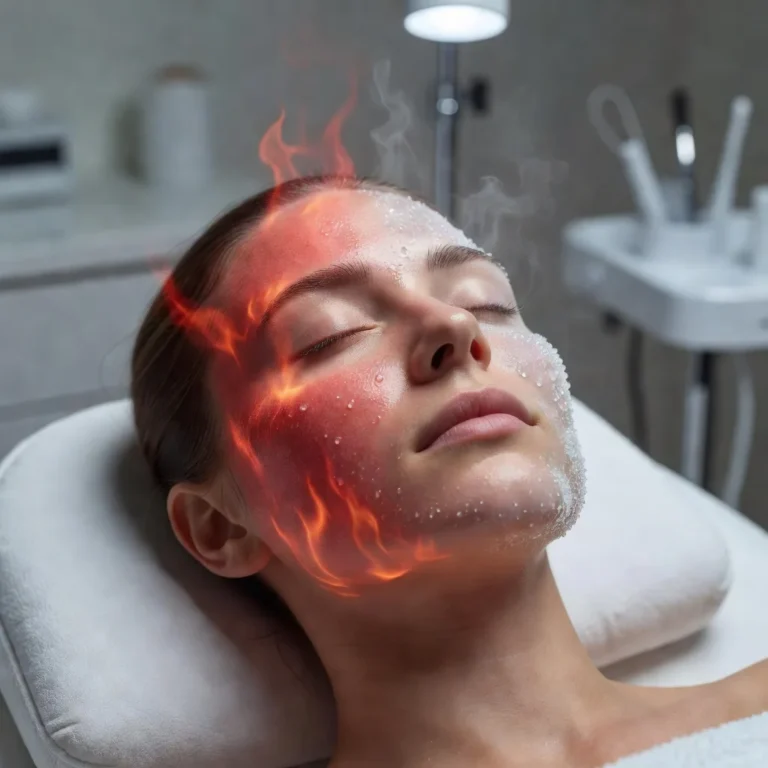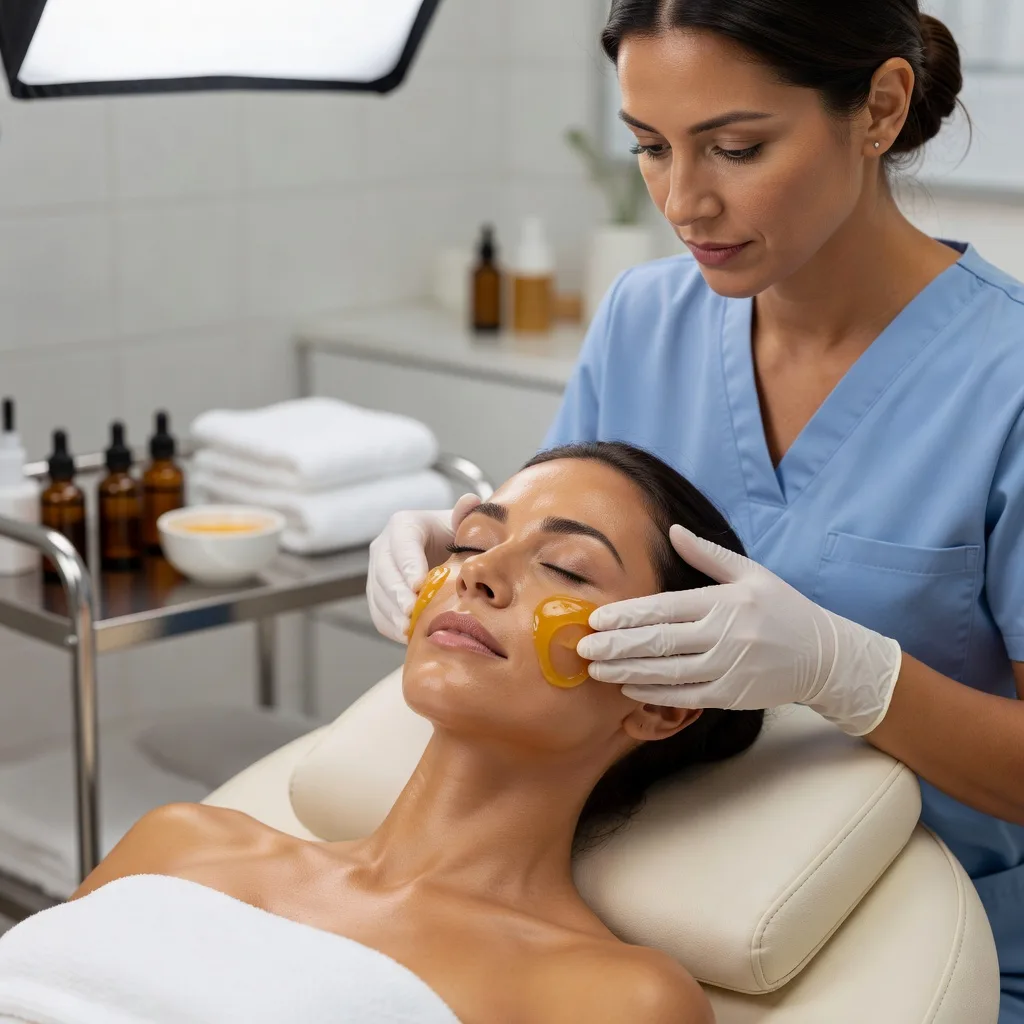
Vitamin C Facial: What the Real Data Shows
A vitamin C facial is built around one of the most genuinely well-studied active ingredients in skincare, though a single session tells only part of the story.
Part of our guide to skincare products. Start with: 10 Best Facial Serums for Aging Skin (2026): Picks by Concern
Only pure L-ascorbic acid in a low-pH formulation absorbs efficiently, and the strongest human trial found just a 13-15% wrinkle improvement after 12 weeks of twice-daily use, not from a single facial. Combining vitamin C with vitamin E and ferulic acid roughly doubles photoprotection compared with vitamin C alone in controlled research.
The long-standing claim that niacinamide cancels out vitamin C traces to outdated lab conditions and is considered a myth today.
This guide covers the real absorption science, the honest timeline for results, and how to tell when your serum has oxidized.
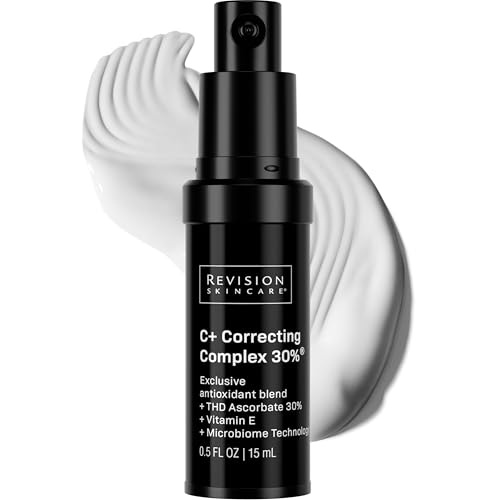
Recommended Vitamin C Serums and Stabilized Formulas

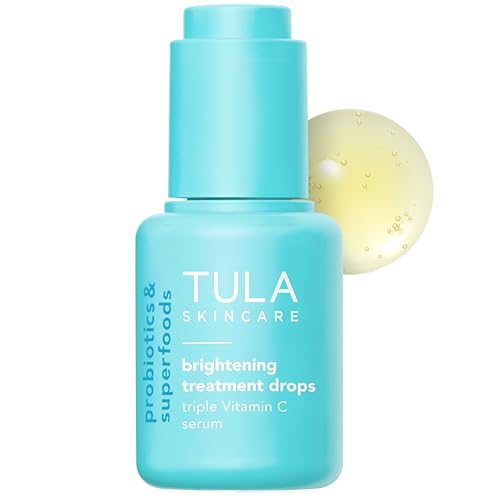
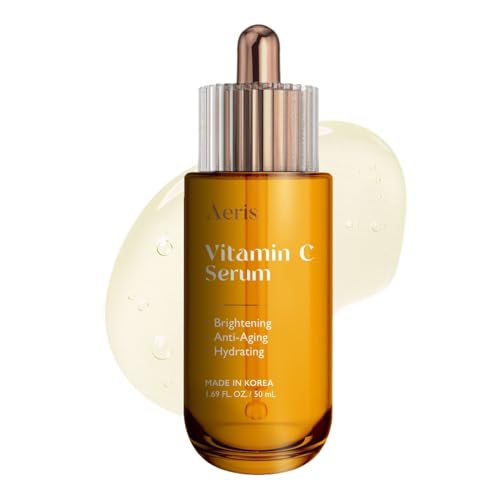
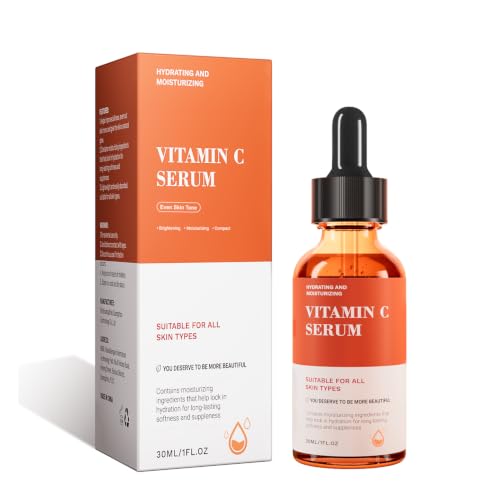
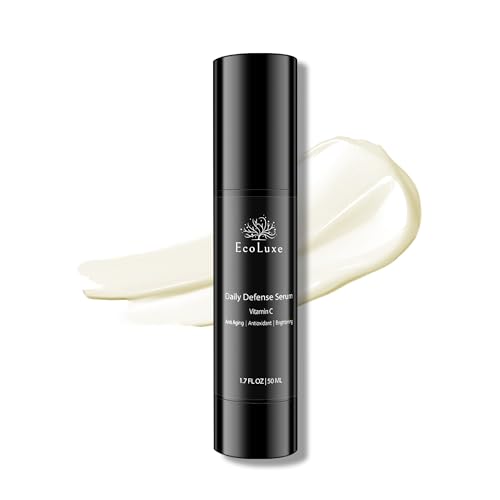
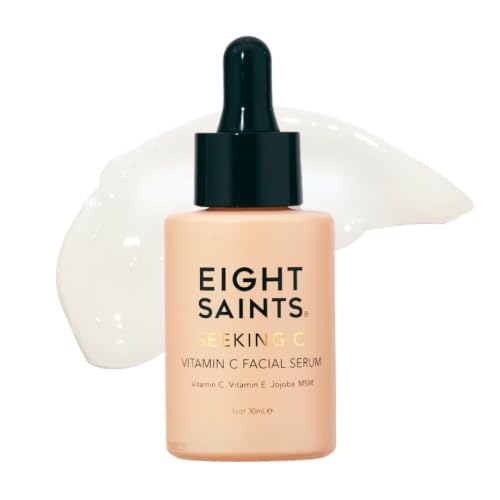
What “Vitamin C” Actually Means on a Skincare Menu
A vitamin C facial almost always means a treatment built around topical L-ascorbic acid — the specific form of vitamin C, not derivative versions like magnesium ascorbyl phosphate or sodium ascorbyl phosphate that some gentler products use instead. That distinction matters more than most marketing lets on. Percutaneous absorption research shows only the pure L-ascorbic acid form crosses the skin barrier efficiently, and only when the formulation’s pH sits below roughly 3.5 — the acid has to stay in its neutral, non-ionized state to actually penetrate the stratum corneum. Push the concentration higher hoping for more benefit and you hit a ceiling around 20%: absorption plateaus there, so anything above it mostly just raises irritation risk without adding meaningful delivery.
Shopping these picks?
Amazon Prime members get fast, free shipping on eligible items, plus Prime Video, Amazon Music and member deals. New members can start with a free trial.
Start a free Prime trialAged 18 to 24? Prime for Young Adults comes with a longer free trial and a lower price after it.
Affiliate link: we may earn a commission at no extra cost to you.
Quick Take
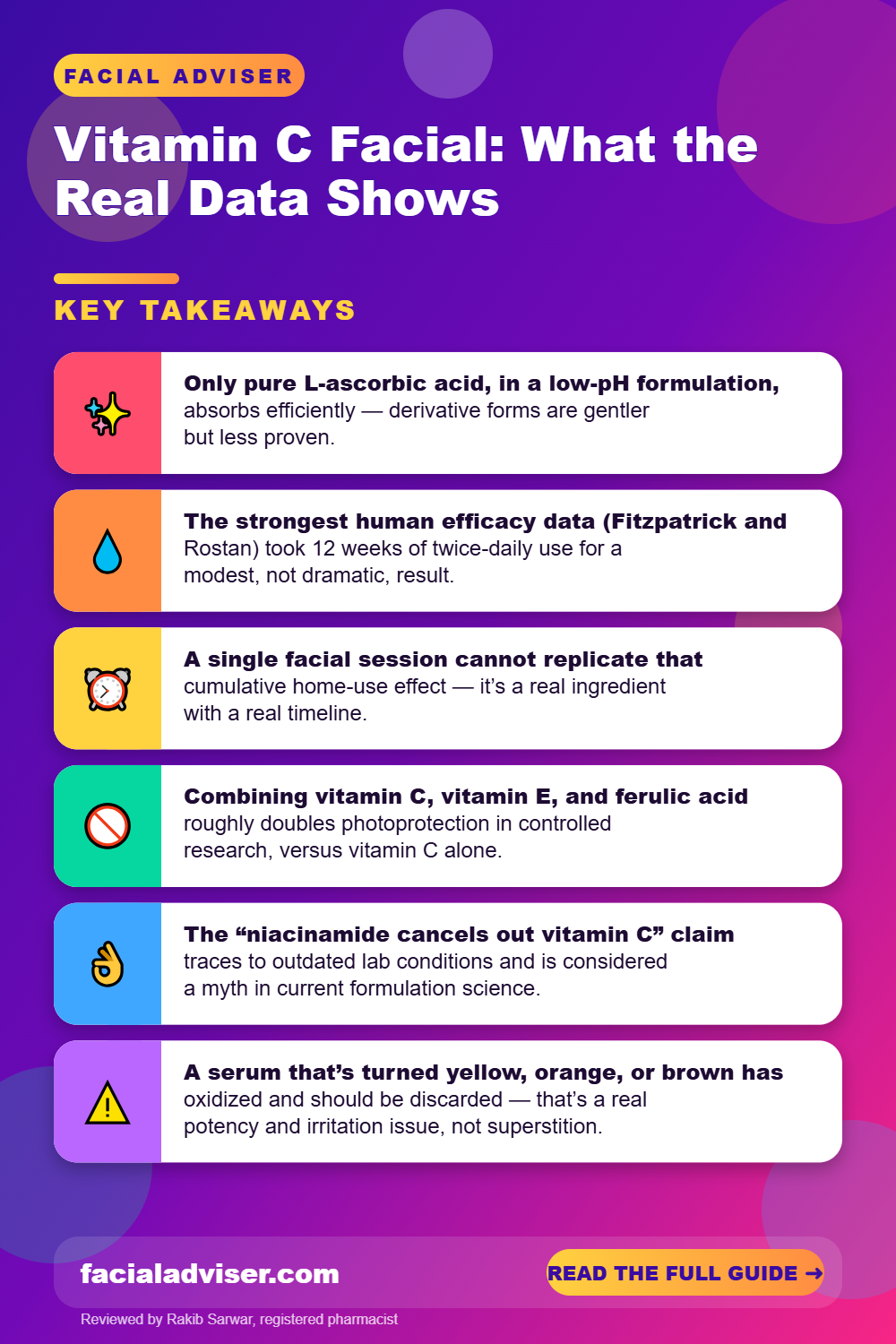
- Only pure L-ascorbic acid, in a low-pH formulation, absorbs efficiently — derivative forms are gentler but less proven.
- The strongest human efficacy data (Fitzpatrick and Rostan) took 12 weeks of twice-daily use for a modest, not dramatic, result.
- A single facial session cannot replicate that cumulative home-use effect — it’s a real ingredient with a real timeline.
- Combining vitamin C, vitamin E, and ferulic acid roughly doubles photoprotection in controlled research, versus vitamin C alone.
- The “niacinamide cancels out vitamin C” claim traces to outdated lab conditions and is considered a myth in current formulation science.
- A serum that’s turned yellow, orange, or brown has oxidized and should be discarded — that’s a real potency and irritation issue, not superstition.
Jump to a Section
- What “Vitamin C” Actually Means on a Skincare Menu
- The Real Photoprotection Data
- What a Single Facial Session Can and Can’t Do
- The 12-Week Wrinkle Study
- Comparing the Different Forms
- Why Serums Turn Orange or Brown
- Combining With Niacinamide, Retinoids, and Sunscreen
- What a Typical Session Looks Like
- Who Tends to Benefit Most
- Who Should Modify or Skip It
- When to See a Dermatologist Instead
- A One-Minute Check Before Booking
- Where the Evidence Runs Out
- Frequently Asked Questions
The Real Photoprotection Data
The most cited research behind vitamin C facial products is a 2005 Journal of Investigative Dermatology study testing a combination of 15% L-ascorbic acid, 1% alpha-tocopherol (vitamin E), and 0.5% ferulic acid, kept at the required low pH, applied once daily for four days on pig skin. Vitamin C plus E alone gave roughly four-fold photoprotection against UV-induced skin damage; ferulic acid alone gave a similar four-fold effect independently. Combined into one formulation, the protection roughly doubled to about eight-fold — a genuine synergy, not just additive stacking, confirmed statistically at multiple UV-exposure levels. At a high UV dose, the combined formulation left skin completely free of a marker of UV-induced DNA damage, while vitamin C and E alone still showed damage in about 15% of samples. This is animal-model data; later human studies confirm real photoprotection but with smaller effect sizes than the pig-skin numbers.
What a Single Facial Session Can and Can’t Do
This is the gap most vitamin C facial marketing glosses over. The photoprotection and collagen-related research behind this ingredient was measured after days to weeks of repeated, daily application — not a single spa visit. A facial that applies a vitamin C serum once, however well-formulated, is giving your skin one exposure to an ingredient whose documented benefits are cumulative. That doesn’t make the session worthless — it can still deliver genuine short-term hydration and a temporary brightening look from the serum and accompanying steps — but it isn’t the mechanism behind the research-backed anti-aging or photoprotective claims.
The 12-Week Wrinkle Study
The most rigorous human trial on this specific question is a double-blind, half-face pilot study of 10 patients with facial photodamage, published in Dermatologic Surgery in 2002. One side of each face received a combined 10% water-soluble and 7% lipid-soluble vitamin C formulation; the other side received a plain vehicle, twice daily for 12 weeks. Fine wrinkling around the mouth improved 15% on the treated side versus 2.5% on the placebo side; cheek skin improved 13% versus 4%. Four of the ten patients specifically noticed improvement only on the treated side; none noticed improvement only on the placebo side. Biopsies from four patients backed this up, showing more new collagen deposition on the treated side. That’s real, statistically significant evidence — but the honest framing is a 13-15% improvement over 12 weeks of twice-daily use, not an “instant glow” a single treatment can deliver.
Comparing the Different Forms
| Form | Absorption | Typical irritation | Evidence quality |
|---|---|---|---|
| L-ascorbic acid (pH ~3.5) | Efficient, best-studied | Higher — low pH is inherently more irritating | Strongest human and animal data |
| Magnesium/sodium ascorbyl phosphate | Less established | Lower, better tolerated on sensitive/rosacea-prone skin | Thinner, less direct evidence |
| Tetrahexyldecyl ascorbate (lipid-soluble) | Different penetration route, used alongside L-ascorbic acid in the 2002 trial | Generally moderate | Supportive data as part of a combined formulation |
Why Serums Turn Orange or Brown
L-ascorbic acid is chemically unstable — exposure to air, light, and heat converts it into dehydroascorbic acid and then further degradation byproducts, and the visible sign is the serum shifting from clear to yellow to orange to brown. This isn’t just a cosmetic annoyance; it’s a real, direct indicator that the active ingredient has broken down and lost potency, and the degradation products can act as mild irritants or pro-oxidants themselves rather than simply doing nothing. Formulation choices that slow this — airless pump packaging, opaque or dark glass, and co-stabilizers like ferulic acid and vitamin E — are legitimate, evidence-linked quality signals, not just marketing flourishes.
Combining With Niacinamide, Retinoids, and Sunscreen
| Paired ingredient | What’s actually established |
|---|---|
| Niacinamide | The old claim that it converts vitamin C to niacin and causes flushing traces to outdated high-heat, high-pH lab conditions, not real-world formulations — widely considered a debunked myth, though no dedicated human trial has directly tested combined-versus-separate use |
| Retinoids | Both can irritate; standard guidance is vitamin C in the morning for photoprotection and a retinoid at night for repair, which also sidesteps a real pH-compatibility mismatch between the two |
| Sunscreen | Vitamin C works by a different mechanism (neutralizing free radicals after UV exposure) than sunscreen’s UV-filtering — it’s a genuine adjunct, never a replacement for daily SPF |
If you’re trying to decide where vitamin C fits among the many other actives on the market, a broader comparison of niacinamide against other common ingredients and a more focused look at what niacinamide itself is actually shown to do are useful companion reading, since the two ingredients are frequently paired in the same routine despite the flushing myth described above. For anyone comparing cream-based versus serum-based vitamin C products specifically, a separate look at vitamin C facial cream benefits covers how that format changes the delivery and stability considerations described earlier in this guide.
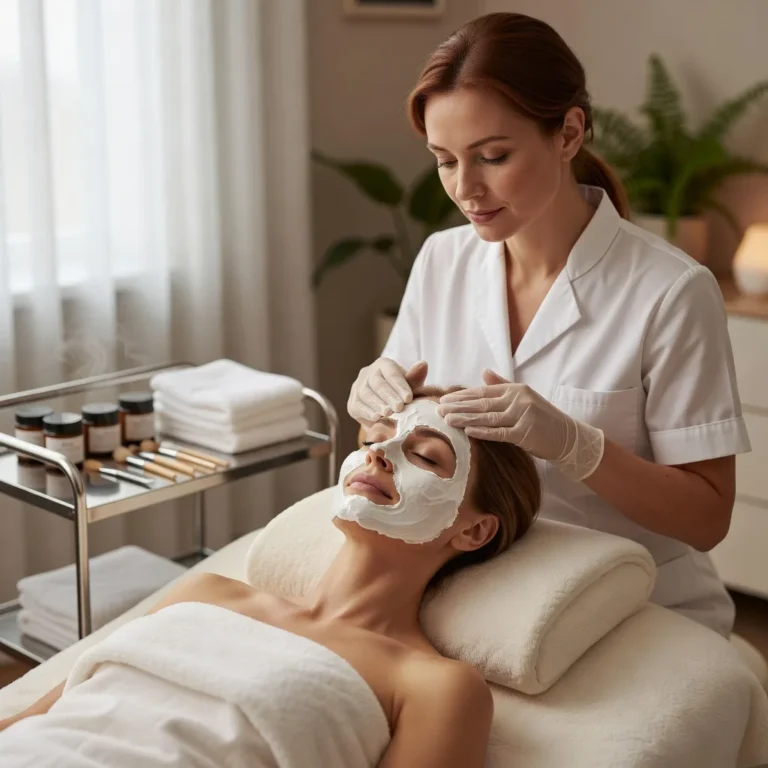
What a Typical Session Looks Like
Cleanse
Skin is cleansed to remove makeup and surface oil before any active ingredient is applied.Gentle exfoliation
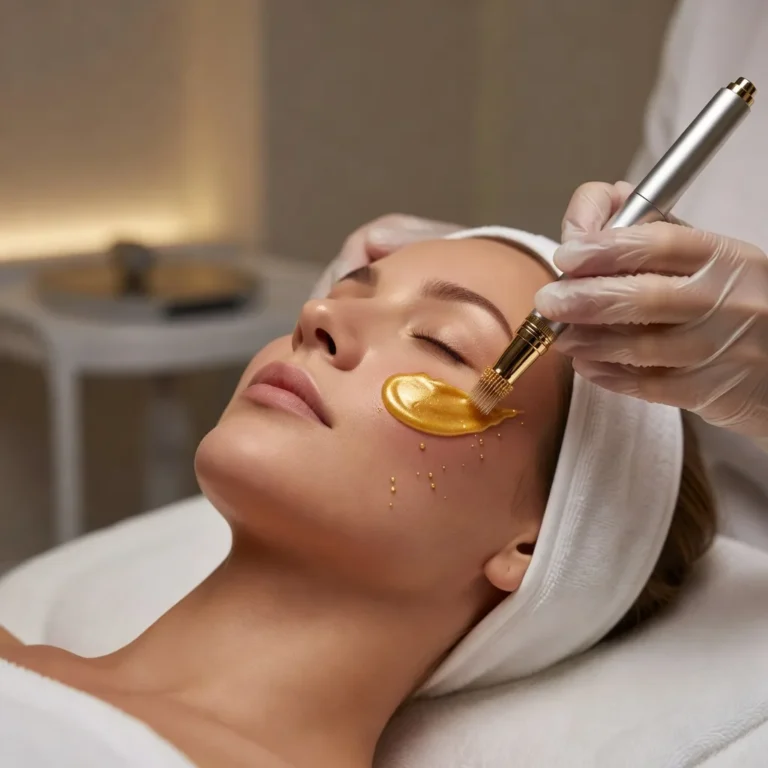
A mild exfoliating step is often used to improve penetration of the serum that follows.Vitamin C serum application
A concentrated L-ascorbic acid or derivative serum is applied, sometimes with light massage.Seal and protect
A moisturizer and, if performed during the day, SPF finish the session to lock in hydration and protect treated skin.
Who Tends to Benefit Most
People with visible sun damage, uneven tone, or early fine lines who are willing to follow up with consistent home use are the best fit for this ingredient — the facial session is a reasonable introduction, but the real benefit comes from the daily-use habit it can help kick off.
Do
- Ask which form of vitamin C is being used and at what pH, since that determines both efficacy and irritation potential
- Pair a vitamin C serum with daily sunscreen rather than treating it as a sunscreen substitute
- Check your at-home serum’s color periodically and discard it once it darkens
Don’t
- Expect a single facial session to replicate a 12-week twice-daily research result
- Assume a higher percentage on the label always means more benefit — absorption plateaus around 20%
- Layer a low-pH vitamin C product directly with a high-pH active without spacing them out if your skin is sensitive
Who Should Modify or Skip It
Because the active, best-studied form requires a low pH to work, it’s inherently more irritating than higher-pH derivative forms. Sensitive or rosacea-prone skin may tolerate a gentler derivative like magnesium ascorbyl phosphate better, even though it has thinner direct evidence behind it than pure L-ascorbic acid. Active sunburn, broken skin, or a recent aggressive peel are also standard reasons to delay this treatment.
When to See a Dermatologist Instead
A vitamin C facial is a cosmetic and preventive skincare step, not a treatment for a diagnosed skin condition. See a board-certified dermatologist if you have persistent redness that doesn’t match typical sensitivity, a lesion that looks unusual, or photodamage severe enough that you’re considering a more intensive intervention.
A One-Minute Check Before Booking
Before your appointment, ask: do you know which form of vitamin C the provider uses and its approximate pH? Do you have rosacea or generally reactive skin? Any sunburn or recent aggressive peel in the last week? A “yes” on sensitivity is worth mentioning up front so the provider can choose a gentler formulation.
Where the Evidence Runs Out
Be clear-eyed about the actual evidence: the ingredient has real, controlled human and animal data behind it, but that data was gathered over days to weeks of repeated application, not a single session. No trial supports an “instant brightening” claim from one facial visit, and the niacinamide-interaction question, while probably a myth, hasn’t been directly tested in a dedicated head-to-head human trial.
Frequently Asked Questions
Can one vitamin C facial noticeably reduce wrinkles?
Not on its own — the strongest human evidence required 12 weeks of twice-daily home use for a modest, measurable improvement, not a single session.
Does niacinamide cancel out vitamin C?
That claim is considered a myth today, traced to outdated high-heat lab conditions rather than real-world formulations, though a dedicated combined-use human trial hasn’t been done.
Why did my vitamin C serum turn orange?
It has oxidized and lost potency — discard it, since the degraded byproducts can also be more irritating than the fresh product.
Is a higher percentage of vitamin C always better?
No — absorption plateaus around 20%, so higher concentrations mainly raise irritation risk without adding meaningful benefit.
Can vitamin C replace my sunscreen?
No — it works through a different, complementary mechanism and should always be paired with, not substituted for, daily SPF.
Is vitamin C safe for sensitive or rosacea-prone skin?
The most effective form requires a low pH that can irritate sensitive skin; a gentler derivative form may be better tolerated, though it’s less studied for efficacy.
Should I use vitamin C in the morning or at night?
Morning is standard, since its main documented benefit is photoprotection alongside sunscreen; many people save retinoids for night instead.
Does combining vitamin C with vitamin E and ferulic acid actually help?
Yes — controlled research shows this combination roughly doubles photoprotection compared with vitamin C and E alone.
What form of vitamin C absorbs best?
Pure L-ascorbic acid at a low pH is the only form shown to absorb efficiently through the skin barrier in percutaneous absorption studies.
Is a vitamin C facial worth getting even if the effect is modest?
It can be a reasonable introduction to a genuinely evidence-backed ingredient, as long as you understand the real benefit comes from consistent home use afterward, not the single session itself.

Written by
Registered pharmacist and founder of Facial Adviser. Rakib's pharmacy training covers how skincare actives work and interact; a later course in cosmetology turned that into a focus on facial treatments and skincare products. He plans, researches and edits every guide on the site and checks health claims against sources such as the American Academy of Dermatology, the FDA and the NIH. He is not a dermatologist; see the Editorial Policy and Medical Disclaimer.
About · Editorial policy · How we choose products · Medical disclaimer · Contact
Keep reading: Serums and actives
- 10 Best Facial Serums for Aging Skin (2026): Picks by Concern
- Collagen Facial Treatment: What the Evidence Shows
- Is Hyaluronic Acid Good for Acne?
- Does Hyaluronic Acid Cause Purging?
- Collagen vs Hyaluronic Acid: What's the Difference?
- Glycolic Acid vs Hyaluronic Acid: Real Differences
- What Does a Facial Toner Do? The Real Answer
- 10 Best Facial Cleansers for Combination Skin (2026): Balanced Picks