Facial Masks Homemade for Acne Scars: Real Answer
Facial masks homemade for acne scars, honey, turmeric, baking soda, and lemon juice among the most common, don’t have controlled clinical evidence behind them, and the underlying skin biology explains why.
Part of our guide to skincare products. Start with: 10 Best Face Masks for Every Skin Type (2026): Clay, Gel and Sheet
Acne scarring is a structural change in dermal collagen, not a surface mark, and a topical mask simply can’t rebuild lost collagen architecture no matter how long it’s left on. A rigorous 68-trial network meta-analysis of real acne-scar treatments didn’t even evaluate home remedies, because that research literature doesn’t exist.
The American Academy of Dermatology’s own clinical guidance lists no DIY or home-remedy category for any scar type, a meaningful absence worth taking seriously rather than working around.
This guide walks through what the real research evaluated, an honest ingredient-by-ingredient reality check, and the treatments that actually have evidence behind them.
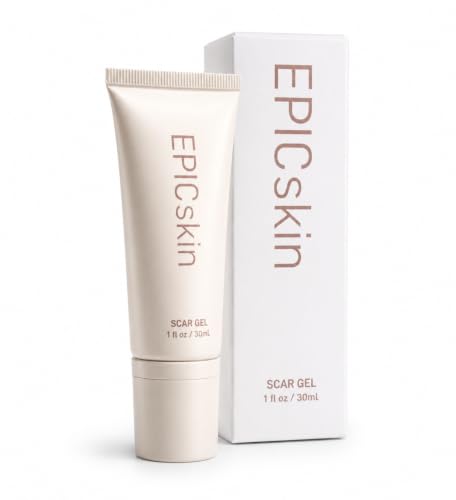
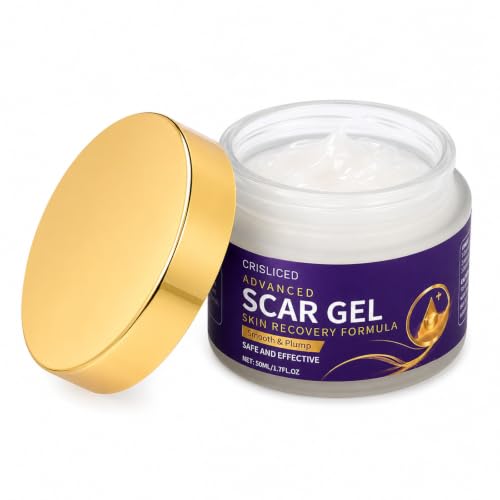
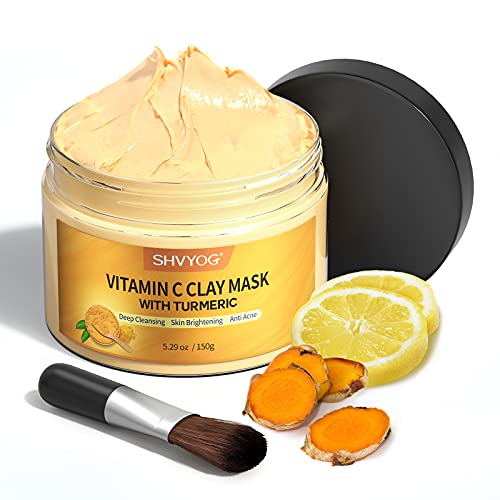
Recommended Homemade Face Mask Ingredients and Scar Care


Key Takeaways
- Acne scarring is structural, actual loss or overproduction of dermal collagen, not surface pigmentation, so a topical mask can’t rebuild it regardless of ingredients or how long it’s applied.
- A network meta-analysis of 68 randomized trials and 4,480 patients ranked real procedures like laser plus PRP as most effective, and didn’t evaluate home remedies at all, because that RCT literature doesn’t exist.
- The AAD’s own clinical guidance by scar type lists no DIY or home remedy category whatsoever, a meaningful absence worth taking seriously.
- The one honey RCT closest to this topic, on surgical scars, found no significant difference in scar scores versus standard care.
- Baking soda’s alkaline pH disrupts your skin’s naturally acidic barrier, a real, documented irritation risk with no acne-scar evidence behind it.
- Lemon juice’s phytophotodermatitis risk, a genuine sun-triggered chemical burn, is a serious, well-documented safety concern for this specific use.
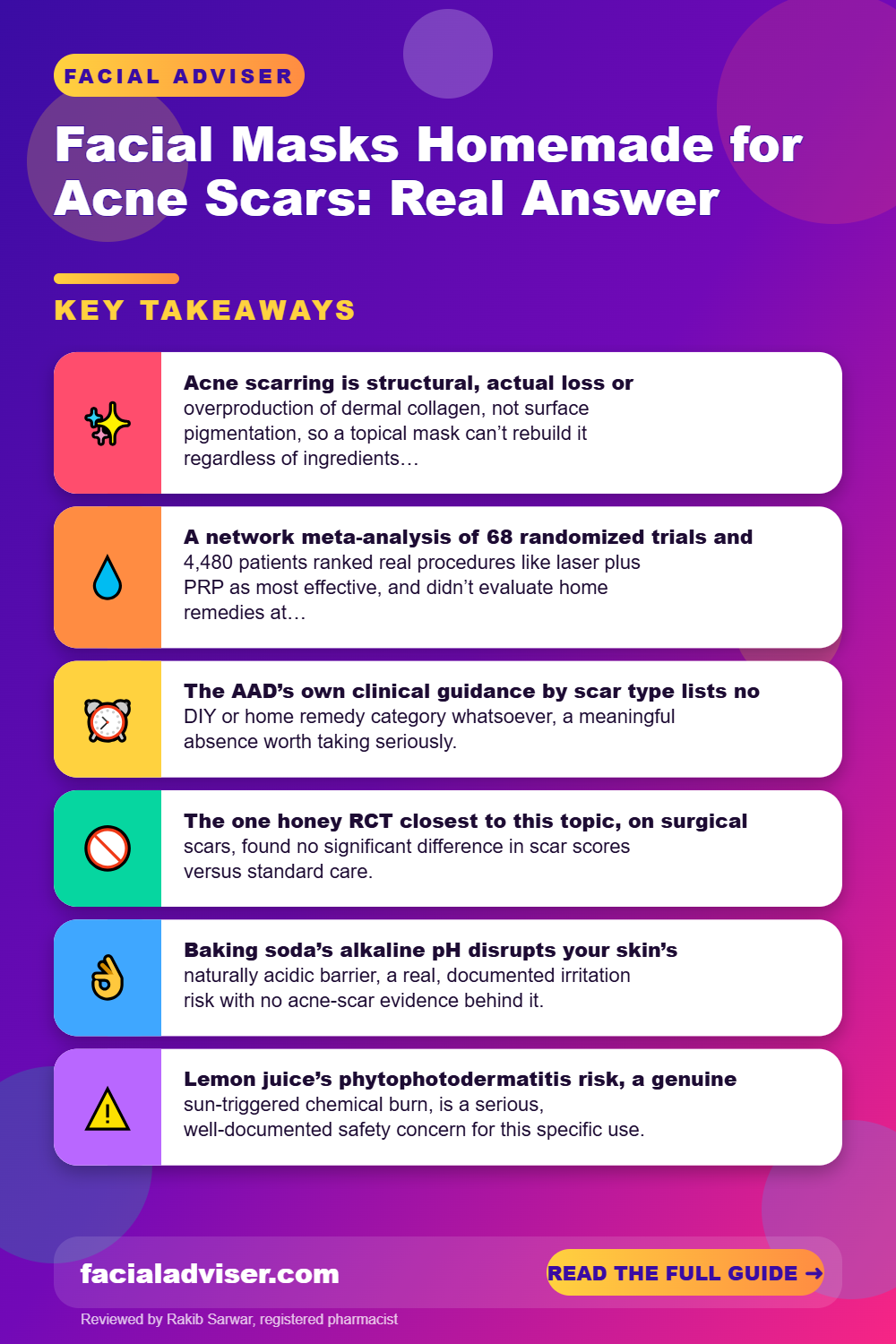
Table of Contents
- Homemade Facial Masks for Acne Scars
- Why Acne Scarring Is a Structural Problem
- What the Real Research Actually Evaluated
- What Dermatology’s Own Guidance Says
- Ingredient-by-Ingredient Reality Check
- Comparing Home Remedies to What Actually Works
- Identifying Your Scar Type at Home
- Do This, Not That
- How to Actually Approach Acne Scarring
- When to See a Dermatologist
- Frequently Asked Questions
- The Bottom Line
Homemade Facial Masks for Acne Scars
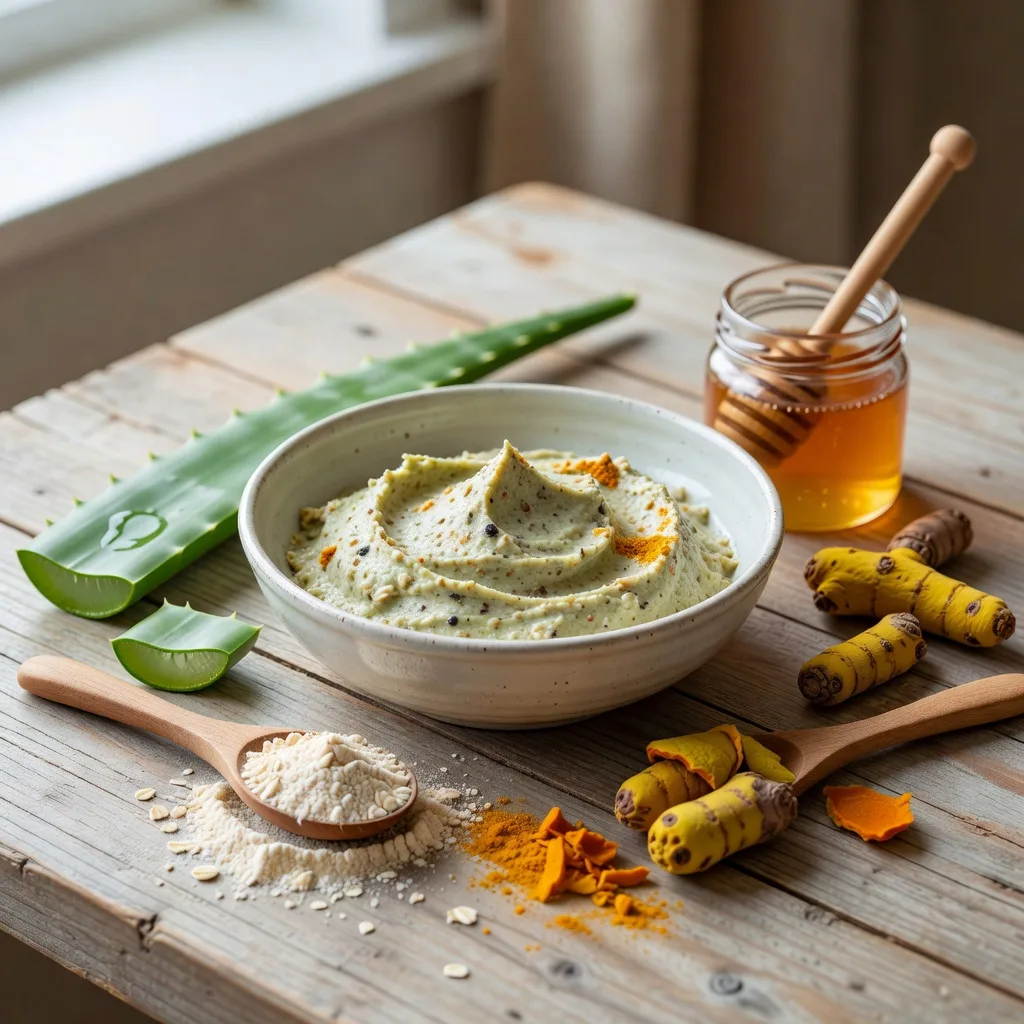
Homemade facial masks, honey, turmeric, baking soda, tomato, egg white, and lemon juice among the most commonly recommended, are not supported by controlled clinical evidence for improving acne scars, and the underlying biology explains why. Acne scarring is a structural change in your skin’s dermal collagen, not a surface-level mark that a topical ingredient can simply lift or fade away.
Shopping these picks?
Amazon Prime members get fast, free shipping on eligible items, plus Prime Video, Amazon Music and member deals. New members can start with a free trial.
Start a free Prime trialAged 18 to 24? Prime for Young Adults comes with a longer free trial and a lower price after it.
Affiliate link: we may earn a commission at no extra cost to you.
This guide walks through that structural reality, the actual research landscape for acne scar treatment, an honest ingredient-by-ingredient look at common DIY recommendations, and what real dermatological treatments look like for readers who want a genuinely effective option.
Why Acne Scarring Is a Structural Problem
Atrophic acne scars, ice pick, boxcar, and rolling types, result from an actual loss of dermal collagen during the inflammatory healing process. Hypertrophic and keloid scars go the other direction, an overproduction of collagen creating raised tissue. Either way, this is a structural, dermal-level change, not surface pigmentation sitting on top of otherwise normal skin.
This distinction matters enormously for what can realistically help. A topical mask applied to the skin’s surface, however long you leave it on, cannot rebuild lost collagen architecture or reverse fibrotic tissue underneath. This isn’t a matter of the right ingredient not having been found yet, it’s a basic tissue-biology limitation that applies to any topical-only approach, homemade or store-bought.
What the Real Research Actually Evaluated
Note: A network meta-analysis covering 68 randomized controlled trials and 4,480 patients evaluated real acne-scar treatments against each other. Laser combined with PRP ranked best for reducing scar severity by ECCA score, laser combined with filler ranked best for scar grading, laser combined with chemical peeling ranked best for patient satisfaction, and microneedling ranked best for pain tolerability.
What’s critically important here is what this rigorous review did not evaluate: home remedies or topical-only treatments, at all. That’s not an oversight, it’s because there isn’t a home-remedy randomized-trial literature to include in the first place. When researchers ask “what actually reduces acne scarring,” the answer comes exclusively from procedural interventions, not kitchen-ingredient masks.
What Dermatology’s Own Guidance Says
The American Academy of Dermatology’s clinical guidance breaks treatment down by scar type. For depressed or atrophic scars: chemical peels, dermal fillers, laser resurfacing, microneedling (safe across all skin tones, often combined with radiofrequency, peeling, or PRP), subcision, dermabrasion, and topical retinoid or salicylic acid for mild cases. For raised or hypertrophic scars: laser therapy, corticosteroid injections, and topical prescription medications. For keloid scars: corticosteroid injections, laser, surgery, and cryotherapy, often combined given how frequently keloids recur.
Notice what’s missing from that entire list: any home or DIY topical remedy category. The AAD simply doesn’t list one, for any scar type. That absence is itself a meaningful, citable finding, not an oversight in their guidance.
Ingredient-by-Ingredient Reality Check
| Ingredient | Claimed benefit | What the evidence actually shows |
|---|---|---|
| Honey | Antibacterial, heals scars | An RCT on surgical scars found no significant score difference vs. standard care; real wound-healing evidence exists but not for reshaping existing scars |
| Turmeric | Anti-inflammatory, fades scars | No controlled evidence for structural scar improvement; causes temporary yellow-orange skin staining |
| Baking soda | Exfoliates, balances skin | No acne-scar evidence; alkaline pH disrupts the skin’s naturally acidic barrier, documented irritation risk |
| Tomato | Vitamin C fades scars | No controlled trial evidence; mild acidity may irritate broken or sensitive skin |
| Egg white | Tightens skin, astringent | No scar-remodeling evidence; temporary tightening is a cosmetic drying sensation, not structural change; raw egg carries salmonella risk |
| Lemon or citrus juice | Lightens scars, astringent | Not evidence-based for structural scars; real phytophotodermatitis risk, a documented sun-triggered chemical burn |
Comparing Home Remedies to What Actually Works
| Approach | Evidence base |
|---|---|
| Microneedling (+/- RF or PRP) | Included in the 68-trial network meta-analysis, AAD-recommended, safe across skin tones |
| Fractional or ablative laser resurfacing | Included in the meta-analysis, AAD-recommended for atrophic and hypertrophic scars |
| Professional chemical peels | AAD-recommended, distinct from any DIY peel or mask |
| Silicone sheeting or gel | Well-established first-line treatment specifically for hypertrophic and keloid scars |
| Homemade masks (honey, turmeric, etc.) | No controlled trial literature evaluating structural scar improvement |
Identifying Your Scar Type at Home
Before any consultation, it genuinely helps to get familiar with the visual differences between scar types, since that vocabulary shapes a more useful conversation with a dermatologist. Ice pick scars are narrow, deep, and pitted, often described as looking like small punctures. Boxcar scars have sharper, more defined edges and a broader, box-like depression. Rolling scars create a wave-like, undulating texture from fibrous bands tethering the skin below. Hypertrophic and keloid scars, by contrast, sit raised above the skin’s surface rather than depressed into it, with keloids specifically extending beyond the original wound’s borders.
This is a self-observation exercise, not a diagnostic one, real classification still benefits from a dermatologist’s exam, particularly since many people have more than one type present at once. But walking into a consultation already able to describe what you’re seeing, depressed versus raised, narrow versus broad, tends to produce a more efficient, more targeted treatment conversation than a general description like “acne scars” on its own.
It’s also worth setting realistic expectations about timeline regardless of which evidence-based treatment you pursue. Even the top-ranked options in the network meta-analysis, laser combined with PRP or filler, typically require multiple sessions spaced weeks apart, with visible improvement building gradually rather than after a single visit. That’s a genuinely different pace than most homemade-mask marketing implies, but it reflects an honest, achievable timeline backed by the same trials that established these treatments as effective in the first place.
Do This, Not That
Do
- Understand that acne scarring is a structural, dermal-level issue, not a surface mark
- Consider AAD-recommended options like microneedling, laser resurfacing, or professional peels
- Use silicone sheeting or gel specifically for hypertrophic or keloid scars, it’s genuinely well-supported
- Apply sunscreen consistently, since sun exposure can worsen the appearance of any scar
- Consult a dermatologist to identify your actual scar type before choosing a treatment
Don’t
- Expect any topical mask, homemade or store-bought, to rebuild lost dermal collagen
- Apply raw lemon or citrus juice to your face before sun exposure
- Use baking soda on your face given its alkaline mismatch with skin’s natural pH
- Apply raw egg white to broken or actively inflamed skin, given salmonella risk
- Assume “natural” ingredients are automatically low-risk for topical use
How to Actually Approach Acne Scarring
Identify your scar type
Ice pick, boxcar, rolling, hypertrophic, and keloid scars each respond differently to treatment.
Consult a dermatologist for an evidence-based plan
They can match your scar type to AAD-recommended options like microneedling, laser, or peels.
Consider a first treatment based on the 68-trial evidence
Laser plus PRP, laser plus filler, or laser plus chemical peeling rank highest across different outcome measures.
Tip: Ask your dermatologist which combination best fits your specific scar type and skin tone.
Use silicone sheeting for raised scars specifically
This is a genuinely well-established, low-risk option for hypertrophic or keloid scarring.
Protect the area with daily sunscreen
This helps prevent scars from becoming more noticeable due to sun-related discoloration.
When to See a Dermatologist
Warning: A lemon or citrus-based mask followed by sun exposure can cause phytophotodermatitis, a genuine chemical burn that can leave discoloration lasting months to years. This isn’t a minor irritation risk, treat it as a real injury mechanism to avoid entirely.
See a dermatologist to get your scar type properly identified and matched to an evidence-based treatment, rather than working through home remedies with no controlled evidence behind them. If you’re also dealing with active acne alongside scarring, our acne facial guide covers evidence-based options for the active breakouts themselves, and our skin peel facial guide covers how professional peels are classified and who can safely perform them.
Frequently Asked Questions
Do homemade facial masks actually improve acne scars?
No, there’s no controlled clinical trial evidence supporting structural improvement from homemade masks.
Why can’t a topical mask fix acne scarring?
Acne scarring is a structural change in dermal collagen, and a surface-level mask can’t rebuild or reverse that.
Does honey help fade acne scars?
An RCT on surgical scars found no significant difference versus standard care, so evidence for scar-fading specifically is lacking.
Is baking soda safe to use on acne scars?
No, its alkaline pH disrupts your skin’s naturally acidic barrier and carries a documented irritation risk.
Is lemon juice safe for treating scars?
No, it carries a real risk of phytophotodermatitis, a sun-triggered chemical burn, when combined with sun exposure.
What actually works for acne scars?
Microneedling, laser resurfacing, professional chemical peels, and silicone sheeting all have real controlled-trial evidence.
Does the AAD recommend any home remedies for acne scars?
No, its clinical guidance lists no DIY or home remedy category for any scar type.
What treatment works best for keloid or hypertrophic scars?
Silicone sheeting or gel is a well-established first-line option, along with corticosteroid injections and laser therapy.
Is egg white safe to use on broken skin?
No, raw egg carries a salmonella risk, and any tightening sensation is cosmetic, not structural scar improvement.
Should I see a dermatologist for acne scars?
Yes, they can identify your specific scar type and match it to an evidence-based treatment plan.
The Bottom Line
Homemade facial masks don’t have controlled evidence behind them for improving acne scars, and the underlying reason is straightforward: acne scarring is a structural change in dermal collagen, not a surface mark a topical ingredient can lift away. A rigorous 68-trial network meta-analysis didn’t even evaluate home remedies, because that research literature doesn’t exist, and the AAD’s own guidance lists no DIY category for any scar type.
Microneedling, laser resurfacing, professional chemical peels, and silicone sheeting all have real evidence behind them, unlike honey, turmeric, baking soda, tomato, egg white, or lemon juice. See a dermatologist to identify your scar type and get matched to a treatment that’s actually been shown to work.

Written by
Registered pharmacist and founder of Facial Adviser. Rakib's pharmacy training covers how skincare actives work and interact; a later course in cosmetology turned that into a focus on facial treatments and skincare products. He plans, researches and edits every guide on the site and checks health claims against sources such as the American Academy of Dermatology, the FDA and the NIH. He is not a dermatologist; see the Editorial Policy and Medical Disclaimer.
About · Editorial policy · How we choose products · Medical disclaimer · Contact
Keep reading: Face masks and exfoliation
- 10 Best Face Masks for Every Skin Type (2026): Clay, Gel and Sheet
- Can Over-Exfoliating Cause Acne?
- What Does Exfoliating Skin Mean?
- What Are the Best Homemade Face Masks?
- Do Gel Face Masks Work?
- 10 Best Facial Exfoliators for Mature Skin (2026): Lactic, AHA and PHA
- What Does a Facial Toner Do? The Real Answer
- 10 Best Facial Cleansers for Combination Skin (2026): Balanced Picks