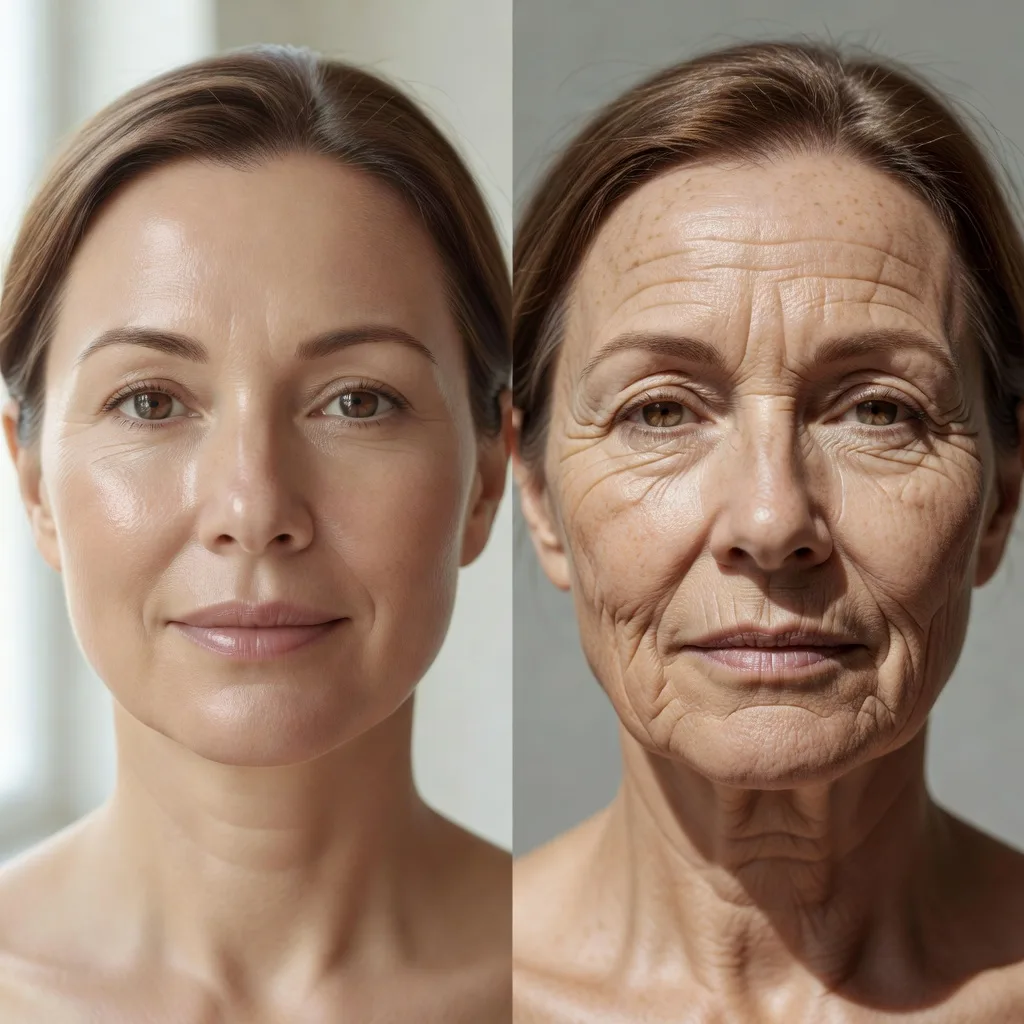
Does Skincare Actually Prevent Aging? What the Evidence Supports
The skincare aisle is full of promises to prevent, stop or reverse ageing. Some of those promises rest on decades of research, while others rest on clever packaging and a single ingredient at a tiny concentration. Knowing the difference saves money and, more importantly, helps you spend your effort on the steps that actually change how your skin ages.
Part of our guide to facial treatments. Start with: What Is the Best Anti-Aging Facial Treatment? Options Compared by Goal
Yes, some skincare genuinely helps prevent visible ageing, but only a few products have strong evidence behind them. Daily broad-spectrum sunscreen is the most effective, because sun exposure causes most of the wrinkles, spots and loss of firmness people associate with age. Retinoids, including prescription tretinoin, over-the-counter adapalene and retinol, have good evidence for improving fine lines and texture and supporting collagen. Vitamin C and moisturisers play supporting roles. No cream can stop natural ageing or reverse deep wrinkles and sagging, and many trendy ingredients have little proof behind them.
In short: sunscreen prevents, retinoids improve, moisturiser supports, and most of the rest is marketing.
The US Food and Drug Administration states that broad-spectrum sunscreens of SPF 15 or higher, used regularly with other sun protection measures, reduce the risk of skin cancer and early skin ageing caused by the sun, which is one of the few anti-aging claims regulators accept.
This guide explains what skincare can and cannot do, which ingredients have real evidence, and how to spot marketing claims that promise more than any cream can deliver.
Shopping these picks?
Amazon Prime members get fast, free shipping on eligible items, plus Prime Video, Amazon Music and member deals. New members can start with a free trial.
Start a free Prime trialAged 18 to 24? Prime for Young Adults comes with a longer free trial and a lower price after it.
Affiliate link: we may earn a commission at no extra cost to you.
Recommended Evidence-Based Anti-Aging Skincare



Key Takeaways
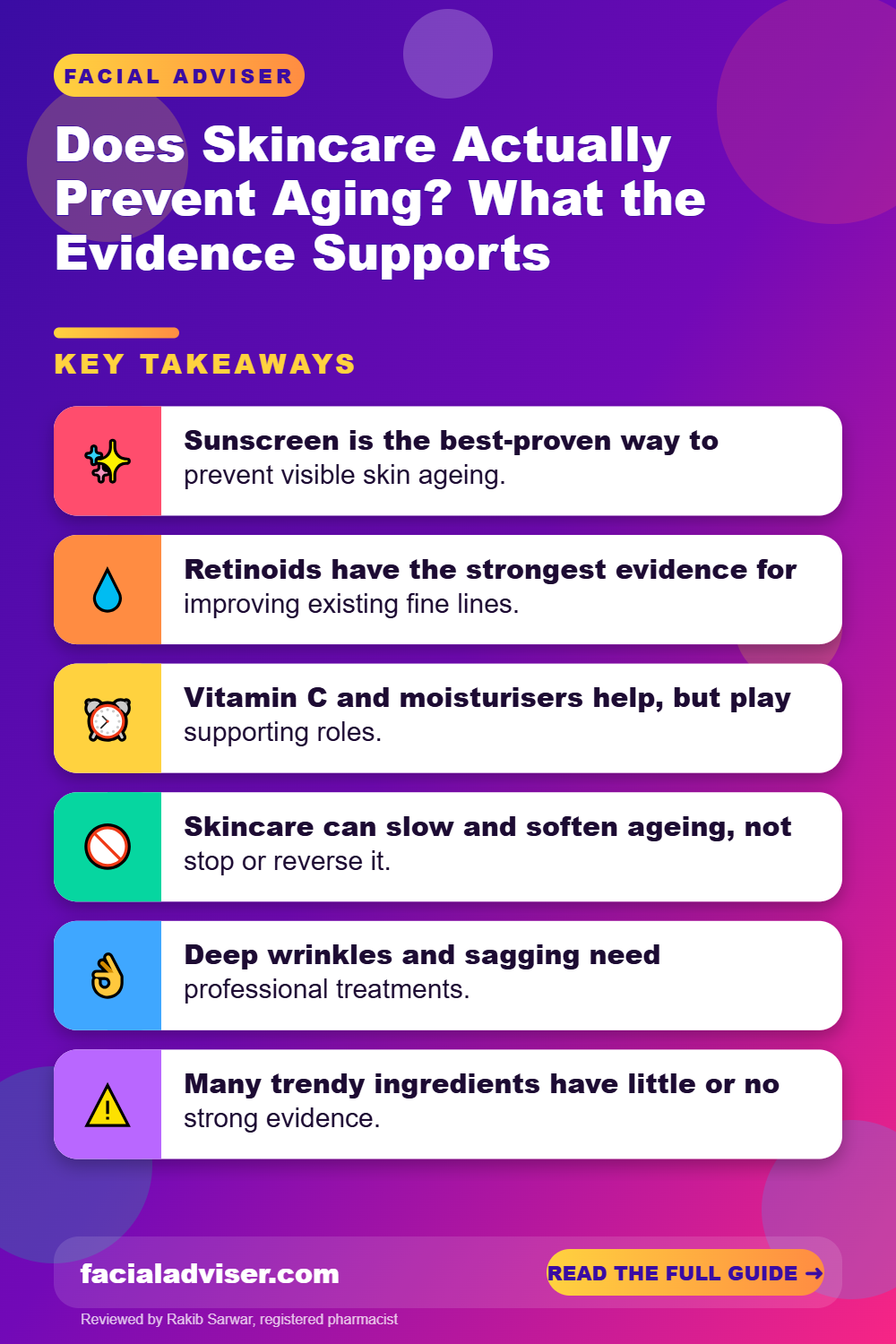
- Sunscreen is the best-proven way to prevent visible skin ageing.
- Retinoids have the strongest evidence for improving existing fine lines.
- Vitamin C and moisturisers help, but play supporting roles.
- Skincare can slow and soften ageing, not stop or reverse it.
- Deep wrinkles and sagging need professional treatments.
- Many trendy ingredients have little or no strong evidence.
- Not smoking and protecting skin from the sun matter as much as any product.
In This Guide
- Why Skin Ages in the First Place
- What the Evidence Actually Supports
- Sunscreen: The Most Effective Anti-Aging Product
- Retinoids: The Best-Proven Repair Ingredient
- Vitamin C and Moisturisers: Useful Supporting Roles
- Can Skincare Reverse Aging?
- What Is Mostly Marketing
- What Prevention Looks Like at Different Ages
- How to Build an Evidence-Based Anti-Aging Routine
- Dos and Don’ts for Preventing Skin Aging
- Honest Limits
- When to See a Dermatologist
- Questions People Ask
- Summing Up
Why Skin Ages in the First Place
Skin ageing has two main drivers. Intrinsic ageing is the natural, genetically programmed process: collagen production slows, skin gets thinner and drier, and fat and bone change shape. Extrinsic ageing comes from outside factors, and the biggest by far is ultraviolet light from the sun. This is often called photoageing.
Compare skin on your inner arm, which rarely sees sun, with skin on the back of your hand or your face. The difference in wrinkles, spots and texture is mostly sun damage. Smoking, pollution, poor sleep and a high-sugar diet add smaller effects.
Skincare mainly works on extrinsic ageing. It can reduce future sun damage and partly repair some of it, but it has little effect on the natural, internal timeline set by your genes.
What the Evidence Actually Supports
Not all anti-aging ingredients are equal. This table ranks common options by the strength of evidence, based on the general weight of dermatology research rather than individual brand claims.
| Ingredient or step | Evidence strength | What it can do |
|---|---|---|
| Broad-spectrum sunscreen | Strong | Prevents photoageing, spots and skin cancer |
| Prescription retinoids (tretinoin) | Strong | Improves fine lines, texture and spots |
| Adapalene and retinol | Moderate | Similar benefits to tretinoin, usually milder and slower |
| Alpha hydroxy acids | Moderate | Smoother texture and brighter tone |
| Vitamin C (L-ascorbic acid) | Moderate | Antioxidant support, brighter tone |
| Niacinamide | Moderate | Evens tone, supports the barrier |
| Moisturisers | Moderate for appearance | Softens the look of fine lines temporarily |
| Peptides | Limited | May modestly improve firmness |
| Plant stem cells, gold, caviar, collagen creams | Weak or none | Mostly marketing |
The pattern is clear: the most proven products are also among the least glamorous. A plain sunscreen and a retinoid will usually outperform an expensive cream built around an exotic ingredient. Evidence strength also depends on concentration and formulation, so an ingredient with good research behind it may still do little in a product that contains only a trace of it or that breaks down in the jar.
Sunscreen: The Most Effective Anti-Aging Product
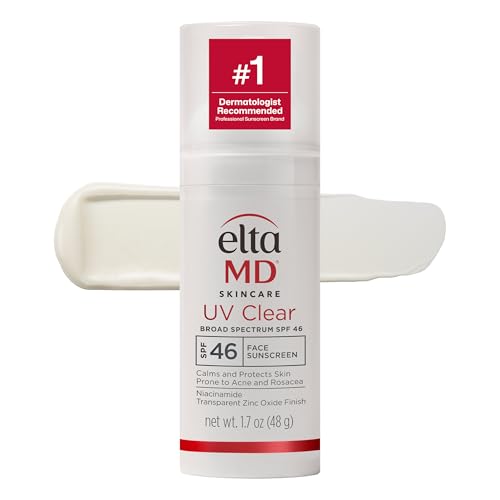
If you only use one anti-aging product, make it sunscreen. Controlled research has found that people who used sunscreen daily showed less visible skin ageing over several years than people who used it only when they chose to. It also lowers the risk of skin cancer, which no other cosmetic can claim.
- Choose broad spectrum, which covers UVA as well as UVB.
- Use SPF 30 or higher, as the AAD recommends.
- Apply about a quarter to a third of a teaspoon for the face.
- Apply every day, including cloudy days and near windows.
- Reapply at least every two hours outdoors, and after sweating or swimming.
The AAD guide on how to apply sunscreen covers the details. The FDA’s page on sunscreen and how to protect your skin explains SPF and broad-spectrum labels.
Retinoids: The Best-Proven Repair Ingredient
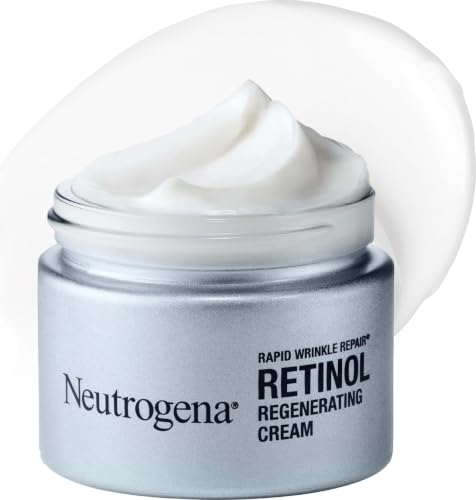
Retinoids are vitamin A derivatives. They speed up cell turnover, help even out pigment and, in the case of prescription tretinoin, have been shown to increase collagen in sun-damaged skin. They are the closest thing skincare has to a genuine repair treatment.
| Retinoid | Availability | Strength and tolerance |
|---|---|---|
| Tretinoin | Prescription | Strongest evidence, most irritation |
| Adapalene 0.1% | Over the counter in many countries | Well studied, often well tolerated |
| Retinol | Over the counter | Converted in skin, milder and slower |
| Retinaldehyde | Over the counter | Between retinol and tretinoin |
| Retinyl esters | Over the counter | Weakest, gentlest |
Results take time: expect at least three to six months before changes in fine lines become visible. Start slowly to limit irritation, use a pea-sized amount at night and pair it with daily sunscreen, because retinoids can make skin more sensitive to the sun. Our guide on how to transition to retinol smoothly explains how to build up use.
Vitamin C and Moisturisers: Useful Supporting Roles
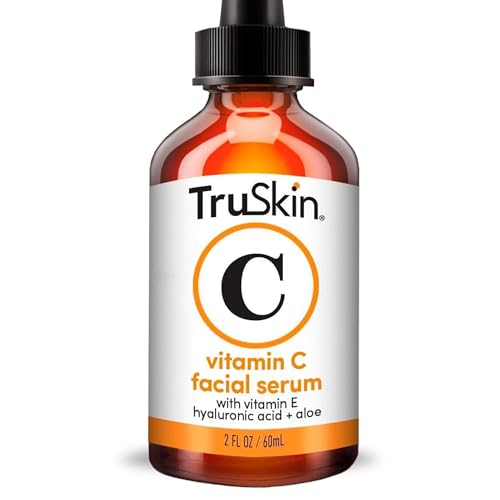
Vitamin C is an antioxidant that helps neutralise some of the free radicals produced by sun and pollution. It works alongside sunscreen, not instead of it, and can brighten dull skin and fade some dark spots over time. It is unstable, so choose products in opaque, airtight packaging and discard any that turn dark orange or brown.
Moisturisers do not stop ageing, but hydrated skin reflects light better and fine lines look softer. A good moisturiser also helps you tolerate retinoids and acids, which indirectly supports the products with stronger evidence. Our guide on the benefits of vitamin C facial cream covers what vitamin C can realistically do.
Can Skincare Reverse Aging?
Partly, and only on the surface. Retinoids and, to a lesser extent, acids and vitamin C can improve fine lines, rough texture, dullness and some sun spots. That is a real, visible improvement, and in some ways it undoes a portion of past sun damage.
What skincare cannot do is reverse the deeper structural changes of ageing. Loss of facial fat, bone changes, deep folds, sagging jowls and heavy eyelids are beyond the reach of any topical product.
- Can improve: fine lines, rough texture, uneven tone, some sun spots, dullness.
- Can partly improve: mild crepiness and early loss of firmness, over many months.
- Cannot reverse: deep wrinkles, sagging, volume loss, jowls, loose neck skin.
- Better options for deeper changes: professional procedures such as lasers, fillers, neuromodulators and radiofrequency, discussed with a dermatologist.
What Is Mostly Marketing
Cosmetic companies can make broad claims such as reduces the look of wrinkles without proving that a product changes skin structure. Here are claims to treat with scepticism:
- Collagen creams: collagen molecules are too large to pass into the skin and rebuild your own collagen.
- Instant lift or instant wrinkle reduction: usually a temporary film or swelling effect that washes off.
- Clinically proven: often a small, short, company-funded study, sometimes measuring only hydration.
- Stem cells, gold, caviar, snail or diamond extracts: little or no strong human evidence for anti-aging.
- Anti-aging for your twenties: prevention mostly means sunscreen, not expensive creams.
- Botox in a jar: no cream relaxes muscles the way injections do.
If you want to support collagen, the proven levers are sun protection, retinoids and not smoking. Our guide on how to stimulate collagen naturally covers the options that have real support.
Be cautious of products or online sellers promising dramatic, permanent results, and never use unregulated skin-lightening or peeling products. Some have been found to contain harmful ingredients such as mercury or very high-strength acids that can burn skin.
What Prevention Looks Like at Different Ages
Prevention does not mean buying more products as you get older. The core steps stay the same for life, and extras are added only when there is a clear reason.
- Teens and early twenties: daily sunscreen, a gentle cleanser and a moisturiser are enough for most people.
- Mid-twenties to thirties: add a retinoid at night if you want to target early fine lines or uneven tone.
- Forties and beyond: keep sunscreen and a retinoid, and choose richer moisturisers if skin becomes drier.
- Menopause: skin often gets drier and thinner, so barrier support and gentle products become more important.
- Any age: shade, hats and sunglasses add protection that no cream can match.
Starting sunscreen early has the largest lifetime effect, because sun damage builds up year after year. Starting a retinoid at forty still helps, so it is never too late to begin the basics.
How to Build an Evidence-Based Anti-Aging Routine
A short routine built on proven steps beats a long one built on trends. These steps suit most adults.
Cleanse gently
Use a mild, fragrance-free cleanser morning and night.
Apply vitamin C in the morning
Optional, a few drops on dry skin before moisturiser.
Moisturise
Use a simple moisturiser suited to your skin type.
Apply sunscreen every morning
Broad-spectrum SPF 30 or higher as the last step, every day.
Use a retinoid at night
Start with adapalene or retinol two or three nights a week.
Increase slowly
Build up to nightly use over several weeks if tolerated.
Stay consistent
Give the routine at least three to six months before judging it.
Spend your budget on the product you use most: sunscreen. A texture you enjoy and will apply generously every day is worth more than an expensive serum.
Dos and Don’ts for Preventing Skin Aging
Try This
- Wear broad-spectrum sunscreen daily
- Use a retinoid consistently at night
- Wear a hat and sunglasses outdoors
- Keep your routine simple
- Stop smoking, or never start
Avoid This
- Buy creams based on exotic ingredients
- Expect a cream to lift sagging skin
- Skip sunscreen on cloudy days
- Stack several strong actives at once
- Use tanning beds
Lifestyle matters too. Not smoking, sleeping enough and a diet rich in fruit and vegetables support healthy skin, although their effects are smaller than consistent sun protection.
Honest Limits
Skincare can slow visible ageing and soften some signs of it, but it cannot stop time. Genetics, hormones and natural changes in fat and bone will shape your face regardless of the products you use. Most studies of anti-aging ingredients are relatively short and measure modest changes, and results vary between people.
The honest message is also the good news: the most effective steps are cheap and simple. Daily sunscreen and a retinoid, used for years rather than weeks, will do more than any trend, and there is no need to buy dozens of products to take good care of your skin. Judge any new product by what it contains and how consistently you will use it, not by the promises on the box.
When to See a Dermatologist
- You want a prescription retinoid such as tretinoin.
- You have stubborn dark spots or melasma.
- You are concerned about sagging, deep lines or volume loss.
- You notice a new, changing or bleeding spot or mole.
- Your skin reacts to most anti-aging products.
This article is for general information and does not replace professional medical advice. See a board-certified dermatologist for skin conditions, suspicious spots and prescription treatments. Avoid retinoids during pregnancy unless your doctor advises otherwise.
Questions People Ask
Does skincare actually prevent aging?
Sunscreen and retinoids can slow visible ageing; most other products have weaker evidence.
What is the most effective anti-aging product?
Daily broad-spectrum sunscreen.
Can skincare reverse aging?
It can improve fine lines and texture, not deep wrinkles or sagging.
Is retinol as good as tretinoin?
It works similarly but is milder and slower.
Is adapalene good for anti-aging?
It has some evidence for improving sun-damaged skin.
Does vitamin C prevent aging?
It helps as an antioxidant alongside sunscreen.
Do collagen creams work?
Not to rebuild collagen; they mainly moisturise.
At what age should I start anti-aging skincare?
Sunscreen from childhood; a retinoid is optional from your mid-twenties or later.
Do expensive creams work better?
Not necessarily; ingredients and consistency matter more than price.
Does moisturiser prevent wrinkles?
It softens the look of fine lines but does not prevent them.
Summing Up
Skincare can genuinely help prevent visible ageing, but the evidence strongly favours a few basics: daily broad-spectrum sunscreen, a retinoid at night and a simple moisturiser, with vitamin C as a helpful extra.
No cream can stop natural ageing or lift sagging skin, so be sceptical of big promises, keep your routine simple and give proven products months, not weeks, to work.

Written by
Registered pharmacist and founder of Facial Adviser. Rakib's pharmacy training covers how skincare actives work and interact; a later course in cosmetology turned that into a focus on facial treatments and skincare products. He plans, researches and edits every guide on the site and checks health claims against sources such as the American Academy of Dermatology, the FDA and the NIH. He is not a dermatologist; see the Editorial Policy and Medical Disclaimer.
About · Editorial policy · How we choose products · Medical disclaimer · Contact
Keep reading: Anti-aging facials and treatments
- What Is the Best Anti-Aging Facial Treatment? Options Compared by Goal
- Face Tools for Anti-Aging: Which Ones Work and What the Evidence Says
- How to Apply Anti-Aging Cream on Face: Order, Amount and Timing
- How to Do an Anti-Aging Facial at Home: Steps, DIY Masks, Oils and Serums
- Best Treatment for Facial Wrinkles: At-Home Creams vs In-Office Options
- 10 Best Facial Products for Aging Skin (2026): Serums, SPF and Creams
- Ultimate Guide Microdermabrasion: What to Know
- Facial vs Chemical Peel: Differences, Results and Which to Choose