
Facial Skin Tightening After Weight Loss: Realistic Options That Help
Losing a significant amount of weight changes more than your waistline. Many people notice that their face looks thinner, more tired or older, with softer jowls, deeper folds around the mouth and looser skin under the chin. This is sometimes called weight-loss face, and it is a normal result of losing fat that used to fill out the skin.
Part of our guide to facial treatments. Start with: What Is the Best Anti-Aging Facial Treatment? Options Compared by Goal
Facial skin can tighten a little on its own after weight loss, especially in younger people and when weight is lost gradually, but it rarely returns fully to how it was. You can support firmer-looking skin by losing weight at a steady pace, eating enough protein, not smoking, wearing sunscreen every day and using a retinoid, which has the strongest evidence among skincare ingredients for improving skin texture over months. Peptide and vitamin C products may help modestly. For more noticeable tightening, professional treatments such as radiofrequency and focused ultrasound can give mild to moderate improvement, while significant sagging usually needs fillers or surgery such as a facelift or neck lift.
In short: skincare and healthy habits help skin quality, energy-based treatments give modest tightening, and only surgery removes truly excess skin.
The FDA notes that broad-spectrum sunscreen helps reduce the risk of early skin ageing caused by the sun, which matters because UV damage breaks down the collagen that keeps skin firm.
This guide sets realistic expectations and walks through the habits, products and professional treatments that can help.
Shopping these picks?
Amazon Prime members get fast, free shipping on eligible items, plus Prime Video, Amazon Music and member deals. New members can start with a free trial.
Start a free Prime trialAged 18 to 24? Prime for Young Adults comes with a longer free trial and a lower price after it.
Affiliate link: we may earn a commission at no extra cost to you.
Recommended Products to Support Firmer Facial Skin

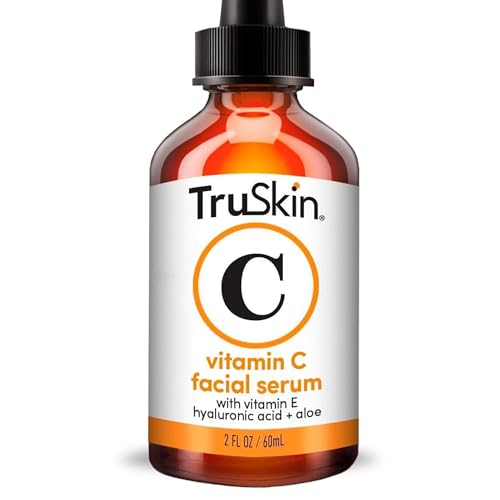
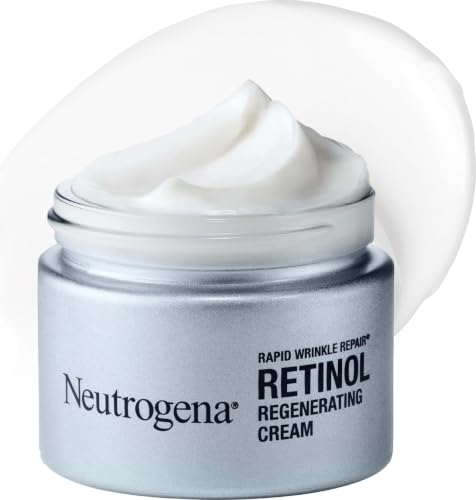
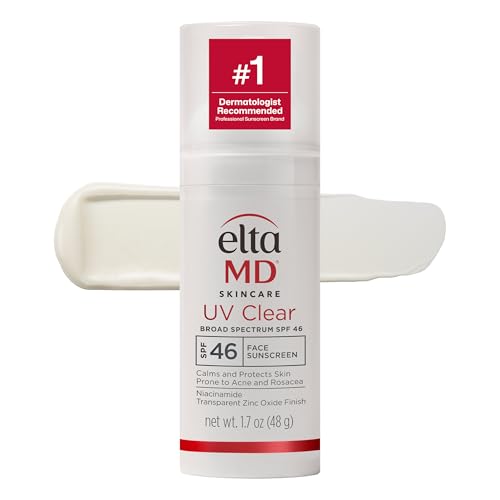


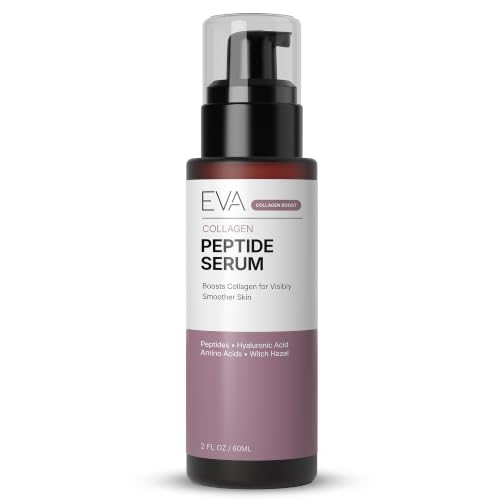
What to Know First
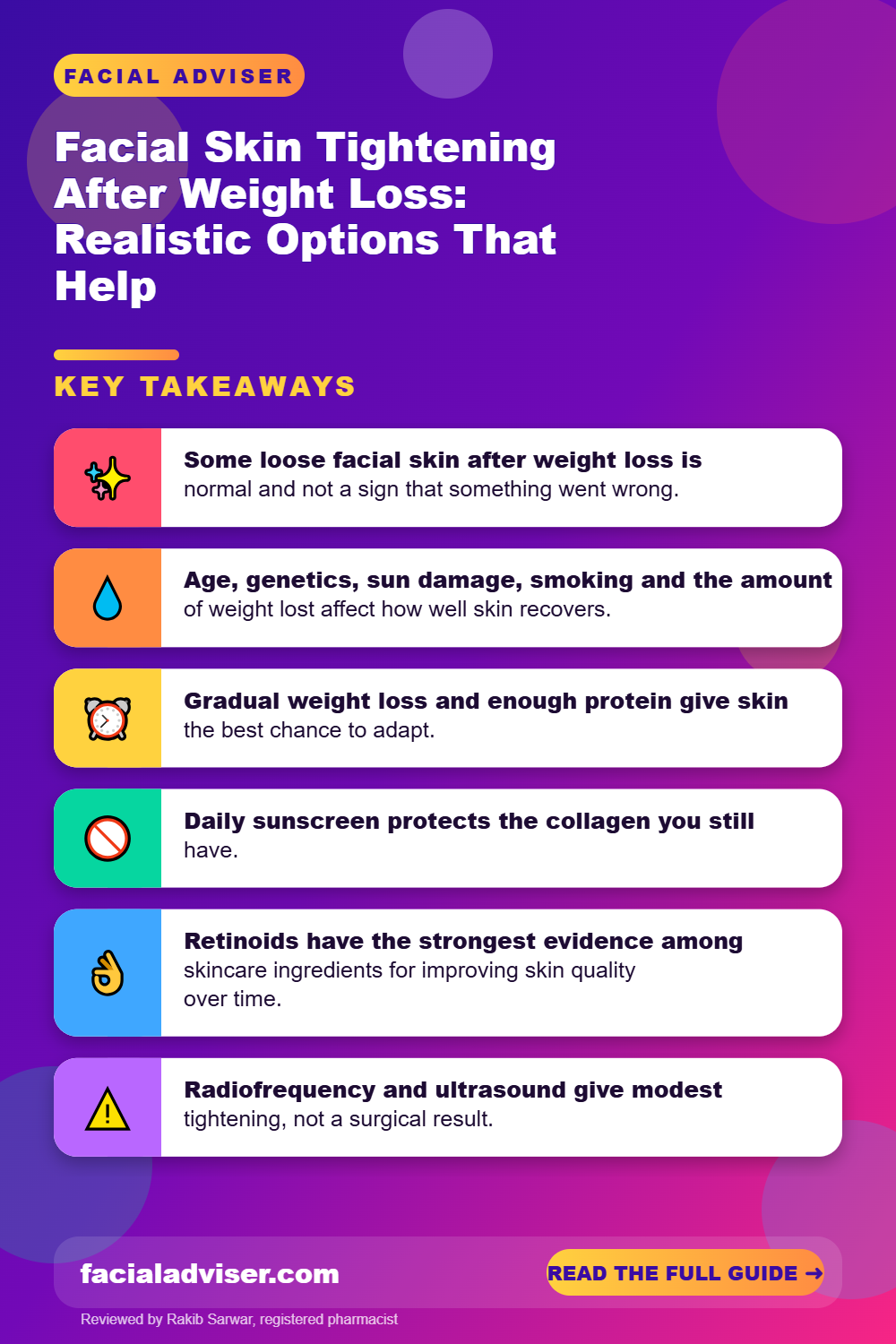
- Some loose facial skin after weight loss is normal and not a sign that something went wrong.
- Age, genetics, sun damage, smoking and the amount of weight lost affect how well skin recovers.
- Gradual weight loss and enough protein give skin the best chance to adapt.
- Daily sunscreen protects the collagen you still have.
- Retinoids have the strongest evidence among skincare ingredients for improving skin quality over time.
- Radiofrequency and ultrasound give modest tightening, not a surgical result.
- Significant excess skin can only be removed surgically.
What This Covers
- Why Facial Skin Loosens After Weight Loss
- What Affects How Much Your Skin Bounces Back
- Realistic Expectations
- Lose Weight Gradually and Eat Enough Protein
- Sunscreen: Protect the Collagen You Have
- Skincare Ingredients: What Has Evidence
- How to Support Firmer Facial Skin After Weight Loss
- At-Home Devices: Microcurrent and Others
- Professional Options: RF, Ultrasound, Fillers and Surgery
- Habits That Help and Habits That Hurt
- Honest Limits
- When to See a Dermatologist
- Frequently Asked Questions
- Final Word
Why Facial Skin Loosens After Weight Loss
Your face contains several fat pads that give it volume and support the skin from beneath. When you lose weight, these pads shrink along with fat elsewhere. The skin that was stretched over them does not always shrink back at the same pace, so it can look looser, and the face can look hollower around the cheeks and temples.
Skin elasticity depends on collagen and elastin fibres in the dermis. Both decline with age and are damaged by UV exposure and smoking. If skin has been stretched for a long time, or if you are older, it has less ability to recoil. That is why two people who lose the same amount of weight can see very different results in their faces.
What Affects How Much Your Skin Bounces Back
Some factors are within your control, and some are not.
| Factor | Effect on skin recovery | Can you change it? |
|---|---|---|
| Age | Younger skin has more collagen and recoils better | No |
| Amount of weight lost | Larger losses leave more excess skin | Partly |
| Speed of weight loss | Very rapid loss gives skin less time to adapt | Yes |
| Sun damage | UV breaks down collagen and elastin | Yes, from now on |
| Smoking | Damages collagen and slows repair | Yes |
| Genetics | Some people naturally have firmer skin | No |
| Nutrition | Low protein and poor diet can affect skin quality | Yes |
None of these guarantees a result either way, but improving the factors you can change gives your skin the best chance.
Realistic Expectations
It is worth being clear from the start about what is possible. Mild laxity often improves over the first year or so after weight stabilises, as skin adapts and you build healthy habits. Skincare can improve texture, fine lines and radiance, and it can make skin look firmer, but it cannot pull loose skin back into place or restore lost facial volume.
Some of the change people call loose skin is actually lost volume. When cheeks and temples lose fat, the face can look older even if the skin itself is fairly firm. Volume loss and skin laxity are treated differently, so a professional assessment helps identify which is the main issue.
Lose Weight Gradually and Eat Enough Protein
Steady weight loss gives skin more time to adjust than very fast loss. Crash diets can also leave you short of the protein, vitamins and minerals your skin needs to maintain itself. If you are using weight-loss medicines or planning surgery, follow the advice of the clinician managing your care on pace and nutrition.
- Include a source of protein, such as fish, eggs, dairy, pulses, tofu or lean meat, at each meal.
- Eat plenty of fruit and vegetables for vitamin C and other nutrients involved in collagen production.
- Stay hydrated; dehydration makes skin look duller and lines more visible.
- Build or maintain muscle with strength training, which helps overall body shape.
- Stop smoking, which is one of the most damaging habits for skin firmness.
Our guide on how to stimulate collagen naturally covers diet and lifestyle habits in more detail.
Sunscreen: Protect the Collagen You Have
Daily sun protection is not glamorous, but it is one of the most important things you can do. Ultraviolet light breaks down collagen and elastin and speeds up sagging, lines and uneven tone. Use a broad-spectrum sunscreen of SPF 30 or higher on the face and neck every day, including cloudy days, and reapply when outdoors.
Apply enough to cover the whole face, neck and ears. The AAD guidance on applying sunscreen explains how much to use and how often.
Skincare Ingredients: What Has Evidence
Skincare cannot remove excess skin, but some ingredients can improve skin quality so that it looks smoother and firmer.
| Ingredient | What it may do | Realistic expectation |
|---|---|---|
| Retinoids (retinol, prescription tretinoin) | Encourage cell turnover and collagen over months | Best evidence; gradual improvement in texture and fine lines |
| Peptides | May support skin repair signals | Modest, variable results |
| Vitamin C | Antioxidant that supports collagen formation | Mild improvement in tone and radiance |
| Moisturisers with humectants | Hydrate and plump the surface | Temporary smoothing |
| Firming creams | Often contain film-formers for a tight feel | Short-lived cosmetic effect |
Retinoids can irritate at first, so start slowly. Our guide on how to transition to retinol smoothly explains how to build up use without redness and peeling.
How to Support Firmer Facial Skin After Weight Loss
This routine focuses on the habits and products with the most support. Give it at least three to six months before judging results.
Cleanse gently
Use a mild cleanser morning and night without stripping the skin.
Apply vitamin C in the morning
Use a vitamin C serum on clean skin if you tolerate it.
Protect every morning
Finish with broad-spectrum sunscreen SPF 30 or higher on the face and neck.
Use a retinoid at night
Start two or three nights a week with a low-strength retinol and increase slowly.
Moisturise
Follow with a moisturiser or peptide cream to support the barrier.
Support from within
Eat enough protein, stay hydrated, sleep well and avoid smoking.
Review progress
Take photos in the same light every few months to judge change honestly.
Extend your retinoid, vitamin C and sunscreen down onto the neck. The neck often shows loose skin after weight loss, and it is easy to forget.
At-Home Devices: Microcurrent and Others
At-home microcurrent devices deliver a low-level electrical current intended to stimulate facial muscles. Some people like the temporary lifted look after use, but effects are short-lived and require consistent use. Evidence is limited, and home devices are far less powerful than professional treatments.
At-home radiofrequency and LED devices are also widely sold. They are generally low-powered for safety, so any effect is subtle. They may be a reasonable add-on if you enjoy using them, but they will not tighten significant loose skin.
If you decide to try a device, follow the instructions closely, use the recommended conductive gel, and avoid use over broken skin, active acne or recent injectables unless your practitioner agrees. People with pacemakers, implanted electronic devices, epilepsy or who are pregnant are usually advised not to use microcurrent devices. Consistency matters more than intensity, and it is sensible to judge any device alongside your sunscreen and retinoid routine rather than as a replacement for them.
Professional Options: RF, Ultrasound, Fillers and Surgery
When skincare and time are not enough, professional treatments offer more noticeable change. The right choice depends on how much laxity and volume loss you have, your health and your goals.
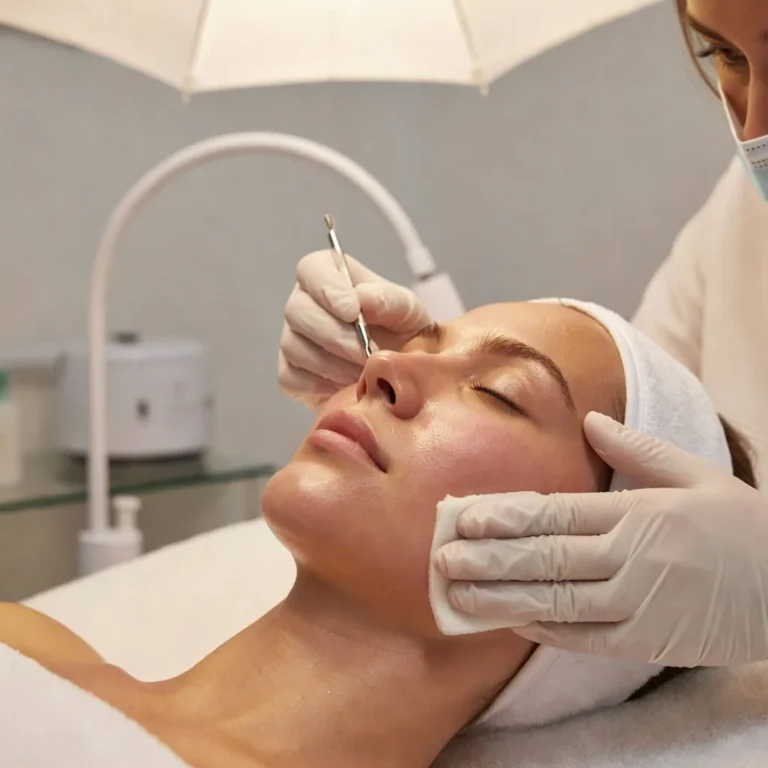
- Radiofrequency (RF): heats the deeper layers of the skin to encourage collagen remodelling; usually mild to moderate tightening over months, sometimes combined with microneedling.
- Focused ultrasound: delivers heat to deeper tissue layers to encourage lifting and tightening; results are gradual and modest.
- Dermal fillers: restore lost volume in the cheeks and temples, which can make skin look firmer.
- Facelift and neck lift: surgically remove and reposition excess skin and deeper tissues; the most dramatic and longest-lasting result.
Our guide on microcurrent facial vs radiofrequency compares these two approaches in more detail.
Choose a qualified, experienced practitioner for energy-based treatments and injectables, and a board-certified surgeon for surgery. Poorly performed treatments can cause burns, lumps, uneven results or scarring. Most surgeons advise waiting until your weight has been stable for several months before surgery.
Habits That Help and Habits That Hurt
Small, consistent habits matter more than any single product or treatment, and they also protect the results of anything you do professionally. Think of them as the foundation for the rest of your plan.
Worth Doing
- Lose weight at a steady pace
- Eat protein at every meal
- Wear sunscreen daily
- Use a retinoid consistently
- Wait for weight to stabilise before major treatments
Skip It
- Do not crash diet
- Do not smoke
- Do not rely on firming creams to lift sagging
- Do not expect facial exercises to remove excess skin
- Do not book surgery while weight is still changing quickly
Honest Limits
No cream, serum, supplement, facial exercise or home device can remove excess skin. Firming products often work by forming a film that feels tight for a few hours. Collagen supplements have limited and mixed evidence. Professional RF and ultrasound give modest, gradual results that vary between people and fade over time. Fillers restore volume but do not remove skin. When there is a large amount of loose skin, surgery is the only option that physically removes it, and it carries real risks, costs and recovery time.
When to See a Dermatologist
See a dermatologist or qualified aesthetic doctor if loose skin is affecting your confidence, if you want a clear view of which treatments suit your face, or if retinoids irritate your skin. They can assess laxity and volume loss and advise on combinations. For significant excess skin, ask for a referral to a board-certified plastic surgeon. If your weight loss was unexplained or unintended, see your doctor first, as that needs medical assessment in its own right.
This article is for general information and does not replace professional medical advice. Patch test new skincare, avoid retinoids if pregnant or breastfeeding unless your doctor advises otherwise, and seek qualified medical advice before any cosmetic procedure or surgery.
Frequently Asked Questions
Will my face tighten after weight loss?
Skin often tightens a little over time, especially if you are younger and lost weight gradually, but not always fully.
How long does it take for facial skin to tighten?
Any natural improvement usually happens over months to about a year after weight stabilises.
Does retinol tighten loose skin?
It can improve skin quality and firmness over months, but it cannot remove excess skin.
Do firming creams work?
Most give a temporary tight feel; they do not lift sagging skin.
Can facial exercises tighten skin after weight loss?
Evidence is limited, and they cannot remove loose skin.
Is radiofrequency good for loose facial skin?
It can give mild to moderate tightening for mild laxity.
Does microcurrent tighten skin?
It may give a short-lived lifted look, with limited evidence for lasting change.
Does eating protein help skin after weight loss?
Enough protein supports overall skin health, especially while losing weight.
Can fillers help weight-loss face?
Fillers can restore lost volume, which can make the face look fuller and firmer.
When should I consider a facelift after weight loss?
When there is significant excess skin and your weight has been stable for several months.
Final Word
Loose facial skin after weight loss is common, and how much it recovers depends on age, genetics, sun damage and how quickly the weight came off. Steady weight loss, enough protein, not smoking, daily sunscreen and a retinoid give your skin the best chance to look firmer over time.
Be realistic about what skincare can do. Radiofrequency and ultrasound offer modest tightening, fillers restore volume, and surgery is the only way to remove significant excess skin. A dermatologist or qualified surgeon can help you choose the right approach.

Written by
Registered pharmacist and founder of Facial Adviser. Rakib's pharmacy training covers how skincare actives work and interact; a later course in cosmetology turned that into a focus on facial treatments and skincare products. He plans, researches and edits every guide on the site and checks health claims against sources such as the American Academy of Dermatology, the FDA and the NIH. He is not a dermatologist; see the Editorial Policy and Medical Disclaimer.
About · Editorial policy · How we choose products · Medical disclaimer · Contact
Keep reading: Anti-aging facials and treatments
- What Is the Best Anti-Aging Facial Treatment? Options Compared by Goal
- How to Get Rid of Rhinoplasty Scars
- Why Do I Still Have Crow's Feet After Botox?
- Cryo Facial: What the Cold Actually Does
- How Long After Botox Can You Get a Facial?
- Acupuncture Facial: What the Evidence Shows
- Ultimate Guide Microdermabrasion: What to Know
- Facial vs Chemical Peel: Differences, Results and Which to Choose