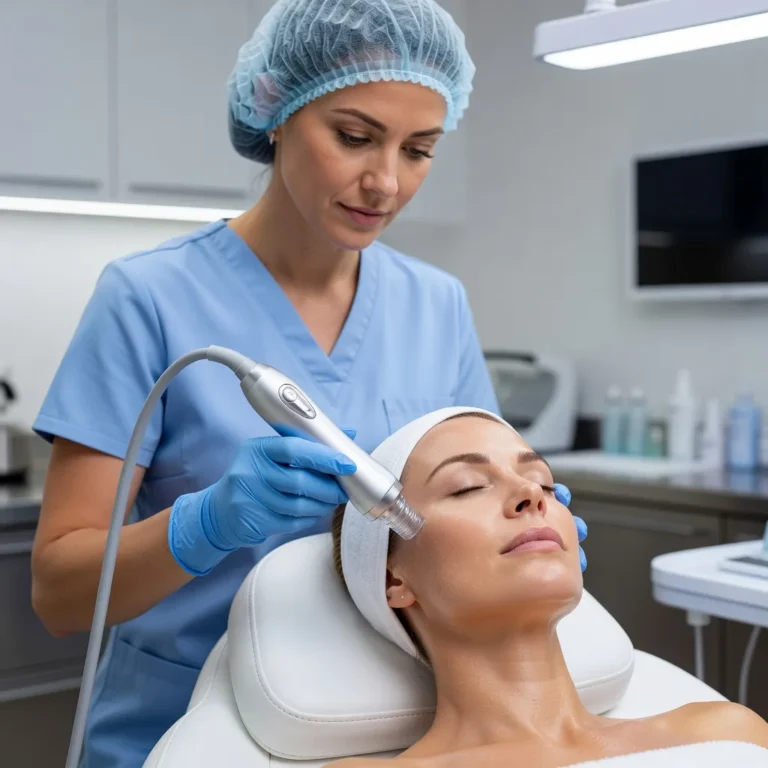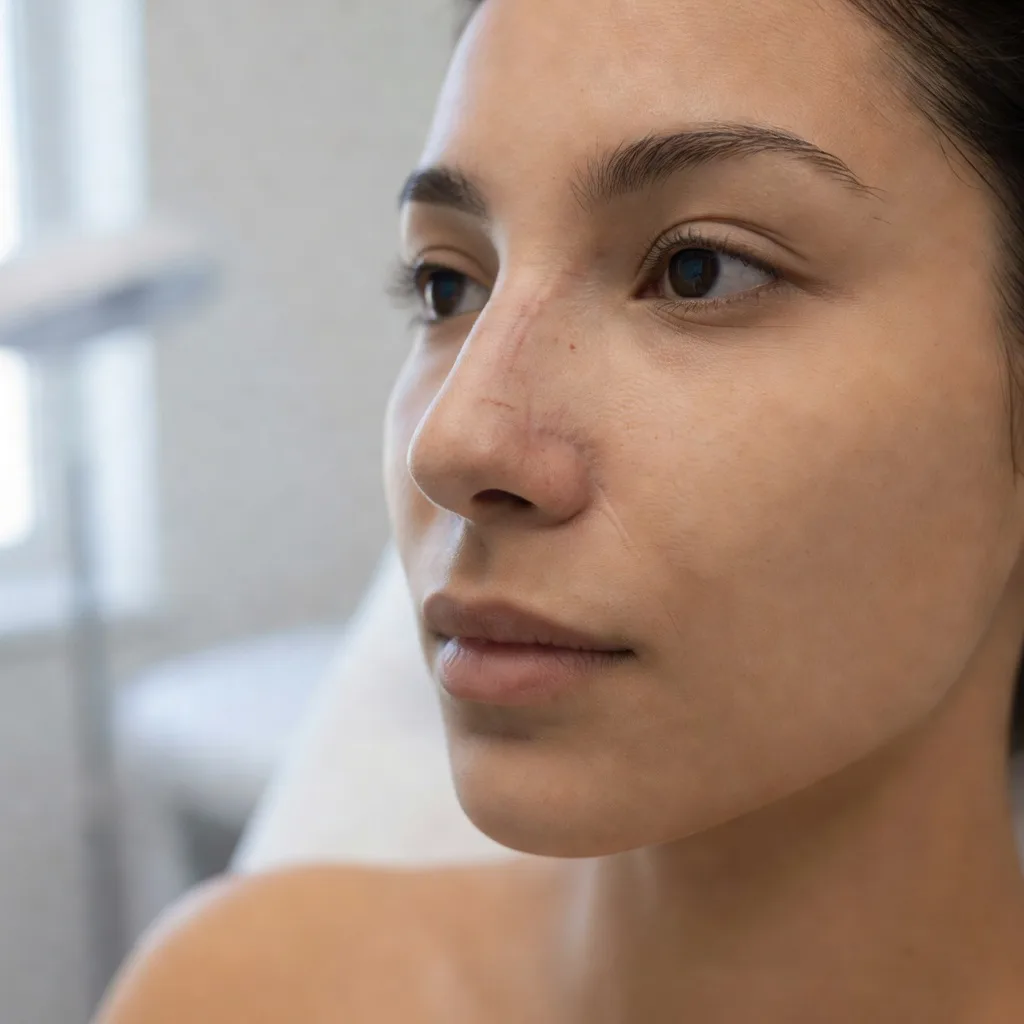
How to Get Rid of Rhinoplasty Scars
Rhinoplasty scars are a genuine concern for anyone considering the procedure, and the honest answer depends heavily on which surgical technique was used and how much patience you’re prepared to have with the healing process.
Part of our guide to facial treatments. Start with: What Is the Best Anti-Aging Facial Treatment? Options Compared by Goal
Closed rhinoplasty leaves no external scar at all, while open rhinoplasty adds one small, deliberately camouflaged incision across the columella. Either way, real scar maturation is a slow biological process that can take a full year or more to fully settle.
There’s no honest shortcut here: a genuine at-home self-test for scar healing doesn’t exist, this is something that actually needs a surgeon’s or dermatologist’s assessment, not a guess based on how it looks in a mirror.
This guide covers the realistic week-by-week healing timeline, the evidence behind treatments like silicone gel sheeting, a practical checklist for tracking your own healing, and the specific warning signs that mean it’s time to see a specialist.
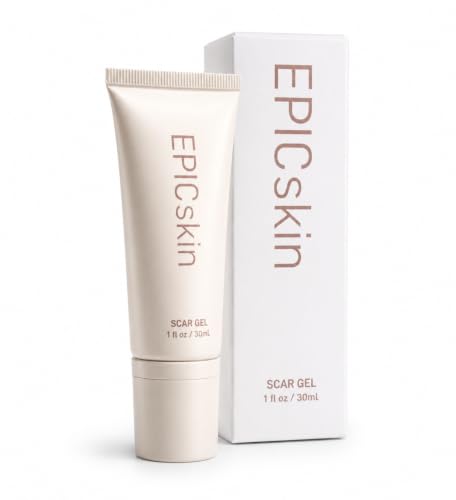
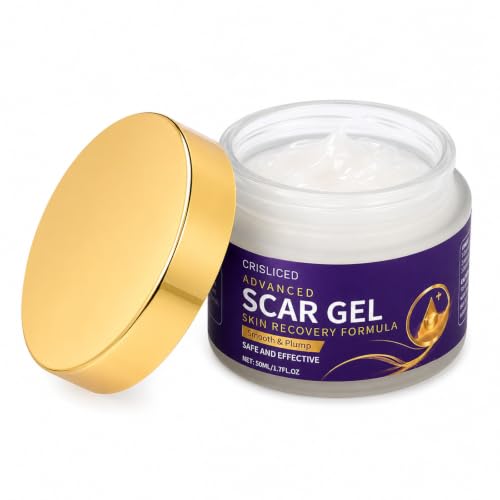
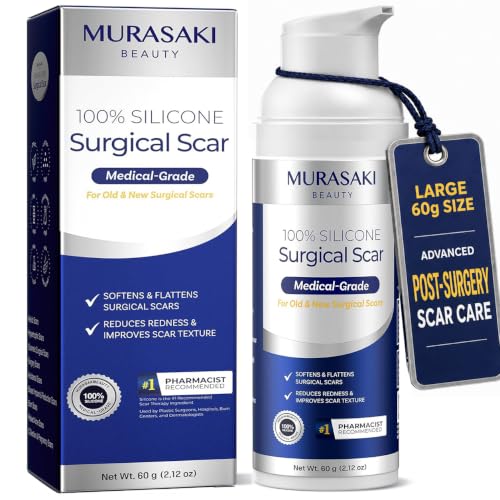
Recommended Products for Post-Surgical Scar Care




Key Takeaways
- Closed (endonasal) rhinoplasty leaves no external scar at all, since every incision is made inside the nostrils.
- Open rhinoplasty adds one small incision across the columella, the strip of skin between the nostrils, usually shaped as an inverted-V to help it blend as it heals.
- Scar maturation is a slow biological process: redness fades over weeks, but full softening and flattening can take a year or more.
- A 2021 Cochrane review found silicone gel sheeting may modestly help scar appearance, though the underlying evidence is low to very low certainty.
- There isn’t a meaningful at-home diagnostic test for a healing scar, this is genuinely something that needs a surgeon’s or dermatologist’s visual and tactile assessment.
- Watch for infection signs and true hypertrophic or keloid changes, both of which warrant prompt professional evaluation rather than waiting it out.
- Sun protection on the healing incision matters more than most people expect, since UV exposure can visibly darken a scar while it’s still remodeling.
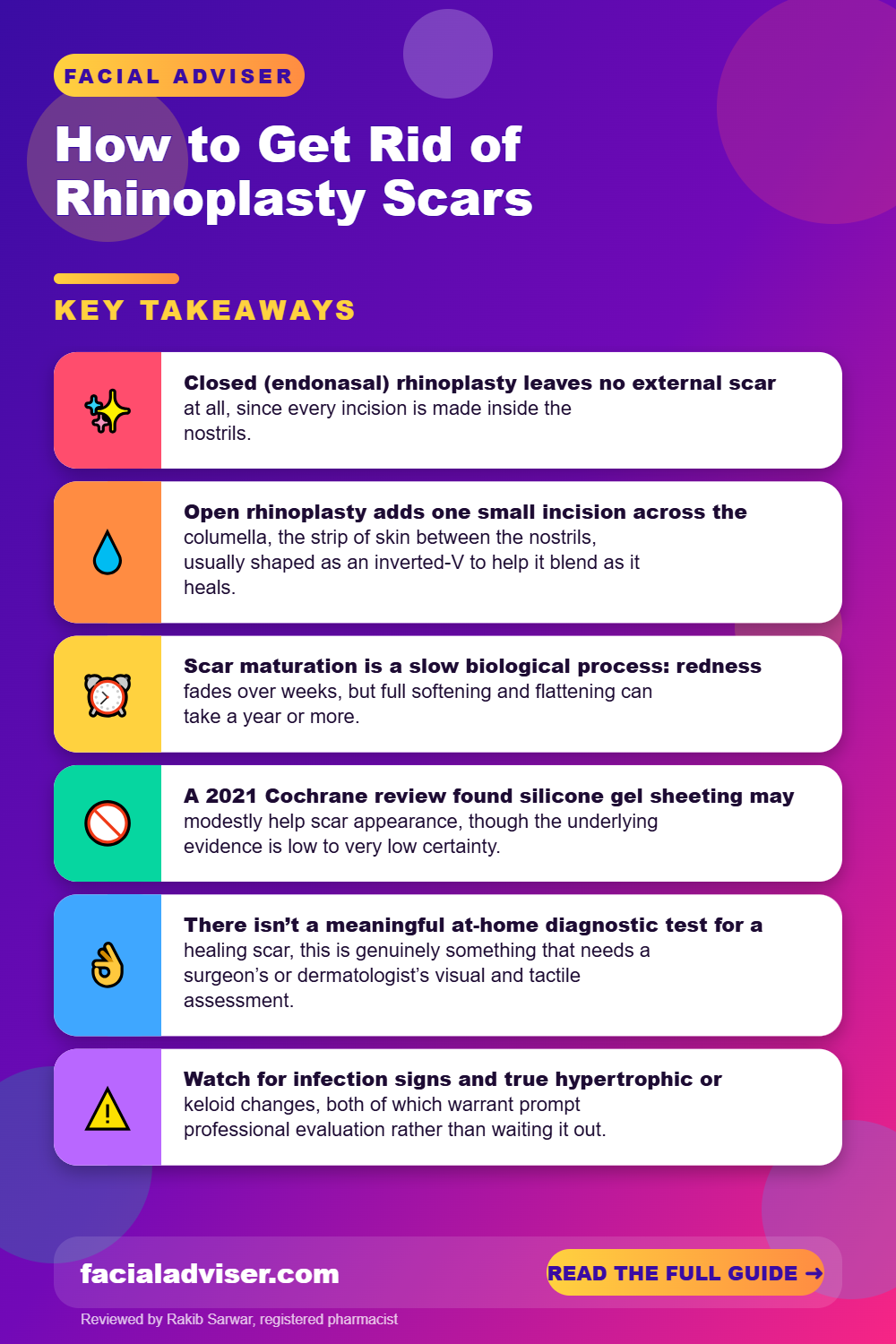
Table of Contents
- Open vs. Closed Rhinoplasty: Where Scars Actually Form
- The Healing Timeline, Week by Week
- A Practical Checklist Instead of a Self-Test
- Comparing Evidence-Based Scar Treatments
- Do This, Not That
- A Realistic Aftercare Routine
- When a Scar Becomes a Problem
- When to See a Specialist
- Frequently Asked Questions
- The Bottom Line
Open vs. Closed Rhinoplasty: Where Scars Actually Form
Closed (endonasal) rhinoplasty places every incision inside the nostrils, intercartilaginous, transcartilaginous, and marginal cuts, so there’s no visible external scar at all. Open rhinoplasty uses those same internal incisions but adds one more: a small transcolumellar cut across the columella, the thin strip of skin separating the nostrils. Surgeons typically shape this as an inverted-V or stair-step “broken line” specifically so it camouflages better as it heals.
Shopping these picks?
Amazon Prime members get fast, free shipping on eligible items, plus Prime Video, Amazon Music and member deals. New members can start with a free trial.
Start a free Prime trialAged 18 to 24? Prime for Young Adults comes with a longer free trial and a lower price after it.
Affiliate link: we may earn a commission at no extra cost to you.
Which approach your surgeon used matters for what you should actually expect to see and feel during recovery, and it’s worth confirming directly if you’re not sure which technique was used on you.
Note: Neither approach is objectively “better,” open rhinoplasty gives surgeons more direct visibility for complex cases at the cost of one small, well-camouflaged scar, while closed rhinoplasty avoids any external incision but offers a more limited view. The right choice depends on what your specific case needs.
The Healing Timeline, Week by Week
| Timeframe | What’s happening |
|---|---|
| Weeks 1-2 | Incision closes; skin is pink and slightly raised |
| Weeks 3-8 | Redness fades, texture starts to smooth |
| Months 3-12 | Scar continues softening, flattening, and blending with surrounding skin |
| Beyond 12 months | Collagen remodeling can continue, gradually refining the scar further |
This is a genuinely slow process, and it follows the same collagen-remodeling biology that governs wound healing anywhere else on the body. A scar that still looks pink or slightly raised at two months isn’t necessarily abnormal, it may simply not be finished maturing yet.
A Practical Checklist Instead of a Self-Test
There isn’t a genuine 60-second self-test for a healing rhinoplasty scar, and it would be misleading to invent one. Scar assessment honestly requires a visual and tactile exam by a surgeon or dermatologist who can compare what they’re seeing against the expected healing timeline for your specific procedure. What you can reasonably track yourself:
- Is the area getting redder, more swollen, warmer, or draining fluid rather than gradually improving? That combination points toward infection.
- Is the scar growing raised or thicker rather than flattening as the weeks pass? That’s a sign worth flagging as possible hypertrophic scarring.
- Is it staying roughly the same or slowly improving, even if slowly? That’s consistent with normal healing.
Comparing Evidence-Based Scar Treatments
| Treatment | Evidence quality | What it’s used for |
|---|---|---|
| Silicone gel sheeting | Low to very low certainty (2021 Cochrane review) | General scar appearance, low-risk option |
| Sun protection | Well-supported general wound-care principle | Preventing UV-driven darkening of a healing scar |
| Gentle scar massage | Commonly recommended, less rigorously trial-tested | Softening and flattening once fully closed |
| Intralesional corticosteroid injection | Established clinical treatment for hypertrophic scars | Flattening raised, thickened tissue |
| Laser (pulsed-dye or fractional) | Established clinical treatment | Redness/vascularity or textural irregularity |
Do This, Not That
Do
- Keep the incision out of direct sun, and use SPF once your surgeon clears you to
- Give the scar a full year before judging its final appearance
- Ask your surgeon which technique, open or closed, they used if you’re unsure
- Flag increasing redness, warmth, swelling, or drainage right away
- Consider silicone sheeting as a reasonable, low-risk option if you want to do something
Don’t
- Expect a self-test to tell you whether a scar is healing normally
- Assume redness at two months means something has gone wrong
- Start massaging the area before the incision is fully closed
- Ignore a scar that’s visibly thickening or growing beyond the incision line
- Rely on unproven “scar erasing” products without surgeon input
A Realistic Aftercare Routine
Follow initial wound care instructions
Keep the incision clean and follow your surgeon’s specific post-op instructions for the first one to two weeks.
Protect from sun exposure
Once cleared, use sun protection consistently on the healing area, since UV exposure can hyperpigment a scar still in its remodeling phase, a form of post-inflammatory darkening that’s easier to prevent than to fade afterward.
Consider silicone gel or sheeting
A reasonable, low-risk option once the incision is closed, backed by modest evidence for scar appearance.
Tip: Ask your surgeon when it’s safe to start silicone products, since timing varies by how the incision has closed.
Begin gentle massage once cleared
Light massage, once the incision is fully closed, is commonly recommended to help soften and flatten the scar during remodeling.
Monitor at follow-up visits
Your surgeon tracks healing progress at scheduled visits, comparing what they see against the expected timeline.
Address problems early if they arise
Raised, thickened, or infected-looking changes are managed with corticosteroid injections or laser treatment rather than waiting them out.
When a Scar Becomes a Problem
Most rhinoplasty scars, especially the internal incisions of closed rhinoplasty and the well-camouflaged columellar incision of open rhinoplasty, mature into something barely noticeable. But a scar can become hypertrophic, meaning raised and thickened beyond the original incision line, and that’s a distinct outcome from normal healing that benefits from active treatment rather than patience alone.
Warning: Increasing redness, warmth, swelling, drainage, or fever around the incision are infection signs that need prompt medical attention, not a wait-and-see approach.
When to See a Specialist
Bring any scar that’s raised, thickened, growing beyond the original incision, or showing infection signs to your surgeon or a board-certified dermatologist rather than trying to diagnose it yourself online. They can offer intralesional steroid injections or laser treatment for genuinely problematic scars, options that aren’t available as at-home fixes.
Frequently Asked Questions
Does closed rhinoplasty leave a visible scar?
No. Closed (endonasal) rhinoplasty places all incisions inside the nostrils, so there’s no visible external scar.
Where is the scar from open rhinoplasty?
Open rhinoplasty adds a small incision across the columella, the skin between the nostrils, usually shaped to help it camouflage as it heals.
How long does a rhinoplasty scar take to heal?
Redness typically fades over the first two months, but full softening and flattening of the scar can take a year or more.
Is there an at-home test to check if a scar is healing well?
No genuine self-test exists. Scar assessment requires a surgeon or dermatologist’s visual and tactile exam.
Does silicone gel help rhinoplasty scars?
A 2021 Cochrane review found it may modestly improve appearance, though the supporting evidence is low to very low certainty.
Can sun exposure make a rhinoplasty scar worse?
Yes. UV exposure can darken a healing scar, which is why sun protection is recommended once your surgeon clears you to use it.
What does a hypertrophic scar look like?
It’s raised and thickened beyond the original incision line, unlike a normally maturing scar that gradually flattens.
When should I worry about a rhinoplasty scar?
Increasing redness, warmth, swelling, drainage, or fever, or a scar that’s thickening rather than flattening, both warrant prompt evaluation.
Can massage help a healing rhinoplasty scar?
Gentle massage, once the incision is fully closed, is commonly recommended to help soften and flatten the scar during remodeling.
How are problematic rhinoplasty scars treated?
Raised or thickened scars are typically managed with intralesional corticosteroid injections or laser treatment from a surgeon or dermatologist.
The Bottom Line
Rhinoplasty scarring depends heavily on technique: closed rhinoplasty leaves nothing visible, while open rhinoplasty adds one small, deliberately camouflaged incision. Either way, real scar maturation takes months, sometimes a full year, and there’s no honest shortcut self-test that replaces a surgeon’s assessment.
What you can control is realistic: sun protection, patience with the timeline, and flagging genuine warning signs, redness that’s increasing rather than fading, or thickening rather than flattening, promptly instead of waiting them out.

Written by
Registered pharmacist and founder of Facial Adviser. Rakib's pharmacy training covers how skincare actives work and interact; a later course in cosmetology turned that into a focus on facial treatments and skincare products. He plans, researches and edits every guide on the site and checks health claims against sources such as the American Academy of Dermatology, the FDA and the NIH. He is not a dermatologist; see the Editorial Policy and Medical Disclaimer.
About · Editorial policy · How we choose products · Medical disclaimer · Contact
Keep reading: Anti-aging facials and treatments
- What Is the Best Anti-Aging Facial Treatment? Options Compared by Goal
- Why Do I Still Have Crow's Feet After Botox?
- Cryo Facial: What the Cold Actually Does
- How Long After Botox Can You Get a Facial?
- Acupuncture Facial: What the Evidence Shows
- Mesotherapy Facial: What the Evidence Shows
- Fruit Facial at Home: Does It Actually Work?
- Facial Types: A Guide to 11 Popular Facials and How to Choose One